
Introduction
Stuffed animals have a way of multiplying overnight. One holiday, one school fair, one sweet surprise — and suddenly every corner is covered in plush paws and floppy ears. The right stuffed animal storage ideas don’t just hide clutter; they transform a growing collection into something intentional and visually calm. With smart vertical storage, thoughtful placement, and kid-friendly access, even a small bedroom can feel styled instead of overwhelmed. When the layout works, cleanup becomes easier and the room feels lighter. If you’re organizing beyond toys, you might also love 21 Closet Decluttering Hacks for a Clutter-Free Wardrobe.
1. Wall-Mounted Stuffed Animal Zoo With Elastic Bars
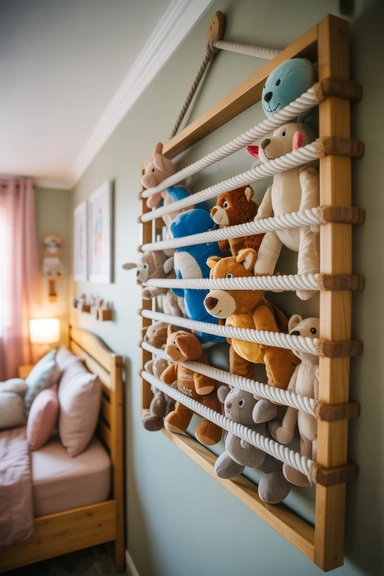
A wall-mounted “zoo” instantly turns stuffed animal storage into something playful instead of restrictive. Built with a simple wood frame and thick elastic cords across the front, this design allows plush toys to be visible yet neatly contained. Kids can stretch the cords to pull animals out without everything collapsing, which makes it interactive and frustration-free. The visual effect feels like a soft display wall rather than a toy pile.
Mount the zoo at child height so it feels accessible and empowering. In smaller bedrooms, this vertical setup frees up valuable floor space while adding texture and color to an otherwise blank wall. It works especially well above dressers or beside beds where unused wall space often exists. The result feels intentional, not cluttered.
2. Hanging Corner Hammock for Soft Toy Overflow
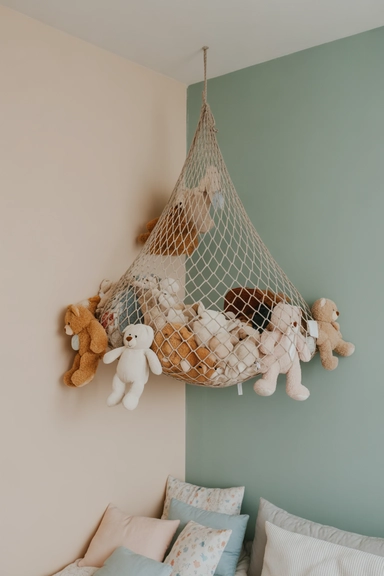
A corner hammock is one of the simplest stuffed animal storage ideas, but execution makes the difference between cozy and chaotic. Installed high in an unused corner, it turns awkward empty space into a functional storage zone. When styled thoughtfully, the plush toys create a cascading, cloud-like effect that adds softness to the room.
Choose a neutral net for a calmer look or a bold color that matches the room’s theme. The key is editing what goes inside. Rotate toys seasonally so the hammock never sags or bulges excessively. This solution works beautifully in shared bedrooms where floor baskets would crowd walking paths and reduce open play space.
3. Under-Bed Rolling Storage Drawers
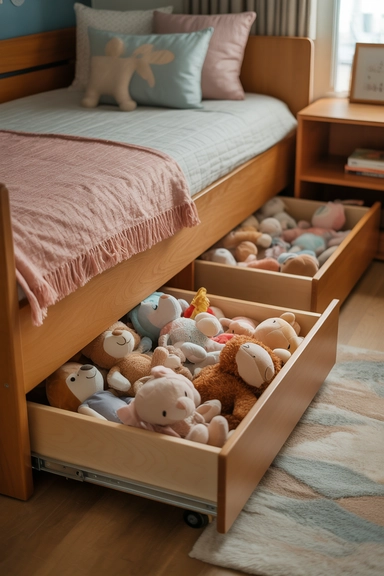
Under-bed storage is often overlooked, yet it’s one of the most efficient ways to reduce visible clutter. Instead of pushing animals loosely under the frame, use rolling drawers with low sides so children can see what’s inside without digging. Clear panels or simple labels make sorting easier and reduce daily mess.
This approach works best for stuffed animals that aren’t part of the everyday rotation. Keep favorites in more accessible areas and reserve under-bed space for overflow. By shifting bulk storage out of sight, the bedroom feels calmer and more open while still honoring the full collection.
4. Built-In Bench With Lift-Up Lid
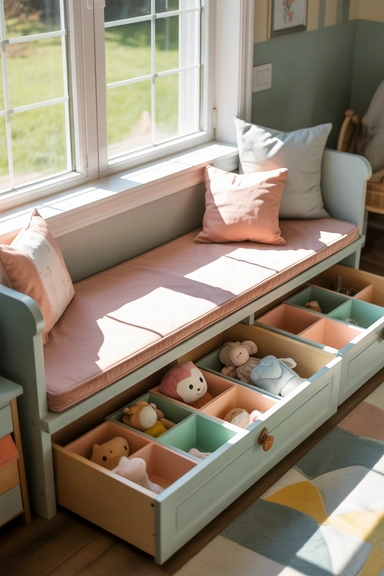
A built-in bench with hidden storage blends functionality with design. Positioned under a window or along an empty wall, it provides seating while concealing bulky plush toys inside. The lift-up lid makes cleanup fast — simply gather and close. Visually, it keeps the room structured and polished.
To prevent chaos inside, use soft bins or dividers within the compartment. On top, layer cushions and textured pillows to make the bench feel like part of the decor rather than a toy box. This solution works especially well in reading nooks, creating a dual-purpose space that feels thoughtful and cozy.
5. Open Cube Shelving With Fabric Bins
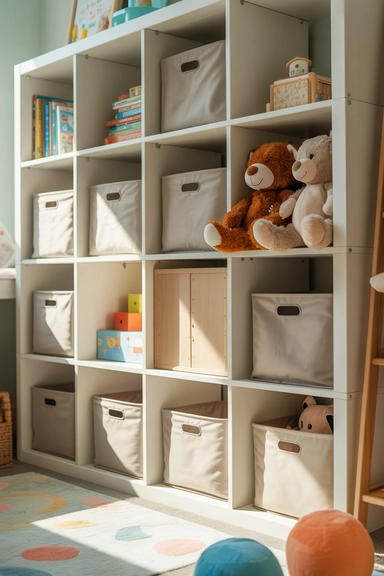
Cube shelving adds structure to stuffed animal storage without eliminating personality. Instead of displaying every plush toy, use fabric bins in some cubes and leave a few open for featured favorites. This creates a curated look that feels styled rather than crowded.
Coordinate bin colors with the room palette to maintain visual harmony. Lower cubes should stay accessible for independent cleanup, while higher sections can hold overflow. The grid structure naturally reduces chaos by assigning every toy a clear home. It’s especially effective in bedrooms that already use cube systems for books or games.
6. Over-the-Door Deep Pocket Organizer That Uses Hidden Vertical Space
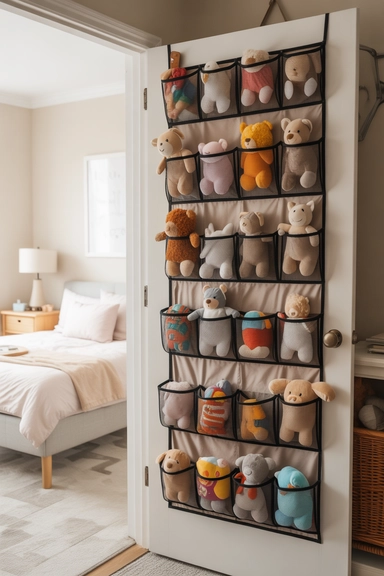
The back of a bedroom or closet door is often wasted real estate. A reinforced over-the-door organizer with deeper pockets transforms that blank surface into structured stuffed animal storage without touching floor space. Unlike shallow shoe organizers, look for wide, fabric-supported compartments that can hold medium plush toys without sagging. The vertical rows naturally separate categories — animals on top, character plushies in the middle, seasonal favorites on the bottom.
Placement matters. Install it behind a closet door if you want the toys visually hidden, or on the bedroom door if your child enjoys seeing their collection. The clear or mesh fronts allow quick identification, which reduces dumping everything onto the bed during searches. It’s especially effective in smaller rooms where every square foot must work harder.
7. Decorative Wicker Trunk That Anchors the Room
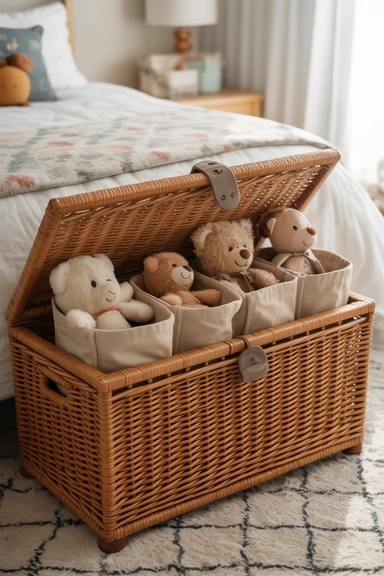
A woven wicker trunk at the foot of the bed adds warmth and structure while concealing bulk. It doesn’t read as toy storage — it reads as furniture. That distinction changes the entire aesthetic of a kids room. The lid keeps stuffed animal storage completely out of sight in seconds, making cleanup feel manageable instead of overwhelming.
Inside, avoid one large empty cavity. Use canvas bags or internal dividers so plush toys don’t compress into a tangled heap. This keeps the interior organized and prevents frustration when reopening it. Visually, the trunk anchors the bed area and introduces natural texture, which balances bright bedding and colorful toys beautifully.
8. Floating Wall Baskets That Double as Display
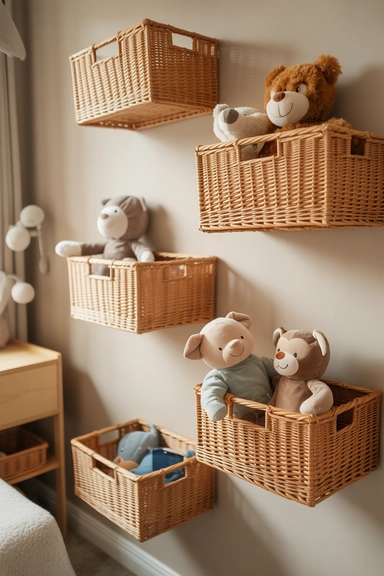
Wall-mounted baskets create a soft display moment rather than a containment system. Install them at staggered heights to build visual rhythm across the wall. Wire, rattan, or woven textures each create a different mood, but all keep stuffed animal storage elevated and intentional. Instead of piling toys, position them so faces peek outward like curated decor.
This approach works best for smaller to mid-sized plush toys. Keep the arrangement edited — three to five per basket maintains shape without overcrowding. By lifting toys off the floor and distributing them vertically, you prevent corner pileups while turning a functional solution into a decorative feature.
9. Ladder Shelf Styled With Plush “Moments”
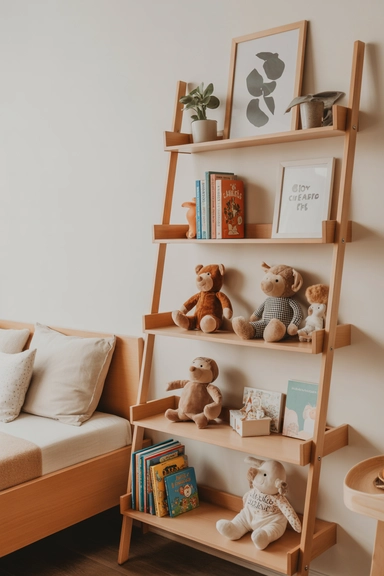
A leaning ladder shelf feels lighter than bulky bookcases, making it ideal for visually crowded bedrooms. Instead of stuffing every shelf, treat each level like a styled vignette. Combine stuffed animals with books, small plants, or framed art to create balance. This approach turns stuffed animal storage into a design element rather than a visual burden.
Keep heavier or larger plush toys on lower shelves for stability. Upper shelves should display smaller characters to avoid top-heavy imbalance. The open design allows breathing room between items, which keeps the room feeling airy. When thoughtfully styled, the ladder shelf blends seamlessly into modern, minimalist, or Scandinavian-inspired spaces.
10. Clear Acrylic Wall Shelves for Featured Favorites
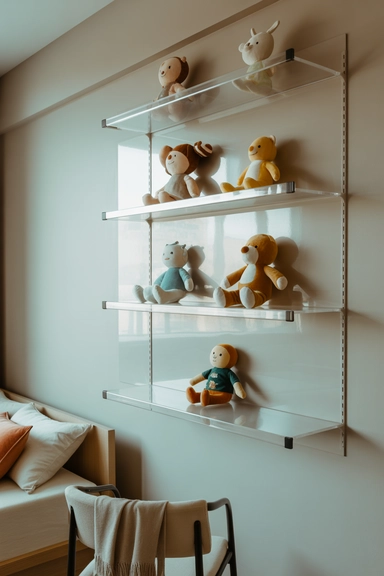
If your child has specific favorite characters they never want hidden, clear acrylic shelves are a sleek solution. They hold plush toys at eye level while keeping the wall visually light. Because the shelves are transparent, they don’t add bulk or heaviness to the room. Instead, they allow stuffed animal storage to feel curated and intentional.
Limit each shelf to a few standout pieces. Overloading defeats the clean effect. Align shelves vertically beside a dresser or horizontally above a reading chair to create a focal wall. This strategy works particularly well in smaller bedrooms where heavy furniture would overwhelm the layout.
11. Built-In Closet Zone Dedicated to Plush Collections
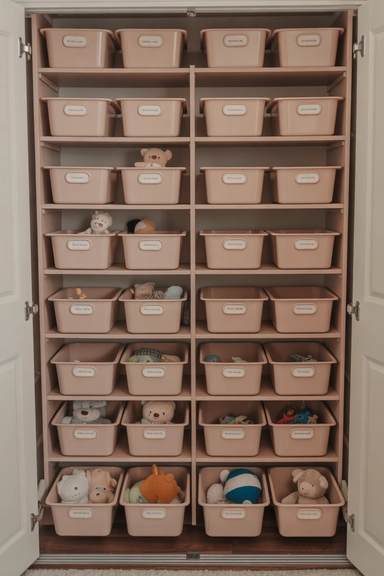
Closets aren’t just for clothing. Dedicate a lower shelf or hanging basket system specifically for stuffed animal storage. By assigning an official “plush zone,” you separate toys from sleeping and study areas, which instantly reduces visual noise in the main room.
Use labeled bins or shallow pull-out baskets to maintain structure. Avoid deep bins where toys disappear into layers. When everything has a defined section, cleanup becomes systematic rather than chaotic. This method works especially well if your child’s bedroom already struggles with surface clutter, as it removes bulk from visible zones entirely.
12. Storage Ottoman That Blends Into Seating Areas
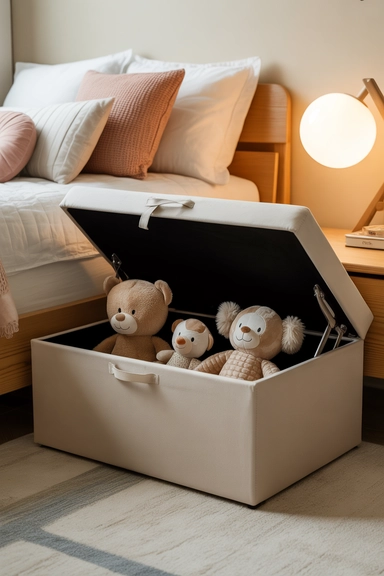
A soft storage ottoman offers concealed capacity without looking like toy containment. Positioned beside a bed, under a window, or near a reading corner, it provides extra seating while quietly managing overflow. The dual function keeps stuffed animal storage from dominating the room visually.
Inside, fold larger plush toys gently instead of cramming them vertically. This protects shape and prevents lid resistance. Choose upholstery that complements bedding or curtains to integrate the piece seamlessly. When furniture works double duty, the room feels more intentional and less like a playroom that took over the entire house.
13. Ceiling-Mounted Hanging Swing for a Playful Display
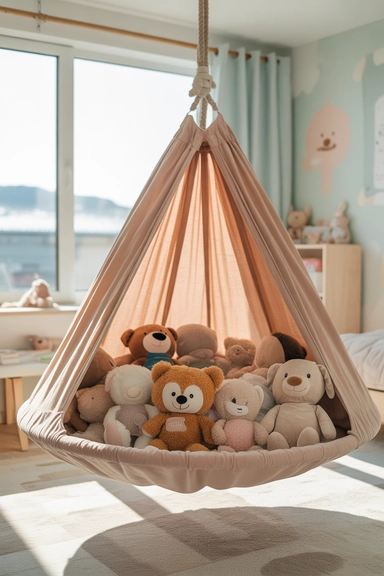
A ceiling-mounted fabric swing or hanging pod can double as unexpected stuffed animal storage when not in use. Instead of letting plush toys scatter across the floor, gather them into the swing to create a floating, playful focal point. The soft drape keeps the look cozy rather than chaotic, and the elevation clears valuable floor space for movement.
Install it securely into a ceiling stud and keep weight limits in mind. This solution works especially well in rooms with higher ceilings where vertical dimension feels underused. When the swing isn’t holding toys, it becomes a reading nook. That flexibility makes it both functional and visually engaging.
14. Custom Built-In Wall Niche With Soft Lighting
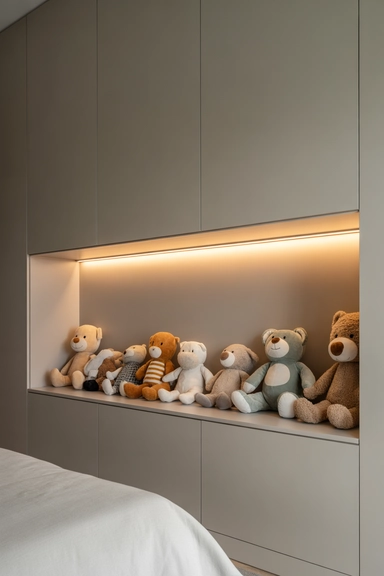
If you’re designing or renovating, a recessed wall niche offers elevated stuffed animal storage that feels architectural rather than temporary. Built directly into drywall between studs, it creates depth without protruding into the room. Add subtle LED strip lighting along the top edge to softly illuminate favorite plush characters at night.
Keep the niche proportionate — wide enough for display but not so deep that toys stack in layers. This idea works beautifully in modern bedrooms where clean lines matter. By integrating storage into the wall itself, you eliminate bulky furniture and maintain an uncluttered layout.
15. Low Bookcase With Front-Facing Display
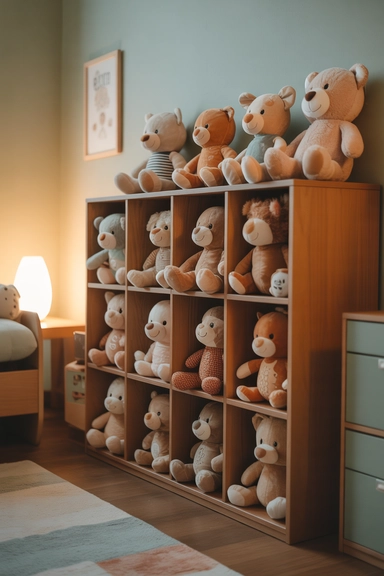
A low bookcase doesn’t have to be reserved for books. Use it for stuffed animal storage by arranging plush toys upright, facing forward. Treat each shelf like a stage rather than a container. Spacing is critical; avoid cramming every toy shoulder to shoulder.
This method works particularly well for character collections that your child identifies strongly with. Keeping them visible preserves emotional attachment while preventing floor scatter. Because the bookcase stays low, children can access and return items independently, reinforcing tidying habits without constant reminders.
16. Hanging Closet Rod Baskets for Quick Access
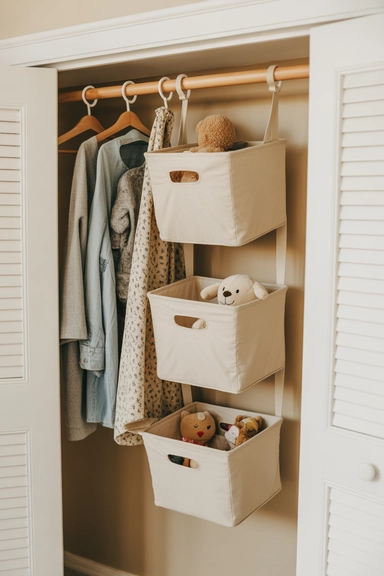
Inside the closet, attach hanging baskets to the lower rod using sturdy hooks or fabric loops. This creates suspended stuffed animal storage without occupying shelf space. The vertical hang keeps toys separated and visible, reducing digging and pileups.
Choose breathable fabric baskets to prevent trapped dust. This system is especially effective for medium-sized plush toys that don’t fit neatly into small bins. By using hanging space rather than floor space, the closet becomes more efficient and the bedroom itself feels less visually crowded.
17. Large Canvas Floor Basket With Defined Limits
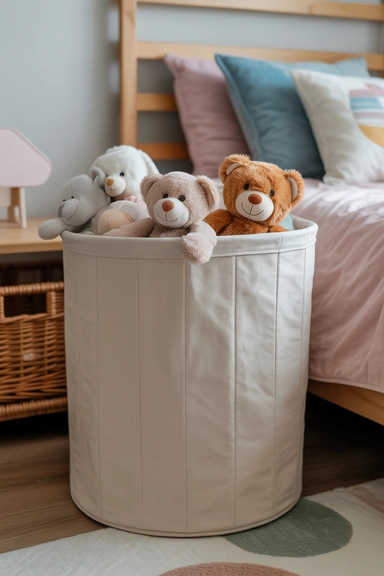
A single oversized canvas basket can be powerful — but only if boundaries are clear. Instead of multiple small bins scattered around, designate one large, structured basket as the primary stuffed animal storage zone. When it’s full, it signals it’s time to rotate or donate.
Place the basket in a corner that doesn’t interrupt traffic flow. Neutral fabric tones keep the room calm, while reinforced sides prevent slouching. This approach works well for families who want simplicity rather than complex systems. The key is consistency: everything goes back into that one defined container.
18. Rotating Display Shelf for Seasonal Favorites
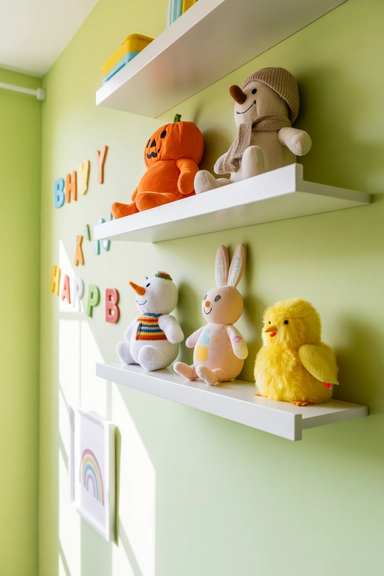
Children’s interests shift quickly. A rotating display shelf allows you to swap out stuffed animals seasonally without overwhelming the room year-round. Keep a limited number on display and store the rest elsewhere. This keeps stuffed animal storage intentional and prevents visual overload.
Install narrow floating shelves at varying heights to create movement along the wall. Highlight themed plush toys — winter bears, spring bunnies, holiday characters — to match the season. This keeps the room feeling refreshed without buying new decor.
19. Bed Frame With Built-In Cubby Compartments
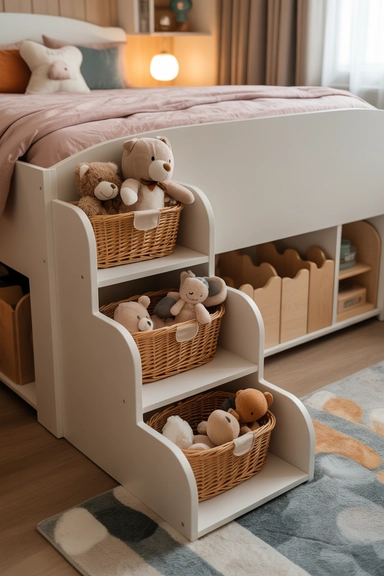
Some modern bed frames include side cubbies or shelving built directly into the base. These compartments provide integrated stuffed animal storage without adding extra furniture. Because they’re part of the bed structure, they feel cohesive rather than cluttered.
Use baskets inside cubbies to prevent loose stacking. Assign each cubby a category — large animals, small animals, bedtime favorites. This separation prevents chaotic mixing and makes cleanup predictable. Integrated storage like this is ideal for compact bedrooms where additional shelving would feel crowded.
20. Pegboard Wall With Adjustable Baskets
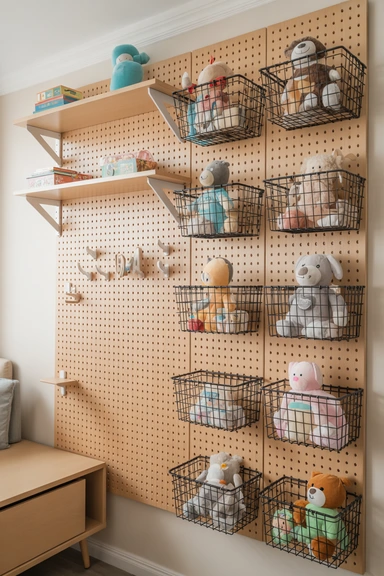
A pegboard wall offers flexibility that traditional shelving can’t. Attach adjustable wire baskets or small shelves to hold stuffed animal storage in customizable groupings. As the collection grows or shrinks, the layout can change without drilling new holes.
Paint the pegboard to match the room for a seamless look, or choose a contrasting color to make it a design feature. Keep spacing intentional so toys aren’t stacked tightly together. The grid system visually organizes chaos into clean rows, making the entire wall feel structured and dynamic.
21. Dedicated Reading Corner Plush Display
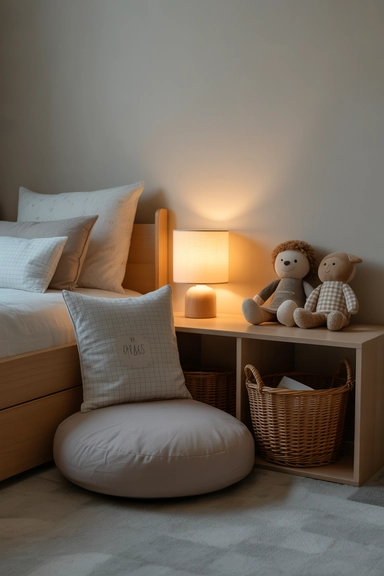
Create a reading corner where stuffed animal storage blends into a calming retreat. Install low shelves or baskets beside a soft chair or floor cushion so plush toys feel like companions rather than clutter. The key is limitation — only keep a handful in this zone.
By tying plush storage to a specific activity, like reading before bed, you create purpose. The rest of the collection can live in other systems throughout the room. When each area has a defined role, the bedroom feels thoughtfully designed instead of overwhelmed by toys.
Conclusion
Stuffed animals don’t have to take over a bedroom to feel loved. The right stuffed animal storage ideas balance accessibility, design, and clear limits. Whether you choose vertical walls, hidden benches, or integrated furniture, structure changes everything. Start with one defined zone, edit the collection thoughtfully, and build from there. When storage feels intentional, the entire room shifts from chaotic to calm — without losing its personality.