
Introduction
Smart utensil organization ideas can completely change how a kitchen functions, especially when drawers feel overcrowded and countertops collect clutter. When spatulas, ladles, and serving tools have no system, cooking becomes slower and storage feels chaotic. The goal is to create clear zones using drawer dividers, vertical storage, and countertop organizers so every tool is easy to find and return. Whether you’re working with a small kitchen, deep drawers, or limited cabinets, structured storage keeps everything accessible. If you’re also organizing tight cooking spaces, ideas from 25 Small Kitchen Storage Solutions That Make Every Inch Work Better can support a more efficient layout.
1- Use Drawer Dividers to Create Clear Utensil Sections
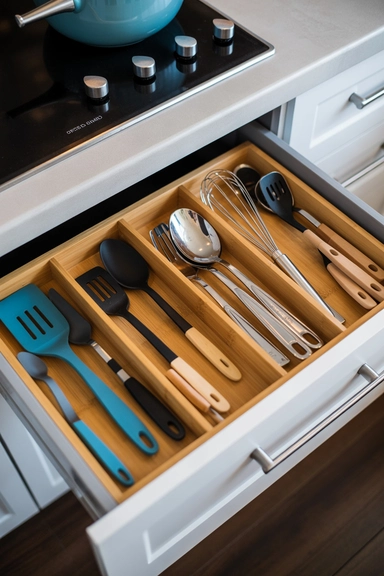
One of the most effective utensil organization ideas is using adjustable drawer dividers to create clear sections for cooking tools. Without structure, spatulas, tongs, and whisks pile together, making drawers difficult to use. Dividers separate each category so items remain visible and easy to grab. This method works well for both shallow and deep drawers, helping maintain consistent kitchen storage that prevents clutter from returning.
Grouping tools by type makes daily cooking faster. Keep baking tools in one section, stirring tools in another, and specialty utensils in a separate compartment. Over time, this system supports efficient utensil drawer organization by ensuring everything has a designated place. A structured drawer layout prevents tools from overlapping and keeps the space functional even as your collection grows.
2- Store Frequently Used Utensils in a Countertop Crock
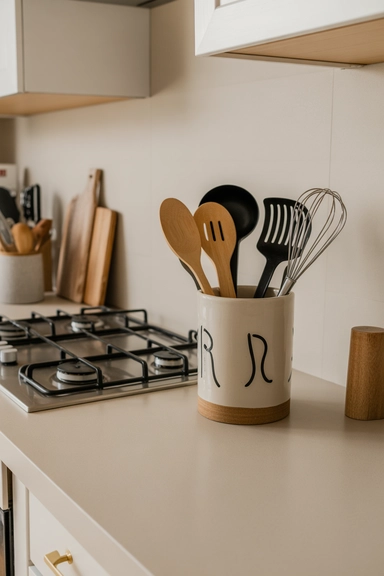
Keeping frequently used tools in a countertop utensil holder ensures they remain within reach during cooking. A crock placed near the stove can hold spatulas, ladles, and wooden spoons without overcrowding drawers. This approach supports kitchen utensil organization ideas that balance accessibility with visual order. Choose a sturdy holder that keeps tools upright and easy to remove.
Rotating tools seasonally also helps maintain order. Store rarely used utensils in drawers while keeping daily tools visible. This method prevents overcrowding and ensures that countertop storage remains functional rather than decorative. Over time, a well-managed utensil crock supports consistent utensil storage ideas that keep cooking spaces efficient and clutter-free.
3- Use Deep Drawer Organizers for Large Utensils
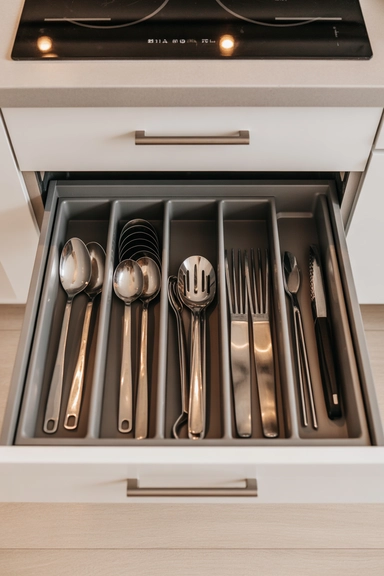
Deep drawers often become cluttered because larger tools don’t fit standard organizers. Using expandable inserts or vertical compartments helps maintain deep drawer organization while keeping tools accessible. Separate large utensils such as serving spoons, tongs, and ladles into designated sections so they don’t overlap. This method supports structured kitchen organization and prevents tools from becoming tangled.
Vertical dividers inside deep drawers also help maximize space. Storing tools upright allows you to see everything at once without digging through piles. Over time, this system improves efficiency and ensures that even large utensils remain easy to locate. Maintaining structure in deep drawers supports long-term utensil organization ideas that keep storage practical and manageable.
4- Install Wall Rails for Hanging Utensils
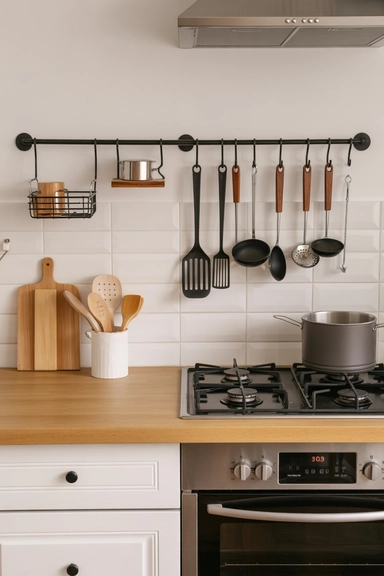
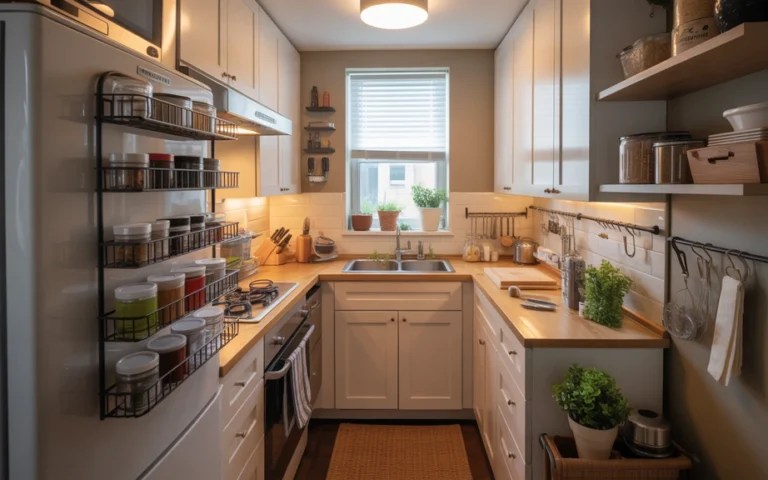
Wall rails provide valuable vertical storage for kitchens with limited drawer space. Hanging utensils such as ladles, spatulas, and measuring cups keeps them visible and easy to reach while freeing up drawer capacity. This approach works especially well in small kitchens where every inch matters. Installing a rail near the cooking area ensures tools remain accessible without cluttering countertops.
Grouping utensils by function keeps the wall display organized rather than chaotic. Place cooking tools together and baking tools in a separate section. Over time, wall rails become one of the most practical utensil organization ideas because they combine storage with easy access. Maintaining a structured rail system helps keep the kitchen functional and visually tidy.
5- Use Stackable Bins for Cabinet Storage
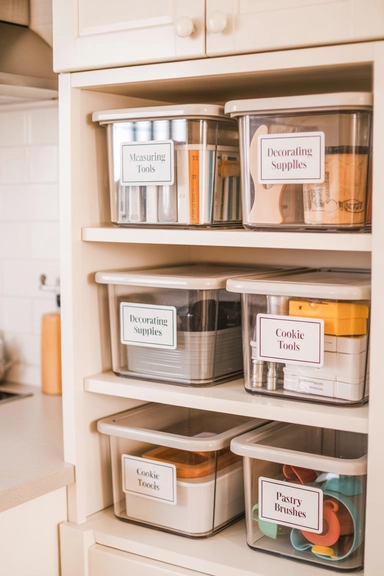
Cabinets can quickly become cluttered when utensils are stacked loosely. Using stackable bins helps maintain clear kitchen storage zones and prevents tools from shifting. Store specialty utensils, baking tools, or seasonal items in labeled bins so they remain easy to locate. This method supports efficient utensil storage ideas by keeping cabinets organized and accessible.
Stackable bins also maximize vertical space within cabinets. When items are grouped and labeled, it becomes easier to return them after use. Over time, this system helps maintain consistent organization and prevents clutter from building up. Structured cabinet storage supports long-term utensil organization ideas that keep kitchens functional and easy to maintain.
6- Create a Vertical Utensil Drawer for Upright Storage
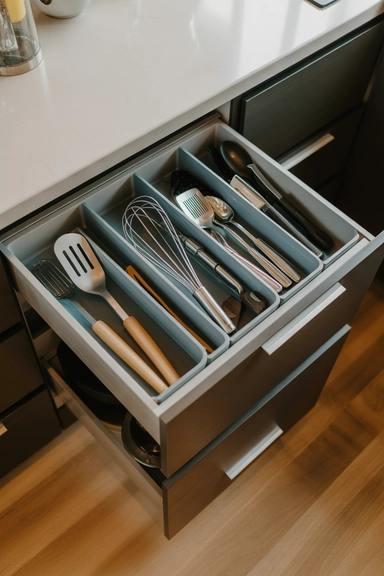
A vertical system is one of the most space-efficient utensil organization ideas for kitchens with limited drawer width. Instead of stacking tools flat, use tall dividers to store spatulas, whisks, and serving spoons upright. This method improves visibility and makes it easier to grab items without digging through layers. Upright storage also prevents tools from overlapping, which helps maintain a more functional utensil drawer layout over time.
Deep drawers benefit most from vertical storage because they often waste height. By installing custom inserts or adjustable dividers, you can separate categories such as cooking tools, baking tools, and serving utensils. Over time, this approach supports efficient kitchen utensil organization ideas by maximizing space and maintaining clear sections. A vertical drawer system keeps tools easy to locate and ensures storage remains tidy throughout daily use.
7- Use a Pull-Out Organizer Inside Cabinets
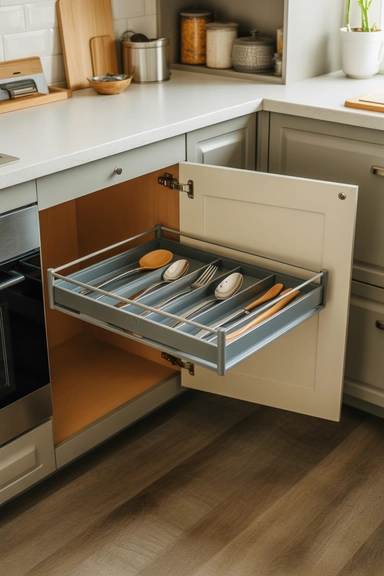
Pull-out organizers transform deep cabinets into accessible storage zones for larger utensils. Instead of reaching into the back of a cabinet, sliding trays allow you to view and access tools instantly. This approach works well for storing bulky items like ladles, serving spoons, and specialty utensils. Adding a pull-out system supports practical utensil storage ideas by turning hidden spaces into functional storage areas.
Separating items into trays helps maintain structure and prevents clutter from building up. When tools are easy to see, they are more likely to be returned to their designated spot. Over time, this system supports consistent kitchen storage by keeping cabinets organized and efficient. Pull-out organizers help maintain order in kitchens where drawer space is limited but cabinet space is available.
8- Store Utensils Without Drawers Using Wall Storage
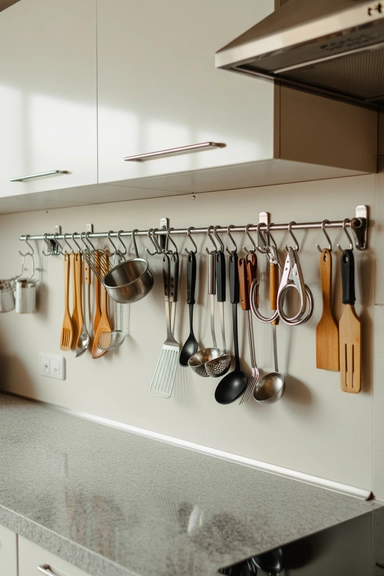
Kitchens without enough drawers can still maintain strong utensil organization ideas by using wall storage. Hanging rails, pegboards, or magnetic strips keep tools visible and accessible while freeing up cabinet space. This solution works well in small kitchens where traditional storage is limited. Mounting utensils on the wall keeps them within reach while preventing clutter on countertops.
Grouping tools by category helps maintain a clean visual layout. Place cooking utensils near the stove and prep tools near the workspace. Over time, wall storage becomes a reliable system that supports efficient small kitchen storage while maintaining easy access. This method ensures utensils remain organized even in kitchens with minimal cabinetry.
9- Use Baskets to Group Similar Utensils
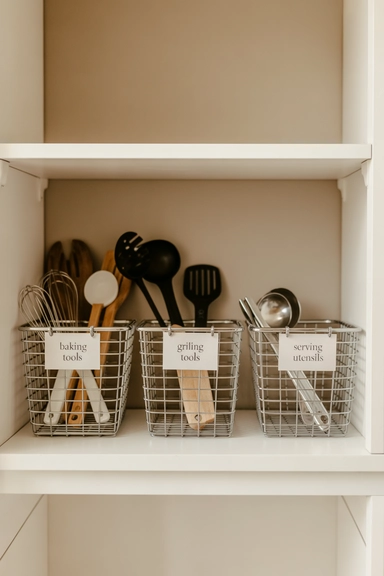
Baskets provide flexible storage for utensils that don’t fit neatly into drawers. Use them inside cabinets or on shelves to group tools by function. One basket can hold baking tools, another can hold grilling utensils, and another can store serving tools. This method supports structured kitchen organization by keeping similar items together and easy to locate.
Choosing stackable or labeled baskets improves efficiency and prevents clutter from spreading. When each basket has a defined purpose, it becomes easier to return items after use. Over time, this system supports consistent utensil storage ideas and keeps cabinets organized. Grouping utensils in baskets ensures that even larger collections remain manageable and accessible.
10- Use a Drawer-Within-Drawer System for Small Tools
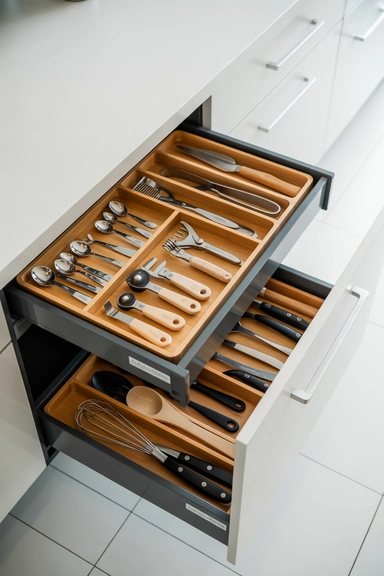
Small utensils such as peelers, measuring spoons, and can openers often get lost in larger drawers. Using a drawer-within-drawer system creates separate layers for smaller items. Insert shallow trays inside deeper drawers to keep categories separated. This approach supports efficient utensil drawer organization by ensuring that small tools remain visible and easy to find.
Layered storage also helps maximize space without overcrowding. When smaller tools are contained in their own tray, they don’t interfere with larger utensils. Over time, this method supports long-term utensil organization ideas by maintaining structure and preventing clutter from building up. A layered drawer system keeps kitchens functional and easy to maintain.
11- Use a Countertop Caddy for Daily Cooking Tools
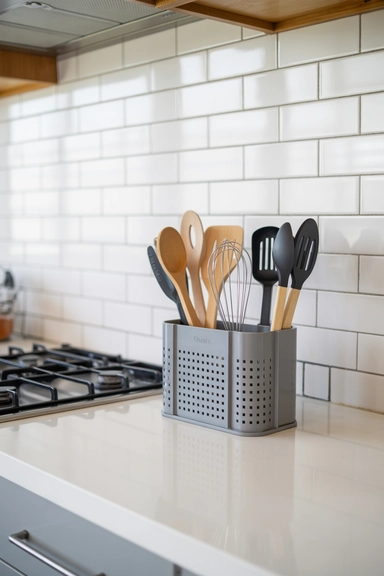
A structured countertop caddy is one of the most practical utensil organization ideas for keeping daily tools accessible without overcrowding drawers. Store spatulas, ladles, and tongs in a divided utensil holder placed near the stove. This setup ensures frequently used tools remain within reach during cooking while maintaining a tidy surface. Choosing a caddy with compartments helps prevent tools from leaning and tangling together.
Rotating tools based on how often they’re used keeps the caddy functional rather than cluttered. Store specialty utensils elsewhere and keep only essentials visible. Over time, this approach supports efficient kitchen utensil organization ideas by balancing accessibility with visual order. A well-managed countertop caddy helps maintain a clean workspace while improving daily cooking efficiency.
12- Install Cabinet Door Racks for Hidden Storage
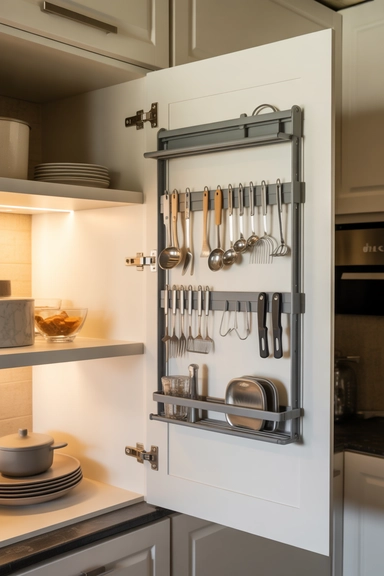
Cabinet door racks create additional vertical storage for utensils without taking up drawer space. Mount slim racks inside cabinet doors to hold measuring spoons, small spatulas, or cooking tools. This hidden storage solution works especially well in compact kitchens where every inch matters. Using door space helps maintain structured kitchen storage without adding clutter to countertops.
Grouping tools by category keeps the system easy to maintain. Store baking tools in one rack and prep tools in another. Over time, cabinet door racks support efficient utensil storage ideas by turning unused space into functional storage. This method helps keep tools accessible while maintaining a clean and organized kitchen layout.
13- Use Adjustable Bamboo Organizers for Flexibility
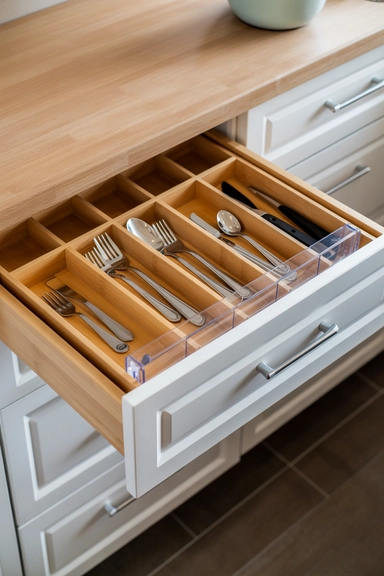
Adjustable bamboo inserts are among the most adaptable utensil organization ideas for drawers of varying sizes. These organizers can expand or contract to fit different drawer widths while maintaining clear sections for utensils. Bamboo dividers also add durability and a clean aesthetic to the drawer. Keeping utensils separated prevents clutter and makes tools easier to locate during cooking.
Adjustable organizers allow you to rearrange sections as your utensil collection changes. This flexibility ensures that storage remains functional over time. Maintaining structured sections supports efficient utensil drawer organization and prevents tools from overlapping. Over time, bamboo inserts help keep drawers tidy and easy to maintain while maximizing available space.
14- Use Wall-Mounted Containers for Small Tools
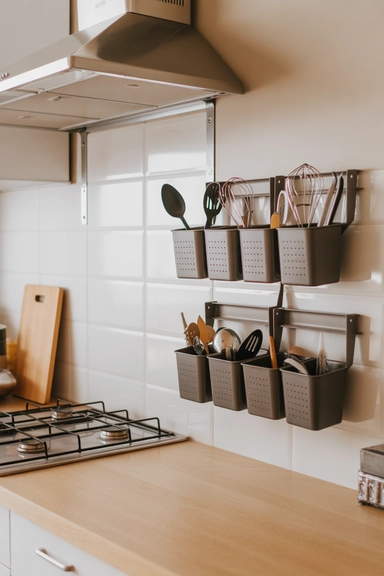
Wall-mounted containers provide a compact solution for storing smaller utensils such as peelers, whisks, and measuring spoons. Mount containers near prep areas so tools remain accessible without cluttering drawers. This method supports efficient small kitchen storage by freeing up space while keeping tools visible. Using wall containers also makes it easier to maintain order.
Grouping tools by function ensures the system remains easy to use. Place prep tools near cutting boards and cooking tools near the stove. Over time, wall-mounted containers support consistent utensil organization ideas by keeping small tools accessible and preventing clutter from spreading across the kitchen.
15- Use Tiered Organizers for Large Utensil Collections
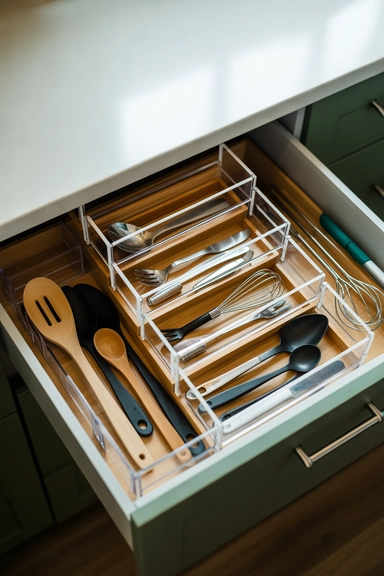
Large utensil collections often require tiered storage to remain manageable. Tiered organizers inside drawers or cabinets create layered sections that keep tools visible. Store larger utensils in lower tiers and smaller ones above for easy access. This system supports efficient kitchen organization by preventing tools from overlapping and becoming difficult to find.
Layered storage also helps maximize vertical space without overcrowding drawers. When utensils are separated by size and function, it becomes easier to maintain order. Over time, tiered organizers support practical utensil storage ideas that keep large collections structured and accessible. Maintaining this system ensures that tools remain easy to locate during daily cooking.
16- Use a Hanging Rail System Near the Stove
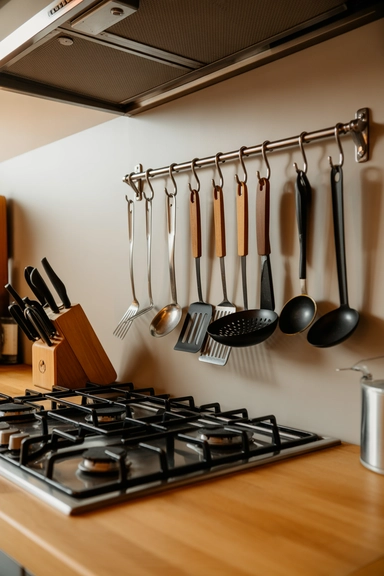
A hanging rail system keeps frequently used tools visible and easy to grab while cooking. Installing a rail with hooks near the stove supports practical utensil organization ideas by freeing up drawer space and reducing countertop clutter. Hanging spatulas, ladles, and tongs ensures they remain within reach while maintaining an orderly layout. This method works especially well in kitchens where drawer capacity is limited.
Grouping tools by function helps maintain structure. Place cooking utensils on one section of the rail and prep tools on another. Over time, this approach supports efficient kitchen utensil organization ideas by creating a clear system that keeps tools accessible. A well-organized rail ensures utensils are returned after use and prevents clutter from building up around the cooking area.
17- Store Specialty Utensils in Labeled Containers
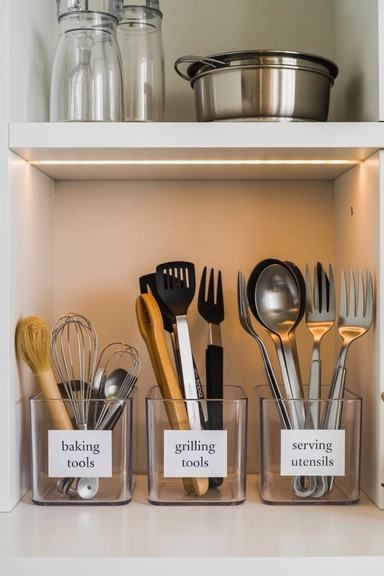
Specialty utensils such as baking tools, serving spoons, and grilling accessories often create clutter when stored with everyday tools. Using labeled containers helps maintain clear kitchen storage zones and keeps similar items grouped together. Place containers inside cabinets or on pantry shelves so they remain easy to locate without overcrowding drawers.
Labeling ensures that tools are returned to the correct spot after use. This system supports consistent utensil storage ideas by preventing tools from mixing and becoming difficult to find. Over time, organized containers help maintain structure and make it easier to manage larger utensil collections without clutter spreading across storage areas.
18- Use Drawer Peg Systems for Custom Layouts
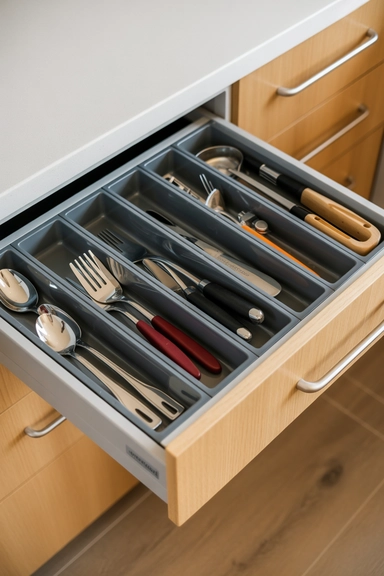
Drawer peg systems provide a flexible way to create custom layouts for utensils. Adjustable pegs allow you to design sections based on tool size and shape. This approach supports efficient utensil drawer organization by preventing items from shifting when drawers open and close. Custom layouts keep tools visible and easy to access.
Rearranging pegs as your utensil collection changes helps maintain order over time. Keeping tools separated by category ensures that storage remains functional and tidy. Over time, peg systems support long-term utensil organization ideas by allowing drawers to adapt without losing structure. This makes it easier to maintain a consistent organization system.
19- Use a Rolling Kitchen Cart for Extra Storage
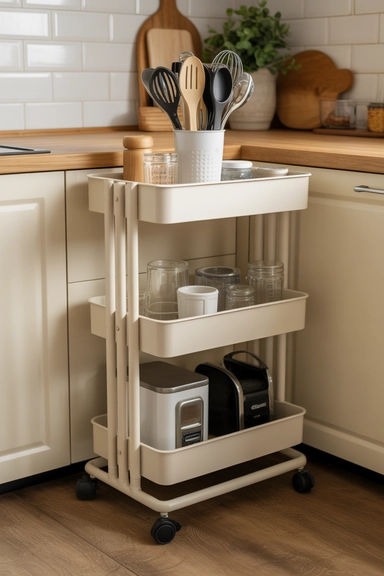
A rolling cart adds flexible kitchen storage for utensils when drawers and cabinets are full. Store frequently used tools, measuring cups, and small appliances on different tiers. This mobile solution keeps items accessible while allowing them to be moved as needed. Rolling carts work especially well in small kitchens where permanent storage is limited.
Keeping utensils grouped on a cart helps maintain order and prevents clutter from spreading. When not in use, the cart can be parked against a wall or beside a counter. Over time, this system supports efficient utensil organization ideas by creating additional storage that adapts to changing needs without overcrowding the main kitchen space.
20- Maintain a Simple Reset Routine
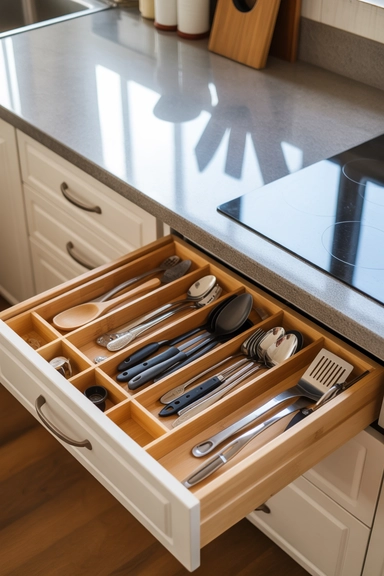
Even the best utensil organization ideas require consistent upkeep. Returning utensils to their designated spots after cooking prevents clutter from building up. Set aside time to check drawers and storage areas regularly to ensure tools remain in their correct sections. Maintaining a routine keeps storage systems functional.
A simple reset habit ensures that organization systems continue working long-term. When tools are returned immediately after use, it becomes easier to maintain order. Over time, this routine supports consistent kitchen organization and keeps storage areas easy to manage. Regular upkeep ensures that utensils remain accessible and clutter-free.
21- Combine Drawer, Wall, and Counter Storage for Balance
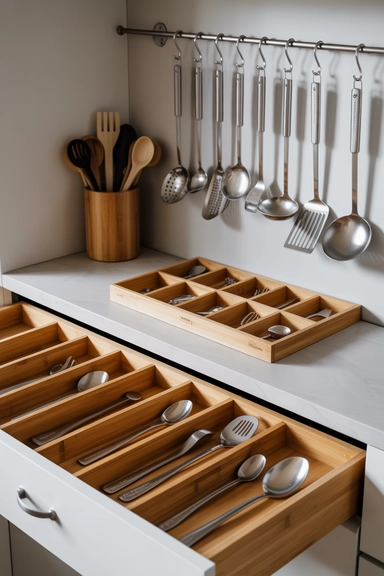
The most effective kitchens combine multiple storage methods to maintain order. Using drawers for small tools, wall rails for frequently used items, and countertop holders for daily utensils creates a balanced system. This layered approach supports efficient utensil organization ideas by ensuring every tool has a designated place.
Balancing storage types prevents overcrowding in any single area. When each zone serves a purpose, it becomes easier to maintain order. Over time, combining storage solutions supports long-term kitchen utensil organization ideas that keep kitchens functional and easy to maintain. A balanced system ensures that utensils remain accessible without creating visual clutter.
Conclusion
Well-planned utensil organization ideas make kitchens more efficient by keeping tools visible, accessible, and easy to return after use. Using drawer dividers, wall rails, countertop holders, and labeled containers creates a structured system that prevents clutter from building up. Whether working with a small kitchen or a larger cooking space, the key is to create clear zones for every utensil category. Maintaining simple routines and using flexible storage solutions ensures that utensils remain organized long-term. A balanced system makes daily cooking easier while keeping the kitchen tidy and functional.