
Introduction
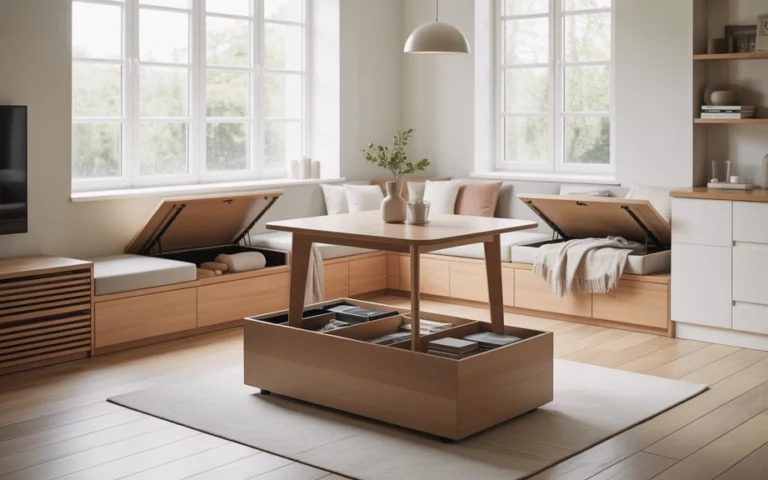
A well-designed vintage craft room ideas meaningfully blends charm with daily usability, creating a space that feels warm, organized, and inspiring to return to again and again. The goal is to combine nostalgic decor, practical storage, and a layout that supports real creative work without visual clutter. From antique cabinets and soft lighting to thoughtful fabric storage and styled worktables, each detail should serve both beauty and function. When storage is intentional and decor feels personal, the room becomes easier to maintain and more enjoyable to use. For more ways to keep creative spaces functional and clutter-free, explore 21 Craft Room Ideas That Keep Creative Spaces Organized.
1 Vintage Storage Cabinets With Glass Doors
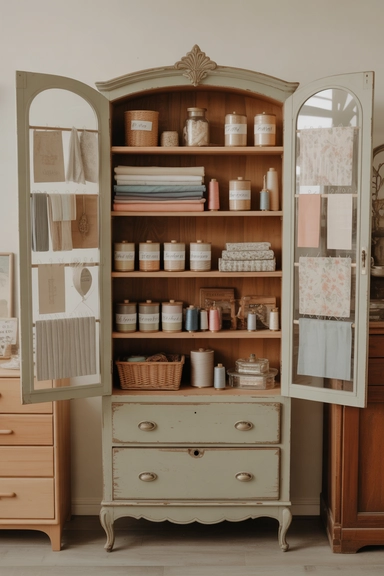
A classic cabinet with glass doors instantly gives a vintage craft room a curated, studio-like feel. Display folded fabrics, thread collections, and labeled jars inside so storage becomes part of the decor. Soft wood tones or painted finishes in cream, sage, or muted blue work especially well for vintage style craft room setups. Position the cabinet along the main wall so it becomes both storage and a visual anchor. Keeping items visible helps with workflow while still maintaining that collected, nostalgic aesthetic that defines vintage craft room decor.
Glass-front cabinets also help reduce visual clutter because everything has a dedicated place. Use small trays or shallow boxes inside to group similar supplies so the shelves feel intentional instead of crowded. Mixing closed drawers at the bottom with display shelves above creates a balanced look that works in both large and small vintage craft rooms. Add subtle lighting inside or above the cabinet to highlight materials and make the space feel welcoming during evening projects. This combination of visibility and order keeps the room functional while reinforcing the timeless atmosphere.
2 Antique Wooden Worktables for Character
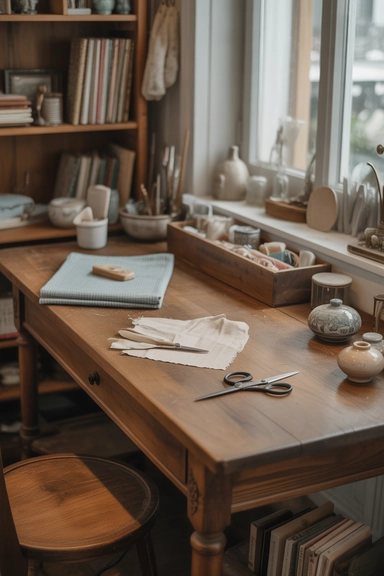
An antique or vintage-style wooden table adds warmth and authenticity to any vintage craft room. Look for sturdy pieces with visible grain, turned legs, or slight imperfections that give the surface character. Placing a large worktable in the center allows for cutting fabric, assembling projects, or spreading out tools without feeling cramped. Pairing the table with a simple vintage chair or stool keeps the setup cohesive. The natural wood tone grounds the space and contrasts beautifully with lighter walls or pastel storage accents often seen in vintage craft room ideas.
To keep the table practical, dedicate small zones across the surface. Use shallow trays for scissors and rulers, a ceramic jar for brushes, and a linen runner to protect the wood from daily wear. This approach keeps tools within reach without sacrificing the charm of the table itself. If space is limited, push the table against a wall and use the area beneath for wicker baskets or rolling carts. A well-placed worktable becomes the heart of the room, blending decorative appeal with everyday usability.
3 Open Shelving With Wicker Baskets
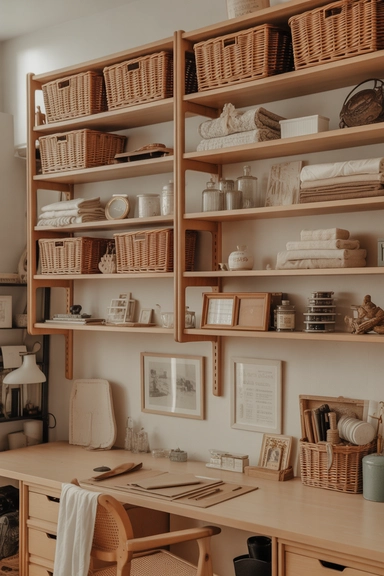
Open shelving is essential in a vintage craft room because it allows supplies to stay accessible while contributing to the room’s layered look. Wooden shelves in warm or distressed finishes help create a cozy backdrop for wicker baskets, folded fabrics, and labeled jars. Position shelves above a desk or along an empty wall so vertical space is used efficiently. Keeping the arrangement balanced prevents the room from feeling cluttered while still showcasing materials in a visually pleasing way that aligns with vintage craft room decor inspiration.
Wicker baskets soften the look of open storage and hide smaller items that might otherwise create visual noise. Choose baskets in similar tones but vary sizes for a collected feel. Labeling each basket subtly with tags or small plaques keeps organization intuitive without breaking the vintage aesthetic. Mixing in a few decorative pieces like framed prints or old sewing tools adds personality and makes the shelves feel styled rather than purely functional. This blend of storage and display supports a workflow that feels both practical and inviting.
4 Vintage Pegboard Walls for Tools
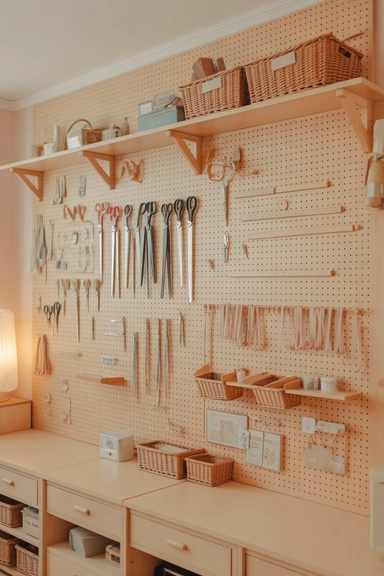
A pegboard painted in a soft neutral or muted pastel can transform an empty wall into a highly functional storage zone. In a vintage craft room, a pegboard works best when styled thoughtfully rather than filled randomly. Arrange scissors, rulers, ribbon spools, and small baskets in an organized layout that feels intentional. Keeping spacing consistent and using hooks in matching finishes creates a cohesive look. The pegboard becomes both a working tool and a decorative feature that reinforces the vintage craft room organization theme.
To enhance the aesthetic, add small framed prints or decorative elements around the pegboard so it blends into the overall design. Wooden pegs or brass hooks can add warmth compared to standard metal hardware. Keeping frequently used tools at eye level improves workflow and reduces time spent searching for supplies. This setup works especially well in smaller vintage craft rooms where wall space needs to carry more of the storage load. A well-styled pegboard ensures tools remain accessible while still contributing to the room’s charm.
5 Soft Layered Lighting for Warmth
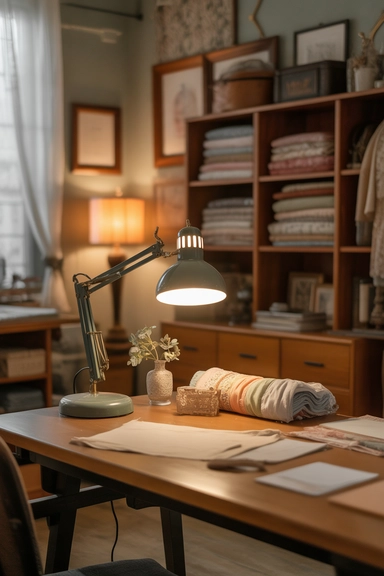
Lighting plays a major role in how a vintage craft room feels and functions. Instead of relying on one overhead fixture, layering light sources creates a softer and more inviting environment. A vintage-inspired desk lamp, a small table lamp on shelving, and warm overhead lighting together make the room comfortable for long crafting sessions. Choosing bulbs with a warm tone helps highlight textures like wood, fabric, and paper, reinforcing the cozy atmosphere that defines vintage craft room ideas.
Placing lights strategically ensures that work surfaces remain bright without making the space feel harsh. A lamp positioned near the main worktable provides focused light for detailed tasks, while softer ambient lighting keeps the room relaxed. Decorative fixtures such as brass or ceramic bases can double as design elements that enhance the overall aesthetic. This balance of practical illumination and decorative charm keeps the workspace efficient while maintaining the inviting character expected in a vintage craft room.
6 Armoire Craft Storage for Hidden Organization
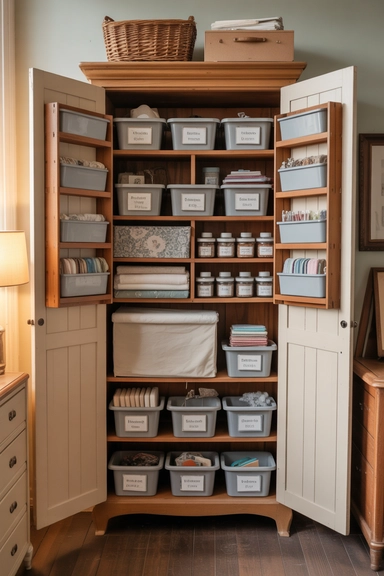
An armoire brings both charm and serious storage into a vintage craft room without making the space feel crowded. A tall piece with paneled doors or distressed paint can hold fabrics, tools, and project bins while keeping everything visually calm when closed. Position the armoire near the main workspace so supplies remain easy to access during longer sessions. Interior shelves can be adjusted to store taller jars or stackable boxes, allowing the piece to adapt as your crafting habits evolve while maintaining a cohesive vintage craft room aesthetic.
Inside the armoire, use labeled bins, shallow trays, and vertical dividers to keep materials sorted and visible. Storing fabric by color or type helps the space feel intentional rather than cluttered. Adding a small light strip inside can make the cabinet easier to navigate and highlight its contents. When the doors are closed, the room instantly looks tidy and serene. This balance between hidden storage and visual harmony makes an armoire one of the most useful elements in a vintage craft room layout.
7 Fabric Storage Display With Open Bins
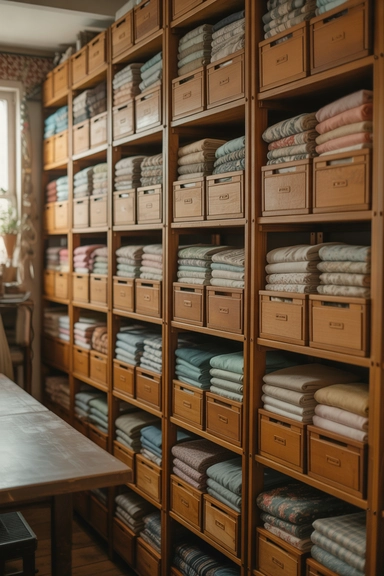
Fabric collections often become part of the decor in a vintage craft room when displayed thoughtfully. Open wooden bins or cubbies allow folded fabrics to be sorted by color, pattern, or project type, turning storage into a visual feature. Position the bins along a lower wall or beneath shelving so they remain easy to reach while working. Soft floral prints, muted tones, and textured materials add depth and personality to the space, reinforcing the nostalgic atmosphere often associated with vintage craft room ideas.
Keeping the folds uniform helps the display look organized rather than crowded. Using neutral or lightly stained bins ensures the focus stays on the fabric itself. If space allows, leave a small gap between stacks so patterns can be seen clearly without overwhelming the eye. Adding a nearby cutting surface or worktable keeps workflow smooth, allowing you to move from storage to creation without disruption. This setup blends functionality with aesthetic appeal, making fabric storage a defining element of the room.
8 Vintage Desk Styling With Functional Decor

A dedicated desk anchors a vintage craft room and provides a focused spot for detailed tasks like sketching, planning, or sewing. Choosing a desk with drawers or carved details adds character while offering built-in storage. Styling the surface with ceramic jars, small trays, and a vintage-style lamp keeps tools organized without losing that collected feel. Positioning the desk near a window helps bring in natural light, making the workspace comfortable for longer creative sessions and reinforcing the warm, welcoming tone expected in vintage craft room decor.
To maintain clarity, limit surface items to essentials and a few decorative accents. Drawer dividers keep smaller tools sorted and prevent clutter from building up over time. A fabric pinboard or framed inspiration board placed above the desk adds visual interest and supports project planning. This combination of structure and charm keeps the desk functional while enhancing the overall look of the vintage craft room. Over time, the workspace becomes a personal creative zone that reflects both style and workflow needs.
9 Wall-Mounted Thread and Ribbon Displays
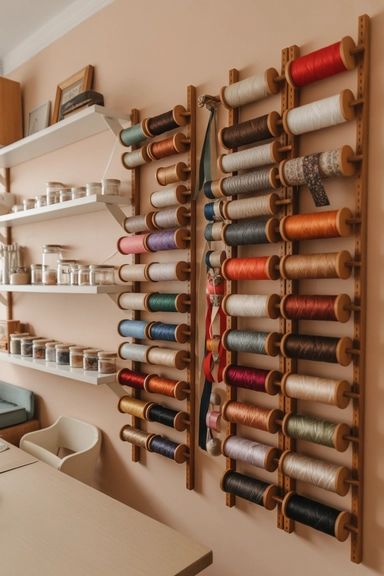
Thread and ribbon collections can become decorative features when arranged on wall-mounted holders. Wooden racks or small shelves keep spools visible and within reach, making color selection easier during projects. In a vintage craft room, displaying these materials adds texture and movement to the walls while reinforcing the handmade feel of the space. Placing the display near the main work area ensures efficiency and prevents the need to search through drawers for frequently used supplies.
Keeping colors grouped creates a soft gradient effect that feels intentional and calming. Mixing thread with small jars of buttons or trims adds variety without overwhelming the display. Using warm wood tones or painted finishes helps the racks blend seamlessly into the room’s overall design. This approach turns everyday materials into part of the decor, helping the vintage craft room feel both practical and visually engaging. Over time, the display evolves with your projects, making the space feel lived-in and personal.
10 Cozy Seating Corners for Creative Breaks
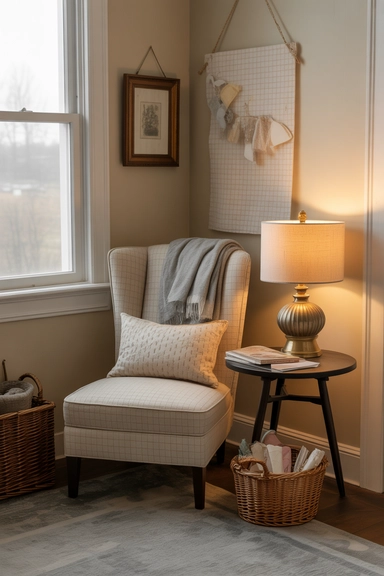
A comfortable seating area adds balance to a vintage craft room by creating a place to pause, sketch ideas, or sort materials. A small upholstered chair or wooden rocker paired with a side table fits well in corners that might otherwise go unused. Adding a soft throw or patterned cushion reinforces the cozy aesthetic while keeping the area functional. Positioning this seating near natural light helps the room feel open and welcoming, encouraging longer creative sessions without fatigue.
Using a nearby basket for current projects keeps the area tidy and ensures materials remain within reach. This corner can double as a planning zone where patterns are reviewed or color palettes are considered before starting work. Including a small floor lamp or wall sconce adds warmth and makes the space usable during evening hours. By blending comfort with purpose, a seating corner strengthens the overall flow of the vintage craft room and supports a more relaxed creative routine.
11 Gallery Walls With Vintage Frames
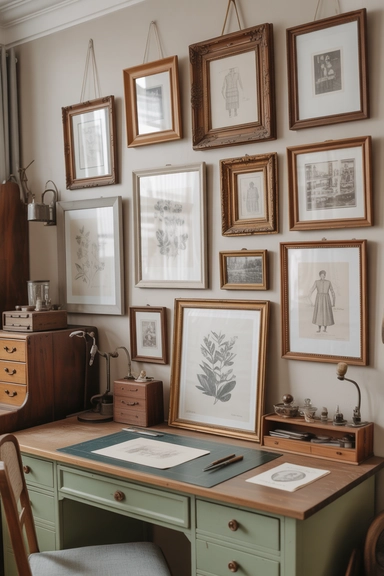
A curated gallery wall adds personality and depth to a vintage craft room while keeping inspiration visible throughout the day. Mixing antique frames, botanical prints, and old pattern sketches creates a layered look that feels collected over time. Arrange the frames above a desk or along a blank wall to anchor the space visually. Soft wood tones, muted gold finishes, and aged textures reinforce the nostalgic feel that defines a vintage craft room. Keeping spacing consistent ensures the wall feels intentional rather than crowded.
Including small shelves within the gallery arrangement allows for rotating inspiration pieces or displaying finished mini projects. Fabric swatches, handwritten notes, or vintage postcards can be added to keep the wall dynamic and personal. The combination of framed art and functional elements supports creativity without overwhelming the room. This approach helps the vintage craft room feel like a true studio where ideas are constantly evolving while still maintaining a calm and organized appearance.
12 Rolling Carts for Flexible Storage
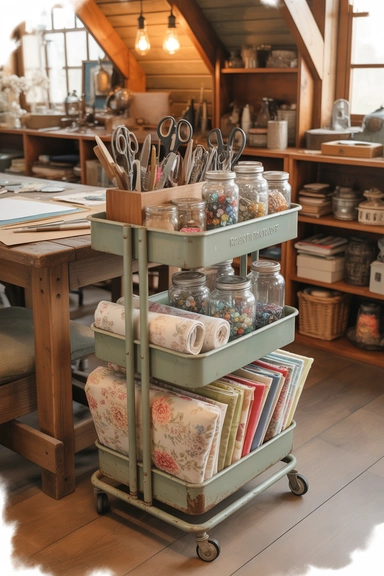
A rolling cart provides flexible storage that adapts to changing projects in a vintage craft room. Choosing a cart with a soft painted finish or wood accents helps it blend into the overall design. Position it near the main worktable so tools and materials can move with you throughout the day. Top shelves can hold frequently used items, while lower tiers store bulk supplies or project bins. This mobility keeps the workflow smooth and prevents surfaces from becoming cluttered during longer crafting sessions.
Keeping the cart organized by category helps maintain efficiency. Small containers or jars prevent items from shifting when the cart is moved, and labeled sections make everything easier to find. When not in use, the cart can be tucked beside a cabinet or desk to keep pathways clear. This balance between accessibility and tidiness ensures the vintage craft room stays functional without sacrificing its warm, collected atmosphere. Over time, the cart becomes a reliable extension of the main workspace.
13 Lace Curtains and Soft Window Styling
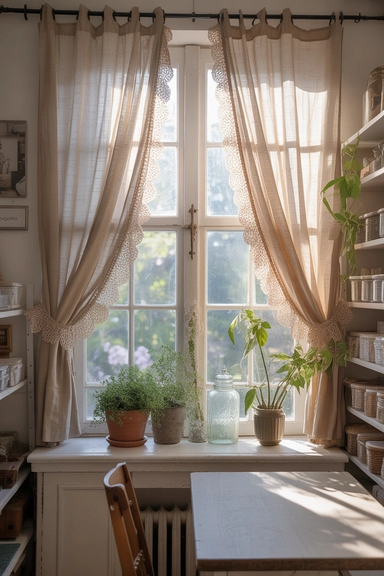
Windows play a major role in shaping the mood of a vintage craft room. Lightweight lace curtains or soft linen panels filter natural light while adding texture and warmth. Choosing neutral or pastel tones keeps the room bright without feeling stark. Positioning the main worktable near the window allows for comfortable daytime crafting and highlights the details of fabrics and materials. The gentle diffusion of light helps maintain a calm atmosphere that supports focus and creativity throughout the day.
Layering window treatments can also add depth without blocking light. A simple rod with sheer panels paired with a subtle valance keeps the look cohesive and timeless. Placing small plants or decorative jars along the windowsill adds another layer of interest and connects the interior with natural elements. This soft styling approach reinforces the cozy feel associated with vintage craft room ideas while ensuring the space remains practical for everyday use.
14 Decorative Jar Storage for Small Supplies
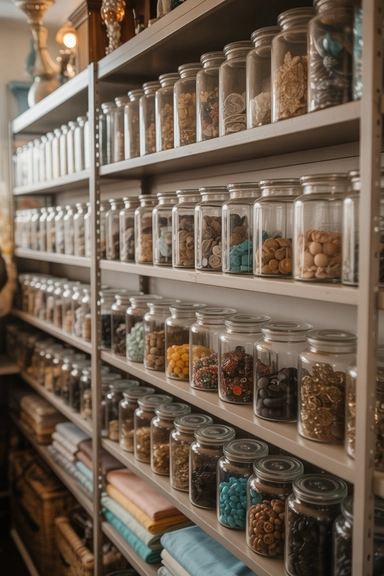
Glass jars are both decorative and practical in a vintage craft room. Using clear jars for buttons, beads, and pins keeps small items visible while adding sparkle and texture to shelves or work surfaces. Placing jars in groups of varying heights creates visual rhythm and prevents the arrangement from feeling flat. Wooden lids or metal clasps add subtle detail that fits well within a vintage aesthetic. Keeping frequently used items in jars near the main workspace helps streamline the crafting process.
Labeling jars discreetly ensures everything remains easy to locate without disrupting the overall look. Positioning them on open shelving or a dedicated tray keeps the display contained and organized. Mixing in a few colored jars or etched glass pieces can add character while maintaining cohesion. This approach transforms everyday storage into a design feature that supports both efficiency and visual appeal within the vintage craft room.
15 Layered Rugs for Warmth and Texture
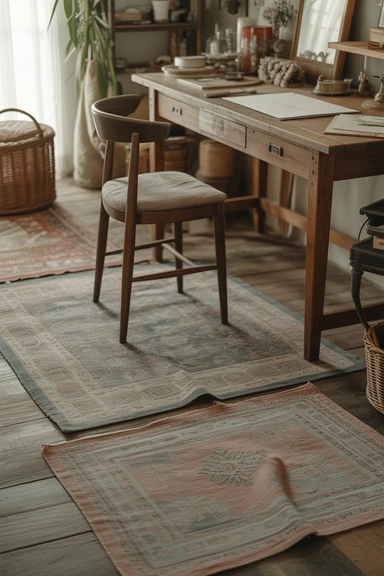
Layering rugs can make a vintage craft room feel more grounded and comfortable, especially in spaces with hard flooring. A larger neutral rug paired with a smaller patterned one creates depth and softens the workspace. Positioning rugs beneath the main table or seating area helps define zones and adds warmth underfoot during long crafting sessions. Choosing faded patterns or muted tones keeps the look consistent with vintage decor while ensuring the room remains calm and inviting.
Keeping rugs low-pile or flatweave prevents them from interfering with rolling chairs or carts. Regular cleaning and occasional rotation maintain their appearance over time. The layered textures help absorb sound, making the space quieter and more focused. This subtle addition enhances comfort without taking attention away from the functional aspects of the vintage craft room. Over time, the rugs contribute to a studio environment that feels both practical and welcoming.
16 Cottage-Style Color Palettes for Cohesion

A cohesive color palette helps a vintage craft room feel calm and intentional rather than busy. Soft creams, muted greens, dusty blues, and warm wood tones create a gentle backdrop that highlights materials without overwhelming the eye. Painting storage pieces in complementary shades can unify the room while still allowing each element to stand out. When walls and furniture share a harmonious palette, the space feels larger and more relaxed. This approach supports creativity by reducing visual noise and maintaining the nostalgic atmosphere associated with vintage craft room design.
To keep the palette balanced, limit bold accents to smaller decor items like jars, cushions, or framed prints. Rotating seasonal fabrics or artwork can refresh the space without requiring major changes. Consistency across shelving, storage bins, and work surfaces ensures the room feels cohesive even as projects change. This thoughtful use of color allows the vintage craft room to remain adaptable while preserving its warm and welcoming character.
17 Small Craft Corners With Vintage Charm

Not every home has space for a full studio, but a dedicated corner can still become a functional vintage craft room. Position a compact desk or table against a wall and build upward with shelves or pegboards to maximize storage. Adding a vintage chair, small lamp, and a few decorative accents helps the corner feel intentional rather than temporary. Even in tight spaces, layering textures and materials creates a cozy environment that supports daily creativity without requiring a separate room.
Keeping supplies organized in labeled boxes or baskets prevents the corner from becoming cluttered. Using vertical storage ensures the workspace remains efficient while still maintaining a soft, nostalgic look. Placing a pinboard or inspiration wall above the desk keeps ideas visible and encourages consistency in projects. This compact setup shows that a vintage craft room can exist in small areas while still offering both charm and practicality.
18 Inspiration Boards for Project Planning
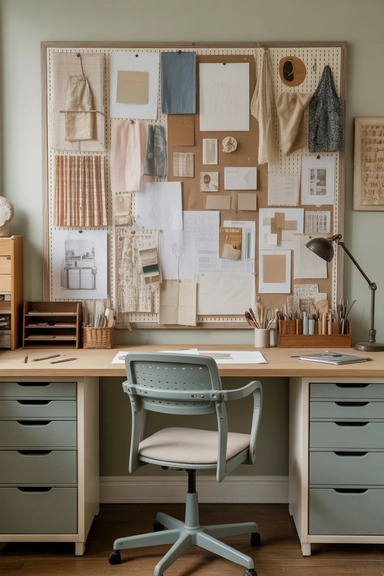
An inspiration board helps keep ideas visible and organized within a vintage craft room. Cork boards, fabric panels, or framed grids can hold sketches, color palettes, and reference images. Positioning the board near the main workspace ensures it remains part of the creative process rather than just decoration. Choosing materials that match the room’s palette helps the board blend seamlessly into the design. This setup supports planning while reinforcing the layered aesthetic often found in vintage craft room ideas.
Rotating items on the board keeps the space feeling fresh and encourages new projects. Mixing pinned fabrics, notes, and small photos adds depth without creating clutter. Keeping the arrangement balanced ensures it remains inspiring rather than overwhelming. Over time, the board becomes a visual record of creative progress and helps maintain focus during complex projects. This combination of function and personality strengthens the overall flow of the vintage craft room.
19 Antique Dressers for Multi-Purpose Storage
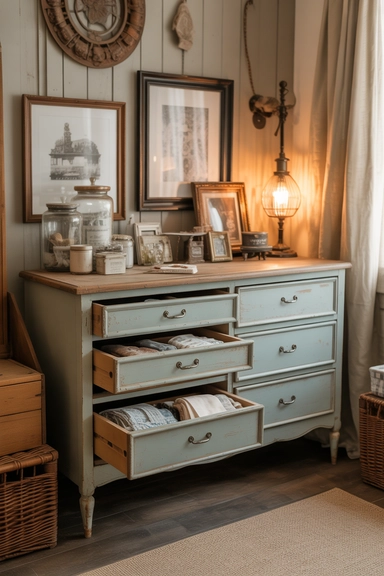
An antique dresser offers generous storage while adding character to a vintage craft room. Deep drawers can hold fabrics, tools, and unfinished projects, keeping surfaces clear for active work. Positioning the dresser along a main wall provides easy access without interrupting movement around the room. The aged wood or painted finish contributes to the nostalgic feel, making the piece both practical and decorative. Using drawer organizers inside ensures items remain sorted and easy to locate.
Styling the top of the dresser with jars, trays, or framed art keeps it visually connected to the rest of the room. Leaving some surface space clear ensures there is room for temporary project placement when needed. This balance between storage and display helps maintain order without sacrificing the charm that defines a vintage craft room. Over time, the dresser becomes a central element that supports both organization and aesthetics.
20 Decorative Hooks and Wall Rails
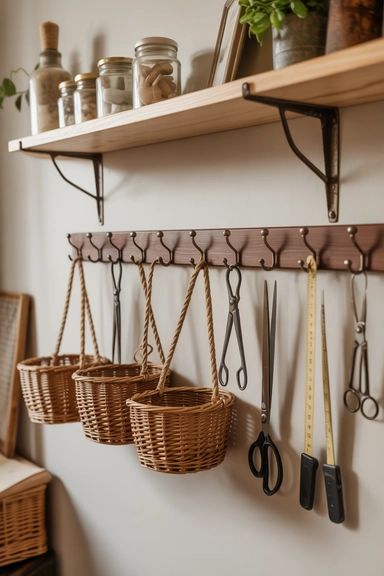
Wall hooks and rails provide quick storage for frequently used tools and materials in a vintage craft room. Wooden or metal hooks mounted along a wall can hold scissors, measuring tapes, or small baskets. Keeping these items visible makes them easy to grab during projects while preventing drawers from becoming overcrowded. Arranging hooks in a neat line ensures the wall looks intentional rather than cluttered. This approach blends convenience with decorative appeal.
Adding a narrow shelf above the hooks allows for small decor items or additional storage jars. Choosing finishes that match other hardware in the room helps maintain cohesion. Over time, this wall-mounted system adapts to changing needs and keeps the workspace efficient. The combination of accessibility and style reinforces the practical yet cozy atmosphere expected in a vintage craft room.
21 Personal Display Shelves for Finished Projects
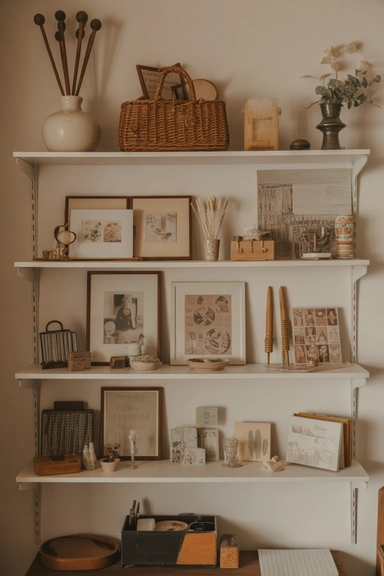
Displaying completed crafts helps a vintage craft room feel rewarding and personal. Small shelves or ledges can hold finished pieces, favorite tools, or collected decor items that reflect your style. Positioning these shelves at eye level keeps them visible without interfering with work surfaces. Mixing practical items with decorative ones creates a balanced display that evolves over time. This approach celebrates progress while maintaining a tidy environment.
Rotating displayed items prevents the shelves from feeling static and keeps the space visually engaging. Using similar tones or materials across the display ensures cohesion with the rest of the room. Keeping the arrangement simple allows each piece to stand out without overwhelming the space. This final layer of personalization reinforces the sense that the vintage craft room is both functional and uniquely yours.
Conclusion
Designing a thoughtful vintage craft room ideas is about blending charm with practicality so creativity can flow without distraction. From layered lighting to antique storage and carefully styled displays, each detail contributes to a workspace that feels calm and inspiring. When storage solutions double as decor and layouts support daily routines, the room becomes easier to use and more enjoyable to spend time in. With intentional choices and a cohesive palette, a vintage craft room can remain organized, welcoming, and ready for new ideas whenever inspiration strikes.