
Introduction
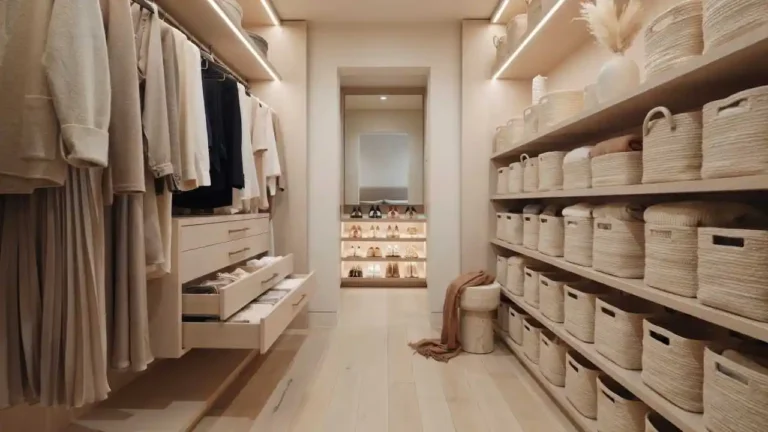
Narrow hallways are often treated as pass-through zones, yet they quietly accumulate clutter faster than larger rooms. Shoes drift into pathways, mail lands on slim tables, and walls remain underutilized. The right hallway storage ideas for narrow spaces focus on depth control, vertical layering, and clean sightlines. If you’re also looking to use wall space more effectively, 22 Vertical Storage Ideas That Reclaim Floor Space and Clear Visual Clutter explores ways to build storage upward without crowding tight areas. When storage stays shallow and structured, circulation remains uninterrupted.
1. Ultra-Slim Wall Cabinets with Push-Open Doors
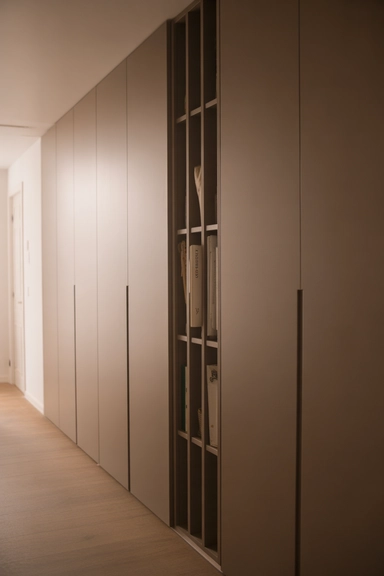
In narrow corridors, depth is everything. Install ultra-slim wall cabinets no deeper than 6–8 inches to prevent walkway obstruction. These cabinets can store mail, small tools, cleaning supplies, or folded textiles without projecting into foot traffic.
Push-open mechanisms eliminate protruding handles, preserving clean lines. Internally, use vertical dividers instead of stacked shelves to prevent wasted space. By aligning multiple slim cabinets in a continuous row, the hallway reads as intentional millwork rather than added furniture, maintaining flow while adding concealed capacity.
2. Recessed Wall Niches Between Stud Bays
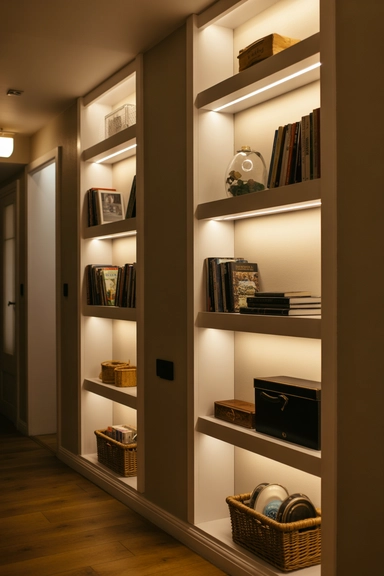
If renovation is possible, carve shallow niches between wall studs to create built-in storage without reducing hallway width. These recesses can hold books, decorative boxes, or narrow baskets for daily essentials.
Add subtle trim framing to integrate the niche architecturally. Keep shelves shallow to prevent double stacking. By embedding storage within wall depth rather than adding outward furniture, you maintain circulation clearance while gaining functional organization.
3. Floating Console Shelf with Concealed Drawer
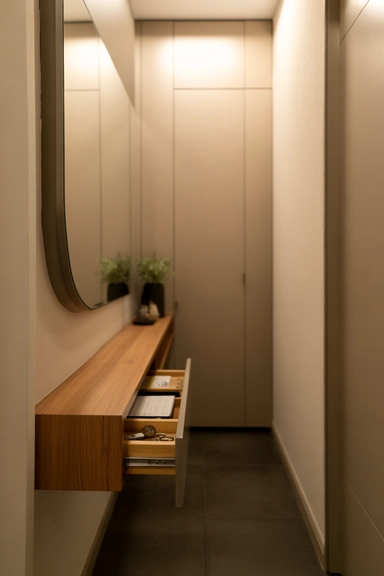
A floating console shelf anchored directly into studs provides surface space without heavy legs cluttering the floor. Beneath the surface, integrate a concealed drawer for mail, keys, or small accessories.
Keep the shelf depth minimal and mount it at a height that avoids hip-level collision. The open floor beneath enhances visual spaciousness while the hidden drawer absorbs clutter that would otherwise accumulate on top.
4. Floor-to-Ceiling Vertical Panel with Integrated Hooks and Cabinets
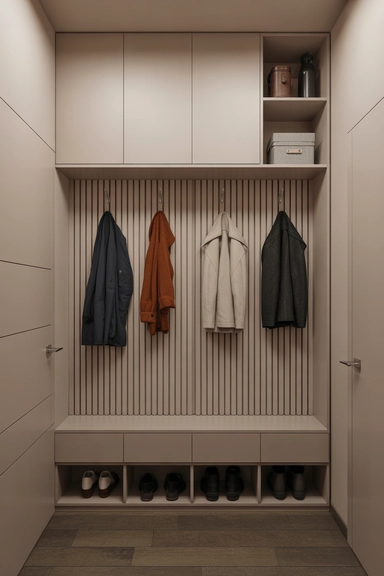
Transform one hallway wall into a unified storage panel that combines upper cabinets, mid-level hooks, and lower concealed compartments. The continuous vertical plane prevents the fragmented look that often makes narrow spaces feel tighter.
Use shallow cabinetry and evenly spaced hook placement to avoid coat overlap. Closed lower storage prevents shoes or bags from spilling into pathways. When executed cohesively, the hallway becomes a streamlined storage wall rather than a constricted corridor.
5. Slim Shoe Cabinets with Angled Compartments
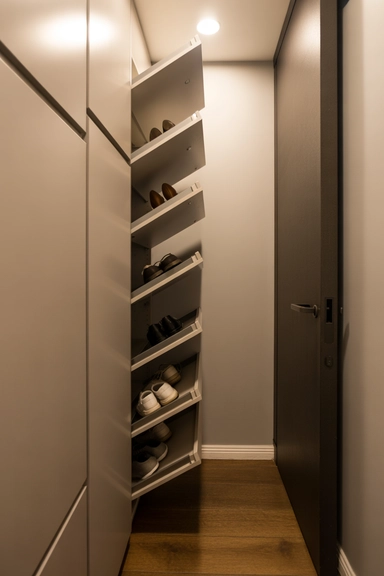
Traditional shoe racks often extend too far into narrow hallways. Instead, choose slim flip-down shoe cabinets with angled internal compartments. These designs store multiple pairs within a shallow profile, typically under 10 inches deep.
Install units flush against the wall and align them horizontally for visual continuity. Internally, adjust dividers to match footwear height. The angled configuration maximizes capacity without blocking passage.
6. Overhead Storage Cabinets Above Door Frames
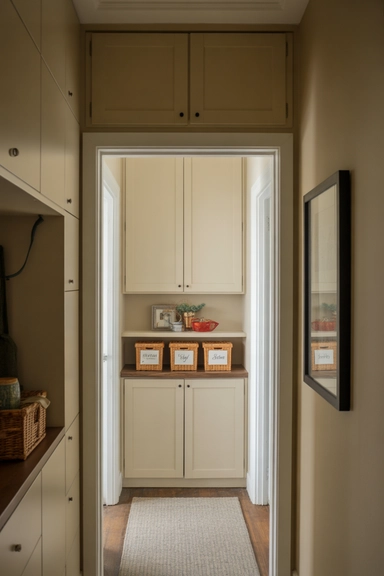
The space above door frames often goes unused. Install shallow overhead cabinets that run above hallway doorways for rarely used items such as seasonal decor or extra linens.
Keep cabinet depth controlled and finish them in the same color as the wall to minimize visual weight. Access may require a step stool, so reserve this storage for non-daily items. Elevating storage upward keeps pathways completely clear.
7. Continuous Picture Ledge with Hidden Back Compartment
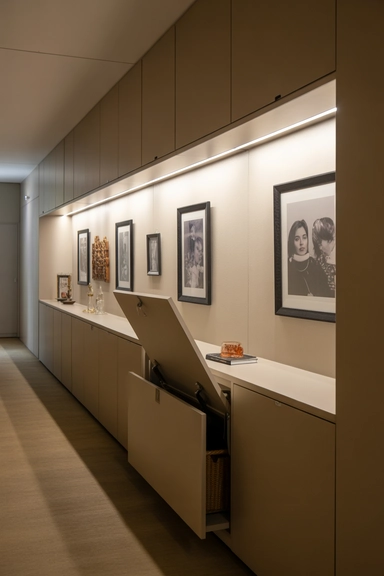
A continuous picture ledge running along one hallway wall provides display space without deep projection. Upgrade the concept by designing the ledge with a concealed back compartment accessed via a lift panel. From the outside, it reads as a slim decorative shelf. Inside, it stores mail, documents, or small household items.
Keep total depth under 6–7 inches to preserve walkway clearance. Use internal dividers to prevent sliding. By merging display and storage into a single shallow plane, you avoid adding bulky consoles while maintaining both function and visual interest in tight corridors.
8. Built-In Bench Niche Flush with Wall Depth
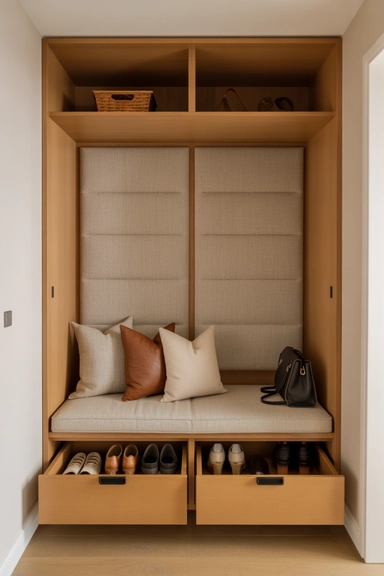
If the hallway widens slightly near an entry point, recess a built-in bench directly into wall depth rather than letting it project outward. Beneath the seat, incorporate full-extension drawers instead of open cubbies to prevent visible clutter.
Drawer interiors should be segmented for shoes, bags, or folded textiles. Use handle-less fronts to maintain a flush surface. Because the bench sits within the architectural envelope rather than in front of it, the corridor retains its full walking width while gaining functional storage.
9. Vertical Rail System with Adjustable Shallow Baskets
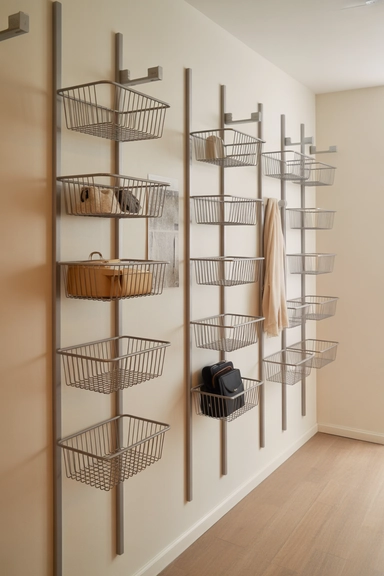
A wall-mounted vertical rail system allows you to attach shallow baskets and trays without committing to fixed shelving. The adjustability is critical in narrow spaces where flexibility prevents overcrowding.
Keep baskets shallow and evenly spaced to avoid protrusion. Use them for lightweight items such as mail, scarves, or small accessories. The modular structure prevents accumulation because capacity is visually limited, encouraging routine editing rather than unchecked buildup.
10. Mirror Cabinet with Concealed Storage Depth
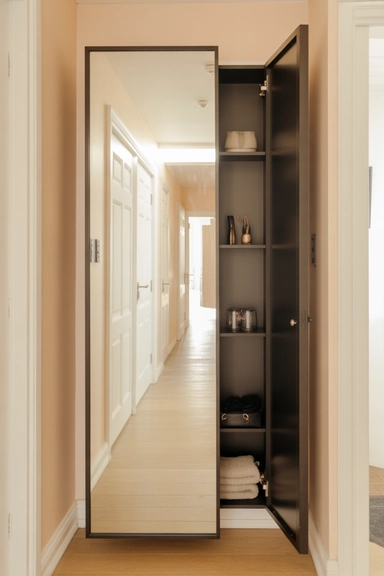
A full-length mirror mounted in the hallway can conceal a shallow cabinet behind it. This dual-purpose solution expands visual width while adding hidden storage. Behind the mirrored door, include slim shelves for small items that typically clutter entry surfaces.
Limit shelf depth to prevent stacking. Soft-close hinges preserve long-term alignment. The reflective surface visually doubles corridor width, while the concealed interior absorbs clutter without adding visible furniture.
11. Stair-Adjacent Pull-Out Storage Units
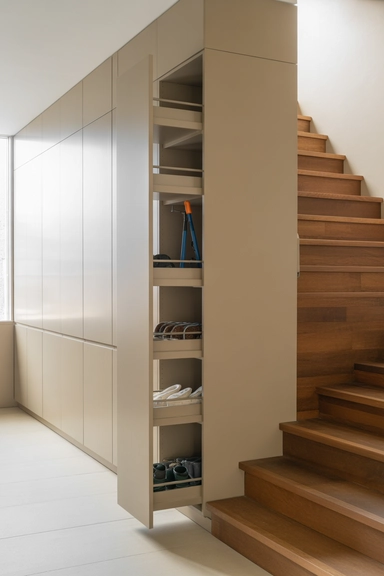
In hallways adjacent to staircases, install pull-out vertical units along the stair wall. These slim towers slide outward to reveal shelving for shoes, cleaning tools, or pantry overflow.
Ensure glide systems are heavy-duty and aligned precisely to prevent friction. Internally, divide shelving to avoid wasted vertical space. Because the unit retracts fully when closed, it maintains the hallway’s narrow profile while delivering significant concealed capacity.
12. Shallow Built-In Wardrobe with Sliding Doors
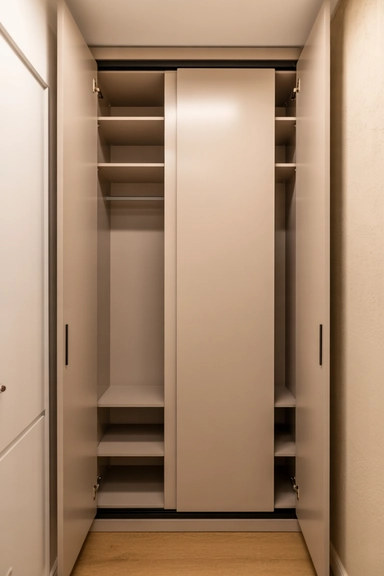
When storage demands are higher, a shallow wardrobe fitted with sliding doors prevents door swing from blocking circulation. Keep the depth minimal and configure the interior with narrow hanging rods or vertical shelving depending on use.
Use matte finishes to reduce visual bulk. Interior segmentation is essential to avoid chaotic stacking. Sliding mechanisms allow access without requiring additional clearance, making this one of the most practical hallway storage ideas for narrow spaces.
13. Floor-to-Ceiling Shallow Library Wall with Integrated Closed Base Cabinets
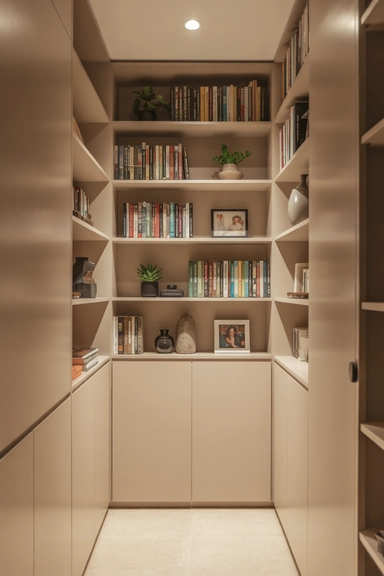
A narrow hallway can function as a high-impact storage gallery when one wall is converted into a floor-to-ceiling shallow library system. Keep the upper shelving depth minimal — just enough for books or decorative boxes — to avoid narrowing the walkway. At the base, incorporate fully closed cabinets to conceal heavier or less attractive items.
Segmentation is critical. Upper shelves should be evenly spaced to prevent awkward stacking, while base cabinets require internal dividers to keep contents upright and accessible. Paint the entire unit the same color as the wall to visually compress its presence. When vertical storage is unified into one architectural element, the hallway feels curated rather than crowded.
14. Recessed Panel Storage with Flush Push-Latch Doors
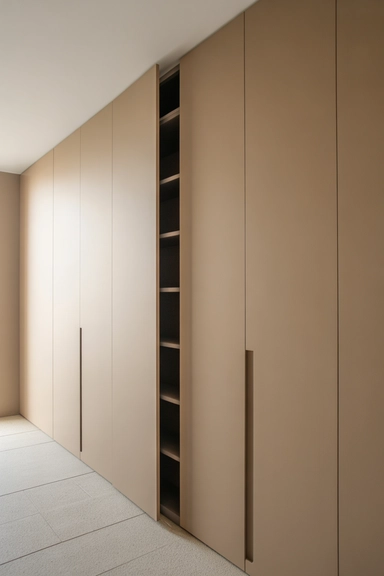
Instead of adding cabinetry onto the hallway wall, integrate storage behind flush push-latch panels that blend seamlessly into the drywall. These shallow compartments can house cleaning tools, folded linens, or small utility items without any visible hardware.
Keep the depth limited to preserve structural balance and avoid protrusion. Inside each compartment, use adjustable narrow shelves to maximize efficiency. Because the panels sit completely flush, the corridor retains a streamlined look. This method adds concealed function without visually interrupting the tight passage.
15. Slim Vertical Shoe Tower with Internal Partitioning
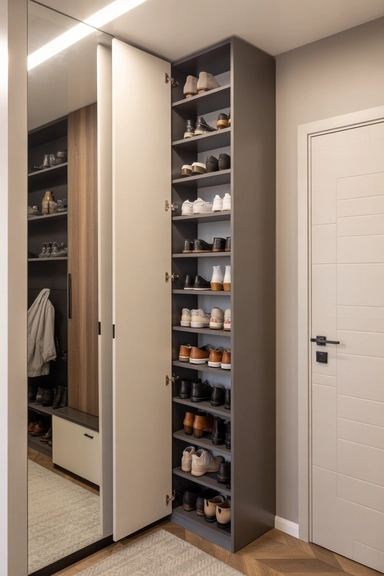
Traditional shoe storage often wastes vertical height. A slim vertical shoe tower installed flush against the wall can hold multiple tiers within a narrow footprint. Inside, use angled or staggered partitions so shoes don’t overlap and become inaccessible.
The cabinet should open with soft-close hinges and remain no deeper than necessary. Internal organization prevents one large cavity from becoming chaotic. When properly divided, a vertical tower can replace scattered floor racks entirely, restoring uninterrupted walking space.
16. Continuous Wall Rail with Enclosed Upper Compartments
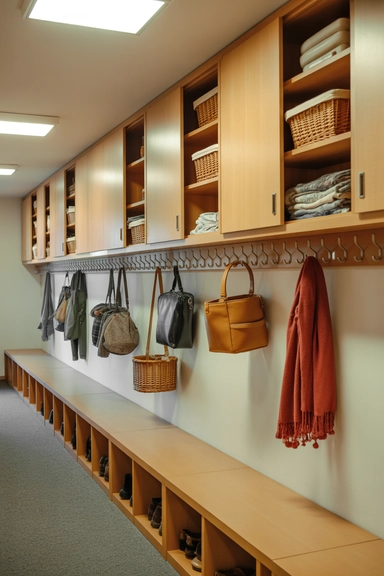
A continuous wall-mounted rail system can anchor shallow enclosed compartments above and structured hooks below. The upper compartments should remain closed to reduce visual clutter, while the lower rail holds lighter items such as bags or scarves.
Spacing must be deliberate to prevent items from projecting into the walkway. Use concealed mounting hardware for stability. The layered vertical approach separates concealed storage from quick-access hanging, creating structure in a corridor that would otherwise accumulate scattered belongings.
17. Built-In Sliding Drawer System Along Baseboard Level
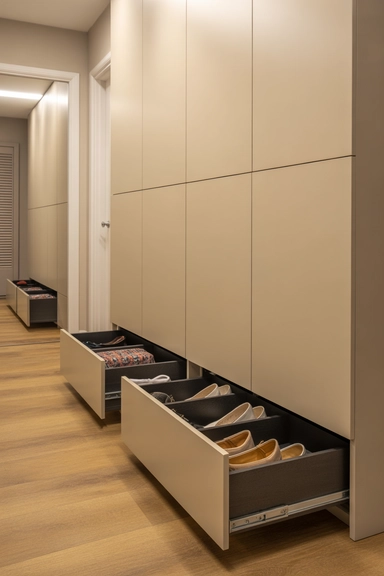
Baseboard-level sliding drawers are one of the most space-efficient hallway storage ideas for narrow spaces. Installed along the lower portion of the wall, these drawers remain shallow yet wide enough to hold shoes, tools, or folded textiles.
Because they sit at floor level, they don’t interfere with shoulder or hip clearance. Use durable glides and internal compartments to maintain order. Keeping storage low and flush allows the upper wall area to remain visually clean, preserving the feeling of openness.
18. Ceiling-Height Cabinet Run with Uniform Door Panels
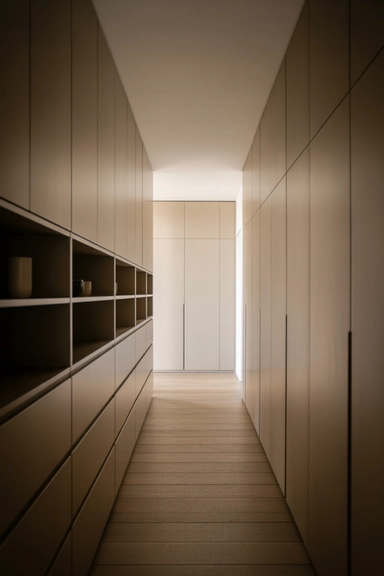
For maximum concealed capacity, install a continuous run of ceiling-height cabinets along one wall, keeping depth controlled. Uniform flat-panel doors prevent visual fragmentation and create a streamlined corridor effect.
Inside, divide shelves vertically rather than stacking loosely. Reserve higher shelves for less frequently used items to avoid constant ladder use. The uninterrupted cabinet run makes the hallway feel designed and intentional, while eliminating the need for additional furniture pieces that would encroach on walking space.
19. Shallow Arched Alcoves with Integrated Lower Cabinetry
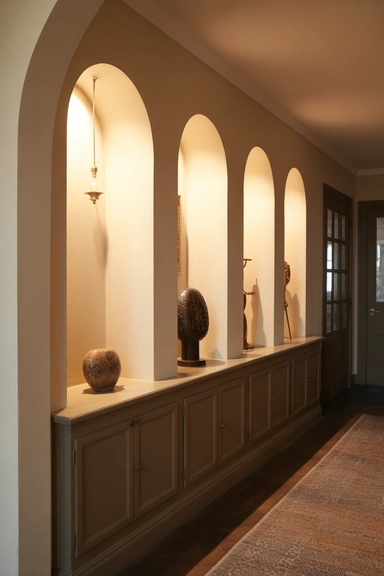
If the hallway allows for architectural detailing, incorporate shallow arched alcoves into the wall structure. The upper recessed portion can hold decorative objects or slim storage boxes, while the lower section integrates closed cabinetry flush with the wall line. This layered composition prevents protrusion while adding dimension.
Keep alcove depth consistent and restrained to avoid compromising walkway width. Install internal shelving within the lower cabinets to prevent wasted vertical stacking. When storage is embedded within architectural curves instead of added onto flat walls, the hallway feels designed rather than compressed.
20. Full-Length Sliding Panel System Concealing Modular Storage
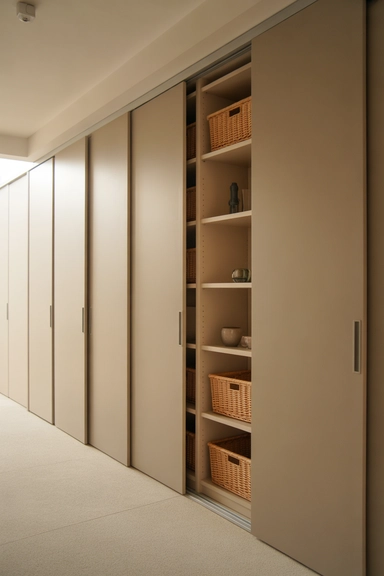
Instead of multiple cabinet doors, use a continuous sliding panel system that spans the hallway wall. Behind the panels, organize modular storage units — narrow shelves, pull-out baskets, and vertical compartments — that remain completely hidden when closed.
Sliding panels prevent door swing interference, which is critical in tight corridors. Internally, allocate fixed sections to avoid clutter migration between compartments. When panels align seamlessly, the hallway appears like a clean wall surface, disguising substantial storage capacity behind it.
21. Integrated Lighting Shelf with Concealed Upper Storage
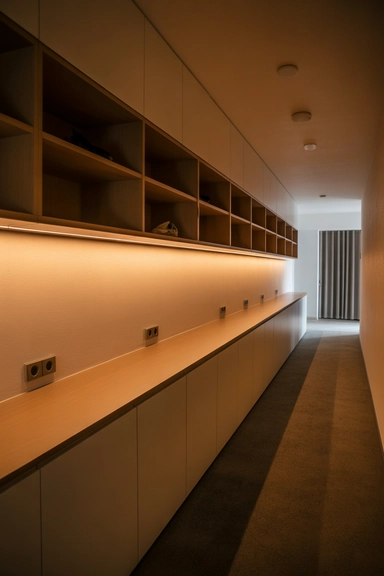
Install a slim continuous shelf at eye level that incorporates integrated LED lighting underneath and shallow concealed cabinets above. The illuminated lower edge visually widens the corridor, while the upper closed storage absorbs overflow such as seasonal decor or small household items.
Maintain strict depth control so upper cabinets do not feel imposing. Internally divide shelves to prevent disorganization. The combination of lighting and concealed storage creates depth without physical intrusion, enhancing spatial perception while maintaining function.
Conclusion
Hallway storage ideas for narrow spaces succeed when they respect circulation first and storage second. Depth control, vertical integration, and concealed compartments prevent pathways from shrinking. By embedding cabinets into wall planes, using sliding systems, and layering storage from floor to ceiling, you transform a transitional corridor into a disciplined, functional zone. When storage aligns with architecture instead of competing with it, even the narrowest hallway can feel structured, efficient, and visually expansive.