
Introduction
Food container clutter is one of the fastest ways to destroy kitchen order. Mismatched lids, unstable stacks, and overcrowded shelves turn cabinets into daily frustration zones. When containers don’t have defined storage logic, they spread across drawers, counters, and even dining tables. Effective organization is not about owning fewer containers — it is about creating systems that control visibility, access, and return paths. These kitchen food container organization ideas focus on structure, stacking stability, lid management, and cabinet zoning so every container stays easy to find, easy to store, and effortless to return after washing. For deeper cabinet flow systems that pair naturally with these solutions, 25 Kitchen Cabinet Storage Ideas That Maximize Every Shelf expands on full cabinet-level optimization.
1. Uniform Container Sets That Eliminate Mismatched Stacks
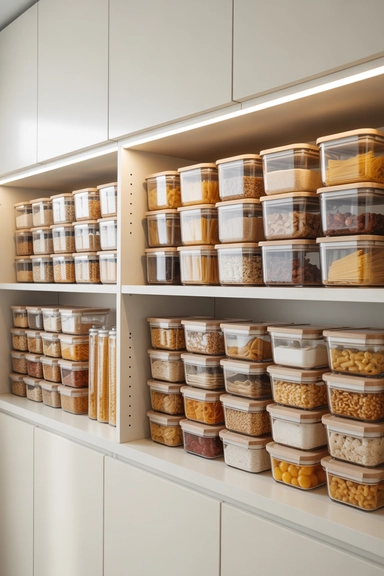
Cabinets feel chaotic when food containers vary in shape, height, and lid style. Transitioning to a uniform container set creates instant stability and predictable stacking. Identical footprints allow containers to sit flat without sliding, while consistent lid styles prevent the common problem of searching through random covers. Uniformity also improves visibility, making it easier to track leftovers and dry goods without opening every container.
Store daily-use containers on lower cabinet shelves for easy reach and backup sizes higher up. Remove broken or unmatched pieces immediately to prevent clutter rebuilding. Among kitchen food container organization ideas, uniform sets form the foundation of long-term container control.
2. Vertical Lid Dividers That Stop Lid Chaos
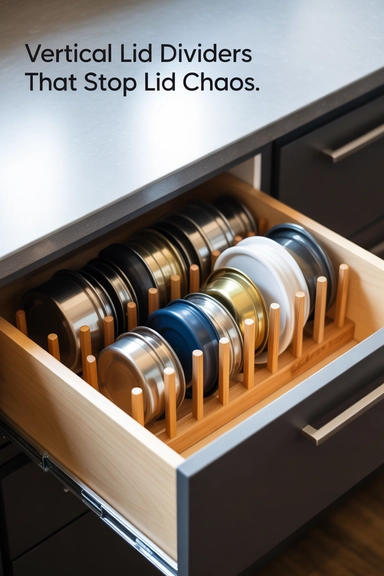
Lids create more disorder than containers themselves when stacked loosely in drawers. A vertical divider system built into a drawer or cabinet section keeps lids upright and separated by size. This prevents sliding piles, cracked plastic, and time wasted matching lids to bases.
Group lids by container size for quick pairing. Keep the divider near the main container storage zone to reinforce natural return habits. Among kitchen food container organization ideas, dedicated lid dividers remove the single biggest frustration point in food storage systems.
3. Deep Drawer Zones for Container Storage
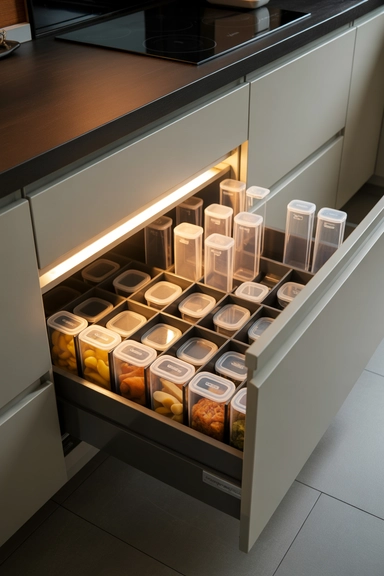
Storing containers in deep drawers instead of overhead cabinets improves access and prevents falling stacks. Drawers allow containers to sit upright rather than piled, keeping sizes visible at a glance. Pull-out access also stops containers from being forgotten at the back of shelves.
Use internal drawer bins to separate sizes and shapes. Keep frequently used meal-prep containers toward the front. Among kitchen food container organization ideas, drawer-based storage replaces cabinet chaos with smooth, reachable structure.
4. Stack Height Limits That Prevent Cabinet Collapse
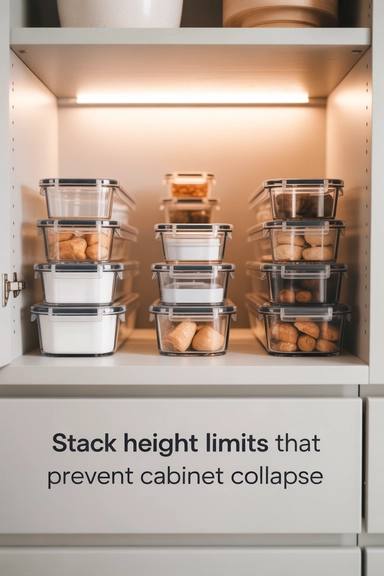
Containers become cluttered when stacks grow too tall and unstable. Limiting stack height to two or three containers maintains stability and prevents avalanches when doors open. Shorter stacks also improve airflow, reducing trapped moisture after washing.
Assign each shelf a stack-height rule and stick to it. Move overflow containers to a backup zone or donate extras. Among kitchen food container organization ideas, controlled stack height is a simple discipline that preserves cabinet order.
5. Clear Containers for Instant Visibility
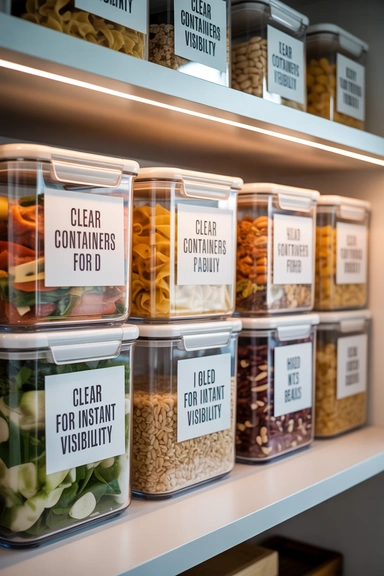
Opaque containers force you to open multiple pieces to find contents, encouraging overstocking and forgotten leftovers. Clear containers solve this by making contents visible from the outside. This improves food rotation, reduces waste, and prevents duplicate storage.
Keep clear containers front-facing so labels or contents are visible. Wipe containers regularly to maintain clarity. Among kitchen food container organization ideas, transparency supports both organization and food management.
6. Pull-Out Cabinet Shelves for Easy Container Access
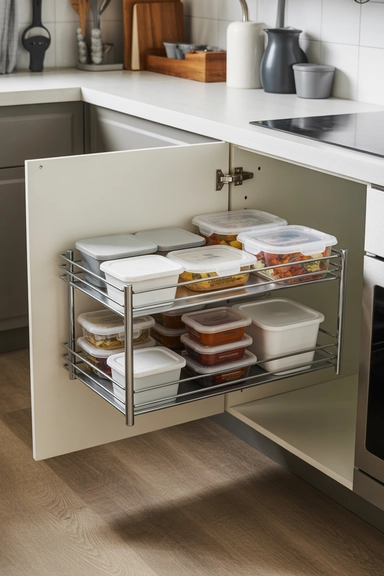
Cabinet shelves often hide food containers at the back, leading to forgotten stacks and unstable piles. Installing pull-out cabinet shelves transforms deep storage into fully accessible space where every container slides forward into view. This prevents overstacking, reduces the need to remove front items to reach the back, and keeps containers aligned instead of wedged into corners. Pull-out motion also encourages proper return habits because containers are easier to place neatly than to toss into fixed shelves.
Assign one pull-out shelf to base containers and another to lids or specialty sizes. Avoid mixing cookware or pantry items on the same shelf to maintain dedicated container zones. Among kitchen food container organization ideas, pull-out shelving eliminates hidden clutter and keeps cabinet interiors functional instead of frustrating.
7. Container Size Zoning That Prevents Mixed Piles
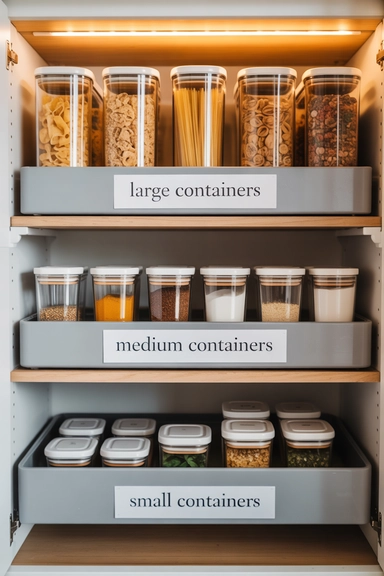
When large and small containers share the same shelf, stacks become unstable and lids mix unpredictably. Creating cabinet zones based on container size introduces immediate structure. Large meal-prep containers occupy one shelf, medium everyday containers sit on another, and small snack containers remain in a separate bin or drawer. This size-based logic prevents leaning towers and reduces time spent searching for the right piece.
Label shelf edges or use small dividers to reinforce zones visually. Reassess zones quarterly as container collections change. Among kitchen food container organization ideas, size zoning creates predictable order that stops random stacking before it starts.
8. Dedicated Drying Zone to Stop Wet-Stack Chaos
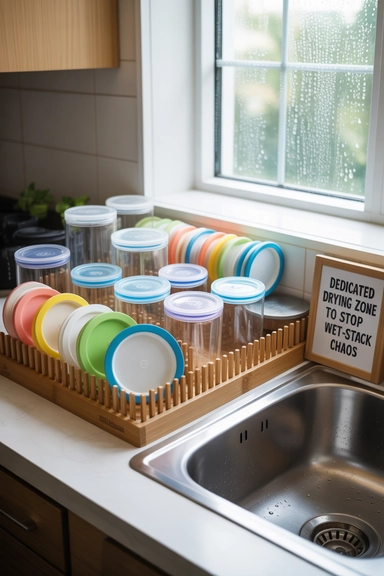
Freshly washed containers often return to cabinets still damp, causing stuck lids, trapped moisture, and unstable stacks. A dedicated drying zone—such as a counter tray or dish rack reserved for containers only—ensures everything dries fully before storage. This simple step prevents mildew smells, water pooling in stacked pieces, and slippery piles inside cabinets.
Position the drying zone near the sink for natural workflow. Return containers to cabinets only when fully dry to maintain hygiene and stack stability. Among kitchen food container organization ideas, drying zones protect long-term cabinet order and container lifespan.
9. Labeling Systems for Fast Container Pairing
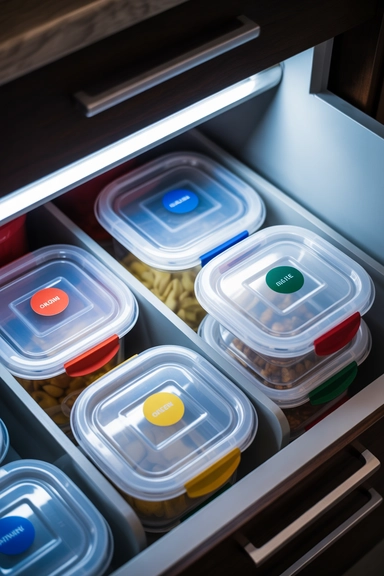
Even organized container cabinets lose efficiency when lids and bases are difficult to match quickly. A labeling system using small symbols, numbers, or color dots on container bases and matching lids speeds up pairing. This prevents random lid tossing and discourages leaving unmatched pieces on counters, which is a major source of visual clutter.
Use waterproof labels that withstand washing. Keep labeling consistent across the entire container set. Among kitchen food container organization ideas, pairing labels reinforce correct return behavior and maintain order without constant re-sorting.
10. Backup Container Overflow Bin
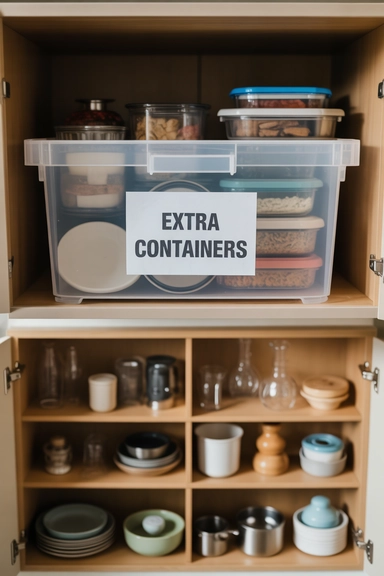
Every kitchen eventually accumulates extra containers from takeout, gifts, or mismatched sets. Without control, these extras invade main storage zones and destabilize organization. A dedicated overflow bin placed on a high shelf or pantry corner holds surplus containers separately from daily-use pieces. This keeps core storage functioning smoothly while still allowing temporary extras when needed.
Review the overflow bin monthly and remove unused items. Do not allow the bin to spill into primary container zones. Among kitchen food container organization ideas, overflow control prevents slow clutter buildup that undermines the entire system.
11. Shelf Risers That Multiply Container Storage
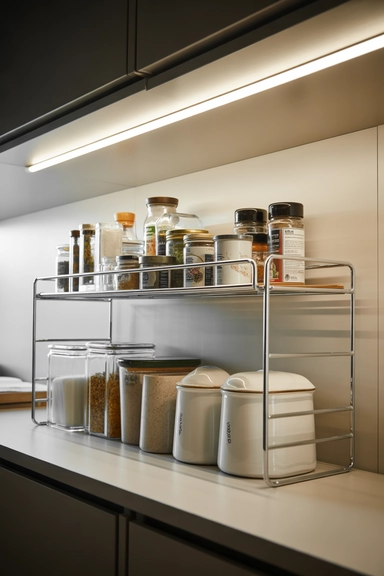
Cabinet shelves often waste vertical airspace above stacked containers. Shelf risers create a second level, allowing containers to store in two layers instead of one. This prevents tall, unstable stacks and keeps each container visible rather than hidden beneath others. When containers sit on tiered levels, it becomes easier to pull out exactly what you need without disturbing surrounding stacks.
Choose risers with non-slip surfaces to keep containers steady. Place frequently used containers on the lower tier and lighter or less-used ones above. Among kitchen food container organization ideas, shelf risers expand cabinet capacity while protecting order and preventing stack collapses.
12. Drawer-Based Lid Storage for Controlled Pairing
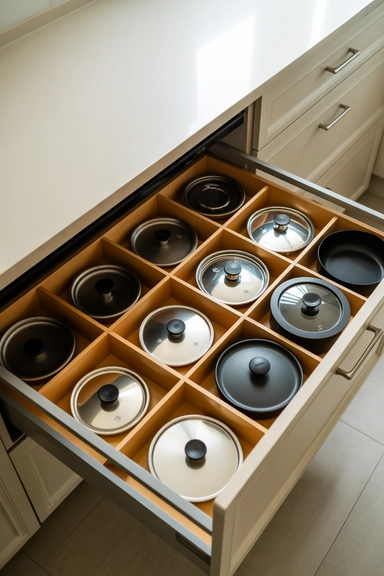
Even when container bases are organized, lids can reintroduce chaos if stored loosely. Converting a shallow drawer into dedicated lid storage keeps every lid visible and separated. Using adjustable dividers or narrow vertical slots prevents lids from sliding into messy piles and cracking under pressure.
Arrange lids by size from left to right so pairing becomes automatic. Keep this drawer close to the main container cabinet to support natural workflow. Among kitchen food container organization ideas, drawer-based lid systems eliminate the frustration of mismatched pieces and countertop leftovers.
13. Clear Bin Grouping for Themed Container Sets
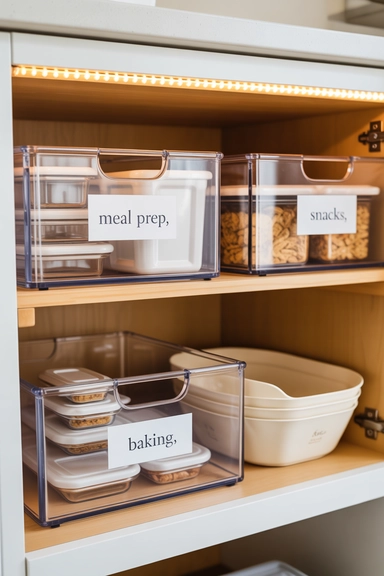
Many households use different containers for different purposes — meal prep, leftovers, baking, snacks, or dry storage. Mixing them creates confusion and inefficient stacking. Grouping containers into clear labeled bins by purpose creates immediate structure. Each bin becomes a mini-system that can be pulled out independently without disturbing others.
Use stackable clear bins to preserve visibility inside cabinets. Label fronts to reinforce return habits. Among kitchen food container organization ideas, themed bin grouping keeps container collections purposeful, contained, and easy to maintain.
14. Door-Mounted Lid Racks for Extra Space
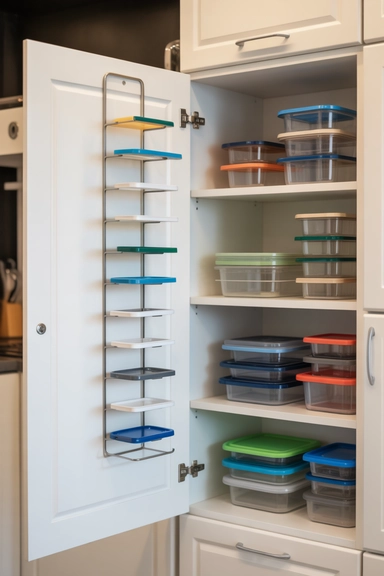
Cabinet doors often go unused while interior shelves overflow. Mounting a slim lid rack on the inside of cabinet doors adds vertical storage without consuming shelf space. Lids stay upright, separated, and instantly accessible when opening the cabinet. This removes pressure from drawers and prevents lid piles from overtaking container shelves.
Ensure racks are shallow enough to allow cabinet doors to close fully. Store only lightweight lids to avoid strain on hinges. Among kitchen food container organization ideas, door-mounted racks reclaim hidden space and keep lid systems stable.
15. Container Rotation Zones for Food Freshness
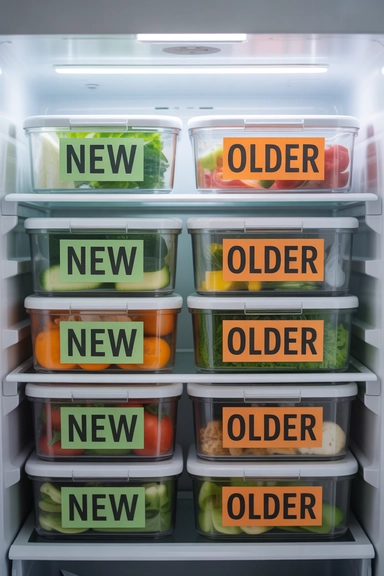
Containers often hide leftovers that get forgotten at the back of cabinets or refrigerators. Creating a simple rotation zone — a designated front section for newly filled containers and a back section for older ones — improves food tracking and reduces waste. This system works especially well when paired with clear containers for instant content visibility.
Train the habit of placing new containers in the front and shifting older ones back. Review stored food weekly to maintain flow. Among kitchen food container organization ideas, rotation zoning supports both tidy cabinets and smarter food management.
16. Dedicated Meal-Prep Container Station
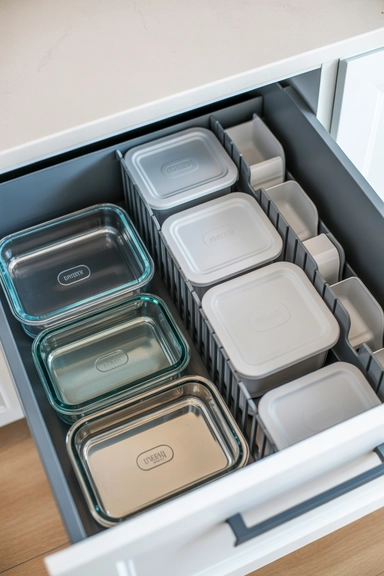
Meal-prep containers often dominate cabinet space when mixed with general-use storage. Creating a dedicated meal-prep station inside a cabinet or deep drawer keeps these containers grouped and ready for routine use. Bases stack in one section while lids stay directly beside them, preventing crossover with everyday leftovers storage. This separation keeps high-frequency containers easy to grab without disrupting the rest of the system.
Place the station at waist height for quick weekday access. Keep only weekly-use meal-prep containers in this zone and move extras to backup storage. Among kitchen food container organization ideas, dedicated prep stations streamline cooking routines and stop container clutter from spreading across multiple cabinets.
17. Adjustable Dividers That Adapt to Changing Collections
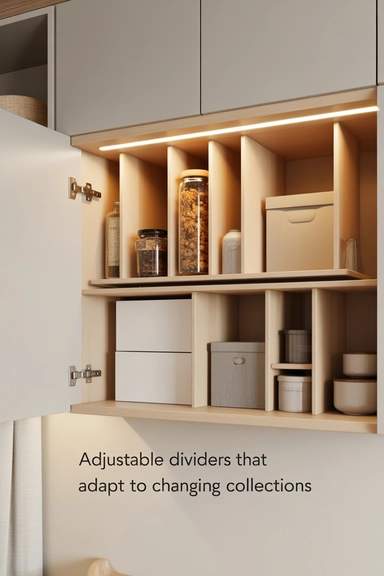
Food container collections change over time as new sizes enter the kitchen. Fixed storage systems often fail because they can’t adapt. Adjustable dividers inside drawers or cabinets allow you to reshape compartments as your container set evolves. This prevents awkward gaps that attract random items and keeps stacks properly aligned.
Reconfigure dividers every few months to match current container shapes. Avoid letting one oversized container disrupt an entire shelf’s order. Among kitchen food container organization ideas, adjustable systems maintain long-term organization without requiring complete storage overhauls.
18. Non-Slip Shelf Liners for Stack Stability
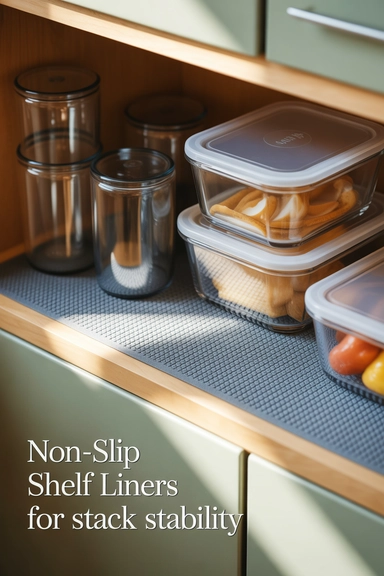
Smooth cabinet shelves allow container stacks to slide, especially when pulling items from the front. Non-slip shelf liners add friction that keeps stacks stable and prevents containers from drifting into each other. This simple layer reduces collapses, scratched plastic, and the frustration of reorganizing fallen piles.
Choose liners that are moisture-resistant and easy to wipe clean. Cut them precisely to shelf size for a tidy finish. Among kitchen food container organization ideas, non-slip liners quietly protect cabinet order and extend container lifespan.
19. High-Shelf Storage for Rarely Used Containers
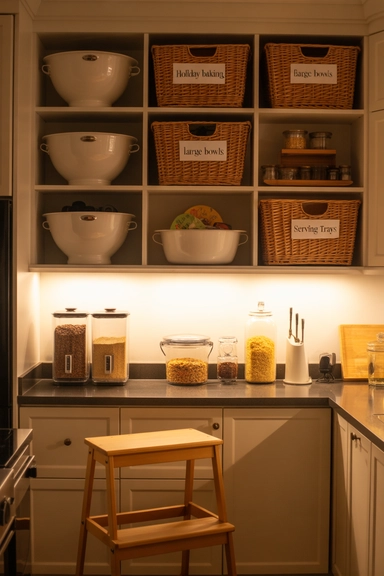
Specialty containers for holiday baking, party platters, or bulk cooking don’t need prime cabinet space. Storing rarely used containers on higher shelves keeps everyday zones free from bulky interruptions. This zoning prevents large containers from forcing awkward stacking in main storage areas.
Use labeled bins on high shelves so you can retrieve items without searching. Keep lighter containers above and heavier ones lower for safety. Among kitchen food container organization ideas, high-shelf zoning preserves prime cabinet space for daily-use pieces.
20. Open-Front Container Bins for Quick Grab Access
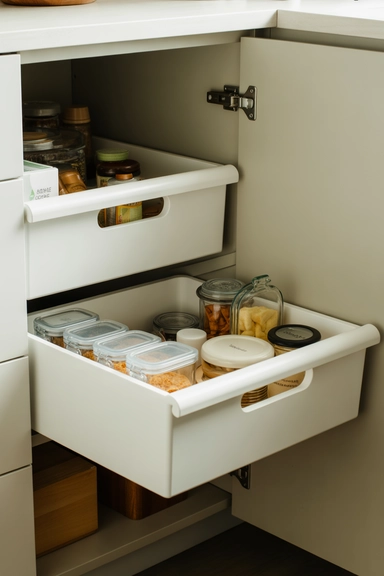
Containers stored in deep cabinets often require pulling out stacks to reach what’s needed. Open-front bins act as pull-out drawers without installation, letting you slide entire groups forward at once. This keeps containers contained yet instantly accessible, preventing disruptive rummaging that leads to messy re-stacking.
Group bins by container type or size to keep structure consistent. Choose bins with handles for easy pull-out. Among kitchen food container organization ideas, open-front bins add flexibility and prevent cabinets from reverting to cluttered catch-alls.
21. Weekly Container Reset Routine
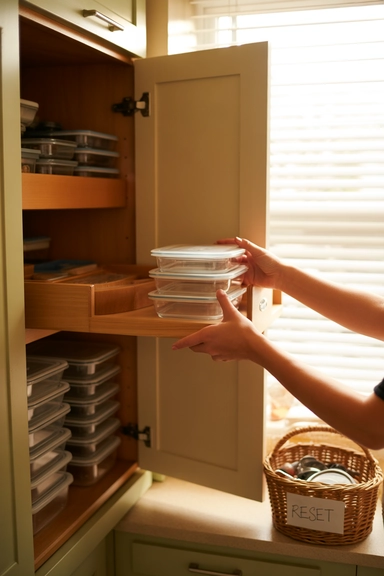
Even the best systems drift when containers are returned carelessly after busy days. A weekly reset routine—five minutes to realign stacks, return lids to dividers, and remove unused pieces—prevents slow disorder from rebuilding. This habit keeps cabinets functioning without requiring major reorganization sessions.
Pair resets with trash day or fridge clean-out for consistency. Remove containers that have lost lids or become stained. Among kitchen food container organization ideas, small weekly maintenance protects long-term organization and keeps cabinet systems performing reliably.
22. Container Declutter Rules That Prevent Reaccumulation
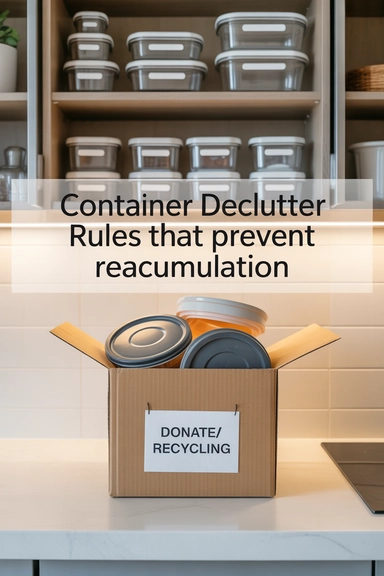
Container clutter often returns when new takeout boxes or random storage pieces enter the kitchen unchecked. Establishing clear declutter rules—such as “one new container in means one old container out”—keeps collections from growing beyond storage capacity. This simple policy prevents cabinet overflow before it begins.
Keep a donation or recycling bag nearby for quick removal. Avoid keeping single lids or unmatched bases “just in case.” Among kitchen food container organization ideas, declutter rules lock in the effectiveness of every other organization system.
Conclusion
Container organization succeeds when visibility, access, and return habits work together. These kitchen food container organization ideas build stable stacking, controlled zoning, and adaptable systems that prevent lid chaos and cabinet collapse. When containers have defined homes and maintenance habits support them, cabinets stay tidy, food stays visible, and kitchen routines become smoother every single day.