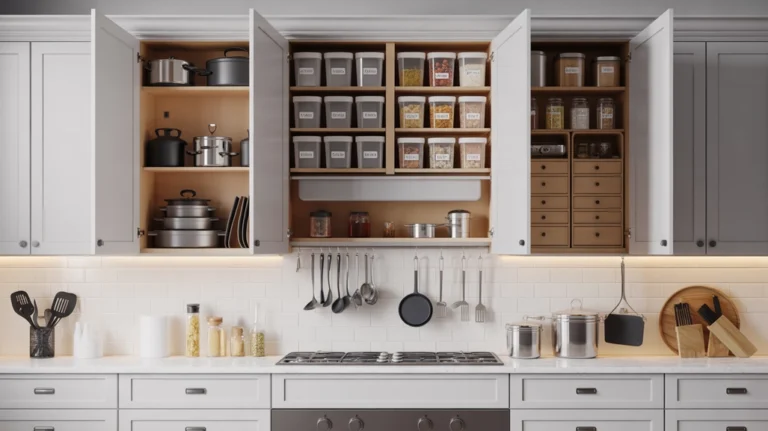

A small pantry doesn’t fail because it lacks space. It fails when layout, visibility, and zones aren’t working together. The best small pantry design ideas focus on vertical layering, clear access, and intentional placement so food storage feels easy instead of cramped. Whether you’re working with a narrow pantry closet, a shallow cabinet wall, or a tiny walk-in, the goal is to create flow and visibility. Smart shelving heights, drawer placement, and category zones turn even the smallest pantry into something that feels calm and usable. When storage is structured well, tight kitchens feel lighter, faster to cook in, and far easier to maintain long term — especially when paired with 21 Pantry Cabinet Ideas That Make Kitchen Storage Work Harder for a more complete kitchen storage system.
1. Vertical Shelf Layering That Uses Every Inch of Height
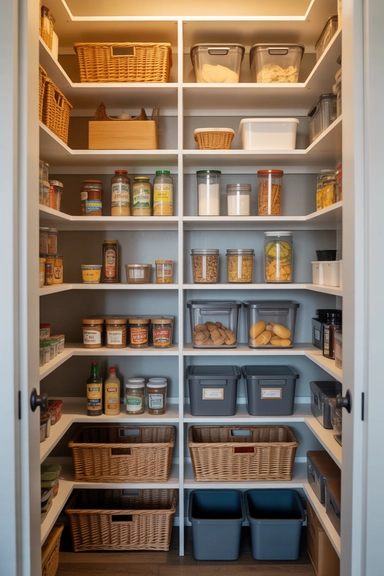
A small pantry should always build upward before expanding outward. Vertical shelf layering allows multiple storage levels without crowding the floor. Start with deeper shelves at eye level for everyday ingredients, then move bulk items higher and heavier storage lower. This layered approach prevents daily items from getting buried while still allowing the pantry to hold more overall.
Adjustable shelves make this system even more effective because food packaging changes constantly. Tall cereal boxes, short jars, and snack containers all need different spacing. When shelves can move, the pantry evolves with your grocery habits instead of forcing everything into one fixed layout. Vertical layering is one of the most reliable small pantry design ideas because it creates usable storage without increasing footprint, making it ideal for apartments and compact kitchens.
2. Narrow Pantry Walls That Become Full Storage Zones
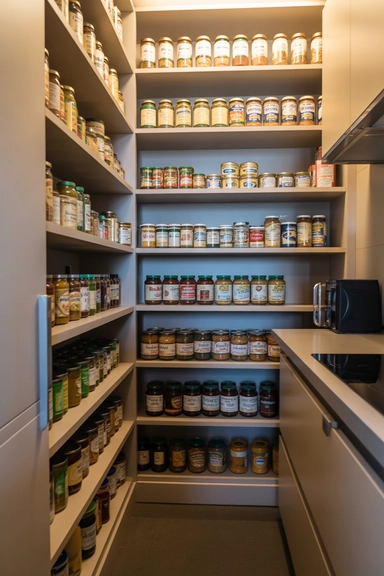
Even a slim wall can become a highly functional pantry when depth is managed correctly. Narrow pantry design ideas work best with shallow shelving that keeps items visible instead of stacked. Shelves between 10 and 14 inches deep allow jars, cans, and containers to sit in a single row where everything can be seen instantly. This prevents forgotten food and reduces clutter buildup.
When possible, extend narrow shelving from floor to ceiling. Lower shelves can hold baskets for heavier goods while upper shelves store bulk items or overflow groceries. Adding consistent containers keeps the look calm and structured. Narrow pantry walls are often overlooked, but when designed intentionally, they can hold more than a traditional deep cabinet without feeling cramped or difficult to maintain.
3. Pantry Closet Layouts That Prioritize Daily Reach
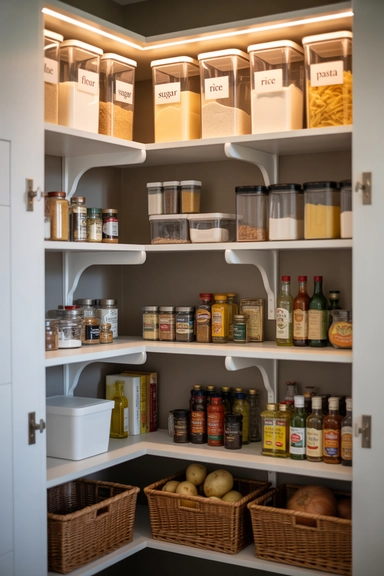
A pantry closet works best when it follows the same logic as a workspace. Frequently used items should sit between waist and eye level, while rarely used ingredients move higher or lower. This keeps everyday cooking fast and prevents constant rearranging. Grouping similar foods together also reduces time spent searching for ingredients.
Use clear bins or baskets to define each category so items always return to the same zone. Snack storage, baking supplies, canned goods, and breakfast items should each have a consistent shelf. Small pantry layout ideas that focus on reach and visibility make tight spaces feel more functional because everything supports daily cooking habits instead of fighting against them.
4. Small Walk-In Pantry Designs That Stay Compact but Functional
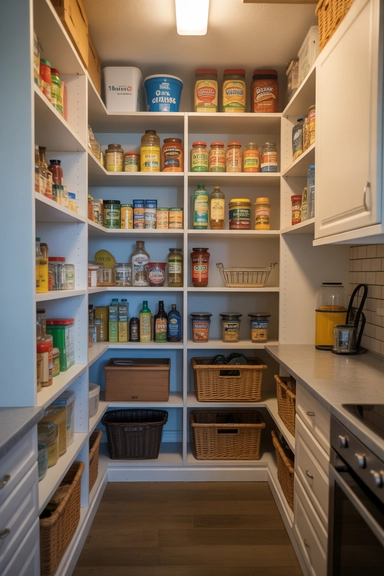
Even a tiny walk-in pantry can feel spacious when shelving is placed correctly. Wrapping shelves along two or three walls creates storage without blocking movement. Keep one side slightly shallower to allow walking space while still holding jars and containers. Lighting also plays a big role in making small walk-ins feel usable instead of cramped.
Floor space should remain as clear as possible. Use upper shelves and wall space first before adding bins or crates at the bottom. When everything has a dedicated zone, the pantry becomes easy to reset after grocery trips. Small walk-in pantry ideas work best when movement and visibility are prioritized over cramming in extra storage.
5. Drawer-Based Pantry Storage for Deep Shelf Control
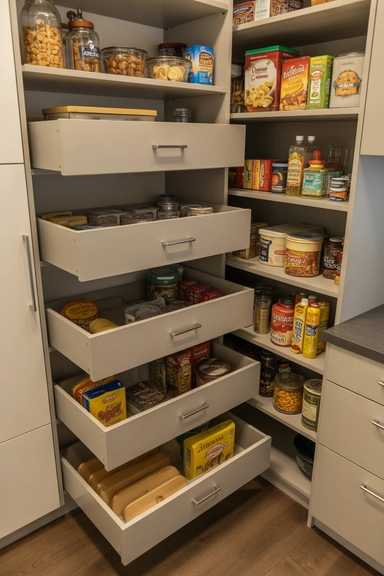
Deep shelves often cause items to disappear into the back, making organization difficult to maintain. Converting lower pantry sections into drawers solves this problem by bringing everything forward at once. Drawers are ideal for snacks, baking tools, and packaged foods that shift easily on open shelves. Shallow drawers create better visibility than one deep bin.
Use internal dividers so items stay separated when drawers open and close. This keeps categories intact and prevents clutter from spreading. Small pantry design ideas that include drawers reduce maintenance because everything stays visible and accessible, making it easier to keep the space organized over time.
6. Corner Pantry Shelving That Prevents Dead Space
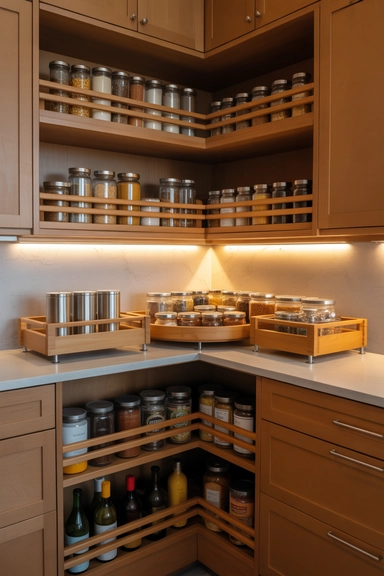
Corner pantry areas often become the most underused zones because standard shelves make items hard to reach. The solution is angled or wraparound shelving that keeps everything visible from the front. When corner shelves are shallow and slightly curved, jars and containers stay accessible instead of disappearing into the back. This makes daily cooking faster and prevents food waste from forgotten items.
For tighter layouts, use rotating trays or corner pull-out systems on lower levels where visibility matters most. Upper shelves can hold bulk goods or rarely used items. Corner pantry design ideas work best when each shelf maintains clear sightlines and easy reach. Turning awkward corners into intentional storage zones helps a small pantry feel complete and fully functional.
7. Behind-the-Door Storage That Expands Capacity Instantly
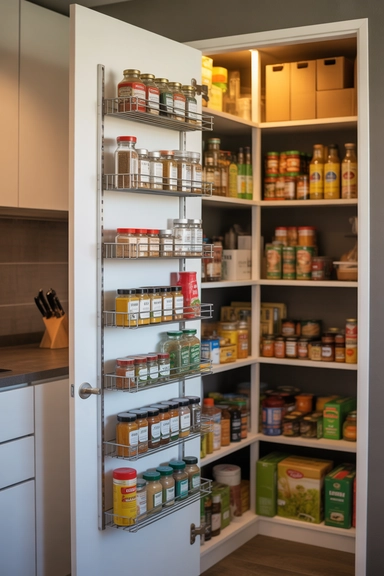
The back of a pantry door offers vertical storage that doesn’t interfere with shelves or walking space. Slim racks or shallow bins mounted on the door can hold spices, sauces, snack packets, or baking supplies. This keeps frequently used items visible while freeing shelf space for larger containers and dry goods. When the door opens, everything remains accessible and contained.
To prevent overcrowding, limit door storage to lightweight items that are used often. Clear bins or labeled racks help maintain order long term. Small pantry design ideas that use door space effectively can increase capacity without expanding the pantry footprint, making them ideal for apartments and compact kitchens.
8. Pantry Zones That Keep Food Categories Predictable
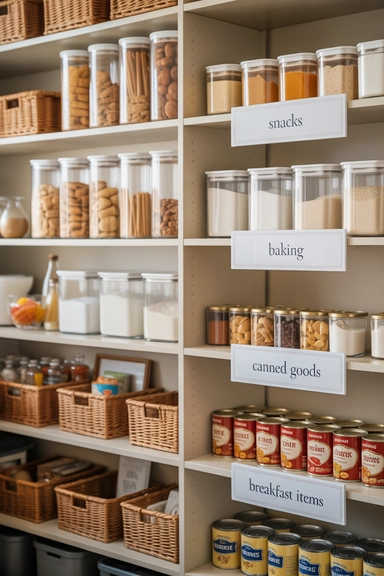
Creating dedicated zones inside a small pantry makes daily cooking faster and reduces clutter buildup. Assign one shelf for snacks, another for canned goods, and a separate area for baking supplies or breakfast items. When each category has a consistent home, groceries can be unpacked quickly and items are easier to find during busy routines.
Use baskets or clear containers to reinforce each zone visually. This keeps items from spreading across shelves and makes it easier for everyone in the household to maintain the system. Small pantry layout ideas that rely on consistent zones help the pantry stay organized even when space is limited and usage is frequent.
9. Open Shelving Pantry Walls for Easy Visibility
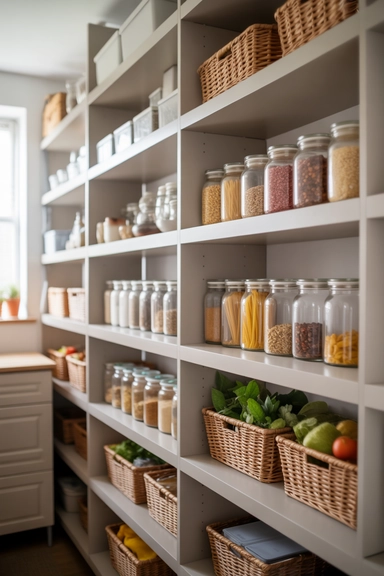
Open shelving can work surprisingly well in small pantry designs when spacing and organization are handled carefully. Shallow shelves with uniform containers keep everything visible while maintaining a calm look. This prevents the overcrowded feel that deep cabinets sometimes create. When items are easy to see, they’re also easier to maintain.
To keep open shelves from looking cluttered, use matching jars or bins and limit the number of categories per shelf. Group similar items together and leave a small amount of breathing room between sections. Open pantry shelving works best when visual clarity and accessibility are treated as equally important.
10. Built-In Pantry Nooks That Use Unused Kitchen Areas
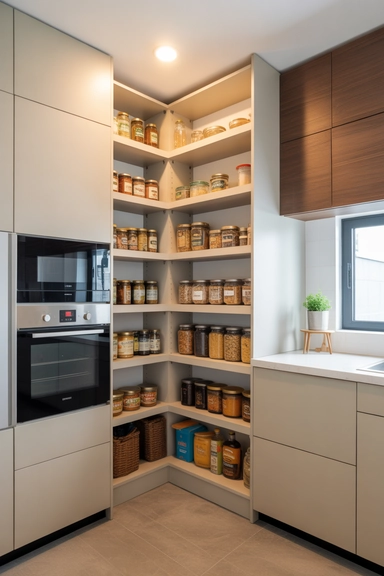
Unused wall sections or gaps near appliances can often become compact pantry nooks. Installing a shallow built-in shelving system in these spaces creates extra storage without affecting kitchen flow. This approach works well in apartments or small homes where adding a full pantry isn’t possible. Even a narrow vertical section can hold a surprising amount when organized well.
Keep frequently used items at eye level and store bulk goods higher or lower. Consistent containers help maintain visual calm and prevent clutter. Small pantry design ideas that use leftover wall space effectively can turn overlooked areas into highly functional storage zones.
11. Shallow Depth Pantry Shelves That Keep Everything Visible
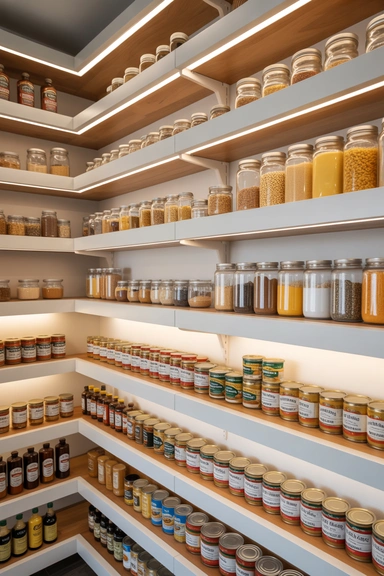
Deep shelves may seem helpful, but in a small pantry they often create hidden clutter zones where items get pushed back and forgotten. Shallow depth shelving keeps everything in a single visible row so ingredients stay easy to find and rotate. Shelves around 10–14 inches deep allow jars, cans, and containers to sit neatly without stacking. This improves visibility and makes grocery restocking much faster.
Use tiered risers or step organizers for canned goods to create layered visibility without adding depth. This prevents items from hiding behind each other and helps maintain order. Small pantry design ideas that prioritize visibility over capacity keep the space manageable and prevent clutter from building up over time.
12. Sliding Door Pantry Designs for Tight Kitchens
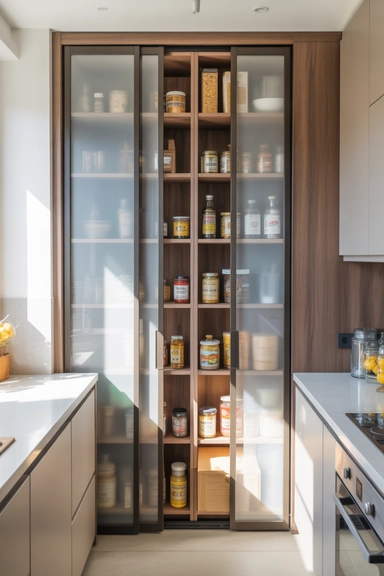
Swinging pantry doors can block walkways in compact kitchens. Sliding doors solve that problem by keeping the footprint clear while still allowing full access to shelves. This makes it easier to place a pantry in narrow layouts or along busy kitchen paths. Sliding doors also create a cleaner visual line that makes the kitchen feel more open.
Inside the pantry, pair sliding doors with pull-out shelves or drawers for full accessibility. This ensures nothing gets trapped in the back. Small pantry design ideas that use sliding doors improve both layout and functionality, especially in apartments or galley kitchens where every inch of clearance matters.
13. Clear Container Systems That Simplify Restocking
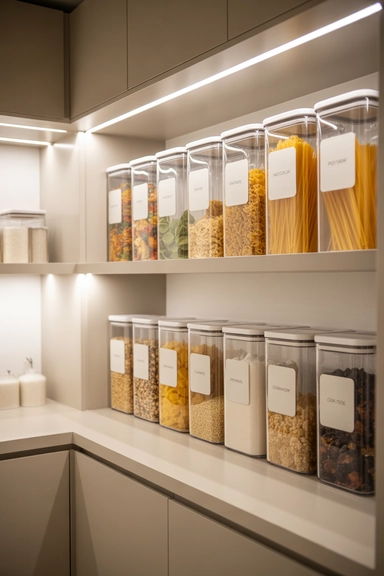
Clear containers create instant visibility and consistency inside a small pantry. Dry goods like pasta, rice, cereal, and snacks become easier to monitor when stored in uniform jars or bins. This prevents overbuying and keeps shelves looking tidy. Matching containers also reduce visual clutter created by packaging.
Labeling each container ensures items return to the right place after use. This keeps the pantry predictable and easier to maintain. Small pantry design ideas that focus on visibility and consistency make daily cooking smoother because ingredients are always easy to locate and restock.
14. Small Pantry Decor That Keeps the Space Inviting
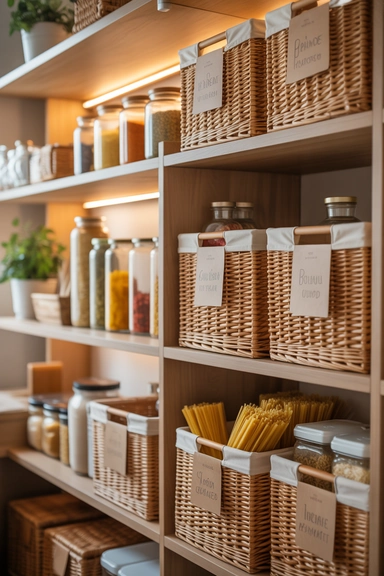
Even a functional pantry benefits from thoughtful decor. Neutral baskets, subtle labels, and warm lighting can make a small pantry feel calm instead of purely utilitarian. When the space looks intentional, it’s easier to maintain because clutter feels more noticeable. A clean aesthetic encourages consistent organization.
Stick to a simple palette so the pantry doesn’t feel busy. Wood tones, soft neutrals, or matching containers create a cohesive look. Small pantry decor ideas should support function first, but when visual calm is added, the pantry becomes a space that’s easier to use and maintain daily.
15. Narrow Pull-Out Pantry Units for Slim Spaces
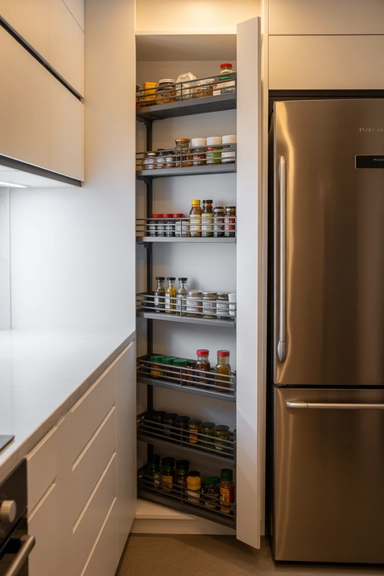
Slim pull-out pantry units can transform tight gaps between cabinets or appliances into valuable storage. These tall vertical drawers are perfect for spices, oils, and small packaged foods that need to stay visible. Pull-out motion allows full access without digging into deep shelves. Even a few inches of width can hold a surprising amount when designed well.
Keep categories grouped and avoid overcrowding so items stay easy to grab. Consistent containers or labels help maintain structure. Narrow pull-out pantry design ideas are ideal for small kitchens where traditional cabinets won’t fit but extra storage is still needed.
16. Small Walk-In Pantry Layouts That Stay Open and Usable
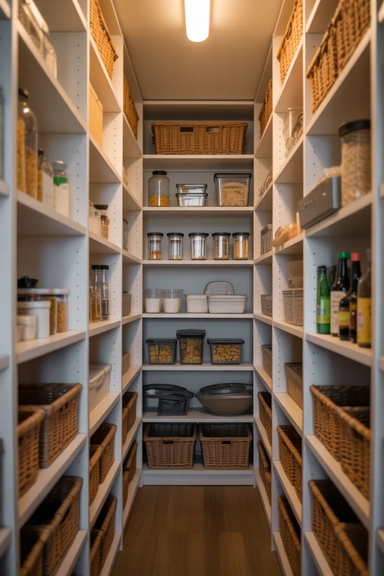
A small walk-in pantry can quickly feel cramped if shelves are placed too deep or too close together. The goal is to keep a clear walking path while still maximizing storage along the walls. Wrap shelving on two sides rather than all three if space is extremely tight. This keeps movement comfortable while still allowing plenty of vertical storage for jars, baskets, and dry goods.
Place frequently used ingredients at eye level and keep bulk storage higher or lower. Consistent containers help maintain visual order, which makes the space feel larger than it is. Small walk-in pantry design ideas work best when movement, visibility, and lighting are balanced so the space feels functional rather than crowded.
17. Pantry Drawers That Replace Lower Shelves
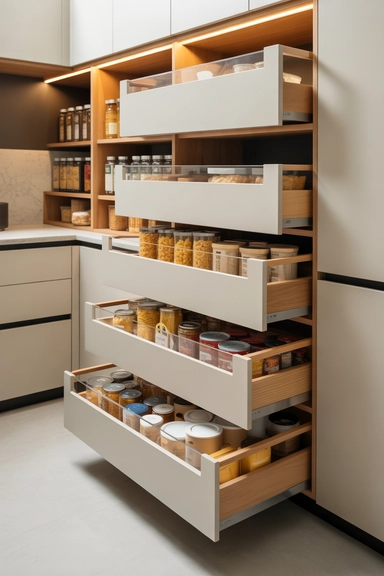
Lower pantry shelves are often the hardest to maintain because items get pushed to the back. Replacing those shelves with deep drawers solves the visibility problem immediately. Pull-out drawers allow you to see everything at once and keep heavier items like flour, rice, or snacks easy to access. This layout also prevents bending and digging through stacks.
Use internal dividers to separate categories and keep items from shifting. Shallow top drawers can hold smaller packages while deeper drawers manage bulk goods. Small pantry design ideas that prioritize drawers in lower zones create a system that’s easier to maintain and far more efficient in daily use.
18. Hidden Pantry Designs That Blend Into Cabinet Walls
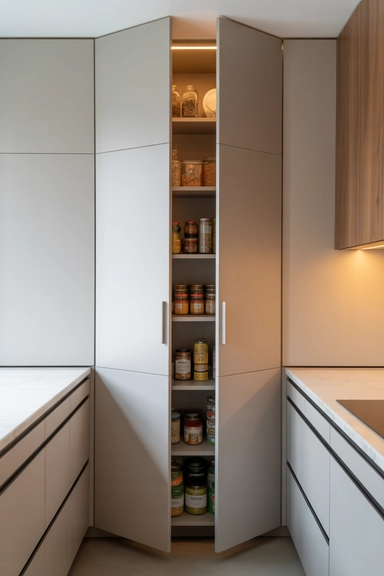
A hidden pantry keeps the kitchen looking clean and uncluttered while still providing serious storage. This design uses cabinet-style doors that blend seamlessly with surrounding cabinetry. When closed, the pantry disappears into the wall, creating a streamlined look that works well in modern kitchens. Inside, shelves and drawers provide the structure needed for organization.
Keep the interior bright with lighting so items stay visible even though the exterior is concealed. Hidden pantry design ideas are especially useful in small kitchens where visual clutter can make the space feel tighter. A concealed pantry maintains a calm look while still maximizing storage capacity.
19. Pantry Closet Designs for Apartment Kitchens
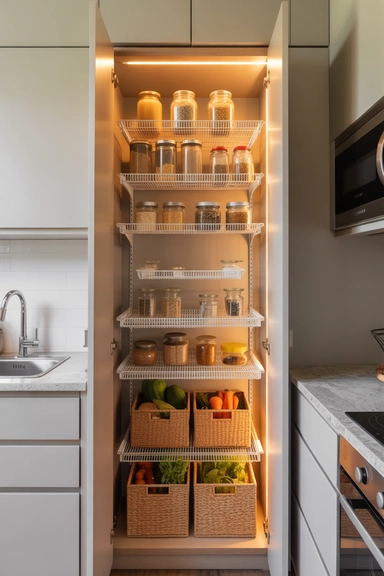
Apartment kitchens often lack dedicated pantry space, so a pantry closet becomes essential. Converting a small closet into a pantry with adjustable shelving and baskets creates a functional storage zone without renovation. Keep shelves shallow enough for visibility and use clear containers to maintain order. This prevents items from getting lost in the back.
Position frequently used foods in the middle zone and bulk storage higher up. Labeling each shelf helps maintain structure when space is shared. Small pantry closet design ideas are perfect for renters because they rely on removable systems rather than permanent installations.
20. Budget-Friendly Small Pantry Makeovers
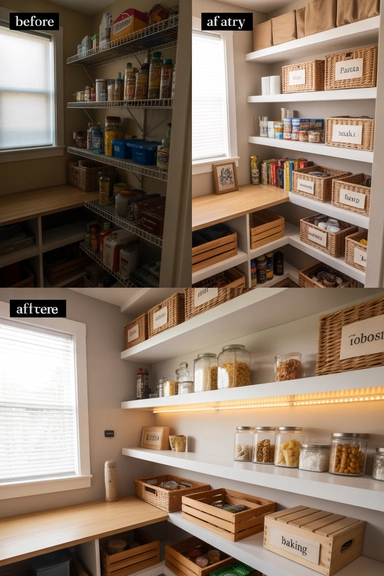
A small pantry doesn’t require a full renovation to become functional. Simple changes like shelf risers, matching containers, and labeled baskets can dramatically improve organization. Repainting shelves or adding peel-and-stick lighting also refreshes the space without major cost. These small upgrades create structure while keeping the layout flexible.
Focus on visibility and accessibility first. When items are easy to see and reach, the pantry stays organized longer. Budget small pantry design ideas are often the most sustainable because they rely on simple systems that are easy to maintain and adjust over time.
21. Vertical Pantry Storage That Uses Door and Wall Space
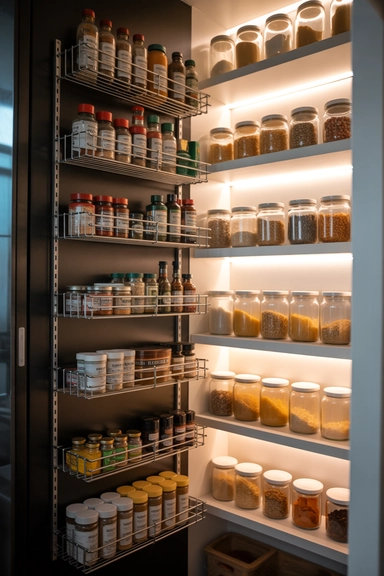
Vertical surfaces inside a pantry offer valuable storage potential. Adding racks to doors or installing narrow wall shelves creates extra space for spices, sauces, and small containers. This keeps frequently used items accessible while freeing up main shelves for larger goods. Vertical storage is especially helpful in tight pantry closets.
To keep the space from feeling cluttered, use uniform containers and avoid overcrowding. Each vertical section should have a clear purpose. Small pantry design ideas that use walls and doors effectively can dramatically increase capacity without expanding the pantry footprint.
22. Pantry Lighting That Improves Visibility and Flow
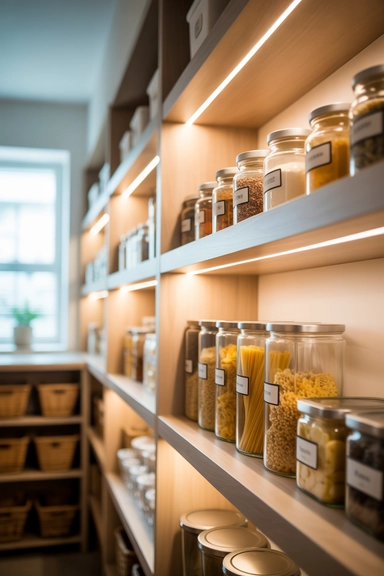
Lighting is often overlooked in small pantry design, but it plays a major role in usability. Dim shelves make it harder to find items and encourage clutter. Installing LED strip lights or motion lights ensures everything stays visible. Bright, even lighting makes the pantry feel larger and more organized.
Place lights under shelves or along door frames for consistent illumination. When visibility improves, maintaining order becomes easier. Small pantry design ideas that include proper lighting help the space feel more functional and easier to navigate daily.
23. Pantry Layouts That Support Daily Cooking Flow
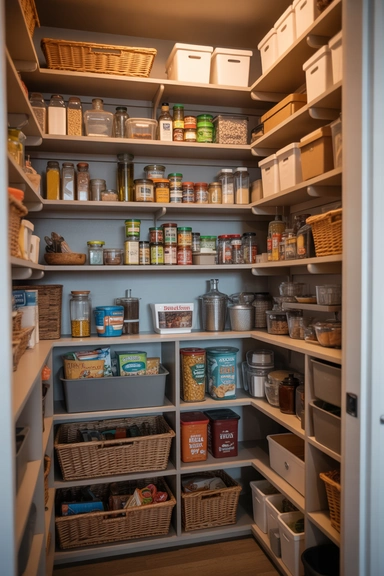
The most effective pantry design is one that supports how you cook every day. Frequently used ingredients should be within easy reach, while rarely used items stay out of the way. Grouping foods by cooking routine — breakfast, snacks, baking — keeps everything predictable and easy to maintain. This reduces time spent searching and keeps the pantry efficient.
Revisit the layout occasionally to adjust zones as habits change. When the pantry supports your daily routine, it stays organized with less effort. Small pantry design ideas that focus on workflow create a space that feels intuitive, efficient, and easy to maintain long term.
Conclusion
A well-planned small pantry doesn’t need extra square footage to feel functional. By focusing on visibility, vertical storage, and clear zones, even the tightest kitchen can support an organized and efficient food storage system. Small pantry design ideas work best when they align with daily habits and keep everything easy to reach. With the right layout and consistent systems, a compact pantry can feel surprisingly spacious and far easier to maintain.