
Introduction
Open kitchen shelving can quickly swing between looking intentional and feeling visually chaotic. The difference is not the number of shelves but how items are selected, grouped, and spaced. The most effective open kitchen shelving organization focuses on visual rhythm, consistent materials, and everyday usability rather than display alone. When shelving is planned with restraint, it supports daily cooking while keeping the kitchen calm and easy to navigate. This article breaks down practical, design-led strategies that reduce visual clutter while allowing open shelves to function as part of a real, working kitchen.
If your shelves already feel crowded, it helps to first simplify what stays visible—these 21 Kitchen Cabinet Organization Ideas pair naturally with the shelving strategies below.
1. Open Kitchen Shelving Organization That Starts With Fewer Items
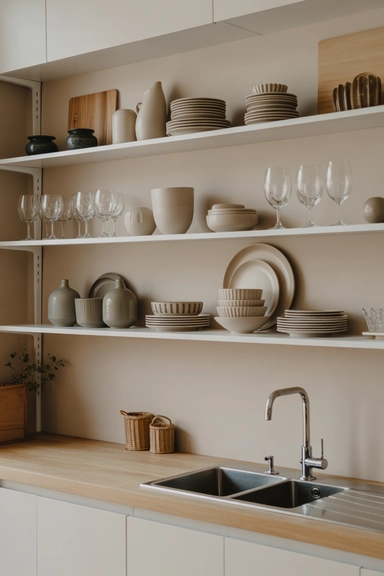
The fastest way open shelves become cluttered is by trying to store too much on display. Effective open kitchen shelving organization begins by limiting visible items to what is used regularly. Plates, bowls, and everyday glasses deserve priority, while rarely used gadgets belong in closed storage. Fewer items create breathing room and allow each piece to feel intentional.
This restraint also improves usability. When shelves are not overfilled, items are easier to grab and return without disturbing surrounding objects. Visual calm comes from negative space, not decoration. Starting with fewer items sets the foundation for shelves that feel organized rather than crowded.
2. Keeping Shelf Depth Visually Light
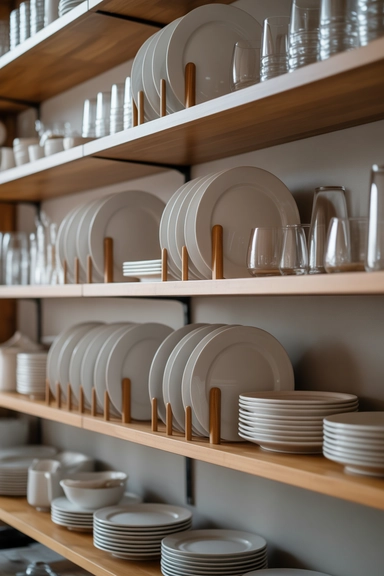
Deep shelves encourage stacking, which quickly creates visual noise. Shallow shelving keeps items aligned in a single row, making everything visible at a glance. This approach is central to open kitchen shelving organization that reduces clutter rather than exposing it.
When shelf depth is controlled, objects naturally stay organized because there is no room for messy layering. Plates remain upright, glassware stays evenly spaced, and the shelf reads as clean from across the room. Depth discipline quietly enforces order without extra effort.
3. Using Repetition to Create Visual Calm
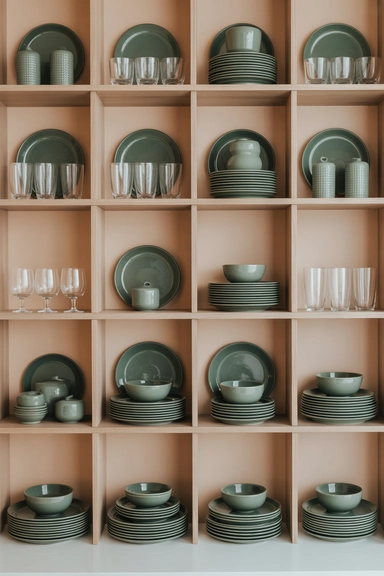
Repetition is one of the most powerful tools in open kitchen shelving organization. When similar items repeat in shape or material, the eye reads them as a single unit rather than individual objects. Stacks of identical plates or matching glassware reduce visual complexity instantly.
This does not require buying new items. Even grouping existing pieces by type and size improves visual rhythm. Repetition creates structure, making open shelves feel composed and intentional instead of accidental or overfilled.
4. Limiting Color to Reduce Visual Noise
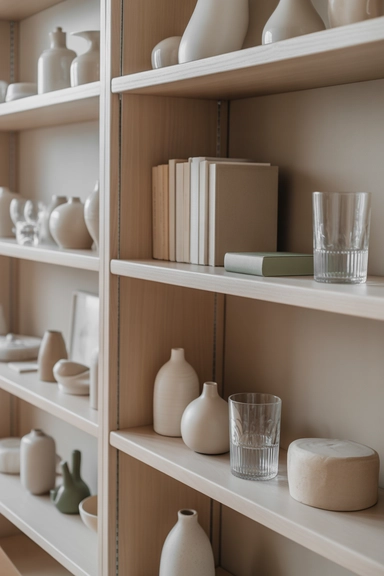
Color variety is often what makes open shelves feel busy. A restrained palette allows the shelving to feel cohesive, even when fully stocked. Neutral dishes, clear glass, and subtle textures support open kitchen shelving organization that stays visually calm.
This does not mean eliminating color entirely. One or two accent tones can work when used sparingly. The goal is control, not uniformity. When color is intentional, shelves feel curated rather than cluttered.
5. Grouping Items by Function, Not Appearance
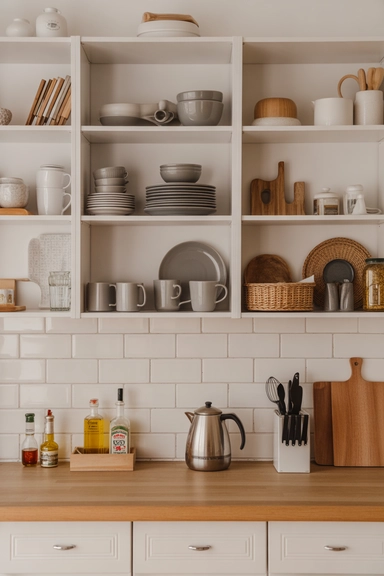
Shelves styled only for looks often fail in daily use. Functional grouping keeps open kitchen shelving organization practical and sustainable. Items used together should live together—plates near bowls, mugs near coffee supplies, oils near cooking tools.
This approach reduces daily friction and prevents random item placement. When everything has a clear functional home, shelves reset themselves naturally. Organization that supports routine always lasts longer than organization based on aesthetics alone.
6. Open Kitchen Shelving Organization That Controls Spacing
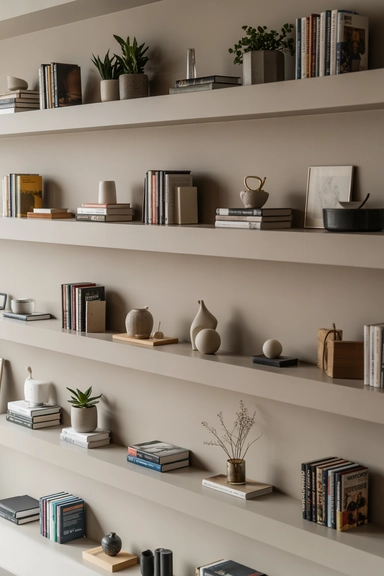
Spacing is what separates intentional shelving from visual clutter. When items are packed too closely, even well-chosen pieces feel chaotic. Effective open kitchen shelving organization relies on consistent gaps between stacks, allowing each group to stand on its own. Space becomes a design element rather than wasted area.
Leaving small pockets of empty shelf space gives the eye a place to rest and prevents the shelves from feeling overworked. This spacing also improves usability by making items easier to remove and return. Controlled spacing supports both visual calm and everyday function without requiring additional storage.
7. Using Height Variation Without Visual Chaos
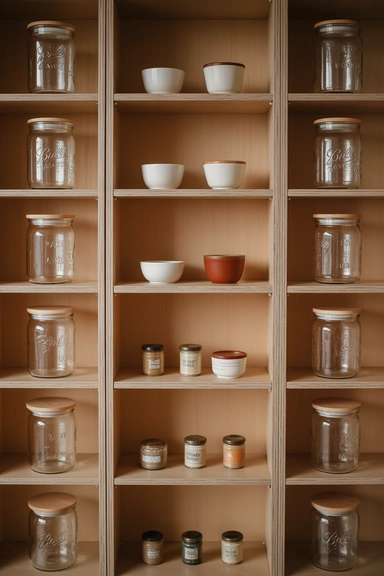
Mixing heights adds interest to open shelving, but without structure it can quickly feel messy. Successful open kitchen shelving organization uses height variation intentionally, keeping taller items grouped and shorter items aligned. This creates a clear visual rhythm instead of random peaks and dips.
For example, taller jars or pitchers can anchor the ends of shelves, while lower-profile plates and bowls sit toward the center. This balance keeps the shelf line readable and prevents visual clutter from creeping in. Height variation works best when it follows a pattern rather than improvisation.
8. Letting Closed Storage Support Open Shelves
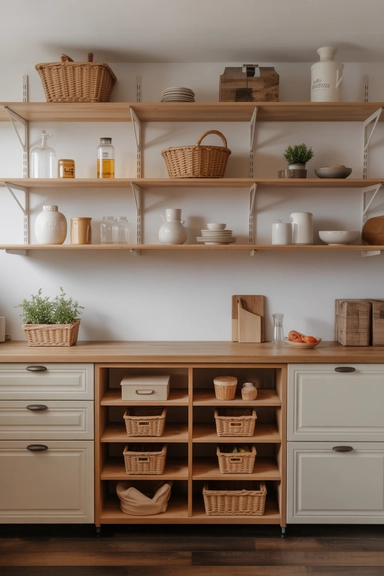
Open shelving works best when it is not asked to do everything. Closed cabinets should handle bulk storage, backups, and rarely used items so open shelves can stay selective. This balance is essential for open kitchen shelving organization that feels sustainable rather than staged.
If your lower cabinets feel overfilled, improving what happens behind closed doors can dramatically improve shelf clarity. Strategies from 23 Smart Kitchen Cupboard Hacks That Reduce Daily Clutter pair naturally with open shelving, allowing visible storage to stay light, practical, and visually controlled.
9. Avoiding Decorative Overload
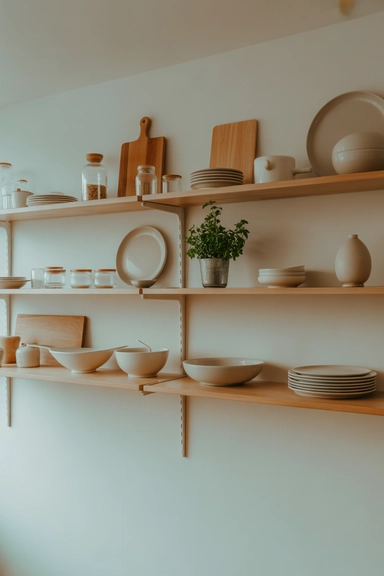
Decor is often what pushes open shelves from calm to cluttered. Too many plants, framed pieces, or decorative objects compete with functional items and break visual cohesion. In strong open kitchen shelving organization, decor plays a supporting role rather than becoming the focus.
One or two simple accents per shelving run is usually enough. Functional items should remain dominant, with decor used to soften rather than fill space. When decoration is restrained, shelves feel livable and intentional instead of styled for a single photo.
10. Choosing Containers That Don’t Fight Each Other

Mismatched containers are a common source of visual noise on open shelves. While variety can work, it needs boundaries. Open kitchen shelving organization benefits from containers that share a common element, such as material, shape, or color tone.
Glass jars, ceramic canisters, or neutral storage pieces create cohesion even when sizes vary. This consistency allows shelves to feel organized even when fully in use. Containers should quietly support storage, not compete for attention.
11. Open Kitchen Shelving Organization That Prioritizes Everyday Items
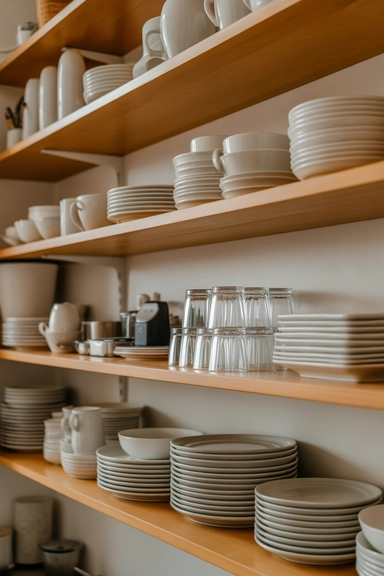
Open shelves should reflect how the kitchen is actually used, not how it looks when untouched. The most effective open kitchen shelving organization places everyday items at eye level and within easy reach. Plates, bowls, and frequently used glasses deserve the most accessible positions, while occasional pieces should move higher or out of sight.
This prioritization reduces visual clutter because it limits shelf rotation. When the same items return to the same spots daily, disorder signals become obvious and easy to correct. A shelf that supports routine naturally stays neater without constant restyling.
12. Keeping Shelf Styling Consistent Across the Kitchen
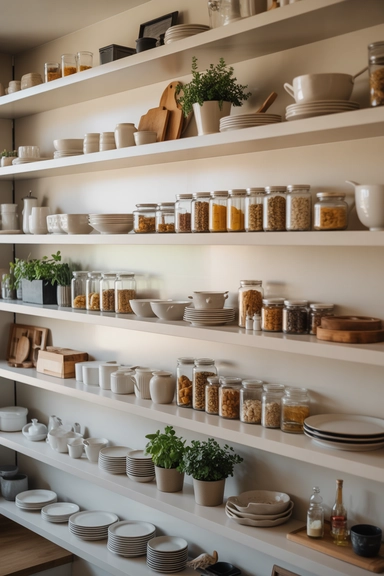
Visual clutter often comes from inconsistency rather than quantity. When one shelf is tightly packed and another loosely styled, the entire kitchen feels unsettled. Strong open kitchen shelving organization treats all shelves as part of one system, maintaining similar spacing, item density, and grouping logic throughout.
Consistency creates predictability, which calms the eye. Even if shelves are not perfectly symmetrical, they should follow the same visual rules. This unified approach keeps open shelving from feeling scattered or improvised.
13. Avoiding Overstacking to Preserve Visual Order
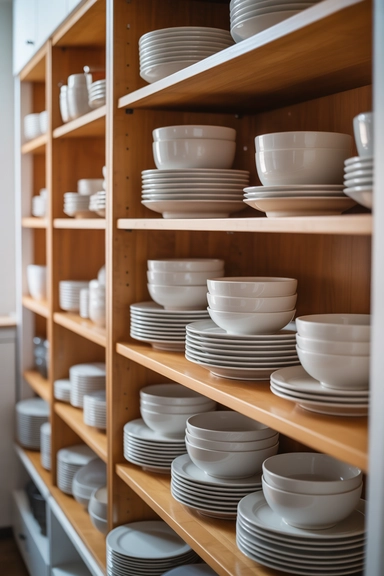
Overstacking is one of the fastest ways to undo good open kitchen shelving organization. Tall piles of plates or bowls may seem efficient, but they create heaviness and block visual flow. Lower stacks with intentional spacing feel lighter and easier to manage.
Limiting stack height also improves usability. Items are easier to remove without disrupting the shelf, reducing accidental disorder. A shelf that looks manageable encourages better habits, which is essential for maintaining visual calm long term.
14. Using Negative Space as an Organizing Tool
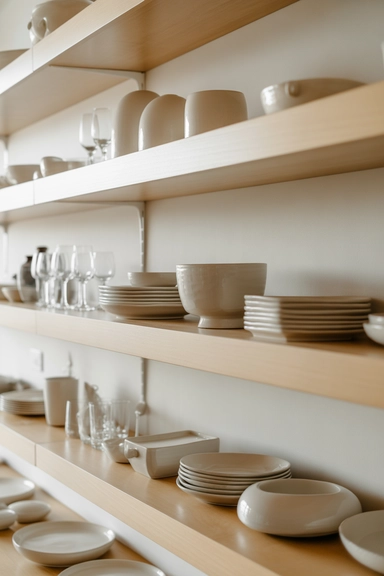
Negative space is not wasted space—it is a critical organizing element. Open kitchen shelving organization that embraces empty areas allows functional items to stand out without competition. Shelves that are filled edge to edge feel busy, even when well organized.
Leaving space between groupings creates clarity and structure. It signals intention and prevents the need to constantly rearrange. Negative space makes open shelving feel purposeful rather than overworked, supporting both aesthetics and daily use.
15. Aligning Shelves With Natural Sightlines
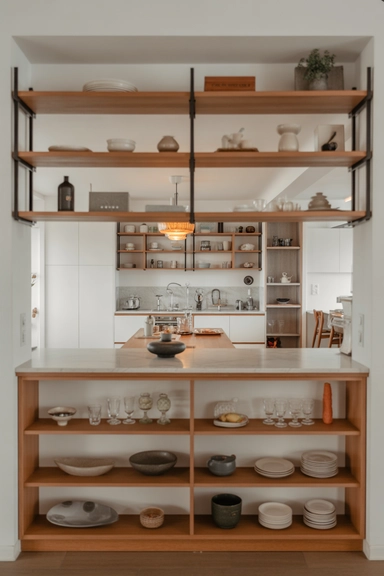
How shelves are seen from different angles matters more than most people realize. Effective open kitchen shelving organization considers sightlines from entrances, seating areas, and work zones. Shelves that look orderly from common viewpoints reduce perceived clutter across the entire kitchen.
This may mean keeping upper shelves simpler or limiting tall items where they interrupt visual flow. When shelves are aligned with how the space is experienced, the kitchen feels calmer without reducing storage.
16. Open Kitchen Shelving Organization That Respects Daily Movement
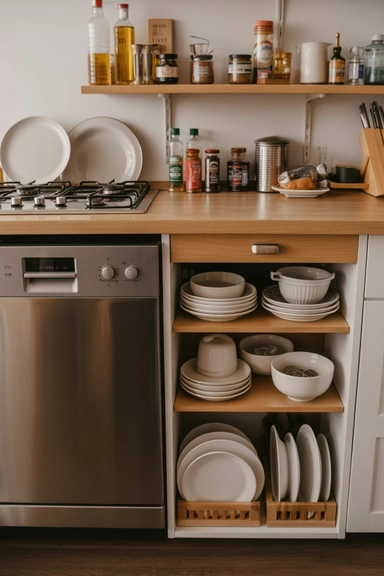
Shelves should never interfere with how the kitchen is used. Open kitchen shelving organization works best when it supports natural movement between prep, cooking, and cleaning zones. Items placed too high, too low, or too far from their point of use introduce friction that quickly turns into visual disorder.
When shelves align with daily motion, items return to their place more easily. Oils near the stove, plates near the dishwasher, and glasses near the sink create intuitive flow. Movement-aware shelving reduces clutter because it removes hesitation and unnecessary rearranging during everyday tasks.
17. Reducing Visual Weight With Thoughtful Shelf Placement
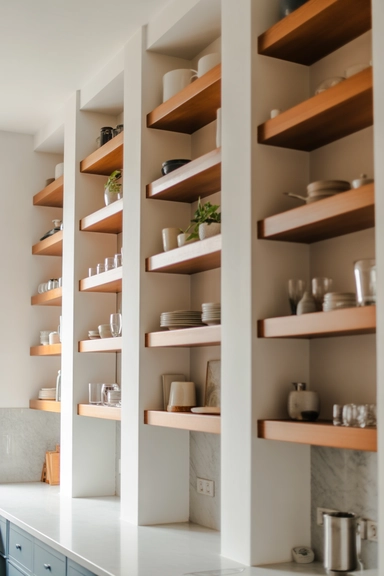
Shelf placement affects how heavy or light a kitchen feels. Shelves installed too close together or too low can visually compress the space. Open kitchen shelving organization benefits from thoughtful vertical spacing that allows walls to breathe and light to travel.
Leaving generous gaps between shelves and counters keeps the kitchen from feeling boxed in. This spacing also makes shelves easier to clean and maintain. When shelves feel visually light, the entire kitchen feels more open and controlled.
18. Letting Materials Stay Quiet and Supportive
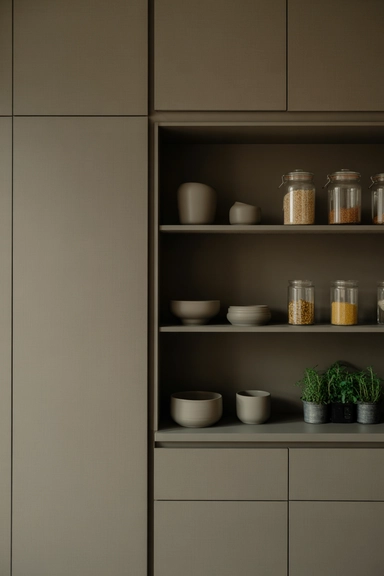
Materials should support organization, not compete with it. Busy wood grains, high-gloss finishes, or mixed metals can add unnecessary visual noise. Strong open kitchen shelving organization relies on materials that feel calm and consistent, allowing stored items to remain the focus.
Matte finishes, subtle textures, and restrained contrasts help shelves blend into the kitchen rather than dominate it. When materials stay quiet, even a fully stocked shelf feels intentional instead of overwhelming.
19. Preventing Shelf Drift Over Time
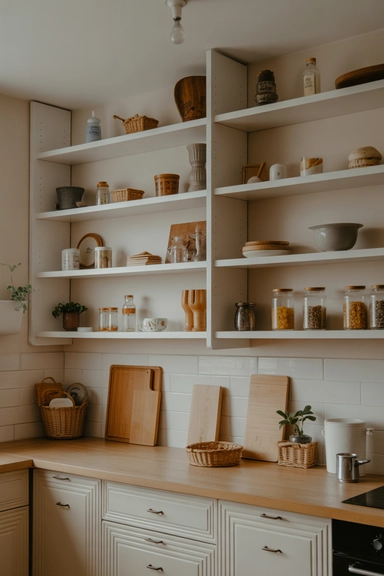
Shelf drift happens when items slowly lose their assigned positions and visual order fades. Open kitchen shelving organization that lasts includes simple visual rules that are easy to reset. Consistent spacing, clear groupings, and limited item variety make disorder obvious early.
When it is easy to notice what is out of place, it is also easy to fix. Shelves that self-correct through clarity stay organized longer without requiring frequent restyling or deep cleanups.
20. Designing Shelves That Age Well
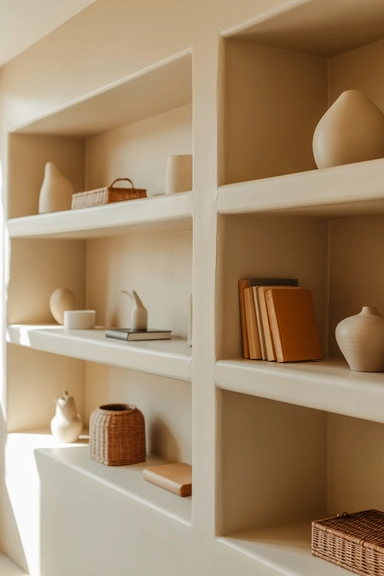
Trendy styling often looks dated quickly and increases visual clutter as tastes change. Open kitchen shelving organization that ages well focuses on timeless shapes, neutral palettes, and flexible layouts. This approach allows shelves to evolve without constant redesign.
When the structure is stable, changing dishware or cookware does not disrupt visual balance. Long-lasting design reduces the urge to overdecorate, keeping shelves functional and visually calm year after year.
21. Open Kitchen Shelving Organization That Supports Real Kitchens
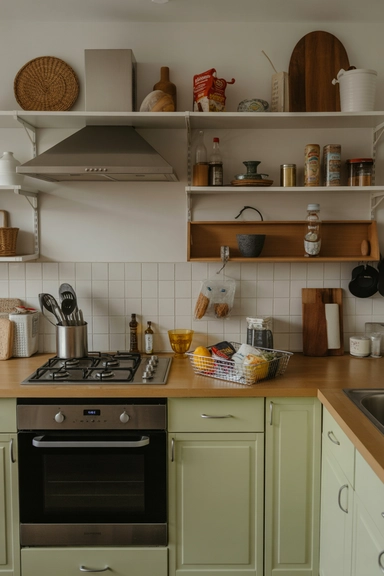
Real kitchens are active spaces, not showrooms. Open shelving must handle daily cooking, cleaning, and storage without constant adjustment. The most effective open kitchen shelving organization accepts signs of use while preventing chaos through clear systems.
This means prioritizing practicality over perfection. Shelves that work during busy mornings and crowded dinners will always outperform those designed only for appearance. Function-first organization naturally reduces clutter.
22. Knowing When Open Shelving Is Enough
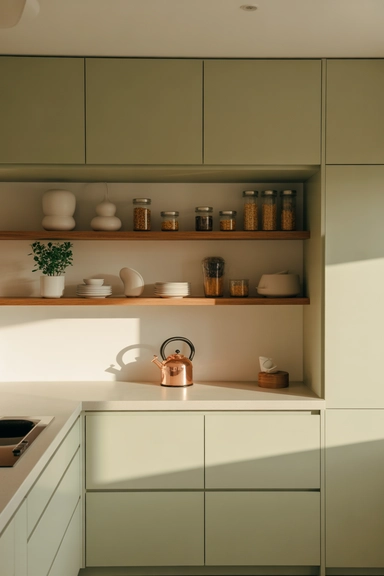
Not every item belongs on display. One of the smartest open kitchen shelving organization decisions is knowing when to stop adding shelves. Too many open surfaces increase visual load and maintenance demands.
Balanced kitchens use open shelving selectively, allowing closed storage to absorb excess. When shelves are limited and intentional, they stay clean, useful, and visually controlled. Restraint is often the final step toward a clutter-free kitchen.
Conclusion
Open kitchen shelving organization succeeds when restraint guides every decision. By limiting visible items, controlling spacing, and aligning shelves with real kitchen habits, open storage becomes functional rather than chaotic. Consistent materials, clear groupings, and intentional negative space allow shelves to support daily use without visual overload. When open shelving is treated as a practical system instead of decoration, it remains calm, adaptable, and easy to maintain over time.