
Introduction
Cutting boards tend to multiply in busy kitchens. A couple of wooden boards for vegetables, a larger one for meat prep, and a few lightweight boards for other quick tasks can quickly turn cabinets into cluttered mess. The best cutting board organization ideas focus on vertical storage, smart use of cabinets, and keeping boards easy to access while cooking. Whether you’re organizing thick butcher boards or compact prep boards, a thoughtful system keeps your kitchen neat and clean. When paired with broader storage systems like 23 Hidden Storage Furniture Ideas for Small Homes, even small kitchens can stay organized and visually calm.
1 Vertical Cabinet Slots That Keep Boards Easy to Grab
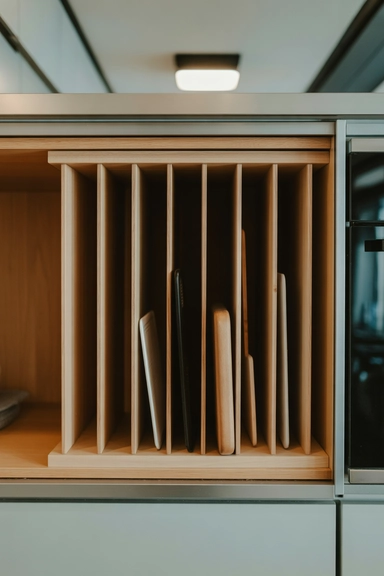
One of the most reliable cutting board organization ideas is storing boards vertically inside a cabinet. Instead of stacking boards flat, vertical slots allow each board to stand upright, making it easy to grab the exact one you need without disturbing the others. This approach works especially well for wooden cutting board organization ideas because heavier boards stay supported and visible rather than buried under a pile.
Creating vertical slots can be done using cabinet dividers or slim wooden panels spaced evenly inside a cabinet. The result feels similar to a file organizer where every board has its own place. This setup prevents boards from sliding around and keeps them separated by size or purpose. Many kitchens use this system for wood cutting board organization ideas because it protects the boards while keeping the cabinet interior neat and easy to maintain.
2 Slim Pull-Out Cutting Board Storage Cabinets
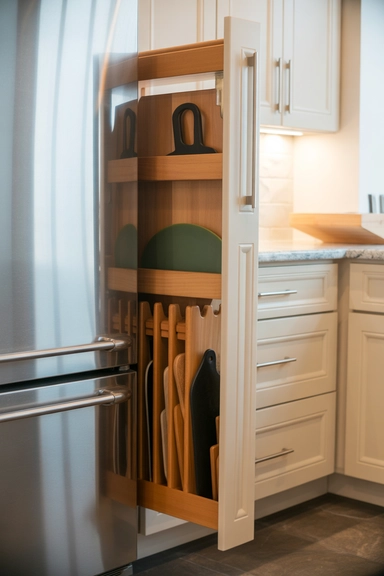
A slim pull-out cabinet can transform an awkward kitchen gap into an organized cutting board station. Narrow cabinets between appliances or beside a refrigerator are often underused, yet they are the perfect width for storing boards vertically. Instead of squeezing boards into drawers or stacking them inside crowded cabinets, a pull-out organizer keeps everything aligned and visible.
Inside the pull-out system, vertical dividers hold each board in place so they don’t lean or shift when the cabinet moves. This style of cutting board storage cabinet works particularly well for households that use several boards daily for different food prep tasks. With everything arranged neatly in one sliding compartment, meal preparation becomes faster because the right board is always easy to locate and remove.
3 Wall-Mounted Cutting Board Racks That Double as Decor
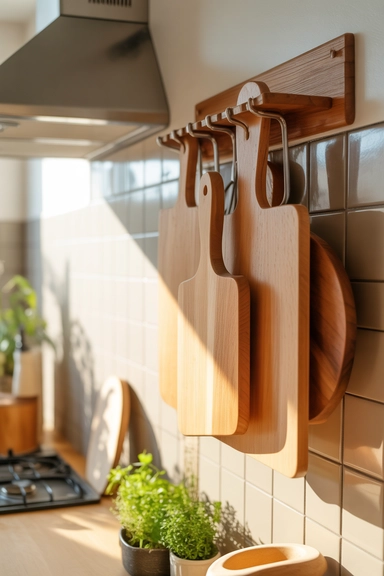
Wall storage is one of the most visually appealing cutting board organization ideas because it turns everyday kitchen tools into decorative elements. A wall-mounted rack allows cutting boards to remain within reach while adding texture and warmth to the kitchen wall. Wooden boards in particular look beautiful when displayed vertically, making this one of the most popular cutting board organization ideas Pinterest users love to save.
Placing the rack near the prep area helps maintain a smooth cooking workflow. Larger boards can sit toward the back of the rack while smaller boards layer in front, creating a practical yet styled arrangement. This approach works especially well in kitchens with limited cabinet space, since it frees up storage while adding a curated, lived-in kitchen look that feels both functional and intentional.
4 Under-Cabinet Cutting Board Organizer Systems
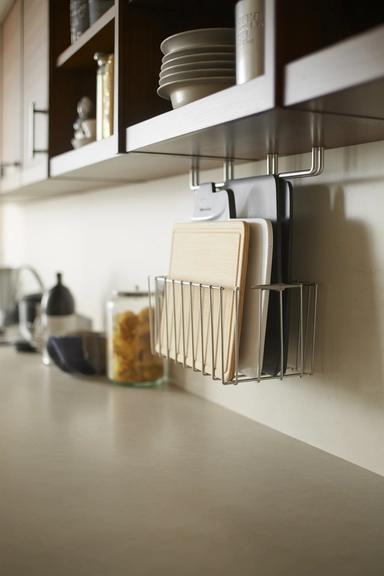
An under-cabinet organizer is a clever solution for kitchens that struggle with limited storage space. These systems attach beneath upper cabinets and hold cutting boards vertically in narrow slots. By using the unused space just above the countertop, boards stay accessible without cluttering drawers or cabinets.
This type of cutting board organizer under cabinet is particularly helpful in compact kitchens where every inch of storage matters. Thin boards slide easily into the slots while thicker wooden boards remain stable thanks to the vertical structure. Because the organizer sits directly above the work surface, grabbing a board while cooking becomes quick and effortless, helping maintain a smoother kitchen workflow throughout meal preparation.
5 Drawer Dividers for Small Cutting Board Organization
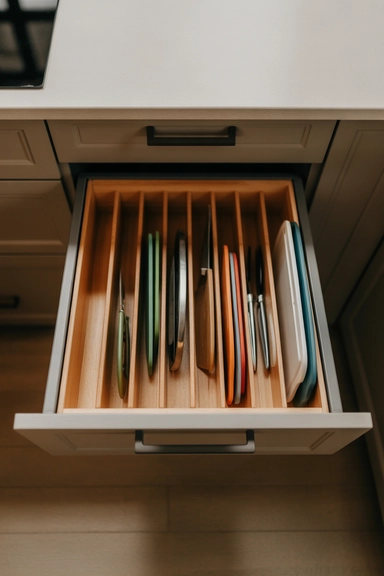
Deep kitchen drawers often become chaotic when cutting boards are stacked inside without structure. Installing drawer dividers creates individual vertical sections where boards can stand neatly instead of sliding into each other. This system is especially effective for small cutting board organization ideas where compact boards need to stay separated but still accessible.
With dedicated slots, each board becomes visible as soon as the drawer opens. This eliminates the need to lift multiple boards just to find the one you want. Organizing boards by size or purpose also helps maintain better kitchen hygiene by keeping vegetable boards, bread boards, and meat prep boards clearly separated while still stored within the same drawer space.
6 Countertop Cutting Board Holders That Keep Boards Tidy
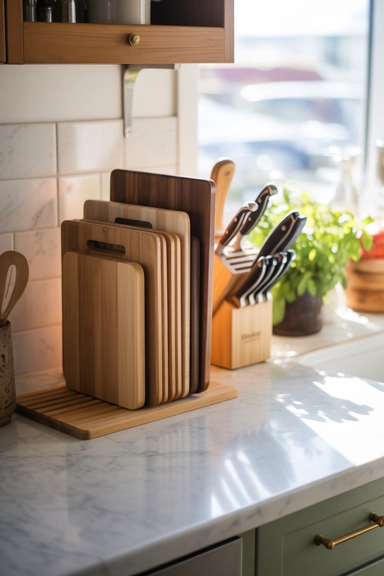
A countertop holder is one of the simplest cutting board organization ideas when you want boards within easy reach. Instead of stacking them against the backsplash or sliding them between appliances, a vertical holder keeps boards neatly separated while allowing air to circulate. This is especially useful for wooden cutting board organization ideas because proper airflow helps boards dry completely after washing.
Choosing a holder with narrow vertical slots helps maintain order on the counter while preventing boards from leaning or sliding. Many kitchens place the holder near the primary prep area so boards can be grabbed quickly during cooking. When selected thoughtfully, a wooden or metal holder can also complement the kitchen’s decor, turning everyday tools into a tidy and visually pleasing countertop feature.
7 Open Shelf Cutting Board Displays
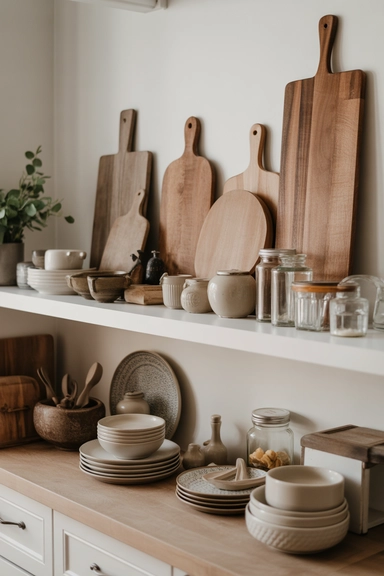
Open shelving offers a beautiful opportunity to store and display cutting boards at the same time. Instead of hiding boards inside cabinets, placing them upright along the back of a shelf creates a layered, decorative effect. Large wooden boards naturally add warmth and texture to kitchen shelving, making this one of the most popular cutting board organization ideas Pinterest users often save for inspiration.
Arranging boards by height helps create a balanced look while keeping them easy to access during food prep. Smaller boards can lean slightly in front of larger ones, forming a visually appealing composition. This approach works particularly well in kitchens that already feature open shelving, because cutting boards blend naturally with dishes, jars, and other kitchen essentials.
8 Inside-Cabinet Door Cutting Board Storage
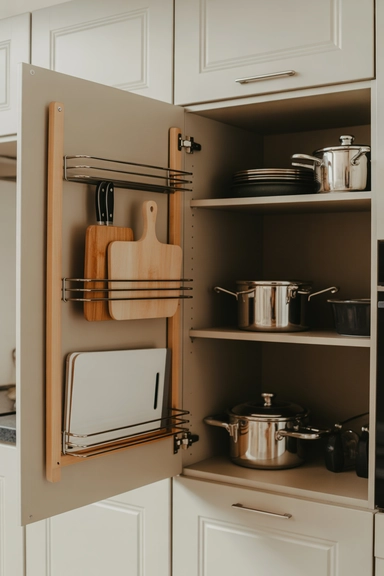
The inside of a cabinet door can become a surprisingly efficient storage area for cutting boards. Installing narrow racks or slim brackets on the inside panel allows boards to slide vertically into place without taking up shelf space. This hidden solution keeps boards organized while leaving the main cabinet area available for cookware or pantry items.
For many kitchens, this method works well as a small cutting board organization idea because thinner boards fit easily within the limited depth of the cabinet door. The boards remain neatly arranged yet completely out of sight when the cabinet is closed. When opened, the organized layout makes it easy to select the right board quickly, keeping meal preparation efficient and clutter-free.
9 Sliding Tray Dividers for Large Cutting Boards
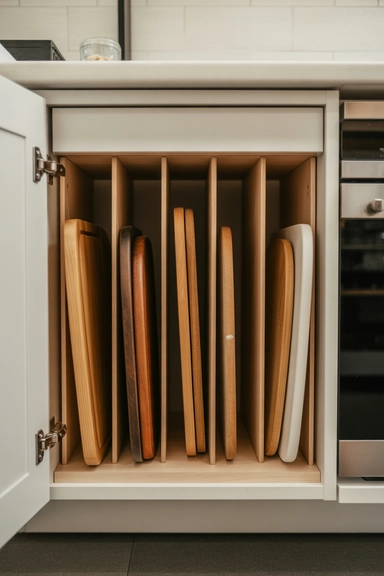
Large cutting boards can be difficult to organize because their size often makes them awkward to store in standard cabinets. Sliding tray dividers create wider vertical compartments that are specifically designed to support oversized boards. These dividers allow boards to stand upright without leaning against other kitchen items.
Because the divider system slides forward with the cabinet shelf, accessing heavier wooden boards becomes much easier. Instead of reaching deep into the cabinet, you can simply pull the shelf forward and remove the board comfortably. Many homeowners prefer this system for wood cutting board organization ideas because it protects thicker boards while keeping the cabinet interior clean and structured.
10 IKEA Cutting Board Storage Solutions
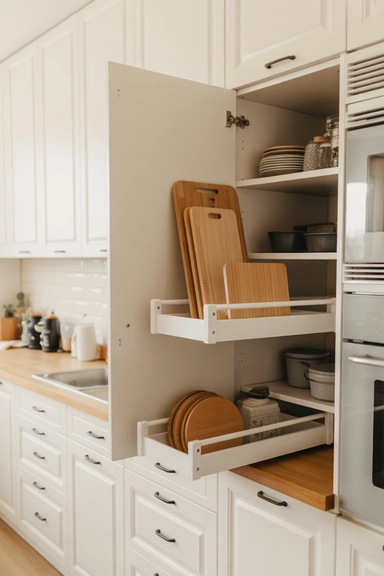
Many kitchens rely on modular systems from IKEA when organizing kitchen tools. Their adjustable racks, cabinet inserts, and slim pull-out organizers provide flexible cutting board storage without requiring custom cabinetry. These solutions are especially useful for homeowners looking for cutting board storage IKEA ideas that are affordable and easy to install.
Inside cabinets, adjustable organizers allow boards of different sizes to stand vertically without sliding around. Some homeowners also use IKEA rail systems or shelf dividers to create custom board storage zones. Because these systems are modular, they can be rearranged as kitchen storage needs change, making them a practical option for both small kitchens and larger cooking spaces.
11 Hanging Rail Systems for Easy Board Access
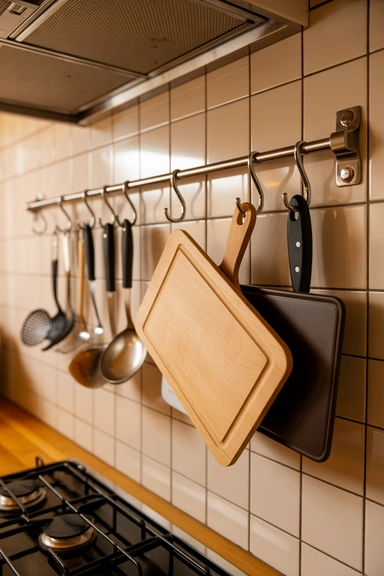
A hanging rail system can transform an empty kitchen wall into a practical storage zone for everyday tools, including cutting boards. Installing a sturdy metal rail along the backsplash allows boards with handles to hang neatly on hooks, keeping them visible and within easy reach. This approach is frequently featured in cutting board organization ideas Pinterest collections because it blends functionality with a styled kitchen look.
Positioning the rail close to the main prep counter keeps boards accessible while cooking. Larger wooden boards can hang toward the ends of the rail while lighter boards stay in the center for quick tasks. This system not only frees cabinet space but also introduces a layered, organized wall display that adds character to the kitchen while keeping frequently used boards right where they belong.
12 Pantry Sidewall Storage for Cutting Boards
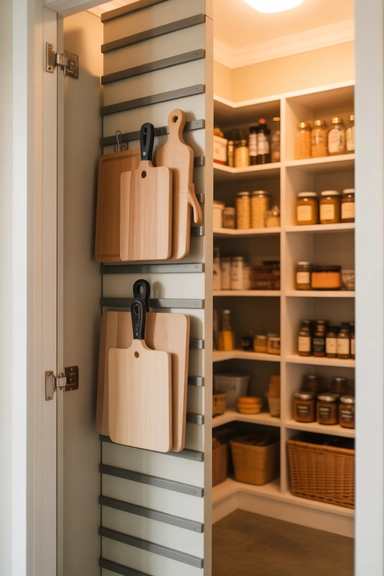
The sidewalls inside a pantry are often overlooked, yet they offer excellent vertical storage for cutting boards. Installing slim brackets or narrow vertical dividers along the pantry wall creates a dedicated area where boards can stand upright without interfering with pantry shelves. This arrangement works particularly well for households that keep several boards for different food preparation tasks.
Because pantry walls usually provide a taller vertical space, even larger boards can be stored comfortably without crowding other kitchen items. This type of cutting board organization keeps boards grouped together while freeing cabinet storage for cookware and dishes. With boards arranged neatly along the pantry wall, the kitchen maintains a more organized workflow during meal preparation.
13 Stackable Cutting Board Organizers Inside Cabinets
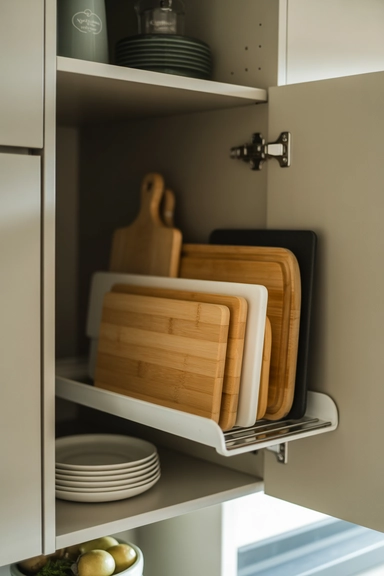
Stackable organizers provide a structured way to store several boards in one cabinet while preventing them from sliding into a messy pile. Each tier supports a single board, allowing you to slide one out without disturbing the others. This system is particularly useful for households that own multiple boards used for vegetables, bread, and meat preparation.
The layered structure keeps boards separated while still making efficient use of cabinet height. Because the boards rest in individual tiers, they remain visible and easy to access. Many homeowners choose this approach when they want a simple cutting board organization solution that requires minimal installation yet dramatically improves cabinet order.
14 Narrow Pull-Out Slots Beside Cabinets
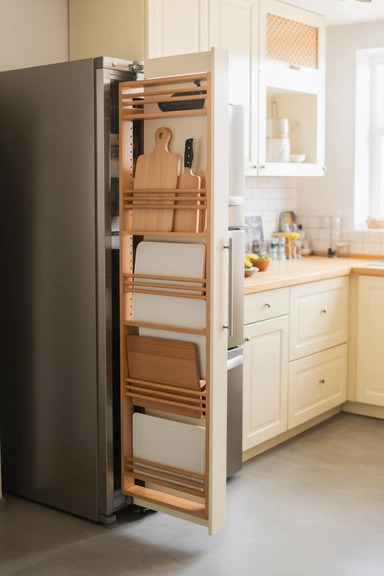
Small gaps beside refrigerators or base cabinets can become excellent storage zones when fitted with narrow pull-out slots. These vertical compartments allow cutting boards to slide in upright, turning previously wasted space into an efficient storage system. This idea works especially well in compact kitchens where maximizing every inch of storage is essential.
Inside the pull-out compartment, slim dividers hold boards securely so they remain organized when the cabinet slides open or closed. Larger boards can sit toward the back while smaller boards rest near the front for quick access. This type of cutting board storage cabinet solution keeps boards contained in one place without overcrowding traditional kitchen cabinets.
15 Rustic Wooden Crates for DIY Board Storage
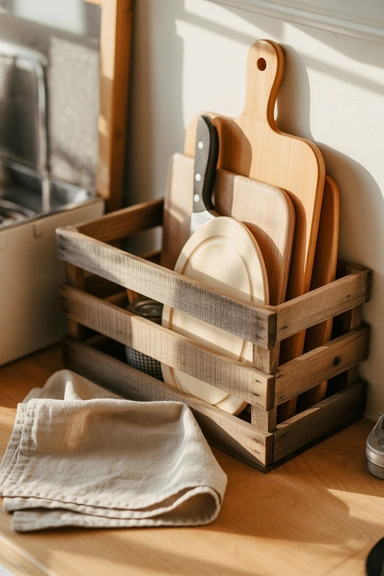
Rustic wooden crates can become charming storage containers for cutting boards, especially in farmhouse-style kitchens. Standing a crate vertically creates natural slots where boards can be placed upright while remaining easy to access. This style works particularly well for wooden cutting board organization ideas because the natural materials complement each other beautifully.
Many homeowners enjoy this cutting board organization ideas DIY approach because it is both affordable and customizable. The crate can be placed on a countertop, inside a pantry, or within a cabinet depending on the available space. Beyond functionality, the crate also contributes to a warm kitchen aesthetic that makes everyday cooking tools feel intentionally styled rather than simply stored.
16 Appliance Garage Storage for Cutting Boards
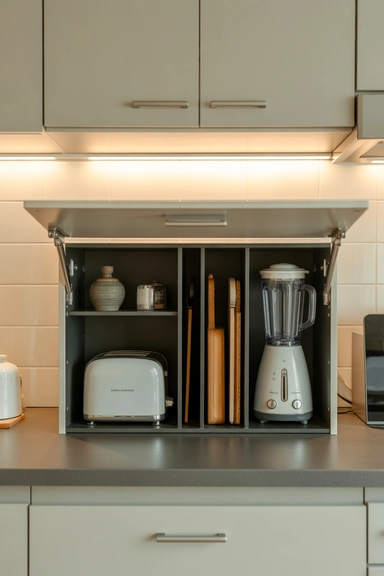
Appliance garages are typically used to hide mixers, toasters, or coffee machines, but they can also work beautifully for cutting board organization. By installing slim vertical dividers inside the appliance garage, cutting boards can stand upright while remaining hidden behind a lift-up or sliding cabinet door. This approach keeps boards close to the prep area while maintaining a clean, uncluttered kitchen appearance.
Because appliance garages sit directly on the countertop level, accessing boards during cooking becomes very convenient. Larger wooden boards can be placed toward the back while thinner boards remain in the front slots. This system works especially well for wooden cutting board organization ideas since it keeps heavier boards supported while preventing them from leaning against delicate kitchen items.
17 Slim Rolling Cart for Cutting Board Storage
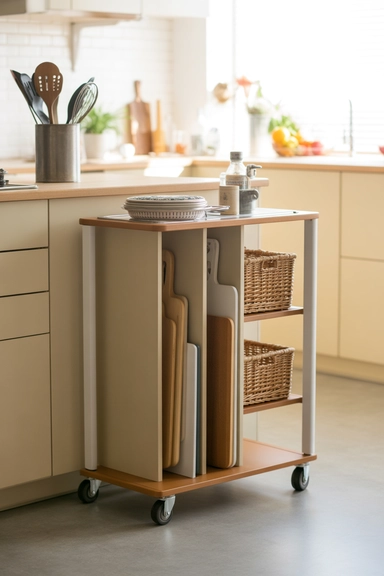
A narrow rolling cart can function as a flexible storage solution for cutting boards, particularly in kitchens with limited cabinet space. By installing vertical dividers inside the cart, boards can stand upright and remain neatly organized. The biggest advantage of this setup is mobility, allowing the cart to move closer to the prep area when cooking and then roll back into a corner when not in use.
This system works well for households that use multiple boards throughout the day. Large boards can sit in the back compartments while smaller boards remain toward the front for quick access. A rolling cart also adds additional storage for knives, kitchen towels, or food prep tools, making it a practical multi-purpose station within the kitchen layout.
18 DIY Wooden Cutting Board Organizer Box
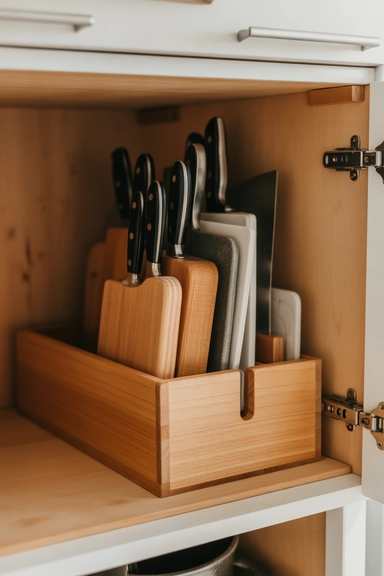
A custom wooden organizer box is a practical DIY solution for keeping cutting boards neatly separated. By building a simple rectangular box with evenly spaced vertical dividers, each board receives its own slot. This prevents boards from sliding around or leaning awkwardly against each other inside cabinets or pantry shelves.
Many homeowners prefer this cutting board organizer DIY approach because it can be customized to match cabinet dimensions. The divider spacing can be adjusted to fit thicker butcher boards or thinner prep boards. Once placed inside a cabinet or pantry, the organizer instantly transforms loose boards into a structured system where every board remains visible and easy to reach.
19 Corner Cabinet Cutting Board Storage
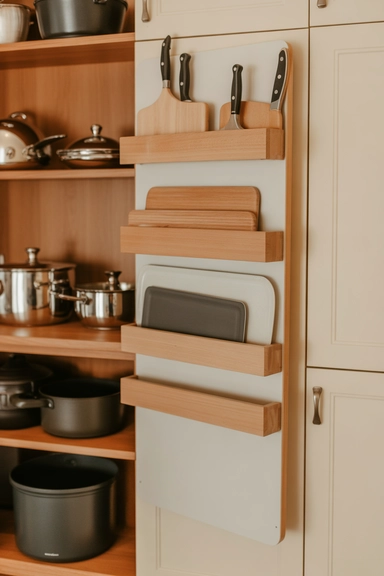
Corner cabinets often become difficult storage areas because their deep angles make it hard to organize kitchen items efficiently. Installing vertical slots specifically for cutting boards can turn this awkward space into a functional storage zone. Since cutting boards are relatively thin, they fit perfectly within the narrow angles that often go unused in corner cabinets.
By placing boards vertically along the cabinet wall, the center of the cabinet remains free for other kitchen items. This simple adjustment allows homeowners to take advantage of storage areas that might otherwise remain underutilized. Over time, organizing boards in a corner cabinet can significantly reduce clutter in more frequently used kitchen cabinets.
20 Magnetic Wall Strips for Lightweight Boards
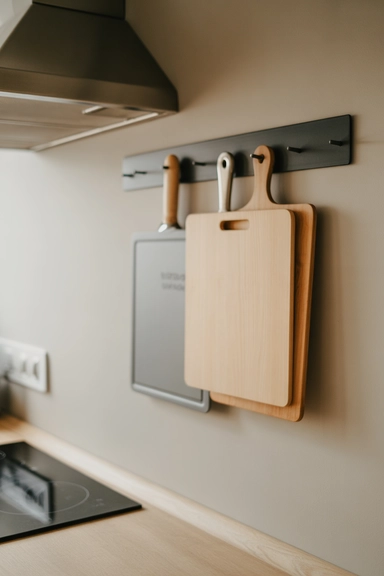
Magnetic wall strips are commonly used for knives, but they can also hold certain lightweight cutting boards that include metal handles or hardware. Mounting a magnetic strip on the kitchen wall allows these boards to attach securely while remaining easy to remove when needed.
This method works best for smaller cutting boards used for quick food preparation tasks. Because the boards remain visible on the wall, they are easy to grab during cooking without opening cabinets or drawers. In kitchens with limited storage space, magnetic strips provide a creative solution that keeps boards accessible while maintaining a neat kitchen layout.
21 Decorative Leaning Board Arrangement
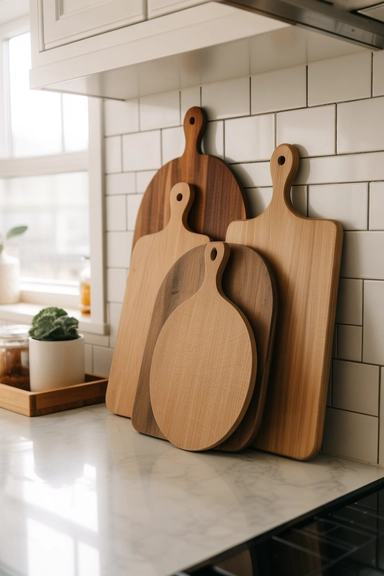
Sometimes the most visually appealing cutting board organization ideas are also the simplest. Leaning boards against the backsplash or wall can create a layered kitchen display that feels both practical and styled. Large wooden boards positioned behind smaller boards add depth and texture to the counter area without looking cluttered.
This arrangement works particularly well with wood cutting board organization ideas because natural wood grains add warmth to the kitchen environment. When grouped thoughtfully, the boards become part of the kitchen’s decor while still serving their everyday purpose. For homeowners who enjoy a relaxed, lived-in kitchen style, this approach keeps boards accessible while adding a touch of visual charm.
Conclusion
Smart cutting board organization ideas focus on vertical storage, easy accessibility, and making the most of overlooked kitchen spaces. Whether you use cabinet dividers, wall racks, pull-out organizers, or simple DIY solutions, keeping boards upright and separated instantly reduces clutter. With the right system in place, cutting boards become easier to find, easier to store, and even contribute to the visual style of your kitchen rather than creating unnecessary cabinet chaos.