
Introduction
I thought buying nicer pieces would fix it.
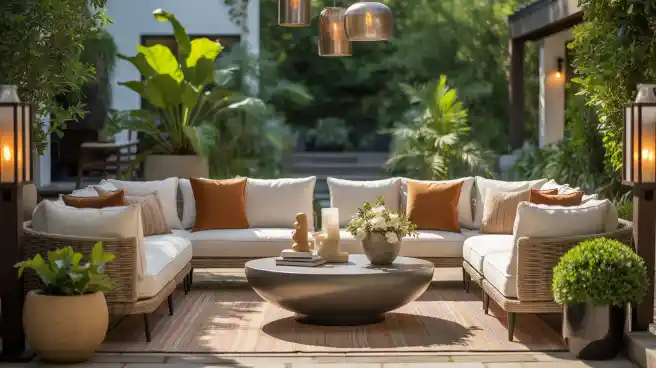
That summer I kept dragging things into the backyard one by one. A rattan set from one shop. Lights from another. A table that looked perfect on the website and then felt off the second I sat down. Too low. Chairs too upright. People would come out, look around for a minute, then slowly head back inside.
For a while I blamed what I bought. That wasn’t it. The space just didn’t work. Nothing connected. It looked set up, but it didn’t feel usable.
This has less to do with price and more to do with how everything sits together. Where you naturally look. Where you sit without thinking. How far your hand reaches for the table… If you have not read Backyard Layout Ideas yet you are probably already making the mistake that costs most people an entire setup.
Start With One Zone, Not the Whole Yard
Most people try to fix everything at once.
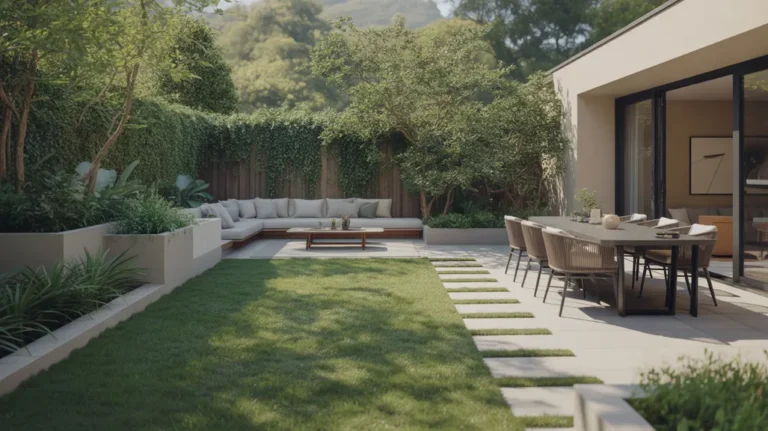
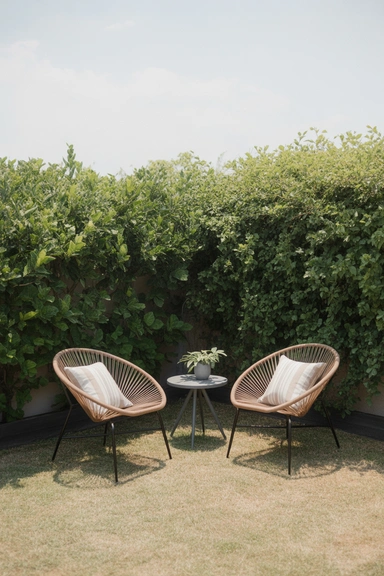
That’s where it breaks. You end up placing things without thinking about how they relate. I did the same thing and kept moving chairs around without ever feeling settled. Instead, take a small section. A corner. Lay down two chairs facing slightly toward each other with a table between. Even that small setup starts to feel complete.
Stand back and look at just that one zone. If your eyes understand it instantly, you’re on the right track. If not, keep adjusting before adding anything else. The goal here is clarity, not decoration.
You’ll notice something else. When one area feels right, it pulls the rest of the yard into place slowly instead of forcing it.
Pro tip: Mark the space on the ground first. Walk through it. If you hesitate even once, the layout is already wrong.
Seating Direction Changes Everything
This gets missed constantly.
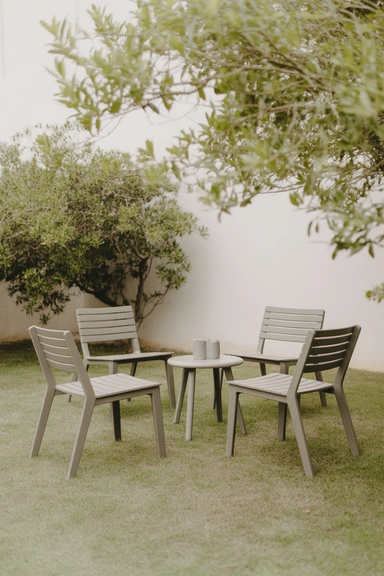
Chairs get pushed outward or lined against walls. It looks fine at first. Sit down and you’ll notice it immediately. Your body turns away from the setup instead of into it. That’s the issue.
I tried keeping chairs straight once. Looked neat. Felt uncomfortable within seconds. The fix was simple but not obvious until you actually sat down.
Angle matters more than style. Two chairs slightly turned toward each other feel more inviting than four placed perfectly in a row.
Pro tip: Sit, then stay still for a few seconds. If you adjust your body to feel comfortable, change the angle.
Lighting Should Hit Edges, Not Faces
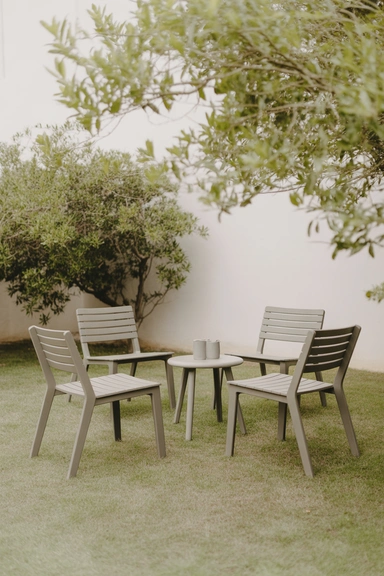
I got this wrong twice.
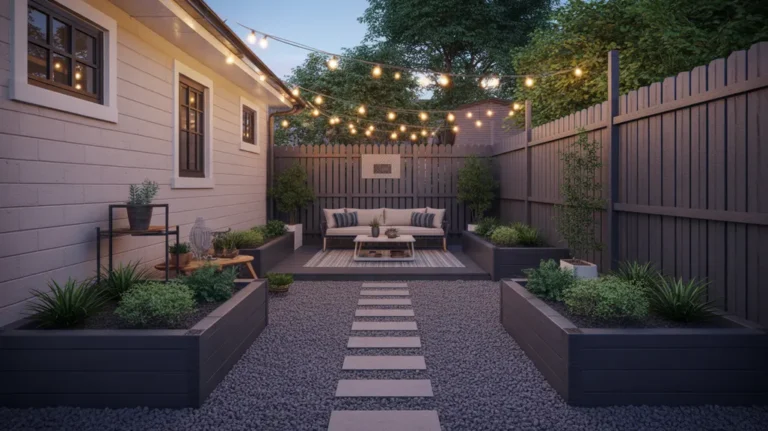
Bright lights in the center make everything feel harsh. It stops feeling like a place to sit. Move the light outward instead. Along fences. Behind seating. Near the ground.
When light wraps around the space instead of hitting it directly, the entire mood changes. It feels calmer without you knowing exactly why.
You want to notice the space, not the source of light. That’s the difference.
Pro tip: Turn everything on at night and stand still. If any light hits your eyes directly, move it.
Layer Heights or It Looks Flat
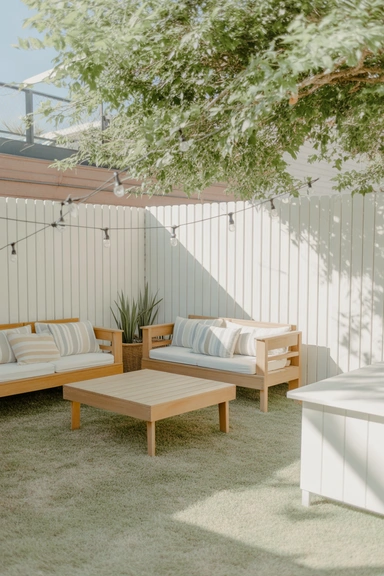
Everything sitting at one level feels off.
A low table, standard chairs, then something taller behind it. That difference creates depth. Without it, the whole setup looks like it’s been pressed flat into the ground.
Even a small change helps. A planter behind seating or a lamp beside a chair can break that flat look instantly.
Depth gives your eyes somewhere to travel instead of stopping at one level.
Pro tip: Look at your setup from a distance. If it looks like one straight line, you need height variation.
Leave Space Empty on Purpose
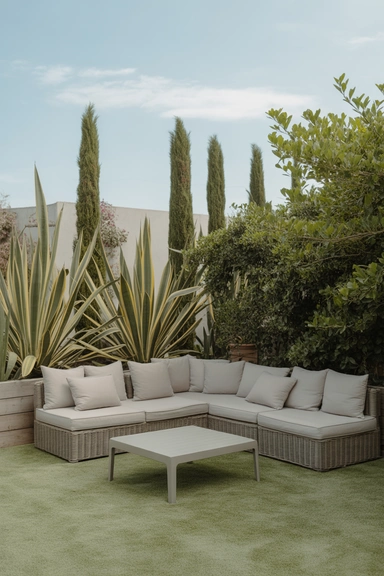
This part feels wrong at first.
You’ll want to fill every gap. I did. It looked full, but it also felt tight. Don’t. Empty space is what makes everything else stand out. A clear walking path behind chairs. Space between pieces. Breathing room.
When there’s space, people relax more. They move naturally instead of adjusting around furniture.
Crowding usually comes from trying to use every inch instead of letting the space breathe.
Pro tip: Remove one item after setup. If it feels better, you added too much.
Create a Clear Focal Point
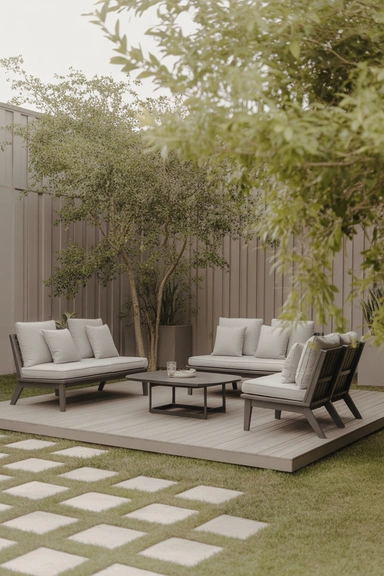
Your eyes should land somewhere immediately.
If they don’t, the space feels scattered. A fire pit, a central table, even a single strong chair can anchor everything. Once that exists, the rest of the layout starts making sense.
I once had everything placed “nicely” but nothing stood out. The space felt forgettable.
A focal point gives the space purpose. Without it, everything feels temporary.
Pro tip: Stand at the entrance. If your eyes move around searching, you need a center point.
Use Fewer Materials, Not More
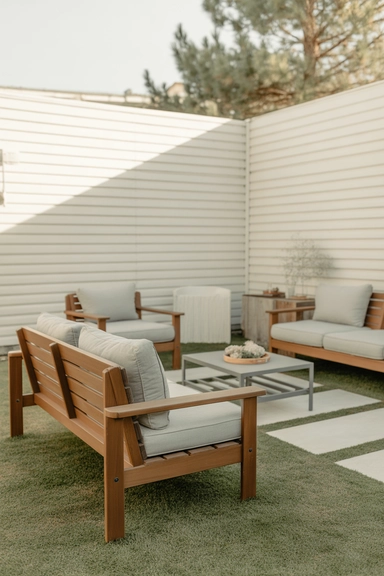
Mixing everything rarely works.
Wood, metal, fabric, stone, all at once. It gets messy fast. Stick to two main materials and repeat them. That repetition is what makes it feel intentional.
When one material shows up again in another spot, your brain starts connecting the space without effort.
Too many materials break that connection.
Pro tip: If something looks out of place, it usually introduces a new texture you didn’t need.
Ground the Space With a Rug
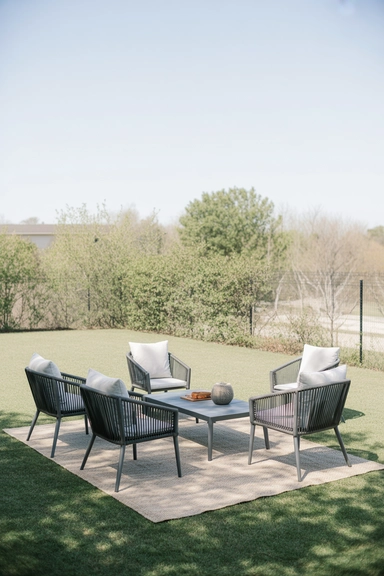
This is where setups quietly fall apart.
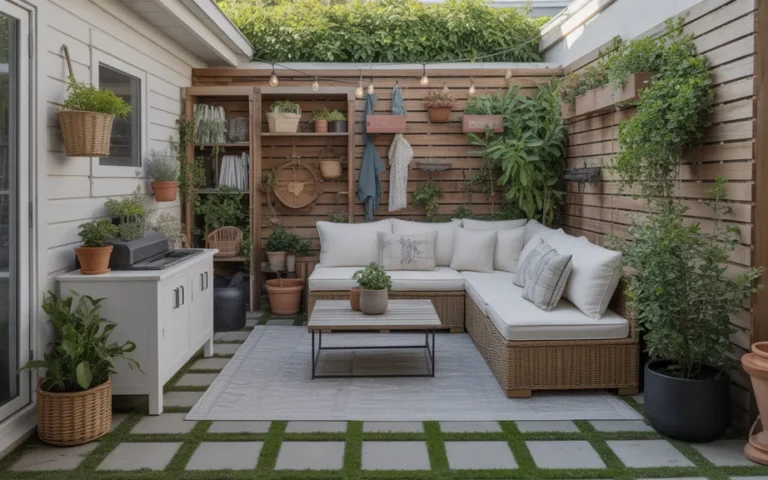
Without a base, furniture feels like it’s drifting. A rug fixes that instantly. Everything sits on something. It defines the area without walls.
I used a small rug once. It made everything look smaller instead of better. That mistake shows up a lot.
Chairs fully on the rug, not half off. That detail matters more than people think.
A properly sized rug quietly holds everything together.
Pro tip: Go larger than feels comfortable. Smaller rugs shrink the entire space visually.
Add One Statement Piece Only
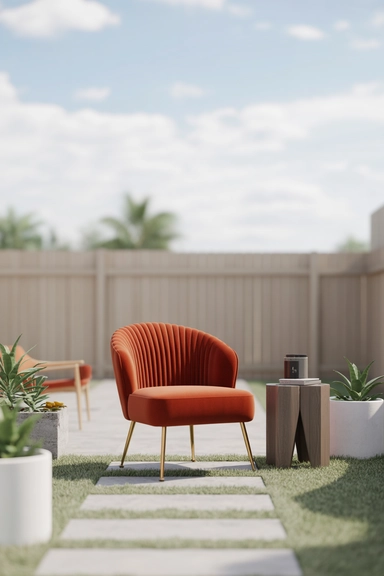
More is not better here.
Pick one piece that stands out. Just one. Everything else should support it. When multiple items try to grab attention, nothing actually does.
I tried adding two “feature” pieces once. They ended up competing instead of working together.
A single strong piece creates focus. Multiple ones create confusion.
Pro tip: If your eye jumps between multiple items, you’ve added too many focal points.
Think About Movement, Not Just Looks
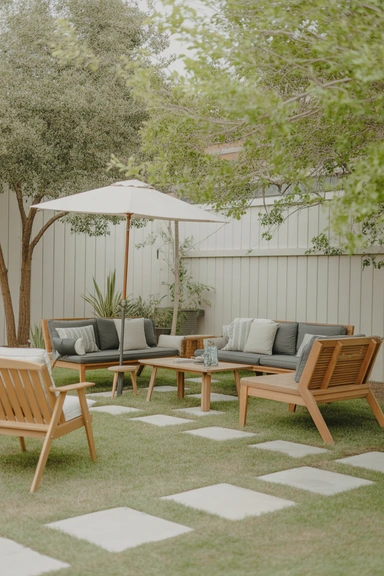
I didn’t think about this at all.
Walking through the space felt awkward. Turning sideways, adjusting steps, small hesitations. That’s what ruins the experience even if it looks good.
You should be able to move through without thinking. That’s when it feels right.
Movement is what turns a setup into a usable space.
Pro tip: Walk through like a guest. If you adjust your steps, something needs to move.
Shade Changes How Long People Stay
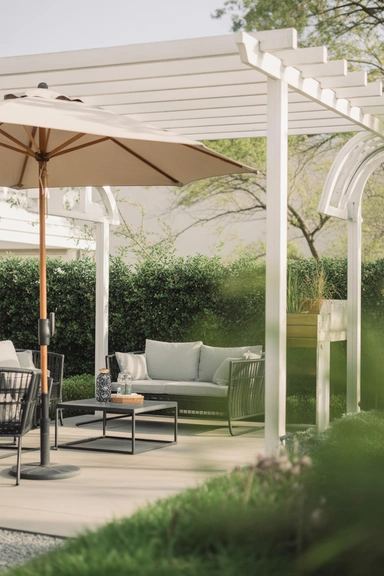
Direct sun ends it fast.
Without shade, people don’t stay. Simple as that. An offset umbrella or a pergola shifts the whole experience. Now the space becomes usable instead of temporary.
You’ll notice people sit longer without realizing why.
Shade controls comfort more than furniture does.
Pro tip: Watch where the sun hits in the afternoon before placing anything permanent.
Add Soft Elements That Move
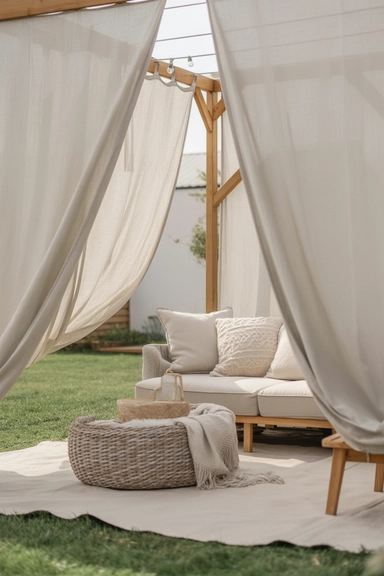
Hard setups feel stiff.
Add something that moves slightly. Curtains, cushions, even a light fabric throw. That movement softens everything without needing more structure.
It brings a kind of life to the space that static setups don’t have.
That small movement keeps the space from feeling frozen.
Pro tip: Keep colors calm here. Movement already adds enough attention.
Hide the Ugly Parts
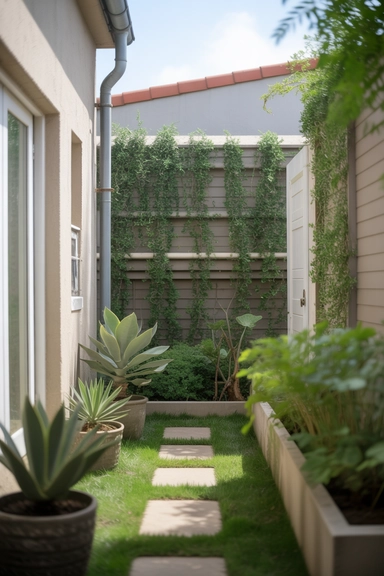
Every yard has something off.
A unit, a pipe, a rough wall. Ignoring it doesn’t work. Cover it first. A panel, a plant, something vertical. Then build your setup in front of that.
Once that distraction is gone, everything else starts to feel cleaner.
Background matters more than people expect.
Pro tip: Fix the background before placing furniture. It saves you from redoing everything later.
Keep One Area Slightly Different
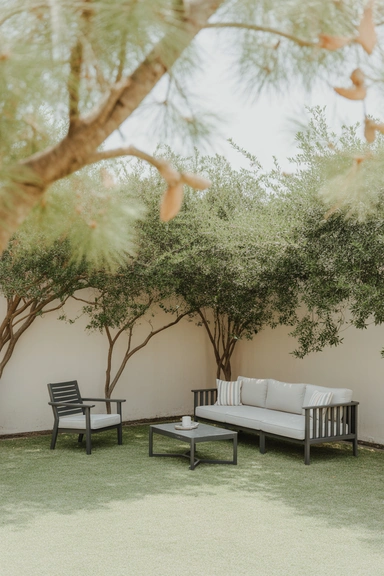
This one changes the feel quietly.
Add a small secondary spot. A single chair in a corner. A tiny table setup away from the main area. It gives the space another option without crowding it.
People tend to move there when they want a quieter spot without even thinking about it.
It adds variety without adding clutter.
Pro tip: Keep it simple. If it starts competing with the main area, it’s too much.
Night Setup Matters More Than Day
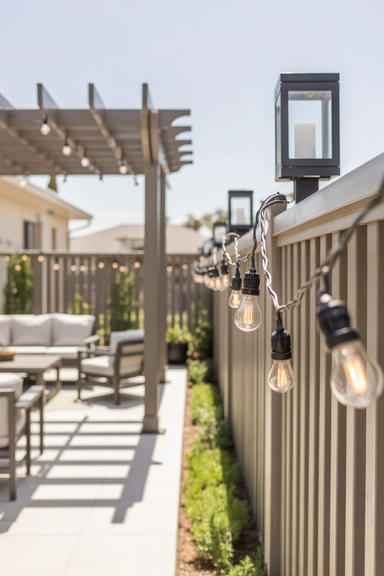
Daylight hides problems.
At night, everything shows. Turn off the main lights and look again. You should still see soft edges, clear shapes, and usable zones.
If everything disappears, the setup was relying too much on daylight.
Night reveals what actually works.
Pro tip: Always test at night before calling it finished.
Conclusion
I kept thinking better things would fix it. They didn’t.
What changed was how everything sat together. The angles, the spacing, the light, the flow. Same pieces, different layout, completely different result.
Most setups look fine until you actually use them. Then something feels off and you can’t explain why.
Fix how it works first. Add things later…
FAQ About Luxury Backyard Ideas
How do I make my backyard look luxury without spending too much?
Start by fixing layout before buying anything. Most of the high-end feel comes from spacing, alignment, and lighting, not expensive furniture. A well-placed seating area with proper angles and soft lighting will always feel better than random expensive pieces.
What is the biggest mistake in backyard design?
Trying to fill every space. Overcrowding kills comfort and makes the setup feel tight. Leaving intentional empty space actually makes everything else look more refined and easier to use.
How do I choose the right layout for my backyard?
Focus on one zone first. Build a small setup that feels natural to sit in and move around. Once that works, expand slowly. If the first area feels off, the entire layout will feel disconnected.
Sarah Mitchell’s Take
I still catch myself wanting to add something instead of adjusting what’s already there. That habit doesn’t go away easily. If you’re stuck, don’t shop. Move one chair, shift the table a few inches, or turn the lights on at night and actually sit there. Most of the time, the answer is already in the space, just slightly out of place.