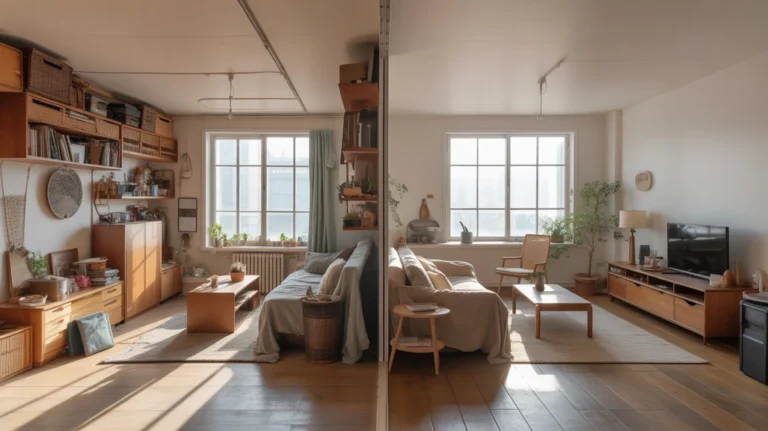

Japanese home organization focuses on simplicity, balance, and mindful use of space, creating interiors that feel calm and functional. Rather than filling rooms with excess storage, this approach emphasizes minimalism, natural materials, and purposeful design. From multi-functional furniture to thoughtful storage rituals, Japanese organization ideas help reduce visual clutter while improving everyday flow. These techniques are ideal for small homes or anyone seeking a peaceful environment. They also complement practical systems like gym room organizing hacks, showing how intentional organization can improve both living and activity spaces.
Shoji Screen Room Dividers
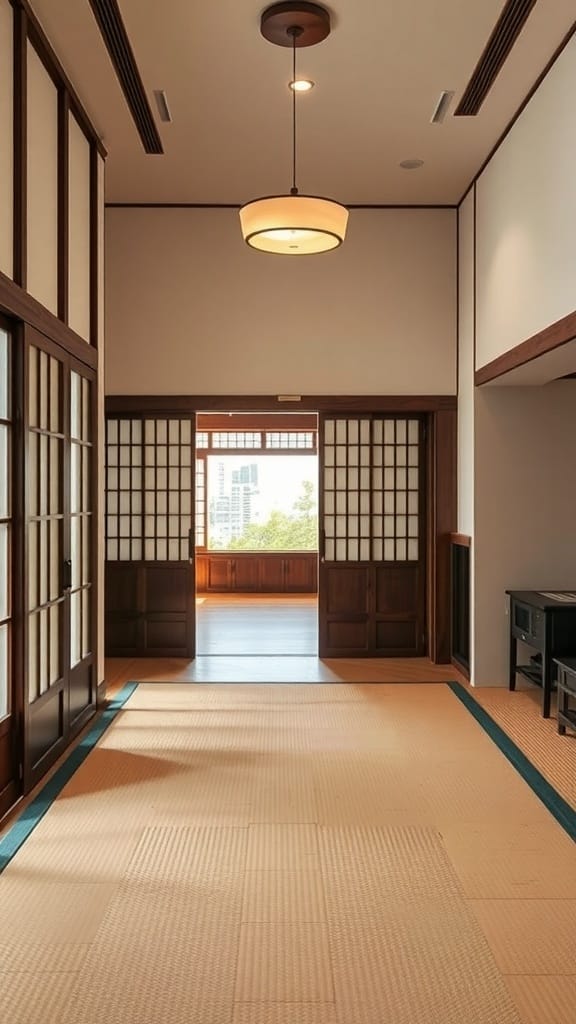
Shoji screens are a classic element in Japanese homes. They serve as room dividers, allowing for flexible space usage. The image shows a beautiful corridor with shoji screens on either side, creating a serene atmosphere.
These screens are made of wood and rice paper, letting in soft light while maintaining privacy. They can easily slide open or closed, making them practical for any room. This feature is perfect for those who want to create separate spaces without permanent walls.
Incorporating shoji screens into your home can enhance the overall look. They add a touch of traditional Japanese design while keeping things modern and functional. Whether you want to separate a living area from a dining space or create a cozy nook, shoji screens are a stylish solution.
Zen Garden Organization
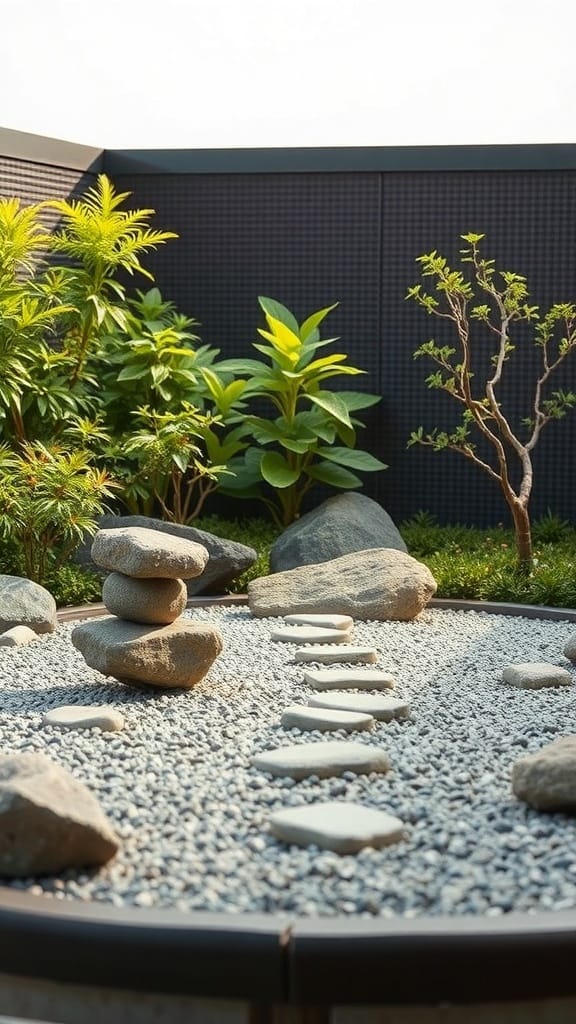
Creating a Zen garden in your home can be a wonderful way to promote relaxation and organization. This image showcases a serene space filled with carefully arranged stones, pebbles, and greenery. The simplicity of the design encourages a peaceful mindset.
The rocks stacked in a balanced way symbolize harmony and stability. They invite you to pause and reflect, making this a perfect spot for meditation or quiet time. The stepping stones lead the way through the garden, guiding you gently as you navigate your thoughts.
Incorporating a Zen garden into your home can help you declutter both your physical space and your mind. The clean lines and natural elements create a calming atmosphere, ideal for unwinding after a busy day.
Consider adding small plants or shrubs to enhance the natural feel. They not only add beauty but also improve air quality. A Zen garden is not just about aesthetics; it’s about creating a space that nurtures your well-being.
Multi-Functional Furniture
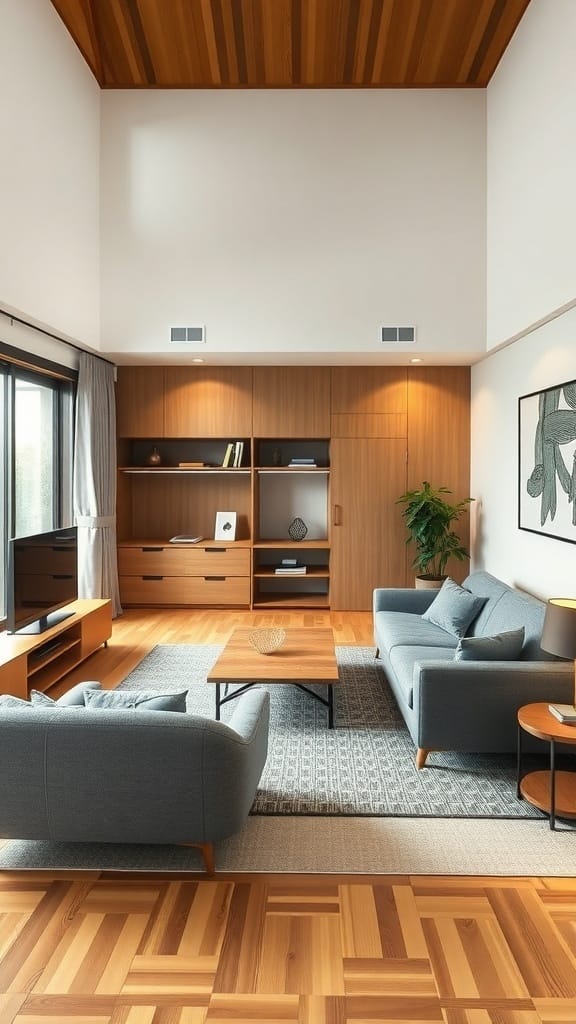
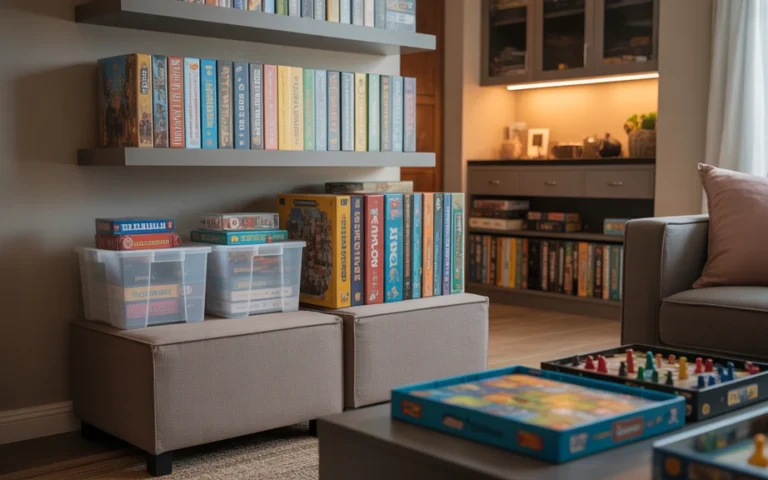
Japanese home organization often focuses on simplicity and functionality. Multi-functional furniture plays a key role in this approach. In the image, you can see a cozy living space that showcases how versatile furniture can enhance a home.
The sofas are designed for comfort but also provide ample seating without taking up too much space. The coffee table in the center is not just for drinks; it can serve as a workspace or a place to display decor. This kind of furniture helps keep the area tidy and organized.
The wooden shelving unit offers storage while adding warmth to the room. It’s perfect for books, plants, or decorative items. This blend of style and practicality is what makes Japanese design appealing. By choosing pieces that serve multiple purposes, you can create a serene and functional living environment.
Under-Bed Storage Innovations
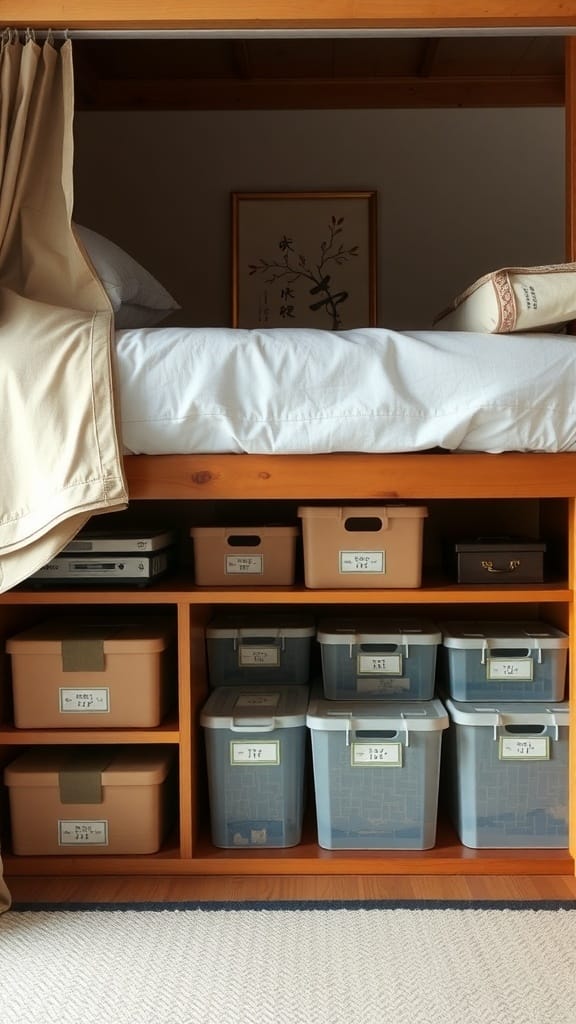
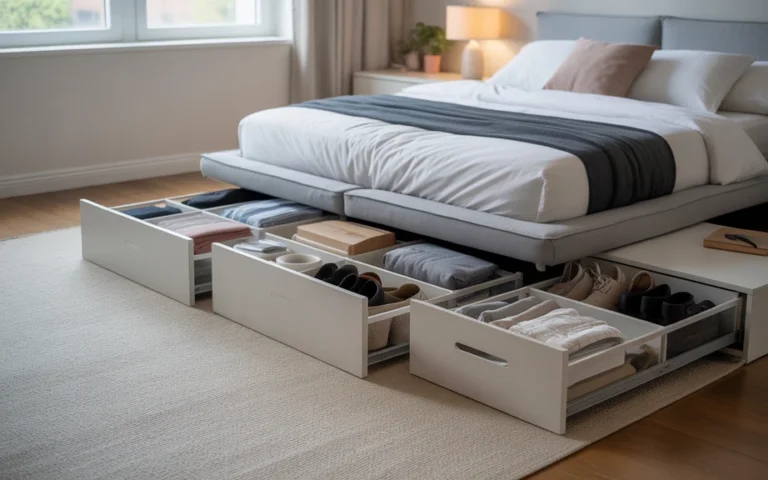
Maximizing space is key in any home, especially in smaller areas. The image shows a clever under-bed storage solution that is both practical and stylish. Here, you can see a bed raised above a set of organized storage bins. This setup not only frees up floor space but also keeps items easily accessible.
The bins are neatly labeled, making it simple to find what you need without rummaging through everything. This is a great way to store seasonal clothes, extra bedding, or even books. The use of clear containers allows you to see the contents at a glance, which is a big plus for quick access.
Incorporating under-bed storage can transform your bedroom into a clutter-free zone. It’s a smart idea for anyone looking to enhance their home organization. Plus, the wooden frame adds a warm touch to the room, blending functionality with aesthetics.
Minimalist Storage Solutions
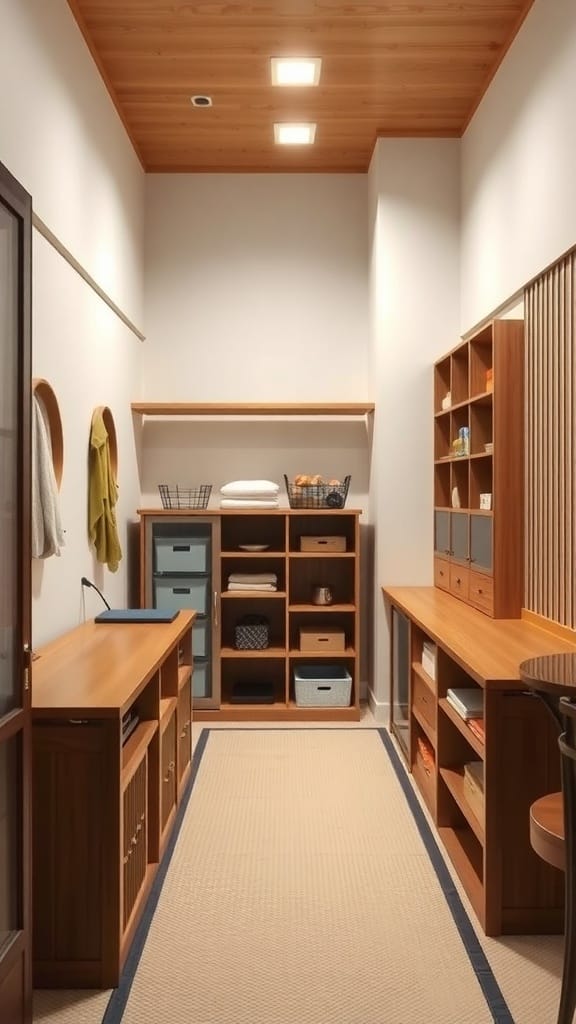
This image showcases a beautifully organized space that embodies minimalist storage solutions. The room features clean lines and a simple color palette, creating a calming atmosphere. The wooden shelves and cabinets offer ample storage while maintaining a sleek look.
On one side, there are open shelves displaying neatly folded towels and a few decorative items. This not only keeps essentials accessible but also adds a touch of style. The other side has closed storage, which helps hide away items that might clutter the view.
The choice of materials, like wood and soft textiles, enhances the warm feel of the space. The tatami mat flooring adds a traditional Japanese touch, making the room feel inviting and cozy.
Incorporating such minimalist storage solutions can help anyone achieve a tidy home. It encourages you to keep only what you need, making your space feel larger and more organized. This approach is perfect for those looking to simplify their living areas.
Nesting Baskets for Clutter Control
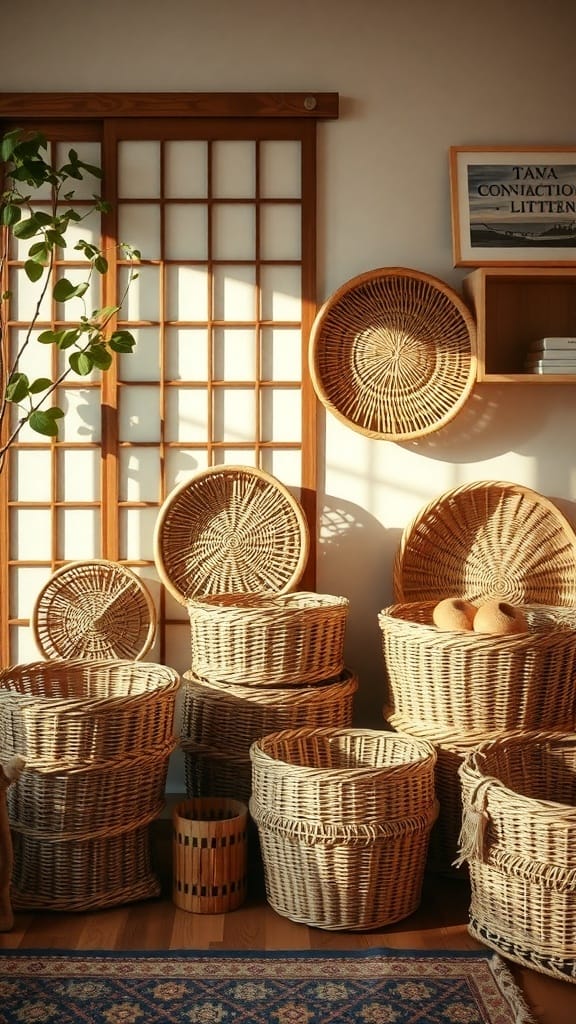
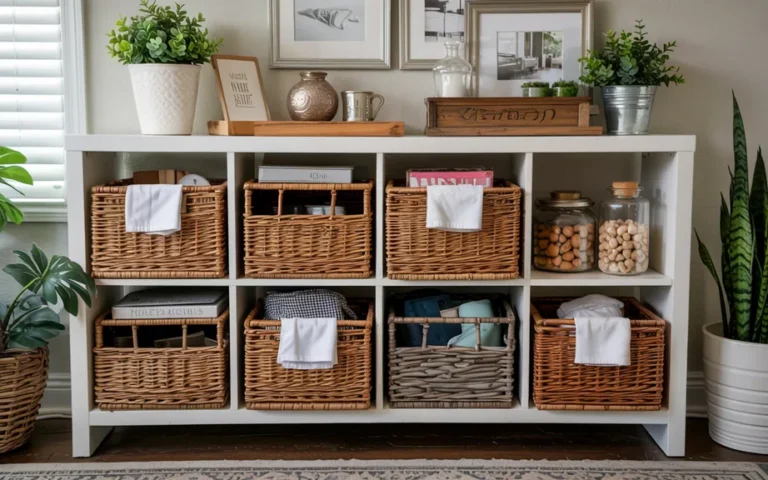
Nesting baskets are a fantastic way to keep your home organized while adding a touch of style. In the image, you can see a collection of beautifully woven baskets in various sizes. They are perfect for storing items like toys, blankets, or even magazines.
These baskets not only help reduce clutter but also look great in any room. The natural materials and warm tones create a cozy atmosphere. You can easily stack them or place them side by side, making them versatile for different spaces.
Using nesting baskets is simple. Just choose a few that fit your decor and start filling them with items that tend to create mess. This method keeps everything tidy and makes it easy to find what you need.
Plus, when you need to clean up quickly, you can just toss everything into the baskets. It’s a quick solution that doesn’t sacrifice style!
Furoshiki Wrapping Techniques
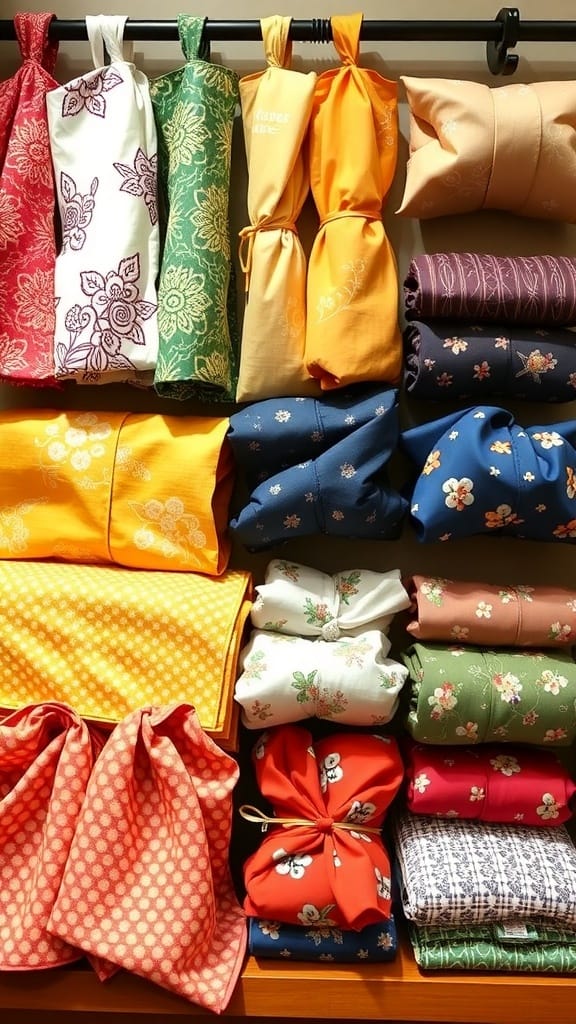
Furoshiki is a traditional Japanese wrapping cloth that adds a touch of elegance to gift-giving and storage. The image showcases a colorful array of furoshiki cloths, each with unique patterns and textures. These vibrant fabrics not only look beautiful but also serve practical purposes.
Using furoshiki is a sustainable choice. Instead of using disposable wrapping paper, you can wrap gifts or carry items in these reusable cloths. The techniques for wrapping can vary, from simple knots to more intricate folds, making it a fun and creative process.
Incorporating furoshiki into your home organization can help keep things tidy. You can use these cloths to bundle items, store seasonal decorations, or even organize your pantry. The versatility of furoshiki makes it a great addition to any home.
Whether you’re wrapping a gift or organizing your space, furoshiki brings a sense of style and tradition. It’s a wonderful way to embrace Japanese culture while being eco-friendly.
Kintsugi-Inspired Repair Techniques
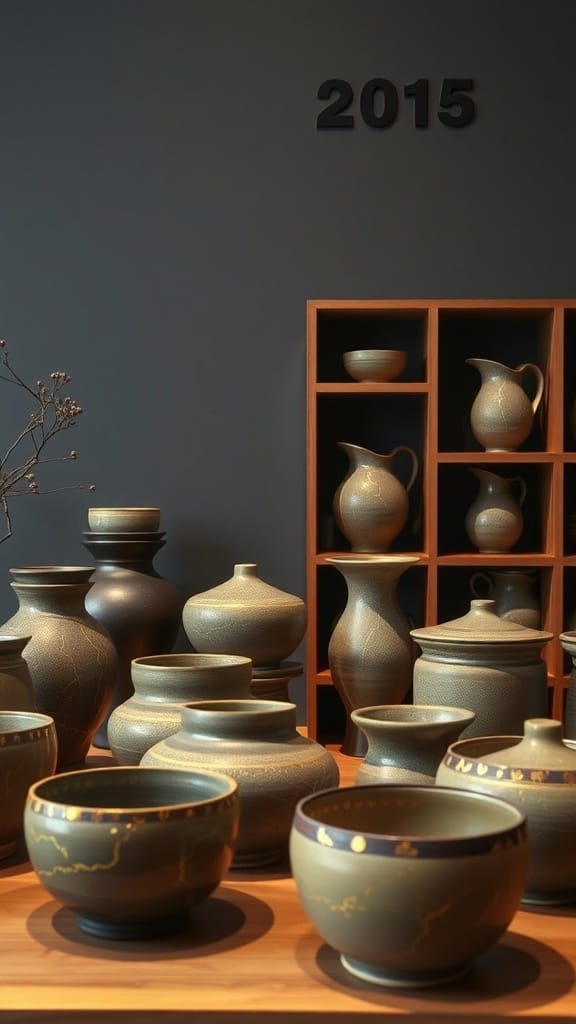
Kintsugi is a beautiful Japanese art form that celebrates imperfections. The image showcases a collection of pottery that embodies this philosophy. Each piece, with its unique shapes and subtle colors, tells a story of resilience and beauty.
The bowls and vases, some with visible repairs, highlight how cracks are filled with gold or lacquer. This technique not only restores the items but also transforms them into stunning works of art. It’s a reminder that flaws can enhance beauty rather than diminish it.
Incorporating Kintsugi-inspired techniques in home organization can be a creative way to embrace imperfections. Instead of discarding broken items, consider repairing them. This approach adds character to your space and encourages a more sustainable lifestyle.
Using Kintsugi in your home can also inspire a calming atmosphere. The repaired pieces can serve as conversation starters, inviting guests to appreciate the beauty of imperfection. So, next time something breaks, think of Kintsugi and how it can turn a mishap into a masterpiece.
Efficient Kitchen Organization
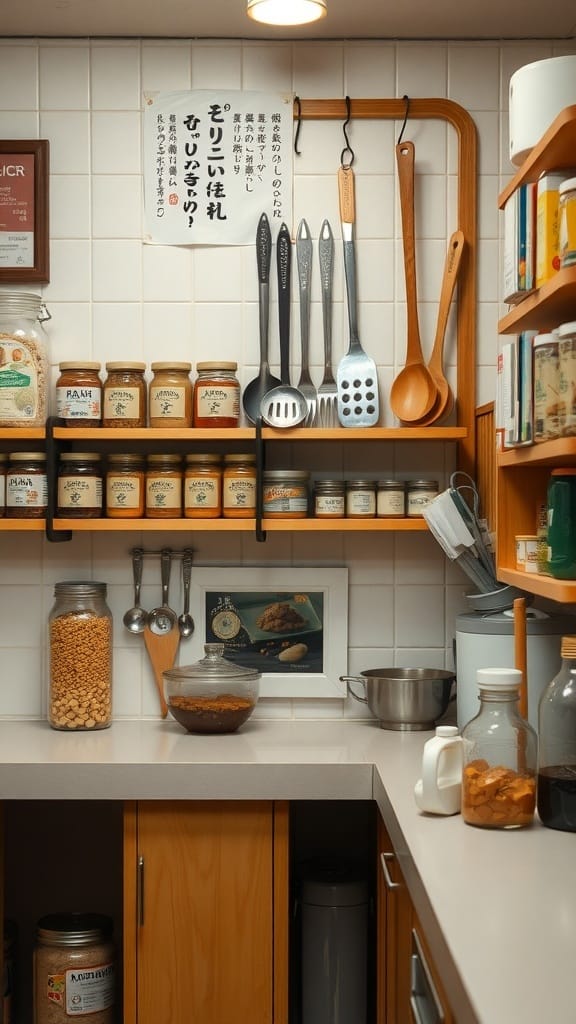
When it comes to kitchen organization, Japanese homes often showcase smart and efficient designs. The image highlights a well-organized kitchen space that maximizes both functionality and aesthetics.
Notice the neatly arranged jars and containers on the shelves. They not only store ingredients but also add a touch of charm to the kitchen. Using clear containers helps you see what you have at a glance, making meal prep easier.
The wall-mounted utensils are another great feature. They save counter space and keep essential tools within reach. This setup encourages a tidy kitchen, where everything has its place.
Also, the use of natural materials, like wood, brings warmth to the space. This combination of practicality and beauty is a hallmark of Japanese design, making the kitchen a pleasant place to cook and gather.
Natural Light Optimization
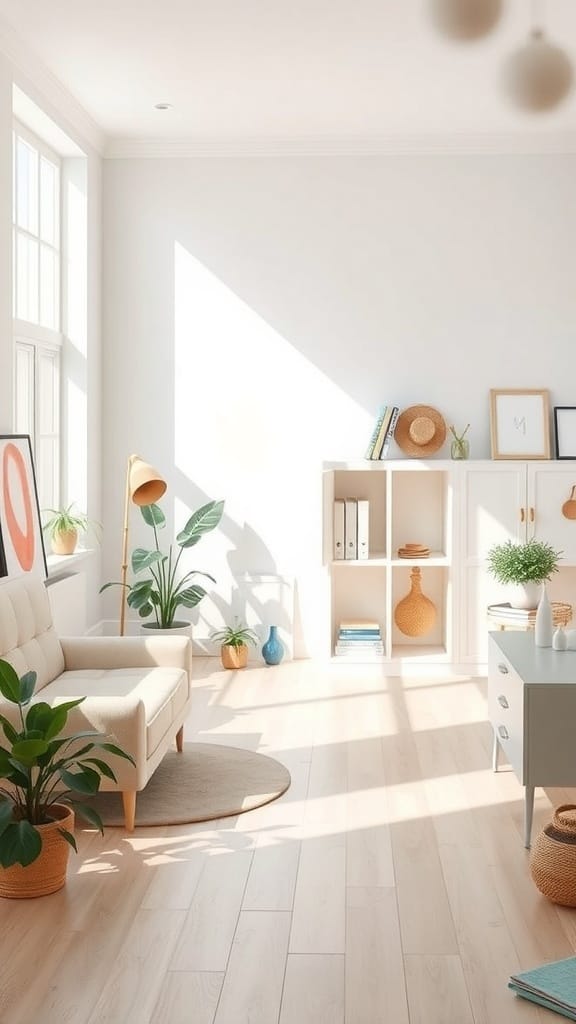
Natural light can transform any space, making it feel open and inviting. In Japanese home organization, maximizing this light is key. The image shows a bright room filled with sunlight, highlighting the beauty of simplicity.
Large windows let in ample daylight, creating a warm atmosphere. This design choice not only brightens the space but also enhances the overall aesthetic. The light wood floors and soft furnishings complement the natural light, making the room feel airy.
Incorporating plants adds a touch of nature, further enhancing the serene vibe. The greenery thrives in sunlight, bringing life to the space. This connection with nature is a fundamental aspect of Japanese design.
To optimize natural light, consider using light colors for walls and furniture. This reflects light and makes the room feel larger. Keeping window areas clear of heavy drapes allows sunlight to flood in, creating a cheerful environment.
Vertical Wall Storage Ideas
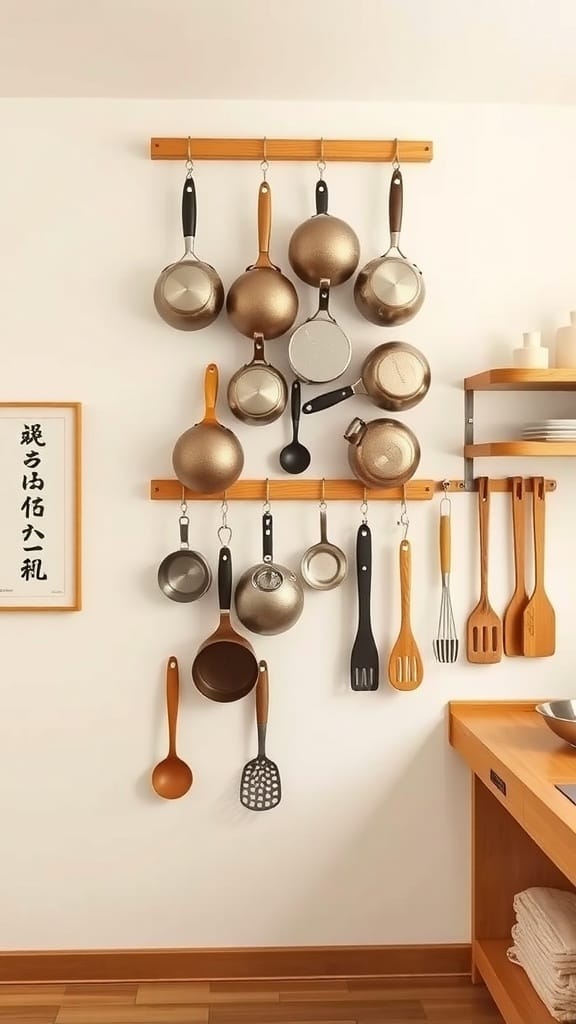
When it comes to maximizing space in your kitchen, vertical wall storage is a fantastic solution. This image showcases a well-organized wall where pots, pans, and utensils hang neatly. It’s not just practical; it adds a stylish touch to the room.
The use of hooks and a wooden rack makes it easy to access your cooking tools. You can grab what you need without digging through drawers. Plus, it keeps everything visible, so you won’t forget what you have.
This method is perfect for small kitchens where counter space is limited. You can also customize the arrangement to fit your style. Whether you prefer a minimalist look or a more eclectic vibe, vertical storage can adapt to your taste.
Consider adding a few decorative elements, like a framed print or a small plant, to enhance the overall look. This way, your kitchen becomes not just a cooking space but a cozy area that reflects your personality.
Artful Display of Collectibles
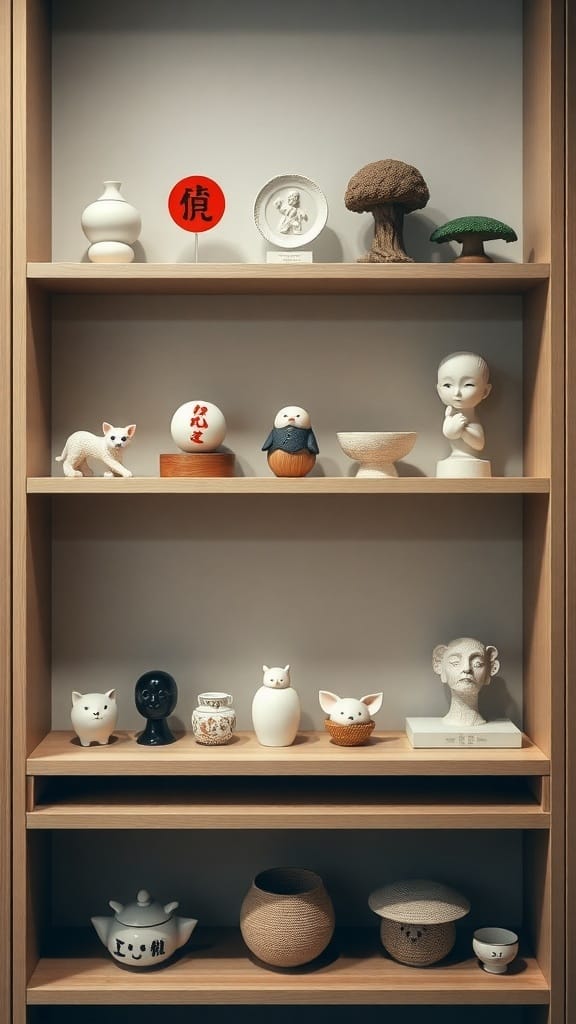
In Japanese homes, showcasing collectibles is an art form. The image captures a beautifully organized shelf filled with unique items that tell a story. Each piece, from the ceramic cat to the whimsical tree, adds character to the space.
Using shelves effectively can transform a simple collection into a focal point. The arrangement in the image highlights balance and variety. Notice how different shapes and colors complement each other, creating visual interest without overwhelming the viewer.
When displaying collectibles, consider the height and spacing of each item. This shelf uses varying heights to draw the eye across the display. Grouping similar items together can also create a cohesive look, making it easier for guests to appreciate the collection.
Don’t shy away from mixing materials. The combination of ceramics, wood, and woven baskets in the image adds texture and depth. This approach makes each piece stand out while still feeling part of a unified display.
Lastly, keep the background simple. A neutral wall allows the collectibles to shine. This minimalist approach is key in Japanese design, emphasizing the beauty of each item without distraction.
Tatami Mat Arrangement
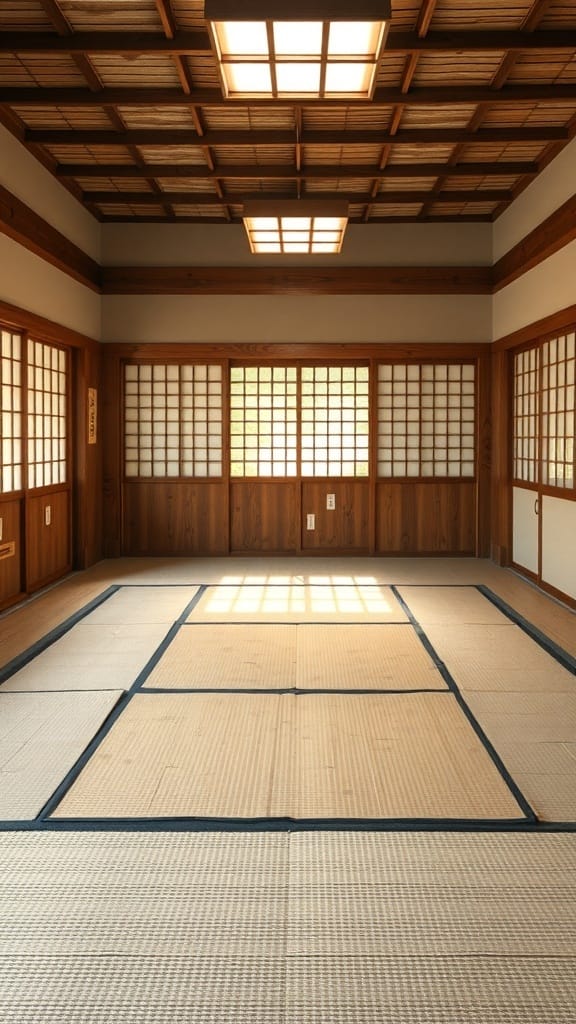
Tatami mats are a staple in traditional Japanese homes. They bring warmth and comfort to any space. The arrangement of these mats can really set the tone for a room.
In the image, you can see a beautifully organized tatami mat layout. The mats are neatly placed, creating a serene and inviting atmosphere. This setup not only looks great but also serves practical purposes.
One of the key features of tatami mats is their versatility. They can be arranged in various ways to fit different activities, whether it’s for tea ceremonies, family gatherings, or simply relaxing. The clean lines and natural materials promote a sense of calm.
When arranging tatami mats, consider the flow of the room. Leave enough space for movement, and think about how the light interacts with the mats. The natural fibers of tatami can enhance the overall aesthetic, making the space feel more connected to nature.
Overall, a well-thought-out tatami mat arrangement can transform a room into a peaceful retreat. It’s a simple yet effective way to embrace Japanese home organization ideas.
Shoe Storage Solutions
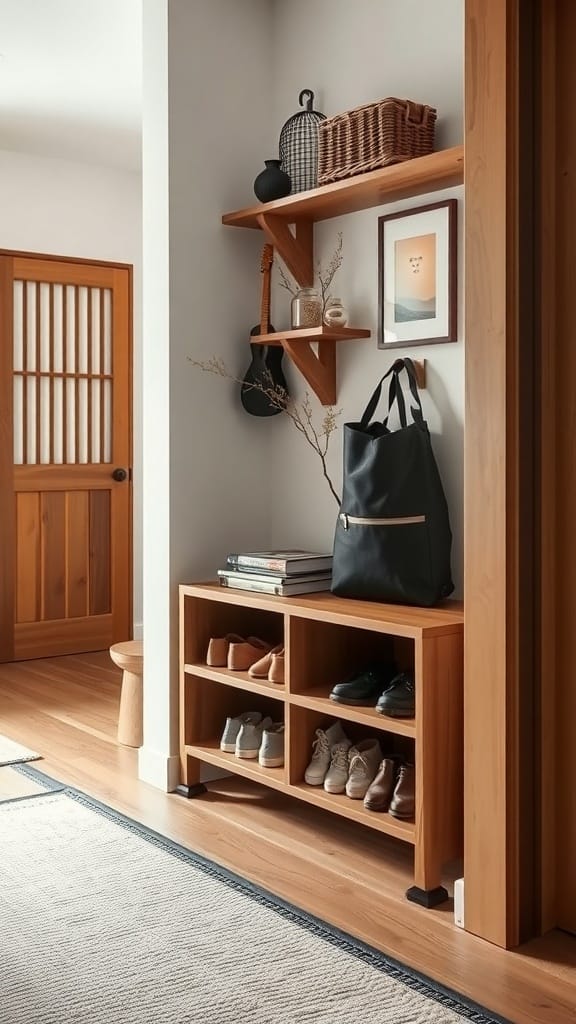
Keeping shoes organized can be a challenge, but Japanese homes offer some clever solutions. The image showcases a tidy entryway with a stylish shoe storage unit. This design not only saves space but also adds a touch of elegance to the home.
The wooden shoe rack features several compartments, making it easy to store different types of footwear. From casual sneakers to dress shoes, everything has its place. This setup encourages a neat environment, which is a key aspect of Japanese home organization.
Above the shoe rack, there are decorative shelves that hold a few personal items. This adds character to the space while keeping it functional. Using vertical space for storage is a smart way to maximize room in smaller areas.
Incorporating such shoe storage solutions can transform your entryway into a welcoming area. It’s all about simplicity and functionality, which are hallmarks of Japanese design.
Decluttering Rituals
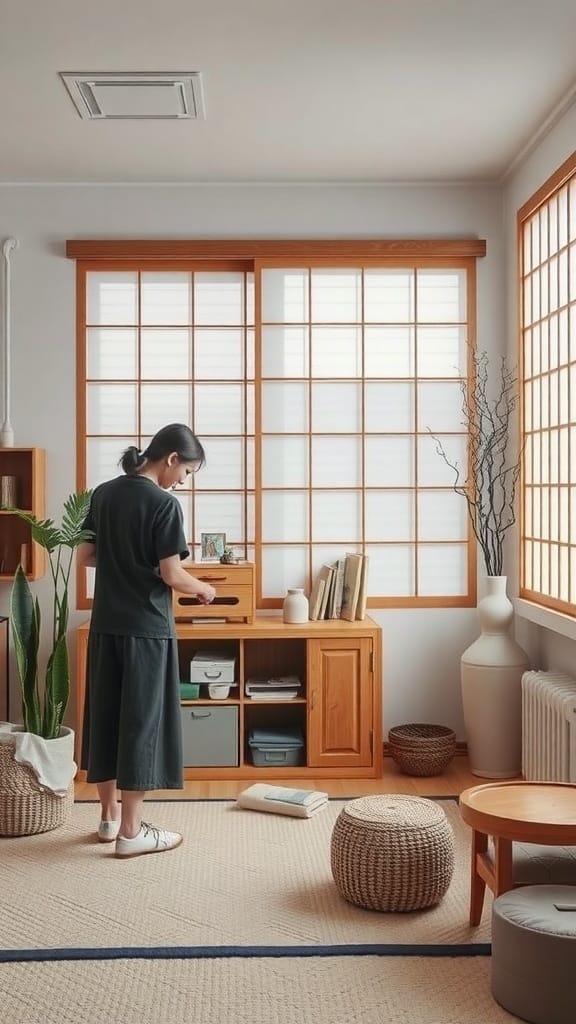
In the image, we see a serene and organized space that reflects the essence of Japanese home organization. A person stands in front of a wooden storage unit, thoughtfully sorting through items. The room is filled with natural light, highlighting the simplicity and calmness that comes with decluttering.
Decluttering is not just about getting rid of things; it’s a ritual that brings clarity and peace to your home. In Japanese culture, this practice often involves a mindful approach. Each item is evaluated for its purpose and emotional value. This helps create a space that feels inviting and functional.
Incorporating decluttering rituals into your routine can be refreshing. Start small by dedicating a few minutes each day to sort through a specific area. As seen in the image, using storage solutions like baskets and boxes can help keep things tidy. This method not only organizes your belongings but also enhances the aesthetic of your space.
Remember, the goal is to create a home that feels good to you. Embrace the process and enjoy the transformation that comes with a decluttered space.
Seasonal Wardrobe Management
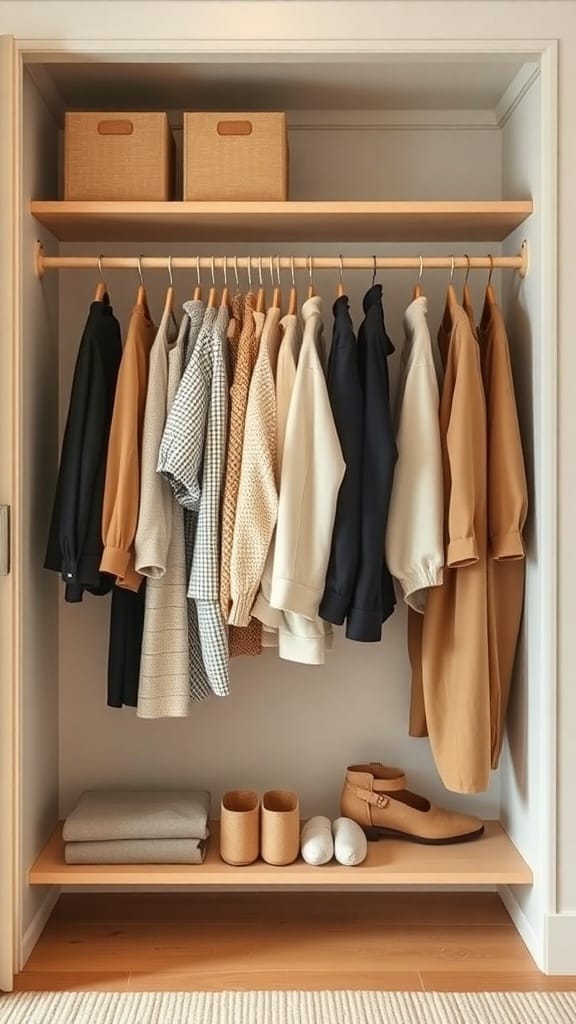
Managing your wardrobe seasonally can make a big difference in how you feel about your clothes. The image shows a neatly organized closet with a variety of clothing items hung up and some boxes on the shelf. This setup is not only visually appealing but also practical.
When the seasons change, it’s a great time to assess what you have. Start by taking out clothes that you won’t wear for a while. This helps create space for seasonal favorites. In the image, you can see a mix of light and warm colors, which is perfect for transitioning between seasons.
Using storage boxes, like the ones in the image, can keep your off-season clothes safe and tidy. Labeling them makes it easy to find what you need when the weather changes. The shoes and folded items on the shelf add a nice touch, showing that every piece has its place.
By organizing your wardrobe this way, you’ll save time getting dressed and enjoy a more peaceful space. Plus, it’s a fun way to rediscover pieces you might have forgotten about!
Bento Box Meal Prep
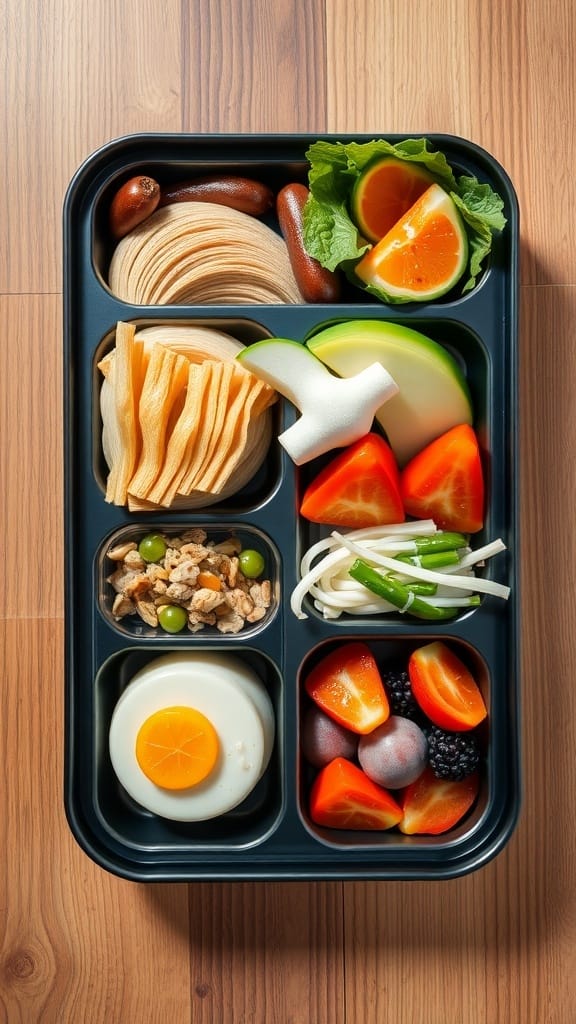
Bento boxes are a fantastic way to organize meals while keeping them visually appealing. This image showcases a beautifully arranged bento box filled with a variety of ingredients. Each section is thoughtfully divided, making it easy to enjoy a balanced meal.
The bento box features a mix of proteins, vegetables, and fruits. There are sliced sausages, colorful bell peppers, and fresh greens. The addition of fruits like oranges and berries adds a sweet touch. This not only makes the meal nutritious but also fun to eat.
Meal prepping with bento boxes can save time during busy weekdays. You can prepare different ingredients in advance and mix and match them throughout the week. This way, you can enjoy a variety of flavors without getting bored.
To create your own bento box, start with a base of grains like rice or quinoa. Then, add your choice of protein, such as chicken, tofu, or fish. Fill the remaining sections with colorful veggies and fruits. Don’t forget to include a small treat or snack to make it even more delightful!
Harmonious Color Schemes
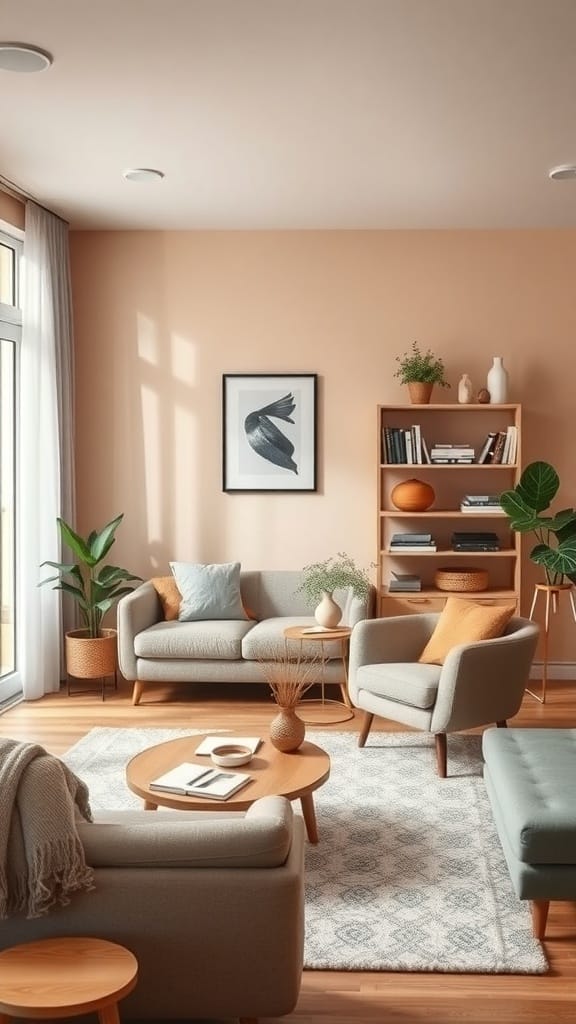
In Japanese home organization, color plays a key role in creating a peaceful atmosphere. The image showcases a living space with soft, muted tones that promote calmness. The warm peach walls blend beautifully with the natural wood elements and greenery, making the room feel inviting.
The furniture is arranged thoughtfully, with a light gray sofa and cozy accents that add warmth without overwhelming the space. The use of plants brings a touch of nature indoors, enhancing the serene vibe. This balance of colors and textures is essential in Japanese design, where harmony is prioritized.
Choosing a harmonious color scheme can transform your home into a tranquil retreat. Soft pastels and earthy tones work well together, creating a soothing environment. Consider incorporating similar colors in your own space to achieve that peaceful Japanese aesthetic.
Traditional Japanese Craft Storage
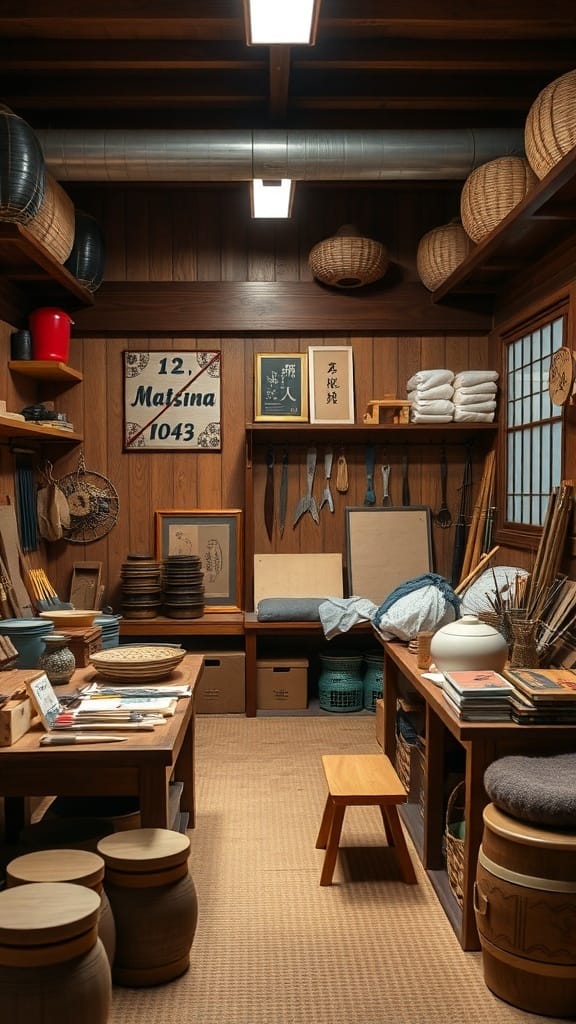
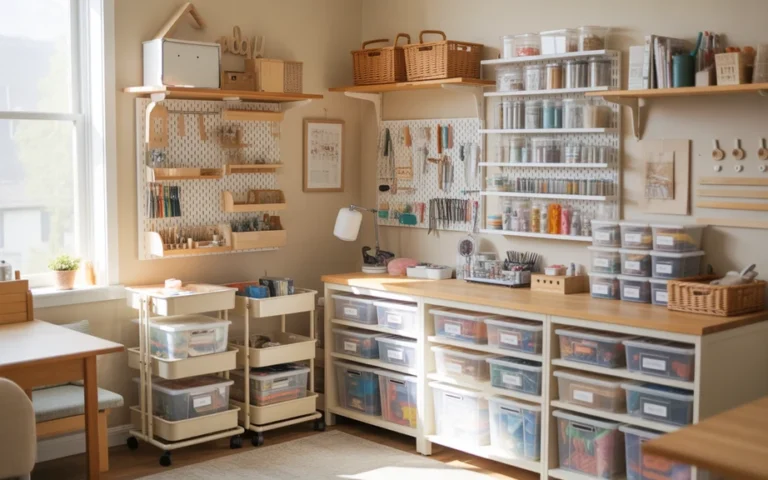
Step into a world of simplicity and organization with traditional Japanese craft storage. The image showcases a beautifully arranged workspace that reflects the essence of Japanese design. Every item has its place, making it easy to find what you need.
The warm wooden tones create a cozy atmosphere. You can see various tools and materials neatly stored on shelves, emphasizing functionality. The use of natural materials, like woven baskets and wooden containers, adds a touch of authenticity.
Notice how the space is not cluttered. Instead, it invites creativity. The open layout allows for easy movement, making crafting a joy rather than a chore. This setup encourages a mindful approach to organization, where each item is appreciated.
Incorporating elements like this into your own home can inspire a sense of calm. Whether you’re a seasoned crafter or just starting, having a dedicated space like this can enhance your experience. Embrace the beauty of simplicity and let it guide your own organization journey.
Mindful Space Utilization
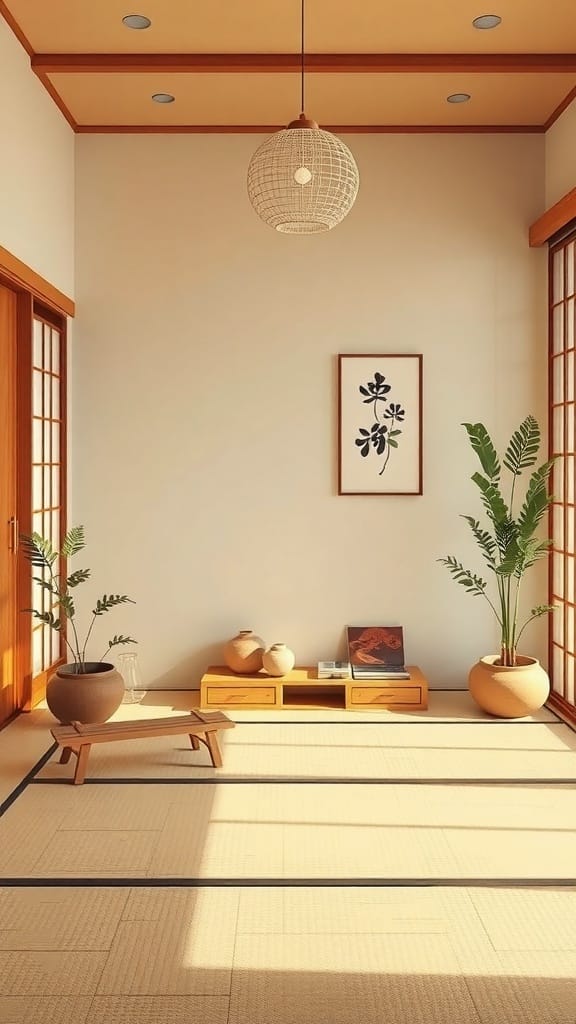
Creating a mindful space in your home can be a game changer. The image showcases a serene room that embodies simplicity and functionality. The clean lines and natural materials invite a sense of calm.
The use of plants adds life and freshness to the space. They not only beautify the room but also improve air quality. The wooden furniture is minimal yet practical, providing storage without overwhelming the area.
Notice how the light floods in, highlighting the tatami flooring. This choice of flooring is traditional and adds warmth. It encourages a connection to nature, which is a key aspect of Japanese design.
Incorporating art, like the framed piece on the wall, gives personality to the room. It’s a reminder that even in minimalism, you can express yourself. Each element in this space is purposeful, making it a perfect example of mindful space utilization.
Organizing with Nature
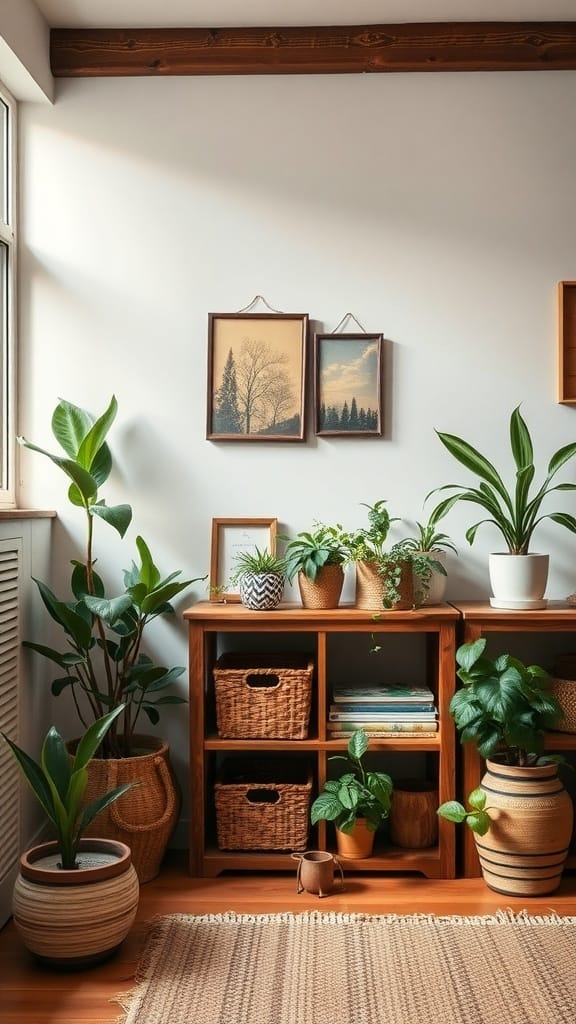
Bringing nature indoors can make your home feel fresh and inviting. In the image, you see a cozy corner filled with various plants and a wooden shelf. The plants add life and color, creating a calming atmosphere.
Using natural elements like plants not only beautifies your space but also helps with organization. The shelf is neatly arranged with woven baskets and books, making it functional and stylish. This blend of greenery and tidy storage is a great example of Japanese home organization.
Incorporating plants into your home can improve air quality and boost your mood. Choose a mix of sizes and types to create visual interest. The earthy tones of the pots and the wooden shelf complement each other, enhancing the overall aesthetic.
Consider placing plants near windows to ensure they get enough sunlight. This not only helps the plants thrive but also brightens up your living space. A well-organized area with nature-inspired elements can truly transform your home.
Paper Organization Techniques
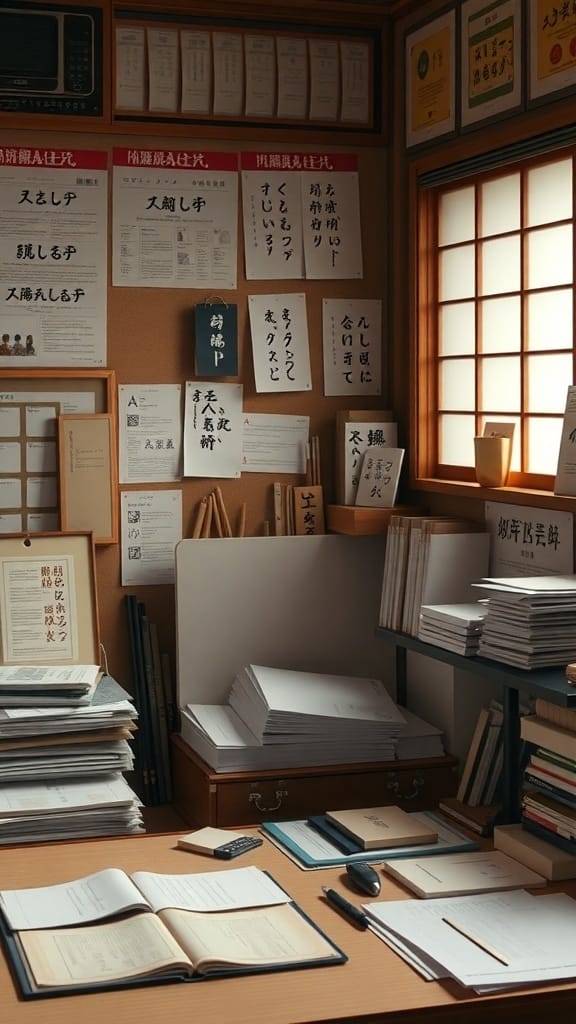
In this cozy workspace, we see a perfect example of how to keep paper organized in a Japanese home. The walls are lined with neatly pinned documents and notes, showcasing a blend of functionality and aesthetics. This setup emphasizes the importance of clarity and order.
On the desk, various stacks of papers are arranged methodically. The use of folders and boxes helps to categorize different types of documents. This method not only saves space but also makes it easy to find what you need quickly.
Another key feature is the open books and notebooks, which suggest an active engagement with the materials. This encourages a habit of regular review and organization. Incorporating a few decorative elements, like a small plant or a traditional item, can also enhance the workspace without cluttering it.
Overall, this image inspires us to create our own organized paper systems at home, reflecting the Japanese philosophy of simplicity and efficiency.
✅ Conclusion
Japanese home organization is about more than tidiness—it’s about creating harmony between space, function, and lifestyle. By using minimalist storage, natural materials, and mindful decluttering habits, you can transform your home into a calm and purposeful environment. Start by applying a few ideas that resonate with you, simplify your surroundings gradually, and focus on intentional living. Over time, these practices help reduce stress, improve flow, and create a clutter-free space that truly feels peaceful.