
Introduction
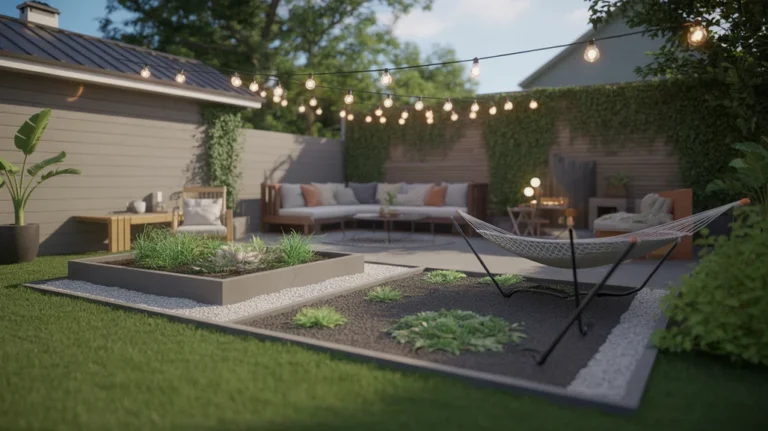
I drew up my backyard design on a napkin, handed it to a landscaper, and spent six thousand dollars turning it into reality. Three months later I hated it. The lines were too harsh, the materials clashed, and the whole space felt cold and uninviting no matter what furniture I put in it. Tearing out expensive work you paid someone else to do is a specific kind of painful. Took me two more seasons and a lot of smaller decisions to understand what modern outdoor design actually means versus what it looks like in magazine photos. Still learning some of it.
Start With a Design Plan That Solves Real Problems
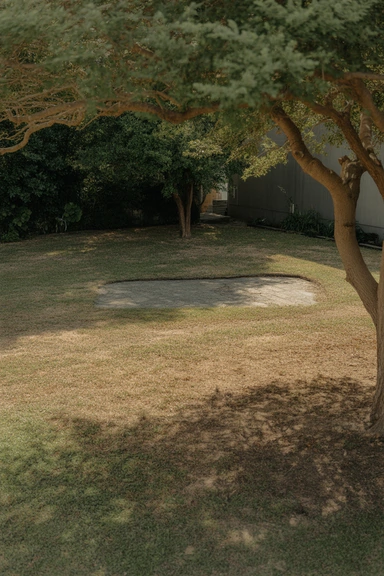
A backyard design that looks good in a sketch fails fast when it ignores how the space actually drains, sits in sun, and connects to the house.
Walk the yard at different times of day for one full week before committing to any layout. Note where water pools after rain. Mark which areas stay shaded all afternoon. Find the spots that dry out fastest. These details determine what materials last and what plants survive in your specific yard, not someone else’s.
Sketch the layout on paper before spending anything. A rough drawing with dimensions catches proportion mistakes that photographs and mood boards always hide. A seating area that looks balanced in a photo can feel cramped or oddly proportioned once it exists in your actual space.
Choose a Consistent Material Palette and Stick to It
Modern backyard design fails most often because of material inconsistency. Too many textures, too many colors, too many finishes competing for attention.
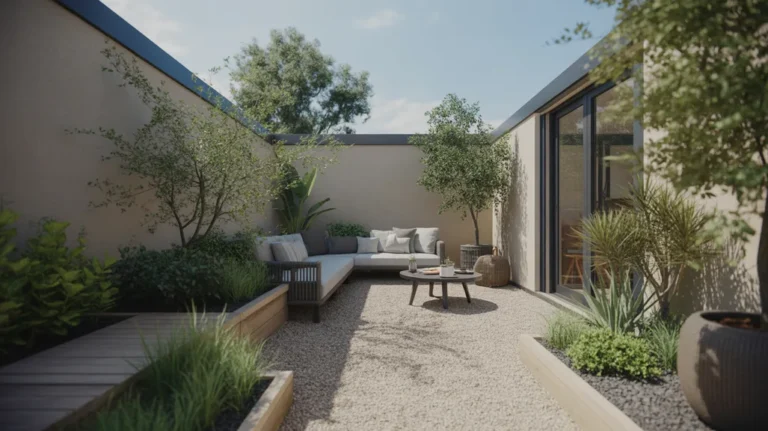
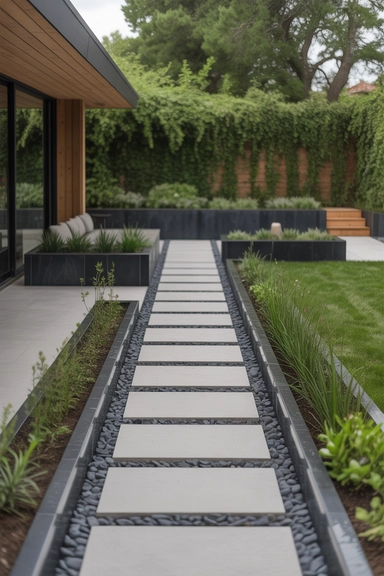
Pick two or three materials and use them everywhere. Concrete and steel. Natural wood and black metal. Stone and gravel. Choose a combination and repeat it across every element — the patio surface, the planters, the raised beds, the furniture frames. Repetition reads as intention. Variety without a system reads as chaos.
I used cedar wood for the pergola, teak for the furniture, pine for the raised beds, and bamboo for the privacy screen in my first modern redesign. Four different woods in one backyard. Nothing connected. Every element fought the others. Pulled two of them out the following season and replaced with steel planters to create some consistency.
Use Concrete Pavers for a Clean Modern Surface
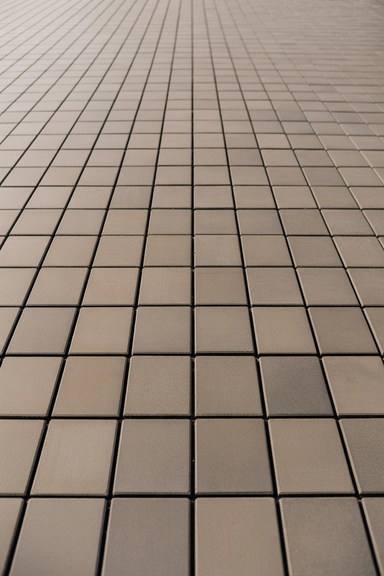
Nothing says modern outdoor design faster than a well-laid concrete paver surface with tight joints and clean edges.
Large format pavers in a single color create the most contemporary look. Sixty-by-sixty centimeter pavers laid in a running bond or stacked pattern with two millimeter joints give a surface that reads as architectural rather than decorative. Keep joint sand swept tight. Wide gaps with weeds pushing through immediately undercut the clean aesthetic.
Set pavers on a two-inch crushed gravel base over compacted soil. That base handles drainage and prevents frost heave. Pavers laid directly on soil or sand without a compacted base shift within one season and the joint lines open up unevenly. Before you spend money on materials, backyard landscaping ideas is the one thing that will stop you from laying an expensive surface on a base that fails in year two.
Add Steel Edging Along Every Bed and Border
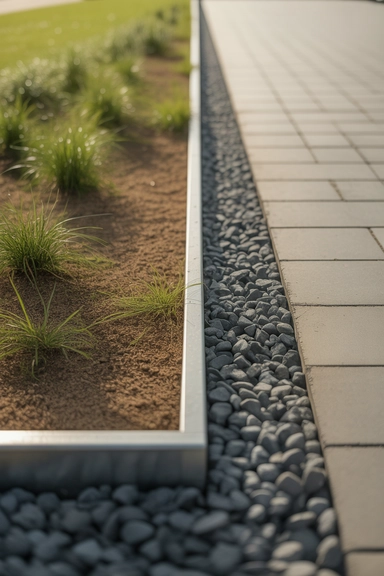
Steel edging is the detail that separates a modern backyard from one that just has modern furniture in it.
Cor-Ten steel edging develops a rust patina over time that looks intentional and pairs naturally with stone, gravel, and dark wood. Standard galvanized steel edging stays silver and works with a more minimal palette. Both options hold bed edges sharply for years without buckling or shifting the way plastic edging does.
Install edging so the top sits flush with or just barely above the paving surface. Edging that sticks up creates a tripping hazard and draws the eye to the border instead of the planting inside it. The border should disappear. The planting should be what you notice.
Build a Pergola With Clean Lines and No Decorative Details
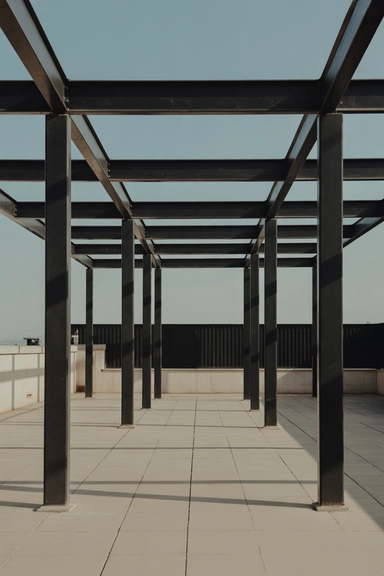
Traditional pergolas have curved rafters, ornamental post caps, and lattice detailing. Modern pergolas have none of that.
Straight square posts, flat horizontal beams, and clean ninety degree connections. That is the entire design. The simplicity is the point. Use one hundred by one hundred millimeter steel posts or large section timber with no taper and no decorative routing on the edges. Every added ornamental detail moves the structure away from modern and toward traditional.
Powder-coated black steel pergola kits ship flat and assemble in a weekend. They hold their finish longer than painted timber, never need staining, and their weight gives them a solidity that lightweight aluminum kits lack. The cost difference is worth it for a permanent structure.
Plant in Blocks Not Scattered Groups
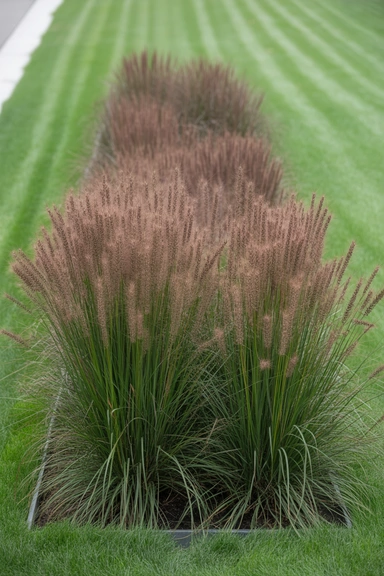
Scattered planting looks cottage garden. Block planting looks modern.
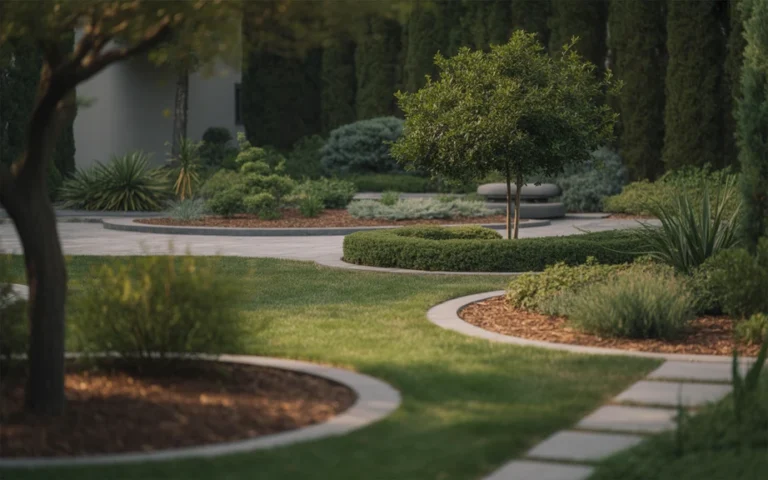
Group the same plant species together in masses of five, seven, or nine rather than mixing single specimens throughout a bed. A mass of ornamental grass reads as a design decision. Three individual grasses dotted between other plants reads as leftover stock from a garden center visit.
Karl Foerster feather reed grass planted in a block of seven creates a strong vertical element that moves in the wind and provides four-season structure. Mexican feather grass planted as a low flowing mass softens the base of steel edging or concrete walls without competing with the hard materials around it. Both plants need almost nothing once established.
Use a Restricted Plant Palette for a Cohesive Look
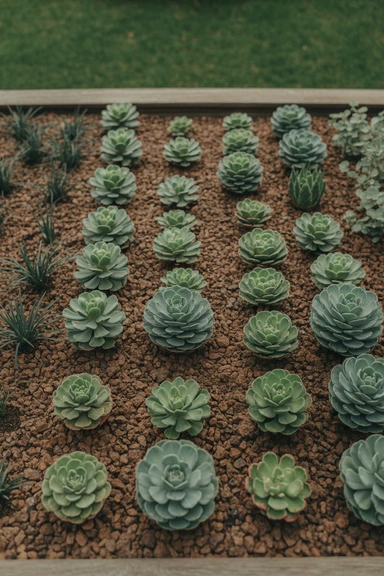
More plant variety does not mean a better garden. In modern design it means a busier one.
Choose four to six plant species maximum for the entire backyard. Repeat those species across every bed. Consistency in planting creates the same visual calm that consistency in materials creates. The eye moves through the space without stopping and starting at competing focal points.
If you have not worked through backyard garden ideas before committing to a plant palette, you are probably about to choose plants that look right at the nursery and wrong in the ground — most people only figure that out after the first season.
Install Outdoor Lighting as Architecture Not Decoration
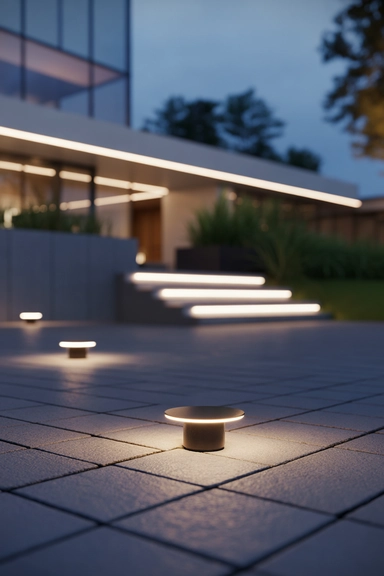
Modern outdoor lighting disappears into the structure and illuminates the space without being visible itself.
Recessed deck lights set flush into paving surfaces, uplights buried at the base of specimen plants, and LED strip lighting hidden underneath pergola beams all create light without showing the source. The effect is a backyard that glows at night with no visible fixtures interrupting the clean lines of the space during the day.
Warm white LED at 2700 to 3000 Kelvin produces the most flattering outdoor light. Cool white above 4000 Kelvin reads as clinical and harsh in an outdoor living space regardless of how good the fixture looks. Get the color temperature right before installing. Replacing installed fixtures because the light color is wrong is an expensive and annoying afternoon.
Add a Water Feature With a Minimal Footprint
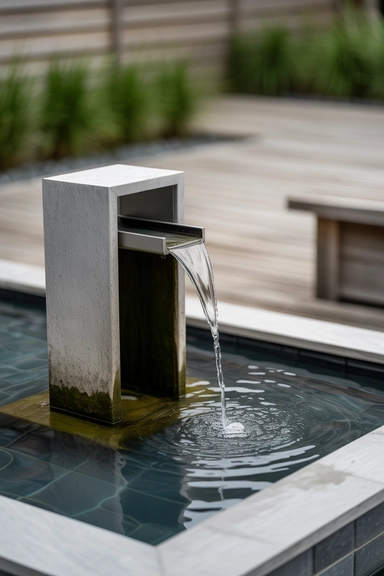
Moving water belongs in modern backyard design because it adds sensory depth without visual clutter.
A disappearing fountain — a pump in a buried reservoir pushing water up through a single basalt column or steel spout — takes up less than two square feet of surface area and produces enough sound to mask street noise from a standard suburban yard. No pond. No basin. No visible water surface. Just sound and movement emerging from what looks like a simple stone or steel element.
Place it within earshot of the main seating area. A water feature you cannot hear from where you sit delivers almost none of its value. Test the position before making it permanent by running a garden hose nearby and listening from the seating area first.
Use Raised Beds as Architectural Elements
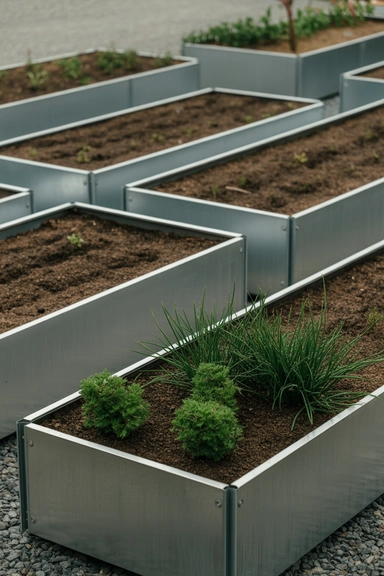
A raised bed is not just a place to grow things. In a modern backyard it is a structural element that organizes space the same way a low wall does.
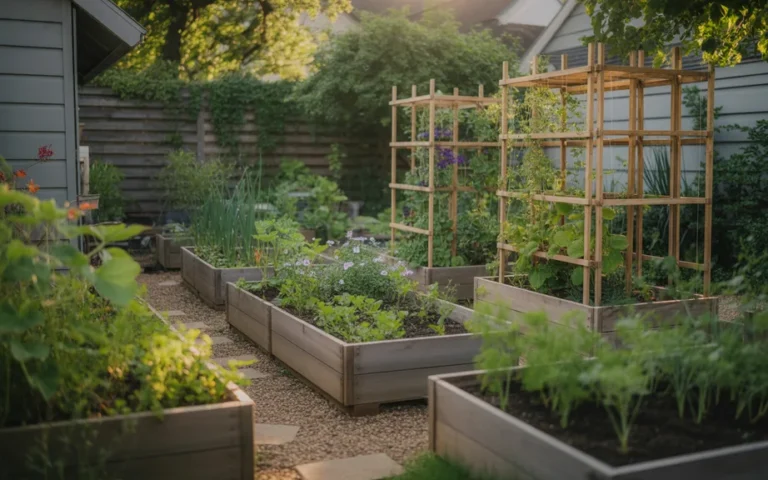
Build raised beds from Corten steel, poured concrete, or powder-coated steel panels. These materials age well, hold their lines sharply, and connect visually to other hard elements in the yard. Timber raised beds work in a modern space only when the timber is thick section, dark stained, and jointed cleanly. Thin pine boards with visible screws read as temporary rather than designed.
Use raised beds to define zones. A row of knee-height steel raised beds separates a dining area from a lawn without building a fence. The separation feels architectural. The plants inside soften the hard material. Both things happen at once.
Create a Dining Zone Separate From the Seating Zone
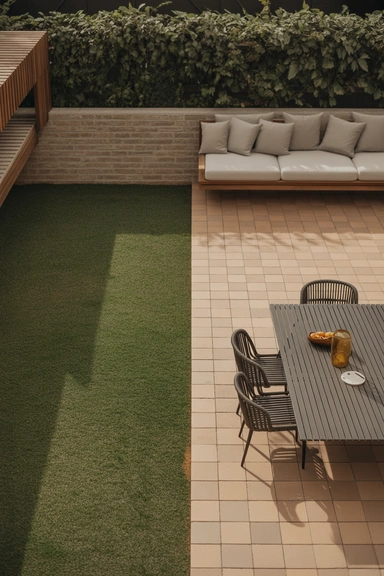
One of the most common backyard design mistakes is treating the whole outdoor space as one undifferentiated area.
A dining zone needs a hard level surface, a table sized for the number of people who regularly eat there, and overhead definition — a pergola, a shade sail, or a canopy that signals this area has a specific purpose. A seating zone needs enclosure, soft surfaces underfoot, and lower lighting. Both zones in the same backyard serve different functions and should feel different to be in.
Separate them with a change in surface material, a planting strip, or a level change of even two or three inches. That small physical distinction tells the brain it has moved from one space to another and the backyard suddenly feels larger than its actual square footage.
Add Privacy Without Building a Fence
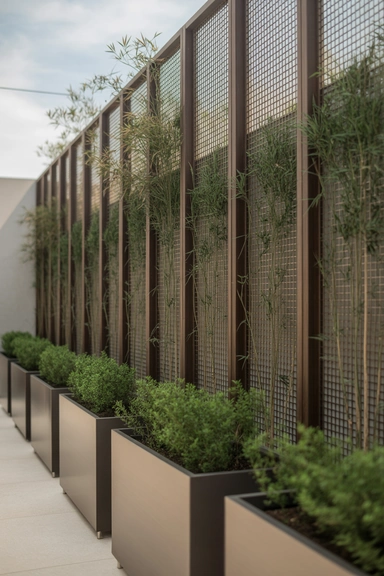
Fences close a space down. Planted screens open it up while still blocking sightlines.
Bamboo in contained raised steel planters grows to full screening height within two seasons, stays evergreen year round, and connects visually with a modern material palette. Contain it in a planter with no drainage holes into the surrounding soil or it spreads underground and becomes a removal project within three years.
Tall steel mesh panels with climbing plants trained across them create a living screen that improves every season. The mesh disappears as coverage fills in and what remains reads as a green wall rather than a fence. Install the mesh panels in a concrete footing so they stay rigid under the weight of mature climbing plants.
Use Gravel as a Design Material Not Just Ground Cover
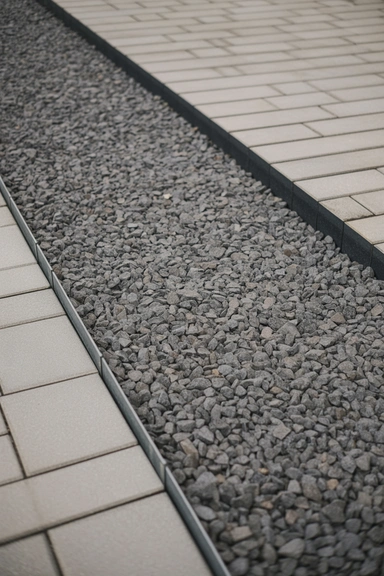
Gravel is not a cheap alternative to paving. In a modern backyard it is a deliberate material choice that creates texture, controls drainage, and defines zones without hard edges.
Crushed granite or washed river pebble in a single consistent size and color reads as intentional. Mixed gravel in multiple sizes and colors reads as leftover material dumped to cover bare soil. Choose one type and use it consistently across every gravel area in the yard.
Steel edging separates gravel zones from planted beds and paved areas cleanly. Without edging gravel migrates into every surrounding surface within one season. Edge every gravel area before laying a single bag. That order of operations matters more than most people realize until they skip it.
Keep the Lawn Simple or Remove It Entirely
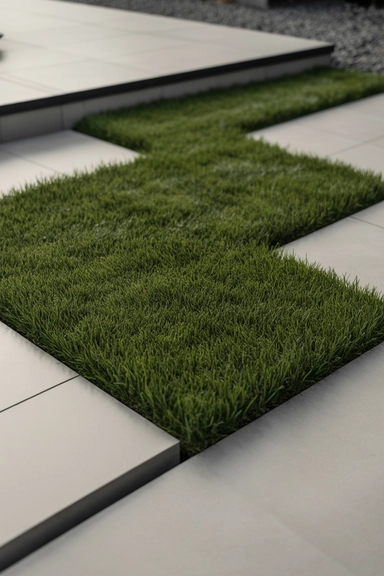
A modern backyard design and a high-maintenance lawn rarely coexist comfortably.
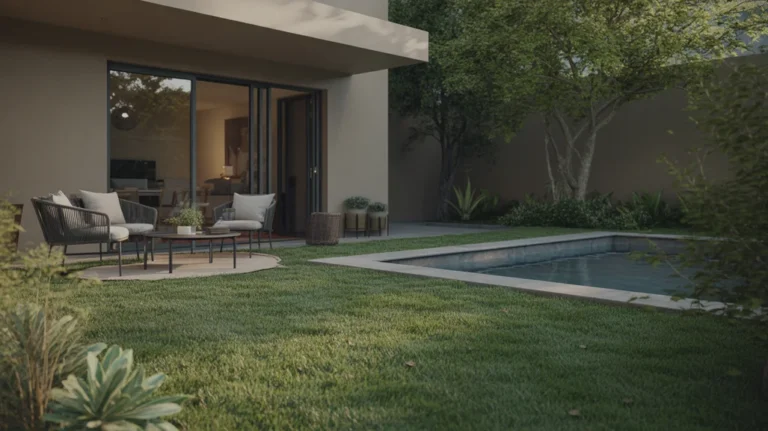
If keeping lawn, reduce it to a single simple geometric shape — a rectangle or square — edged sharply and maintained at a consistent height. A lawn with curved irregular edges, patchy sections, and uneven color undermines every modern design element around it immediately.
If removing lawn, replace with decomposed granite, poured concrete, large format pavers, or a combination of gravel and planted beds. Artificial turf reads as a budget substitute in most modern designs and does not age as well as hard materials. The initial cost difference between artificial turf and a gravel or paver surface narrows significantly when you factor in replacement costs after eight to ten years.
Finish With Furniture That Does Not Fight the Space
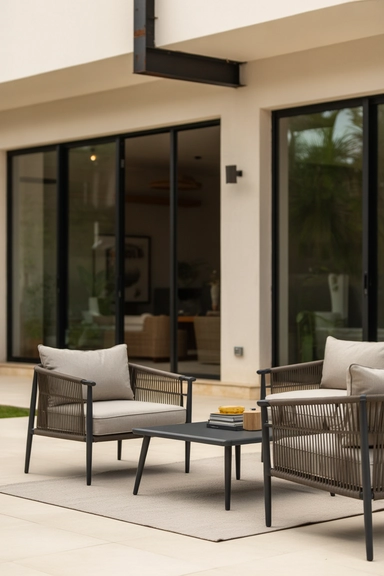
Outdoor furniture in a modern backyard should disappear into the design, not compete with it.
Black powder-coated aluminum frames with charcoal or warm grey cushions work with almost every modern material palette. Teak furniture works when the rest of the yard uses warm natural tones. Wicker and rattan work in coastal or relaxed modern spaces. Bright color, ornate detailing, and mixed metal finishes all pull attention away from the design and toward the furniture itself.
Size the furniture to the space. A six-seat dining table on a patio designed for four people leaves no circulation space and makes the zone feel cramped from the first use. Measure the patio, mark the furniture footprint with tape on the ground, and walk around it before ordering anything. That five-minute check has saved me from at least three expensive sizing mistakes across different outdoor projects.
Final Thoughts on Backyard Design Ideas
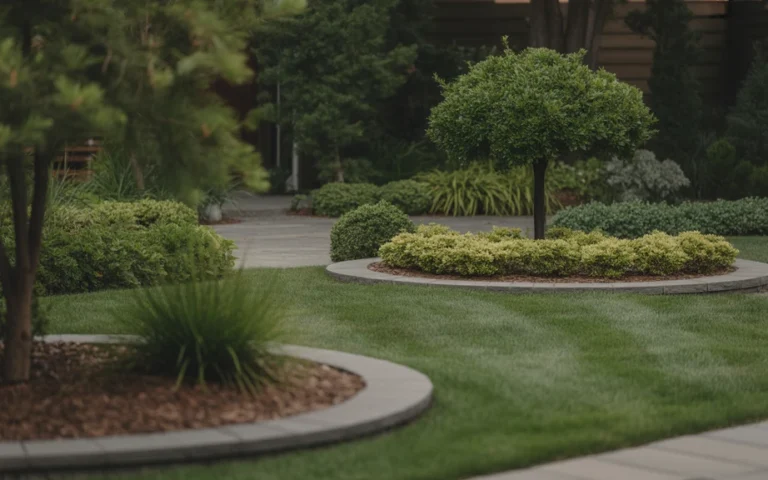
Modern backyard design comes down to restraint. Fewer materials, fewer plant species, fewer decorative details. Every element earns its place by solving a problem or fulfilling a clear function. Anything that does neither comes out.
Start with the surface, the edging, and the lighting. Those three elements set the tone for everything placed on top of them. Get the foundation right and the rest of the design decisions become easier and cheaper.
Give the space two full seasons before judging it. Planting fills in, materials weather into their natural finish, and the space settles into itself in ways that the first season never shows. Most modern backyards look better in year three than they do on the day they are finished.
FAQ About Backyard Design Ideas
How do I make backyard design ideas look modern on a small budget? Start with steel edging, a consistent gravel surface, and black powder-coated containers. Those three elements cost under two hundred dollars total and shift the feel of any backyard toward modern immediately. Add one specimen plant in a large steel planter as a focal point. Modern design rewards restraint so a small budget forces the editing that makes the style work in the first place.
What plants work best with modern backyard design ideas? Ornamental grasses, agave, phormium, lavender, and boxwood clipped into geometric forms all sit comfortably in a modern palette. Choose plants with strong architectural form — upright, mounding, or dramatically spiky — rather than soft cottage-style flowering perennials. Limit the palette to four to six species maximum and repeat them in blocks rather than scattered individually across beds.
How do modern backyard design ideas handle shade and privacy together? Use tall planted screens of bamboo in contained steel planters or steel mesh panels with climbing plants for privacy. Overhead shade comes from a clean-lined pergola with no decorative detailing or a geometric shade sail stretched between steel posts. Both elements use the same materials as the rest of the design so privacy and shade solutions become part of the design rather than additions bolted onto it afterward.
Sarah Mitchell’s Take
The modern backyard I am most proud of cost less than the one I hired someone to build. I did it myself over two seasons, made mistakes, pulled things out, and put better things in. The process taught me that modern design is not about spending more. It is about deciding more carefully and removing anything that does not belong. Most backyards get better when you take things away. That runs against every instinct a new gardener has and it took me years to actually believe it.