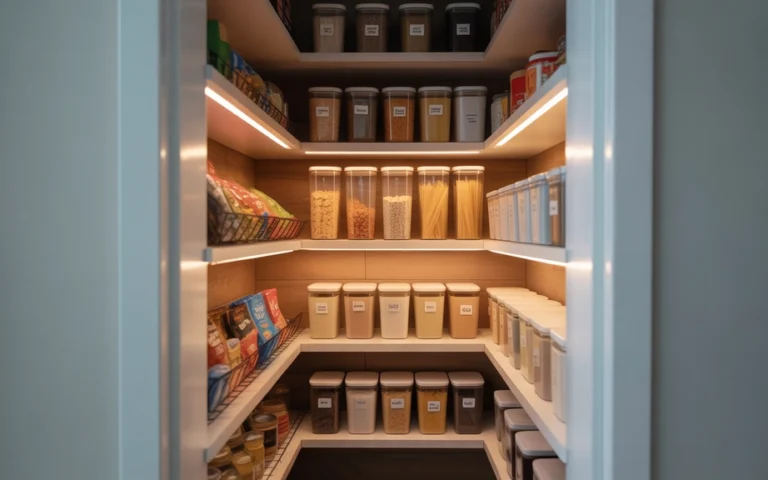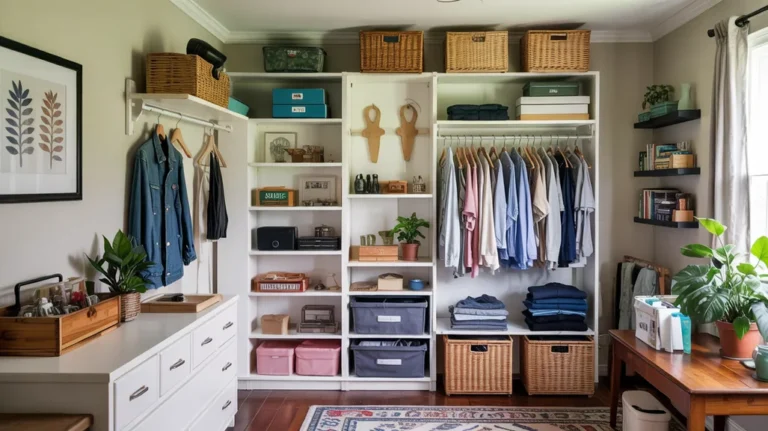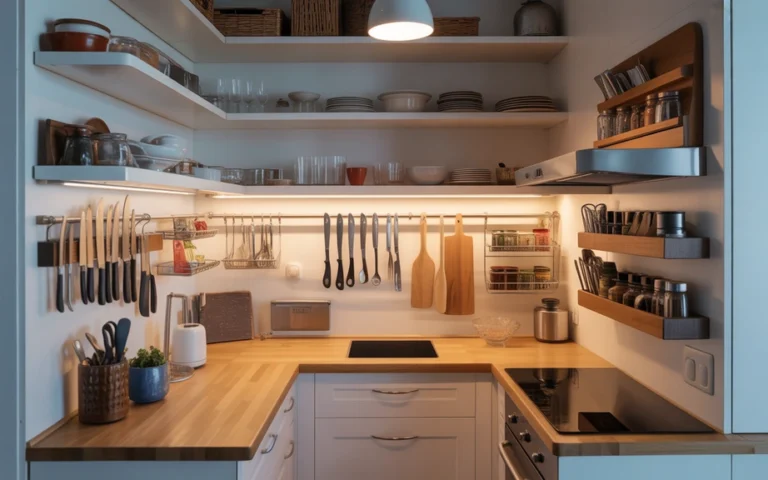

A tiny pantry can feel impossible to manage when shelves overflow, items stack unpredictably, and ingredients disappear behind taller packages. Limited square footage is not the real problem — lack of structured storage is. When every inch is planned for visibility, vertical use, and easy access, even the smallest pantry becomes highly functional. Smart container choices, zoning systems, and flow-based placement eliminate clutter and reduce food waste. These tiny pantry storage ideas are designed for real kitchens where space is tight but efficiency matters. For deeper cabinet efficiency, pair these ideas with 25 Deep Kitchen Cabinet Organization Ideas That Actually Work.
1- Use Clear Stackable Containers
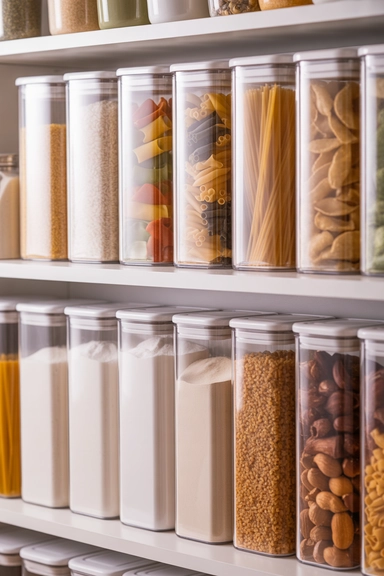
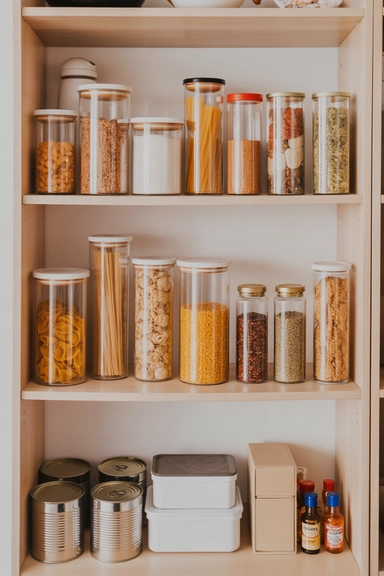
Small pantries become chaotic when food remains in bulky, mismatched packaging. Clear stackable containers create uniform shapes that fit tightly together, instantly multiplying usable shelf space. Dry goods such as rice, pasta, flour, and snacks stay sealed, fresh, and visible. When containers are transparent, you can identify contents at a glance without pulling items forward, preventing forgotten products that expire unseen. This simple container system turns random shelf stacking into structured storage that feels intentional instead of improvised.
Stackable containers also allow vertical expansion without adding shelves. Instead of spreading food across multiple levels, you build upward safely without unstable piles. Restocking becomes faster because every container has a defined place. Over time, uniform containers maintain order automatically, reduce packaging waste, and make even the smallest pantry feel significantly larger and easier to manage daily.
2- Store Frequently Used Items at Eye Level
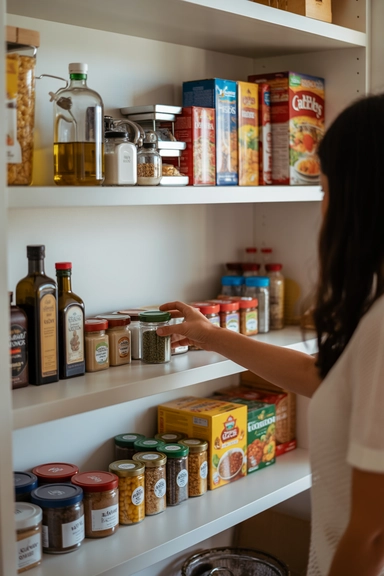
In tiny pantries, poor placement wastes time and disrupts organization. Storing frequently used ingredients at eye level keeps access effortless and prevents unnecessary shelf shifting. Oils, spices, breakfast items, and everyday snacks stay within immediate reach, reducing cabinet rummaging that collapses neatly arranged stacks. When high-use items have priority placement, pantry flow stays smooth instead of frustrating.
Eye-level positioning also protects lower and upper shelves from constant disturbance. Less-used bulk items can remain higher or lower without being displaced daily. This layout logic keeps categories stable, improves visibility, and prevents accidental knockdowns. Over time, eye-level zoning transforms small pantry use into a quick, predictable routine instead of repeated reorganization.
3- Install Shelf Risers for Vertical Expansion
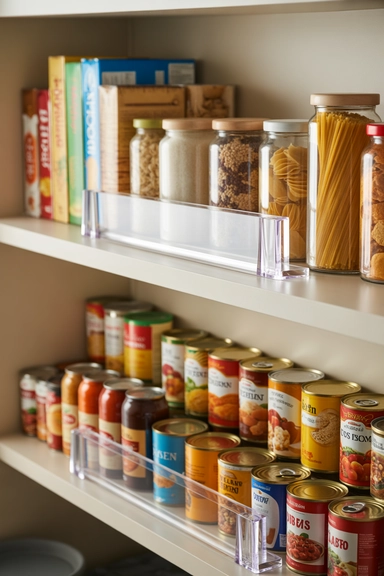
Most tiny pantries waste vertical air space above stacked items. Shelf risers double usable surface area by adding a second tier without permanent installation. Canned goods, jars, and boxed foods become visible in layered rows rather than hidden behind one another. This prevents expired items lurking at the back and eliminates the need to unload shelves just to find one product.
Risers also improve weight distribution. Instead of stacking cans directly on top of each other, you create structured rows that stay stable. This protects packaging from dents and keeps shelves safer. Over time, risers turn cramped shelves into efficient display-style storage that maintains visibility and order with no extra cabinet depth required.
4- Use Door Storage for Slim Items
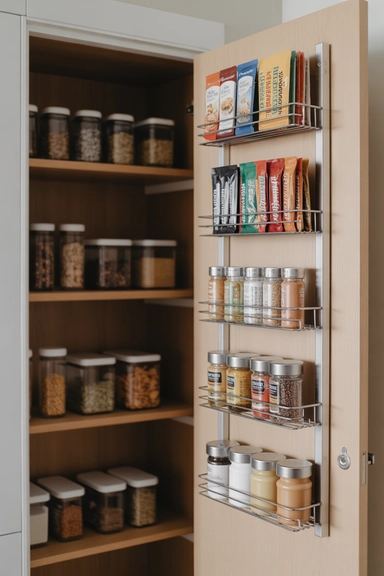
The inside of pantry doors is prime space often left unused. Adding slim racks or hanging organizers creates a dedicated zone for spice packets, snack bars, seasoning sachets, and small jars. These lightweight items stay visible and accessible without occupying shelf surface area needed for bulkier goods. Door storage effectively expands pantry capacity without increasing cabinet size.
This strategy also stabilizes main shelves. Removing small loose items prevents them from slipping between larger containers or falling when shelves shift. Door-mounted storage keeps categories separated and easy to restock. Over time, this hidden vertical zone relieves shelf pressure and keeps tiny pantries functioning far beyond their physical size.
5- Create Category-Based Mini Zones
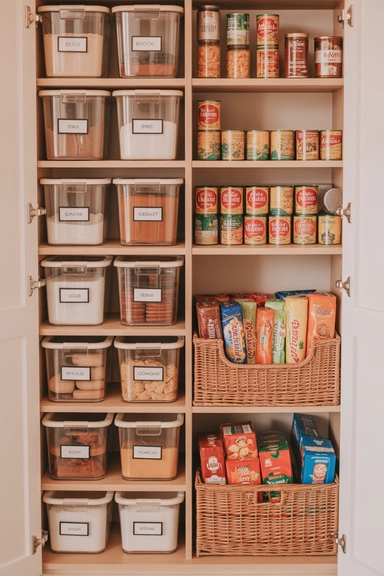
Tiny pantries fail fastest when items are placed wherever space appears. Creating micro-zones for categories such as baking goods, snacks, canned foods, and breakfast items brings logic to limited shelving. Each category receives a defined area, even if small, preventing cross-mixing that leads to visual clutter and misplaced products.
Category zoning also accelerates daily routines. You know exactly where to reach for ingredients without scanning the entire pantry. Grocery unloading becomes faster because placement decisions are already made. Over time, micro-zones maintain order naturally, ensuring that limited pantry space never devolves into random stacking.
6- Use Shallow Bins to Prevent Hidden Items
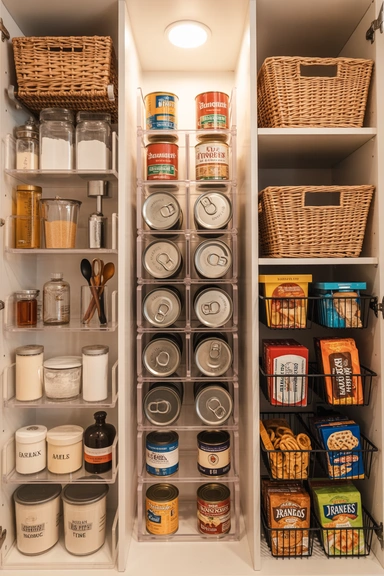
Deep shelves in tiny pantries cause products to hide behind others, leading to forgotten food and wasted purchases. Shallow bins pull everything forward into a single layer, eliminating blind spots. Snacks, seasoning packets, and small jars stay visible and reachable without removing other items first.
Shallow bins also simplify cleaning and reorganization. When it’s time to wipe shelves or check expiration dates, you lift one bin instead of handling dozens of individual items. Over time, shallow bin systems keep small pantries efficient, prevent expired food build-up, and preserve a consistently tidy appearance.
7- Add Pull-Out Drawers for Deep Shelves
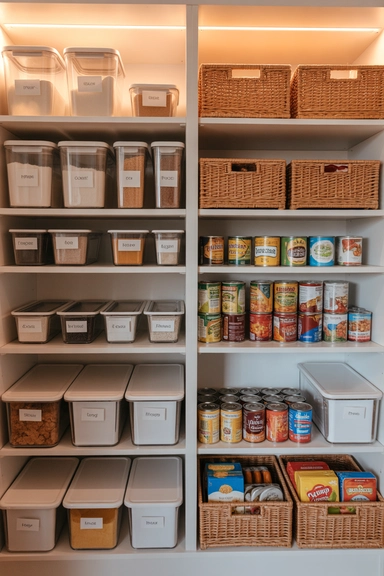
Deep pantry shelves in small spaces often become black holes where items disappear behind taller containers. Installing pull-out drawers transforms those deep shelves into fully accessible storage zones. With a simple slide, every item moves forward, eliminating the need to remove products just to reach the back. This keeps food visible, prevents forgotten ingredients from expiring, and stops shelves from becoming chaotic after daily use.
Pull-out drawers also protect packaging from crushing. Boxes and bags stay upright rather than being pushed into tight corners. When unloading groceries, items go straight into drawers instead of being layered unpredictably. Over time, pull-out systems stabilize tiny pantry layouts, maximize depth efficiently, and reduce the frustration that usually comes with limited cabinet space.
8- Hang Lightweight Storage Under Shelves
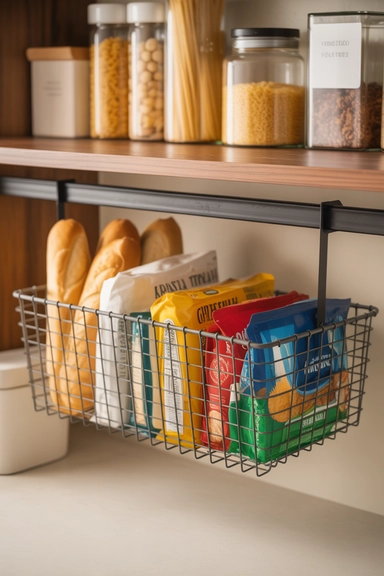
In tiny pantries, unused air space between shelves is wasted potential. Hanging wire baskets or under-shelf racks create extra layers for lightweight foods such as bread, tortillas, napkins, or snack pouches. This adds storage without crowding primary shelf surfaces. Items stay visible and reachable while heavier goods remain securely placed on solid shelving.
Under-shelf storage also improves organization flow. Instead of stacking soft packages on top of boxes where they slide off, everything gains a defined position. This prevents messy piles and makes restocking easier. Over time, hanging storage solutions stretch vertical capacity, allowing small pantries to hold more without feeling overpacked.
9- Store Bulk Backstock Outside the Pantry
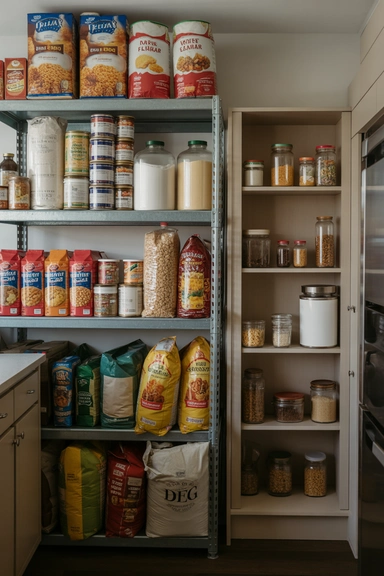
Tiny pantries lose efficiency when large bulk packages occupy prime shelf space. Moving bulk backstock to a secondary cabinet, utility shelf, or storage closet keeps only working quantities inside the main pantry. This prevents shelves from feeling jammed and allows everyday items to stay accessible without shifting heavy packages.
Backstock separation also supports smoother grocery routines. You refill smaller containers from bulk supplies instead of opening new oversized bags inside cramped cabinets. If you’re structuring full kitchen systems alongside this method, it pairs seamlessly with 21 Smart Pantry Organization Ideas That Save Space. Over time, external backstock storage keeps small pantries breathable, functional, and consistently organized.
10- Use Labeling to Maintain Micro-Organization
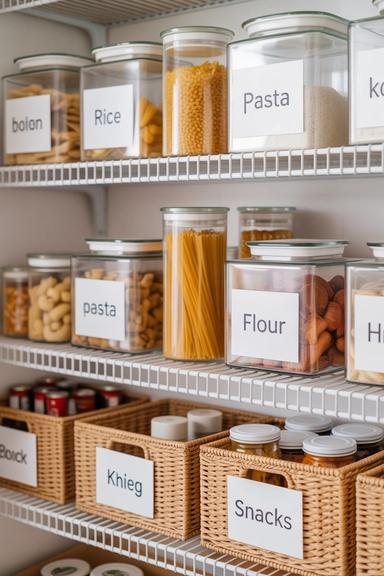
When space is limited, even small misplacements disrupt the entire pantry system. Simple labeling on bins, risers, and shelves ensures every item returns to its assigned zone. Labels remove decision-making during restocking and prevent gradual drift that leads to cluttered mixing of categories.
Labeling also trains household members to maintain order without reminders. Everyone knows where snacks, baking goods, or canned items belong. This consistency prevents shelf reshuffling and lost products. Over time, labeled micro-zones make tiny pantry systems self-maintaining, reducing the need for frequent reorganizing sessions.
11- Prioritize Vertical Can Storage
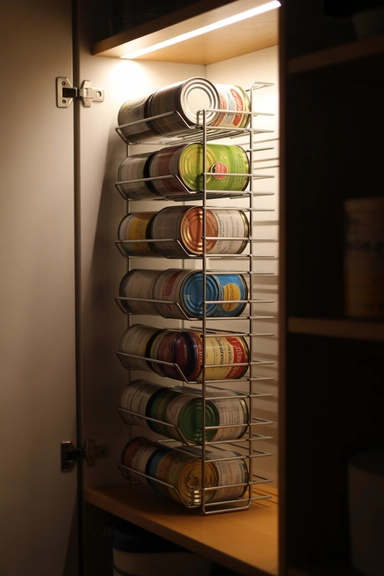
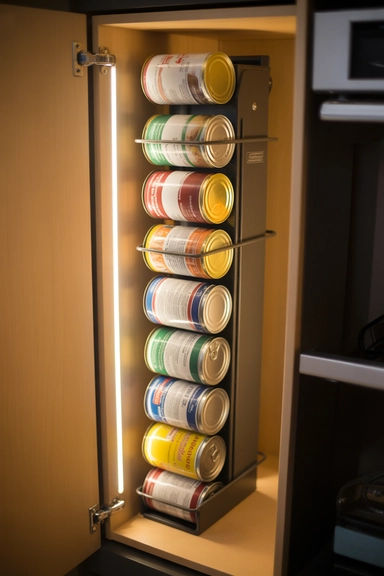
Canned goods take up significant surface area when spread across shelves. Vertical can dispensers or stackable can racks store multiple rows in a compact footprint. This keeps labels facing forward, prevents cans from rolling, and frees shelf width for other items. The result is a tighter, more efficient use of limited pantry depth.
Vertical can systems also support rotation. Older cans naturally move forward as new ones are loaded behind, preventing expired goods from hiding. Over time, structured can storage eliminates cluttered stacking, improves visibility, and makes inventory checks quicker in tight pantry conditions.
12- Keep a Weekly Pantry Reset Routine
Even the most efficient small pantry needs brief maintenance to stay functional. A weekly reset involves pulling bins forward, checking expiration dates, wiping shelves, and returning items to their correct zones. This prevents slow accumulation of clutter and ensures airflow and visibility remain consistent.
Regular resets also reinforce inventory awareness. You notice shortages before shopping trips and avoid buying duplicates already hiding in the back. Over time, this simple habit keeps tiny pantry systems stable, prevents food waste, and maintains a clean, maximized storage layout without requiring full reorganizations.
13- Use Tiered Risers for Jars and Small Boxes
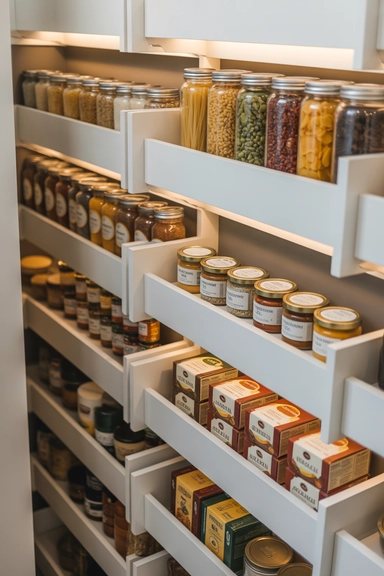
Small pantries often waste shelf depth when jars and small boxes sit in single rows. Tiered risers lift back rows higher, allowing every label to remain visible without moving items around. This prevents forgotten sauces, spreads, and seasoning boxes from expiring unseen. When shelves display items in stepped layers, selection becomes instant and shelf disruption disappears.
Tiered risers also protect fragile containers. Glass jars stay stable instead of being stacked directly on one another. Boxes avoid crushing under weight. Over time, risers transform narrow shelves into high-visibility storage zones that feel organized and spacious, even when pantry square footage is limited.
14- Store Baking Supplies in Uniform Containers
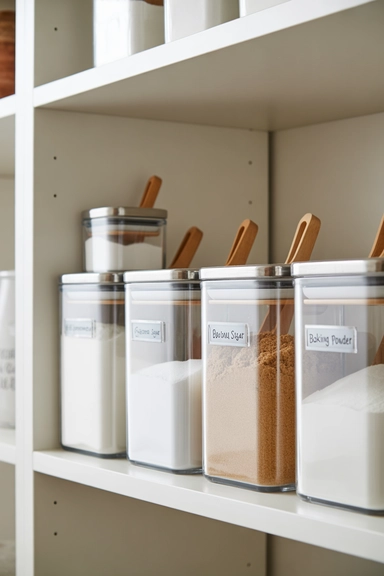
Baking supplies like flour, sugar, cocoa, and baking soda usually come in awkward packaging that spills and wastes shelf space. Transferring them into uniform containers creates clean lines and tight stacking. Airtight seals protect contents from moisture and pests while keeping measurements easy to manage during cooking.
Uniform baking containers also prevent random bag folding that leads to messy shelves. When every container has the same footprint, shelf planning becomes predictable and stable. Over time, structured baking storage reduces spills, speeds up prep, and keeps tiny pantry shelves tidy and visually balanced.
15- Use Sliding Baskets for Produce Storage
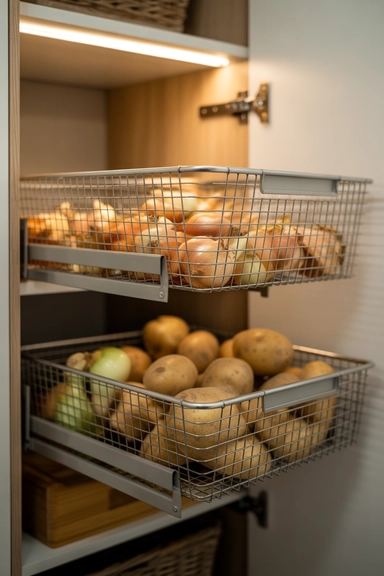
Tiny pantries that hold onions, potatoes, or fruit often struggle with loose rolling items. Sliding wire or mesh baskets provide contained airflow-friendly storage that prevents produce from scattering. With a pull-out motion, you can reach items at the back without removing everything in front.
These baskets also improve ventilation, reducing spoilage in root vegetables. Instead of piling produce on flat shelves, baskets create breathable separation. Over time, sliding produce baskets save space, keep food fresher longer, and maintain neat pantry zones without cluttered piles.
16- Install Hooks for Hanging Storage
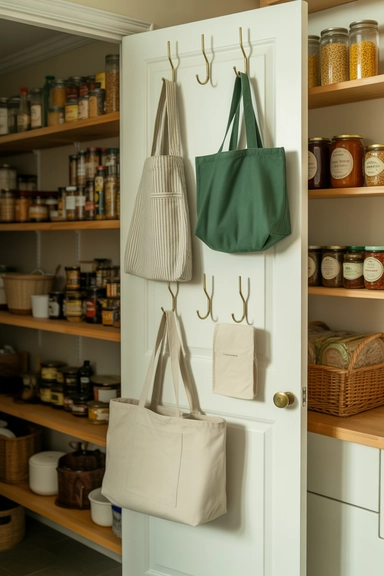
Hooks mounted on pantry walls or door interiors create vertical space for hanging lightweight items such as reusable bags, bread, aprons, or snack pouches. This keeps soft packages off shelves where they usually collapse into messy stacks. Hanging storage uses forgotten wall space instead of consuming precious shelf width.
Hooks also make frequently used items quick to access. Instead of searching through cabinets, you grab what you need instantly. Over time, hanging systems reduce shelf crowding, improve airflow between stored goods, and stretch tiny pantry capacity without adding furniture.
17- Keep a Dedicated Refill Station
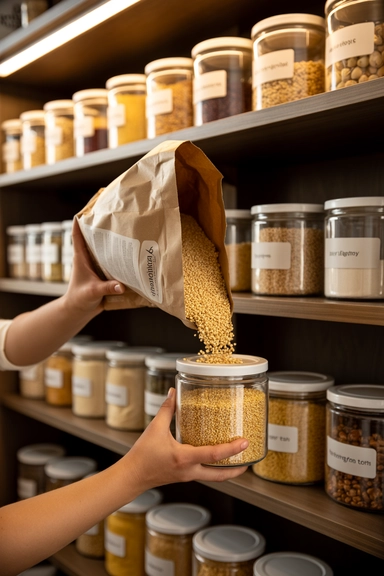
Small pantries function best when only daily-use quantities stay inside. A refill station using small bins or jars allows bulk goods to be poured in gradually from external backstock. This prevents oversized packages from occupying limited shelf space and keeps storage neat.
Refill systems also control mess. Instead of handling large bags repeatedly, you work with compact containers that are easy to open and close. Over time, refill stations reduce clutter, maintain consistent container placement, and ensure tiny pantry shelves always feel organized rather than jammed.
18- Avoid Storing Non-Food Items in Pantry Space
In tiny pantries, every inch matters. Storing paper goods, cleaning supplies, or random household items in food zones quickly reduces capacity and causes clutter. Keeping non-food storage elsewhere preserves pantry space strictly for food, improving visibility and reducing search time during cooking.
This boundary also supports hygiene. Food stays separate from chemicals or non-edible items, reducing contamination risks. Over time, dedicating pantry space solely to food ensures efficient use of limited shelving and keeps organization systems intact without competing storage demands.
19- Use Clear Pull-Out Bins for Snacks
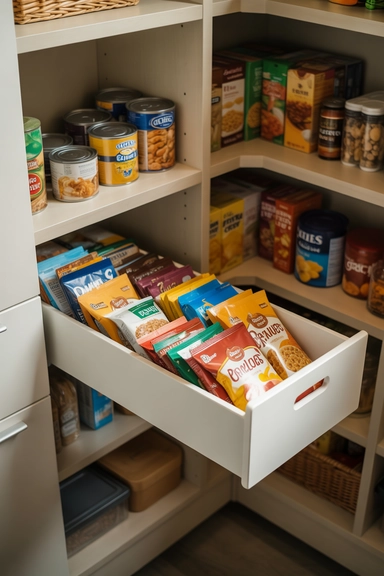
Snack storage becomes chaotic in tiny pantries when packets slide behind larger items. Clear pull-out bins keep snacks contained and fully accessible. With one motion, the entire bin slides forward, revealing everything inside without disrupting other shelves. This prevents forgotten packets, crushed packaging, and messy cabinet digging that quickly breaks organization.
Pull-out snack bins also support portion control and easy refilling. When stock runs low, the empty bin signals restocking instead of forcing a search through shelves. Over time, sliding bins maintain consistent order, protect packaging, and make even the smallest pantry feel structured and easy to navigate.
20- Store Oils and Bottles in Slim Vertical Racks
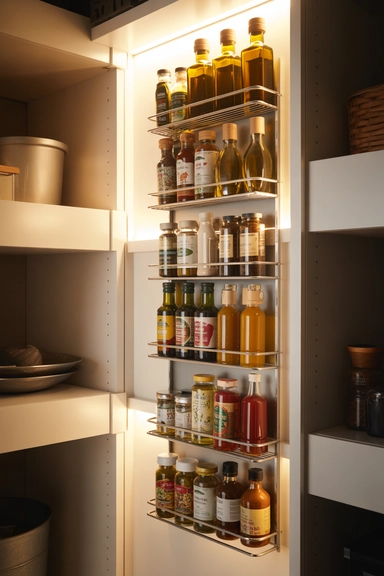
Tall oil bottles and sauce containers waste shelf height when placed randomly. Slim vertical racks keep bottles upright, secure, and aligned in narrow rows. This prevents tipping, leaking, and sticky shelf buildup while using vertical clearance efficiently. When bottles are stored in one tight footprint, surrounding shelf space opens up for other pantry goods.
Vertical racks also improve visibility. Labels face forward, making selection fast and preventing duplicate purchases. Over time, dedicated bottle storage keeps spills contained, maximizes narrow shelf areas, and maintains a clean, professional-level pantry layout.
21- Keep Frequently Used Spices in a Compact Zone
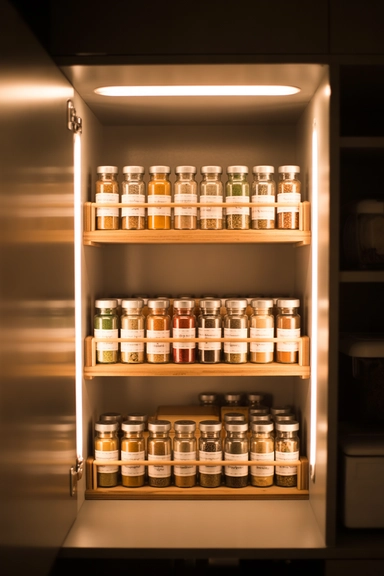
Scattered spice jars eat up valuable pantry space and cause visual clutter. A compact spice zone using a small tiered shelf or narrow bin groups all seasonings into one tight area. Every jar stays visible, reachable, and protected from falling behind other items. This prevents spice overbuying and forgotten expired containers.
A dedicated spice zone also speeds up cooking routines. You grab what you need without shifting pantry items. Over time, compact spice organization preserves shelf space, maintains kitchen efficiency, and keeps tiny pantry systems consistent and clutter-free.
22- Use Magnetic Storage for Metal Containers
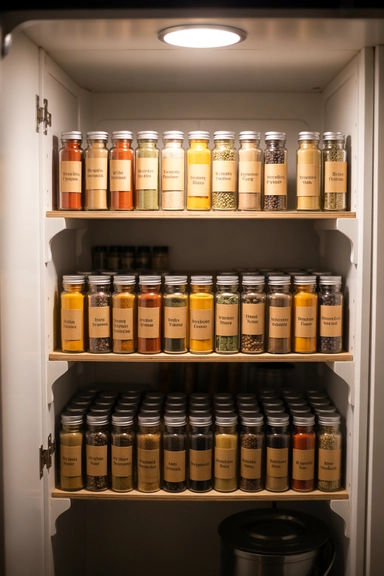
When shelf space is scarce, vertical wall space becomes essential. Magnetic strips or panels allow metal spice tins or small containers to attach directly to pantry walls or doors. This removes items from shelves completely while keeping them visible and accessible. It’s an efficient way to store lightweight goods without consuming shelf depth.
Magnetic storage also adds flexibility. Containers can be rearranged easily as pantry needs change. Over time, this system reduces shelf congestion, improves visibility, and maximizes every hidden surface inside a tiny pantry.
23- Perform a Monthly Pantry Audit
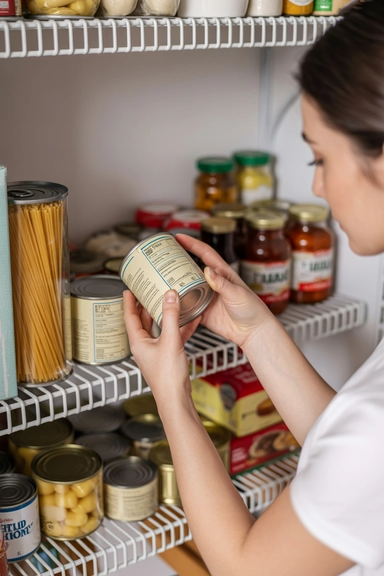
Tiny pantries demand routine oversight to stay functional. A monthly pantry audit involves checking expiration dates, wiping shelves, rotating older items forward, and removing anything no longer used. This prevents slow buildup of expired goods that steal valuable space.
Audits also highlight consumption patterns. You learn which products deserve prime placement and which should be removed from rotation. Over time, a simple monthly check keeps tiny pantry systems efficient, prevents wasted food, and ensures every inch continues serving a clear purpose.
Conclusion
A tiny pantry does not require more space to work better — it needs smarter structure. When containers are uniform, zones are defined, and vertical surfaces are fully used, limited shelving becomes highly efficient. These tiny pantry storage ideas focus on real-world functionality, not decorative organization. With consistent zoning, controlled refilling, and short maintenance routines, even the smallest pantry stays clutter-free, easy to navigate, and permanently maximized.