
Snacks are often the first category to fall into chaos. Half-open bags, crushed boxes, and scattered wrappers create cluttered shelves and forgotten food that quietly increases waste. True snack organization is not about decorative bins alone, but about creating clear zones, portion systems, and visibility that support daily habits. When snacks are easy to see and reach, kitchens stay cleaner, kids self-serve safely, and grocery planning becomes more accurate. These snack organization ideas focus on long-term function rather than temporary neatness. For stronger kitchen-wide structure, pair these systems with 23 Kitchen Storage Hacks That Make Every Inch Work Harder.
1- Use Clear Stackable Snack Bins
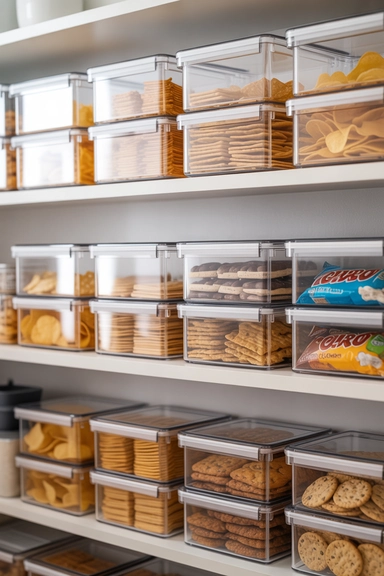
Storing snacks in original packaging creates uneven stacks, hidden items, and crushed bags. Clear stackable bins solve this by creating uniform containers that protect contents while keeping everything visible. Chips, crackers, granola bars, and cookies stay upright and contained, preventing spills and broken packaging. When bins are transparent, you immediately see what is available, which reduces duplicate buying and forgotten snacks pushed to the back of shelves.
Stackable bins also maximize vertical shelf space. Instead of spreading snacks across multiple shelves, bins allow controlled layering without collapse. This keeps pantry layouts predictable and easy to maintain. Over time, using clear stackable containers creates a stable system where snacks are protected, visible, and always returned to the correct zone without daily rearranging.
2- Create a Dedicated Snack Zone
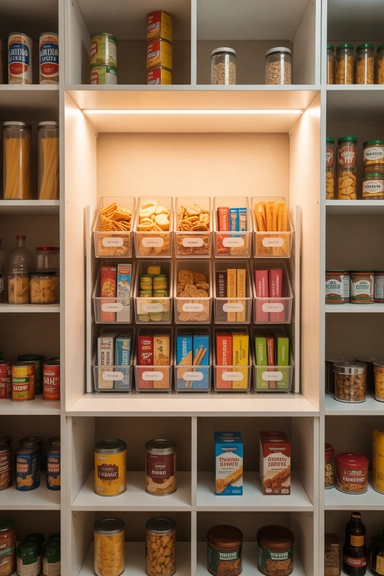
When snacks are mixed with baking supplies or canned goods, they become hard to find and easy to overbuy. Assigning a dedicated snack zone groups all snack items in one defined shelf or cabinet section. This single-zone system prevents scattered storage and keeps snack selection quick and stress-free. Kids and adults alike learn exactly where snacks belong, reducing random cabinet searching and misplaced food.
A defined snack zone also supports inventory awareness. You can instantly see when supplies are running low or when certain items are being ignored. This improves grocery planning and reduces waste from expired snacks. Over time, zoning transforms snack storage into a predictable routine rather than a daily scavenger hunt through overcrowded cabinets.
3- Portion Snacks into Grab-and-Go Containers
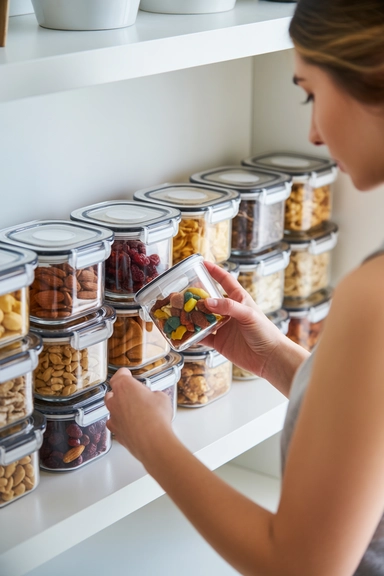
Large snack bags encourage overeating, go stale faster, and create messy shelves once opened. Dividing snacks into small grab-and-go containers keeps portions controlled, fresh, and easy to reach. Nuts, crackers, dried fruit, and trail mixes stay sealed and protected while remaining visible for quick selection. This method eliminates torn packaging and scattered crumbs inside cabinets.
Grab-and-go containers also support healthier eating habits. When portions are ready in advance, snack choices become intentional rather than impulsive. Containers stack neatly, making shelf space easier to manage. Over time, this system reduces wasted half-finished bags, keeps snacks fresher longer, and maintains clean, structured pantry storage.
4- Use Pull-Out Drawers for Deep Cabinets
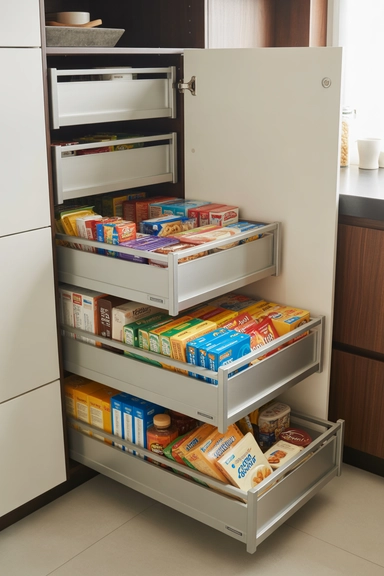
Deep cabinets often hide snacks behind taller items, causing forgotten food and cluttered rearranging. Pull-out drawers bring everything forward with a single motion, making snack access simple and visibility complete. No more reaching into dark cabinet corners or removing multiple items to find one snack. Every product stays reachable and organized.
Pull-out systems also maintain order after use. When drawers slide smoothly, snacks naturally return to their designated spot instead of being shoved into random spaces. This prevents collapsing stacks and lost items. Over time, pull-out drawers transform deep cabinets into efficient snack stations that stay neat without daily effort.
5- Store Kids’ Snacks at Lower Levels
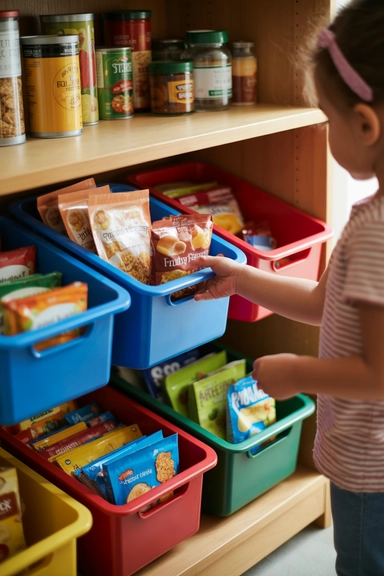
When children cannot reach snack storage, they tend to ask for help or pull items from unsafe shelves. Creating a lower-level snack zone with child-approved options encourages safe independence. Bins or containers placed at reachable heights let kids select snacks without disturbing other pantry sections or climbing shelves.
This approach also prevents disorganized rummaging. When kids know exactly where their snacks live, they stop opening multiple cabinets searching for food. Over time, a child-friendly snack zone reduces mess, teaches responsibility, and keeps the rest of the pantry structured and untouched.
6- Use Lazy Susans for Small Snack Packs
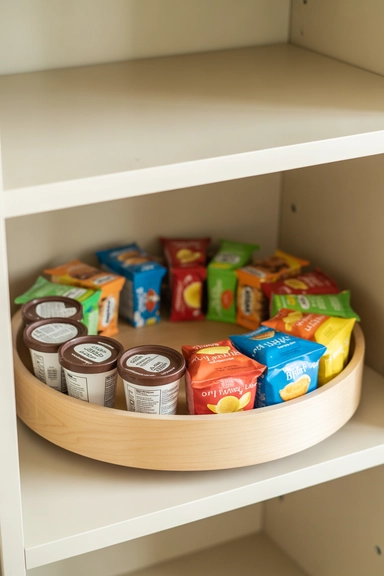
Small snack packs like pudding cups, yogurt pouches, or mini chip bags easily scatter across shelves. A rotating lazy Susan groups these items while allowing instant access to those stored at the back. A simple spin replaces shelf digging and prevents knocking over nearby items.
Lazy Susans also contain crumbs and drips, protecting shelves from mess. When every small snack pack stays inside a defined rotating tray, restocking and cleaning become faster. Over time, this tool keeps snack storage controlled, visible, and consistently tidy.
7- Use Airtight Containers for Crispy Snacks
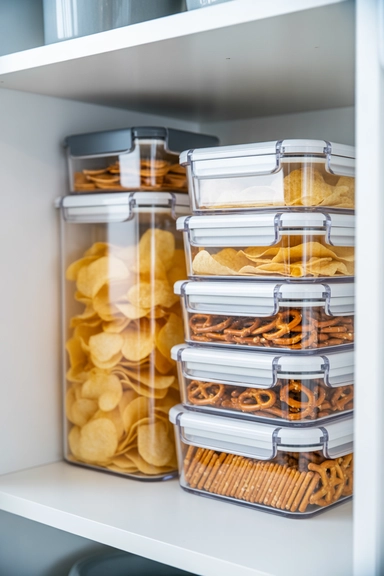
Crispy snacks like chips, pretzels, and crackers lose texture quickly once packaging is opened. Transferring them into airtight containers protects against humidity and air exposure that cause staleness. Clear containers also prevent crushed bags and broken snacks at the bottom of shelves. When lids seal tightly, freshness lasts longer, and shelves stay free of loose crumbs and torn wrappers that create visual clutter.
Airtight containers also create consistent stacking. Uniform shapes allow efficient use of vertical cabinet space without unstable piles. Because contents remain visible, you always know when stock is running low. Over time, sealing snacks properly reduces waste, keeps flavors intact, and maintains a clean, orderly snack system that requires little daily upkeep.
8- Group Snacks by Category
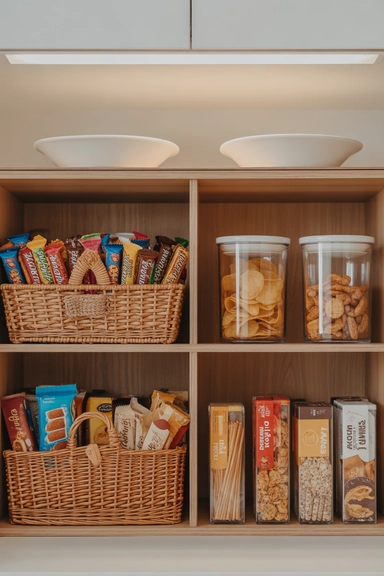
Mixing sweet, salty, healthy, and indulgent snacks together creates visual noise and slows decision-making. Grouping snacks by category gives each type a defined home. Sweet treats stay together, salty items share a zone, and healthier options remain separate. This structure makes snack selection faster and prevents random reshuffling of shelves after every use.
Categorized storage also improves grocery planning. When one category runs low, it becomes instantly noticeable. This prevents overbuying and reduces forgotten items pushed to the back. Over time, category grouping stabilizes snack organization, keeps cabinets predictable, and makes maintaining order a natural habit rather than a constant correction task.
9- Store Frequently Used Snacks at Eye Level
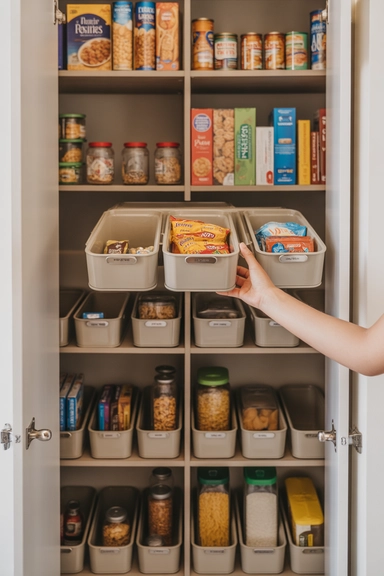
When popular snacks sit on high or low shelves, cabinets get disturbed every time someone searches for them. Placing frequently used snacks at eye level keeps access smooth and reduces cabinet disruption. This simple positioning strategy protects other organized zones from being shifted or collapsed during daily snack retrieval.
Eye-level placement also improves visibility. When favorite snacks are easy to see, fewer items get forgotten and replaced unnecessarily. Less digging means fewer messes and fewer crushed packages. Over time, prioritizing high-use snack placement makes pantry flow efficient, reduces frustration, and preserves the overall organization system.
10- Use Shelf Dividers to Prevent Falling Stacks
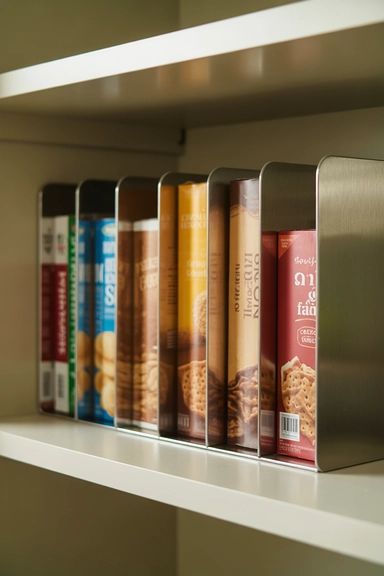
Snack boxes and pouches easily fall sideways once one item is removed, creating instant shelf chaos. Shelf dividers hold stacks upright, preventing chain collapses that require frequent restacking. This keeps snack shelves visually clean and easy to browse without hands-on rearranging every time.
Dividers also allow taller stacks without instability. You can safely maximize vertical shelf space while keeping categories separated. Over time, this small structural addition dramatically reduces daily mess, protects packaging from damage, and ensures snack shelves stay neat even with frequent family use.
11- Create a Weekly Snack Refill Station
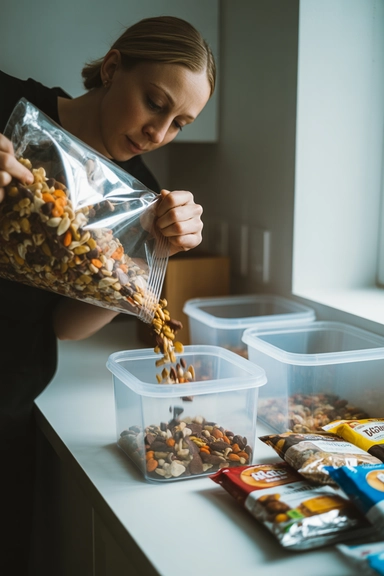
Bulk snack packages stored in main pantry shelves often crowd daily-use areas. A weekly refill station solves this by keeping only small working quantities in snack bins while bulk stock stays elsewhere. Once a week, bins are refilled from backstock, keeping shelves tidy and preventing overflow.
This method also prevents half-used bulk bags from lingering open. Snacks remain fresh, portions stay controlled, and cabinets avoid random excess packages. Over time, refill stations create rhythm in pantry maintenance, lower waste, and keep snack zones consistently stocked without clutter.
12- Use Clear Labeling for Snack Zones
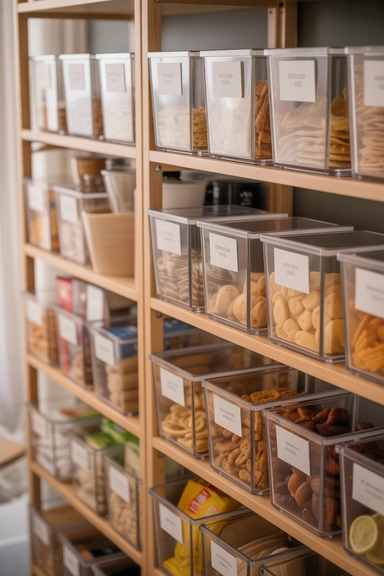
Without labels, even organized snack systems drift over time as family members return items to random spots. Simple labels on bins or shelves reinforce structure and make it obvious where each snack category belongs. This prevents slow breakdown of organization that usually happens in shared kitchens.
Labeling also speeds up restocking and grocery unloading. You immediately know where new items go without shifting existing products. Over time, labeled snack zones maintain order automatically, reduce daily correction work, and keep pantry systems stable even in busy households.
13- Use Door Racks for Small Snack Items
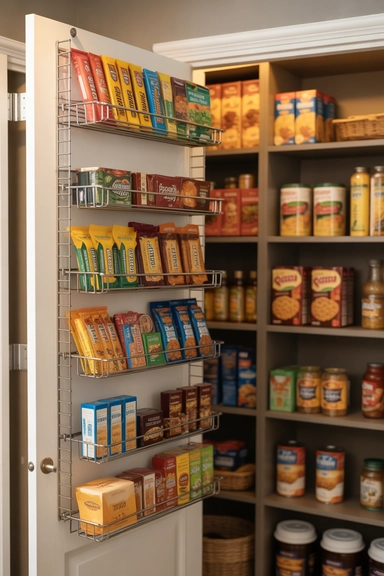
Small snack items like candy bars, fruit strips, and mini packs easily disappear behind larger boxes on pantry shelves. Installing door racks creates a dedicated vertical zone where these lightweight items stay visible and separated. When the pantry door opens, every small snack is instantly accessible without digging through stacked containers. This prevents forgotten treats from expiring unnoticed and stops smaller packages from slipping into shelf gaps where they create hidden clutter.
Door rack storage also protects shelf stability. Removing small items from main shelves keeps box stacks upright and prevents shifting piles. It improves space efficiency by using an area often left empty. Over time, door-mounted snack racks reduce cabinet congestion, improve visibility, and make daily snack selection faster while keeping core pantry shelves clean and organized.
14- Keep Healthy Snacks in Prime Visibility Zones
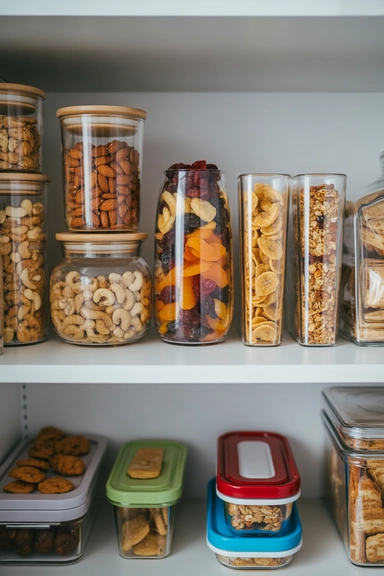
When healthier snacks are hidden behind sugary treats, they get ignored. Placing fruit cups, nuts, protein bars, and dried fruit in the most visible pantry or fridge zones encourages better choices and faster access. Prime visibility zones include eye-level shelves or front-facing bins where contents are immediately noticeable. This intentional placement supports consistent eating habits without relying on willpower or reminders.
Visibility-based placement also reduces overbuying. When healthy snacks are easy to see, you know exactly what needs replenishing. This prevents expired stock and forgotten packages at the back of shelves. Over time, prioritizing prime snack zones maintains pantry balance, supports wellness goals, and keeps food rotation predictable rather than random.
15- Store Bulk Snack Stock Separately
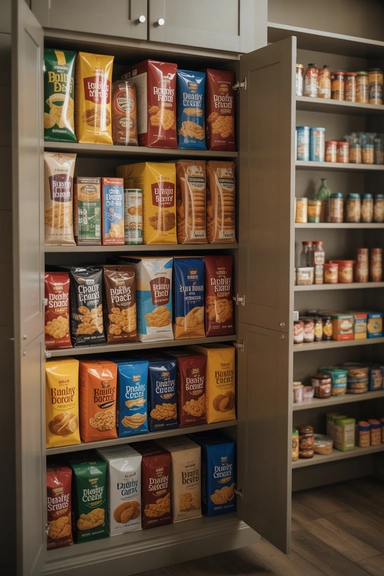
Bulk snack packages take up excessive room in daily-use cabinets and often remain half-open, causing staleness and clutter. Keeping bulk snack stock in a separate overflow cabinet or storage shelf protects main snack zones from overcrowding. Only working quantities are kept in accessible bins, while large backup packages remain sealed and out of sight until needed.
This separation keeps shelves visually calm and prevents excessive handling of bulk bags. It also makes weekly restocking simple and controlled. If you are building full pantry systems alongside this approach, it pairs smoothly with 21 Smart Pantry Organization Ideas That Save Space. Over time, separating bulk stock reduces waste, preserves freshness, and maintains long-term pantry structure without constant rearranging.
16- Use Shallow Bins to Prevent Snack Piling
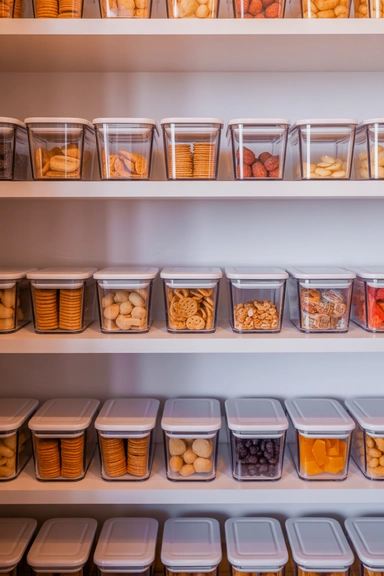
Deep bins encourage stacking, which hides items at the bottom and leads to crushed packaging. Shallow bins spread snacks in single layers, improving airflow and visibility. When every snack is laid flat or slightly angled, you can instantly see what is available without lifting or shifting other items. This prevents forgotten products and accidental overbuying.
Shallow bin systems also keep packaging intact. Boxes and pouches stay upright instead of collapsing under weight. This reduces spills, broken wrappers, and messy crumbs inside cabinets. Over time, shallow storage makes snack zones self-maintaining, as items remain easy to return to their designated spot after every use.
17- Keep Grab-and-Go Snacks Near the Fridge Exit
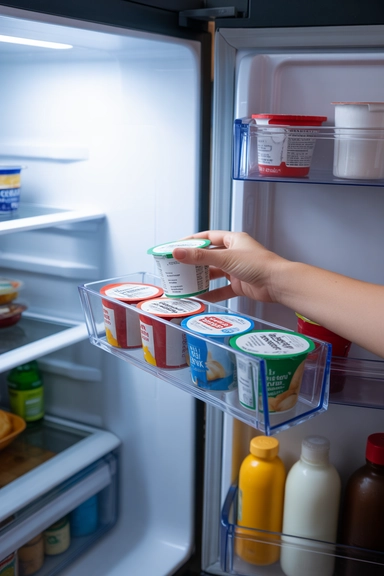
Busy households benefit from placing ready-to-eat snacks close to fridge doors or pantry exits. This positioning allows quick access during school mornings, work breaks, or evening routines without opening multiple cabinets. When grab-and-go items have a defined departure zone, kitchen traffic flows smoothly and snack retrieval doesn’t disturb deeper storage areas.
Exit-zone placement also supports portion control. Only pre-portioned items occupy this space, preventing random box grabbing. Over time, this system reduces kitchen congestion, keeps other snack zones untouched, and supports fast daily routines while maintaining organized storage behind the scenes.
18- Schedule a Weekly Snack Zone Reset
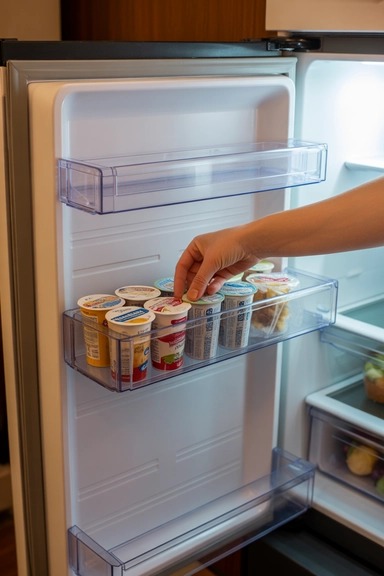
Even well-designed snack systems drift when unchecked. A weekly snack reset involves checking expiration dates, refilling bins, discarding damaged packaging, and wiping shelves. This small routine prevents clutter from accumulating and keeps organization systems performing as intended. It also reinforces awareness of snack inventory, reducing duplicate grocery purchases.
Weekly resets also allow adjustment based on consumption patterns. If certain snack categories run out faster, zones can be resized accordingly. Over time, this habit ensures snack organization remains dynamic, waste stays low, and pantry order never collapses into a major reorganization task.
19- Use Tiered Risers for Boxed Snacks
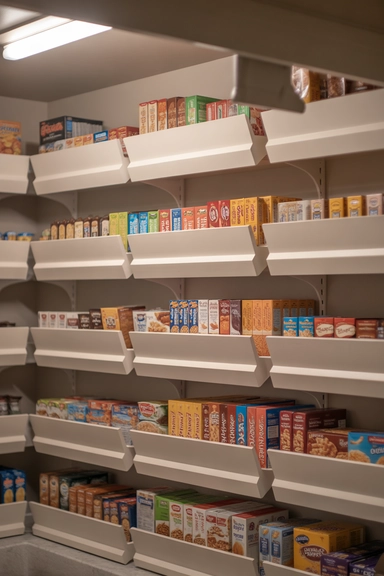
Boxed snacks like granola bars, cookies, and snack cakes often hide behind one another when placed on flat shelves. Tiered risers lift back rows higher, creating stadium-style visibility so every box is easy to see and reach. This prevents forgotten snacks from expiring unseen and eliminates the need to pull out multiple boxes just to find one item. When packaging stays upright and layered, shelves remain visually clear instead of overcrowded.
Tiered storage also protects box integrity. Without stacking pressure, boxes don’t collapse or tear open. This keeps wrappers contained and prevents loose items spilling across cabinets. Over time, risers improve space efficiency, speed up snack selection, and maintain a stable shelf layout that stays organized without daily reshuffling.
20- Store Refrigerated Snacks in Dedicated Fridge Bins
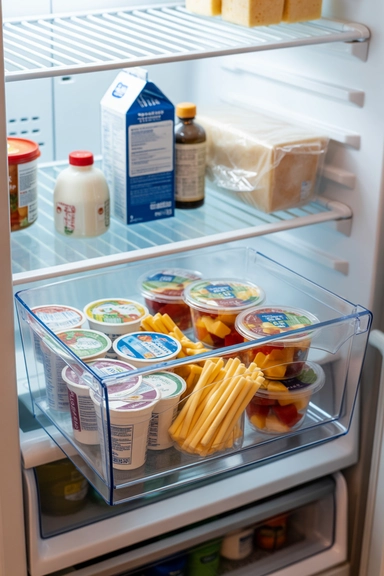
Yogurt cups, pudding packs, cheese sticks, and fruit cups quickly clutter fridge shelves when scattered. A dedicated snack bin groups all refrigerated snacks into one controlled zone. Clear bins keep items contained, visible, and easy to pull forward without moving other foods. This prevents fridge shelves from becoming mixed storage areas where snacks disappear behind larger containers.
Dedicated bins also simplify restocking. New items go directly into the snack bin, maintaining consistent placement. Kids and adults can grab items without touching meal-prep or produce zones. Over time, fridge snack bins reduce misplaced food, prevent overbuying duplicates, and preserve refrigerator organization with minimal effort.
21- Use Clip Seals for Opened Snack Bags
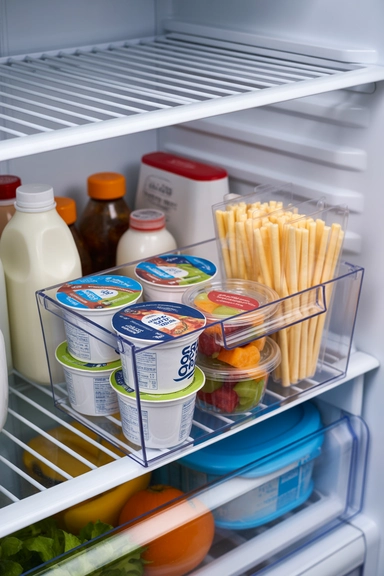
Open snack bags are a major source of stale food and cabinet mess. Using strong clip seals or bag clamps keeps packaging tightly closed after each use. This protects chips, crackers, and cereal from air exposure and prevents crumbs from spilling onto shelves. Sealed bags also stack more easily, reducing the random pile effect inside cabinets.
Clip sealing also reduces the need to transfer every snack into containers. This saves time while still preserving freshness. When every opened bag stays sealed, odors remain contained and shelves stay clean. Over time, simple clip systems lower food waste, protect packaging integrity, and maintain tidy snack storage zones.
22- Keep a Snack Inventory Check Routine
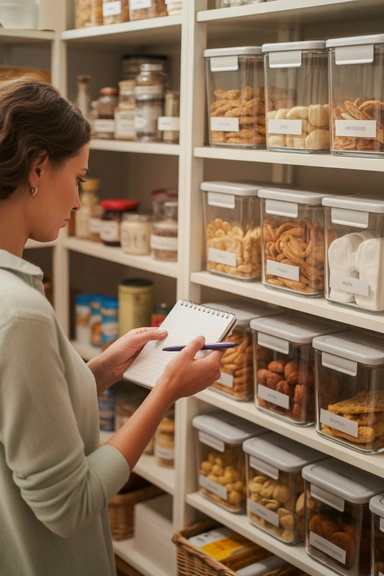
Even organized snack systems break down without occasional review. A short weekly inventory check helps identify expired items, empty containers, and overstocked categories. This routine prevents buildup of forgotten snacks and keeps refill systems running smoothly. When inventory awareness becomes habit, cabinets stay balanced rather than overloaded.
Regular checks also improve grocery accuracy. You buy only what is needed instead of replacing items that were hidden behind others. Over time, snack inventory routines reduce waste, stabilize storage layouts, and keep your snack organization system performing consistently instead of collapsing into clutter.
Conclusion
Snack clutter is rarely caused by lack of space but by lack of structure. When snacks are grouped, sealed, visible, and placed in defined zones, daily use becomes effortless and mess-free. These snack organization ideas focus on practical systems that withstand busy households, not temporary display setups. With consistent placement, portion control, and quick weekly resets, snacks stay fresh, cabinets remain tidy, and kitchen organization holds steady long term without constant rework.