
Introduction
Small pantries rarely struggle because of size alone. The real issue appears when canned goods stack without a plan, labels disappear from view, and forgotten tins collect in the back. Smart canned food organization for small pantries creates visibility, smooth access, and consistent restocking habits that last beyond the first tidy day. When every can has a defined place, cooking feels easier, shopping becomes intentional, and waste quietly declines. If you are also refining other pantry zones, 22 Dollar Store Pantry Organizing Ideas That Reduce Daily Clutter pairs naturally with these strategies to build a fully functional storage system. The ideas ahead focus on realistic home behavior, not showroom perfection, so order stays natural and sustainable over time.
1-Tiered Shelf Risers for Instant Visibility
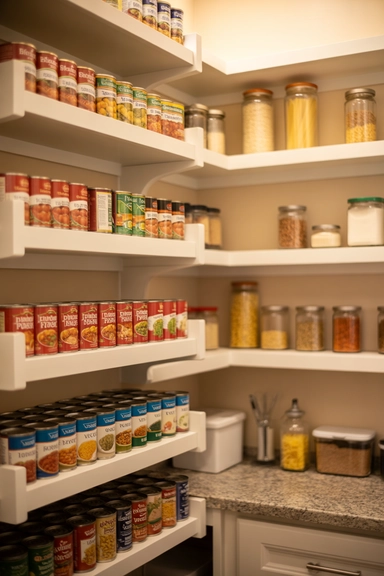
Flat pantry shelves hide more than they reveal. When canned goods sit in single-level rows, only the front line stays visible while everything behind becomes guesswork. Tiered shelf risers introduce stepped elevation, allowing each label to face forward at a readable height. This eliminates the habit of pulling cans out to check stock and prevents accidental double purchases. The result is a pantry that communicates its inventory clearly every time the door opens.
For smart canned food organization for small pantries, risers also improve shelf stability. Instead of stacking cans into wobbly towers, each tin rests on a secure level. This keeps shelves from sagging under uneven weight and preserves order even when items are removed daily. Once installed, restocking becomes intuitive, and the system quietly maintains itself.
2-Pull-Out Pantry Drawers for Deep Shelves
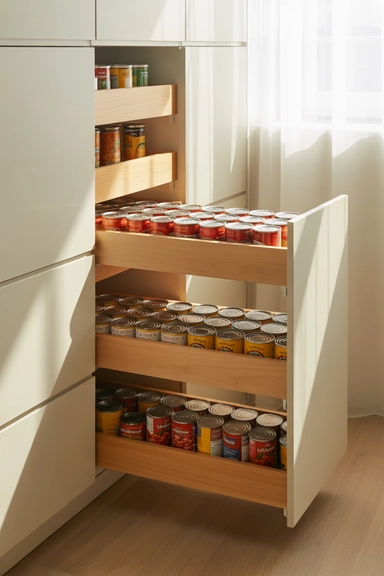
Deep pantry shelves often turn into blind storage zones where canned goods disappear from memory. Pull-out drawers change that behavior by bringing the entire shelf forward in one smooth motion. Instead of reaching into dark corners and disturbing stacks, you slide the drawer out and view every can at once. This small mechanical shift transforms daily access into a quick, frustration-free routine.
In smart canned food organization for small pantries, pull-out drawers also establish controlled capacity. Each drawer defines how many cans belong in that category, reducing overbuying and clutter. Weight distributes evenly across rails instead of resting on fragile shelf boards. Over time, this structure keeps inventory visible, rotation consistent, and restocking predictable rather than reactive.
3-Lazy Susan Turntables for Corner Recovery
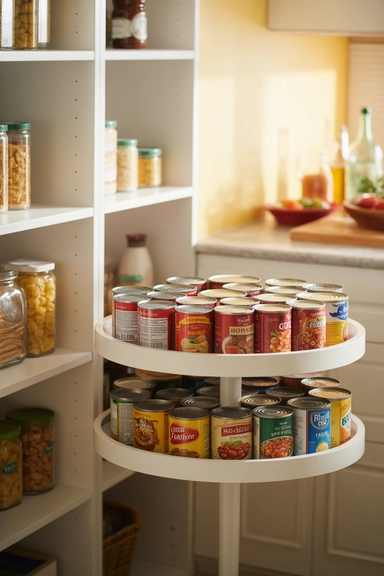
Corner pantry shelves often waste valuable square footage because access angles feel awkward. A Lazy Susan turntable converts that neglected corner into active storage. With a gentle spin, every can rotates into view, removing the need to unload shelves to find a single item. This keeps movement simple and preserves order during busy cooking routines.
For smart canned food organization for small pantries, turntables also create natural food zones. Soups, beans, sauces, or vegetables can each occupy a dedicated rotating platform, and if you’re also improving broader cabinet systems, 23 Smart Kitchen Cupboard Hacks That Reduce Daily Clutter fits seamlessly alongside this approach. This grouping keeps similar items together without crowding main shelves.
4-Gravity-Fed Can Dispensers for Automatic Rotation
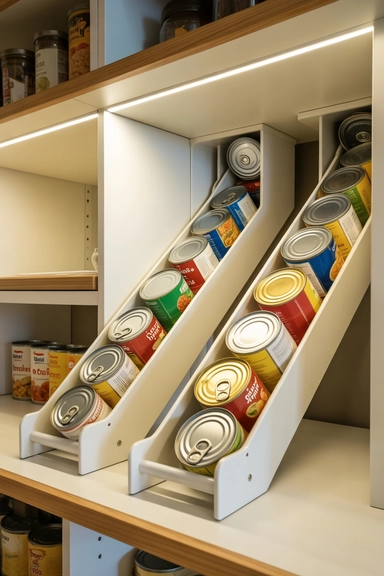
Gravity-fed can dispensers introduce motion-based order into small pantry systems. Instead of stacking cans manually, you load new tins from the top while older ones roll gently forward for use first. This natural flow prevents expired food from hiding in the back and removes the mental load of tracking dates. The front-facing layout keeps labels visible, making meal planning quicker and grocery shopping more accurate.
For smart canned food organization for small pantries, dispensers also compress storage into narrow vertical lanes. This frees horizontal shelf width for other essentials while maintaining a clean visual line. Because cans always return to the same position after removal, the pantry retains structure even with frequent daily use.
5-Under-Shelf Hanging Baskets for Vertical Expansion
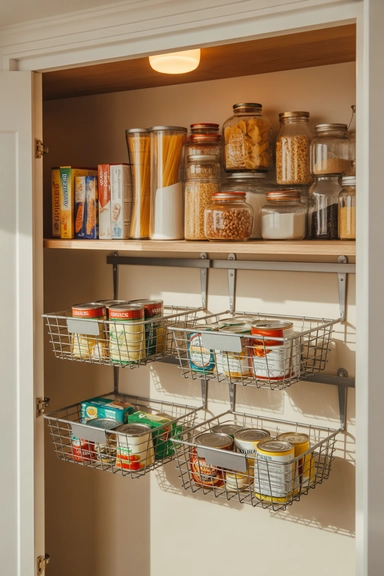
Most pantry shelves waste vertical airspace between shelf levels. Under-shelf hanging baskets capture this unused zone by adding a second storage layer without altering cabinetry. Lightweight canned items fit securely underneath, leaving primary shelves free for heavier goods. This approach increases capacity without crowding or requiring new shelving installations.
In smart canned food organization for small pantries, vertical layering also improves category separation. Frequently used cans can occupy eye-level shelves, while backup stock sits below in hanging baskets. This subtle zoning reduces overstocking on main shelves and keeps the pantry looking calm instead of crammed.
6-Front Rail Shelf Guards to Stop Can Drift
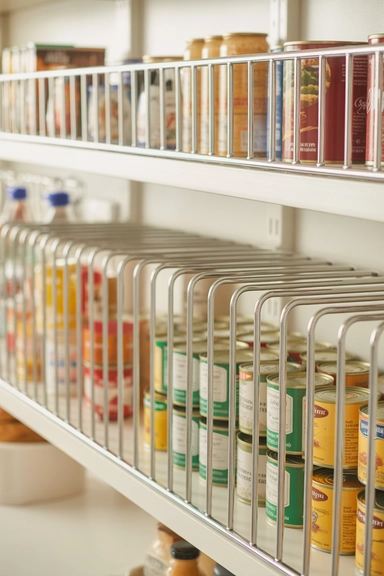
Cans naturally roll backward when shelves are opened and closed. Front rail shelf guards create a subtle barrier that keeps every tin aligned at the front edge. This ensures labels stay visible and prevents cans from slipping into unreachable gaps behind other items. The system maintains itself without daily adjustment.
For small pantry layouts, front rails also protect shelf surfaces from scraping and weight drag. By keeping cans locked in a consistent line, inventory checks become effortless. You immediately see what needs replenishing without touching a single item, reinforcing sustainable canned food organization habits.
7-Clear Category Bins for Grouped Storage
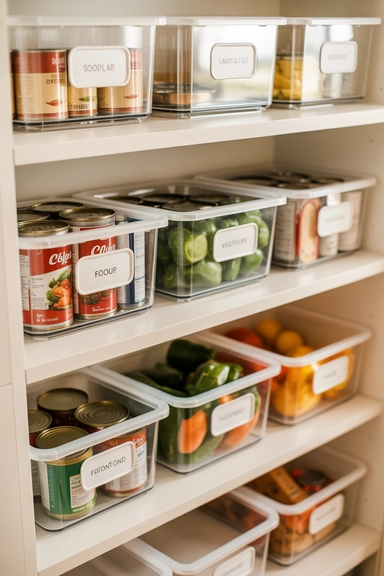
Grouping canned goods into category bins replaces chaotic stacking with defined zones. Clear bins allow instant recognition of contents while containing loose movement inside a controlled boundary. Whether grouping vegetables, soups, or sauces, each category gains a dedicated footprint that remains stable during daily use.
Smart canned food organization for small pantries benefits from this visual zoning. When one bin empties, you know exactly what to restock. When a bin feels full, you stop overbuying. This clear boundary system keeps shelves orderly, simplifies shopping decisions, and prevents scattered overflow.
8-Labelled Shelf Zones for Visual Guidance
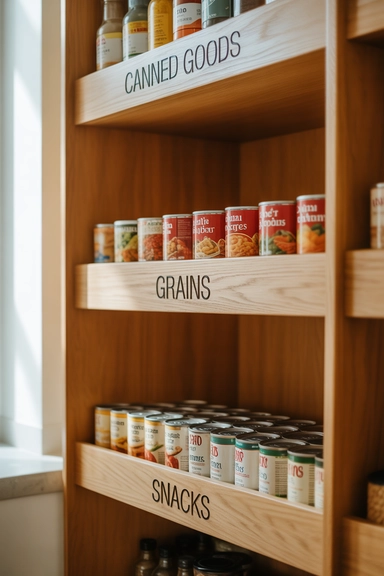
Even the best storage tools fail without visual guidance. Labelled shelf zones establish fixed positions for each canned category. Once zones are defined, every household member knows where items belong, reducing random placement that slowly breaks systems over time.
In small pantry environments, labelled zones also improve cleaning routines. Shelves can be wiped section by section without moving the entire pantry. This keeps smart canned food organization consistent long after the initial setup, reinforcing habits through gentle visual cues rather than constant effort.
9-Backstop Risers to Prevent Hidden Rows
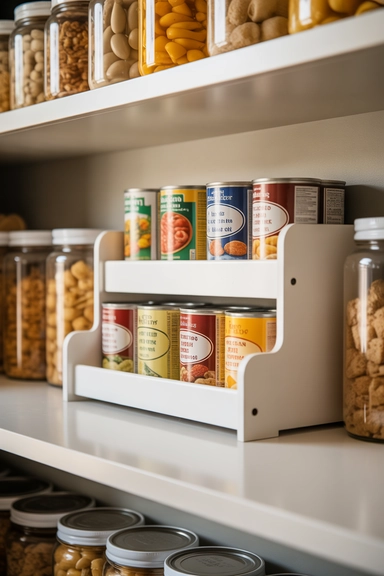
Deep shelves often allow cans to slide behind front rows unnoticed. Backstop risers lift rear rows slightly higher than front rows, ensuring no can disappears from sight. This subtle elevation creates a visual inventory wall where every tin remains readable from the doorway.
For smart canned food organization for small pantries, backstop risers also support first-in-first-out flow. New cans settle at the back but stay visible, while older cans remain at the front for use. The shelf stays balanced, accessible, and consistently tidy.
10-Slim Rolling Pantry Carts for Overflow Control
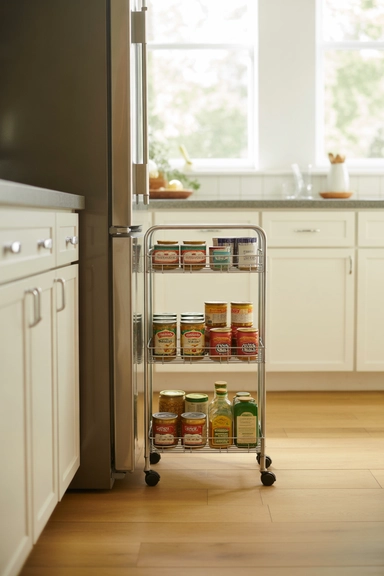
When pantry shelves reach capacity, canned goods often spill onto countertops or get stored in random cabinets. A slim rolling pantry cart creates a controlled overflow zone that stays mobile and accessible. These narrow units slide beside refrigerators or between cabinetry, allowing you to expand storage without remodeling. Every can remains visible and reachable instead of buried in improvised spaces.
For smart canned food organization for small pantries, rolling carts also introduce flexibility. Bulk purchases, sale stock, or seasonal items gain a temporary home that doesn’t disrupt the main pantry system. When inventory reduces, the cart rolls out of sight, preserving a clean visual environment and preventing permanent clutter build-up.
11-Magnetic Can Holders for Metal Wall Panels
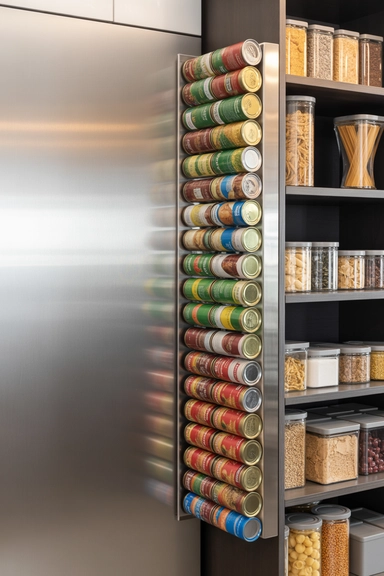
Vertical wall space inside or beside pantry doors is often ignored. Magnetic can holders attached to metal panels turn that blank surface into functional storage. Cans attach securely while staying visible and easy to remove. This technique uses height instead of shelf depth, freeing primary shelving for larger goods.
In smart canned food organization for small pantries, magnetic storage also keeps frequently used items within immediate reach. Tomato paste, coconut milk, or broth cans can live on wall panels near prep zones. This reduces repeated door opening, speeds cooking routines, and keeps shelf zones from becoming overcrowded.
12-Door-Mounted Rack Systems for Quick Access
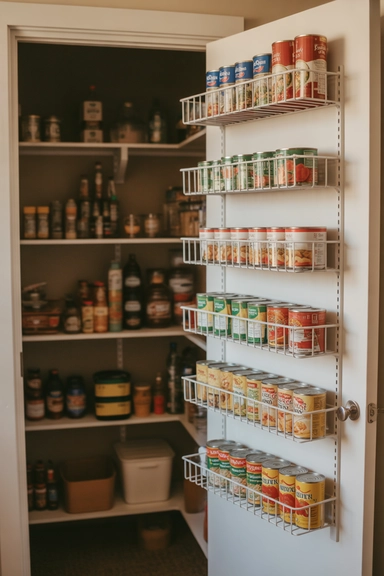
Pantry doors provide valuable real estate for lightweight canned storage. Door-mounted racks hold rows of smaller tins in clear view each time the door opens. This keeps high-use ingredients accessible without reaching into shelves or rearranging stacks.
For small pantry layouts, door racks also prevent overfilling shelves. By relocating lighter cans to the door, heavier stock stays safely supported on fixed shelving. This separation balances weight distribution, keeps visibility high, and reinforces long-term canned food organization stability.
13-Adjustable Shelf Height Planning
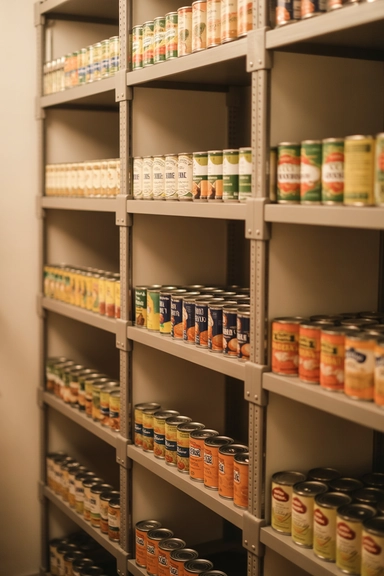
Fixed shelf spacing often wastes vertical room or creates cramped stacking. Adjustable shelf planning allows you to customize heights specifically for canned goods. Shelves can be set just tall enough to clear tins, preventing unused air gaps and maximizing capacity.
In smart canned food organization for small pantries, tailored shelf heights also improve reach. No stacking is required, labels stay readable, and restocking becomes simple. Over time, this intentional spacing reduces the temptation to create messy overflow piles that undo organization systems.
14-First-In-Front Loading Systems
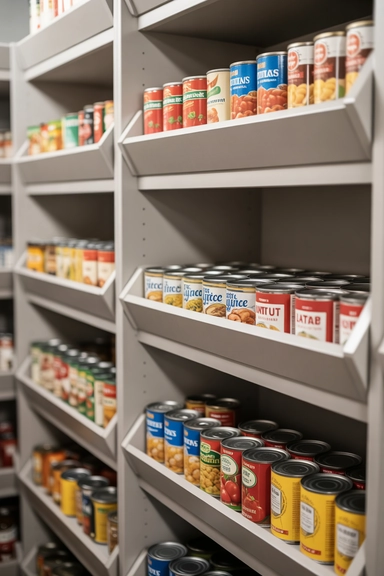
A first-in-front system keeps older cans positioned for immediate use. Whether achieved with angled shelves or manual placement routines, the concept is simple: new stock loads from behind, older stock stays in front. This prevents expiration waste without relying on memory or date checking.
For small pantry environments, this method also creates a natural rhythm for grocery unloading. Each can has a clear direction of placement, eliminating random stacking. The pantry maintains its structure through daily habit rather than constant reorganizing.
15-Clear Expiration Label Tags
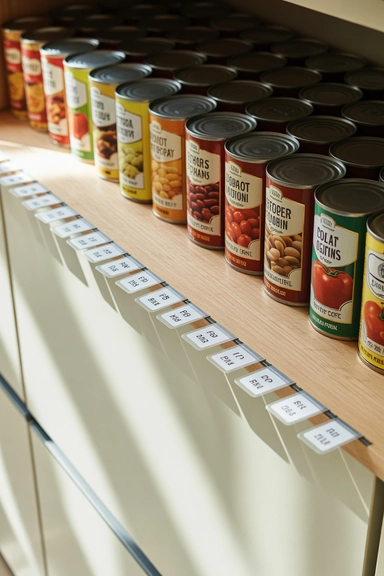
Even with good visibility, expiration tracking can slip through. Clear date tags placed on shelf edges or bins add a quick-reference layer without covering can labels. You glance once and know what should be used first.
Smart canned food organization for small pantries benefits from this low-effort accountability. Instead of pulling cans out to check dates, information stays visible where decisions happen. This keeps waste low, meal planning faster, and storage zones consistently orderly.
16-Uniform Can Grouping by Height
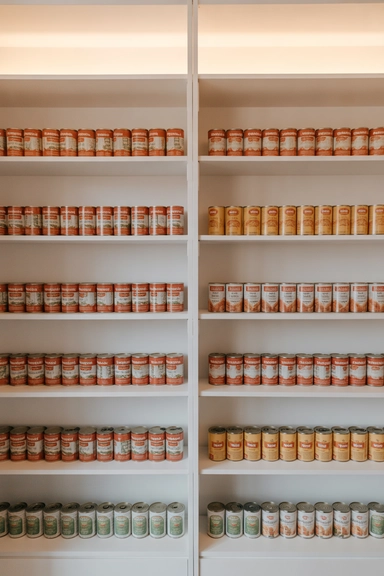
Cans of different heights create uneven rows that destabilize stacks. Grouping by height keeps shelf lines clean and prevents rolling gaps. When all tins in a row share the same size, alignment stays intact and access feels smoother.
In small pantry setups, uniform height grouping also improves visual calm. Straight shelf lines reduce the sense of clutter even when storage is full. This visual order reinforces long-term canned food organization habits by making disruption immediately noticeable.
17-Stackable Modular Can Trays for Shelf Order
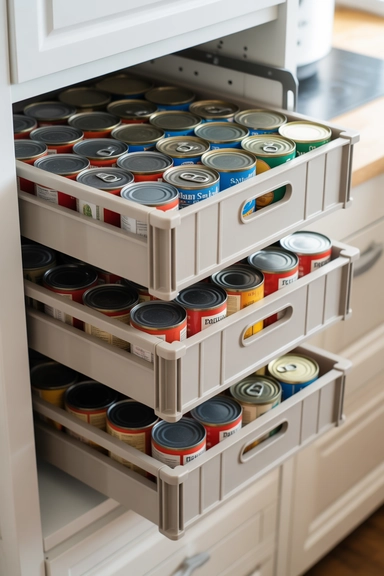
Loose cans tend to drift out of alignment each time something is removed. Stackable modular can trays solve this by giving each row a defined boundary. These trays lock into place, preventing rolling movement and maintaining straight lines even when shelves are partially empty. This structure keeps visual order intact, reduces accidental spills, and makes restocking faster because every row has a clear footprint.
For smart canned food organization for small pantries, modular trays also simplify cleaning routines. Entire rows can be lifted out at once, wiped down, and returned without rearranging individual cans. Over time, this ease of maintenance keeps the pantry looking composed rather than gradually slipping back into clutter.
18-Open-Front Shelf Boxes for Category Containment
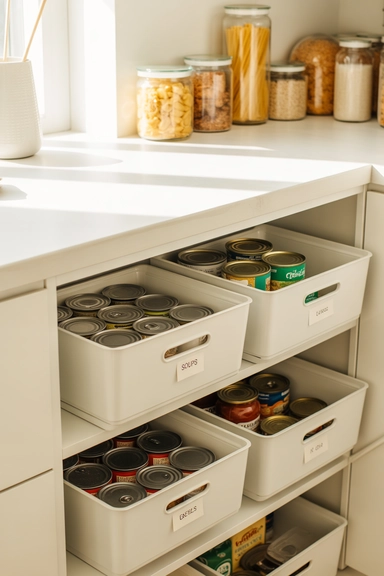
Open-front shelf boxes create a controlled compartment without hiding contents. Cans slide in from the front, stay contained on all sides, and remain visible without labels being blocked. This prevents loose stacking while still allowing quick access during cooking. Each category maintains a clear border, keeping different food types from blending into visual noise.
In smart canned food organization for small pantries, open-front boxes also help regulate purchasing habits. When a box feels full, you know stock is sufficient. When it empties, restocking becomes obvious. This visual feedback loop supports long-term organization without requiring constant shelf resets.
19-Color-Coded Category Systems for Fast Recognition
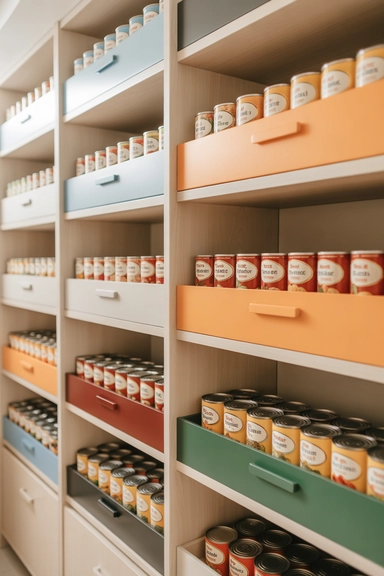
When pantry shelves are compact, speed matters. Color-coded category systems use subtle visual signals to distinguish food groups instantly. Whether through colored shelf tags, bin handles, or tray edges, this method allows the eye to locate ingredients quickly without scanning every label. It reduces friction during meal prep and keeps items returning to their correct zones.
For smart canned food organization for small pantries, color coding also improves shared household use. Every family member understands where items belong without instructions. This consistency prevents random placement and protects your pantry system from slow deterioration caused by misplacement over time.
20-Narrow Shelf Depth Planning for Zero Back Rows
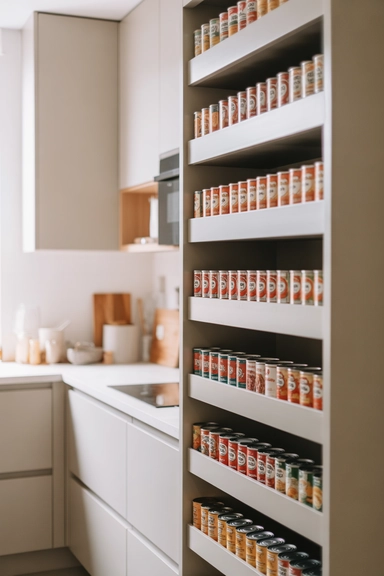
Many pantry shelves are deeper than necessary, creating hidden back rows where cans disappear. Narrow shelf depth planning reduces that risk by limiting storage to a single visible row. When every can sits at the front edge, nothing gets forgotten and inventory checks take seconds.
In smart canned food organization for small pantries, shallow-depth shelving also prevents overbuying. If there is no space to hide extra cans, purchasing becomes naturally controlled. This approach keeps storage honest, visible, and sustainable without relying on periodic decluttering sessions.
21-Dedicated Weekly Use Zone for Active Rotation
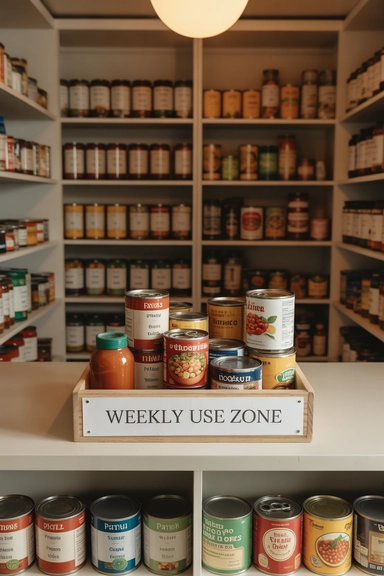
A dedicated weekly use zone separates frequently used cans from long-term stock. This might be a small front-row tray or a mid-shelf section reserved for current meal planning. Each week, items rotate into this zone, ensuring steady movement through inventory.
For smart canned food organization for small pantries, this active zone keeps daily cooking efficient. You reach for what you need without disrupting deeper storage. It also prevents the common pattern of repeatedly using only newly purchased items while older cans sit untouched behind them.
Conclusion
Smart canned food organization for small pantries is not about creating perfect shelves. It is about building quiet systems that hold their shape through daily life. When visibility, access, and placement rules work together, food stays in rotation, waste drops, and the pantry feels calm instead of crowded. These strategies turn limited space into structured space, allowing your kitchen routines to flow naturally while maintaining order that lasts.