Introduction
A cramped pantry rarely means you own too much food — it usually means the layout isn’t working. The most effective small pantry organization ideas starts with creating clear zones, controlling visual clutter, and making every shelf easier to maintain daily. When storage supports real cooking habits instead of looking staged, even a narrow pantry can feel calm and usable. The goal isn’t perfection. It’s predictability. When snacks, dry goods, and bulk items each have defined homes, restocking becomes faster and cleanup takes minutes instead of a full reset. Start with structure first, containers second, and styling last for results that actually last.
If your cabinets also feel crowded, these 25 Deep Kitchen Cabinet Organization Ideas That Actually Work can help extend the same system beyond the pantry.
1. Start With Zones Before Buying Any Containers
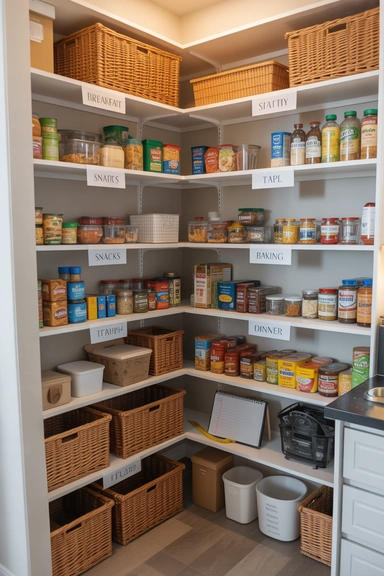
Most people jump straight to bins and baskets, but small pantry organization ideas works best when zones are mapped first. Instead of buying containers immediately, step back and evaluate how your pantry is actually used day to day. Empty everything out and group items by purpose — breakfast, snacks, baking, dinner staples, and overflow. This zoning step is what turns random storage into intentional small pantry organization that’s easier to maintain long term. Once categories are clear, assign shelves based on frequency so daily items sit between waist and eye level while occasional items move higher or lower. When shelves match real habits, the pantry supports your routine instead of slowing it down during busy mornings and weeknight cooking.
After zones are established, measure each shelf before purchasing storage. Narrow shelves benefit from tiered risers, while deeper shelves need pull-out bins to prevent forgotten items at the back. When categories match shelf depth and reach, the pantry starts working like a system instead of a crowded cabinet. Label zones loosely at first and live with them for a week. Adjust placement based on how often you reach for items. This trial period ensures your organization reflects real habits instead of a one-day reset that quickly falls apart.
2. Use Shelf Height Strategically Instead of Even Spacing
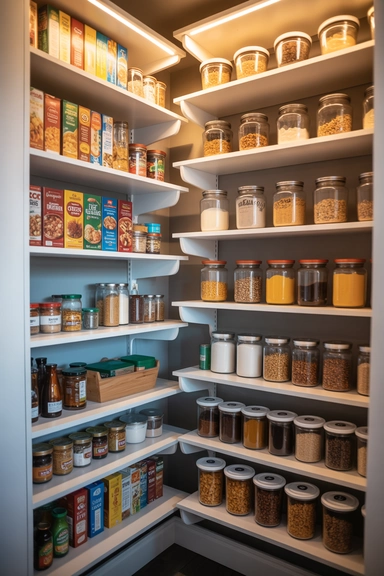
Evenly spaced shelves waste valuable vertical room. In small pantry organization, shelf height should match the tallest items stored on that level. Cereal boxes, oil bottles, and bulk containers all require different clearance, and adjusting shelves to fit them tightly creates extra room for an additional level. When shelves hug their contents, you prevent wasted space and make everything feel intentionally placed instead of stacked. This also improves visibility, making it easier to track inventory without pulling everything forward.
If your shelves are fixed, use stackable risers or low-profile bins to simulate adjustable levels. Wire risers work especially well for canned goods and spices because they lift back rows into view. For tall, narrow pantries, create a “top reserve shelf” for rarely used bulk items and keep everyday foods within arm’s reach. Strategic spacing transforms the pantry into a layered system where every inch has a purpose. Over time, this layout reduces overbuying because you can clearly see what you already have.
3. Clear Bins for High-Turnover Food Categories
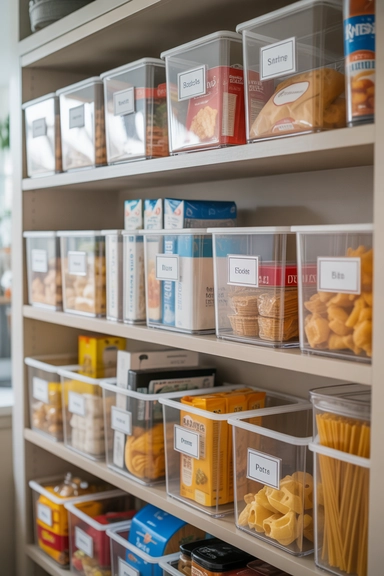
Clear bins are one of the most effective tools in small pantry organization because they contain clutter without hiding what’s inside. Use them for snacks, baking supplies, packets, and small bags that normally scatter across shelves. Assign one category per bin and avoid mixing food types. When bins have defined purposes, cleanup becomes automatic because everything returns to its designated container. This is especially helpful for families or busy households where multiple people access the pantry throughout the day.
Choose bins with straight sides to maximize shelf space and ensure they slide easily. Handles are useful for deep shelves because they allow quick pull-out access. Avoid overfilling containers; leave a little breathing room so items stay visible and easy to grab. If aesthetics matter, use matching bins throughout to create visual calm. A consistent container system makes the pantry feel intentional and prevents the crowded look that often happens in small spaces. Visibility and containment together create long-term order.
4. Turn Deep Shelves Into Pull-Out Storage Zones
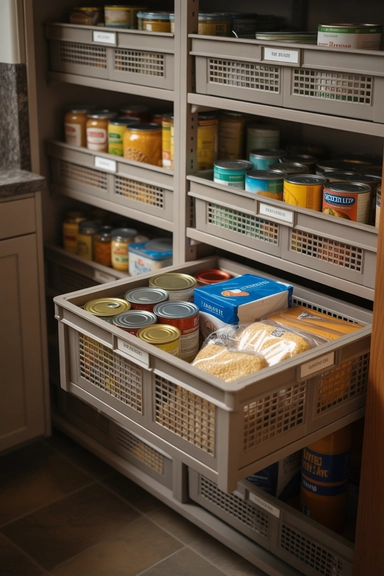
Deep shelves are one of the biggest challenges in small pantry organization. Items at the back get forgotten, expire, or create clutter as new groceries are placed in front. The solution is turning each deep shelf into a pull-out zone using baskets or sliding bins. When the entire section pulls forward, you can see and access everything without digging. This keeps categories intact and reduces the need for frequent full resets.
Use wide baskets for larger items like pasta, rice, and canned goods, and narrower bins for snacks or baking ingredients. Assign one category per container and label the front so anyone can maintain the system. If sliding drawers aren’t possible, use lightweight baskets that can be lifted out easily. Over time, this method prevents overbuying and keeps food rotation consistent. Deep shelves stop feeling like storage black holes and start functioning as organized drawers within the pantry.
5. Use Door Space as an Extension of the Pantry
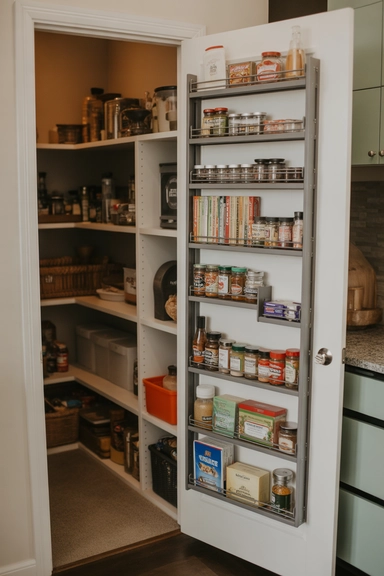
Pantry doors often hold the most underused storage in small kitchens. Slim racks or shallow bins mounted to the inside of the door can store spices, packets, foil, wraps, and small jars without crowding shelves. This works especially well in small pantry organization because it shifts low-profile items off primary shelves and frees up central space for bulkier foods. Keep door storage lightweight so hinges aren’t strained, and avoid placing glass containers here to prevent accidental drops.
Group door items by function instead of size. For example, create a baking door section, a snack topping section, or a sauce packet zone. When the door becomes a functional extension of the pantry, you reduce visual clutter on the main shelves and make daily cooking faster. The key is consistency. If the door is always used for small items, the rest of the pantry stays open and easy to scan. Over time, this simple shift creates breathing room in even the narrowest pantry setups.
6. Baskets for Flexible Categories That Change Often
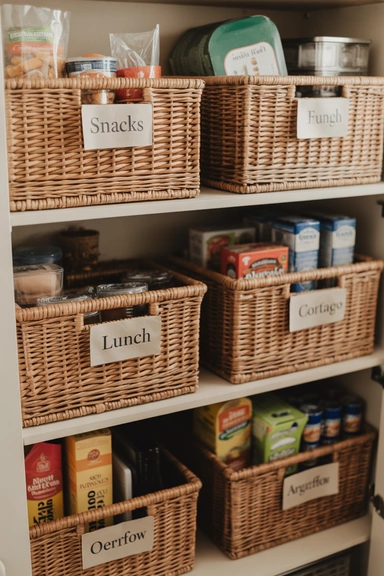
Not every category in a pantry stays consistent. Snacks rotate, seasonal items change, and bulk buys vary throughout the year. That’s why flexible storage plays an important role in sustainable small pantry organization ideas. Baskets are ideal for evolving zones because they contain shifting items without forcing a rigid container system. Instead of constantly relabeling bins, assign baskets to adaptable categories like kids’ snacks, quick lunches, or overflow groceries. This approach keeps shelves structured while allowing the flexibility that real-life small pantry organization requires, especially in busy households where food inventory changes weekly.
Choose baskets with open tops so items are easy to grab and return. If you prefer a clean look, use matching woven or wire baskets for visual consistency. Labeling helps maintain order but keep labels general so categories can shift over time. For example, “snacks” works better than “granola bars.” Flexible storage prevents the system from breaking down when grocery habits change. Instead of reorganizing weekly, you simply reset items back into their designated basket.
7. Tiered Risers for Cans and Jars
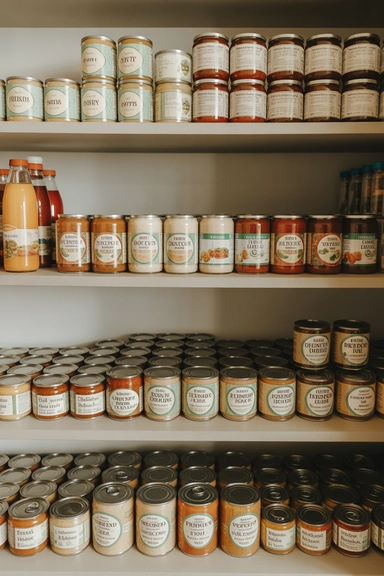
Cans and jars quickly create visual clutter when stacked in rows. Tiered risers lift back rows so everything stays visible and accessible. This is one of the most effective small pantry organization upgrades because it prevents duplicate purchases and keeps expiration dates easier to track. Use risers for canned goods, sauces, and small jars, especially on shelves at eye level where visibility matters most.
If shelf depth is limited, choose narrow risers designed for spices or small cans. For deeper shelves, wider risers allow multiple rows without hiding items. Keep similar products grouped together — soups in one section, beans in another, sauces in a third. This visual grouping makes restocking faster and helps you see when supplies run low. Over time, risers reduce clutter and make the pantry feel layered rather than crowded.
8. Create a Snack Station That Contains the Chaos
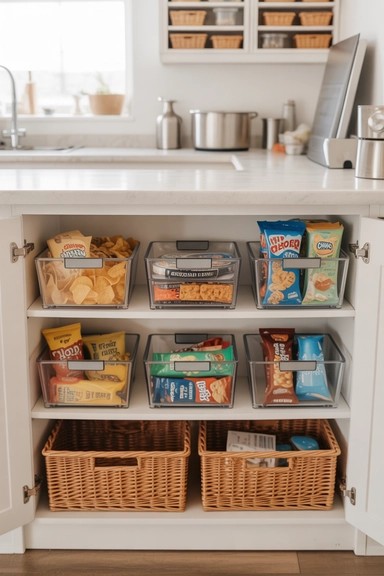
Snacks are often the most disruptive category in a pantry because they come in different sizes and get accessed constantly. A dedicated snack station keeps everything contained and makes daily use easier to manage. Use one shelf or one large bin and group snacks by type: grab-and-go, sweet, savory, or lunchbox items. In a well-planned small pantry organization ideas system, containing snacks in one defined area prevents them from spreading across multiple shelves and creating visual clutter. This kind of focused small pantry organization also makes restocking faster and helps everyone in the household know exactly where snack items belong.
For families, place the snack zone at a lower height so kids can reach it without pulling everything out. Use clear bins or open baskets so contents stay visible. Refill the station weekly instead of daily to reduce constant adjustments. When snacks have a defined home, the rest of the pantry stays orderly. This small change dramatically reduces clutter because the highest-traffic items no longer disrupt the entire system.
9. Use Vertical Dividers for Baking Sheets and Trays
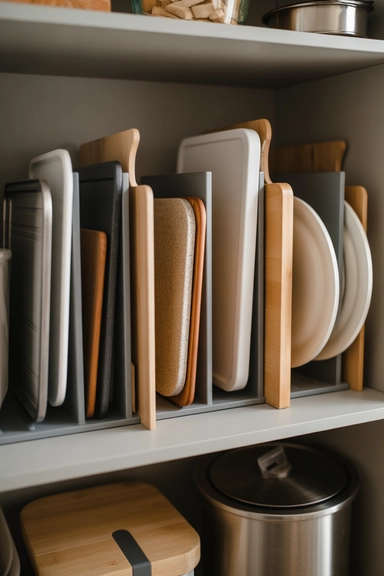
Flat items like baking sheets, cutting boards, and trays can overwhelm a small pantry when stacked horizontally. Vertical dividers turn one awkward shelf into a functional slot system where each item stands upright and stays accessible. This is especially useful in small pantry organization because it keeps bulky pieces contained without consuming an entire shelf. Install tension dividers or use a file-sorter style rack to separate trays and lids so nothing topples over when you remove one piece.
Place these dividers on a lower or mid-level shelf where heavier items are easier to lift safely. Keep similar pieces together and avoid overcrowding each slot so items slide in and out smoothly. When trays and boards are stored vertically, the surrounding shelves stay clearer and easier to maintain. This layout also prevents the cascading mess that happens when stacked items shift. Over time, vertical storage makes the pantry feel calmer and more controlled.
10. Label for Maintenance, Not Perfection
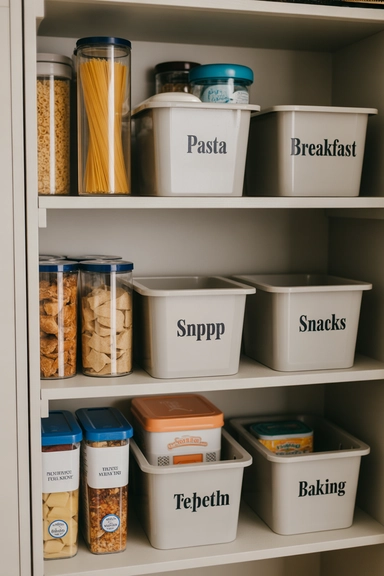
Labels aren’t just for aesthetics — they keep a system functioning long-term. In small pantry organization, labeling bins and zones ensures everyone in the household knows where items belong. Focus on simple, readable labels that describe categories rather than specific products. “Pasta,” “Baking,” or “Breakfast” works better than overly detailed labels that become outdated. The goal is maintenance, not decoration.
lace labels at eye level and on the front of bins so they’re visible without pulling containers out. In a well-designed small pantry organization ideas system, visibility is what keeps maintenance simple. If your pantry changes often, use removable labels or chalk-style tags that can be updated quickly without redoing the entire setup. A consistent labeling approach strengthens your small pantry organization by reducing decision fatigue during cleanup and making grocery restocking faster. When everything has a clear destination, the pantry stays organized with minimal effort. Over time, labels act as quiet visual cues that prevent clutter from creeping back in.
11. Dedicate One Shelf to Bulk and Backstock
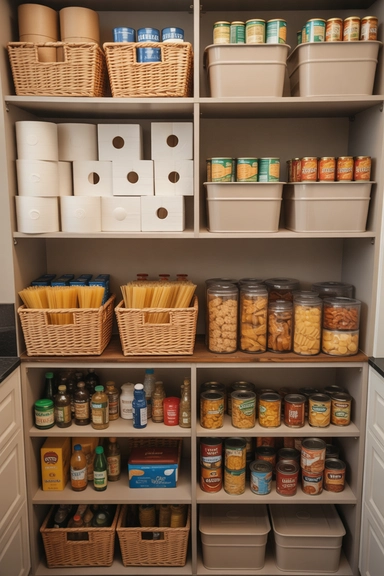
Bulk purchases can quickly overwhelm a small pantry if they’re mixed with everyday items. Creating a dedicated backstock shelf keeps overflow contained. Store extra pasta, rice, canned goods, and backup snacks here so the main shelves remain streamlined. This approach to small pantry organization prevents visual clutter and makes it easier to see what’s currently in use versus what’s stored for later.
Place the backstock shelf at the top or bottom of the pantry depending on accessibility and how often you reach for those items. In a thoughtful small pantry organization ideas setup, large bins or baskets help group similar backstock so it doesn’t mix with daily-use food. Rotate older products forward when refilling main shelves to keep inventory visible and prevent waste. This simple rotation habit strengthens small pantry organization by reducing expired food and limiting overbuying. By separating everyday items from reserves, you maintain a cleaner, more functional layout. The pantry feels lighter and more intentional when overflow has a clearly defined place within the overall system.
12. Create a Breakfast Zone for Faster Mornings
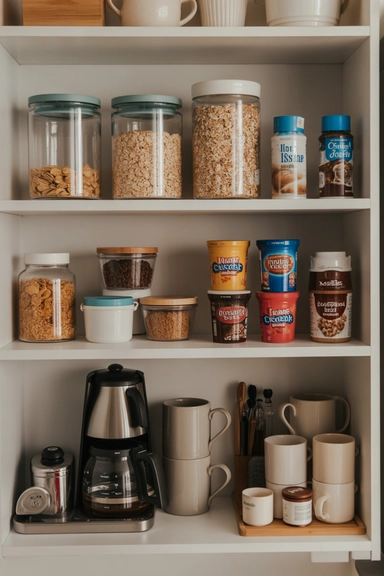
Morning routines become smoother when breakfast items live in one dedicated area. Group cereal, oats, spreads, coffee supplies, and quick options together so everything needed for the first meal is within reach. In small pantry organization, a breakfast zone prevents early-morning searching and keeps frequently used items from spreading across multiple shelves. Place this zone at eye level for easy access during busy mornings.
Use clear containers for cereals and grains to maintain freshness and reduce bulky packaging. A small basket can hold bars, packets, or single-serve items. If space allows, store mugs or small appliances nearby to create a cohesive morning station. When breakfast has its own section, the pantry supports daily routines rather than slowing them down. This focused setup keeps mornings efficient and the rest of the pantry orderly.
13. Make Corner Shelves Work With Lazy Susans
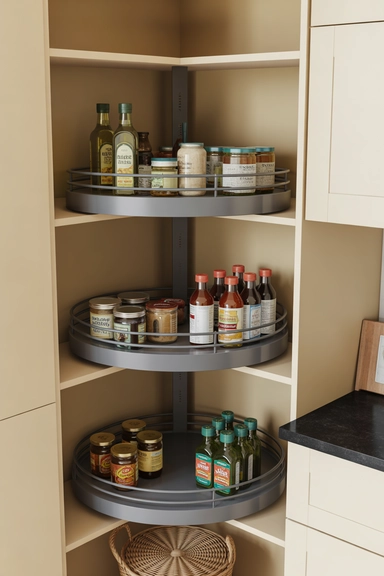
Corner shelves often become dead zones where items disappear behind larger containers. A lazy susan instantly converts that awkward space into a rotating storage hub. In small pantry organization, this works especially well for sauces, oils, condiments, and jars that tend to get lost in corners. A quick spin brings everything forward, eliminating the need to reach blindly into the back. Choose a size that fits comfortably without crowding surrounding items so rotation stays smooth and accessible.
Use one lazy susan per category to prevent clutter from mixing and to keep similar items rotating together. In a smart small pantry organization ideas layout, place taller bottles toward the center and shorter jars along the outer edge so everything stays visible with a quick spin. For deeper corners, consider a two-tier version to maximize vertical space and keep more items accessible without stacking. Over time, rotating storage strengthens your small pantry organization by preventing forgotten items and reducing duplicate purchases. What once felt like the most frustrating shelf becomes one of the easiest to maintain, making the entire pantry feel more functional and controlled.
14. Use Glass Jars for Dry Goods You Reach For Daily
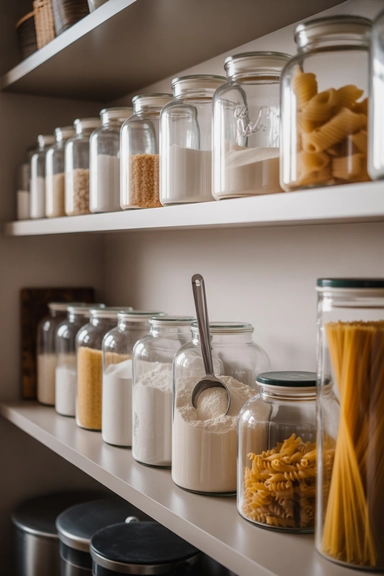
Glass jars create structure for high-use dry goods like flour, sugar, rice, and pasta. They stack efficiently, reduce packaging clutter, and keep ingredients visible. In small pantry organization, transferring everyday staples into jars helps maintain consistency because containers fit shelves better than bulky bags and boxes. Choose uniform shapes for a cohesive look and easier stacking. Clear sides allow quick inventory checks so you always know when it’s time to restock.
Place frequently used jars at eye or waist level so daily cooking stays efficient, and store backup supplies on a separate shelf to avoid overcrowding. In a thoughtful small pantry organization ideas setup, scoop-friendly containers work well for baking items while airtight lids keep grains fresh and contained. Labels add clarity, but keep them simple so the system remains flexible as groceries change. When dry goods are decanted into jars, shelves immediately feel calmer and easier to navigate. This style of small pantry organization blends practicality with aesthetics, creating a pantry that functions smoothly while still looking intentional and tidy..
15. Install Narrow Pull-Out Shelves for Tight Spaces
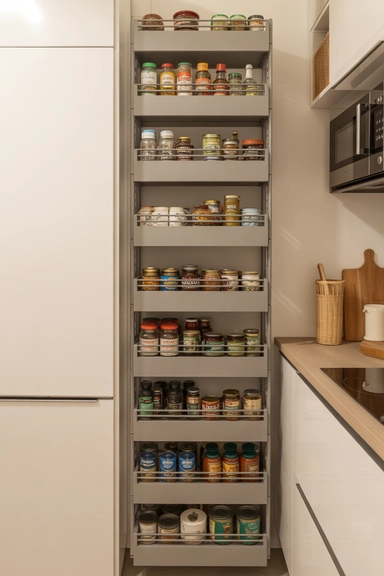
Tall, narrow pantries can be difficult to manage because items get stacked and hidden. Narrow pull-out shelves or rolling carts solve this by bringing everything forward in one motion. This method of small pantry organization works especially well in apartments or slim kitchen layouts where space is limited. Each pull-out section can hold a specific category like spices, canned goods, or baking supplies, keeping items contained but accessible.
If built-in pull-outs aren’t possible, use slim rolling carts that fit between cabinets or inside pantry closets. Keep heavier items on lower levels and lighter goods on top for stability. Label sections so items return to the correct spot after use. Over time, pull-out storage reduces clutter and prevents overcrowding because everything has a defined width and boundary. Tight spaces become efficient storage zones instead of frustrating bottlenecks.
16. Add Under-Shelf Baskets for Instant Extra Storage
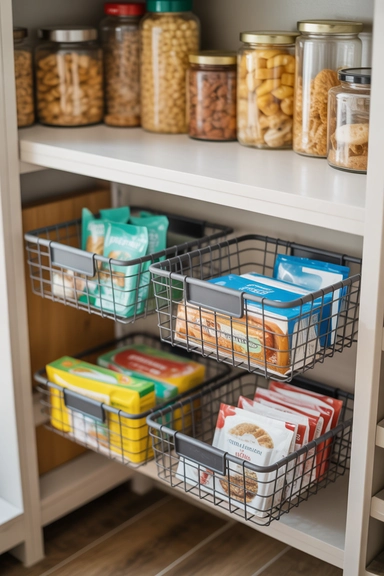
Under-shelf baskets create additional storage without requiring a full pantry overhaul. These slide onto existing shelves and hold lightweight items like packets, wraps, or snack bags. In small pantry organization, they’re ideal for capturing unused vertical space that would otherwise remain empty. Use them sparingly to avoid overcrowding and place them on shelves with enough clearance so items remain easy to access.
Group similar items in each basket to maintain clarity. For example, one basket can hold baking packets while another stores instant meals or small snack packs. Keep heavier items off under-shelf baskets so shelves remain stable. This quick upgrade expands storage capacity and helps separate small items from larger containers. Over time, it reduces visual clutter and makes shelves feel more layered and intentional without major installation work.
17. Build a Simple System for Spices and Seasonings
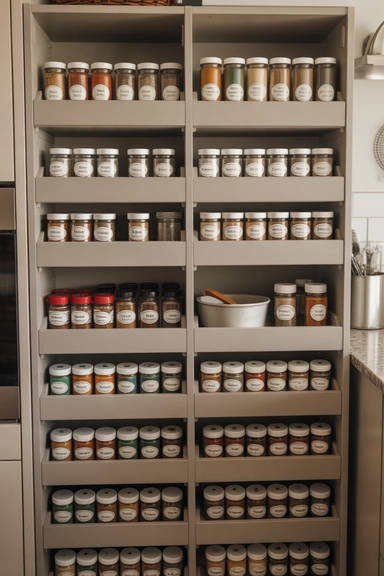
Spices can quickly scatter across multiple shelves if they don’t have a defined home. A dedicated spice zone keeps cooking faster and prevents duplicates. In small pantry organization, use tiered shelves, shallow drawers, or door-mounted racks so labels stay visible at a glance. Group spices by type — everyday cooking, baking spices, and specialty blends — to make restocking and cleanup easier. Keeping them together ensures they don’t migrate into other pantry zones and create clutter.
Store the most-used spices at eye level and less common ones on higher shelves. If space is tight, transfer spices into uniform jars that fit neatly into risers or bins. Label lids as well as fronts for quick identification. When seasonings live in one controlled area, meal prep becomes smoother and the rest of the pantry stays organized. Over time, a clear spice system reduces waste and keeps shelves from becoming overcrowded with small containers.
18. Turn One Shelf Into a Meal-Prep Zone
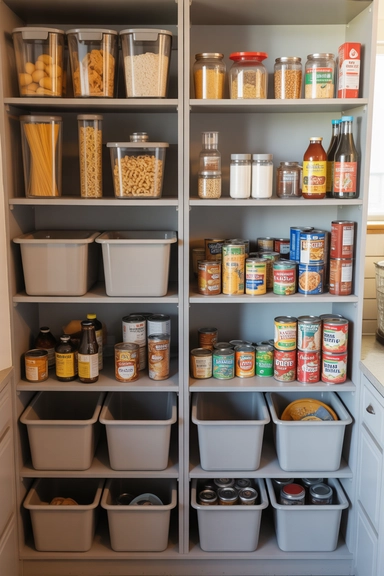
A meal-prep shelf simplifies busy weeks by keeping dinner components together. Store pasta, sauces, grains, and quick sides in one area so planning meals becomes easier. In small pantry organization, grouping items by meal type instead of food category can save time and reduce decision fatigue. This shelf acts as a staging area where you can quickly see what’s available for the week without searching through the entire pantry.
Use bins or baskets to separate different meal components and keep portions visible. Rotate items weekly so older products move forward and get used first. If you cook frequently, place this zone near the center of the pantry for easy access. Over time, a meal-prep shelf reduces clutter because ingredients stop drifting into unrelated areas. It turns the pantry into a functional planning tool rather than just a storage space.
19. Use a Minimalist Color Palette to Reduce Visual Clutter
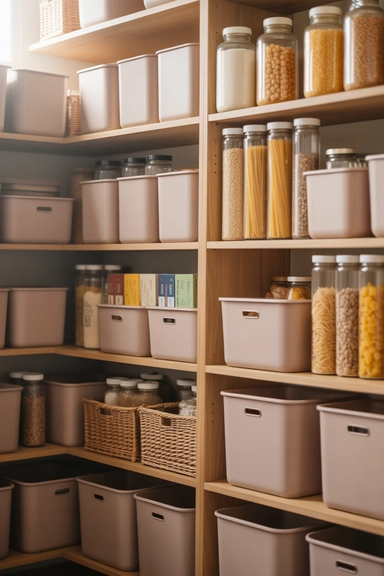
Visual clutter makes a pantry feel smaller than it actually is. A consistent color palette helps calm the space and makes shelves look more intentional. In small pantry organization, using matching containers, neutral baskets, or similar labels creates visual cohesion. This doesn’t mean everything must be identical — just keep colors within a narrow range so the eye isn’t overwhelmed by packaging.
Transfer high-visibility items into neutral containers where possible and group colorful packaging inside bins. This keeps the pantry from looking chaotic even when it’s fully stocked. A simplified palette also makes it easier to spot when something is out of place. Over time, visual consistency encourages maintenance because the space feels styled rather than crowded. A calm-looking pantry naturally stays more organized because clutter becomes easier to notice.
20. Adjust the System After One Week of Real Use
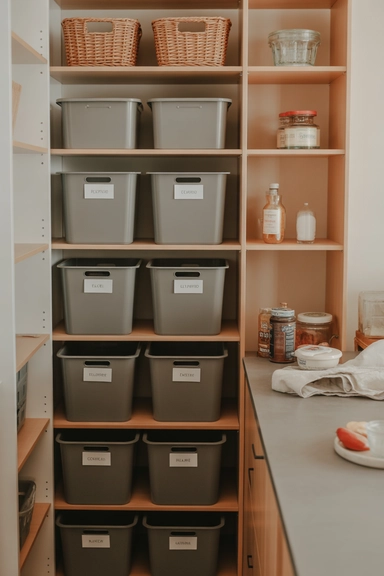
The most successful small pantry organization systems evolve after a trial period. Once everything is placed, live with the setup for a week and observe how you actually use it. Notice which shelves get messy first, which bins are overfilled, and which items are hard to reach. These patterns reveal what needs adjustment. Small changes — like moving snacks lower or shifting bulk items upward — make the system more intuitive.
Avoid aiming for perfection immediately. The goal is a layout that supports daily habits rather than one that looks perfect for a single day. After the first week, refine zones and remove anything unnecessary. This ongoing adjustment keeps the pantry functional long-term. When the system reflects real routines, maintenance becomes effortless and clutter is less likely to return.
21. Use Vertical Rack Storage for Cans and Bottles
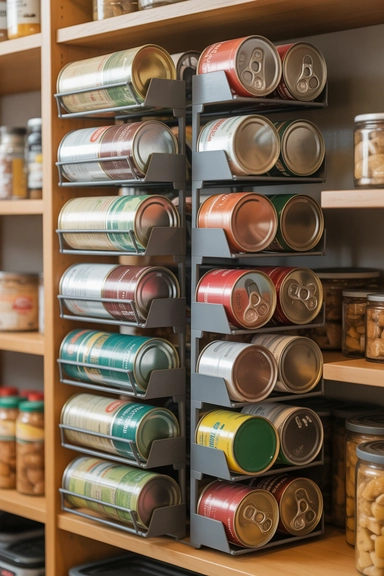
When shelf width is limited, vertical rack systems can dramatically increase usable space. Stackable can dispensers or slim vertical racks allow items to flow forward while keeping rows contained. In small pantry organization, this method works especially well for canned goods and bottled drinks because it prevents stacking that hides labels. Gravity-fed racks also help with inventory rotation by naturally bringing older items to the front.
Place heavier racks on lower shelves for stability and keep similar products grouped together. If full rack systems feel bulky, use narrow wire organizers that divide rows without consuming too much width. The goal is controlled stacking rather than loose piles. Over time, vertical storage reduces visual chaos and keeps items accessible without constant rearranging. Instead of cluttered rows, you get clean, structured lines that make the pantry easier to manage.
22. Make Under-Stairs or Awkward Nooks Functional
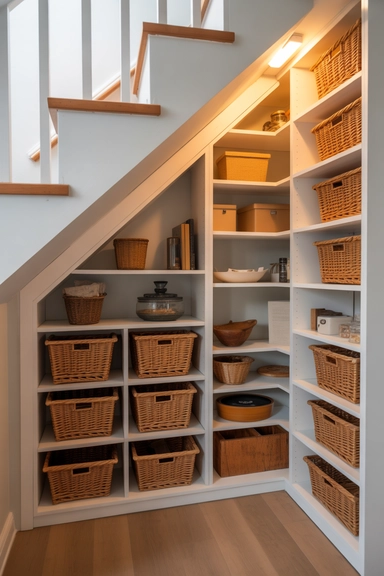
If your pantry sits under stairs or inside an oddly shaped nook, work with the angles instead of fighting them. Slanted ceilings and triangular corners can still support effective small pantry organization when shelves are customized by height. Install shorter shelves where clearance drops and reserve taller areas for bulk items. This prevents wasted space while maintaining easy access.
Use bins or baskets to contain items on irregular shelves so nothing slides backward into hard-to-reach areas. Label clearly and avoid overcrowding tighter spots. When angled spaces are thoughtfully divided into zones, they become some of the most efficient areas in the pantry. Rather than feeling like leftover space, these nooks can store backstock, appliances, or seasonal items without interfering with daily-use shelves.
23. Create a Simple Pantry Reset Routine
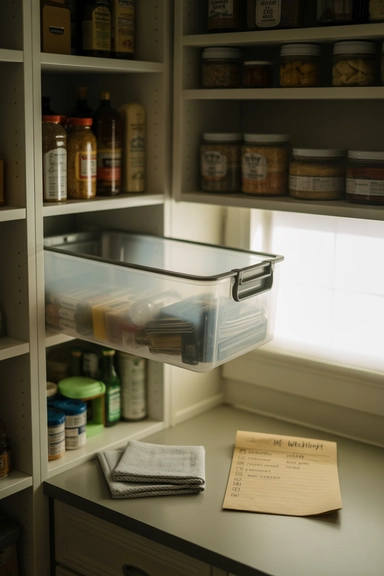
Even the best layout needs maintenance. A weekly five-minute reset keeps small pantry organization intact without requiring a full overhaul. Straighten bins, return misplaced items, wipe shelves, and check inventory. This prevents minor messes from turning into overwhelming clutter. Choose one consistent day each week to do this quick refresh so it becomes part of your routine.
During the reset, rotate older items forward and remove empty packaging. If a zone feels crowded, reassess whether categories need adjusting. Consistent small resets maintain the structure you worked to build and keep the pantry functioning smoothly. Organization isn’t about perfection — it’s about creating systems that are easy to maintain. When upkeep is simple and predictable, even the smallest pantry can stay calm, efficient, and ready for daily life.
Conclusion
Small pantry organization isn’t about fitting more into tight shelves — it’s about designing a layout that supports how you actually cook and shop. When zones are clear, containers are intentional, and maintenance is simple, even the smallest space can work harder without feeling crowded. Start with structure, refine after real use, and focus on systems over styling. With a few thoughtful adjustments, your pantry can become one of the most efficient and stress-free areas in your kitchen.