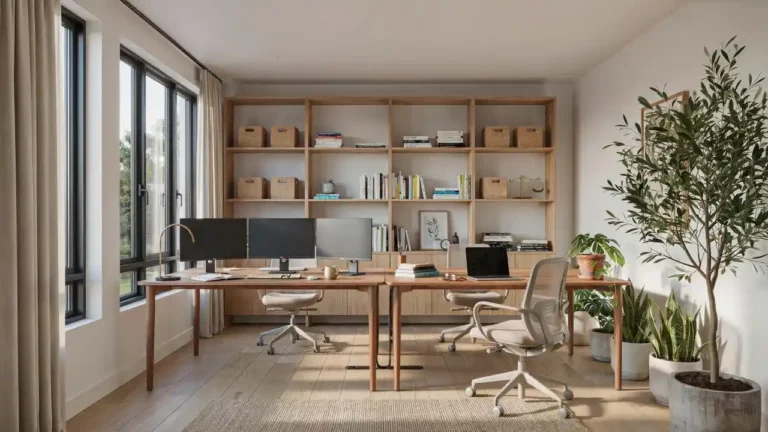

Tiny homes demand precision in how every inch is used. When belongings spread horizontally, even well-designed small spaces begin to feel restricted and visually crowded. Tiny home storage ideas focus on directing function upward, inward, and behind existing structures rather than adding new furniture footprints. The objective is spatial efficiency that feels natural rather than engineered. Storage should disappear into architecture, keeping movement paths clear and daily routines smooth. When each item has a defined vertical or concealed destination, small living environments remain calm, breathable, and easy to maintain. For deeper concealed-space strategies, explore 21 Hidden Storage Solutions That Keep Clutter Completely Out of Sight.
1. Floor-to-Ceiling Built-In Shelving That Replaces Bulky Furniture
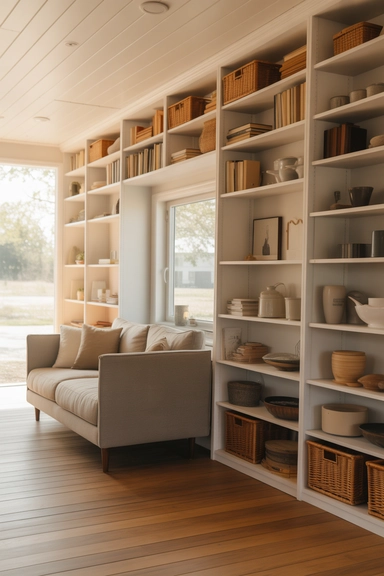
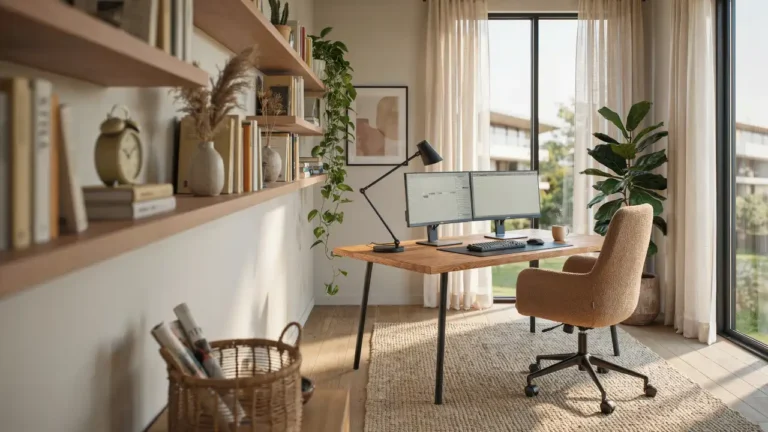
Traditional furniture consumes floor area that tiny homes cannot afford to lose. Floor-to-ceiling built-in shelving uses wall height instead of floor width, creating generous storage without interrupting circulation. Lower shelves hold heavier items such as cookware, books, or folded clothing, while upper levels store seasonal belongings. This vertical expansion turns blank walls into functional infrastructure rather than decorative surfaces.
Finish continuity keeps the shelving visually integrated. Matching wall colors or natural wood tones prevent visual fragmentation. Proper depth selection ensures shelves do not protrude into living zones. Tiny home storage ideas that use full-height shelving provide capacity equal to wardrobes or cabinets while preserving open floor rhythm.
2. Under-Stair Drawer Systems That Capture Hidden Volume
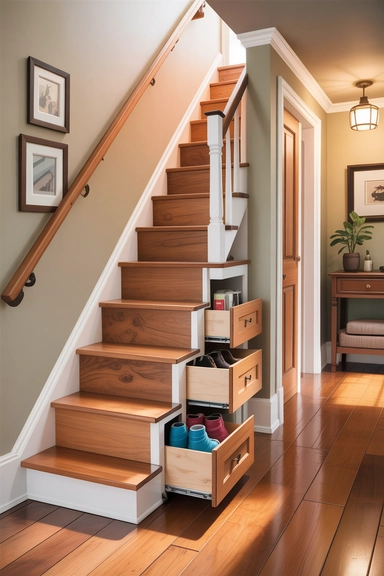
Staircases in tiny homes often conceal valuable unused volume beneath each step. Built-in drawer systems convert this void into segmented storage for shoes, pantry goods, or cleaning tools. Each pull-out compartment provides easy access without requiring additional cabinets elsewhere. This approach keeps essential items close while eliminating awkward dead zones.
Smooth gliding hardware ensures usability in tight layouts. Dividing drawers by function prevents mixed storage that creates clutter. Tiny home storage ideas like under-stair drawers turn transitional architecture into practical containment without adding visual weight to the room.
3. Fold-Up Wall Tables That Appear Only When Needed
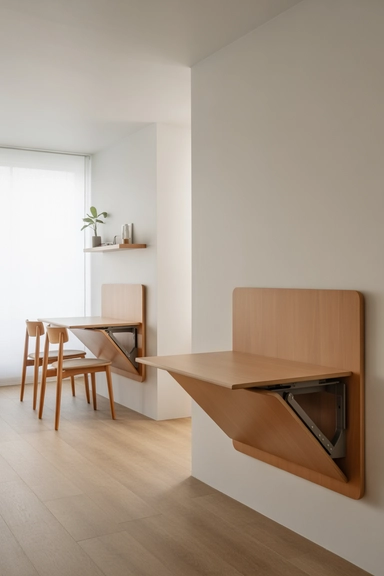
Dining tables and desks typically demand permanent floor allocation. Fold-up wall tables collapse vertically when not in use, freeing valuable movement space. Inside the folded unit, shallow shelves store notebooks, chargers, or placemats, maintaining order within the same footprint. When opened, the table provides a stable work or dining surface without bulky legs.
Hinge strength and wall anchoring guarantee long-term durability. Choosing finishes that match surrounding walls keeps the folded form discreet. Tiny home storage ideas that use collapsible surfaces create multifunctional rooms that shift easily between daily activities.
4. Ceiling-Mounted Hanging Racks for Kitchen Essentials
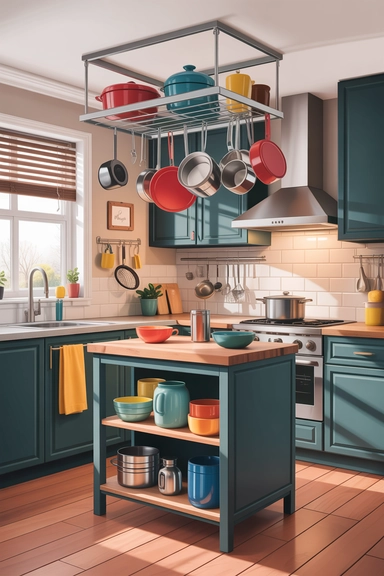
Cabinets alone rarely meet kitchen storage needs in compact homes. Ceiling-mounted hanging racks lift cookware, mugs, and utensils into overhead zones that otherwise remain unused. This keeps frequently used items accessible while freeing cabinet and counter space below. The kitchen becomes more functional without expanding cabinetry footprint.
Balanced spacing between hanging elements prevents visual clutter overhead. Secure ceiling anchors ensure weight stability. Tiny home storage ideas that utilize ceiling height create layered storage without compromising workspace comfort.
5. Platform Beds with Deep Drawer Bases
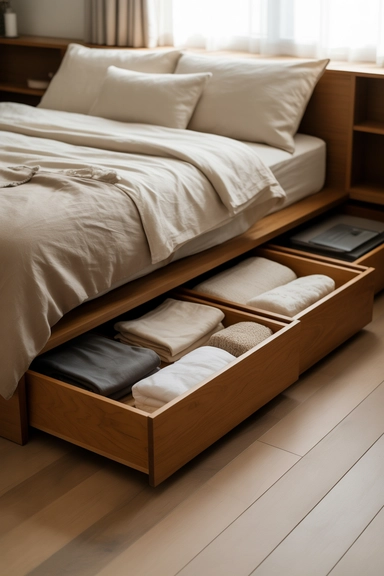
Beds occupy the largest footprint in tiny homes, making under-bed space too valuable to waste. Platform bases with integrated deep drawers replace dressers and wardrobes. Clothing, linens, and off-season items remain neatly stored within the bed’s footprint. This keeps bedroom zones uncluttered and easy to navigate.
Drawer depth planning ensures smooth opening without floor interference. Soft-close hardware reduces noise in compact interiors. Tiny home storage ideas that convert bed bases into primary storage anchor sleeping spaces while preserving surrounding floor freedom.
6. Wall-Recessed Storage Niches That Keep Surfaces Clear
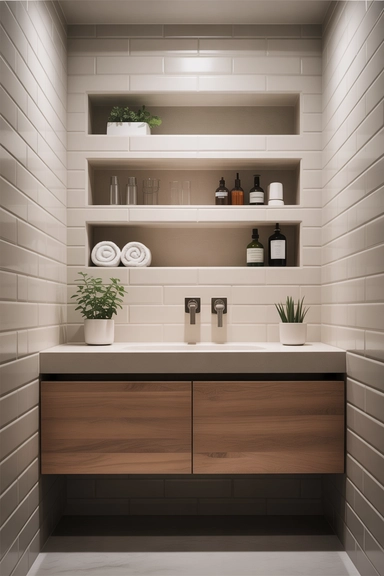
In tiny homes, protruding shelves quickly interrupt movement flow. Wall-recessed storage niches solve this by embedding shelving directly between studs, creating storage that does not extend into the room. These niches work well in kitchens, bathrooms, and sleeping areas for daily essentials such as toiletries, spices, or books. Because the shelving sits flush with the wall, floor and counter surfaces remain uninterrupted.
Consistent niche sizing keeps visual order intact. Moisture-resistant finishes protect durability in kitchens and baths. Grouping stored items by daily frequency prevents overloading. Tiny home storage ideas that integrate into wall cavities preserve usable space while maintaining clean architectural lines.
7. Sliding Door Pantry Walls That Replace Standard Cabinets
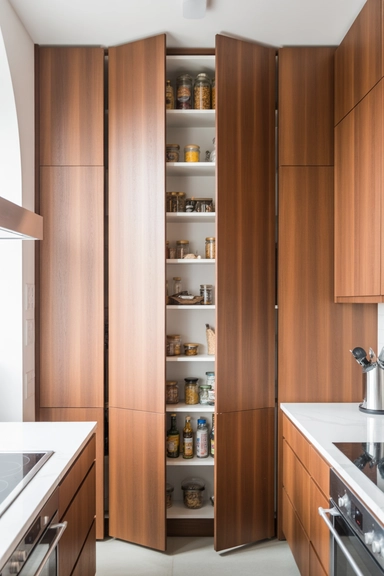
Swinging cabinet doors require clearance tiny homes cannot spare. Sliding door pantry walls eliminate that issue by allowing access without encroaching on walking space. Inside, adjustable vertical shelving holds food containers, cookware, and small appliances. The entire pantry disappears behind a flat panel when closed, maintaining a seamless kitchen façade.
Track quality ensures smooth, silent movement. Choosing door finishes that match cabinetry prevents visual fragmentation. Tiny home storage ideas like sliding pantry walls expand kitchen capacity while keeping circulation paths open and uninterrupted.
8. Bench Seating with Hidden Lift-Top Storage
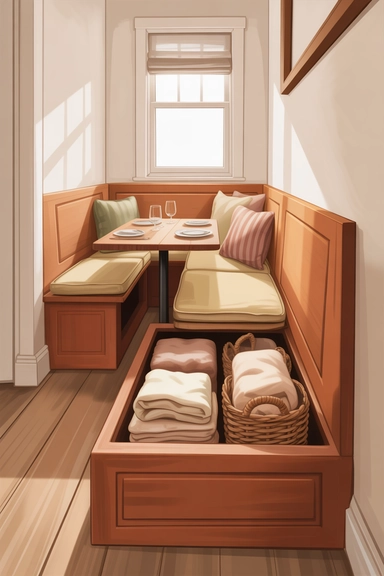
Seating must earn double duty in compact interiors. Built-in bench seating with lift-top lids provides concealed storage for blankets, shoes, or bulk supplies while serving as dining or lounging space. This keeps loose items out of sight without adding extra furniture pieces.
Hydraulic hinges make lids easy to open and safe to handle. Dividing the interior into compartments prevents contents from shifting. Tiny home storage ideas that combine seating and containment maximize square footage while maintaining a relaxed living environment.
9. Vertical Door-Mounted Shelving for Everyday Items
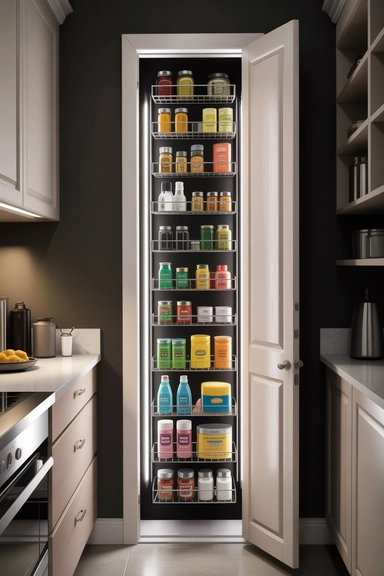
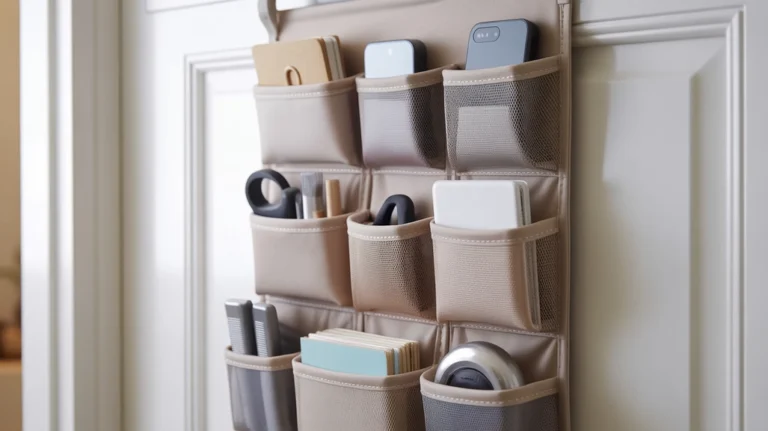
Interior doors present uninterrupted vertical real estate. Slim door-mounted shelving units create storage for pantry goods, toiletries, or cleaning products without altering room layouts. Shelves remain accessible while doors function normally, converting transitional surfaces into storage assets.
Weight balance is essential to prevent hinge strain. Clear or uniform containers maintain visual calm. This approach works especially well alongside broader compact-living systems such as those found in 27 Small Apartment Organizing Ideas for Smart Storage, where every vertical opportunity counts. Tiny home storage ideas that activate doors unlock capacity without sacrificing floor area.
10. Overhead Loft Storage for Seasonal Belongings
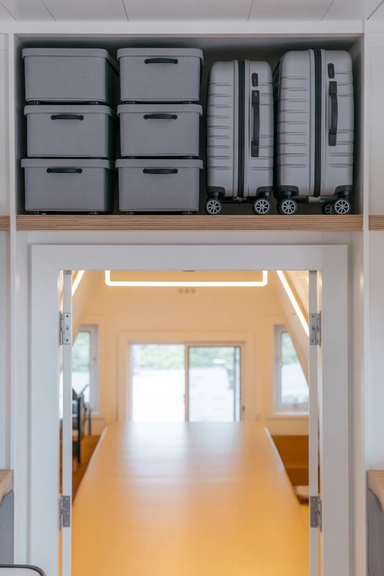
Seasonal clothing, luggage, and rarely used items consume prime storage zones when kept at ground level. Overhead loft storage platforms installed above hallways or sleeping zones capture unused upper air space. This keeps infrequent belongings accessible but out of daily living areas.
Sturdy railing and weight-rated supports ensure safety. Using uniform containers prevents visual chaos from below. Tiny home storage ideas that utilize overhead zones preserve essential lower-level storage for everyday needs.
11. Pull-Out Kitchen Base Drawers That Replace Lower Cabinets
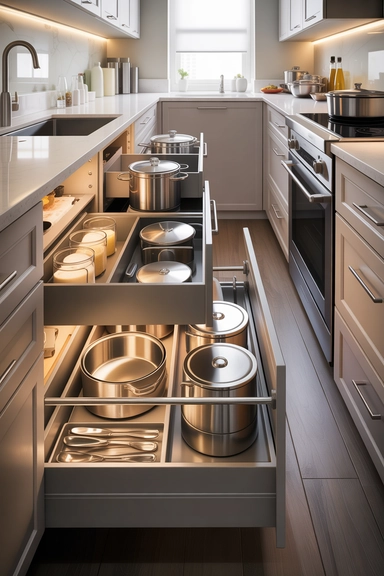
Lower kitchen cabinets often waste space because items stack behind one another. Pull-out base drawers transform that depth into accessible layered storage. Pots, pans, dry goods, and cleaning supplies slide forward smoothly, eliminating the need to crouch and search. This keeps daily-use items reachable while maintaining a compact kitchen footprint.
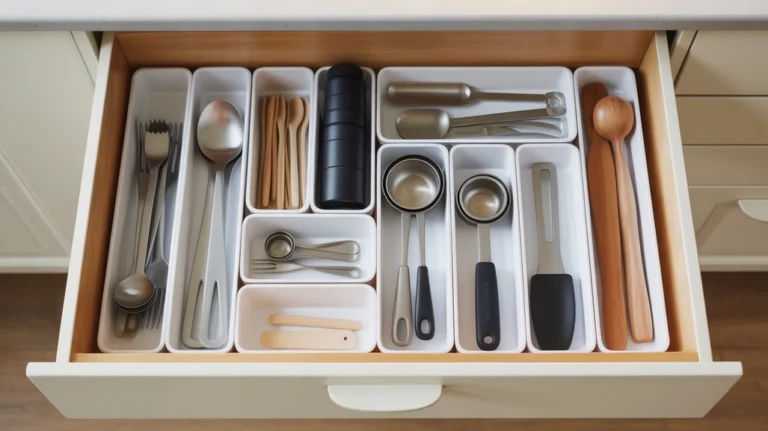
Drawer dividers prevent shifting during movement and keep categories defined. Soft-close tracks reduce noise in tight living quarters. Tiny home storage ideas that replace fixed cabinets with pull-out systems make kitchens faster to use while preserving clear floor circulation.
12. Hidden Toe-Kick Drawers Beneath Cabinets
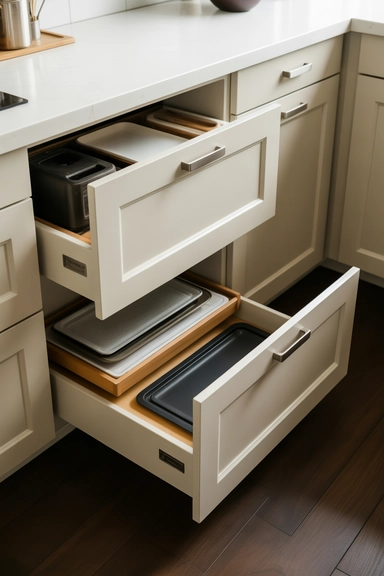
The recessed space beneath kitchen and bathroom cabinets typically sits unused. Toe-kick drawers convert that narrow strip into shallow storage for flat items such as baking sheets, cutting boards, or cleaning cloths. Because they sit below sightline, they add capacity without visual impact.
Push-to-open hardware keeps the drawer front flush and discreet. Using moisture-resistant materials ensures durability near sinks. Tiny home storage ideas that activate toe-kick zones quietly expand storage in places most homeowners overlook.
13. Wall-Fold Murphy Beds with Integrated Shelving
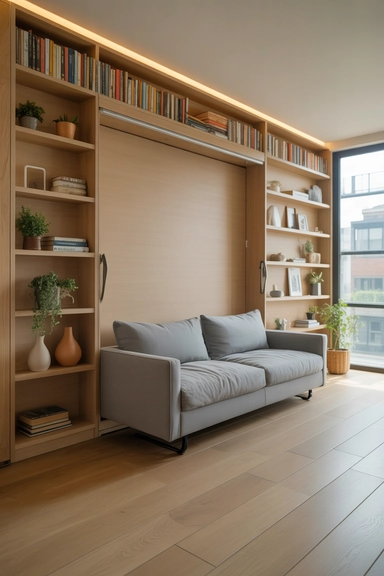
Sleeping zones dominate tiny home layouts, but Murphy beds reclaim that footprint during the day. Wall-fold systems lift the mattress vertically while surrounding shelving holds books, lighting, and décor. This keeps the wall functional even when the bed is stored away.
Balanced counterweight systems allow easy lifting without strain. Integrated shelves prevent the need for bedside tables, keeping walkways open. Tiny home storage ideas like Murphy bed walls allow one room to function as both bedroom and living space seamlessly.
14. Inside-Cabinet Door Organizers for Micro Items
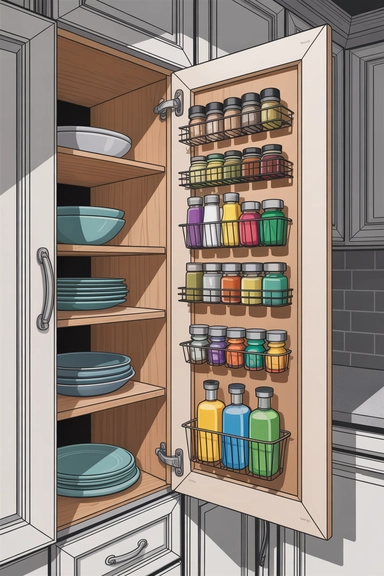
Cabinet doors often swing open without contributing to storage. Slim interior organizers add racks for spices, cleaning supplies, or toiletries, using vertical surfaces that otherwise sit idle. This keeps small items sorted and prevents cluttered shelf fronts.
Lightweight materials reduce hinge strain over time. Transparent compartments make contents instantly visible. Tiny home storage ideas that activate cabinet interiors improve access while preserving shelf space for larger necessities.
15. Stackable Modular Storage Cubes for Flexible Layouts
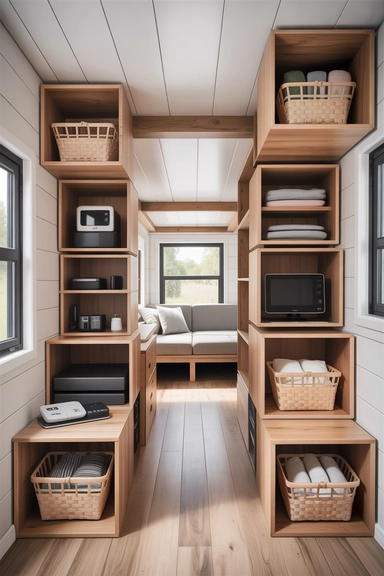
Fixed furniture limits adaptability in tiny homes. Stackable modular cubes allow storage walls to grow upward or reconfigure as needs change. Each cube holds clothing, pantry goods, or electronics, while stacking maintains a small footprint.
Securing cubes together prevents shifting. Using matching finishes keeps the arrangement visually cohesive rather than pieced together. Tiny home storage ideas built on modular systems support evolving lifestyles without requiring new furniture purchases.
16. Staircase Side Cabinets That Extend Storage Without Blocking Flow
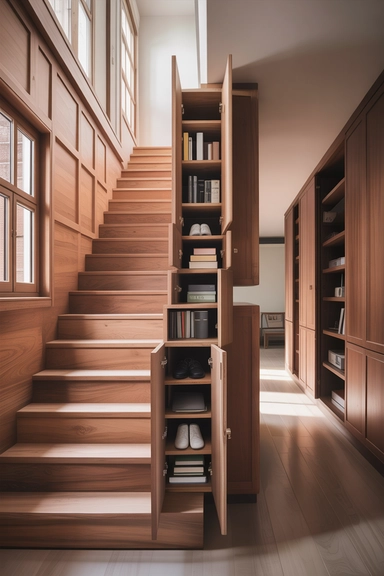
Staircases in tiny homes often feature exposed side panels that serve no functional purpose. Converting these panels into slim side cabinets introduces vertical storage without altering stair access. Hinged or sliding doors reveal shelving for shoes, books, or pantry overflow while keeping corridors unobstructed. Because the cabinetry follows the staircase line, it blends into the structure instead of appearing as added furniture.
Flush door fronts prevent visual clutter. Interior shelf heights should vary to accommodate mixed item sizes. Tiny home storage ideas that build into stair sides capture unused structural volume while keeping movement zones natural and open.
17. Ceiling-Suspended Shelves for Lightweight Everyday Items
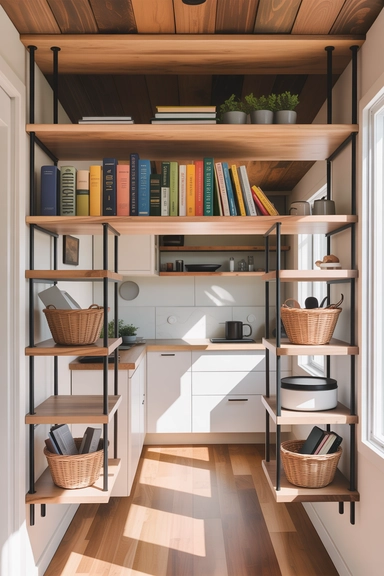
Upper wall zones near ceilings often remain empty, yet they offer valuable storage potential. Ceiling-suspended shelves hung from slim rods provide platforms for lightweight items such as baskets, cookbooks, or decorative containers that also serve practical roles. This keeps essential supplies accessible without occupying walls needed for windows or artwork.
Proper anchoring ensures stability while maintaining a floating appearance. Keeping shelf depth minimal prevents visual heaviness overhead. Tiny home storage ideas that introduce suspended shelving create an additional storage layer without sacrificing floor or wall usability.
18. Folding Room Dividers with Built-In Shelving
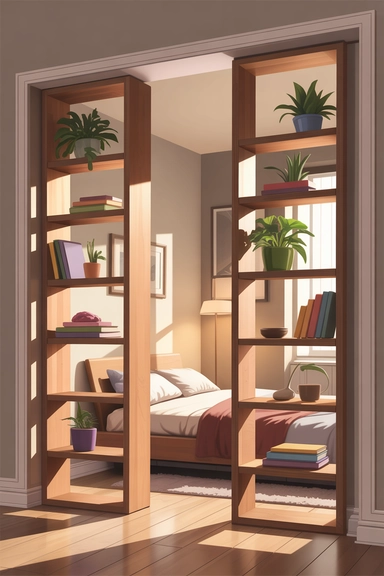
Open-plan tiny homes sometimes require visual separation without permanent walls. Folding room dividers with integrated shelving offer dual-purpose function, acting as both space partitions and storage units. Shelves hold books, plants, or baskets while subtly defining zones between living and sleeping areas.
Lightweight frames allow easy repositioning as layouts change. Open-back shelving preserves airflow and prevents visual blocking. Tiny home storage ideas that merge zoning and storage maintain flexibility while reducing the need for extra furniture.
19. Vertical Bathroom Ladder Racks for Towels and Toiletries
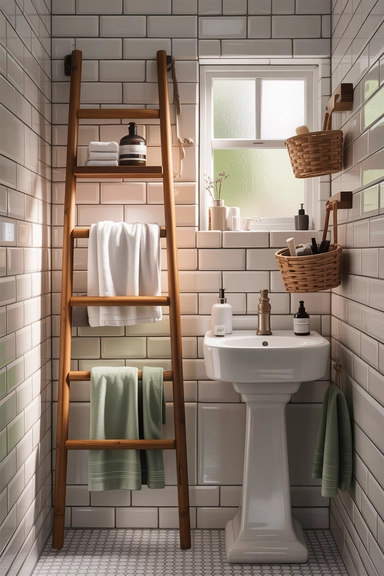
Bathrooms in tiny homes rarely allow bulky cabinets. A vertical ladder rack leaning against the wall provides tiered hanging space for towels and baskets for toiletries. This keeps floor areas clear while ensuring daily essentials remain reachable without cluttering sink edges.
Water-resistant finishes protect against humidity. Spacing bars evenly prevents damp fabric overlap and speeds drying. Tiny home storage ideas like ladder racks deliver functional bathroom organization while keeping the room light and breathable.
20. Pull-Down Overhead Cabinets in Kitchen Zones
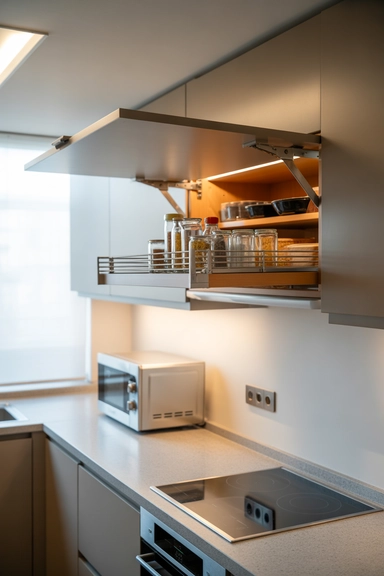
Overhead cabinets often become hard to access in compact kitchens. Pull-down cabinet systems solve this by lowering shelves toward the user when needed, then lifting them back into overhead position. This allows full use of upper kitchen volume without requiring step stools or creating unreachable storage.
Strong lifting mechanisms ensure smooth motion under weight. Clear container grouping keeps cabinet contents organized once raised. Tiny home storage ideas that introduce pull-down overhead systems unlock high-level storage without sacrificing convenience or safety.
21. Behind-Wall Pocket Storage for Folding Chairs and Tables
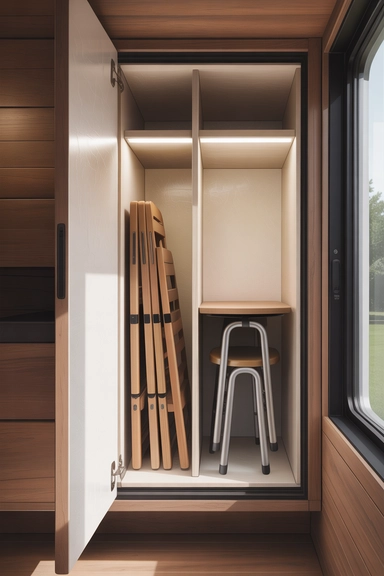
Folding chairs and collapsible tables are useful in tiny homes but awkward to store. Behind-wall pocket compartments create vertical slots inside partition walls, allowing these items to slide out of sight when not needed. This prevents bulky objects from leaning against walls or occupying closet floors. Access panels remain flush, keeping the wall visually uninterrupted while hiding practical equipment within reach.
Smooth interior lining prevents scratches during insertion and removal. Allocating separate pockets for chairs and tables avoids friction and noise. Tiny home storage ideas that integrate behind-wall pockets preserve open living zones while keeping occasional-use furniture conveniently contained.
22. Vertical Appliance Garages That Clear Kitchen Counters
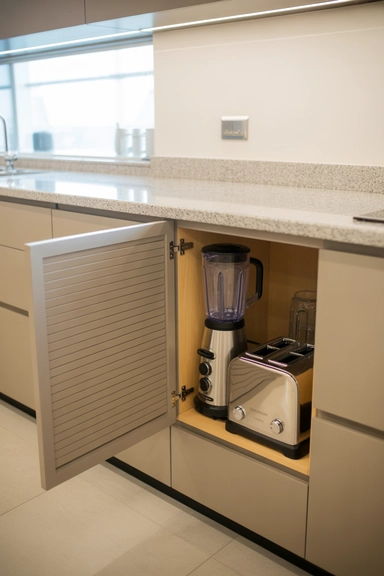
Small kitchens struggle when appliances permanently occupy counter space. Vertical appliance garages with roll-up or lift-front doors store blenders, coffee machines, and toasters while keeping them plugged in and ready. When closed, the counter reads as one continuous surface, restoring prep space without removing convenience.
Interior outlets reduce cable clutter. Shelving height should accommodate appliance variation without wasted space. Tiny home storage ideas that enclose countertop equipment improve visual calm and maintain functional readiness in compact cooking areas.
23. Multi-Level Closet Rod Systems That Double Hanging Capacity
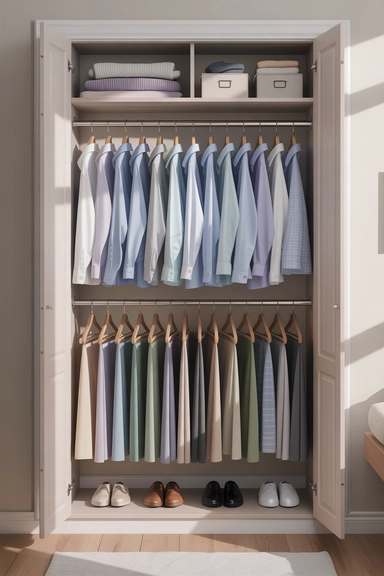
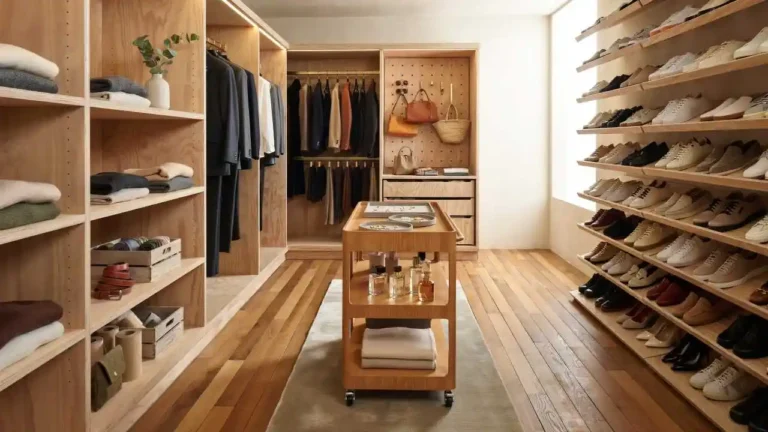
Standard closet rods waste vertical air above hanging clothes. Multi-level rod systems introduce a second or even third hanging tier for shorter garments such as shirts and folded trousers. This instantly doubles wardrobe capacity without expanding closet footprint, a critical improvement in tiny bedrooms.
Staggered rod heights prevent clothing overlap and allow airflow. Reinforced mounting brackets ensure rods remain stable under daily use. Tiny home storage ideas that optimize closet height reduce reliance on dressers, preserving valuable floor space throughout the home.
Conclusion
Living well in a tiny home depends on storage that works quietly in the background rather than competing with living space. Tiny home storage ideas succeed when they use height, hidden cavities, and multifunctional structures to remove visual congestion and protect movement flow. The most effective solutions feel built-in, not added on, allowing daily routines to unfold without constant rearranging. With thoughtful vertical and concealed systems in place, small homes gain freedom, clarity, and lasting functional comfort.