
Introduction
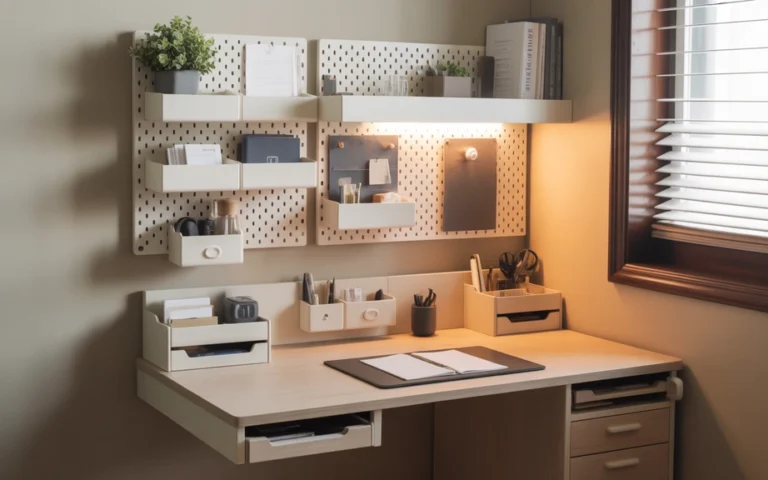
Japanese organization is rooted in restraint, clarity, and respect for space rather than aggressive storage solutions. Homes are treated as systems where every object earns its place through use, proportion, and necessity. The goal is not minimalism for its own sake, but balance—visual, functional, and mental. Japanese organization hacks focus on reducing visual noise, shortening decision paths, and maintaining order through habits rather than constant resets. When storage supports daily flow instead of fighting it, homes feel calm and deliberate. Many of these principles align closely with creative Japanese home organization ideas for a clutter-free space, where intention matters more than volume.
1. Prioritize Empty Space as Part of the System
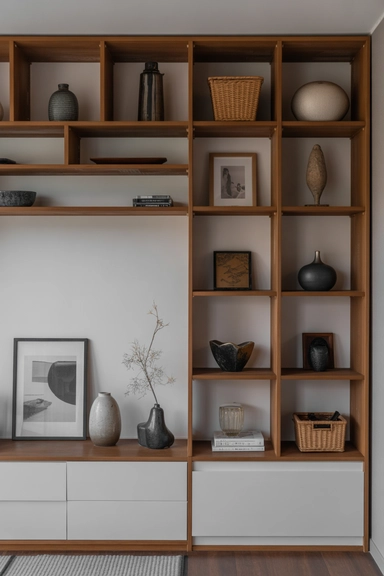
In Japanese interiors, empty space is not considered wasted; it is structural. Leaving space intentionally allows rooms to breathe and prevents storage from overwhelming daily life. When every shelf and surface is filled, the home loses hierarchy and becomes visually demanding. Empty space acts as a visual pause that restores balance.
This restraint also slows accumulation. When storage is not maximized by default, new items require deliberate placement decisions. Over time, this reduces clutter pressure and keeps organization stable. Empty space becomes a boundary that protects order rather than an opportunity to fill.
2. Store Items at the Point of Use
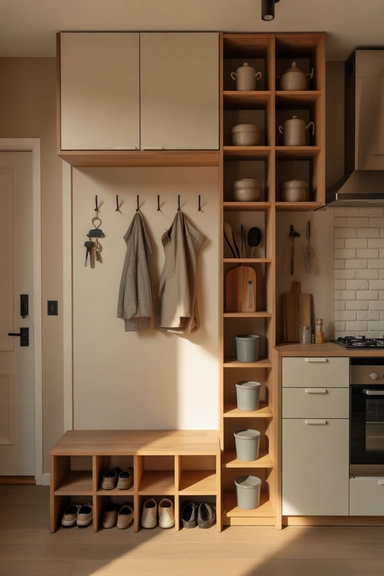
Japanese organization prioritizes proximity over categorization. Items are stored exactly where they are used, not grouped by type across the home. This reduces unnecessary movement and prevents objects from drifting onto visible surfaces due to inconvenience.
When storage aligns with daily habits, items return to their place naturally. Kitchens, entryways, and bathrooms benefit most from this logic. The home stays organized because systems support behavior instead of demanding constant effort to maintain them.
3. Reduce Storage Depth to Improve Visibility
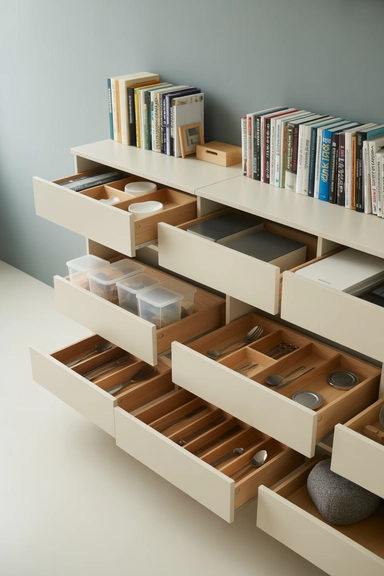
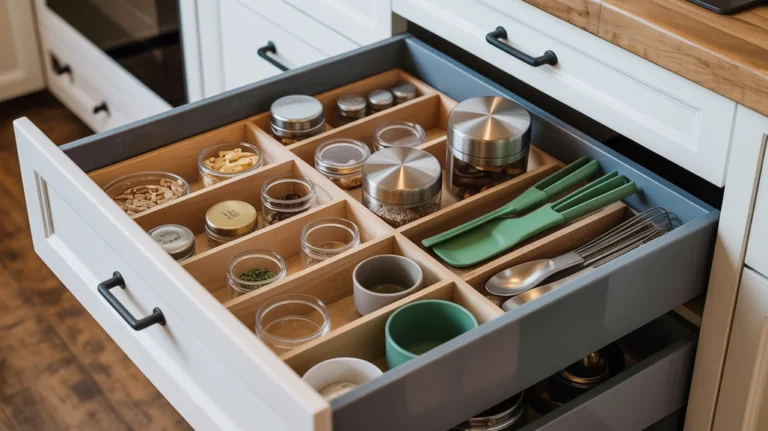
Deep storage hides clutter rather than solving it. Japanese storage solutions favor shallow shelves, drawers, and containers that keep all items visible at once. When nothing is buried, retrieval becomes faster and duplication decreases.
Shallow storage also enforces limits. Items must fit within a defined depth, which prevents overcrowding. This visibility-driven approach turns organization into a visual check rather than a physical search, preserving calm and efficiency.
4. Use Uniform Containers to Create Visual Order
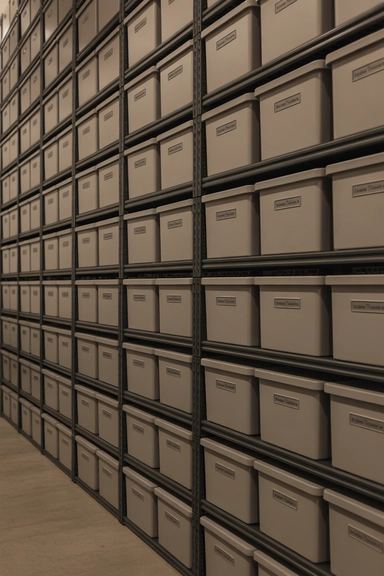
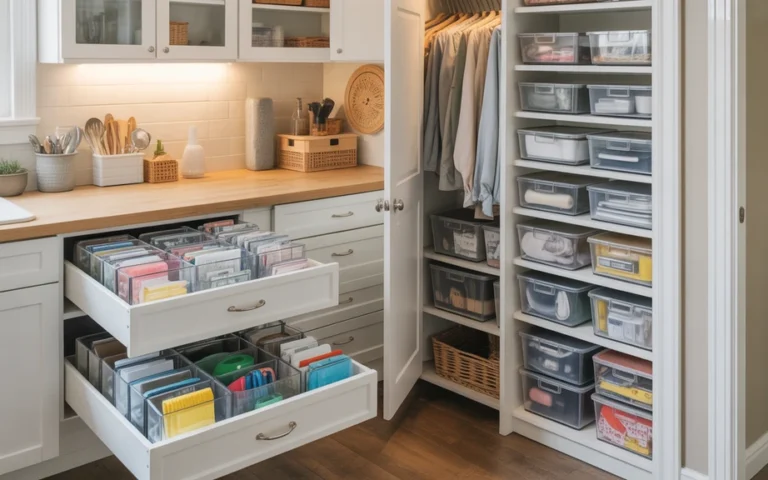
Consistency is a defining feature of Japanese organization. Uniform containers reduce visual noise and allow storage to recede into the background. When shapes, colors, and materials repeat, the eye reads order even when items differ inside.
This principle extends across rooms. Repeating container styles reinforces continuity and prevents storage from becoming visually fragmented. The result is a home that feels cohesive and intentional rather than pieced together over time.
5. Limit Each Category to a Defined Boundary
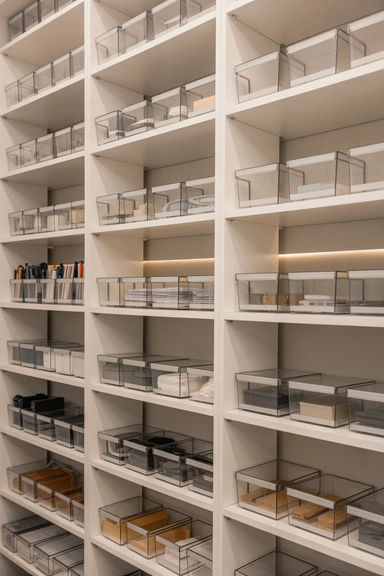
Japanese organization relies on physical limits rather than abstract rules. Each category of items is given a defined container or space, and nothing exceeds that boundary. When the space is full, something must leave before something new enters.
This method replaces decluttering cycles with ongoing balance. Boundaries make excess immediately visible and easier to address. Organization becomes self-regulating, preventing gradual buildup without requiring constant sorting sessions.
6. Design Storage Around Daily Reset Rituals
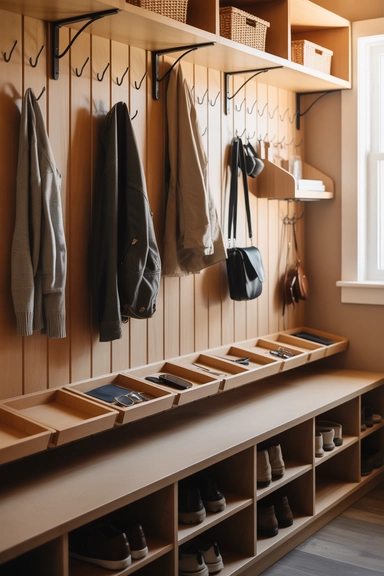
Japanese organization systems are built around predictable daily resets rather than occasional deep cleans. Storage is designed to support quick, repeatable actions that return the home to order with minimal effort. Shoes, bags, kitchen tools, and clothing all have positions that allow for fast end-of-day alignment without decision fatigue.
When storage aligns with reset rituals, disorder loses momentum. Items return to place because the system anticipates daily behavior. This is why Japanese homes often appear consistently tidy rather than periodically decluttered. Organization is embedded into routine, not treated as a separate task.
7. Separate Visual Storage From Functional Storage
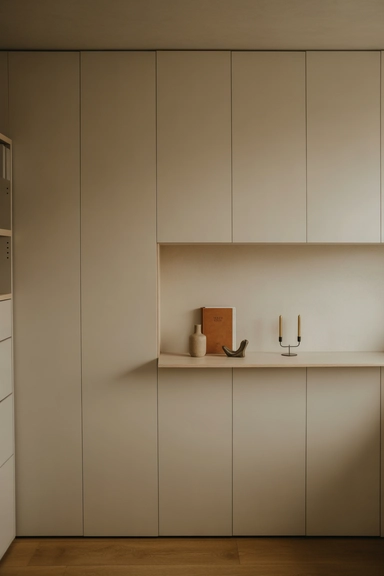
Not everything needs to be visible. Japanese interiors distinguish between items that support daily awareness and those that should disappear entirely. Functional storage handles volume, while visual storage is curated to maintain calm. Mixing the two creates visual noise and mental distraction.
By separating these roles, rooms maintain clarity even when storage capacity is high. Closed storage absorbs necessity, while limited open storage communicates intention. This balance prevents the home from feeling either sparse or overloaded, allowing function to exist without visual demand.
8. Keep Floor Space as a Visual Anchor
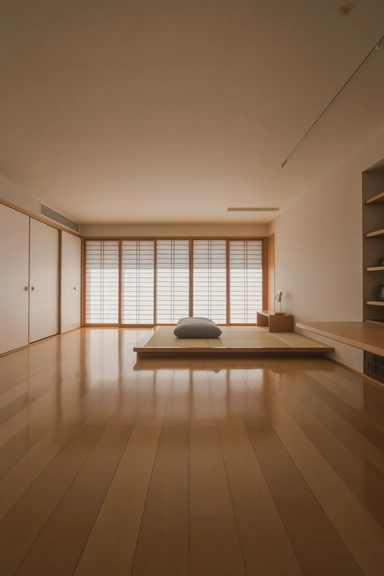
Japanese organization places strong emphasis on visible floor area. Open floors provide spatial clarity and make rooms feel larger, calmer, and easier to navigate. Storage that creeps outward onto floors breaks this anchor and destabilizes the entire room.
Keeping floors clear is not about removing furniture but about lifting storage upward or consolidating it. When floor space remains legible, the home feels grounded. Movement becomes easier, and the eye has a stable reference point that reduces visual fatigue.
9. Use Vertical Surfaces Sparingly and Deliberately
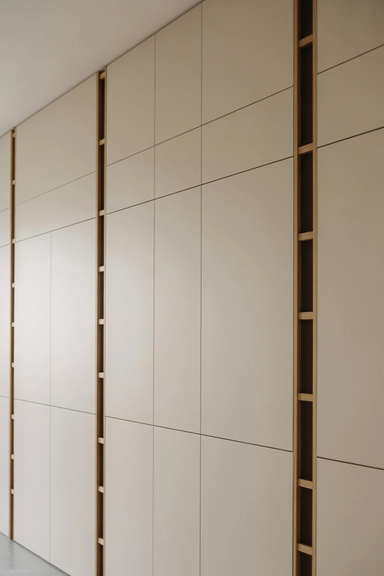
While vertical storage is common, Japanese homes avoid saturating walls. Vertical surfaces are used selectively to support function without dominating sightlines. When walls become crowded, rooms feel compressed regardless of floor space.
Deliberate vertical placement preserves proportion. Storage aligns with architectural lines and remains visually contained. This restraint ensures walls continue to frame space rather than compete with it, maintaining balance even in compact interiors.
10. Assign Objects a Single, Non-Negotiable Home
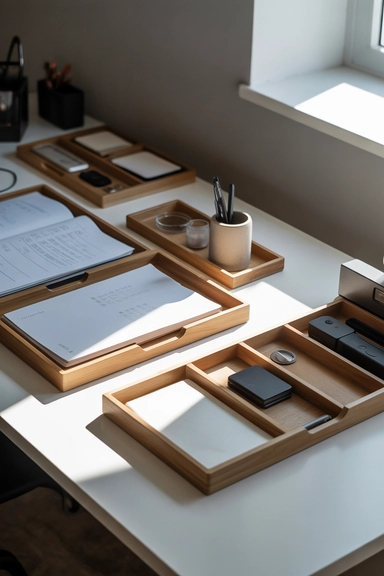
Japanese organization systems rely on certainty. Each object has one home, not several acceptable options. This eliminates hesitation during cleanup and prevents items from migrating across the house based on convenience.
When objects lack fixed homes, clutter spreads quietly. Certainty stops that spread. Items return where they belong because the system leaves no ambiguity. Over time, this consistency reinforces order without requiring constant attention.
11. Reduce Duplication to Protect Storage Integrity
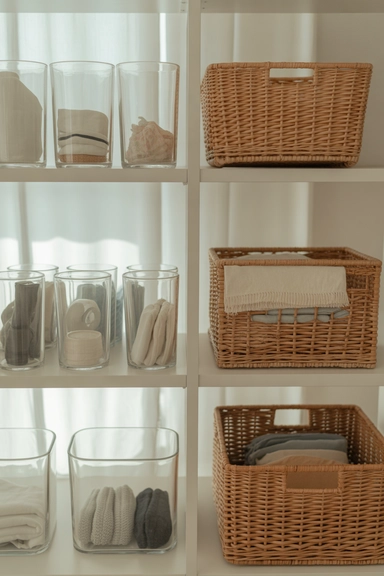
Duplication undermines even the best storage systems. Japanese organization emphasizes awareness of what already exists before adding more. When duplicates accumulate, storage boundaries fail and visual calm disappears.
Reducing duplication restores integrity. Storage regains breathing room, and categories become easier to manage. This practice supports intentional living by aligning possessions with actual use rather than perceived need.
12. Favor Folding Methods That Control Volume, Not Just Neatness
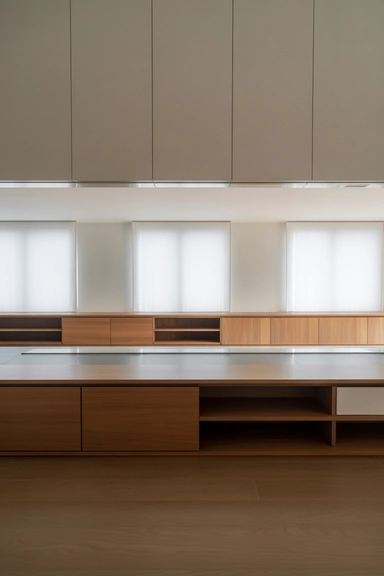
Japanese organization treats folding as a spatial control method rather than a visual habit. The purpose is not aesthetic uniformity, but volume regulation. When items are folded to stand vertically and occupy consistent depth, drawers stop expanding unpredictably. Storage becomes measurable, and excess becomes immediately visible.
This approach prevents compression drift. When items are stacked flat, layers collapse and invite overfilling. Vertical folding resists that pressure by maintaining structure even as items are removed and replaced. Storage stays stable because its form does not depend on perfect alignment, only consistent volume.
13. Use Low Storage Heights to Keep Rooms Visually Calm
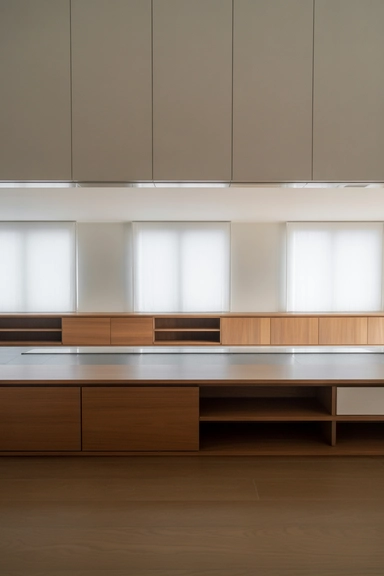
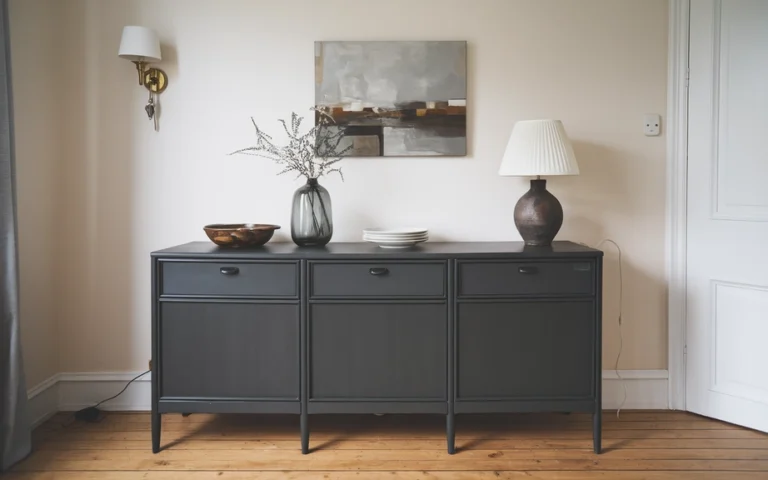
Japanese interiors favor low storage to maintain uninterrupted sightlines. Tall cabinets introduce vertical weight that fragments space and draws attention upward, increasing visual tension. Lower storage allows walls to remain open, which makes rooms feel broader and more settled.
This principle is especially effective in living and sleeping areas, where visual rest matters most. By keeping storage below eye level, attention shifts back to the room itself rather than its contents. This logic overlaps with bedroom organization ideas that reduce visual clutter, where calm is preserved through restraint rather than concealment.
14. Limit Open Display to Objects That Reinforce Identity
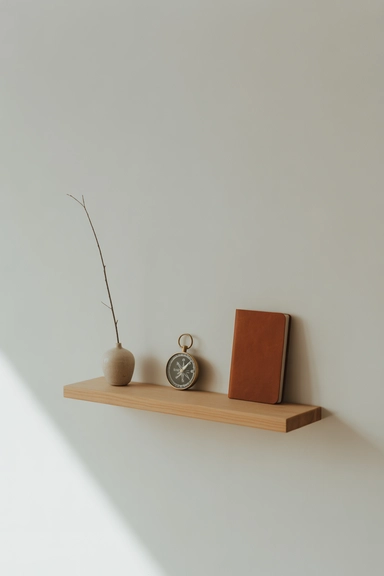
Open display in Japanese homes is selective and intentional. Items shown are not stored for convenience, but for meaning or daily relevance. Display serves identity, not capacity. When too many objects compete for visibility, the message becomes noise.
Restricting display forces prioritization. Objects earn visibility through use, seasonality, or emotional relevance. This keeps rooms expressive without becoming crowded. Storage absorbs the rest, allowing display to communicate clarity instead of accumulation.
15. Treat Storage as Part of Architecture, Not Furniture
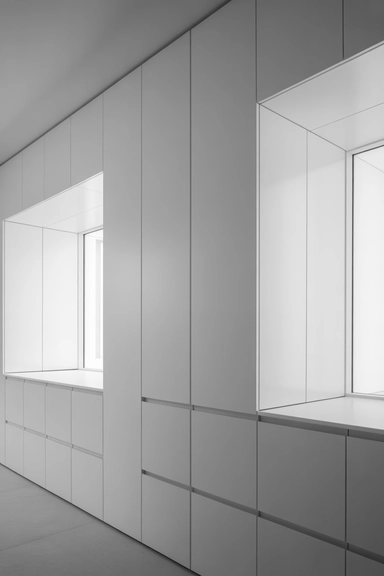
Japanese organization integrates storage into the architectural rhythm of the home. Storage aligns with walls, corners, and transitions rather than sitting independently within rooms. This reduces the sense of objects floating within space.
When storage feels architectural, it stabilizes the environment. The home reads as continuous rather than interrupted by containers and units. Even portable storage is placed to respect structural lines, reinforcing order without visual assertion.
16. Remove Items That Interrupt Flow, Even If They Are Useful
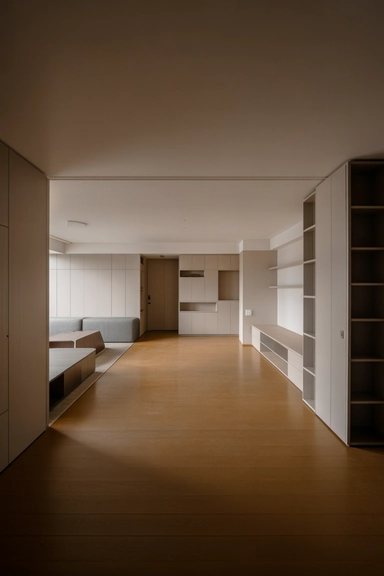
Japanese organization values flow over justification. An item can be useful and still disruptive. Objects that interrupt movement paths, block sightlines, or require frequent repositioning are considered liabilities regardless of function.
Removing such items restores ease. The home feels smoother because nothing demands negotiation. This approach prioritizes lived experience over inventory, ensuring that usefulness does not come at the cost of daily friction.
17. Reassess Storage Seasonally Instead of Continuously
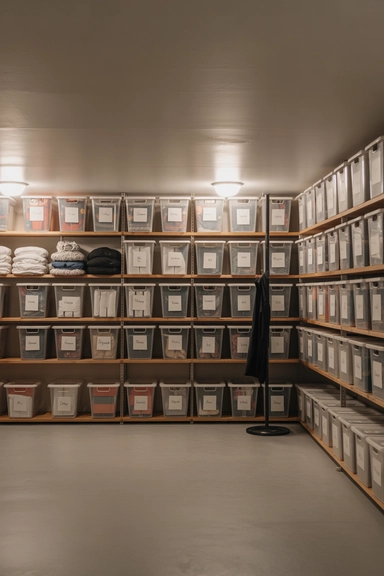
Rather than constant tweaking, Japanese organization relies on periodic reassessment. Seasonal review aligns storage with current needs, preventing overcorrection and fatigue. Storage systems remain stable for long stretches, reinforcing trust in the structure.
Seasonal reassessment also matches lifestyle rhythms. Items rotate naturally without disrupting established order. The home evolves without chaos, maintaining intentional living without constant intervention.
18. Reduce Visual Contrast Within Storage Zones
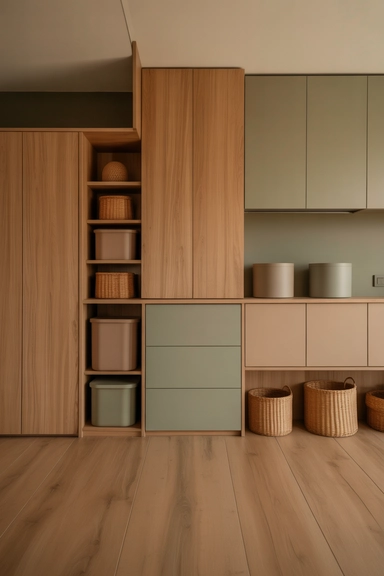
Japanese organization minimizes contrast within storage zones to keep attention on space rather than objects. High-contrast colors, mixed materials, or inconsistent finishes pull the eye toward storage, making rooms feel busier than they are. Reducing contrast allows storage to recede and the room to remain visually dominant.
This does not require neutral-only palettes, but it does require consistency. When tones stay within a narrow range, storage blends into its surroundings instead of interrupting them. The result is a calmer visual field where objects exist without demanding attention, supporting intentional living rather than constant visual stimulation.
19. Allow Storage to Signal Limits Through Resistance
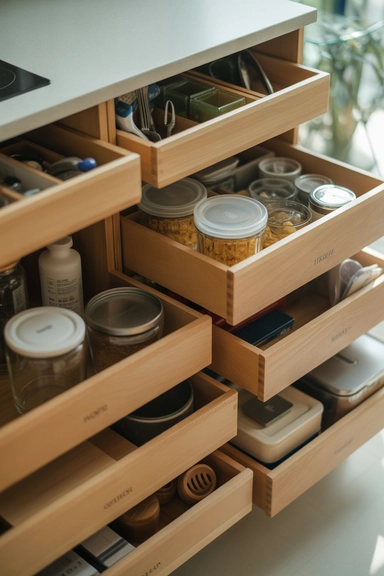
Effective Japanese storage systems are slightly resistant by design. Drawers that fill fully, containers that close only when within capacity, and shelves that show fullness clearly discourage excess without rules or reminders. Resistance becomes feedback.
This feedback loop replaces discipline with awareness. When storage resists expansion, decisions happen naturally. Something must be removed before something new enters. Over time, this resistance protects order without effort, keeping the home aligned with actual needs rather than unchecked accumulation.
20. Use Transitional Zones to Contain Incoming Clutter
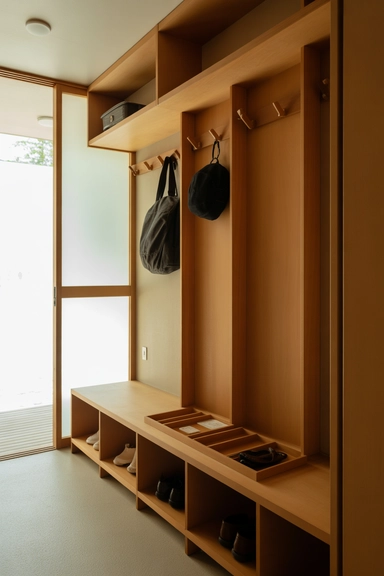
Japanese homes rely on transitional zones to intercept clutter before it spreads. Entryways, thresholds, and change-over points absorb items that arrive from outside the home. These zones prevent bags, papers, and daily carry items from migrating deeper into living spaces.
When transitional zones are absent, clutter travels. Containment near the point of entry keeps the rest of the home stable. These zones act as buffers, allowing daily life to flow without contaminating calm interior spaces.
21. Let Storage Support Awareness, Not Amnesia
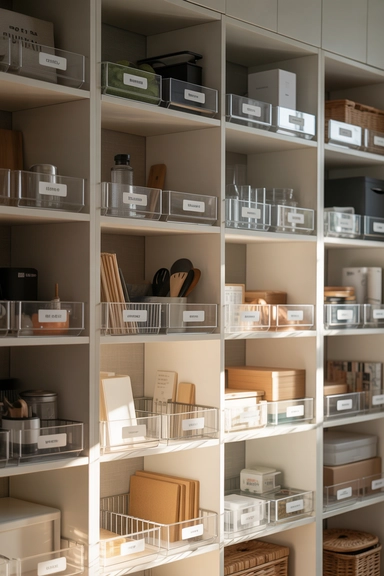
Storage should not make possessions disappear entirely. Japanese organization values awareness of what exists without visual overload. Items remain accessible and mentally present, even when stored out of sight.
This awareness reduces overbuying and duplication. When the home communicates what it holds, decisions become grounded. Storage supports intentional living by keeping possessions accountable rather than hidden and forgotten.
22. Reduce Choice to Reduce Disorder
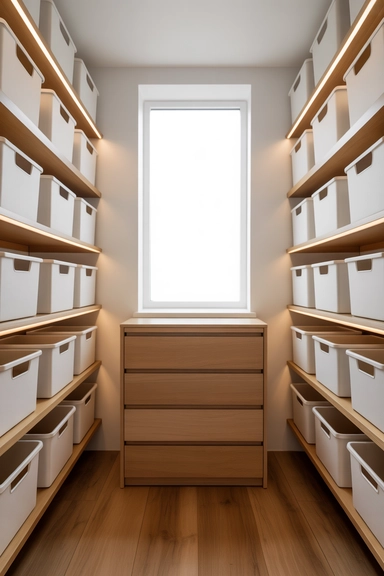
Too many storage options create hesitation. Japanese systems intentionally reduce choice by narrowing where items can go. Fewer options mean faster decisions and fewer misplaced objects.
This simplicity protects order during busy or tired moments. When systems require minimal thought, they survive real life. The home stays organized not because of effort, but because complexity has been removed at the structural level.
23. Treat Organization as a Living Practice, Not a Finish Line
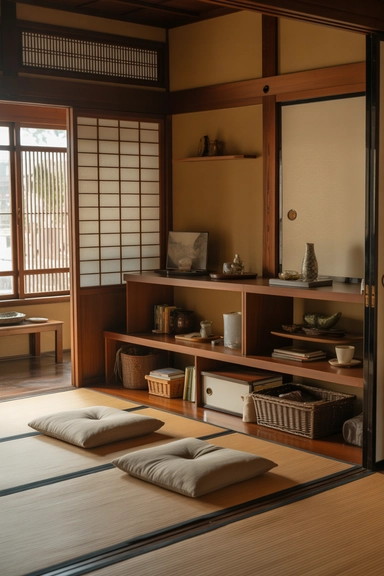
Japanese organization is never considered complete. It evolves quietly with life changes, without dramatic resets. Systems are stable but flexible, allowing adjustment without collapse.
This mindset prevents burnout. Organization remains supportive rather than demanding. The home feels intentional not because it is perfect, but because it is responsive without losing structure.
Conclusion
Japanese organization hacks succeed because they prioritize clarity over capacity and systems over shortcuts. By reducing visual noise, aligning storage with behavior, and enforcing gentle limits, homes remain calm without constant correction. Intentional living emerges not from minimalism alone, but from structures that support awareness, flow, and balance. When organization becomes a living practice rather than a project, the home maintains order naturally and sustainably over time.