
Introduction
Daily kitchen clutter rarely comes from lack of space—it comes from storage that does not support how the kitchen is actually used. IKEA solutions work well because they are modular, adaptable, and designed around real routines rather than ideal layouts. The most effective IKEA kitchen organizing hacks focus on visibility, accessibility, and easy reset, allowing clutter to resolve itself during daily use. When storage aligns with movement and habits, counters stay clear and cabinets stop becoming catch-all zones. This article breaks down practical, design-led IKEA hacks that reduce daily clutter while keeping the kitchen efficient, calm, and easy to maintain over time.
1. IKEA Kitchen Organizing Hacks That Start With Drawer Control
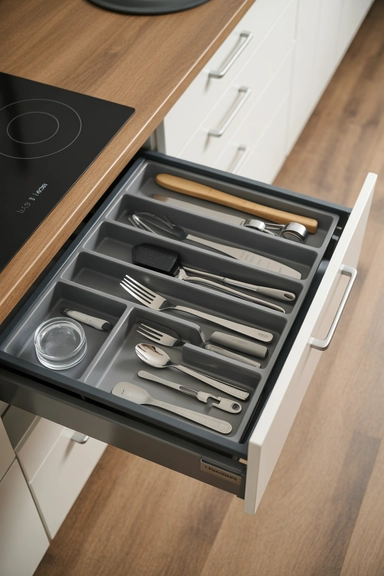
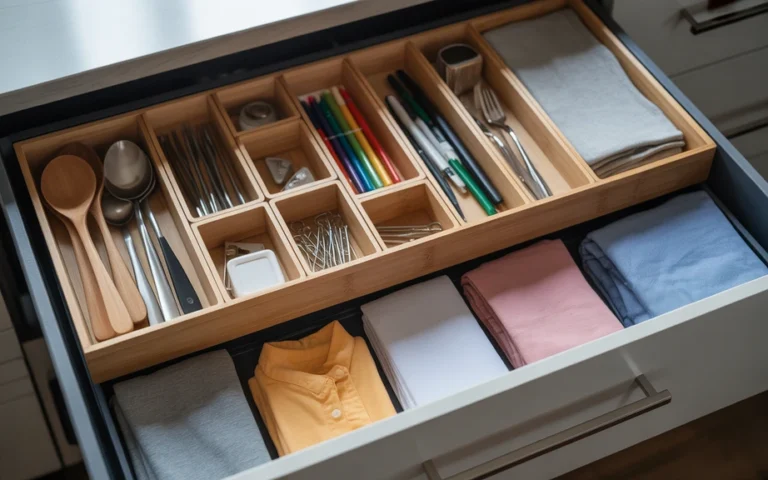
Drawers are often where clutter quietly accumulates, especially when items shift during daily cooking. IKEA drawer inserts work best when they are sized to the contents rather than forcing items to adapt to generic layouts. Adjustable dividers allow utensils, tools, and gadgets to stay separated without overlapping or stacking awkwardly.
When drawers have clear zones, items return to place naturally after use. This reduces visual mess and prevents drawers from becoming chaotic within weeks. Drawer control is foundational because it removes clutter at the source—before it spreads to counters or cabinets.
2. Using IKEA Shelf Inserts to Create Vertical Order
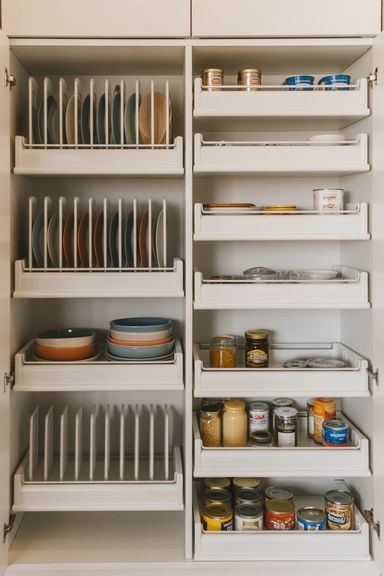
Tall cabinets often waste vertical space, leading to stacked items that are hard to access. IKEA shelf inserts solve this by creating usable layers within existing shelves. Plates, bowls, and pantry items gain defined zones instead of forming unstable piles.
These inserts reduce daily clutter by improving visibility. When everything is visible at a glance, overbuying and duplicate storage decrease. Vertical order also limits reshuffling, which is one of the biggest contributors to cabinet mess in busy kitchens.
3. IKEA Pull-Out Solutions That Prevent Forgotten Items
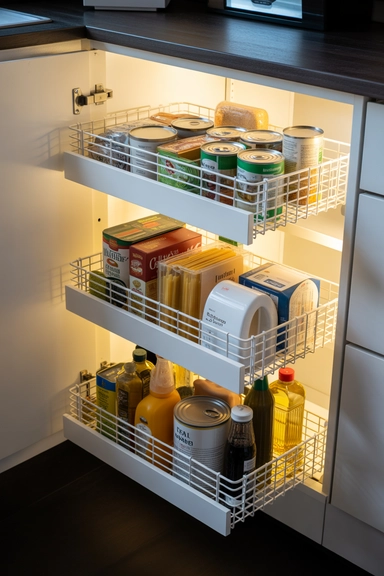
Deep cabinets tend to hide clutter rather than solve it. IKEA pull-out baskets and trays transform these spaces into fully accessible storage. Items stored at the back become just as reachable as those at the front, eliminating forgotten duplicates and messy digging.
This hack reduces daily clutter because it removes friction. When access is easy, items return to place without hesitation. Pull-out systems turn problem cabinets into reliable storage zones that stay organized without constant attention.
4. Wall Rail Systems That Clear Countertops
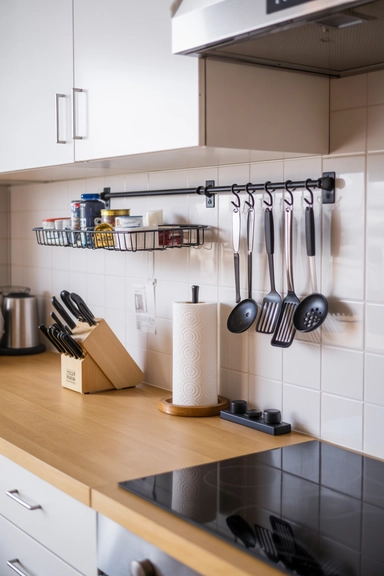
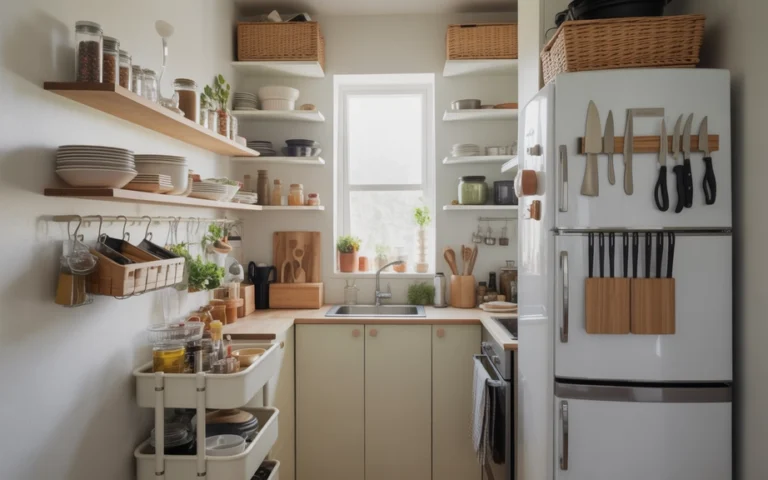
Counters often collect clutter simply because frequently used items lack a clear home. IKEA wall rail systems move essentials like utensils, paper towels, and small tools off the counter while keeping them accessible. This creates immediate visual relief.
The key is restraint. Only daily-use items belong on rails. When used selectively, wall systems reduce counter buildup without adding visual noise. Clearing horizontal surfaces has one of the fastest impacts on perceived kitchen clutter.
5. IKEA Containers That Make Pantry Storage Predictable

Pantries feel cluttered when packaging sizes and shapes fight each other. IKEA storage containers introduce consistency, which simplifies both storage and restocking. When containers stack cleanly and labels are visible, shelves stay orderly with minimal effort.
Predictable container sizing prevents overflow and random placement. This reduces daily clutter by making it obvious where items belong and when something is out of place. Consistency, not volume, keeps pantry storage under control.
6. IKEA Cabinet Door Storage That Uses Hidden Space
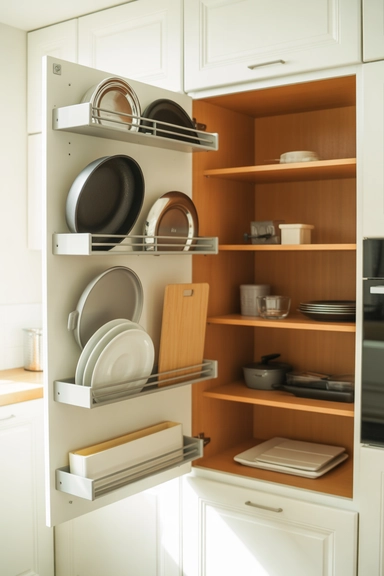
Cabinet doors are often ignored, yet they offer valuable storage that does not interfere with daily movement. IKEA door-mounted organizers and narrow racks work best for lightweight items such as lids, wraps, and cleaning supplies. Using this hidden surface prevents these items from drifting into drawers or countertops.
The key is keeping door storage shallow and intentional. Overloading doors creates imbalance and visual mess inside cabinets. When used selectively, door-mounted storage absorbs clutter quietly while keeping primary cabinet shelves clean and easy to access.
7. IKEA Turntables That Stop Corner Cabinet Chaos
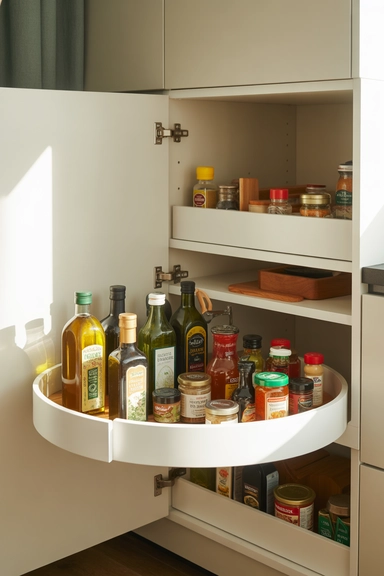
Corner cabinets are notorious clutter zones because items disappear into deep, awkward spaces. IKEA turntables solve this by keeping everything visible and reachable with a simple spin. Oils, spices, and small pantry items benefit most from this solution.
Turntables reduce daily clutter by eliminating reshuffling. When items are easy to reach, they return to their place instead of being left out. This single change often transforms the most frustrating cabinet into one of the most reliable storage areas.
8. IKEA Modular Bins That Adapt to Changing Needs
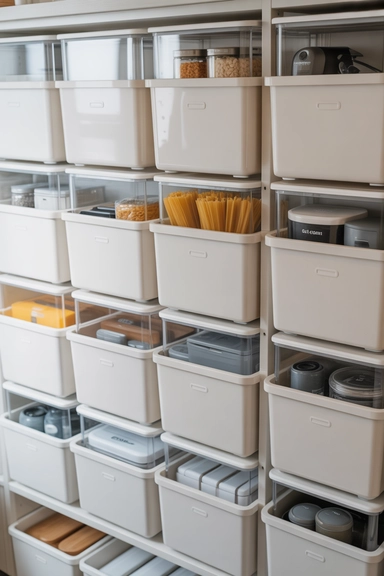
Rigid storage systems often fail as kitchen needs change. IKEA modular bins succeed because they can be reconfigured without replacing the entire setup. These bins work especially well in drawers, pantries, and under-sink areas where clutter tends to evolve.
Adaptability reduces clutter over time. When storage adjusts easily, items do not spill into nearby spaces. Modular systems support long-term organization because they grow and shift with habits rather than resisting them.
9. IKEA Open Shelf Accessories That Stay Controlled
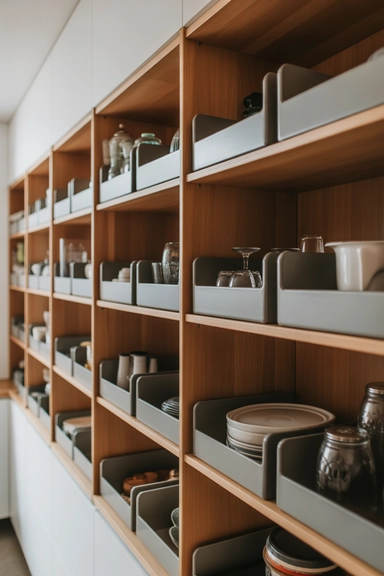
Open shelving becomes cluttered when it lacks structure. IKEA shelf accessories such as dividers, risers, and trays help define zones on open shelves without closing them off. This keeps items grouped and prevents visual sprawl.
The goal is to introduce subtle boundaries. When shelves have invisible rules, items stay in place naturally. Controlled open shelving reduces daily clutter by balancing accessibility with restraint, rather than treating shelves as decorative overflow.
10. IKEA Under-Sink Solutions That Prevent Pileups
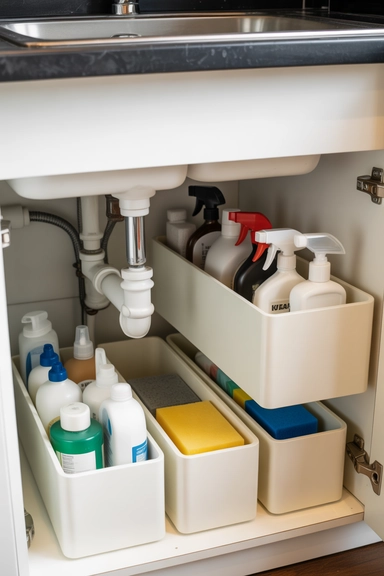
The area under the sink often becomes a dumping ground due to pipes and irregular shapes. IKEA under-sink organizers are designed to work around plumbing, creating usable zones instead of one messy cavity.
By separating cleaning supplies into defined compartments, clutter stops accumulating randomly. When each item has a designated spot, the under-sink area stays functional instead of becoming a forgotten mess that spills into surrounding cabinets.
11. IKEA Drawer Peg Systems That Keep Items in Place
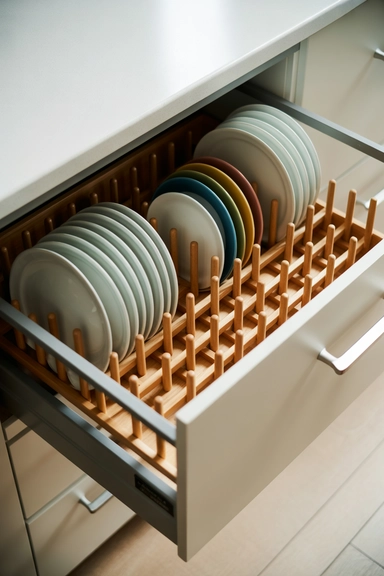
Drawers often look organized at first, then slowly lose order as items shift with use. IKEA drawer peg systems prevent this by creating fixed boundaries that stop movement. Plates, bowls, and containers stay exactly where they belong, even in wide drawers.
This stability reduces daily clutter because items do not slide into each other or stack unpredictably. When everything remains visible and separated, drawers reset themselves after use. Peg systems work quietly in the background, maintaining order without constant readjustment.
12. IKEA Adjustable Shelving for Evolving Storage Needs
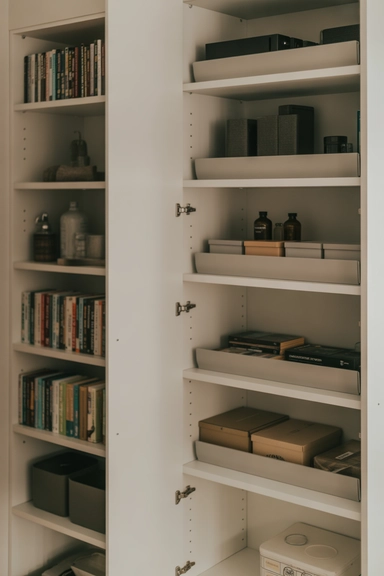
Kitchen storage needs change over time, and fixed shelving often fails to keep up. IKEA adjustable shelving allows heights to be modified as item sizes shift. This prevents awkward stacking and wasted space that often leads to clutter creeping outward.
When shelves adapt easily, storage stays aligned with reality. Items no longer end up on counters simply because they do not fit properly. Adjustable systems reduce clutter by keeping everything contained within its intended zone.
13. IKEA Storage for Small Appliances Without Visual Overload
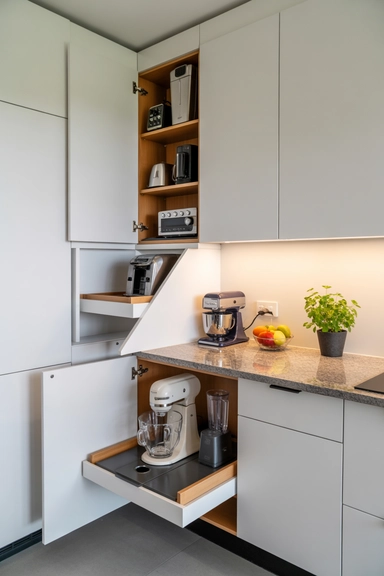
Small appliances are frequent contributors to counter clutter. IKEA cabinet solutions designed for appliances, such as lift-up doors or pull-out shelves, allow these items to stay accessible without remaining visible all day.
This approach reduces visual noise while preserving convenience. When appliances return to hidden storage easily, counters remain clear by default. The result is a kitchen that feels calmer without sacrificing functionality.
14. IKEA Labeling Systems That Prevent Daily Guesswork
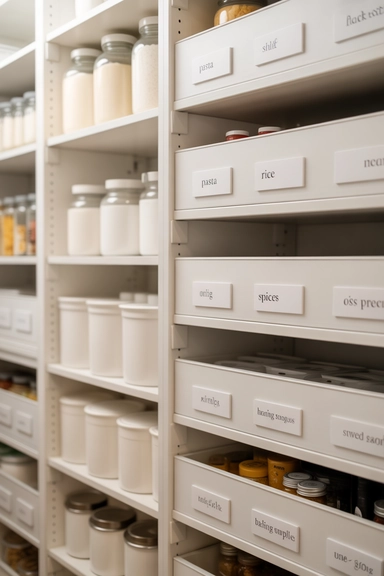
Unlabeled storage relies on memory, which often fails in busy kitchens. IKEA labeling systems create clear identification without visual distraction. Simple, consistent labels help everyone in the household return items correctly.
This clarity prevents clutter from forming through misplacement. When storage communicates its purpose instantly, organization becomes automatic. Labels act as silent guides that keep systems working long after initial setup.
15. IKEA Vertical Organizers That Maximize Narrow Spaces
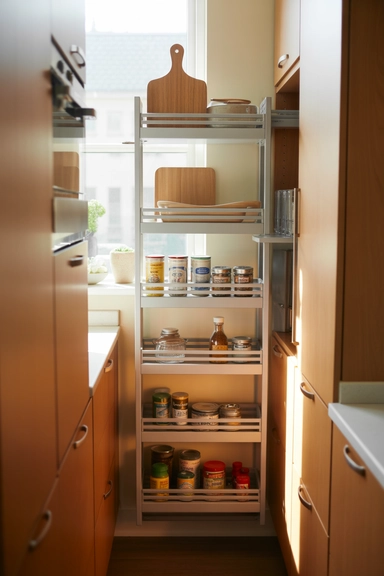
Narrow gaps often go unused, yet they are ideal for vertical IKEA organizers. Slim pull-out units or vertical dividers can store baking trays, cutting boards, or pantry items without widening cabinets.
Using these spaces reduces overflow into other areas. When narrow zones become functional, larger storage areas stay less crowded. Vertical organizers turn overlooked gaps into clutter-absorbing assets.
16. IKEA Countertop Organizers That Stop Surface Creep
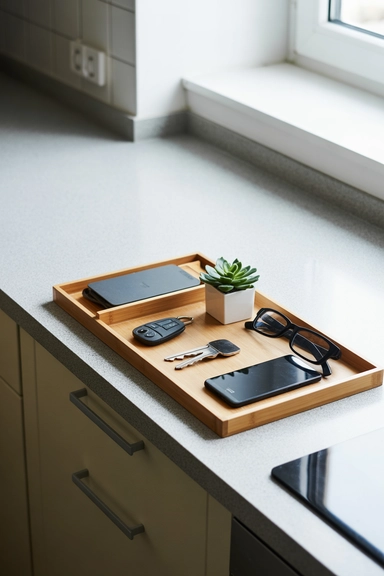
Countertops collect clutter when items lack a defined boundary. IKEA countertop organizers work best when they limit spread rather than add storage. Trays, slim racks, and contained zones prevent small items from drifting across work surfaces throughout the day.
When countertop storage has edges and limits, clutter stops expanding. Items remain visible but controlled, allowing counters to stay usable for cooking. The goal is not to store more, but to keep daily-use items from spreading unchecked.
17. IKEA Fridge Organizers That Prevent Food Pileups
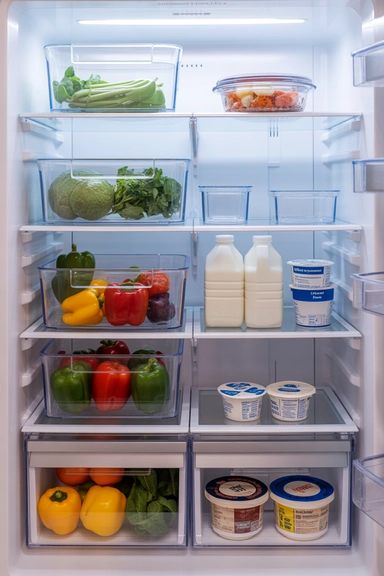
Refrigerator clutter often leads to forgotten food and unnecessary overflow. IKEA fridge organizers create clear zones for categories, preventing items from stacking randomly. Transparent bins keep contents visible, reducing duplicate purchases and wasted space.
This organization reduces daily clutter by improving retrieval and restocking. When food placement is predictable, the fridge stays orderly without constant rearranging. A well-zoned fridge supports the entire kitchen’s organization system.
18. IKEA Storage That Simplifies Cleanup Routines
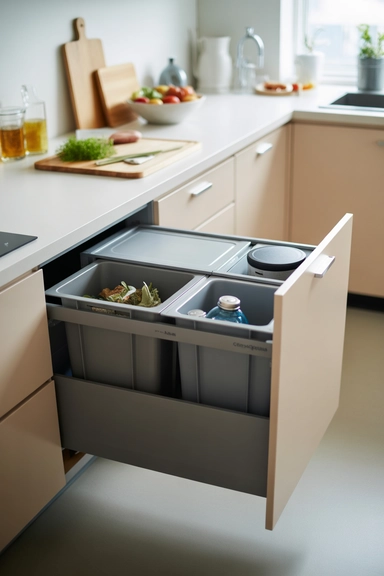
Cleanup is when clutter either resolves or spreads. IKEA storage solutions that support easy cleanup—such as pull-out trash systems and recycling bins—prevent mess from lingering. When disposal is intuitive, counters clear faster.
Reducing friction during cleanup has a direct effect on clutter levels. Storage that supports quick resets keeps disorder from becoming permanent. Cleanup-friendly systems maintain order even during busy cooking schedules.
19. IKEA Kitchen Organizing Hacks That Reduce Visual Noise
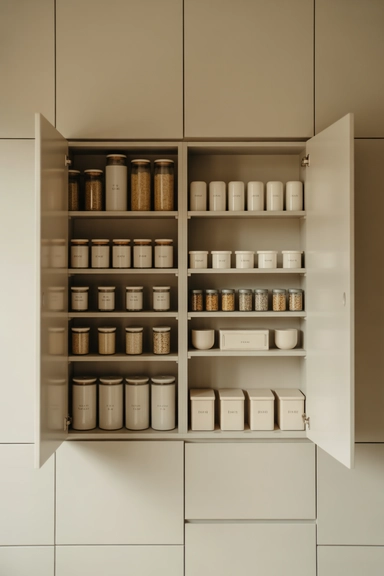
Visual clutter is often worse than physical clutter. IKEA solutions that hide variation—such as uniform containers, panel-ready fronts, and internal organizers—help kitchens feel calmer even when fully stocked.
When visual elements are simplified, the kitchen feels cleaner without removing functionality. Reducing visual noise lowers stress and makes organization feel effortless rather than forced.
20. IKEA Storage Systems That Encourage Daily Reset
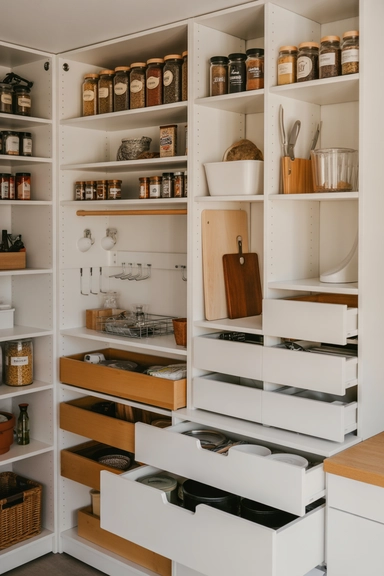
The most effective organizing systems make resetting easy. IKEA modular storage encourages items to return to place without effort. When storage feels intuitive, daily reset becomes a habit rather than a task.
Clutter reduces itself when systems align with behavior. Storage that supports natural movement and usage patterns stays organized with minimal maintenance.
21. IKEA Kitchen Organizing Hacks That Work Long-Term
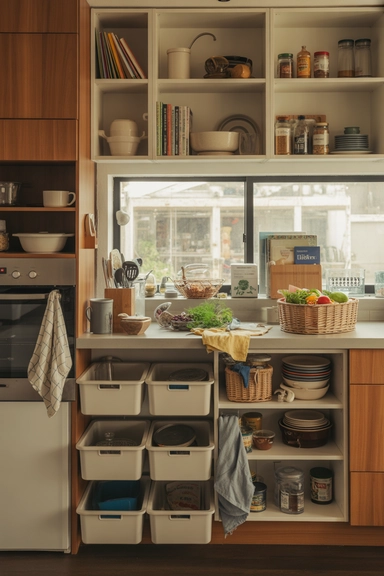
Short-term organization often fails because it ignores real-life use. IKEA kitchen organizing hacks succeed long-term when they remain flexible, accessible, and visually calm. Systems that adapt over time prevent clutter from reappearing.
Longevity comes from simplicity. When storage solutions remain easy to understand and maintain, clutter stays under control without constant intervention.
Conclusion
IKEA kitchen organizing hacks are most effective when they support real routines instead of ideal setups. By focusing on visibility, accessibility, and easy reset, these solutions reduce daily clutter without adding complexity. Thoughtful use of drawers, cabinets, shelves, and hidden spaces allows the kitchen to function smoothly while staying visually calm. When storage works with habits rather than against them, organization becomes sustainable, and clutter stops returning.