
Introduction
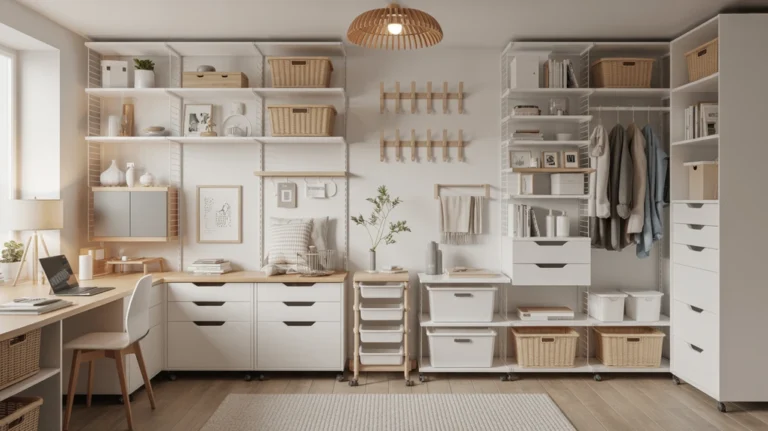
Small spaces rarely fail because of a lack of square footage—they fail because vertical opportunities are ignored. Doors, in particular, remain one of the most underused storage surfaces in homes of every size. Over-the-door storage ideas solve this problem quietly, without changing layouts or adding furniture that crowds the room. When used intentionally, they can hold daily essentials, reduce surface clutter, and restore visual balance. The key is choosing systems that stay slim, stable, and visually controlled. For broader strategies that reduce visual noise across every room, this approach pairs well with 21 Wall Organizer Ideas That Keep Surfaces Clutter-Free.
1. Slim Pocket Organizers for Daily Grab Items
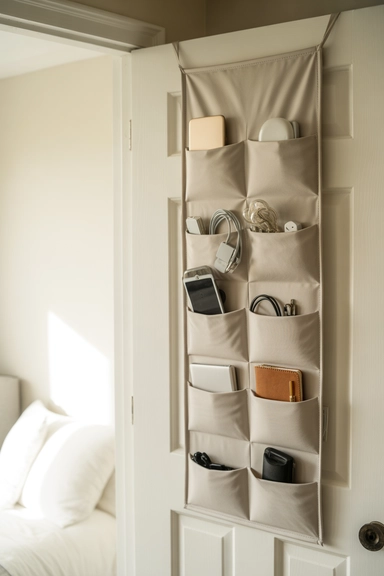
Slim pocket organizers work best when storage needs are frequent but lightweight. These systems hang flat against the door, using stitched fabric or reinforced mesh pockets that prevent sagging. They are ideal for items like chargers, notebooks, grooming tools, or small accessories that otherwise scatter across desks and countertops. Because each pocket has a defined boundary, items stay visually contained, which keeps the door from looking busy even when fully used.
Placement matters more than capacity with pocket organizers. Installing them on doors that remain closed most of the day—such as bedroom or closet doors—keeps the visual field calm. Neutral colors or matte finishes reduce contrast against the door surface, helping the storage fade into the background. When selected carefully, this type of over-the-door storage creates order without drawing attention to itself.
2. Over-the-Door Racks That Replace a Dresser Drawer
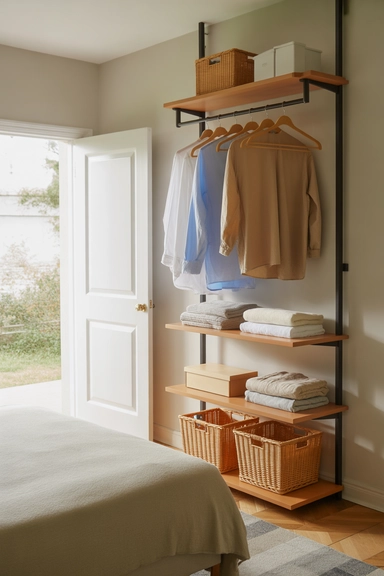
Over-the-door racks can function as vertical drawers when horizontal storage is limited. These racks often feature shallow shelves or wire trays that hold folded clothing, workout gear, or linens. Unlike bulky furniture, they do not interrupt floor circulation or block natural light. This makes them particularly effective in bedrooms where every inch of open space contributes to comfort and movement.
The most successful over-the-door storage ideas in this category prioritize depth control. Shelves should remain narrow enough to allow the door to open fully without hitting walls or furniture. When used on closet doors, these racks free up drawer space for heavier items while keeping frequently used pieces visible and easy to reach.
3. Clear Vertical Organizers for Visual Inventory Control
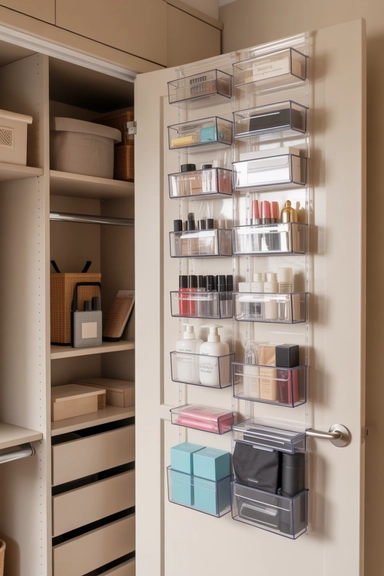
Clear vertical organizers are designed for people who lose items the moment they disappear from view. Made from transparent plastic or acrylic, these systems allow instant visual inventory without opening drawers or boxes. They work especially well for cosmetics, cleaning supplies, or office tools that need quick access throughout the day. The clarity reduces overbuying and clutter caused by forgotten duplicates.
Despite their transparency, balance is essential. Clear over-the-door storage should be limited to doors inside closets, pantries, or utility spaces rather than main living areas. Grouping similar items by function keeps the organizer from looking chaotic. When visual order is maintained, clear systems become practical tools rather than visual distractions.
4. Metal Basket Systems for Heavy-Use Storage
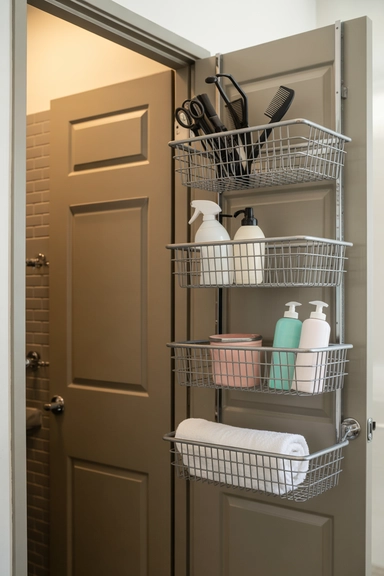
Metal basket systems provide structure where fabric organizers fall short. Their rigid frames support heavier items such as hair tools, cleaning bottles, or pantry goods without bending or collapsing. Open wire construction allows airflow, which is especially useful in bathrooms or laundry areas where moisture builds quickly. These systems are functional without feeling temporary or flimsy.
For long-term use, stability is critical. Look for over-the-door storage ideas that include padded hooks or adjustable brackets to prevent shifting when the door moves. Matte black or brushed finishes integrate well with modern interiors, while white or chrome options blend into utility spaces. The right finish helps metal baskets feel intentional rather than industrial.
5. Fabric Storage Panels That Stay Flat Against the Door
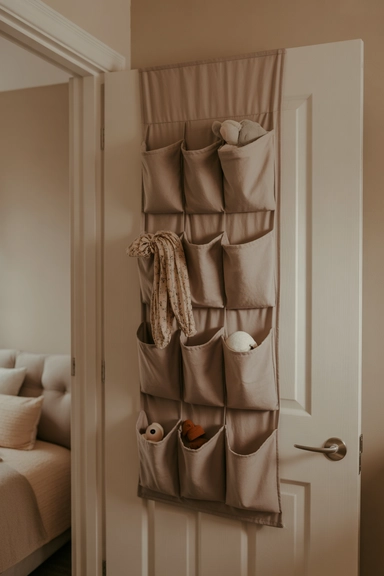
Fabric storage panels offer a softer alternative to rigid organizers while still providing structure. Unlike loose pocket hangers, these panels are often reinforced with internal stitching that keeps them flush against the door. This makes them ideal for storing lightweight items such as scarves, accessories, or children’s supplies without adding visual bulk.
These over-the-door storage ideas work best in bedrooms and nurseries where texture adds warmth. Choosing panels in neutral or muted tones prevents them from becoming a focal point. When aligned carefully, fabric panels read as part of the door surface rather than an added layer, preserving the room’s overall balance.
6. Hidden Shoe Storage That Doesn’t Crowd the Floor
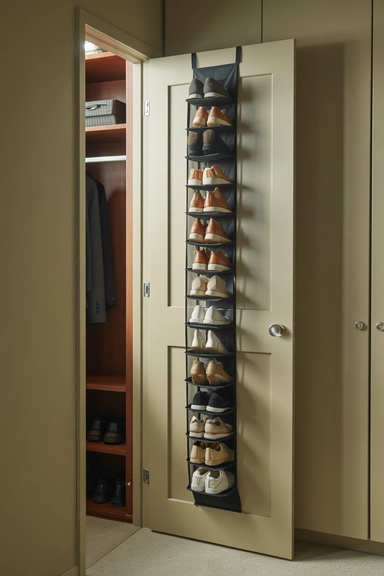
Shoe clutter is one of the fastest ways a room loses visual calm. Over-the-door shoe organizers solve this by lifting footwear off the floor and placing it into a vertical, contained system. Unlike open shoe racks, door-mounted storage keeps pairs aligned and prevents them from spreading outward. This is especially effective in bedrooms and entryways where floor space directly affects how open the room feels.
The most effective over-the-door storage ideas for shoes use narrow pockets or angled compartments that support the shoe’s shape. Neutral-toned organizers help reduce visual noise, while clear pockets work well inside closets for quick selection. By relocating shoes to the door surface, circulation improves and the room instantly feels more intentional.
7. Door-Mounted Hooks for Bags, Belts, and Scarves
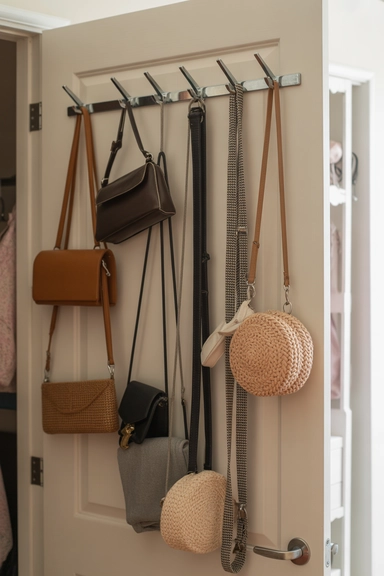
Hooks remain one of the most underestimated storage tools, particularly when used vertically. Over-the-door hook systems allow bags, belts, and scarves to hang freely without overlapping, which prevents creasing and tangling. Unlike wall hooks, door-mounted versions avoid drilling and preserve wall space for artwork or furniture placement.
Spacing is critical for success. Hooks should be staggered vertically to keep items from stacking visually. In bedrooms or closets, matte or wood-accent hooks integrate more seamlessly with decor. When chosen carefully, this form of over-the-door storage creates quick access while keeping accessories organized and visually controlled.
8. Over-the-Door Shelving for Toiletries and Skincare
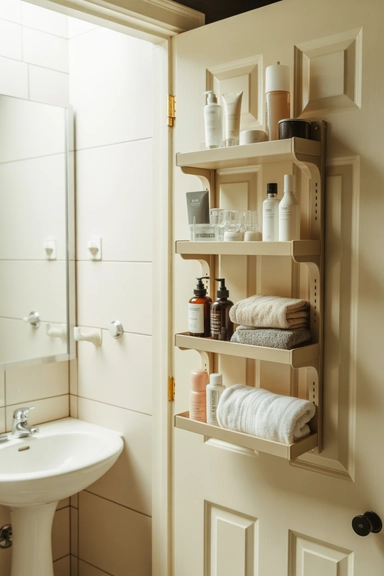
Bathrooms often lack drawer depth, making vertical door storage an efficient alternative. Over-the-door shelving systems with shallow tiers can hold skincare, towels, and daily toiletries without crowding the sink area. These systems reduce countertop clutter while keeping essentials within reach, which improves both function and visual order.
Moisture resistance is essential in bathroom applications. Look for coated metal or sealed plastic shelves that withstand humidity without warping. When aligned behind the bathroom door, this type of over-the-door storage stays hidden from view, maintaining a clean, spa-like feel while solving daily storage limitations.
9. Pantry-Style Door Storage for Small Kitchens
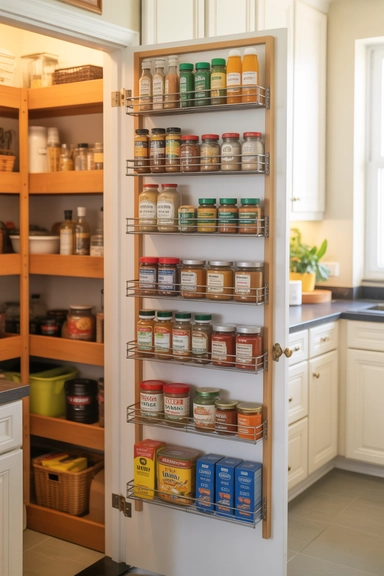
Kitchen doors—especially pantry and utility doors—offer valuable vertical space for food storage. Over-the-door racks designed for spices, snacks, or condiments reduce cabinet congestion and make frequently used items easier to access. This layout improves workflow by keeping essentials visible without opening multiple doors.
The most effective over-the-door storage ideas in kitchens use shallow wire racks that prevent items from tipping forward. Consistent container sizes create visual rhythm and prevent overcrowding. When properly organized, pantry door storage functions like an extension of the cabinet system rather than an afterthought.
10. Over-the-Door Solutions for Rental-Safe Storage
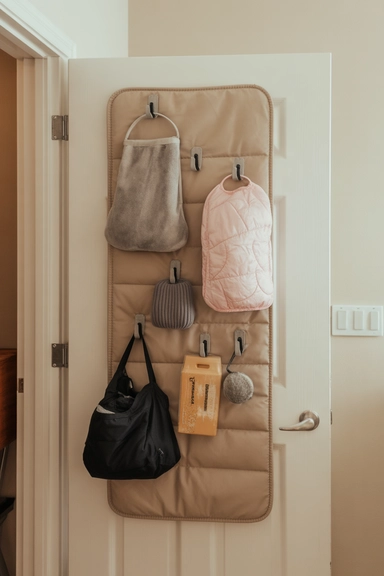
Rental spaces demand storage solutions that leave no permanent marks. Over-the-door systems meet this requirement while still providing meaningful capacity. From hooks to shelving units, these solutions bypass drilling restrictions and allow renters to personalize their space without risking deposits.
The key is weight distribution. Rental-safe over-the-door storage should sit flush against the door and include protective padding to prevent scuffing. Neutral finishes help these systems blend with standard rental doors, keeping the space flexible for future changes while still supporting daily organization needs.
11. Narrow Wire Racks for Cleaning Supplies
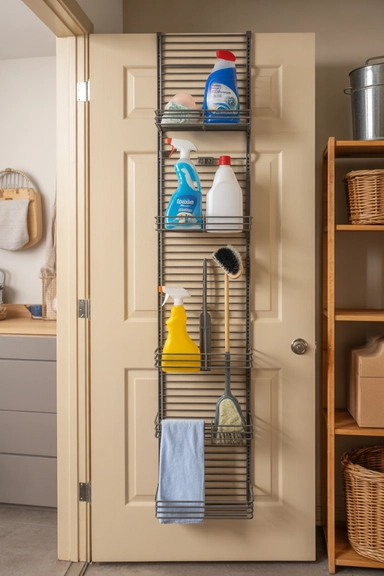
Cleaning supplies are often bulky, awkward, and visually disruptive when stored openly. Narrow wire racks mounted over utility or closet doors provide structured storage without taking up shelf space. These racks allow bottles and tools to stand upright, preventing leaks and making inventory easy to track.
Ventilation is a major advantage here. Wire construction allows air circulation, reducing moisture buildup from damp cloths or sprays. When placed behind a laundry or utility door, this form of over-the-door storage keeps cleaning essentials accessible without letting them dominate the room’s appearance.
12. Adjustable Door Systems for Changing Storage Needs
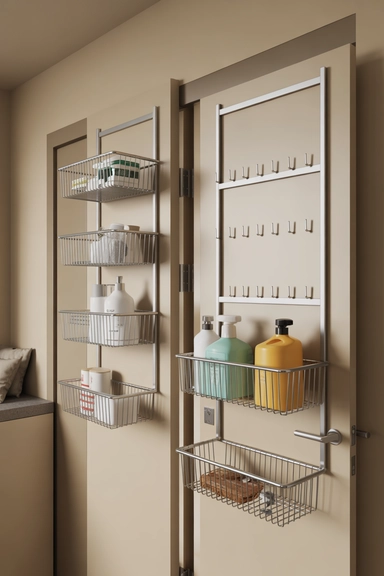
Adjustable systems offer long-term value because storage needs rarely stay the same. Over-the-door frameworks with movable baskets, hooks, or shelves allow layouts to evolve without replacing the entire unit. This flexibility is particularly useful in shared homes where storage demands shift seasonally or between occupants. Instead of forcing items into fixed compartments, adjustable systems adapt to what actually gets used.
The most effective over-the-door storage ideas in this category prioritize balance and load distribution. Adjustable components should lock securely to prevent shifting when the door opens. When installed thoughtfully, these systems feel intentional rather than temporary, providing structure without committing the space to a single function.
13. Bedroom Door Storage for Night-Time Essentials
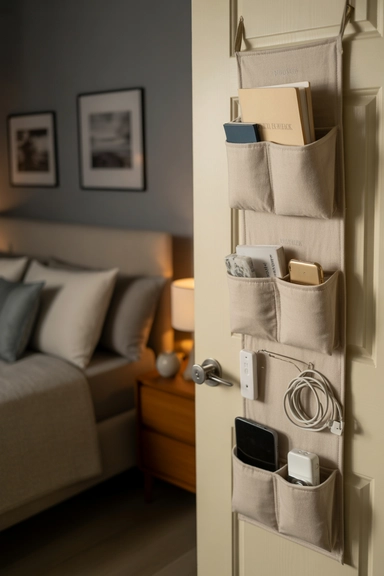
Bedrooms benefit from storage that supports routines rather than disrupts rest. Over-the-door organizers placed behind the bedroom door can hold items like books, sleep accessories, chargers, or journals without introducing new furniture. This keeps bedside surfaces clear, which visually reduces noise and helps the room feel calmer.
Soft materials and shallow depth are essential here. Fabric or low-profile organizers prevent the door from feeling heavy or intrusive. When selected in tones that match bedding or wall color, bedroom door storage blends into the background, supporting function without competing with the room’s overall mood.
14. Bathroom Door Organizers That Resist Moisture
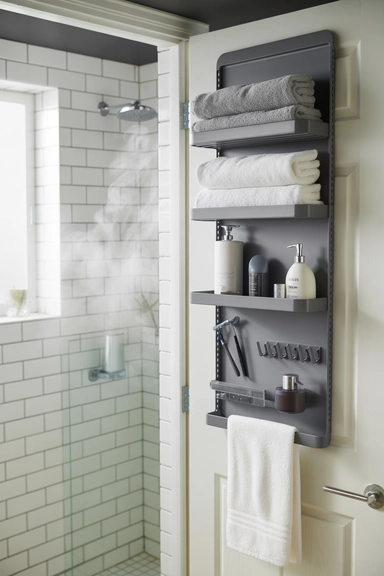
Bathrooms demand materials that can handle humidity without degrading. Over-the-door storage ideas designed for these spaces often use coated metals, sealed plastics, or treated fabrics that resist moisture buildup. These organizers are ideal for towels, grooming tools, and backup toiletries that do not need to live on the counter.
Proper spacing between compartments improves airflow and prevents mildew. Installing these systems on doors that remain closed most of the time helps keep the bathroom visually clean. When moisture resistance is prioritized, door-mounted storage becomes a durable solution rather than a short-term fix.
15. Linen and Towel Storage Without a Cabinet
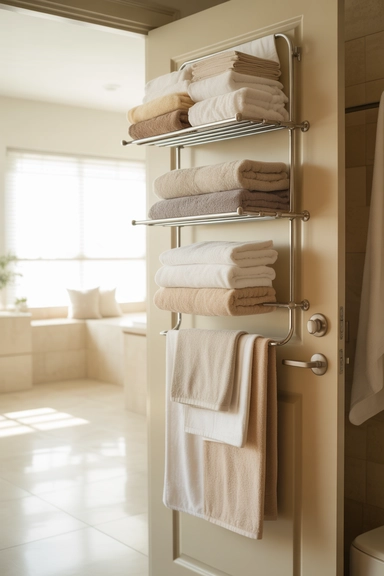
Not every bathroom or laundry area has room for a dedicated linen cabinet. Over-the-door storage provides a vertical alternative that keeps towels and linens organized without taking up floor space. Tiered racks or wide fabric pockets allow items to be stored folded, preserving shape and accessibility.
The key to success lies in proportion. Storage should align with towel width to prevent overhang and visual clutter. Neutral colors and structured designs help linen storage feel cohesive. These over-the-door storage ideas work best when they replace, rather than supplement, bulky cabinetry.
16. Closet Door Storage for Accessories and Extras
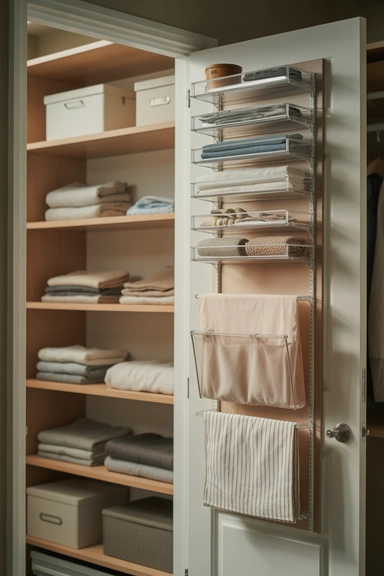
Closet interiors often become congested while door surfaces remain unused. Over-the-door storage inside closets can hold accessories, seasonal items, or overflow clothing without interfering with hanging space. This approach keeps everything within the closet zone, reducing the need for external storage furniture.
Consistency improves usability. Grouping similar items and assigning each compartment a purpose prevents clutter from returning. When used thoughtfully, closet door storage supports daily routines while maintaining visual order inside the closet, making it easier to find what you need without rearranging shelves.
17. Minimalist Door Storage That Stays Visually Quiet
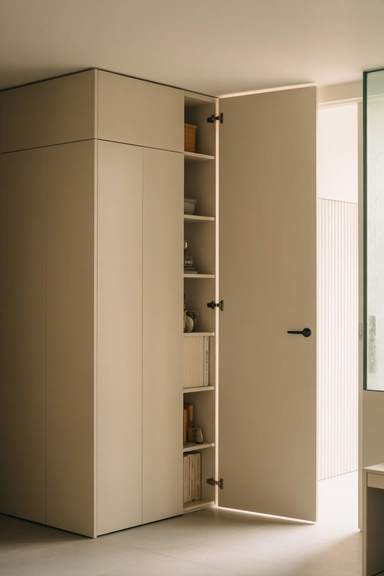
Minimalist spaces require storage that does not announce itself. Over-the-door storage ideas designed with slim profiles, muted finishes, and simple geometry can exist without disrupting clean lines. These systems often rely on repetition and restraint rather than capacity, holding only what is used daily.
Placement is critical in minimalist rooms. Doors that remain closed most of the day provide the best surface for discreet storage. When color and material closely match the door itself, storage becomes nearly invisible, preserving the room’s visual calm while still serving a practical function.
18. Over-the-Door Storage for Kids’ Rooms
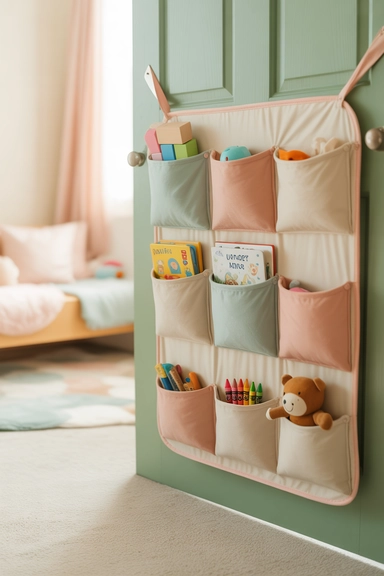
Children’s rooms accumulate small, fast-moving items that easily overwhelm shelves and floors. Over-the-door storage ideas work especially well here because they create defined zones for toys, art supplies, books, or school essentials without taking away play space. Vertical storage keeps frequently used items visible and reachable, which supports independence and reduces daily mess.
Durability and safety should guide selection. Fabric organizers with reinforced seams or rounded-edge compartments prevent injuries and wear. When placed on doors that remain open during playtime, these systems keep clutter contained while allowing the room to function freely without constant tidying.
19. Entryway Door Storage for Small Apartments
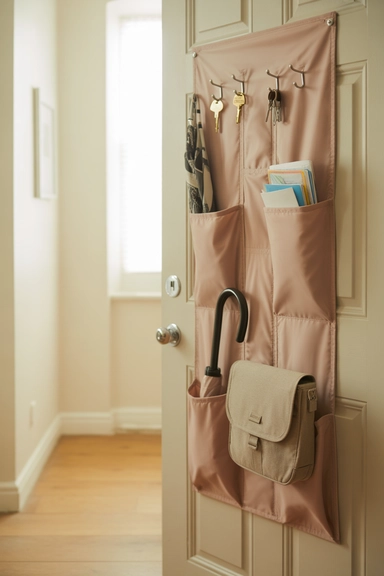
Entryways are transition zones, yet they often lack storage depth. Over-the-door solutions add structure without narrowing walkways or blocking doors. Hooks, slim shelves, or pocket organizers can hold keys, mail, umbrellas, and daily bags, preventing clutter from spreading deeper into the home.
The most effective over-the-door storage ideas for entryways emphasize restraint. Only daily-use items should live here to avoid visual overload. Neutral finishes and shallow profiles help the storage blend into the door surface, keeping the entryway calm, efficient, and easy to maintain.
20. Door Storage That Works Behind Open Doors
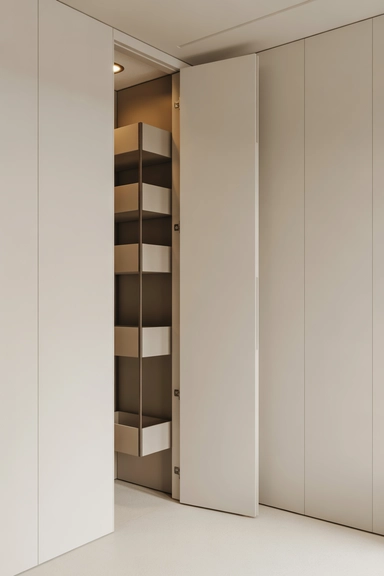
Not all doors stay closed, which makes placement strategy essential. Over-the-door storage installed on doors that rest open against walls must stay slim and stable to avoid visual disruption. Shallow racks and flat organizers ensure the door still sits cleanly without protruding into the room.
This approach works well in bedrooms, offices, and bathrooms where doors remain open most of the day. Choosing finishes that echo nearby furniture or wall tones helps the storage read as intentional. When planned correctly, these over-the-door storage ideas disappear into the room’s layout.
21. Over-the-Door Solutions That Don’t Slam or Shift
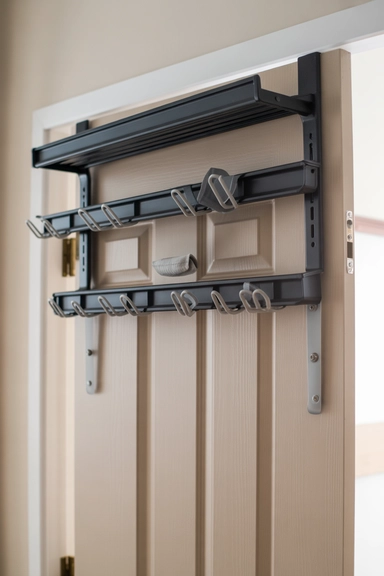
Movement is one of the most common complaints with door-mounted storage. Poorly designed systems can shift, rattle, or cause doors to slam unevenly. High-quality over-the-door storage ideas address this through weight balance, padding, and adjustable hooks that anchor the unit securely.
Rubberized contact points protect the door while reducing noise. Even load distribution across the organizer prevents strain on hinges. When stability is prioritized, door-mounted storage feels permanent and reliable rather than temporary or disruptive to daily use.
22. When Over-the-Door Storage Should Be Avoided
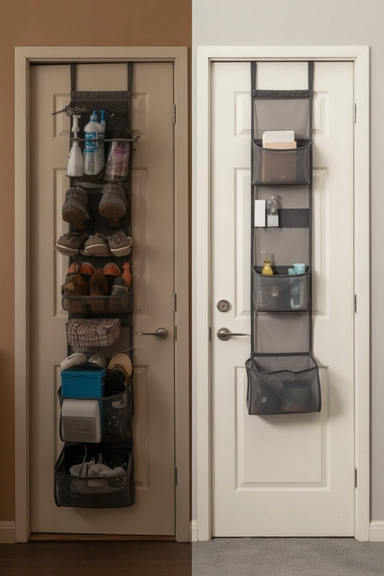
Despite their benefits, over-the-door storage ideas are not universal solutions. Doors with frequent use, limited clearance, or fragile hinges may not support added weight. In highly visible areas, bulky organizers can disrupt visual flow and make the space feel crowded rather than efficient.
It is also important to avoid overloading. When storage exceeds practical limits, items become harder to access and visual clutter returns. Over-the-door storage works best as a targeted solution, not a catch-all replacement for thoughtful organization elsewhere.
Conclusion
Over-the-door storage ideas succeed when they are treated as part of the room’s design rather than an afterthought. By using vertical space intentionally, these solutions reduce clutter, protect floor space, and support daily routines without adding furniture. The most effective systems stay slim, stable, and visually controlled, blending into the door rather than competing with the room. When chosen thoughtfully and used with restraint, over-the-door storage becomes a quiet tool that improves both function and visual balance throughout the home.