
Introduction
The bedroom is the one room in the house where clutter does physical damage. Not metaphorical damage. Actual, measurable damage to how well you sleep, how calm you feel when you wake up, and how much mental energy you burn before your day even starts. I figured this out after three years of blaming my mattress for bad sleep while ignoring the visual chaos surrounding it. Things to get rid of in your bedroom are not always the obvious piles. Sometimes they’re the things you stopped seeing entirely, which makes them harder to catch and more draining than anything sitting in plain sight. If you haven’t read Bedroom Organization Ideas yet, you’re likely organizing around clutter instead of removing it first, and the results will always disappoint you.
The Right Way to Approach a Bedroom Purge
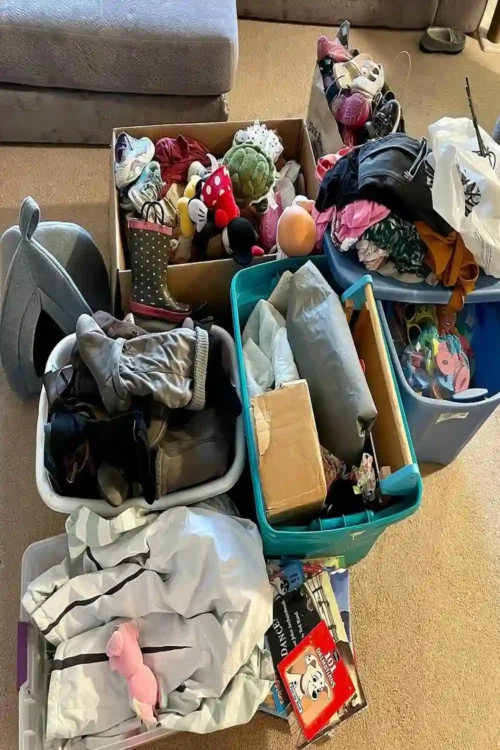
Image source @intagram
Don’t start with the closet. I know that’s where everyone goes first. It’s also where everyone quits, because the closet is the hardest decision zone in any bedroom and burning out there means the nightstand, the floor, and the dresser top never get touched.
Start with flat surfaces. Nightstands, dresser tops, windowsills, the floor beside the bed. These hold the most recent accumulation and need the fewest emotional decisions. Clear them first and you’ll have enough momentum to go deeper.
Before anything else, look under the bed. Whatever’s down there sets the tone for everything else you’ll find. Organized bins actually in use is one situation. A graveyard of forgotten objects is another. Either way, you need to see it before you start.
Clothes You Haven’t Worn in a Full Year
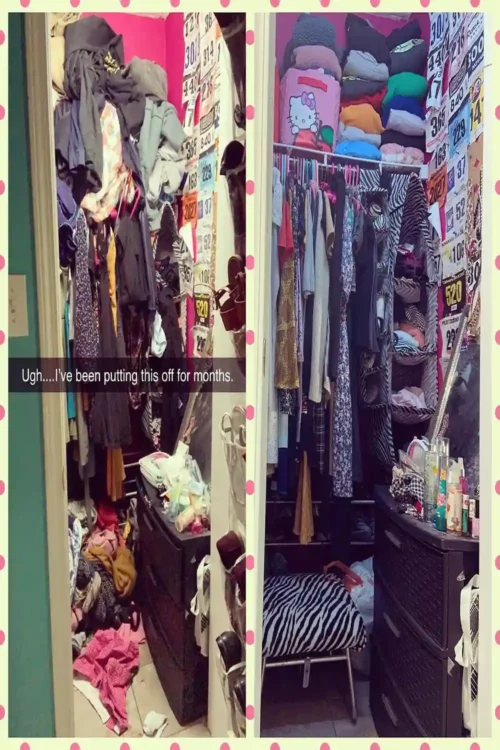
Image Source @Instagram
Not six months. A full year, because seasons matter and six months only covers half the wardrobe cycle.
Pull everything out and ask one question per item: did you wear this at any point in the last twelve months? Not would you wear it. Not could you imagine wearing it. Did you. A blazer at the back of the closet behind three others, untouched since a job interview two years ago, is not a wardrobe asset. It’s a placeholder taking real space from clothes you actually reach for.
A closet rod with breathing room between hangers looks completely different from a jammed one. Your morning changes when you can see what you own.
Expired Medications and Old Supplements
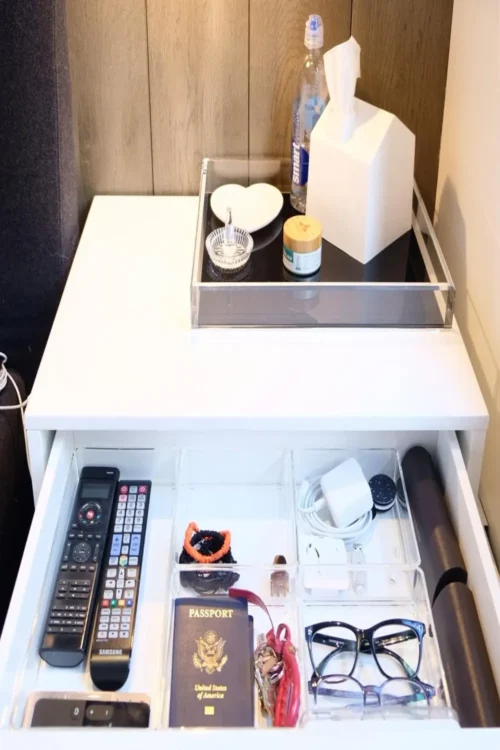
Image source @intagram
Every bedroom I’ve cleaned out had at least one drawer holding supplements from a health kick that ended. Expired melatonin. A half-finished magnesium bottle from 2022. Three different sleep aids from three different attempts to fix a problem that turned out to be the clutter itself.
Check every expiration date. Anything past it goes, regardless of how much is left. Expired medications lose effectiveness and some break down into compounds you don’t want to take. A nightstand drawer holding four expired bottles and two unlabeled ones is not a wellness setup.
This is where most bedroom cleanouts stall.
Mismatched or Worn-Out Bedding
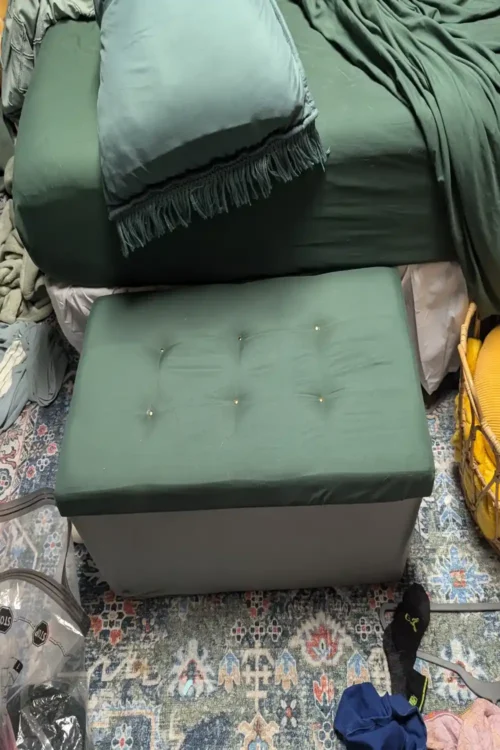
Image source @intagram
Be honest about the linen situation. Most people have more bedding than their bed needs, and a portion of it is pilling, yellowing, losing elasticity, or sized for a bed they no longer own.
A fitted sheet that won’t stay on the corners. A duvet cover with a broken zipper. Pillowcases in a color that matches nothing in the current room. These get shuffled around the shelf without ever being used or removed. Picture your bedroom closet shelf: two sets you actually rotate, and behind them three more sets in various states of decline eating up a full shelf. If you haven’t read Clutter Busting Hacks before tackling your linen situation, decision fatigue hits fast and most people just close the shelf and walk away.
Keep two complete sets per bed. Everything else goes.
Books Stacked on the Nightstand You’re Not Reading
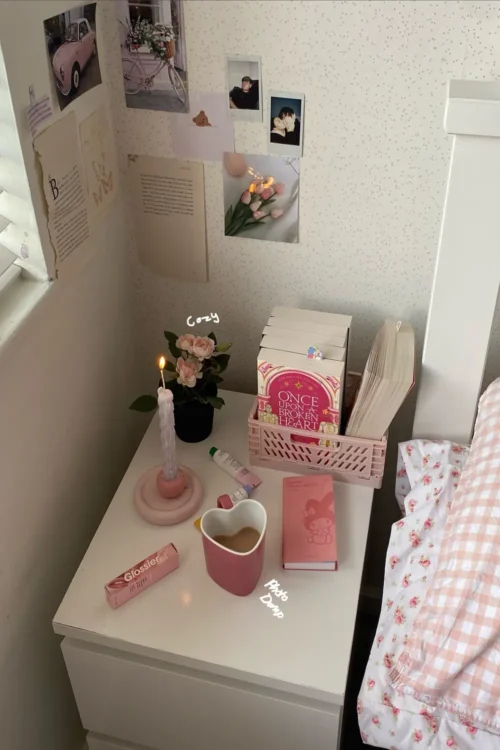
Image source @intagram
The nightstand book pile is almost universal. One you’re actively reading, one you finished three weeks ago and haven’t moved, one you started and abandoned, and two you put there with good intentions that went nowhere.
Finished ones go back to the shelf or leave the house. Abandoned ones get an honest answer: are you going back or not? If the answer takes more than two seconds, the answer is no. A nightstand with one book, a glass of water, and a lamp works better than one holding a leaning tower of good intentions.
The surface beside your bed is not a library annex.
Decorative Items That Don’t Belong in a Sleep Space

Image source @intagram
I had a gallery wall above my dresser with seven framed prints in four different styles. Put it together during a decorating phase and never looked at it critically again. It looked fine in photos. In person it was a wall of visual noise directly in my sightline from the bed.
The bedroom is not the place for décor that demands attention. Anything with busy patterns, clashing colors, or too many competing focal points earns a second look. Not everything needs to go. But every decorative item in a bedroom should answer one question: does it make the room feel calmer or busier? If the answer is busier, it goes.
Exercise Equipment That Became Furniture

Image source @intagram
A yoga mat rolled out beside the bed that hasn’t been unrolled in two months. Resistance bands draped over the chair back. Dumbbells on the floor you navigate around in the dark.
Exercise equipment in the bedroom only works when it’s actively in use. The moment it stops being used and starts being stored, it becomes the most guilt-producing clutter category in the room. It doesn’t just take up space. It reminds you of something you meant to do every time you look at it. Use it or remove it. There’s no productive middle ground here.
Old Chargers and Tangled Cords
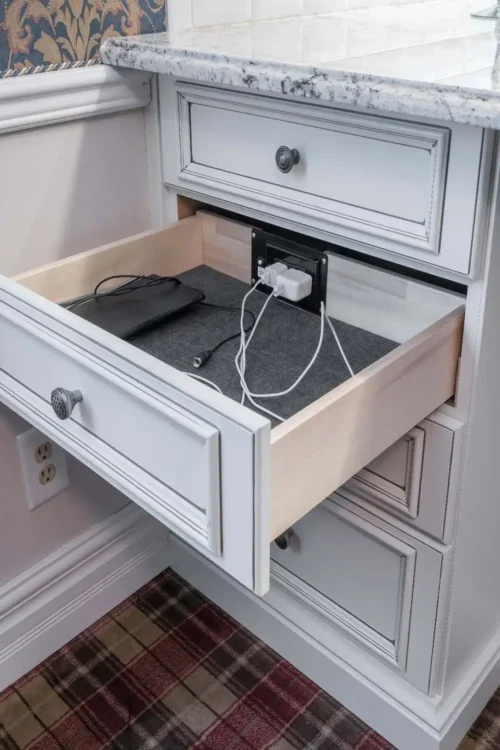
Image source @intagram
Every bedroom collects them. The charging brick from a phone two generations old. A USB cable that fits nothing currently owned. Three cords knotted together in the nightstand drawer that you avoid touching because untangling them feels like a whole project.
Test every cord. If it charges or connects something currently in use, keep it and store it properly. Not coiled and stuffed. If it doesn’t, it goes. If you haven’t read Things to Throw Away for Easy Decluttering yet, the cord drawer is one of those spots where most people give up and close it again rather than make actual calls.
My IKEA Nordli dresser had an entire top drawer that was a cord graveyard. I got rid of eleven and kept four.
Perfume and Skincare Products You Don’t Use

Image source @intagram
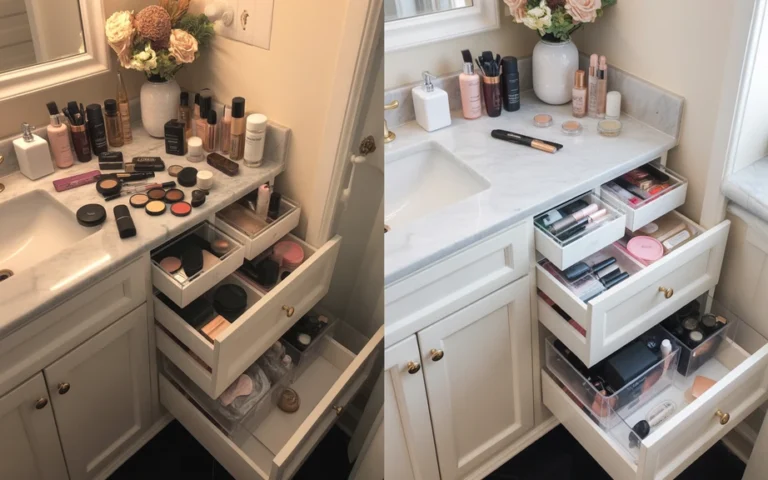
The dresser top in most bedrooms holds products in three categories: things in active daily use, things kept out of guilt, and things forgotten entirely.
Perfume degrades. Skincare expires. A half-used serum from a routine you abandoned six months ago is not a backup plan. Pull everything off the surface and go through it: used in the last thirty days or not. If not, it either moves to dedicated storage or leaves. A dresser top with three items looks like a room someone takes care of. One with twenty looks like a surface that got away from its owner.
Furniture That Doesn’t Earn Its Place

Image source @intagram
An armchair in the corner holding tomorrow’s outfit and last week’s cardigan. A small desk that became a second nightstand. A bench at the foot of the bed stacked with folded laundry that never makes it to the closet.
Ask the same question you’d ask in any room: if this piece disappeared tomorrow, would the room work better or worse? Most bedroom furniture that doubles as a clutter surface works better as empty floor space. If you haven’t read Small Bedroom Storage Ideas before adding any new piece to the room, you’re likely replacing one problem with a different one in the same spot.
Jewelry and Accessories You Never Wear
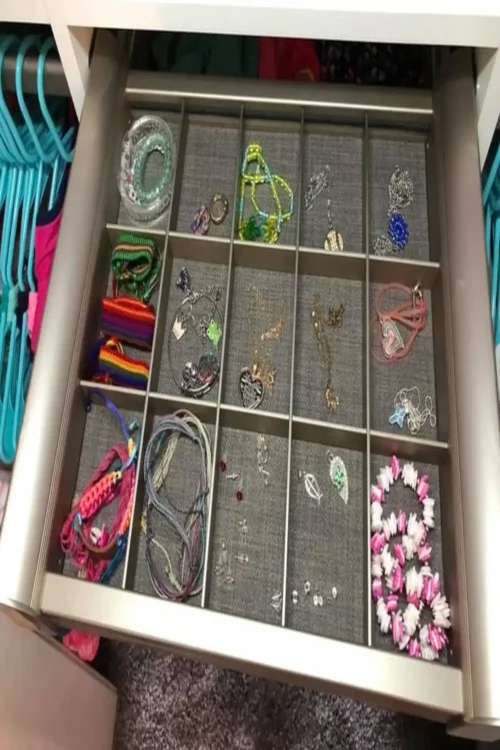
Image source @intagram
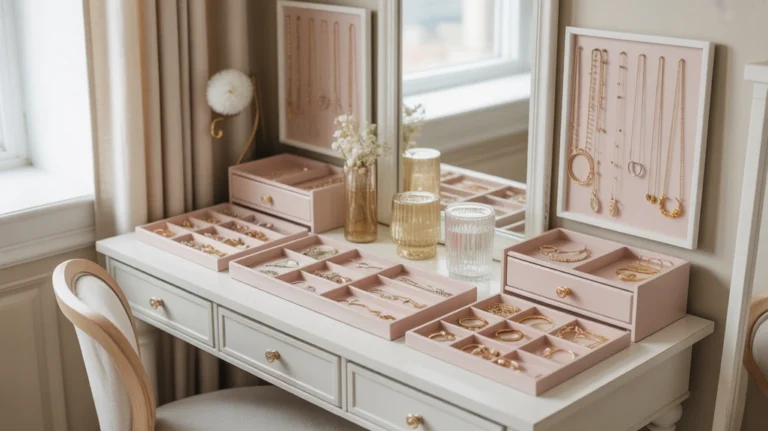
Not the pieces you love. The ones you keep because getting rid of jewelry feels final in a way that getting rid of a shirt doesn’t.
Tangled necklaces that take five minutes to unknot. Single earrings with no match. Bracelets from a style phase that ended years ago. A watch with a dead battery you’ve been meaning to replace for eighteen months. These clog the jewelry dish, the drawer, and the small box on the dresser that was supposed to organize everything. Pull it all out, lay it flat, and make a call on each piece. What you wear, what you genuinely love, what has real meaning. Everything else goes.
Bags and Purses Stored in the Bedroom
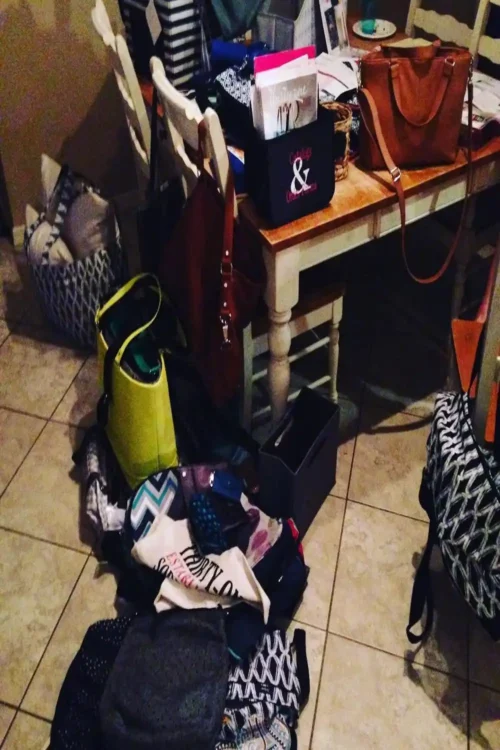
Image source @intagram
Handbags that migrated from the entryway and never left. A conference tote propped against the wall from two years ago. A backpack on the floor beside the dresser that belongs in the hallway.
Bags in the bedroom create floor clutter in a space that should have none. They’re also rarely examined, which means they hold old receipts, expired cards, and forgotten items adding weight to the room without anyone noticing. Empty them, decide what’s inside, and store the bags somewhere that isn’t the bedroom floor or the back of a chair.
Candles and Wax Melts Past Their Prime
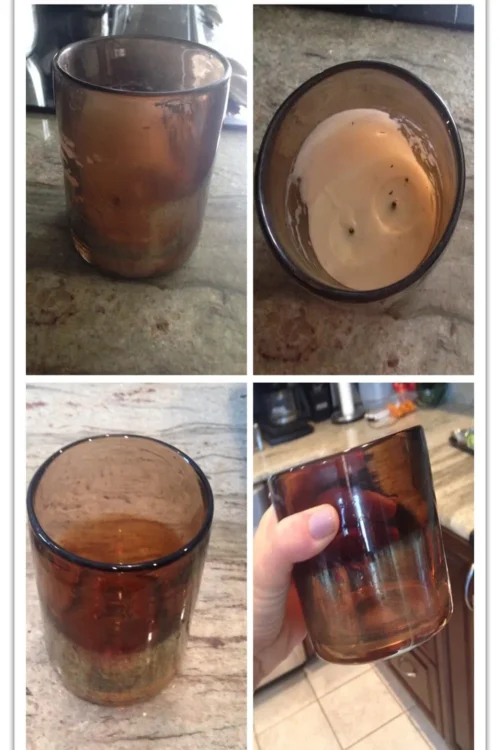
Image source @intagram
Bedrooms accumulate these differently than living rooms. Smaller candles, more of them, spread across the nightstand, dresser, windowsill. Each burns down a little and gets replaced but never removed.
A bedroom with six small burned-down candles in various states looks cluttered even when everything else is tidy. The wax discolors, the scent goes flat, and the overall effect is of a space that collects things without ever clearing them. Keep one or two fresh ones currently in use. The rest go, including the wax melt dishes with residue and the tea lights burned down to the metal cup.
Seasonal Items Stored in the Wrong Place

Image source @intagram
Winter coats on the back of the bedroom door in July. A box of holiday decorations on the closet floor eating a quarter of the available space. An extra duvet draped over the chair because it doesn’t fit in the linen closet.
Seasonal storage in the bedroom is a space tax paid every single day. These items crowd the room during the months they serve no purpose and make the closet and floor harder to use. Move them to proper seasonal storage: under-bed bins, a hall closet, attic space. The bedroom should only hold what’s in active use for the current season.
Trash That Accumulated Without a Bin

Image source @intagram
This sounds obvious. It isn’t. Bedrooms without a small dedicated bin collect a specific type of trash that’s easy to overlook: water bottle caps on the nightstand, empty packaging from an online order, tissues beside the bed, clothing tags, twist ties, hair ties with no stretch left.
None of these feel like trash in the moment because none are large enough to demand attention. Together they add up to a layer of low-grade disorder across every surface. A small bin that fits inside the nightstand or tucks beside the dresser without taking floor space solves this permanently. Everything currently scattered across surfaces that belongs in a bin goes in right now.
Final Thoughts on Things to Get Rid of in Your Bedroom
Image source @intagram
Work in a specific order: surfaces first, floor second, furniture third, closet last. Each layer you clear makes the next one easier to see and decide about.
The categories that make the biggest immediate difference are the ones you stopped noticing. Expired products, dead cords, worn-out bedding, objects that arrived without a real decision ever being made. Those are the ones quietly draining the room every night.
A bedroom should be the easiest room in the house to be in. It gets there through subtraction, not addition.
FAQ About Things to Get Rid of in Your Bedroom
How often should I go through my bedroom and declutter?
Twice a year covers the seasonal wardrobe shift and catches accumulation before it gets out of hand. A lighter pass every month, just surfaces and the floor, keeps the room from resetting to its cluttered baseline between the deeper sessions.
What is the best way to declutter a bedroom without getting overwhelmed?
Work one category at a time rather than one area at a time. All clothing in one session, all bedding in another, all surface items in another. Category-based decluttering stops the shuffle problem where items just move from one spot to another without actually leaving the room.
Can getting rid of bedroom clutter actually improve sleep quality?
Yes. Visual clutter keeps the brain in a low-level alert state that interferes with winding down. Clearing surfaces, reducing the object count, and removing anything that creates guilt or mental obligation, like unread books or unused exercise equipment, lowers the cognitive load the room carries before you even close your eyes.
Sarah Mitchell’s Take
The stuff that’s hardest to get rid of in a bedroom is usually doing the most damage. The exercise equipment you feel guilty about. The skincare from the routine you abandoned. The books you feel like you should want to read. That layer of aspirational clutter, the version of yourself you were planning to become, is worth looking at honestly. Letting it go isn’t giving up. It’s making room for the life you’re actually living right now.
Sarah Mitchell is a home decor and DIY writer who shares practical cleaning, organizing, gardening, and budget-friendly home ideas. She personally tests every tip she shares on Budget Nest Studio to make sure it works in real life.