
Introduction
Wrapping supplies rarely stay contained unless they’re given a dedicated system. Rolls slide behind shelves, ribbons tangle in drawers, and gift bags get crushed under random storage. The most effective gift wrap storage ideas focus on vertical space, clear grouping, and predictable placement so you always know what you have and where it belongs. When wrapping paper, bows, tape, and tags live in structured zones, last-minute wrapping becomes efficient instead of chaotic. A well-planned setup also protects supplies from bending or tearing, allowing you to reuse materials without constant repurchasing. For whole-home storage structure, see 25 Smart Storage Ideas That Make Every Space Work Better.
1- Vertical Wrapping Paper Bin System
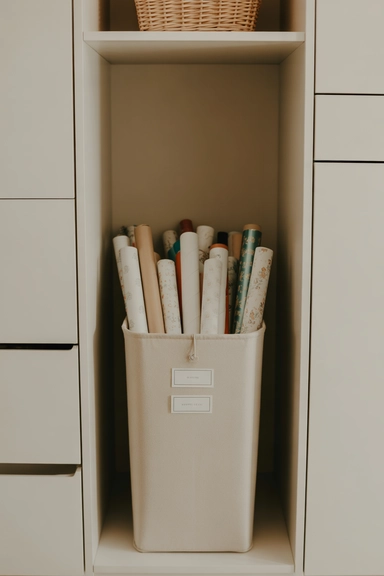
Storing wrapping paper upright prevents creasing and allows you to see patterns instantly. Use a tall, narrow container placed in a closet corner or beside shelving. Rolls remain visible and protected rather than flattened under stacked boxes. Practical gift wrap storage ideas rely on vertical containment so long items stay intact and easy to access. By keeping paper upright, you eliminate the need to unroll and inspect each piece before use.
Sort paper by color, season, or occasion so selections become faster during wrapping sessions. Place everyday designs toward the front and specialty rolls behind them. Avoid overfilling the container so rolls can be removed without friction. This simple vertical system maintains order year-round and keeps wrapping paper from drifting into random storage areas.
2- Over-the-Door Gift Wrap Organizer
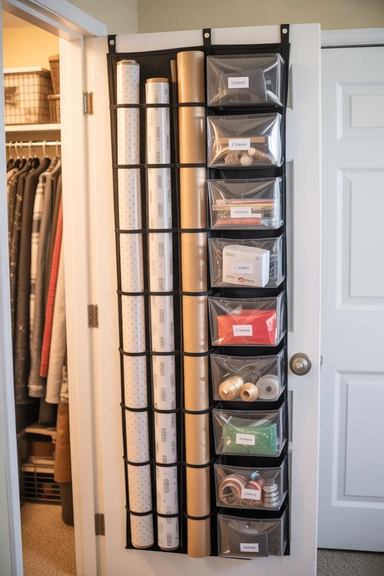
Closet doors provide valuable vertical storage for wrapping supplies that don’t require heavy shelving. Install a hanging organizer with long pockets designed for wrapping paper rolls and medium compartments for gift bags. This keeps everything visible without taking up floor space. Strong gift wrap storage ideas use underutilized vertical surfaces to prevent clutter buildup in drawers and bins.
Assign specific pockets for ribbon spools, tissue paper, and tags so items remain grouped by function. Store frequently used materials at eye level and seasonal designs higher up. Because the organizer stays in one place, supplies return to the same position after each use. This consistency keeps wrapping materials from spreading across multiple storage zones.
3- Structured Wrapping Supply Drawer
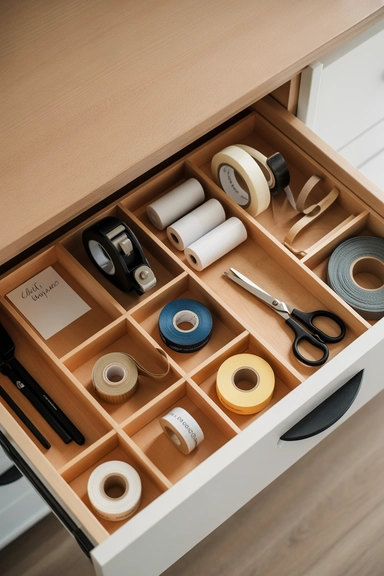
A dedicated drawer prevents small tools from scattering throughout the house. Use adjustable dividers to separate tape dispensers, scissors, markers, and tags. Keeping these essentials contained ensures that wrapping sessions start without searching through multiple rooms. Detailed gift wrap storage ideas focus not only on paper but also on the tools that support wrapping tasks.
Place the drawer near your primary storage zone for paper and bags so the workflow remains efficient. Store backup supplies in small labeled containers behind the main row. Avoid mixing unrelated items in this drawer, as that quickly erodes the system. A structured supply drawer keeps essentials visible and reduces setup time whenever gifts need to be wrapped.
4- Rolling Gift Wrap Cart Station
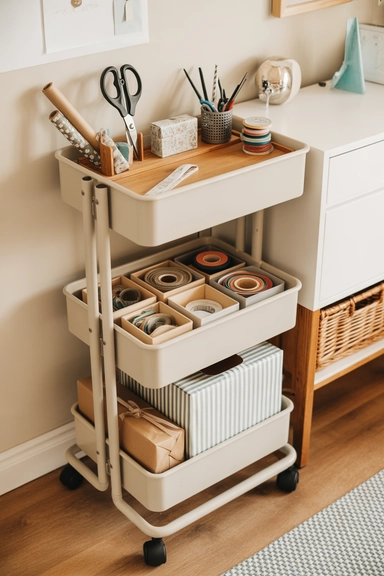
A rolling cart creates a mobile wrapping station that moves wherever you need it. Top tiers hold frequently used tools like scissors and tape, while lower shelves store ribbon containers and gift tags. This setup keeps supplies grouped and visible while allowing flexibility during busy seasons. Among adaptable gift wrap storage ideas, carts prevent the need for permanent counter space.
When not in use, park the cart beside shelving or in a closet to maintain clear walkways. Keep each tier categorized so items return to consistent positions. Mobility ensures that supplies remain organized even when wrapping in different areas of the home. Over time, a rolling station becomes the central hub for all wrapping tasks.
5- Gift Bag Storage File System
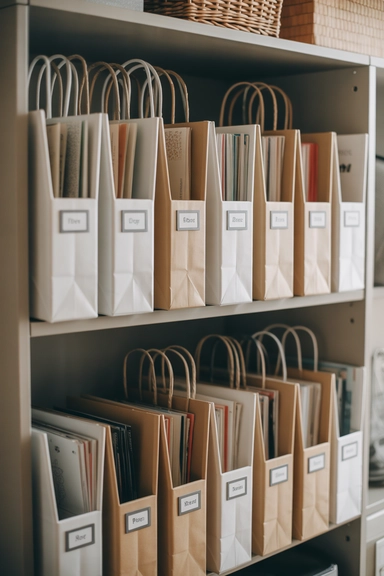
Gift bags often collapse into messy stacks unless they’re stored upright. Use magazine holders or file organizers to separate bags by size and style. Standing them vertically keeps handles from tangling and allows quick visual selection. Effective gift wrap storage ideas treat gift bags like documents—filed, visible, and easy to retrieve.
Group bags by occasion or color to streamline access. Place frequently used sizes toward the front and specialty bags behind them. Avoid overstuffing holders, which can bend bag edges. This filing system maintains bag shape and prevents them from being buried under wrapping paper or ribbon bins.
6- Ribbon Storage with Spool Control Rods
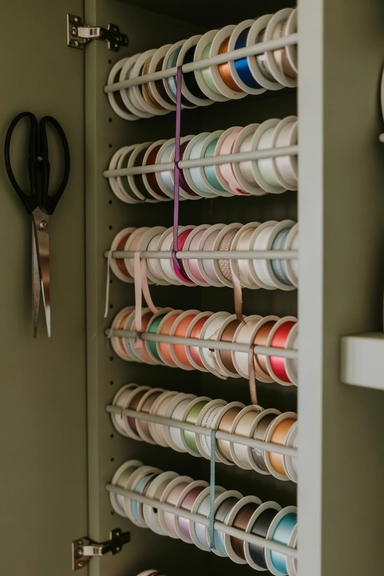
Ribbon quickly becomes unmanageable when spools are tossed into bins where they unwind and tangle. Install horizontal rods inside a cabinet, on a wall bracket, or within a small shelving unit so ribbon spools slide onto the rod and rotate freely. This keeps each roll controlled, visible, and easy to dispense without unraveling. Strong gift wrap storage ideas prevent friction between materials, and spool rods eliminate the constant need to rewind ribbon after every use.
Arrange ribbon by width or color gradient to make selection intuitive during wrapping sessions. Leave small gaps between spools so they spin smoothly instead of rubbing against one another. Store scissors nearby to cut ribbon directly from the rod without removing the spool. This system protects ribbon edges, reduces waste, and keeps decorative accents neat and accessible.
7- Under-Bed Wrapping Paper Storage
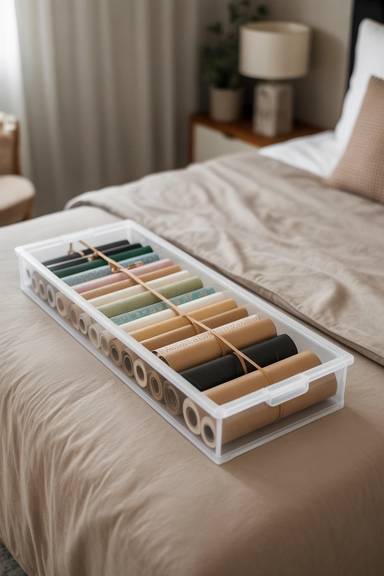
When closet space is limited, flat under-bed containers provide a concealed but structured storage solution. Choose long, low-profile containers designed specifically for wrapping paper rolls so they lie flat without bending. Clear lids allow quick identification without pulling everything out. Among space-saving gift wrap storage ideas, under-bed storage is ideal for apartments or small homes where vertical closet space is limited.
Group rolls by season inside the container and secure them with elastic bands to prevent shifting. Keep lighter accessories such as gift tags or bows in a separate shallow compartment to avoid crushing. Slide the container fully under the bed to maintain a clean visual environment while preserving easy access when wrapping season begins.
8- Closet Shelf Zoning by Category
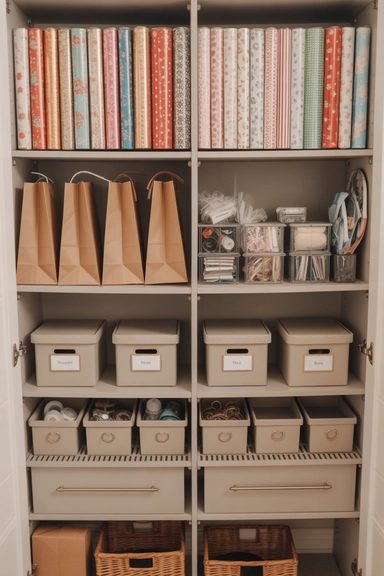
Instead of stacking wrapping supplies randomly, divide closet shelves into defined zones. Dedicate one shelf to wrapping paper rolls, another to gift bags, and another to ribbon and accessories. Clear labeling reinforces these boundaries and prevents cross-category clutter. Well-planned gift wrap storage ideas depend on physical zoning to reduce decision fatigue and maintain order over time.
Keep frequently used supplies at waist or eye level to minimize bending and rearranging. Store backup inventory higher up so it remains accessible but out of the daily workflow. Zoning your shelves ensures that wrapping materials return to predictable spots rather than migrating throughout the closet after each use.
9- Pegboard Wrapping Station Wall
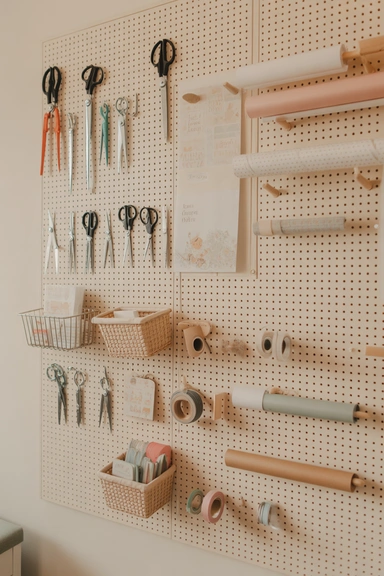
A pegboard mounted inside a closet or craft room creates a customizable wrapping station that keeps tools visible. Hooks can hold scissors and tape dispensers, while baskets store tags and small embellishments. Dowels inserted through pegboard brackets allow wrapping paper to hang vertically for easy dispensing. Creative gift wrap storage ideas often incorporate wall systems that evolve as supplies change.
Organize pegboard sections by task—cutting tools together, decorative accents together, paper rolls aligned in one row. Avoid overcrowding to preserve clarity. A pegboard station not only stores supplies but also establishes a dedicated workspace, reducing the chance that wrapping materials spill into other areas of the home.
10- Clear Storage Bins with Labeling System
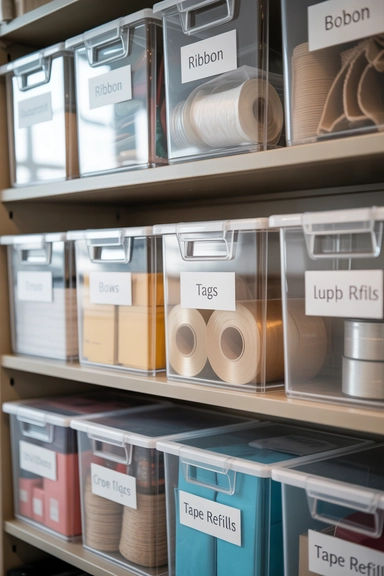
Clear bins provide containment without hiding contents. Store ribbon, bows, gift tags, and spare tape refills inside labeled transparent containers so you can see quantities instantly. Consistent labeling prevents accidental mixing of unrelated supplies. Reliable gift wrap storage ideas depend on visibility combined with structure.
Use identical bin sizes to maintain a clean, uniform shelf appearance. Place labels on both the front and top for quick identification from different angles. Avoid stacking bins too deeply, which can make lower containers difficult to access. A clear bin system protects small supplies while preserving visual order throughout your storage area.
11- Dedicated Wrapping Station Surface with Storage Below
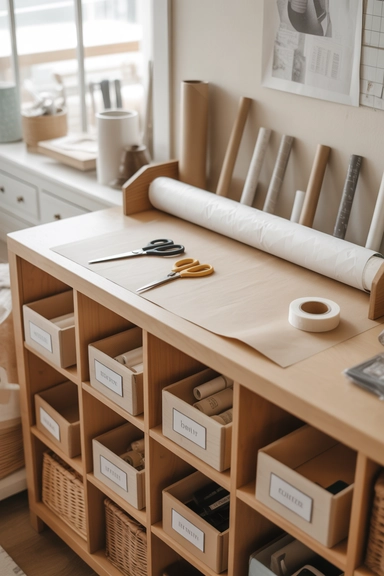
A permanent wrapping surface eliminates the need to clear dining tables or floors whenever gifts need attention. Set up a narrow desk, folding table, or countertop that remains dedicated to wrapping tasks. Beneath this surface, install shelves or rolling bins that hold wrapping paper, ribbon containers, and tool drawers. Effective gift wrap storage ideas often include a stable workspace because it prevents supplies from spreading across unrelated areas during use.
Keep only essential tools on the tabletop and store backups underneath in labeled containers. Position the station near good lighting so pattern selection and cutting stay precise. When wrapping has a fixed location with structured storage below, supplies naturally return to their assigned spots, reducing clutter buildup over time and keeping everything ready for the next occasion.
12- Upright Gift Box Storage with Size Grouping
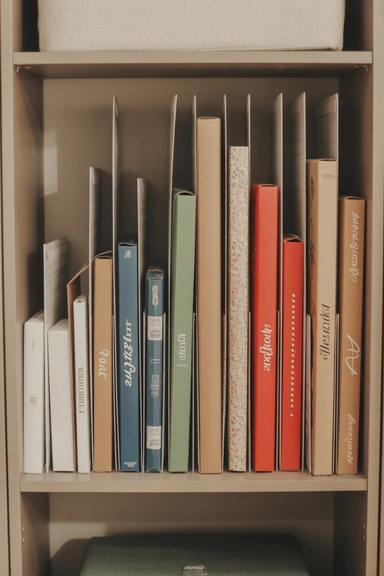
Gift boxes collapse and lose shape when stacked without structure. Store them upright on a shelf or inside tall bins so lids and bases remain aligned and visible. Group boxes by size—small, medium, and large—to simplify selection during wrapping sessions. Detailed gift wrap storage ideas account for rigid packaging materials that require careful handling to remain usable year after year.
Use dividers or shelf separators to keep stacks from leaning into one another. Place frequently used box sizes at mid-level for easy access while storing specialty shapes higher up. By maintaining upright placement and size grouping, you avoid crushing box corners and ensure that reusable packaging stays clean and ready.
13- Gift Tag and Card Organizer System
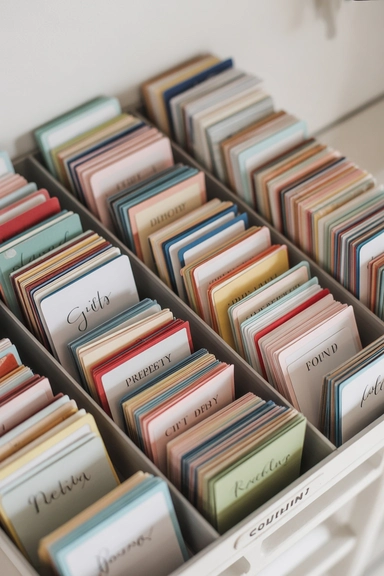
Gift tags and greeting cards often scatter across drawers unless given a dedicated organizer. Use small compartment trays or labeled envelopes stored in a shallow container to keep tags separated by occasion. This method ensures you can locate the right tag quickly without sorting through mixed piles. Practical gift wrap storage ideas include micro-organization systems that support the larger wrapping workflow.
Store blank cards and specialty tags in separate compartments to prevent bending. Keep markers and pens nearby in a small holder so labeling gifts remains efficient. When tags and cards have a defined storage location, they stay visible and ready, reducing last-minute searching and unnecessary repurchasing.
14- Rolling Drawer Units for Multi-Category Storage
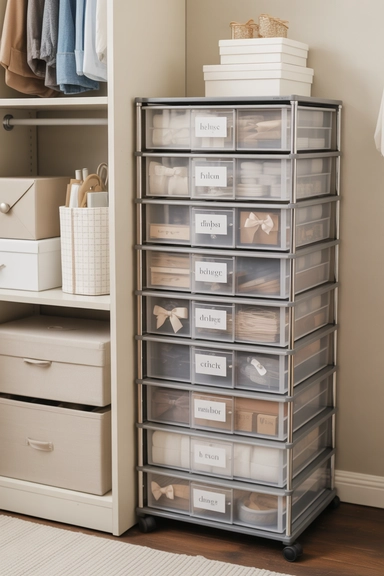
A rolling drawer unit provides flexible storage for multiple wrapping categories without requiring permanent shelving. Each drawer can hold a specific group such as bows, ribbon, tags, or small tools. Clear or labeled drawer fronts make identification easy. Adaptable gift wrap storage ideas benefit from mobility because supplies can be repositioned as storage needs evolve.
Place the unit beside a wrapping station or closet shelf for quick access. Keep heavier items in lower drawers to maintain stability. Because drawers slide out fully, you can view contents without digging through bins. This structure keeps materials contained while maintaining visibility and accessibility.
15- Hanging Gift Wrap Closet Rod System
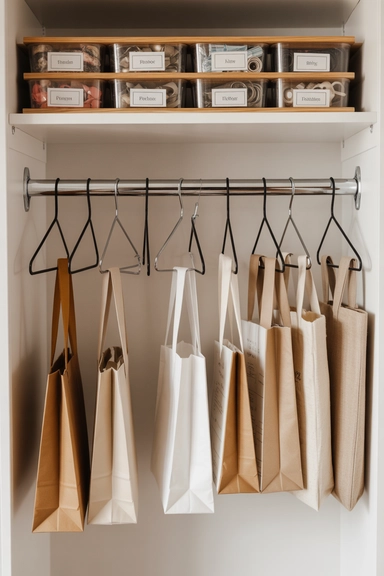
Install a secondary rod in a closet dedicated to wrapping supplies. Hang gift bags, fabric gift sacks, and reusable packaging vertically so they remain smooth and visible. This method keeps delicate materials from folding into cramped bins. Thoughtful gift wrap storage ideas often include vertical hanging systems to preserve shape and maintain order.
Group items by size or occasion and leave space between hangers so handles don’t tangle. Store ribbon containers or tag bins on the shelf above the rod to complete the station. A dedicated closet rod keeps wrapping materials organized while making selection fast and efficient during busy seasons.
16- Compartment Bins for Bows and Embellishments
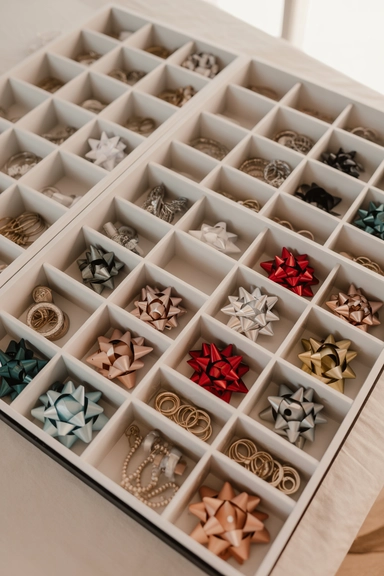
Loose bows, decorative picks, and small embellishments quickly become tangled when stored together. Use shallow compartment bins with adjustable dividers so each type of decoration has its own section. This keeps items visible without allowing them to compress into one another. Structured gift wrap storage ideas treat embellishments as delicate supplies rather than toss-in extras that can survive in crowded containers.
Sort embellishments by size or color to make selection faster during wrapping sessions. Place frequently used bows toward the front and seasonal accents behind them. Avoid stacking heavy items on top of these bins to preserve shape. A compartment system protects decorative elements and prevents them from becoming unusable due to crushing or tangling.
17- Portable Wrapping Supply Tote
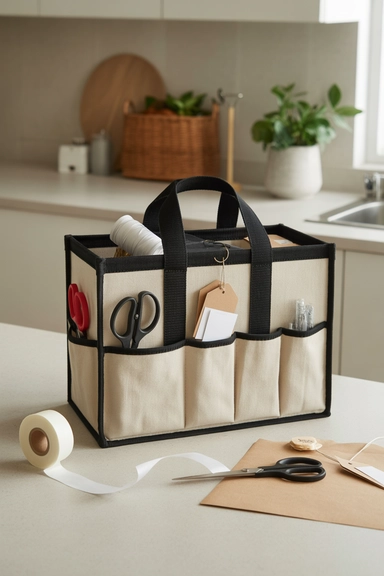
A portable wrapping supply tote solves a common problem: tools migrating across the house and never returning to the main storage zone. Instead of storing scissors in one drawer and tape in another, use a structured caddy with divided compartments that keeps every essential in one controlled container. Tape dispensers, extra tape refills, ribbon cutters, tags, and pens should each have a defined slot. Strong gift wrap storage ideas don’t just organize materials — they reduce setup time and eliminate the friction of searching for missing tools.
Choose a tote with rigid sides so contents don’t collapse into each other during movement. Assign fixed compartments for specific items and maintain that layout every time supplies are returned. Keep only daily-use tools inside and store bulk extras separately to avoid overcrowding. After each wrapping session, return the tote to its designated shelf or closet zone rather than leaving it on a surface. Mobility combined with consistent placement ensures tools stay grouped, visible, and ready without spreading into unrelated storage areas.
18- Labeling System Across All Storage Zones
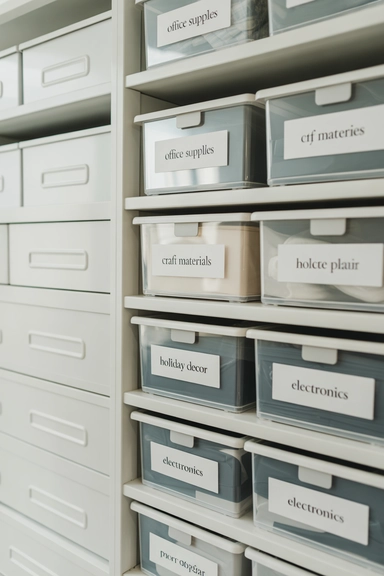
A storage system fails when categories blur. A unified labeling system ensures that every bin, drawer, and shelf clearly communicates its purpose without guesswork. Use consistent fonts, label sizes, and placement locations so identification becomes automatic. Clear labels such as “Ribbon – Everyday,” “Holiday Gift Bags,” or “Extra Tape Refills” eliminate hesitation during wrapping sessions. Among long-term gift wrap storage ideas, standardized labeling protects the structure of the entire setup and prevents materials from drifting into incorrect zones.
Place labels on both the front and top of bins so they remain readable whether stacked or shelved. Avoid vague wording and instead categorize by function or frequency. When new supplies are added, update labels immediately rather than stacking items loosely. Over time, consistent labeling reinforces habits because everyone in the household understands where materials belong. This visual clarity reduces clutter buildup and supports a stable organizational system that holds its structure year after year.
19- Shelf Divider System for Paper Rolls

Wrapping paper stored flat or stacked without separation quickly becomes unstable. Rolls press against one another, slide forward, and develop bent edges from uneven weight distribution. Installing shelf dividers transforms a single shelf into structured vertical compartments where each roll stands independently. This is one of the most protective gift wrap storage ideas because it maintains roll shape, keeps patterns visible, and prevents accidental damage during retrieval.
Adjust divider spacing according to roll thickness so each section holds only a manageable number of papers. Store frequently used designs toward the front and reserve deeper sections for specialty or seasonal prints. Avoid overcrowding by leaving slight clearance between rolls so removal does not disturb adjacent sections. This divider system converts open shelving into a controlled structure that preserves paper integrity while maintaining easy access and long-term organization.
20- Seasonal Rotation Storage Strategy
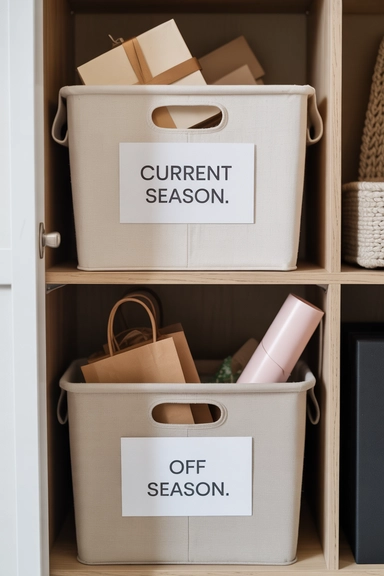
Keeping every roll and bag accessible year-round creates unnecessary visual clutter and slows down decision-making. A seasonal rotation strategy limits active inventory to current needs while storing off-season materials in clearly labeled bins. For example, everyday birthday wrap can stay on primary shelves, while holiday-specific paper moves to higher storage zones. Practical gift wrap storage ideas often include rotation because it reduces overhandling and prevents unnecessary reshuffling.
Use separate containers for each season and label them clearly before storing. Rotate contents at predictable times during the year instead of mixing everything together. When seasonal supplies are returned to storage, inspect for damage and discard unusable items to prevent accumulation. This system keeps primary shelves streamlined, reduces visual noise, and ensures that only relevant materials remain within immediate reach.
21- End-of-Use Reset and Inventory Routine
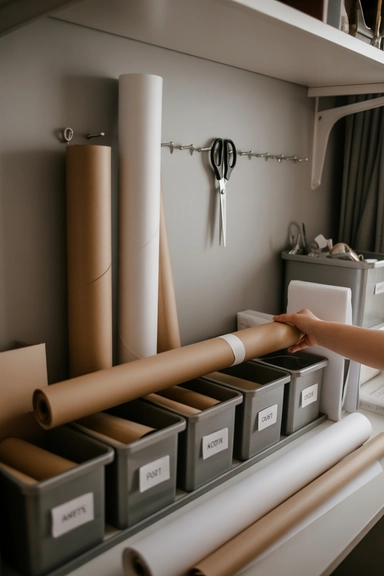
Even the most detailed storage system breaks down without maintenance. An end-of-use reset routine ensures that every wrapping session concludes with structure restored. Realign paper rolls vertically, close ribbon containers, return scissors to their hook, and place tags back into labeled compartments. Strong gift wrap storage ideas rely on consistent habits, not just well-designed bins. Without resetting, materials slowly migrate and compromise the system.
Take a few minutes to check tape levels, straighten bent edges, and discard scraps that no longer serve a purpose. Avoid postponing this step, as delayed resets create cumulative clutter. By committing to a brief inventory and realignment process after each use, you maintain visibility, protect supplies, and ensure that your wrapping station remains efficient and ready for the next occasion.
Conclusion
Keeping wrapping supplies organized isn’t about having more storage space — it’s about creating a system that protects materials and keeps them visible. These gift wrap storage ideas focus on vertical placement, categorized zones, and consistent labeling so nothing gets lost or damaged between uses. Start by organizing one category at a time, establish clear storage locations, and maintain a simple reset routine after each wrapping session. With consistent structure, your wrapping supplies will stay ready, accessible, and easy to manage throughout the year.