
Introduction
Bathroom drawers don’t become messy overnight — they unravel slowly, one misplaced product at a time. The most effective bathroom drawer organization ideas that last focus on defined compartments, depth control, and routine-based zoning instead of simply adding more trays. When skincare, makeup, dental supplies, and grooming tools are layered intentionally, drawers stay structured far longer. Clear boundaries prevent daily-use items from drifting. If you’ve already optimized your cabinet with 22 Medicine Cabinet Organization Ideas That Fit, this guide refines organization right inside your drawers.
1. Custom-Fit Dividers That Lock Categories in Place
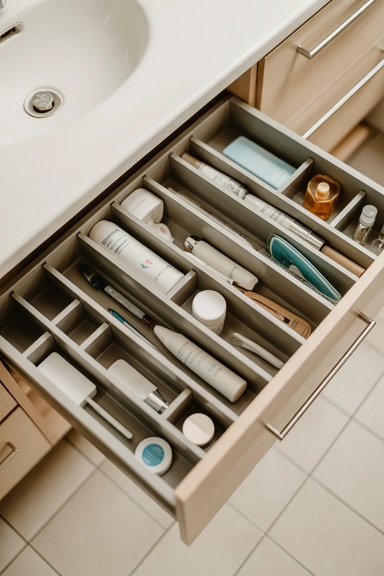
An open bathroom drawer without dividers is guaranteed to collapse. Products slide sideways, tubes overlap, and categories blur together within days. Installing adjustable dividers that fit tightly against the drawer walls creates fixed lanes that physically prevent drift. Instead of reacting to clutter later, you engineer stability from the beginning. Each divider should match the true width of your product grouping — skincare separate from dental, grooming separate from cosmetics — so nothing competes for the same horizontal space.
Measure carefully before placing dividers and avoid oversized compartments that invite random piling. Leave slight breathing room inside each lane so items can be removed without disturbing adjacent sections. Among dependable bathroom drawer organization ideas that last, tight compartment control is foundational because it minimizes daily movement, which is the real cause of long-term disorder.
2. Front-to-Back Routine Mapping That Reduces Disruption
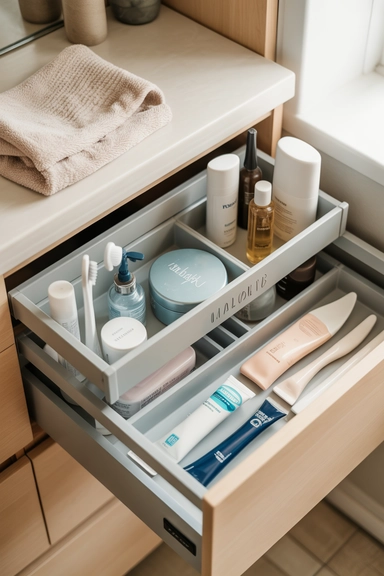
Most drawers are arranged by category but not by behavior. A system that actually lasts mirrors your daily routine from front to back. Items you reach for first each morning — toothbrush accessories, deodorant, contact solution — should sit closest to the drawer edge. Products used later in the sequence can live progressively deeper inside. This prevents unnecessary lifting and reshuffling that slowly breaks alignment.
Physically walk through your routine and place items in that exact order. Keep high-frequency products within immediate reach and low-frequency treatments toward the back. Smart bathroom drawer organization ideas that last align placement with habit flow. When storage follows behavior, movement decreases naturally, and the drawer stays structured without constant correction.
3. Single-Layer Visibility That Eliminates Hidden Clutter
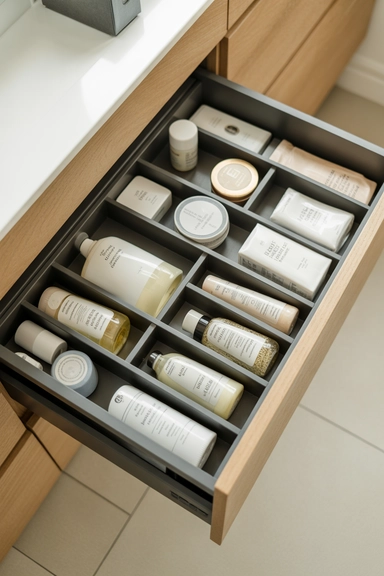
Stacking may feel efficient, but it quietly destroys organization. The moment products sit on top of one another, visibility disappears and forgotten items accumulate underneath. Commit to keeping most products in a single visible layer so everything can be identified at a glance.
If capacity feels tight, reduce duplicates rather than stacking vertically. Use shallow inserts only when absolutely necessary. Sustainable bathroom drawer organization ideas that last protect transparency because hidden products create repeat purchases and clutter cycles. When every item remains visible and accountable, drawers stay organized far longer.
4. Height-Based Grouping That Removes Wasted Space
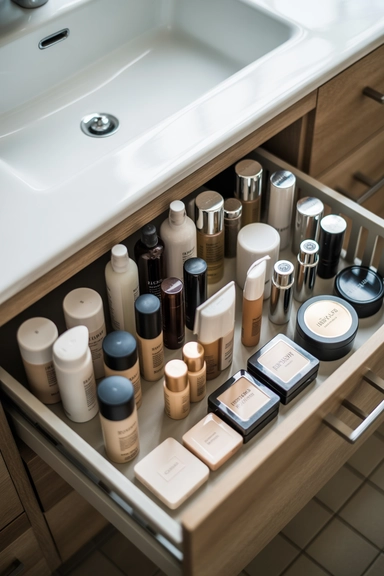
Random height placement creates awkward gaps that invite piling. Group tall bottles together in one rear section, medium tubes in another, and flat compacts toward the front. This proportional zoning removes wasted vertical air pockets and allows compartments to fit tighter without compression.
Height alignment also preserves visual balance when you open the drawer. Nothing leans or topples into neighboring categories. Effective bathroom drawer organization ideas that last consider physical dimension alongside category. When similar heights sit together, the drawer maintains clean structure and resists gradual collapse.
5. Backup Separation That Protects Daily Zones
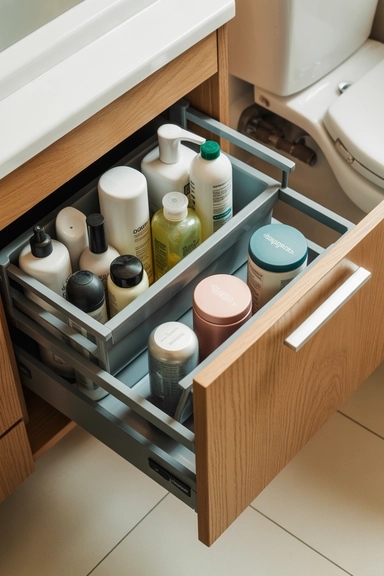
Mixing unopened backups with active daily products is one of the fastest ways a drawer becomes overcrowded. Instead of storing duplicates alongside what you’re currently using, assign a rear compartment or a small bin strictly for reserve inventory. This prevents overflow from creeping into your primary sections and keeps your daily routine area visually light.
Rotate items forward only when the current product is finished. Avoid storing more than one backup per category if space is limited. Practical bathroom drawer organization ideas that last rely on flow control. When active products and reserve inventory are clearly separated, your main compartments stay stable instead of slowly expanding beyond capacity.
6. Shallow Trays for Small, Loose Essentials
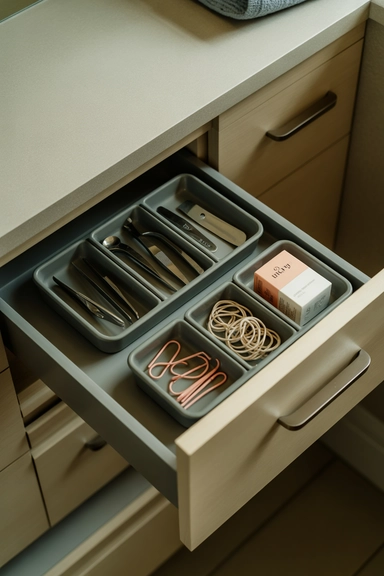
Tiny items like tweezers, nail clippers, hair ties, and sample-size products scatter easily inside open drawers. Shallow trays create controlled micro-compartments that prevent these small essentials from migrating into larger sections and disrupting order.
Choose low-profile trays that don’t consume unnecessary vertical clearance. Group similar small items together rather than mixing unrelated pieces. Strong bathroom drawer organization ideas that last focus on micro-containment because small clutter spreads quickly. When loose items are confined intentionally, the rest of the drawer remains intact and predictable.
7. Non-Slip Liners That Prevent Gradual Drift
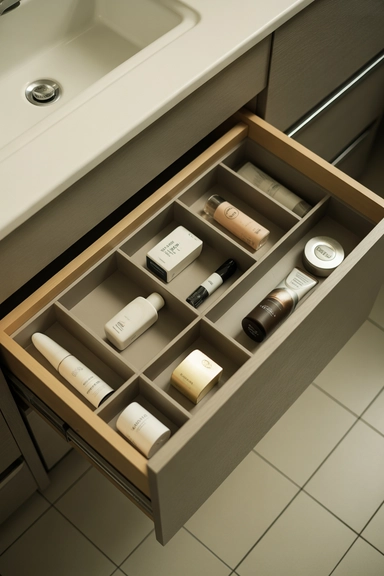
Even perfectly arranged products shift slightly every time a drawer opens or closes. Over time, that subtle movement breaks alignment and causes categories to blur. Installing a non-slip liner underneath compartments stabilizes containers and reduces gradual drift.
Trim the liner precisely to match drawer dimensions for a clean, fitted look. Choose neutral tones that don’t visually compete with products. Reliable bathroom drawer organization ideas that last address structural stability, not just layout. When items stay where you place them, maintenance becomes significantly easier.
8. Dental Care Compartment With Clear Boundaries
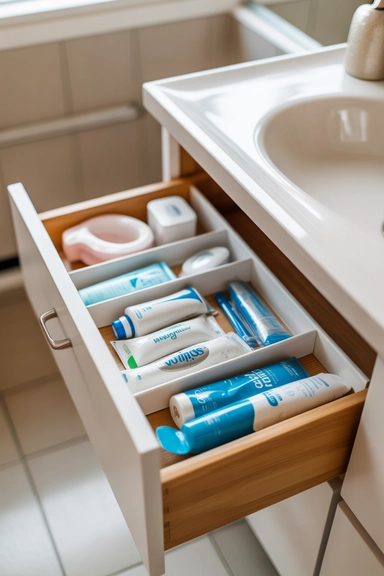
Toothpaste, floss, mouth guards, and whitening products easily spread across multiple compartments without a dedicated zone. Creating one clearly defined dental care section keeps daily-use essentials from mixing with skincare or grooming tools.
Keep this compartment near the front for easy access during rushed mornings. Avoid placing backup tubes here to preserve clarity. Effective bathroom drawer organization ideas that last succeed when each category has a fixed home. When boundaries are obvious, items return to the same spot automatically.
9. Vertical Tool Holders for Hair and Grooming Gear
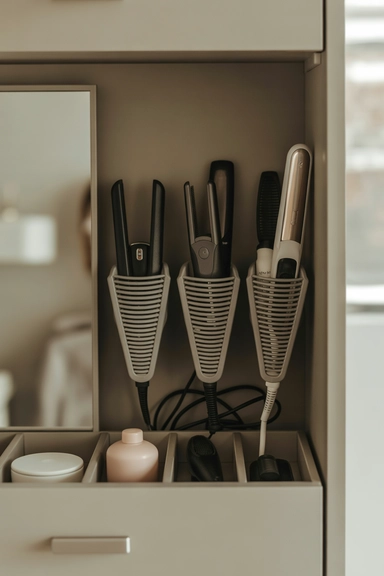
Hair tools like straighteners, curling wands, and grooming trimmers are bulky, irregularly shaped, and often come with long, tangled cords. When laid flat, they take up too much drawer width and end up spilling into neighboring zones. Using vertical holders or compartments inside deep drawers allows these tools to stand upright, saving surface space and reducing clutter.
Wrap cords neatly and secure them with ties or integrated clips before storing. Position the holders toward the back so they don’t interfere with smaller daily-use items at the front. High-function bathroom drawer organization ideas that last contain bulk by using vertical storage and cord control. When large items are corralled properly, your drawer becomes instantly more navigable.
10. Uniform Containers for Cotton and Hygiene Products
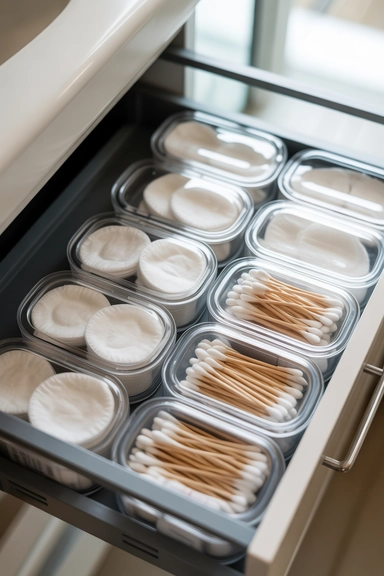
Storing cotton pads, swabs, or wipes in their original packaging leads to inconsistent sizing and inefficient use of space. Transfer these hygiene staples into uniform low-profile containers that stack neatly and fit your drawer layout. This reduces visual noise and allows better grouping of like items.
Label containers subtly if needed, and use transparent lids to keep inventory visible. Store all hygiene tools in the same zone so they’re easy to access without digging. Smart bathroom drawer organization ideas that last rely on shape consistency to streamline both appearance and function. When container sizes match, the drawer becomes calmer and easier to maintain.
11. Morning and Night Zoning That Prevents Routine Overlap
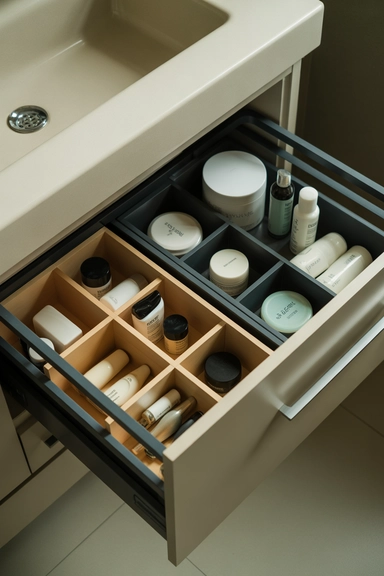
When morning and nighttime products share the same undivided space, they compete for front placement and slowly blend together. Creating distinct zones for AM and PM routines protects structure and keeps daily essentials predictable. Morning products — deodorant, daytime moisturizer, dental care — should live toward the front, while evening treatments can sit deeper in the drawer.
This separation reduces unnecessary shifting and accidental mixing. You’re not reorganizing daily — you’re following a pre-set path. Practical bathroom drawer organization ideas that last anticipate behavior patterns. When drawers reflect how you actually move through your day, structure holds without constant adjustment.
12. Defined Makeup Compartment With Tight Edges
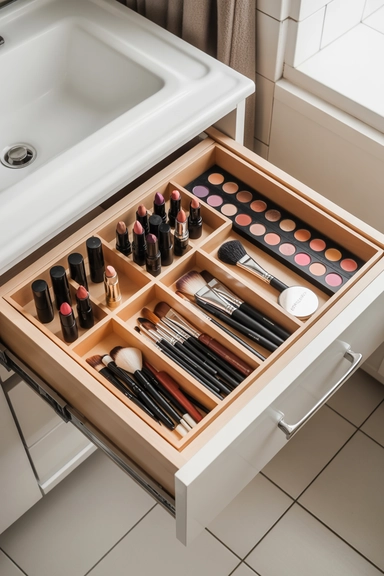
Makeup products vary in size and shape, which makes them especially prone to spreading. A tightly defined compartment with snug dividers prevents compacts, palettes, and lip products from sliding into adjacent sections. Precision fit is key — too much space invites clutter.
Arrange items upright whenever possible to improve visibility. Group similar formats together to maintain clean lines. Strong bathroom drawer organization ideas that last reduce horizontal drift by eliminating extra room. When the edges are tight and intentional, products stay where they belong instead of creeping outward.
13. Deep Drawer Layering With Sliding Inserts
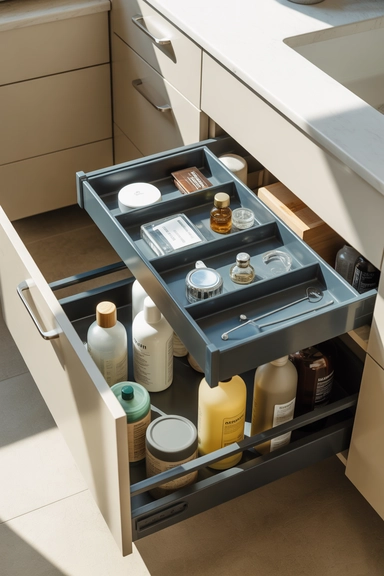
Deep bathroom drawers often look spacious but become chaotic because items get buried underneath others. Installing sliding or lift-out inserts creates a controlled upper layer without permanently dividing the entire drawer. The top layer holds smaller daily essentials, while larger products remain organized beneath.
Choose inserts that glide smoothly and fit the drawer width precisely. Avoid stacking loosely without structure, as that defeats the purpose. Effective bathroom drawer organization ideas that last rely on engineered layering rather than random piling. When each layer has a purpose and easy access, products stay visible and the drawer remains stable over time.
14. Travel Grab Zone That Stops Micro-Clutter
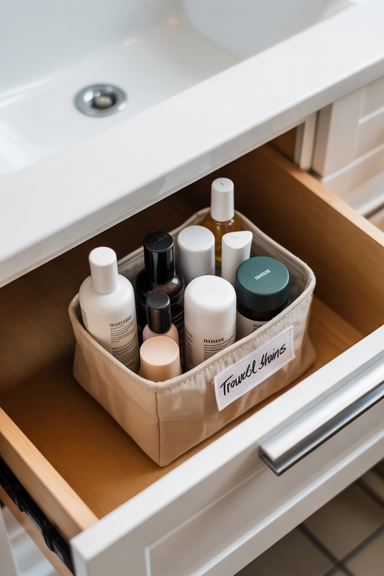
Travel-size items and sample products are notorious for drifting between compartments. Instead of letting them float, create one compact grab zone using a small pouch or shallow bin dedicated only to mini products and travel essentials.
Place this section toward the back so it doesn’t interfere with daily routines. Review and edit it regularly to prevent buildup. Sustainable bathroom drawer organization ideas that last eliminate floating categories. When small, temporary items have a fixed home, the rest of the drawer maintains its structure effortlessly.
15. Weight Distribution That Protects Drawer Hardware
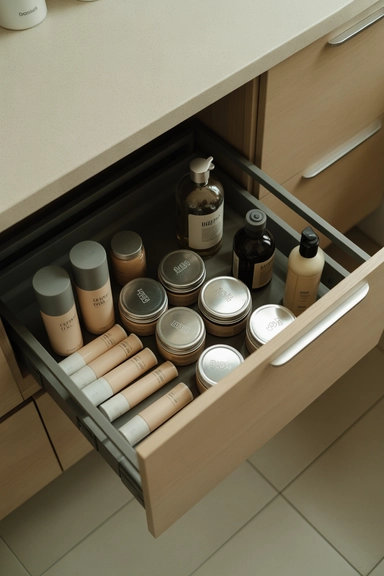
Heavy glass jars and full product bottles placed near the front create uneven pressure on drawer tracks. Over time, this strain causes subtle sagging, which disrupts internal alignment and makes compartments shift. Position heavier items toward the back or center of the drawer to distribute weight evenly and preserve structural stability.
Keep lightweight tubes and compacts near the front where they’re accessed frequently. This simple adjustment extends hardware longevity and prevents gradual tilting that encourages items to slide. Durable bathroom drawer organization ideas that last account for physical mechanics, not just visual arrangement. When weight is balanced, your drawer maintains alignment longer.
16. Slim Cord Channel for Electrical Tools
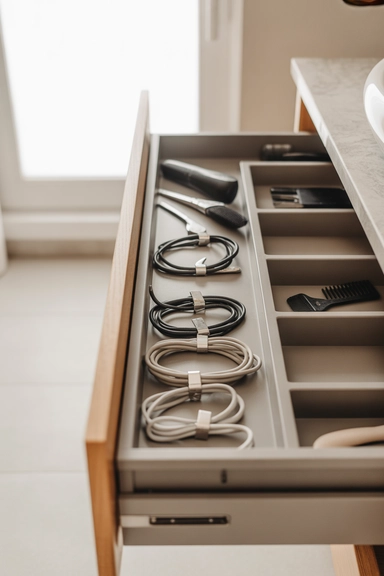
Electric toothbrush chargers, trimmers, and styling tools introduce cords that easily tangle and expand beyond their section. Creating a narrow cord channel using clips or elastic ties keeps wires contained inside one controlled compartment instead of spilling across the drawer.
Wrap cords consistently before storing and avoid overloading the same section with multiple bulky devices. Assign one defined lane strictly for electrical accessories. Practical bathroom drawer organization ideas that last treat cord management as essential infrastructure. When cables stay disciplined, the rest of the drawer remains calm and accessible.
17. Edit Capacity to Protect Long-Term Structure
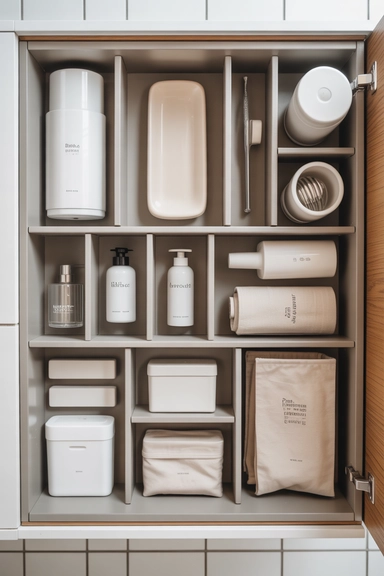
A drawer filled to maximum capacity rarely stays organized. Even the best dividers cannot compensate for overcrowding. Intentionally limiting how much you store inside creates breathing space that absorbs small daily disruptions without collapsing the system. If a compartment feels tight, remove duplicates or expired products rather than compressing items further.
Leave slight gaps between category blocks so products can move without shifting entire sections. This restraint is what makes organization durable. Sustainable bathroom drawer organization ideas that last respect volume limits. When capacity is controlled, structure survives routine use instead of unraveling slowly.
18. Clear Label Reinforcement for Shared Drawers
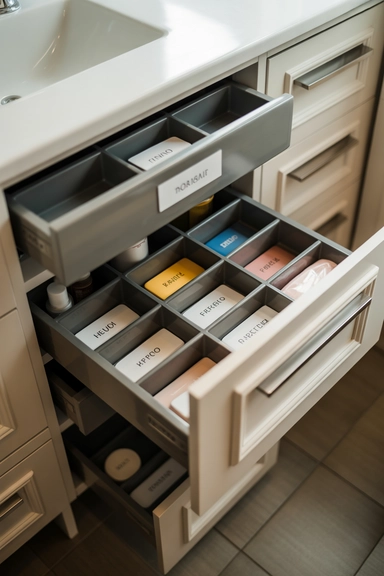
In shared bathrooms, confusion often causes categories to blur. Subtle internal labels inside compartments reinforce boundaries and reduce accidental mixing. Labels do not need to be decorative — simple, clean identifiers are enough to guide placement.
Assign fixed sections to each person if space allows, and keep labeling consistent across the drawer. This visual cue prevents drift over time. Reliable bathroom drawer organization ideas that last use clarity as a preventative measure. When everyone knows where items belong, the drawer remains stable even with multiple users interacting daily.
19. Quick-Access Top Layer for High-Frequency Items
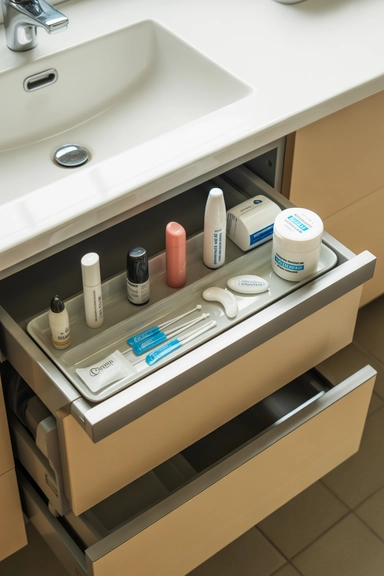
Every drawer has a few products that get used multiple times a day — lip balm, hand cream, floss picks, contact drops. Instead of burying them within larger compartments, create a shallow top-access section that keeps these essentials instantly reachable without disturbing the rest of the drawer.
This can be achieved with a slim tray positioned at the front edge. Limit this zone strictly to high-frequency items so it doesn’t expand uncontrollably. Effective bathroom drawer organization ideas that last reduce repeated disruption. When everyday products have their own quick-access lane, the deeper structure remains untouched.
20. Periodic Micro-Reset to Prevent Slow Drift
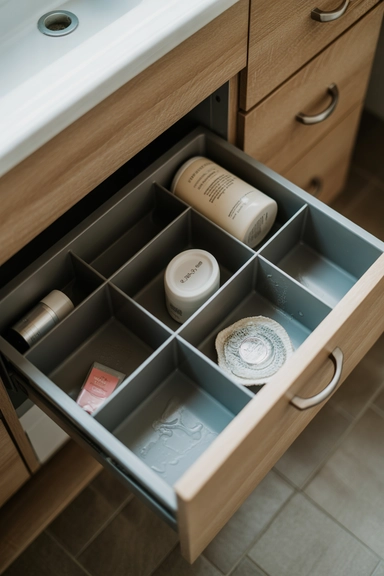
Even the most structured drawer will experience subtle misalignment over time. Instead of waiting for visible clutter, implement a quick monthly micro-reset. Remove contents briefly, wipe surfaces, realign dividers, and discard empties or expired items.
Keep the process under ten minutes so it remains sustainable. This habit reinforces boundaries before they break down. Long-lasting bathroom drawer organization ideas that last include maintenance as part of the design. When resets are built into your routine, drawers remain orderly without major overhauls.
21. Dedicated Grooming Tool Lane With Clear Edges
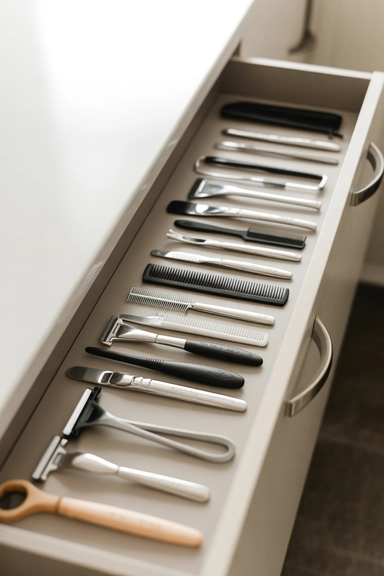
Razors, combs, small trimmers, and brow tools often overlap with skincare compartments unless a specific lane is defined. Creating one tight-edged grooming section prevents these elongated tools from spreading sideways into neighboring categories.
Use a long, narrow divider to match the shape of these items. Keep them aligned parallel instead of stacked. Structured bathroom drawer organization ideas that last prevent horizontal creep by matching compartment shape to product shape. When form follows function, categories remain intact.
22. Remove Packaging That Disrupts Alignment
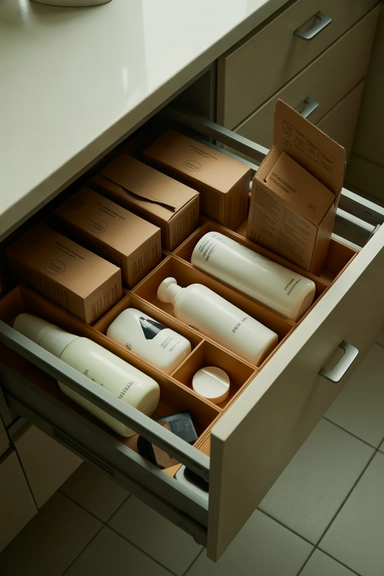
Bulky cardboard packaging and irregular plastic wrappers consume valuable drawer space and create uneven surfaces. Removing unnecessary outer packaging allows products to sit flush within compartments and reduces visual noise.
Keep only instruction inserts that are essential and store them separately if needed. Streamlined products align better and occupy less room. Smart bathroom drawer organization ideas that last favor simplified forms over retail packaging, improving both capacity and consistency.
23. Set a Maximum Category Limit Rule
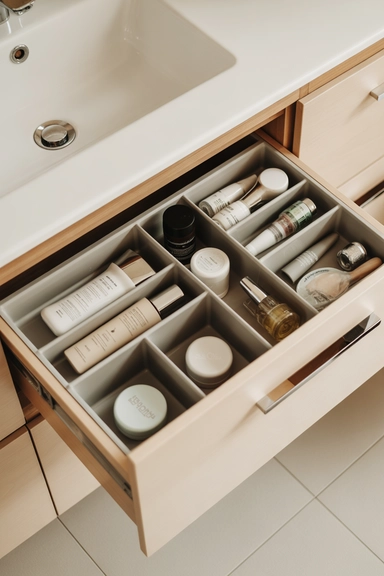
The final safeguard against clutter returning is a simple limit rule: define how many items each category can hold and stick to it. For example, no more than three active serums or two backup deodorants at a time.
When a new item enters, something else exits. This discipline prevents silent accumulation. The strongest bathroom drawer organization ideas that last combine structural layout with volume control. When limits are respected, drawers stay balanced and calm instead of gradually overflowing.
Conclusion
Drawers stay organized when structure is stronger than habit. The most effective bathroom drawer organization ideas that last rely on defined lanes, single-layer visibility, controlled capacity, and routine-based placement — not just pretty trays. When categories have fixed boundaries and volume limits, daily use stops disrupting the system. Protect your structure with small monthly resets and intentional editing. Lasting organization isn’t about perfection; it’s about maintaining clear zones that make returning items automatic instead of optional.