
Introduction
When square footage is limited, furniture can either crowd a room or quietly solve its biggest problems. The best space-saving furniture with hidden storage does both jobs at once — serving its primary function while concealing everyday clutter inside. Instead of adding extra cabinets or bins, you integrate storage directly into beds, sofas, tables, and seating. This keeps visual lines clean and surfaces clear. In compact homes, that difference is dramatic. Smart dual-purpose design allows rooms to breathe while still holding everything you need within reach.
1. Lift-Top Coffee Table with Deep Interior Compartment
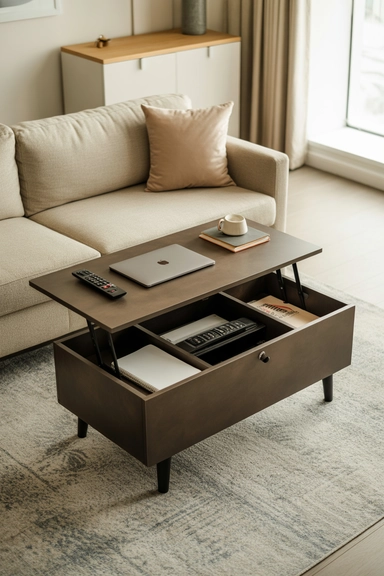
A lift-top coffee table is one of the most practical forms of space-saving furniture with hidden storage. From the outside, it appears streamlined and minimal. Lift the top surface, and it reveals a spacious interior compartment ideal for remotes, laptops, notebooks, and small electronics.
Choose a model with divided sections to prevent loose stacking. The elevated top can double as a temporary work surface or dining tray, eliminating the need for additional side tables. In small living rooms, this single piece reduces surface clutter while adding function without increasing footprint.
2. Storage Bed with Full-Length Under-Mattress Access
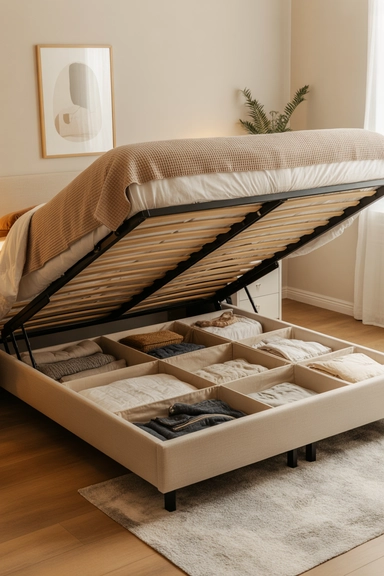
Instead of relying on shallow drawers, a full lift-up storage bed uses the entire mattress base as concealed storage. This allows you to store bulky items like seasonal clothing, spare bedding, or extra pillows without adding dressers or cabinets.
Hydraulic lift mechanisms ensure smooth operation. Internally, divide the cavity with soft bins or wooden partitions to maintain order. Because everything stays hidden beneath the mattress, the bedroom retains a calm and uncluttered appearance.
3. Modular Sofa with Hidden Chaise Compartment
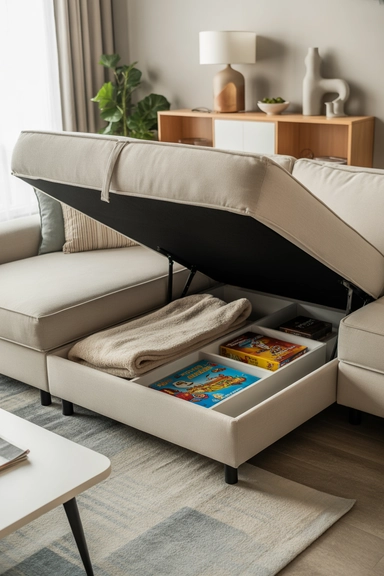
A sectional sofa with a lift-up chaise offers discreet storage beneath the seating cushion. This space works well for blankets, board games, or media accessories. Because it’s integrated into the sofa’s structure, it doesn’t demand extra square footage.
Keep items contained in soft bins inside the compartment to avoid collapse. This design supports compact living rooms where traditional storage furniture would feel bulky or intrusive.
4. Dining Bench with Deep Drawer Base
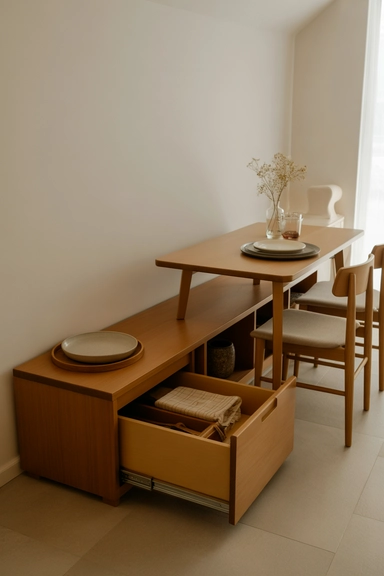
Replace individual dining chairs with a built-in bench featuring deep drawers below the seat. These drawers can store table linens, serving trays, or rarely used kitchen tools. The bench anchors the dining area while adding concealed capacity.
Use full-extension drawer slides to ensure accessibility. Keep compartments structured to prevent overfilling. This combination reduces the need for additional sideboards in smaller dining spaces.
5. Wall-Mounted Fold-Down Desk with Interior Shelves
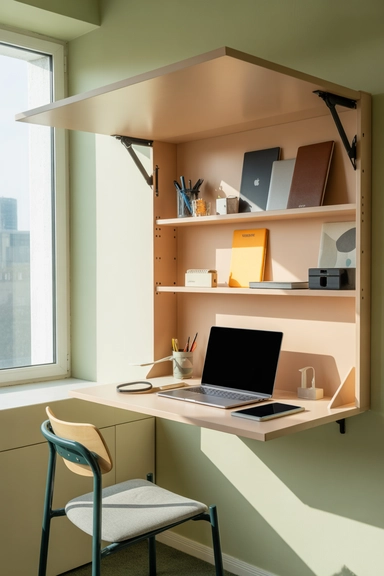
A fold-down desk mounted to the wall provides a compact workspace that disappears when not in use. Inside the cabinet portion, install shallow shelves for notebooks, chargers, and office supplies. When closed, the desk presents as a simple panel.
This solution is ideal for studio apartments or bedrooms without dedicated office space. By folding the desk away, you immediately restore floor and wall openness while maintaining functional storage.
6. Platform Storage Bed with Side Drawers and Lift Panels
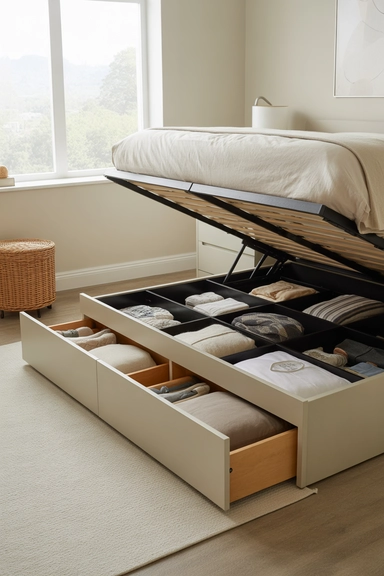
A true platform storage bed goes beyond basic under-bed drawers. The most effective versions combine full-length side drawers with a secondary lift panel at the center, giving you layered access to different storage depths. This allows daily-use items to live in drawers while bulkier or seasonal pieces remain concealed under the lift section.
Drawer construction matters. Choose solid glide hardware with full extension to avoid wasted back space. Inside, divide contents by category — bedding in one drawer, off-season clothing in another. Without internal organization, even the best space-saving furniture with hidden storage becomes inefficient. When structured properly, this single piece can eliminate the need for a separate dresser entirely.
7. Storage Sectional with Multi-Zone Compartments
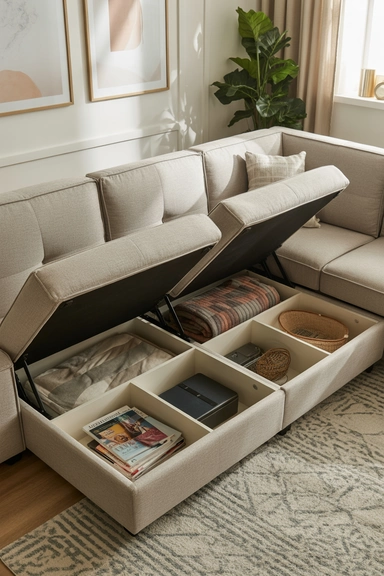
Not all storage sofas are created equal. The most functional designs divide hidden compartments into zones rather than one large cavity. Look for sectionals where the chaise opens upward while adjacent seats include smaller lift panels. This segmentation prevents everything from collapsing into one bulky pile.
Use labeled fabric cubes inside each compartment to maintain separation — electronics in one, textiles in another, entertainment items in a third. Structured interiors ensure fast retrieval and prevent digging. In compact living rooms, a well-designed storage sectional replaces both a blanket chest and media cabinet, reducing overall furniture count without sacrificing capacity.
8. Expandable Dining Table with Concealed Storage Base
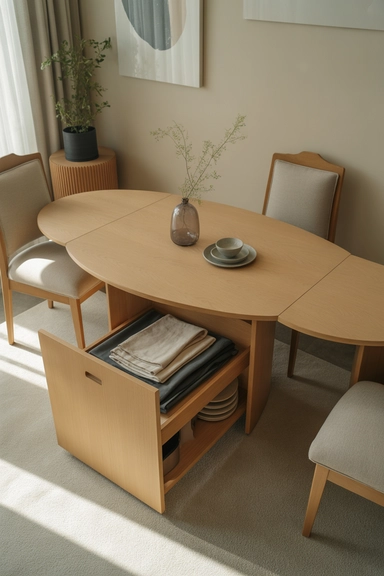
Some expandable dining tables include hidden base compartments beneath the tabletop or within the pedestal column. These areas can store extension leaves, placemats, serving linens, or compact dinnerware. This design eliminates the need to find separate storage for removable leaves, which often end up in closets.
Ensure the compartment is properly ventilated and accessible without dismantling the table. Keep items flat and organized to avoid interference with extension mechanisms. As space-saving furniture with hidden storage, this solution supports homes where dining areas must double as workspaces or entertaining zones without introducing additional cabinetry.
9. Lift-Top Storage Ottoman with Interior Dividers
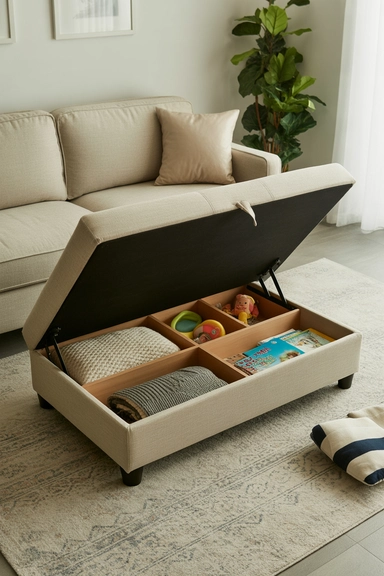
A standard storage ottoman can quickly become a chaotic dumping ground. A higher-function version includes internal dividers or removable trays that create structured compartments. This allows you to separate throws, magazines, children’s toys, or small electronics without stacking them loosely.
Choose an ottoman with a reinforced lid and slow-close hinges for durability. Upholstery should align with surrounding seating to maintain cohesion. Positioned centrally, this single piece can replace a coffee table, extra chair, and storage trunk — three functions in one footprint.
10. Wall Bed System with Integrated Side Cabinets
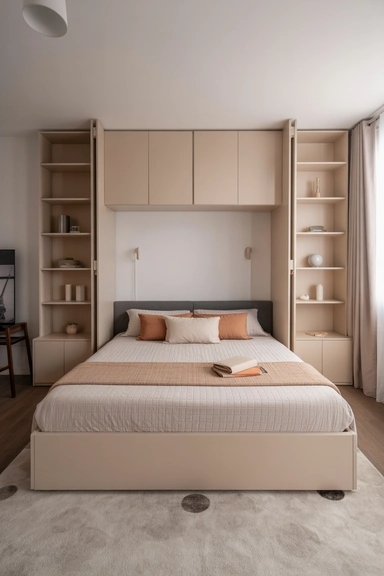
A wall bed system becomes dramatically more powerful when paired with integrated vertical cabinets on either side. These narrow cabinets can include concealed shelving, drawers, or even pull-out desks. When the bed is closed, the wall appears like a built-in unit rather than a sleeping area.
Keep cabinet depth balanced to avoid visual heaviness. Interior shelving should be adjustable to accommodate changing storage needs. This type of space-saving furniture with hidden storage transforms a single room into a dual-purpose environment without sacrificing organization or style.
11. Storage Headboard with Concealed Sliding Panels
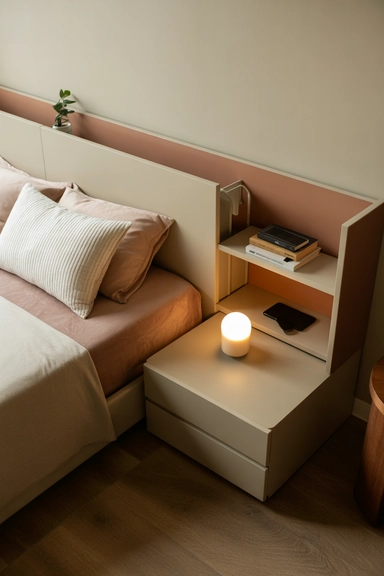
A traditional headboard often becomes a magnet for clutter — stacked books, chargers, water bottles. A storage headboard with concealed sliding or lift-up panels eliminates that surface chaos entirely. Behind the panels, install shallow shelves divided into sections for books, devices, and small personal items. When closed, the front remains visually solid and uninterrupted.
Depth control is critical. Keep compartments shallow enough to prevent double stacking, which quickly leads to disorganization. Include discreet cable cutouts to route chargers invisibly. Properly executed, this type of space-saving furniture with hidden storage replaces bedside tables while maintaining a clean architectural line along the wall.
12. Entryway Console with False Front Panels
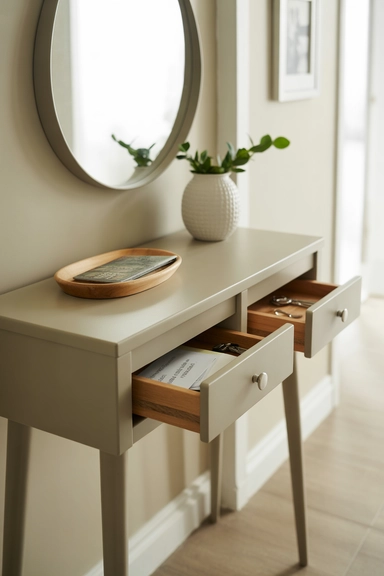
In small homes, entry consoles often appear decorative but lack real capacity. A well-designed version includes false front panels that swing open to reveal slim internal compartments. These can hold mail, keys, small tools, or daily-use accessories without visible trays cluttering the surface.
Internally, use vertical dividers rather than open cavities to prevent papers from collapsing. Keep the exterior profile narrow to preserve walkway space. This solution allows the entry to remain welcoming and minimal while quietly managing high-traffic items that typically create daily mess.
13. Banquette Seating with Full-Extension Deep Drawers
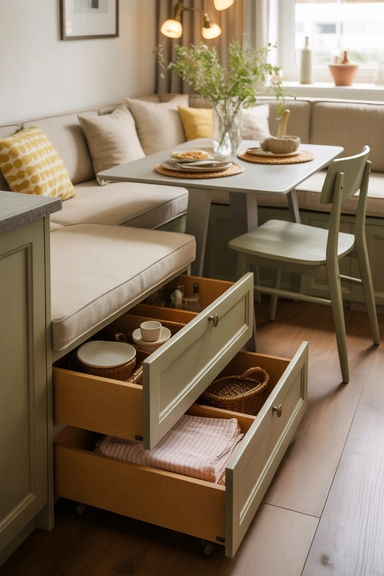
A built-in banquette along a dining wall can conceal surprising volume when equipped with full-extension drawers instead of lift-up lids. Drawers allow access without removing seat cushions and prevent the deep interior from becoming a single inaccessible void.
Segment drawers by function — one for linens, one for small appliances, one for pantry overflow. Use sturdy slides rated for heavier weight if storing dense items. As space-saving furniture with hidden storage, this approach eliminates the need for additional dining cabinetry while preserving an open floor plan.
14. Sideboard with Hidden Pull-Out Work Surface
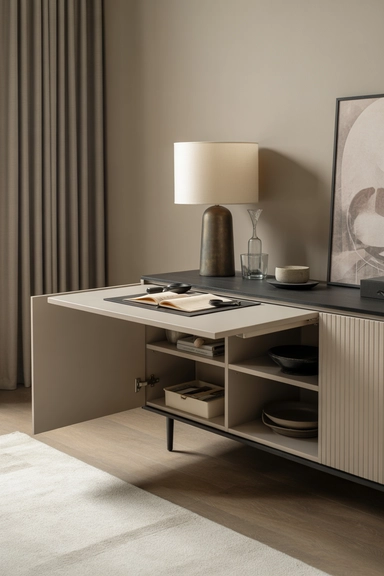
A compact sideboard can incorporate a concealed pull-out shelf that extends into a temporary workspace. Beneath the top surface, hidden compartments store office supplies, serving pieces, or household paperwork. When closed, it appears like standard dining storage.
Keep internal compartments structured with trays or shallow boxes to prevent clutter stacking. The pull-out shelf should glide smoothly and lock securely. This design allows one piece of furniture to support entertaining, work, and storage without increasing visual density in a small living or dining area.
15. Nested Tables with Concealed Interior Storage
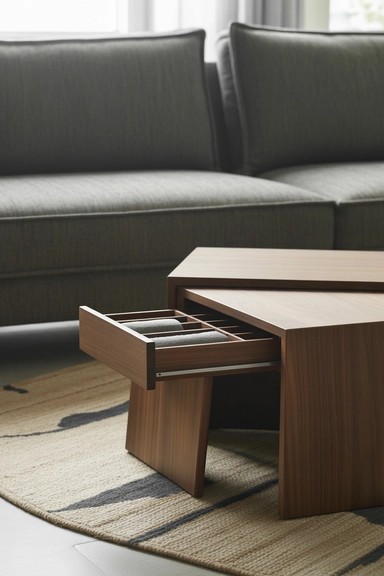
Nested tables typically save space by stacking vertically, but upgraded versions include hollow interiors accessible from discreet side panels. These cavities can hold chargers, remotes, or small accessories that otherwise clutter surfaces.
When nested together, the tables maintain a compact footprint. When separated, they provide flexible surface area. Internal compartments should be shallow and structured to avoid wasted volume. This layered design allows you to expand usable space when needed and collapse it afterward, maintaining both functionality and visual clarity.
16. Staircase Drawers Built Into Each Step
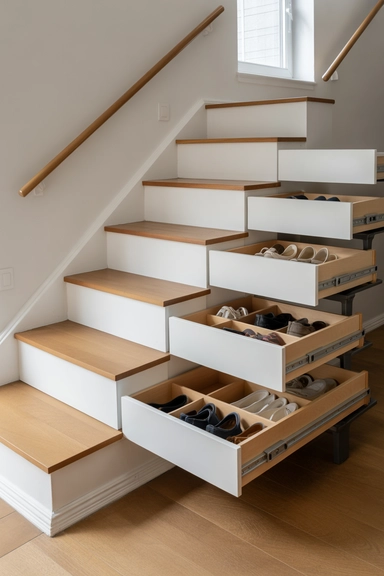
In compact duplexes or loft-style homes, the staircase can quietly become one of the most powerful pieces of space-saving furniture with hidden storage. Instead of leaving the stair structure hollow, each step can function as a pull-out drawer. This transforms vertical circulation space into highly usable storage without expanding the footprint.
Design matters. Drawer fronts should align flush with the risers to maintain clean architectural lines. Use heavy-duty glides to support weight, especially if storing shoes, tools, or pantry goods. Internally, divide each drawer so contents don’t slide when opened. When executed properly, the staircase becomes an organized storage wall disguised as structure.
17. Raised Platform Sofa with Integrated Base Cabinet
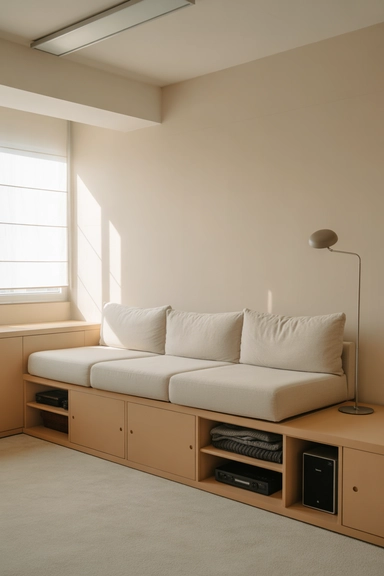
A raised platform sofa built against a wall can conceal cabinet-style compartments along its base. Unlike lift-up seats, side-facing cabinet doors allow access without disrupting seating cushions. This structure works particularly well in studio layouts where living and sleeping areas overlap.
Install adjustable interior shelving to prevent stacking inefficiencies. Keep door fronts minimal and handle-free for a seamless appearance. By elevating the sofa slightly, you gain substantial concealed capacity while maintaining a clean, low-profile seating arrangement that doesn’t visually crowd the room.
18. Coffee Table with Dual-Layer Hidden Compartments
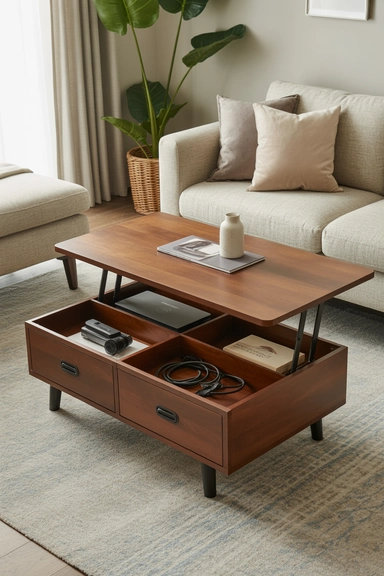
Some advanced coffee tables feature dual hidden compartments: a lift-top section for daily items and a secondary sliding panel beneath for less frequently used objects. This layered concealment prevents everything from occupying one visible zone.
Structure the upper compartment for quick-access items like remotes and notebooks, while reserving the deeper layer for cables or gaming accessories. Internal dividers are essential to prevent disorganized stacking. This approach consolidates multiple small storage needs into one central piece without increasing furniture count.
19. Wardrobe with Concealed Interior Drawer Panels
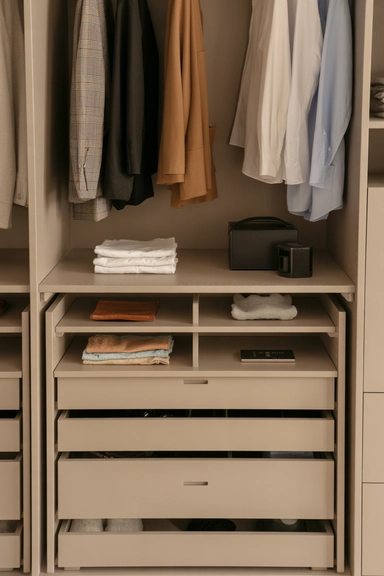
A wardrobe can offer more than hanging space when designed with secondary interior panels that slide open to reveal hidden drawers. Behind the main clothing section, narrow compartments can store valuables, folded garments, or personal documents discreetly.
Keep drawer depths shallow to prevent wasted vertical stacking. Use soft-close mechanisms to preserve structure over time. By layering storage within the wardrobe frame, you increase capacity without adding another chest or cabinet to the room.
20. Bedside Cabinet with Pull-Out Vertical Storage Tower
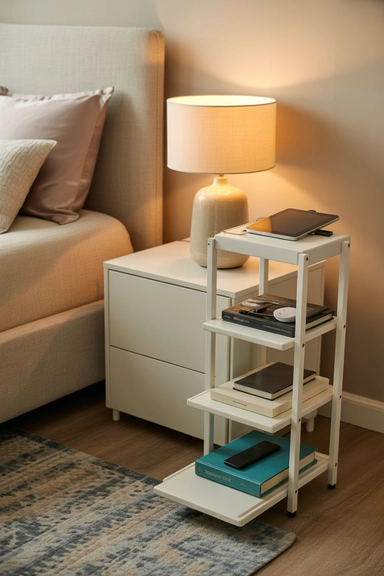
Instead of a single shallow drawer, some bedside cabinets include a vertical pull-out tower concealed within the side frame. This slim tower can hold books, tablets, chargers, and small essentials upright, eliminating stacked clutter.
The tower should glide smoothly and retract fully to maintain a compact footprint. Interior separators prevent items from shifting. This vertical approach maximizes depth while keeping the exterior minimal, making it ideal for narrow bedrooms.
21. Compact Media Unit with Hidden Cable and Device Compartment
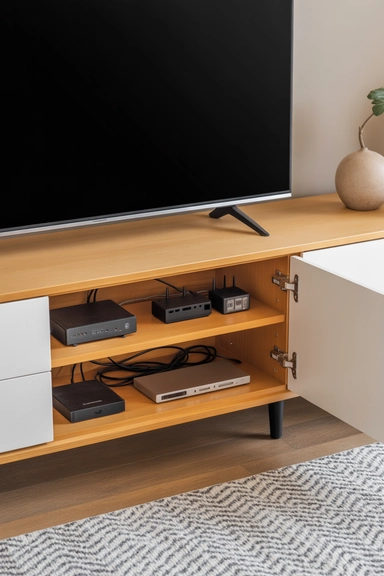
A streamlined media console with concealed rear compartments can house routers, power strips, and streaming devices out of sight. Instead of leaving cables exposed, route them through hidden channels behind sliding panels or lift-up tops.
Keep internal sections ventilated to prevent overheating. Use cord management clips to maintain separation and accessibility. As space-saving furniture with hidden storage, this unit reduces visual clutter in living areas while maintaining full technological functionality.
Conclusion
Space-saving furniture with hidden storage works best when it replaces, rather than supplements, additional pieces. Each item should absorb clutter internally while preserving open floor space and clean lines. Prioritize layered compartments, full-extension access, and internal dividers to prevent concealed chaos. When storage integrates seamlessly into structure, small homes feel intentional, breathable, and dramatically more spacious without sacrificing daily practicality.