
Introduction
Tupperware chaos rarely comes from having too many containers; it comes from storing mismatched shapes, sizes, and lids without a system that reflects daily kitchen use. When containers slide, stack poorly, or separate from their lids, cabinets become frustrating even when they are technically full of storage. Effective Tupperware organizing ideas focus on containment logic, visibility, and controlled access rather than simply adding bins. When containers are stored in a way that supports how they are grabbed, stacked, and returned after use, cabinet disorder drops quickly. This approach becomes far more effective when paired with kitchen cabinet organization ideas that create clear storage boundaries.
1. Container-First Storage That Prevents Lid Chaos
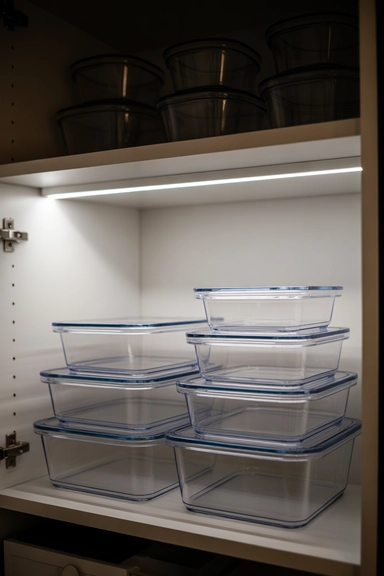
One of the most effective Tupperware organizing ideas starts by prioritizing container storage before addressing lids. When containers are stacked randomly, lids have nowhere logical to return, which is why they end up drifting across drawers and shelves. Organizing containers by size and footprint creates a stable foundation that supports everything else in the system.
Stacking should be limited to short, stable piles that can be accessed without removing multiple items. Overstacking increases friction and discourages proper return. In small kitchens, container-first storage reduces cabinet overflow. In larger kitchens, it keeps systems predictable. Once containers are controlled, lid organization becomes significantly easier to maintain.
2. Lid Separation Systems That Reduce Daily Frustration
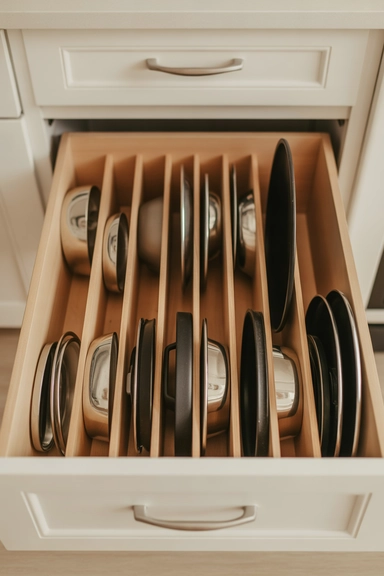
Lids cause most cabinet chaos because they vary in shape and resist stacking. Effective Tupperware organizing ideas treat lids as their own category rather than forcing them to follow container logic. Vertical storage using dividers or narrow bins allows lids to stand upright, making them visible and easy to grab.
The key is limiting movement. Loose bins allow lids to slide and collapse into piles. Dividers that match lid width keep categories intact. In small kitchens, vertical lid storage prevents drawer crowding. In larger kitchens, it centralizes lids instead of scattering them across cabinets. Separating lids reduces daily friction more than almost any other change.
3. Drawer-Based Systems That Eliminate Deep Stacking
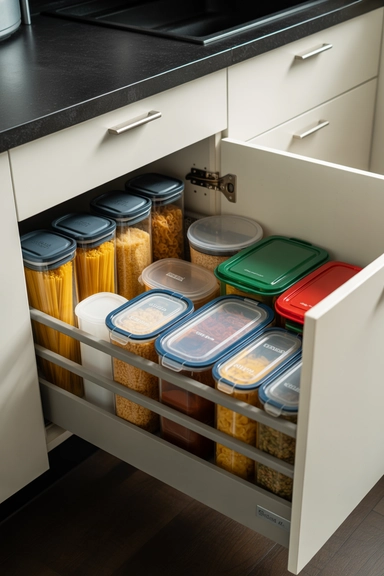
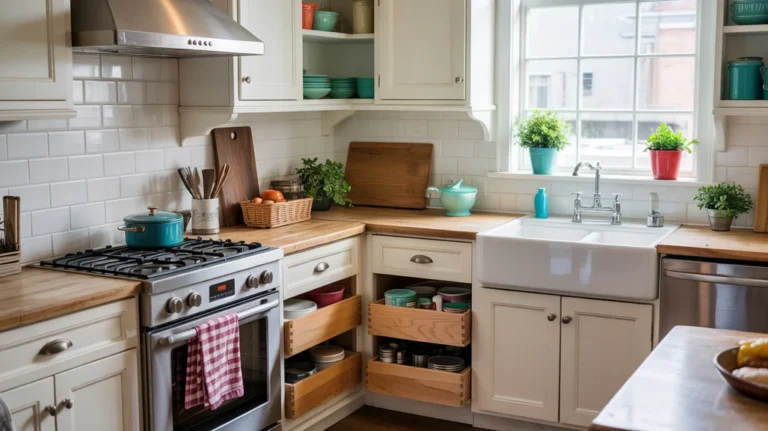
Deep cabinets encourage stacking, which leads to instability and constant rearranging. Drawer-based Tupperware organizing ideas reduce chaos by keeping containers in a single visible layer. Pull-out drawers or cabinet drawers allow access without removing items above or behind others.
Drawer systems work best when sized to container depth. Oversized drawers invite clutter, while shallow drawers enforce restraint. In small kitchens, drawers make limited space more usable. In larger kitchens, they maintain order across larger collections. Drawer-based systems shift storage from vertical guessing to horizontal clarity.
4. Size-Based Grouping That Stops Random Piling
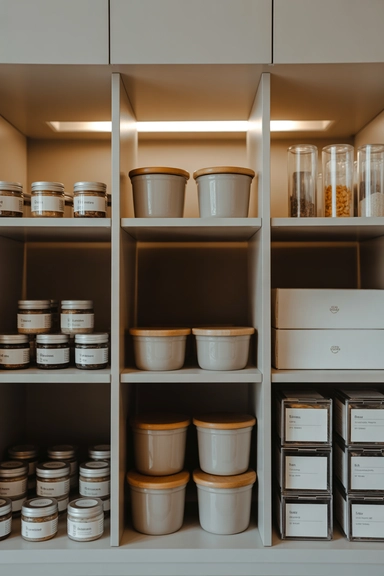
Grouping containers by size is one of the simplest but most overlooked Tupperware organizing ideas. When different sizes are mixed, stacks become unstable and lids no longer align. Size-based grouping creates uniform stacks that are easier to access and return after use.
This system also reduces decision fatigue. When containers are grouped, selecting the right size becomes faster and cleaner. In small kitchens, grouping prevents overcrowding. In larger kitchens, it keeps collections from spreading across multiple shelves. Size-based logic turns cabinet space into a predictable system instead of a dumping ground.
5. Shelf Dividers That Keep Stacks From Collapsing
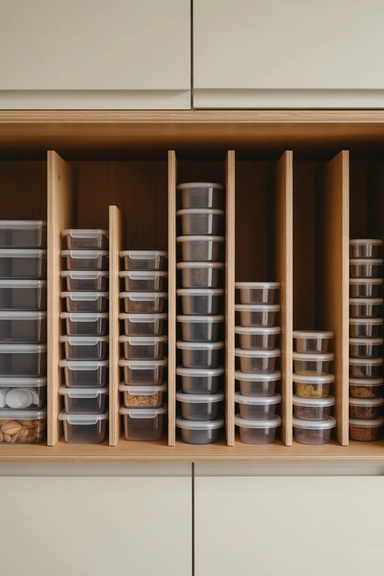
Shelf dividers add structure to Tupperware storage by preventing stacks from shifting sideways. Without dividers, containers lean, slide, and eventually collapse into cluttered piles. Dividers create defined lanes that maintain order even as containers are removed and returned.
Divider spacing should match the footprint of container stacks. Too much space encourages drift, while tight spacing keeps stacks upright. In small kitchens, dividers maximize cabinet efficiency. In larger kitchens, they preserve order across wider shelves. Dividers turn passive shelves into controlled storage systems.
6. Vertical Container Storage That Uses Cabinet Height Wisely
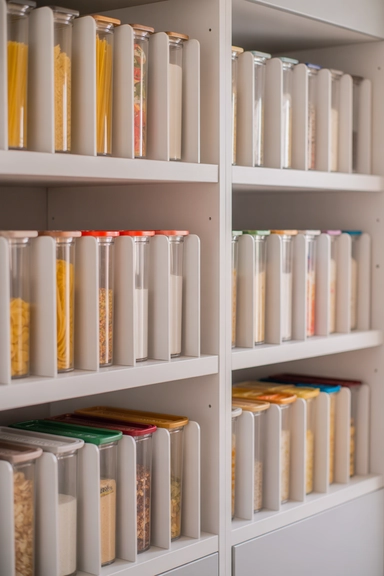
Vertical storage is one of the most effective Tupperware organizing ideas when cabinet height is underused. Instead of stacking containers flat, storing them upright on edge allows each piece to be accessed without disturbing others. This approach reduces sliding and eliminates the need to reshuffle stacks every time one container is removed.
Vertical systems work best with file-style dividers or narrow bins that keep containers aligned. Without structure, upright storage quickly collapses. In small kitchens, vertical storage frees shelf depth. In larger kitchens, it improves visibility and keeps containers consolidated rather than spread across multiple cabinets.
7. Dedicated Lid Zones That Keep Matching Simple
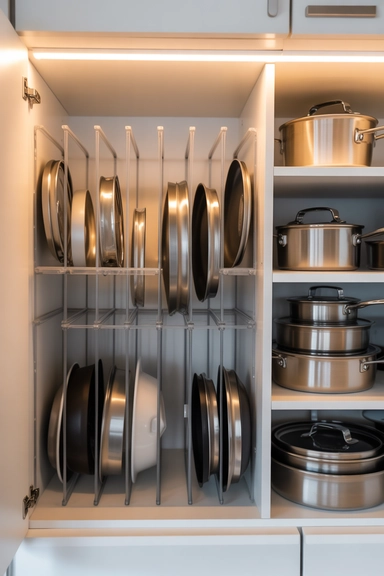
Lids create chaos when they float between drawers and shelves without a fixed home. Dedicated lid zones solve this by assigning lids a single, clearly defined location near container storage. This proximity reduces mismatching and speeds up daily use.
Effective lid zones rely on orientation and spacing. Standing lids vertically makes shapes easier to identify, while dividers prevent slumping. In small kitchens, a compact lid zone replaces multiple cluttered drawers. In larger kitchens, it prevents lids from migrating into unrelated storage areas. Clear zones reinforce consistency.
8. Pull-Out Cabinet Inserts That Improve Visibility
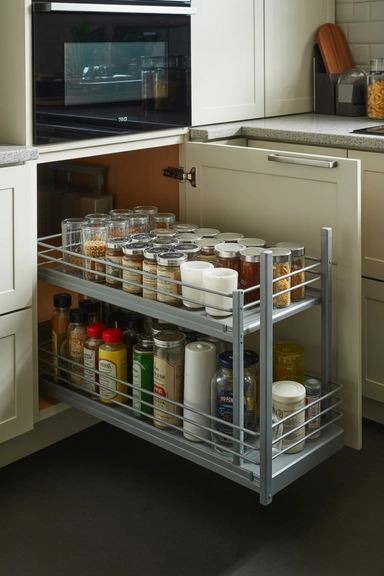
Pull-out inserts transform deep cabinets from clutter traps into usable storage. Instead of reaching into dark spaces and shifting stacks, containers slide out fully into view. This improves access and reduces the likelihood of items being left out after use.
Pull-out systems should be shallow enough to limit stacking height. Overly deep inserts recreate the same problems as shelves. In small kitchens, pull-outs maximize every inch. In larger kitchens, they maintain order across larger collections. Visibility is the key advantage that keeps these systems functional.
9. Uniform Container Sets That Simplify Organization
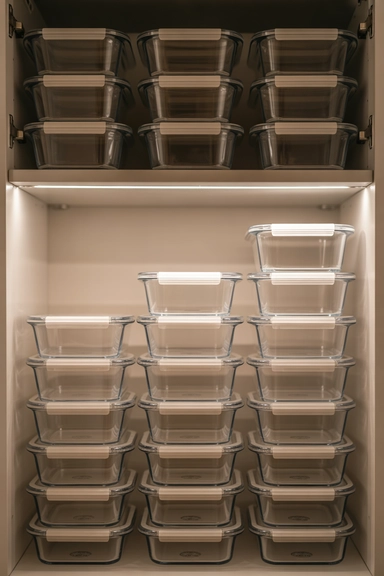
Mixed container brands and shapes make organization harder than it needs to be. Uniform container sets stack more cleanly, share lid sizes, and reduce storage complexity. While not always practical to replace everything at once, gradually standardizing improves long-term organization.
Uniformity reduces decision-making and speeds up cleanup. In small kitchens, it limits the number of storage configurations needed. In larger kitchens, it keeps systems scalable. Simplified shapes reduce friction and support every other organizing strategy in the cabinet.
10. Capacity Limits That Prevent Cabinet Overflow
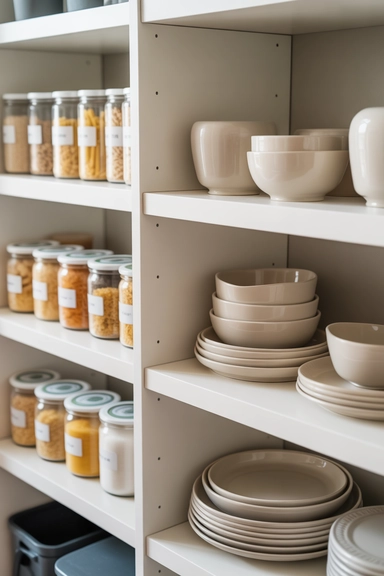
One of the most effective but overlooked Tupperware organizing ideas is setting firm capacity limits. Cabinets without limits absorb clutter silently, leading to overcrowding and frustration. Defining how many containers can fit comfortably prevents gradual overflow.
Capacity limits force intentional choices. When space is full, something must leave before something new enters. In small kitchens, this prevents cabinets from becoming unusable. In larger kitchens, it keeps collections reasonable. Limits protect organization from slow, unnoticed breakdown.
11. Shallow Shelf Storage That Keeps Containers in One Layer
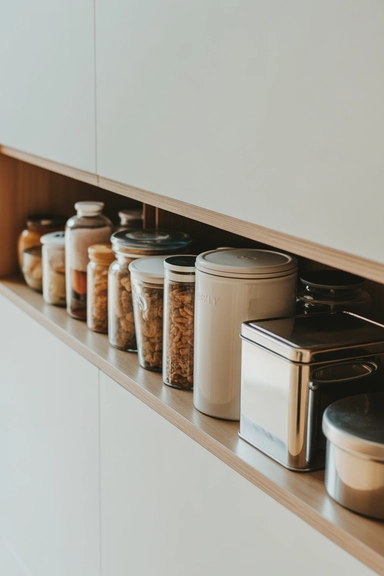
Shallow shelves are highly effective for Tupperware organizing ideas because they prevent containers from being stacked too deeply. When containers sit in a single layer, every piece remains visible and accessible, reducing the need to pull items out just to reach what is behind them. This immediately lowers daily friction and keeps cabinets from unraveling after repeated use.
Shelf depth should closely match container size. Excess depth encourages double stacking, which quickly leads to sliding and collapse. In small kitchens, shallow shelves maximize limited cabinet space. In larger kitchens, they maintain clarity across wide cabinets that would otherwise become cluttered over time.
12. Labeling Systems That Reduce Guesswork and Mismatch
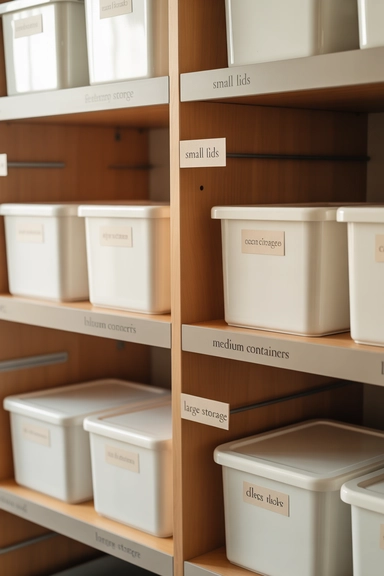
Labeling is often dismissed as unnecessary, but it plays a practical role in Tupperware organizing ideas when multiple sizes and sets exist. Labels help reinforce where containers and lids belong, especially in shared households where not everyone follows the same habits. Clear labeling reduces mismatches and speeds up cleanup.
Labels work best when they are simple and consistent. Overly detailed labels create friction and are ignored. In small kitchens, labels prevent trial-and-error searching. In larger kitchens, they maintain order across bigger systems. Labeling supports habit by reducing mental effort rather than adding rules.
13. Stack-and-Nest Strategies That Reduce Cabinet Volume
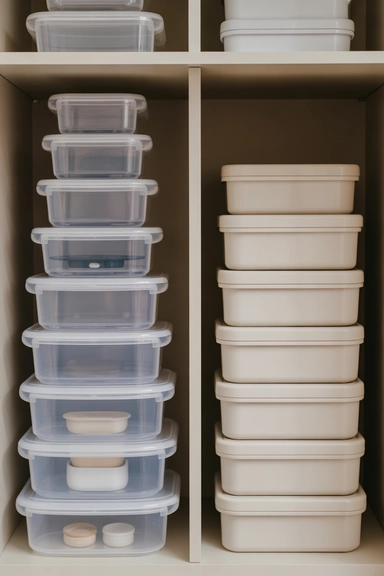
Not all containers should be stacked the same way. Smart Tupperware organizing ideas distinguish between stacking and nesting based on container design. Containers that nest securely reduce volume without compromising stability, while stackable containers benefit from limited-height stacks.
This distinction prevents cabinets from becoming top-heavy and unstable. In small kitchens, nesting frees space quickly. In larger kitchens, it keeps collections compact and predictable. Understanding which containers nest well and which should stack improves storage efficiency without forcing uniformity.
14. Storage That Keeps Frequently Used Containers Front and Center
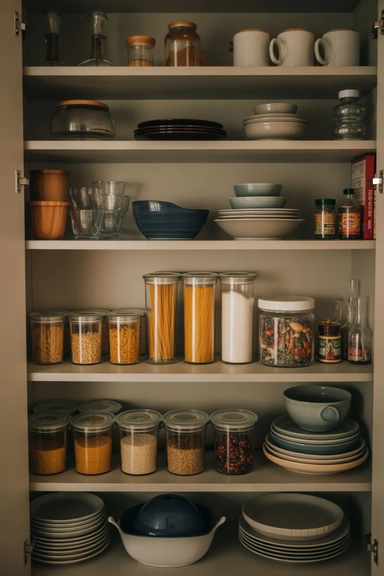
Daily-use containers should never be buried behind specialty or rarely used items. Organizing ideas that prioritize frequency of use reduce cabinet disruption and prevent clutter from spreading during busy routines. When frequently used containers are easy to reach, they are also easier to return.
Front-facing placement or lower shelves work best for high-rotation containers. In small kitchens, this prevents constant reshuffling. In larger kitchens, it preserves order across multiple cabinet zones. Frequency-based placement aligns storage with real behavior instead of idealized organization.
15. Closed Storage That Hides Visual Chaos Without Hiding Function
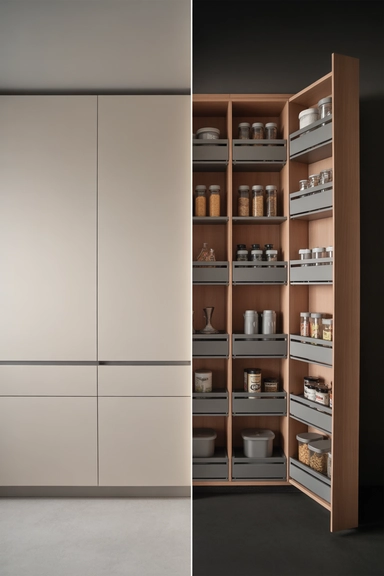
Closed cabinets are often blamed for hiding clutter, but they can be effective when internal organization is strong. Closed storage absorbs visual chaos while protecting containers from dust and light. The key is ensuring that interior systems remain structured and accessible.
Internal dividers, drawers, or inserts prevent closed cabinets from becoming dumping grounds. In small kitchens, closed storage creates visual calm. In larger kitchens, it balances open shelving elsewhere. When interior order exists, closed storage becomes a strength rather than a liability.
16. Systems That Make Containers Easy to Return After Use
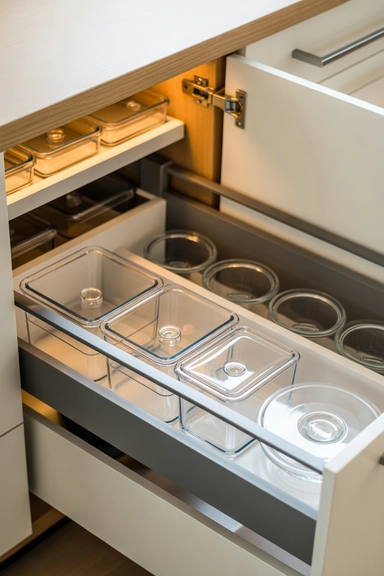
Tupperware organization often fails at the return stage rather than during setup. When containers are hard to put back, they are left on counters or shoved into the nearest cabinet. Effective Tupperware organizing ideas reduce friction at this step by making storage intuitive and forgiving. Containers should slide back into place without precision stacking or rearranging other items.
This is where internal cabinet structure matters most. Slots, shallow drawers, or clearly defined sections guide containers back automatically. This approach works especially well when paired with kitchen drawer organization ideas that keep storage intuitive, reinforcing habits instead of relying on discipline. When return is easy, chaos stops accumulating.
17. Layouts That Prevent Containers From Migrating Between Cabinets
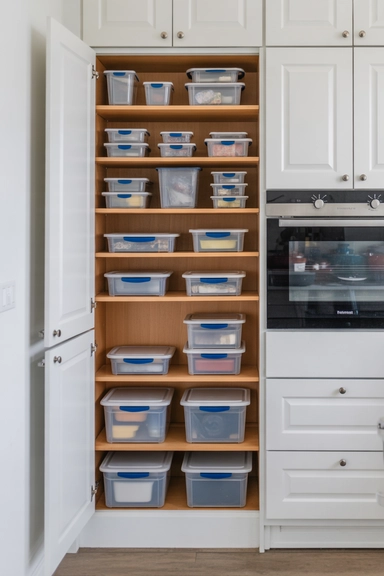
One subtle source of cabinet chaos is container migration. When Tupperware storage lacks a clear boundary, containers slowly spread into adjacent cabinets, drawers, or pantries. Over time, this fragmentation makes it harder to locate matching pieces and maintain order.
Effective organizing ideas establish a single, dedicated zone for all containers and lids. This zone should be sized appropriately to discourage overflow. In small kitchens, containment prevents spillover into unrelated storage. In larger kitchens, it preserves system integrity. Clear boundaries stop gradual disorder before it becomes visible clutter.
18. Organizing Ideas That Account for Different Container Materials
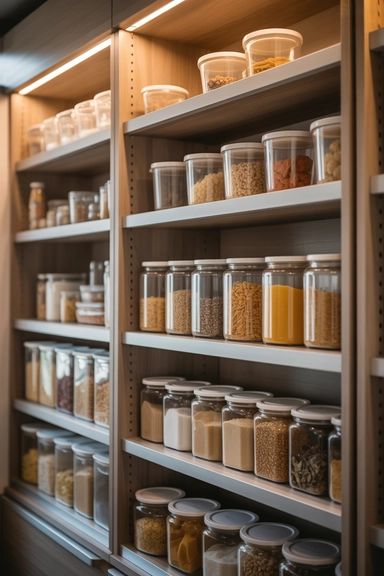
Not all containers behave the same way in storage. Glass, plastic, and silicone containers vary in weight, rigidity, and stacking ability. Treating them identically leads to instability and wasted space. Smart Tupperware organizing ideas account for these differences instead of forcing uniform solutions.
Heavier glass containers benefit from lower shelves or drawers, while lightweight plastic can be stored higher. Flexible silicone containers require containment to prevent collapse. In small kitchens, material-aware storage improves safety. In larger kitchens, it improves efficiency. Matching storage strategy to material prevents constant readjustment.
19. Rotation-Friendly Storage That Supports Daily Use
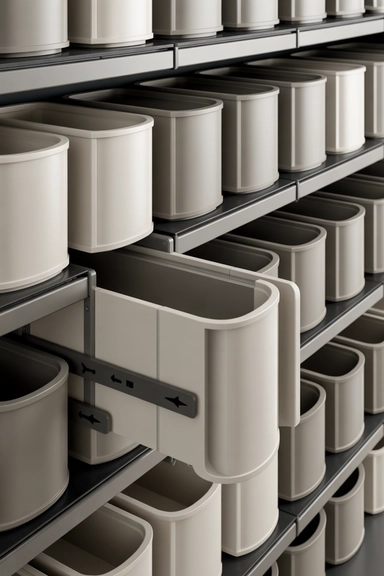
Containers that are used daily need to move through storage without disrupting the system. Organizing ideas that support rotation allow containers to be taken and returned without shifting entire stacks. This prevents disorder during busy routines.
Front-to-back or side-by-side access works better than bottom-stacked systems. When containers cycle naturally, older pieces remain in use instead of being buried. In small kitchens, this keeps storage functional. In larger kitchens, it maintains balance across bigger collections. Rotation-friendly layouts support hygiene and long-term order.
20. Storage That Makes Cabinets Feel Finished, Not Temporary
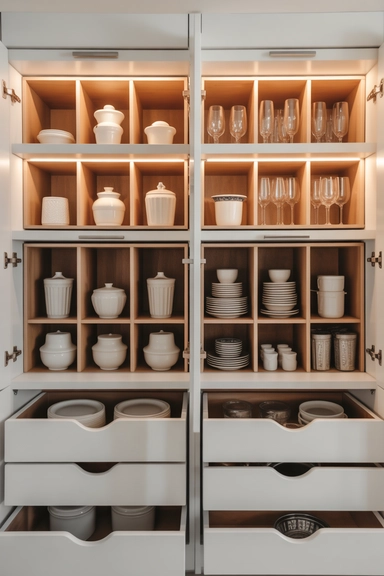
Cabinet chaos often persists because storage feels improvised rather than intentional. When bins, stacks, and inserts lack alignment or cohesion, the cabinet never feels complete. The most effective Tupperware organizing ideas treat cabinet interiors as finished spaces rather than temporary holding zones.
Consistent spacing, aligned dividers, and matched containers create visual and functional order. In small kitchens, this reduces stress and wasted motion. In larger kitchens, it prevents drift and underuse. Finished storage encourages maintenance because it looks and feels worth preserving.
Conclusion
Stopping cabinet chaos requires more than extra bins or quick fixes. Tupperware organizing ideas work when they reflect how containers are actually used, returned, and rotated in daily kitchen routines. By controlling stacking, separating lids, setting boundaries, and reducing friction at every step, cabinets remain functional instead of frustrating. The most effective systems quietly guide behavior, making order the default rather than something that needs constant correction.