
Introduction
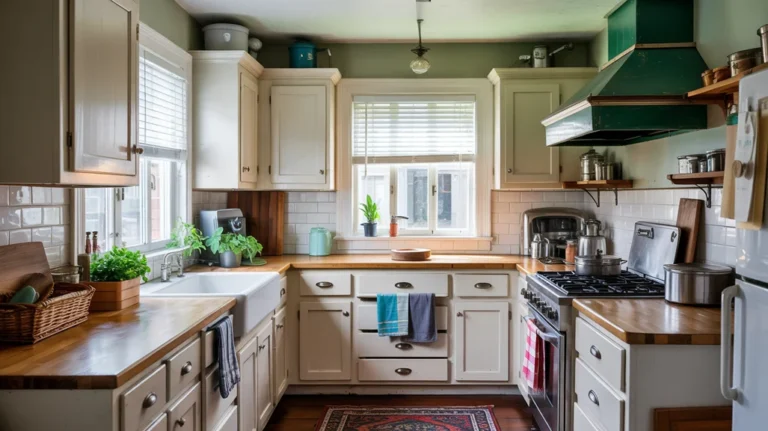
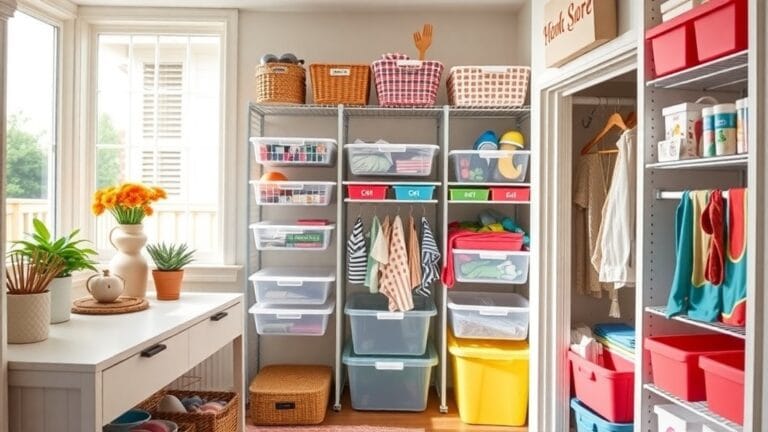
Kitchen storage fails when space exists but function does not. Cabinets overflow, counters collect tools, and drawers become mixed because storage systems do not match daily movement. Effective kitchen storage ideas focus on access, visibility, and logical placement so items return naturally after use. When storage supports behavior instead of fighting it, every inch begins working smarter rather than harder. The result is faster cooking, easier cleaning, and fewer clutter cycles. This article explores practical, design-driven strategies that transform underused kitchen areas into high-function storage zones that maintain order without constant reorganization.
If you’re also optimizing compact kitchen layouts, these 25 Creative Small Kitchen Storage Ideas to Maximize Your Space connect naturally with the strategies below.
1. Kitchen Storage Ideas That Begin With Workflow Mapping
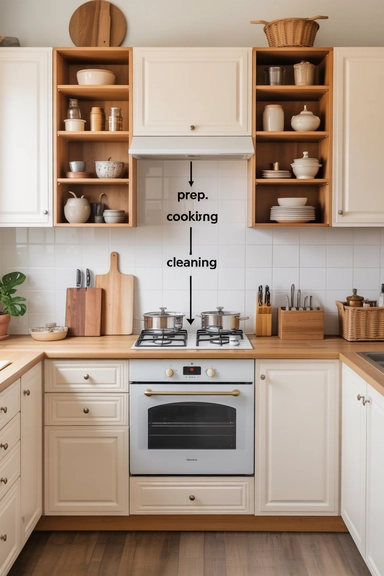
Smart storage begins by understanding how the kitchen is actually used. Mapping workflow identifies where cooking starts, where preparation happens, and where cleanup finishes. When storage aligns with these paths, tools and ingredients live close to their point of use. This reduces unnecessary movement, prevents countertop buildup, and keeps routines smooth during busy cooking periods.
Workflow-based storage also exposes underused zones. Cabinets that once held random items become purposeful stations supporting prep, cooking, or cleaning. Once movement patterns guide placement, storage stops being decorative and becomes operational. This principle ensures every space works intelligently instead of simply holding more items.
2. Vertical Expansion That Uses Full Wall Height
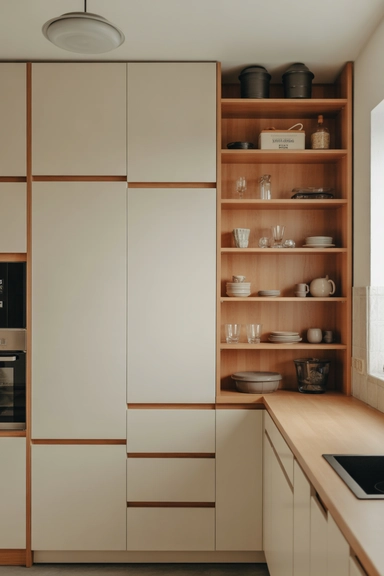
Many kitchens suffer from unused vertical real estate. Tall shelving, wall-mounted rails, and high cabinet extensions transform empty wall height into storage zones for rarely used items, bulk goods, or display-ready dishware. This approach preserves valuable lower cabinet space for daily essentials.
Using full height prevents horizontal overcrowding. When items move upward logically, counters stay clear and base cabinets remain accessible. The key is restraint: grouping items and leaving breathing room prevents visual overload. Vertical expansion turns overlooked height into functional storage without increasing kitchen footprint.
3. Deep Drawer Systems That Replace Lower Cabinets
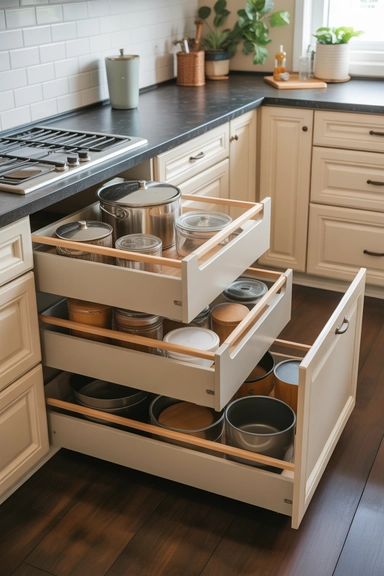
Lower cabinets often become chaotic because items stack behind one another. Deep drawer systems convert these spaces into pull-out platforms where cookware, dishes, and pantry goods remain visible from above. Instead of bending and searching, everything appears at a glance.
This improves retrieval speed and return habits. When drawers offer full access, items are less likely to be left on counters after use. Deep drawers also allow internal dividers for structured placement, ensuring heavy or bulky items stay stable. This transforms lower storage into a highly efficient zone.
4. Corner Storage That Unlocks Hidden Capacity
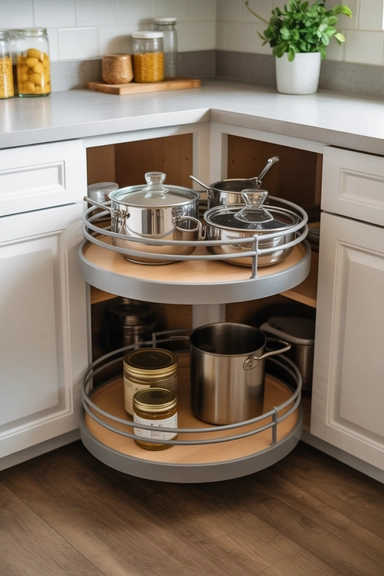
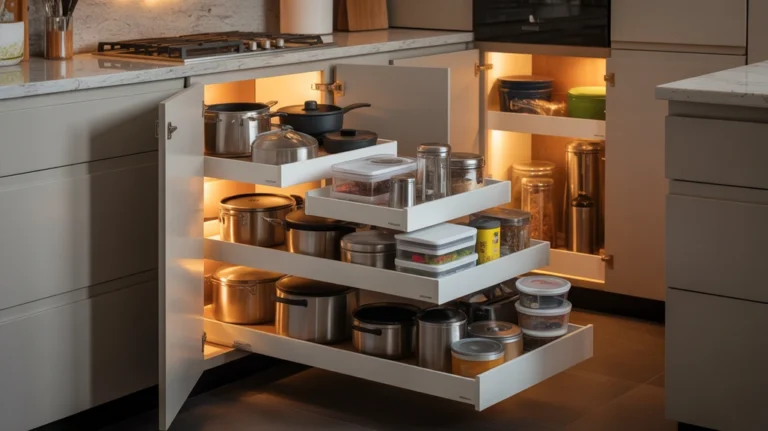
Corner cabinets frequently waste space due to awkward angles and unreachable depths. Rotating trays, pull-out corner units, or diagonal shelving convert these difficult zones into accessible storage. Items that once disappeared into the back become part of active kitchen inventory.
This prevents duplicate purchases and forgotten cookware. When corners function properly, other cabinets experience less overflow pressure. Efficient corner solutions turn dead space into productive storage, allowing the entire kitchen system to operate with less strain.
5. Open and Closed Storage Working Together
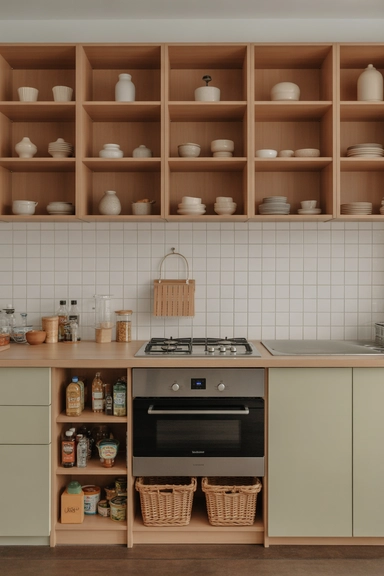
A balanced mix of open and closed storage keeps kitchens both functional and visually calm. Open shelves handle daily-use items that benefit from quick access, while closed cabinets hide bulk goods and irregular packaging. When both systems work together, storage becomes layered rather than crowded.
This combination prevents overloading any single zone. Frequently used items stay visible and reachable, while background supplies remain contained. Hybrid storage ensures every space contributes to organization while maintaining a clean and intentional kitchen appearance.
6. Slide-Out Pantry Towers That Use Narrow Gaps
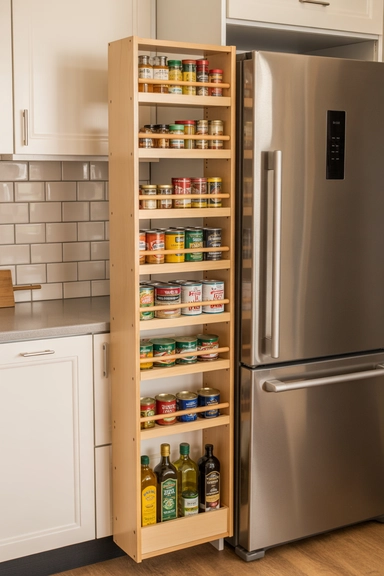
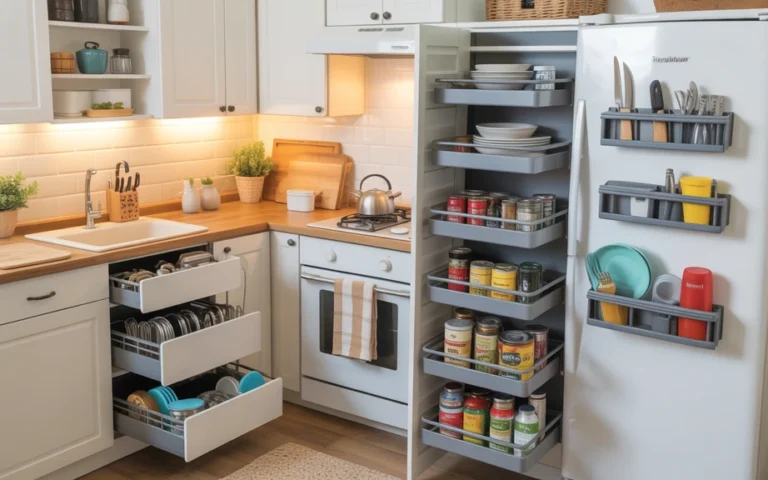
Slim vertical gaps beside refrigerators or ovens often remain unused because they appear too narrow for traditional cabinets. Slide-out pantry towers transform these overlooked spaces into tall storage channels for spices, oils, canned goods, and baking ingredients. Their vertical orientation means items are stored in single-file rows, preventing buried products and eliminating back-of-shelf loss.
This type of storage also reduces congestion in main pantry cabinets. Frequently used cooking ingredients move closer to prep zones, improving workflow efficiency. Because the unit pulls out completely, inventory checks become instant, preventing overbuying and expired food waste. Narrow pantry towers prove that even the smallest kitchen voids can become high-yield storage assets.
7. Ceiling and Overhead Rack Storage for Cookware
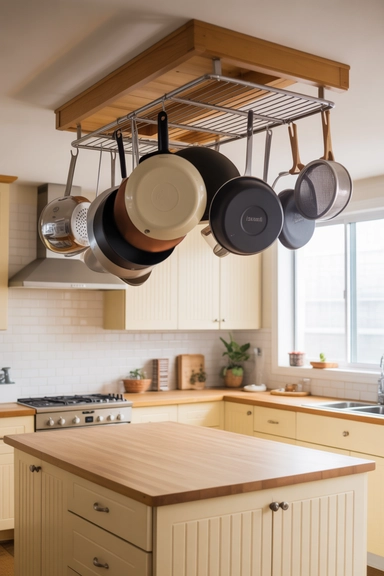
Airspace above kitchen islands or prep zones is rarely considered part of storage planning. Ceiling-mounted racks introduce a dedicated zone for pots, pans, and colanders, removing bulky cookware from lower cabinets. This relocation frees prime cabinet space for pantry goods and dishware while keeping cooking tools within immediate reach.
Overhead storage also prevents cookware stacking damage. Each item hangs independently, improving longevity and eliminating noisy pile shifts. Because cookware is retrieved and returned effortlessly, counters remain clearer during meal preparation. Using vertical airspace overhead expands total storage volume without increasing cabinetry footprint.
8. Appliance Garages That Preserve Counter Workspace
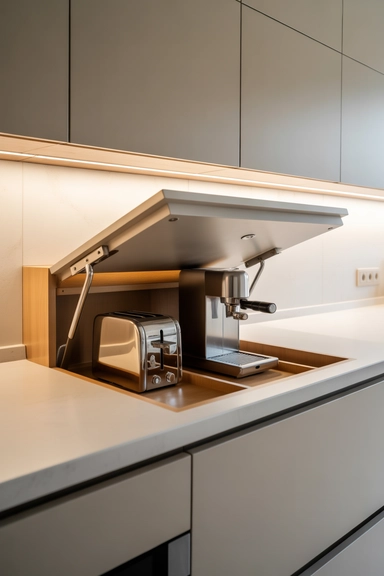
Small appliances consume valuable counter real estate when left permanently on display. Appliance garages integrate hidden cabinet compartments with lift or roll-up doors that store mixers, toasters, and coffee machines while keeping them plugged in and ready. This allows instant access without sacrificing surface space.
This system changes counter behavior. When appliances disappear after use, countertops naturally reset to functional prep areas rather than becoming storage zones. It also protects appliances from grease and dust buildup. Appliance garages convert high-use tools into hidden infrastructure rather than visual clutter.
9. Magnetic Wall Storage for Metal Tools and Jars
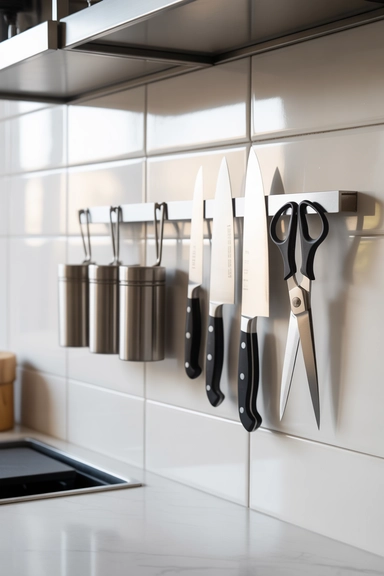
Metal kitchen tools and spice jars often drift into drawers where they become tangled or forgotten. Magnetic wall strips create visible vertical storage that keeps knives, scissors, and metal-lidded jars separated and instantly accessible. This frees drawer capacity for non-magnetic tools.
Magnetic storage improves safety and speed. Tools no longer stack blade-to-blade, and spices remain within arm’s reach during cooking. Because every item has a visible designated position, return habits become automatic. Magnetic systems turn empty wall strips into precision storage zones.
10. Rolling Carts That Act as Mobile Storage Stations
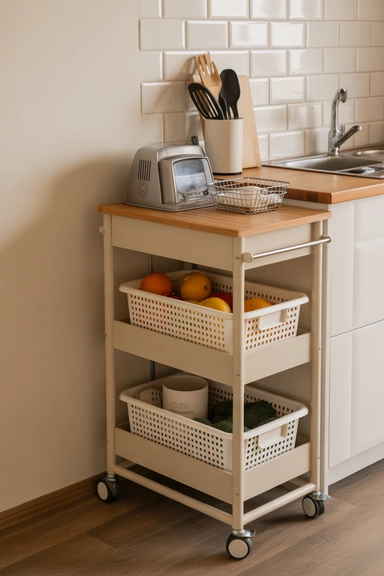
Kitchens frequently need flexible storage for tasks that shift between prep, cooking, and serving. Slim rolling carts provide movable shelving for produce, utensils, dishware, or small appliances. Unlike fixed cabinets, carts adapt to real-time workflow demands.
Mobile storage prevents countertop crowding during busy cooking sessions. Once tasks finish, carts roll back into narrow gaps or corners, restoring open floor space. This flexibility allows small kitchens to temporarily expand work zones without permanent structural changes.
If you’re also strengthening cabinet efficiency alongside these space strategies, these 23 Smart Kitchen Cupboard Hacks That Reduce Daily Clutter fit naturally with the storage systems above.
11. Under-Sink Storage That Works Around Plumbing
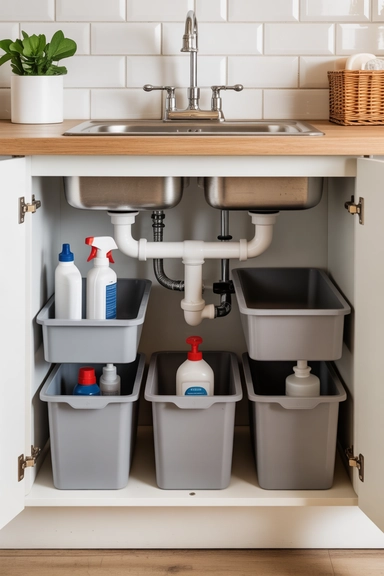
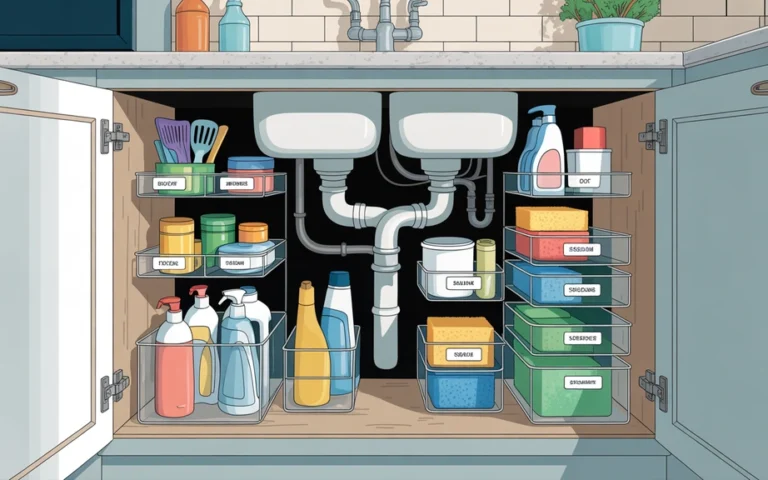
Under-sink cabinets often become chaotic because plumbing pipes interrupt usable space. Instead of treating this area as a dumping zone, structured U-shaped shelving and fitted bins organize cleaning supplies around pipework. This prevents bottles from tipping, leaking, or blocking access to shutoff valves.
Proper under-sink organization also isolates chemical products from food storage zones, improving household safety. When every item stands upright and visible, restocking becomes simple and spills are contained. A well-planned sink cabinet turns a traditionally wasted area into a reliable support zone for daily kitchen maintenance.
12. Drawer Zoning That Separates Prep, Cook, and Serve Tools
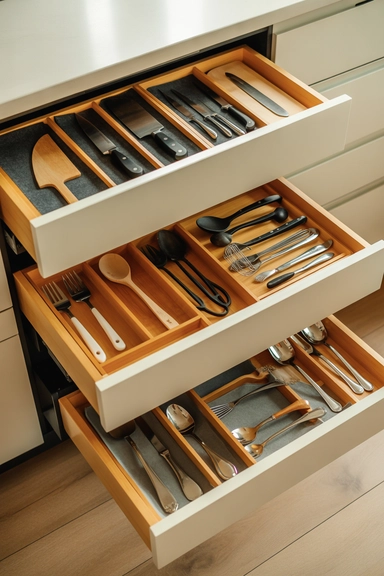
Drawers fail when they mix tools for unrelated tasks. Separating drawers into prep tools, cooking utensils, and serving items prevents mid-task searching and countertop scattering. When each stage of meal preparation has a defined storage zone, workflow becomes continuous instead of interrupted.
This zoning also protects drawer systems from becoming general catch-alls. People return tools to the correct drawer because logic is clear. Over time, drawer zoning stabilizes organization without reminders, keeping kitchen movement fluid even during high-activity cooking periods.
13. Stackable Modular Containers for Adaptive Pantry Storage
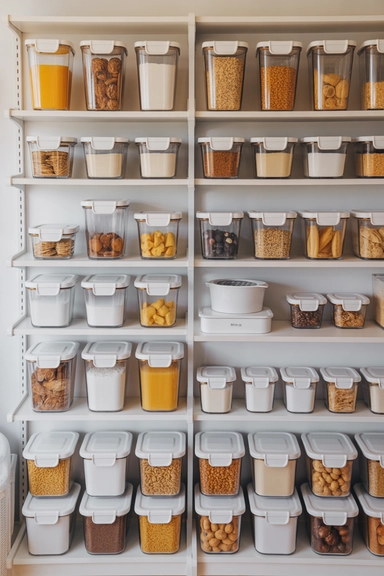
Pantry goods constantly change in volume and packaging. Stackable modular containers solve this by allowing uniform footprints that can reconfigure as inventory shifts. Shelves remain fully utilized whether storing tall cereal containers or short snack bins.
Modular systems also simplify shelf cleaning and category changes. Instead of reorganizing loose packaging, containers move as units. This adaptability prevents pantries from breaking down as household needs evolve, ensuring long-term storage stability rather than periodic overhauls.
14. Shelf Depth Management That Prevents Hidden Inventory
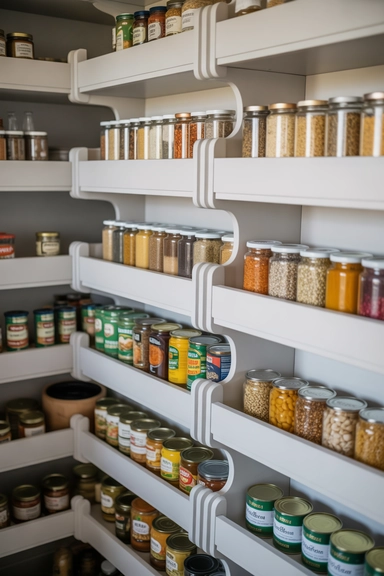
Deep shelves often hide products behind front rows, causing forgotten food and duplicate purchases. Depth management tools such as stepped risers or front-row limiters keep items visible and prevent backward migration.
By controlling shelf depth behavior, inventory stays transparent. This encourages conscious consumption, reduces waste, and keeps cabinets from becoming overstocked. Managing depth is not about adding space but about preventing invisible clutter from forming behind accessible zones.
15. Fold-Down and Slide-Out Work Surfaces With Hidden Storage
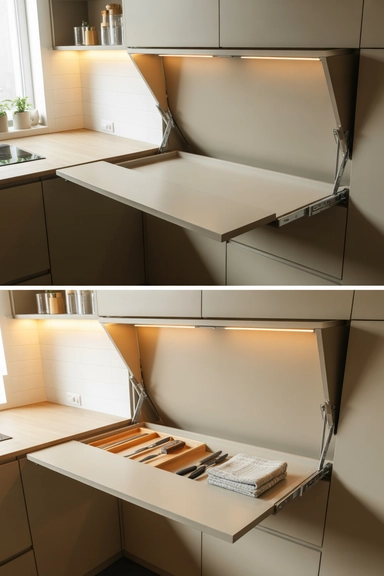
Compact kitchens benefit from surfaces that appear only when needed. Fold-down counters and slide-out cutting boards add prep space while incorporating shallow storage compartments beneath. These compartments hold knives, boards, or towels at the exact point of use.
When surfaces retract, the kitchen returns to a clean, open state. This prevents permanent counter crowding while still supporting full cooking routines. Integrated surface-storage solutions maximize spatial efficiency without compromising movement.
16. Refrigerator Cabinet Pairing for Food Flow Efficiency
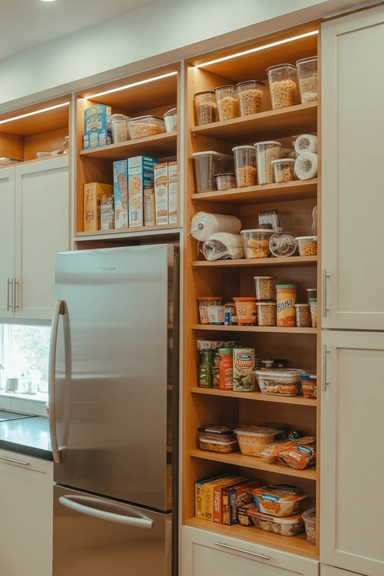
Cabinets surrounding refrigerators often hold random items unrelated to food storage. Pairing these cabinets intentionally with refrigeration zones keeps wraps, containers, condiments, and snacks directly adjacent to where food is handled.
This reduces back-and-forth movement during meal prep and prevents food packaging from spreading across countertops. When food-related items live near refrigeration, kitchen flow becomes compact and controlled rather than scattered across multiple cabinet areas.
17. Tall Utility Cabinets for Broom and Bulk Storage
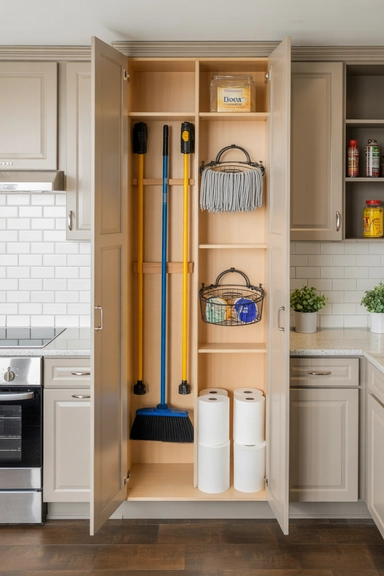
Kitchens often lack defined zones for tall or awkward items like brooms, mops, or bulk drink packs. A dedicated tall utility cabinet with vertical tool holders and bottom bulk zones prevents these items from leaning into corners or occupying food storage space.
Separating tall utility storage also protects hygiene boundaries between cleaning equipment and kitchenware. With vertical containment, these oversized items stop interfering with everyday cabinet access.
18. Integrated Recycling and Sorting Zones
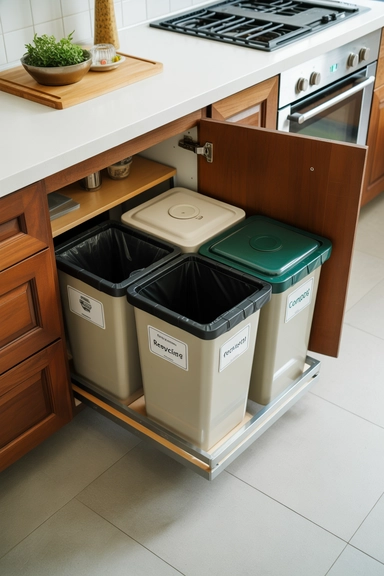
Modern kitchens require structured recycling systems, yet most cabinets ignore this need. Integrated sorting drawers or multi-bin cabinets separate trash, recycling, and compost in one contained zone. This prevents loose bags and bins from occupying floor space.
Clear sorting systems also reinforce sustainable habits. When bins are built into cabinetry, waste management becomes part of kitchen routine rather than an afterthought. This improves cleanliness while reducing clutter near preparation areas.
19. Glass-Front Cabinets for Controlled Visibility
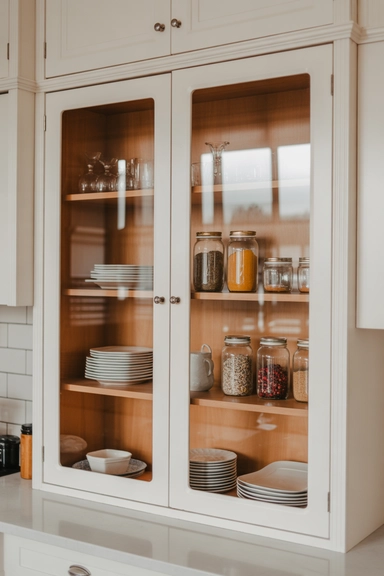
Not all visibility must come from open shelving. Glass-front cabinets allow selective display of organized dishware or pantry containers while still protecting items from grease and dust. This introduces visual depth without exposing clutter.
Because contents remain visible, these cabinets encourage consistent order. Items cannot be hidden behind closed doors, so organization naturally maintains itself. Glass-front storage balances openness and protection in a functional way.
20. Appliance Lift Cabinets for Ergonomic Access
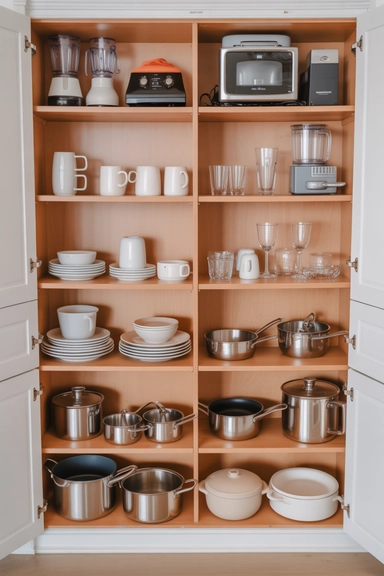
Heavy appliances stored low create strain when lifted repeatedly. Appliance lift cabinets raise mixers or blenders to counter height with a mechanical platform. This prevents awkward lifting and encourages proper appliance storage after use.
Ergonomic access also extends cabinet lifespan by reducing slamming or dragging of heavy items. When retrieval is effortless, appliances no longer live permanently on counters, restoring valuable workspace.
21. Frequency-Based Shelf Assignment
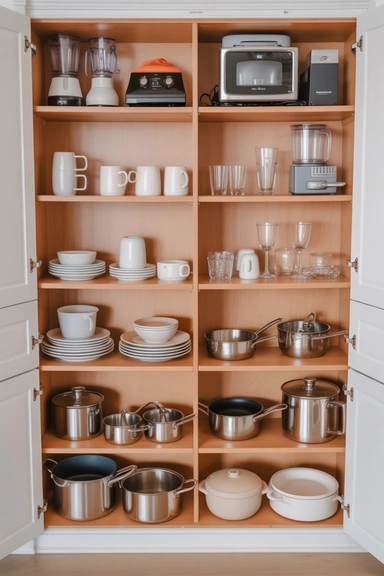
Cabinet efficiency increases when shelves are assigned by how often items are used. Prime shelves handle daily dishes and tools, secondary shelves hold weekly-use items, and top shelves store seasonal or specialty equipment.
This hierarchy prevents prime storage from being wasted. When frequency guides placement, kitchen activity remains fluid and cabinets resist overcrowding. Behavior-based shelf assignment is one of the most sustainable long-term storage strategies.
22. Behavioral Reset Systems That Maintain Order
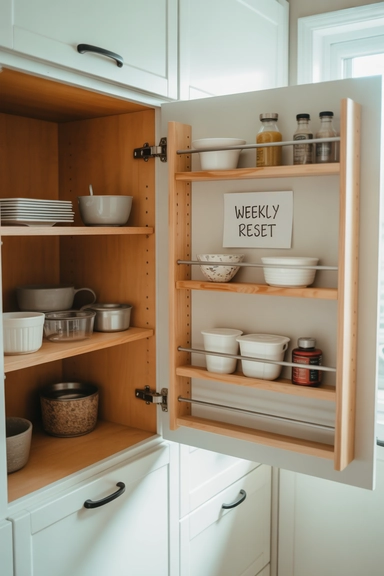
Even the smartest storage fails without behavioral integration. A short weekly cabinet reset routine—returning misplaced items, wiping shelves, checking inventory—keeps systems aligned. Because storage is already structured, resets take minutes rather than hours.
This maintenance habit prevents gradual drift into clutter. Instead of waiting for cabinets to collapse into chaos, small resets preserve organization continuously. Behavior-driven upkeep is what makes kitchen storage ideas permanent rather than temporary.
Conclusion
Kitchen storage ideas succeed when they align physical structure with human behavior. Vertical expansion, adaptive containers, ergonomic access, defined zoning, and maintenance habits work together to ensure every space performs a purpose. Smart storage does not merely contain items—it guides movement, reduces friction, and prevents clutter from forming in the first place. When every cabinet, drawer, and surface is designed around real kitchen use, organization becomes natural, durable, and quietly efficient every day.