
Introduction
A well-planned workout area at home should feel motivating, efficient, and easy to maintain. The best home gym organization ideas focus on storage, layout, and accessibility so even small rooms can function like dedicated training zones. Whether your setup lives in a spare bedroom, garage corner, or shared living space, thoughtful organization helps prevent clutter and keeps equipment ready for use. Clear pathways and smart storage also make workouts smoother and safer.When equipment has a defined place, it becomes easier to stay consistent and keep the room visually calm. Wall storage, compact racks, and flexible solutions can transform tight areas into productive workout spaces without sacrificing comfort. If your gym shares space with another room, these ideas also work well alongside 21 Smart Small Room Storage Ideas That Maximize Space, helping maintain order while supporting daily routines.
1- Wall-Mounted Storage Systems
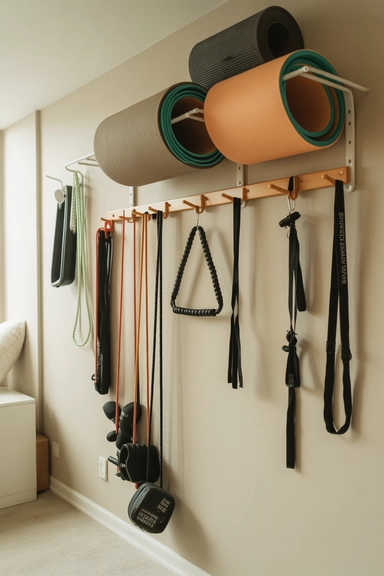
Using vertical wall space is one of the most effective ways to keep a workout area organized without sacrificing valuable floor space. Wall-mounted racks can hold resistance bands, jump ropes, and mobility tools while keeping everything visible and easy to reach. This setup prevents equipment from piling up on the floor and makes it easier to reset the space after each session. Organized walls also create a structured look that helps the room feel more intentional.
Installing modular panels or heavy-duty hooks allows you to store barbells, mats, and smaller accessories in one centralized area. Keeping equipment elevated protects flooring and reduces visual clutter. A dedicated wall storage system transforms unused vertical space into a practical zone that supports consistent workouts and maintains a clean, open layout in even the smallest rooms.
2- Compact Weight Storage Racks
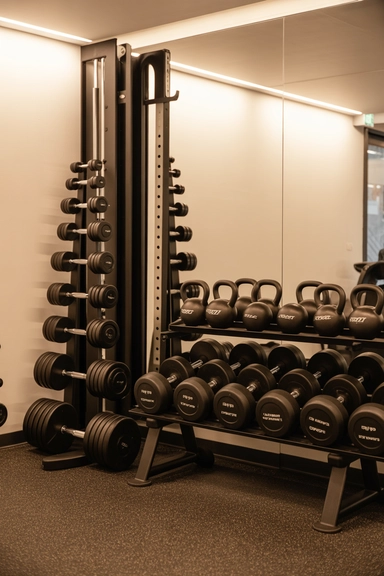
Free weights can quickly overwhelm a small room when they’re left scattered after workouts. A compact weight rack keeps dumbbells and kettlebells grouped together while preserving open floor space for movement. Vertical racks are especially helpful because they store multiple weights without requiring a wide footprint. This allows the room to stay functional while maintaining clear pathways for exercises.
Placing a slim rack along a wall or in a corner keeps equipment accessible without interrupting the layout. Organized weight storage also protects floors from damage and makes the space safer to navigate. When weights have a dedicated rack, the workout area feels more structured and easier to maintain, encouraging regular use and reducing the need for constant cleanup.
3- Storage Baskets for Accessories
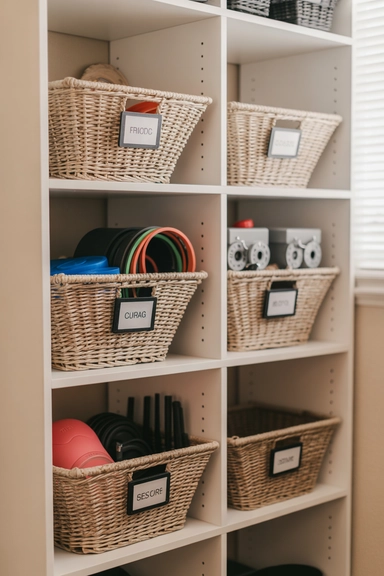
Small accessories like resistance bands, lifting straps, and sliders often create clutter when they don’t have a dedicated storage spot. Using baskets or bins helps group these items together so they remain easy to find and return after workouts. Placing labeled baskets on shelves or inside cabinets keeps everything contained while maintaining a clean visual layout.
Uniform storage containers also help create a cohesive look that prevents the space from feeling chaotic. When accessories are sorted by type, it becomes easier to maintain order and quickly locate what you need. Organized baskets support a smoother routine and ensure the workout zone stays tidy without requiring constant rearranging.
4- Foldable Equipment for Flexible Spaces
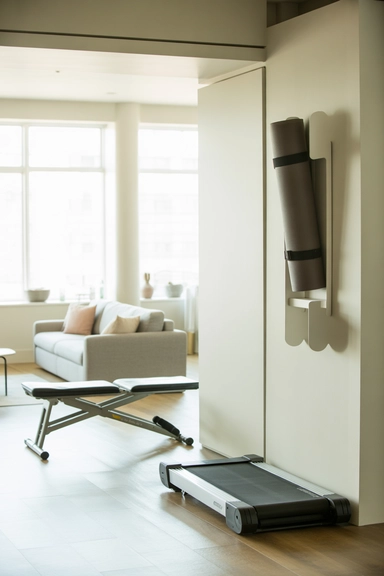
In multipurpose rooms, foldable equipment helps maintain flexibility without sacrificing functionality. Benches, mats, and compact cardio machines that can be stored vertically allow the space to shift between uses throughout the day. This is especially useful in apartments or shared rooms where the gym setup cannot remain permanent.
Being able to store equipment after workouts keeps the room adaptable and visually open. Foldable designs reduce clutter and make it easier to maintain a clean environment. A flexible setup ensures the workout area remains functional while still allowing the space to serve other purposes when needed.
5- Open Shelving for Daily-Use Gear
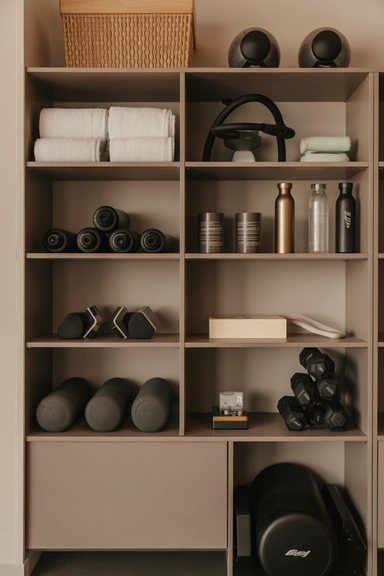
Open shelving works best when it is treated as functional storage rather than display. In a small workout room, shelves should hold items you reach for in almost every session, such as towels, foam rollers, lifting straps, and water bottles. Keeping these essentials visible reduces friction during workouts and prevents time wasted searching through drawers or bins. When shelves are placed at reachable heights, resetting the space after training becomes part of the routine rather than an extra chore.
To prevent visual clutter, shelves should be arranged by category and kept intentionally minimal. Grouping items in small containers maintains order while still allowing quick access. A clean shelving system creates structure without adding bulk to the room. This balance keeps the workout area efficient and helps reinforce consistent habits because everything you need is always within reach.
6- Corner Storage to Maximize Layout
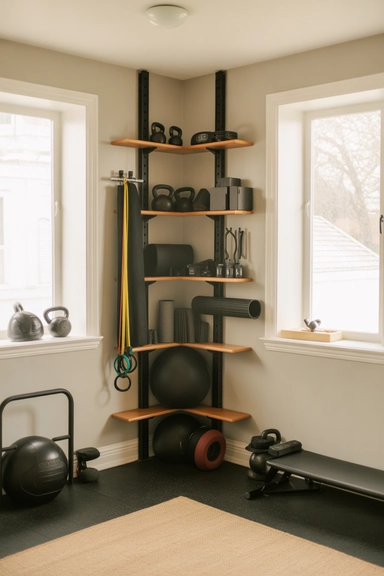
Corners often become dead zones in small rooms, yet they can provide valuable storage when used correctly. Placing a vertical rack, compact shelf, or stand in a corner helps free up central floor space for movement. This layout keeps heavier equipment out of main pathways and maintains a safer workout environment. Using corners strategically allows the rest of the room to remain open and functional.
A well-organized corner can hold kettlebells, mats, or recovery tools without making the space feel crowded. Keeping equipment grouped in one area also simplifies cleanup and reduces visual noise. When corners are used intentionally, the room feels more balanced and easier to navigate, making it simpler to transition between exercises without constant adjustments.
7- Cabinets for a Clean, Minimal Look
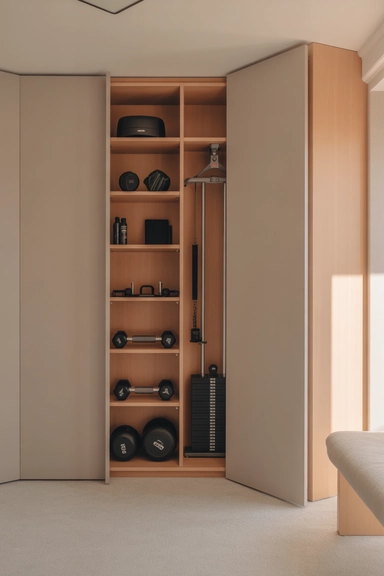
Closed cabinets are one of the most effective ways to keep a home gym looking calm and organized, especially in shared spaces. Storing equipment behind doors reduces visual clutter and helps the workout area blend into the rest of the home. Cabinets can hold weights, resistance bands, and smaller accessories while keeping the room tidy between sessions. This approach works well for living rooms, spare bedrooms, or multipurpose spaces.
Choosing cabinets that match the room’s style helps the gym feel intentional rather than temporary. Adjustable shelves inside cabinets allow for flexible storage as equipment changes over time. A concealed storage system supports a structured routine by giving everything a defined place while maintaining a polished appearance that feels consistent with the rest of the home.
8- Rolling Carts for Mobile Storage
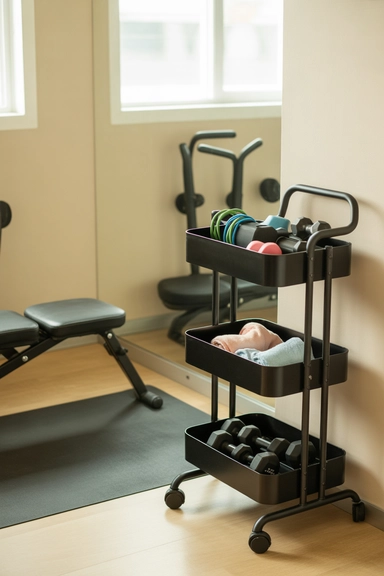
Rolling carts offer flexible storage that can move with your workout routine. In small rooms, being able to shift equipment from one area to another prevents the space from feeling crowded. A cart can hold resistance bands, small weights, towels, and cleaning supplies, making it easy to access essentials during workouts. Afterward, the cart can be tucked into a corner or closet to keep the room open.
Mobile storage is especially helpful in multipurpose areas where the gym setup cannot remain in place all day. Having a portable system allows the space to adapt quickly without creating clutter. This flexibility helps maintain order and ensures equipment is always accessible without permanently occupying valuable floor space.
9- Vertical Mat and Foam Roller Storage
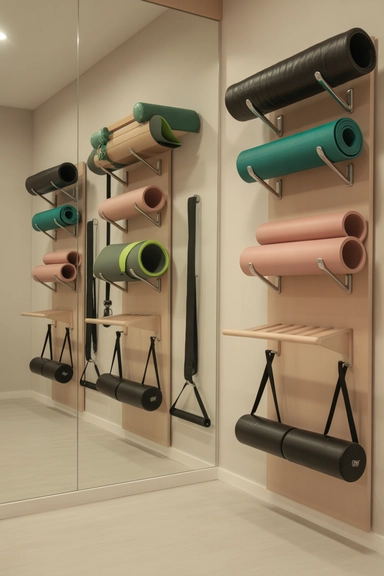
Mats and foam rollers often end up leaning against walls or lying on the floor, creating visual clutter and taking up valuable space. Vertical storage solutions keep these items organized and easy to access while maintaining a clean layout. Wall hooks, slim stands, or narrow racks allow mats and rollers to stay upright without spreading across the room.
Keeping larger items stored vertically also helps preserve floor space for workouts. When mats and rollers have a designated storage spot, it becomes easier to reset the area after each session. This simple adjustment improves both the appearance and functionality of the room, making it feel more structured and easier to maintain.
10- Overhead Garage-Style Storage
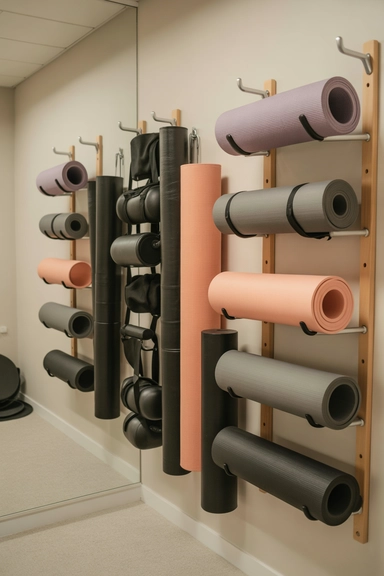
In garage gyms or rooms with high ceilings, overhead storage can dramatically increase available space. Installing ceiling-mounted racks allows less frequently used equipment to be stored out of the way while keeping the floor clear for workouts. This approach works well for seasonal gear, spare mats, or bulkier items that don’t need daily access.
Using overhead storage helps maintain an open training area while still keeping everything organized. When items are stored above eye level, the room feels less crowded and more functional. This strategy makes use of vertical space that would otherwise go unused, supporting a more efficient and adaptable home gym layout.
11- Dedicated Wall Zones for Equipment
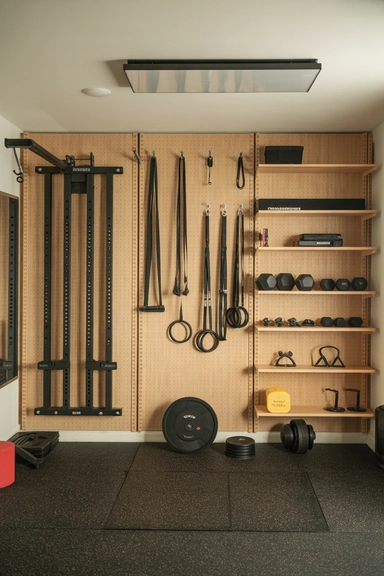
Creating defined wall zones helps keep different types of equipment organized and easy to access. Instead of placing everything in one area, grouping items by category—such as strength gear, mobility tools, or cardio accessories—improves efficiency during workouts. This structure allows you to move through exercises smoothly without needing to search for items or rearrange the space constantly. A clear system also makes it easier to reset the room after each session.
Using labeled hooks, racks, or panels ensures each tool has a designated home. This prevents clutter from building up and keeps the room visually balanced. A well-zoned wall layout supports consistent routines by making equipment placement predictable and organized. Over time, this structured approach reduces maintenance and keeps the workout area ready for use at any moment.
12- Storage Benches With Hidden Compartments
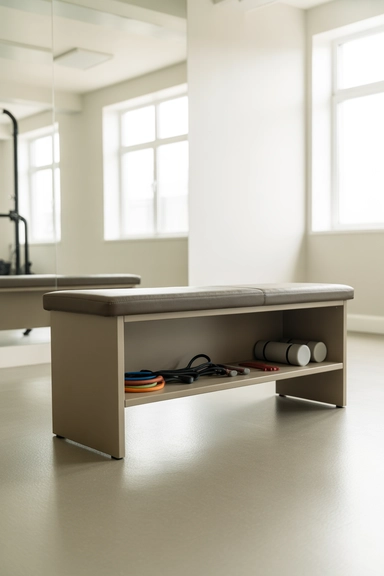
A storage bench combines seating with concealed storage, making it especially useful in small home gyms. Inside the bench, you can store resistance bands, yoga blocks, and smaller accessories while keeping them out of sight. This helps maintain a clean appearance without sacrificing accessibility. The top surface can also serve as a place to sit, stretch, or prepare for workouts.
Using furniture with built-in storage helps maximize functionality without adding extra pieces to the room. Hidden compartments keep clutter contained and allow the workout area to feel calm and organized. This type of dual-purpose solution works particularly well in shared spaces where maintaining a tidy look is just as important as functionality.
13- Pegboard Systems for Custom Layouts
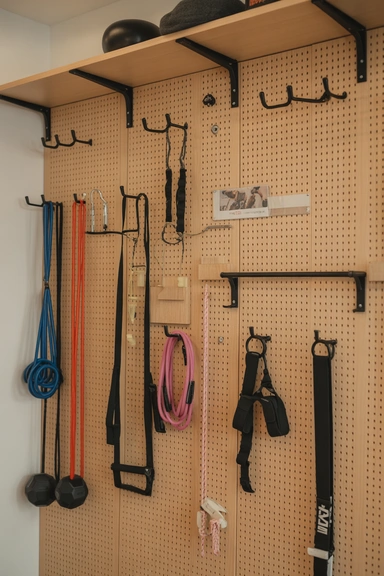
Pegboards provide adjustable storage that can evolve as your equipment changes. Hooks, baskets, and small shelves can be rearranged to fit different tools, making it easier to maintain order over time. This flexibility is useful for growing collections of gear or changing workout routines. A pegboard system keeps items visible while preventing them from spreading across surfaces.
Mounting a pegboard near the workout zone ensures tools remain within reach without cluttering the floor. Organized pegboard layouts support efficient transitions between exercises and make cleanup faster. With thoughtful placement, this adaptable system helps maintain a structured environment that stays functional even as your needs shift.
14- Drawer Systems for Small Accessories
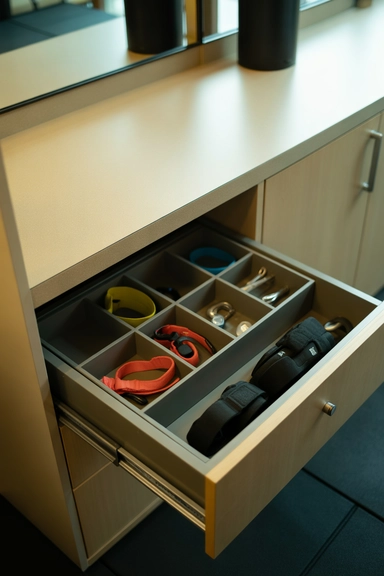
Drawers provide concealed storage for smaller items that can easily create clutter. Keeping gloves, straps, and other accessories inside organized drawers ensures they stay protected and easy to find. Dividers within drawers help separate categories so everything remains accessible without becoming disorganized. This approach works well for maintaining a clean visual layout.
A structured drawer system reduces surface clutter and supports a more streamlined environment. When small items are stored properly, the workout area feels more intentional and easier to maintain. This simple solution helps prevent equipment from accumulating on shelves or floors while still keeping everything within reach when needed.
15- Vertical Barbell and Plate Storage
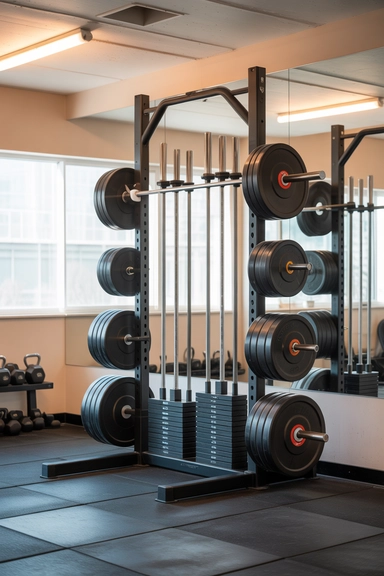
Barbells and weight plates can quickly dominate a small space if they’re not stored efficiently. Vertical storage racks keep these heavier items grouped together without taking up excessive floor space. Storing plates on vertical pegs and barbells in upright holders helps maintain an open workout area while keeping equipment accessible.
Organizing heavier gear in a single area also improves safety by reducing obstacles on the floor. When plates and bars have a dedicated storage system, transitions between exercises become smoother. This setup keeps the room balanced and functional, making it easier to maintain a consistent workout routine without constant rearranging.
16- Multi-Purpose Wall Cabinets
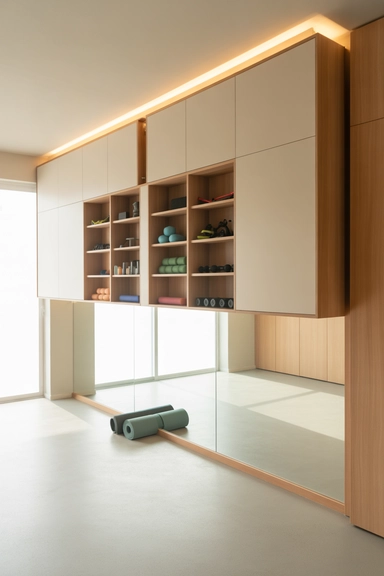
Wall cabinets offer enclosed storage while freeing up floor space. Mounted cabinets can hold smaller equipment and accessories without adding bulk to the room. This helps maintain a clean visual layout and keeps tools protected when not in use. Cabinets placed above eye level also allow the lower portion of the wall to remain available for racks or hooks.
Using wall cabinets ensures equipment stays organized while maintaining an uncluttered environment. Adjustable shelving inside allows for flexible storage as your collection grows. A well-planned cabinet system supports both functionality and aesthetics, helping the room feel more cohesive and easier to maintain over time.
17- Organized Garage Gym Zones
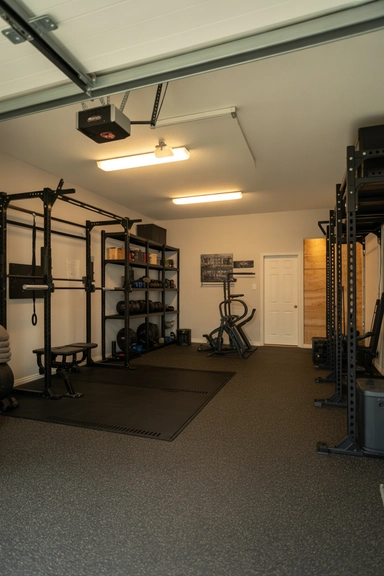
For those using a garage, dividing the space into zones helps maintain order. One section can hold strength equipment, another for mobility tools, and a separate area for storage. This layout prevents gear from spreading across the entire room and keeps the workout area focused and efficient. Clear zones also make it easier to clean and maintain the space.
Using shelving, racks, and wall storage within each zone helps keep everything contained. When equipment is grouped logically, it becomes easier to move between exercises without disruption. A structured garage layout supports consistent workouts and keeps the environment functional even when space is limited.
18- Labeled Storage for Faster Reset
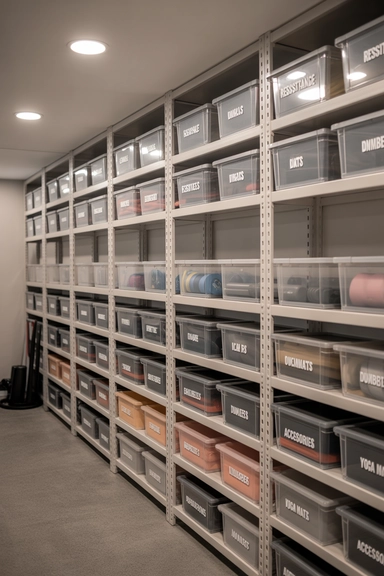
Labeling storage zones helps maintain order and prevents equipment from being placed randomly after workouts. When baskets, shelves, and racks have clear labels, it becomes easier to return items to their proper spots without overthinking. This small step saves time and helps keep the room consistently organized. Clear labeling also ensures that shared workout spaces remain structured for everyone using them.
Over time, labeled storage builds a routine where resetting the room becomes automatic. Knowing exactly where each item belongs reduces visual clutter and keeps the workout area ready for use. A consistent system supports efficiency and helps maintain a clean environment that feels intentional rather than chaotic.
19- Slim Storage for Small Spaces
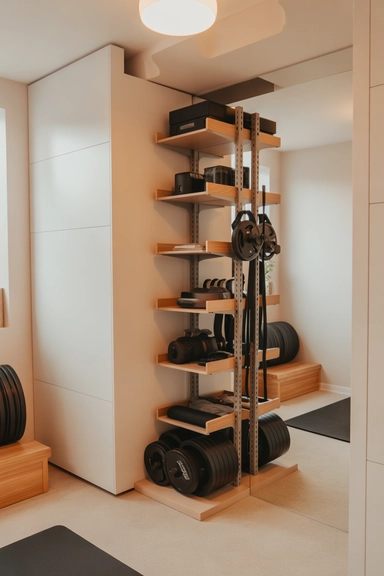
In tight rooms, bulky storage can overwhelm the layout and reduce usable floor space. Slim storage units provide organization without taking over the room. Narrow racks, vertical stands, and compact shelves keep equipment accessible while preserving open areas for movement. This approach helps maintain balance and prevents the space from feeling overcrowded.
Using slim storage ensures that even small workout areas remain functional and visually calm. When storage solutions fit the scale of the room, it becomes easier to maintain a structured layout. This keeps pathways clear and allows workouts to flow smoothly without constant rearranging.
20- Budget-Friendly DIY Storage Solutions
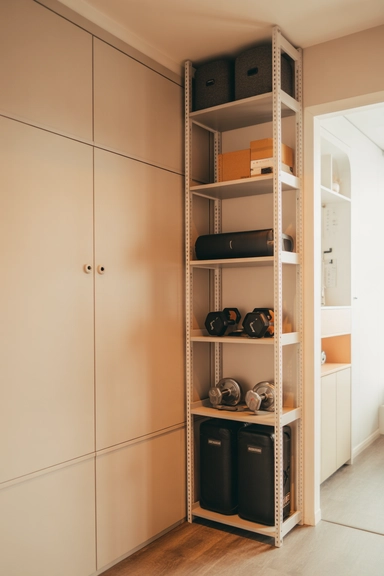
Creating storage solutions using affordable materials makes it possible to organize a home gym without a large investment. Repurposed shelves, simple hooks, and basic racks can provide effective organization while staying within budget. DIY options also allow for customization based on the available space and equipment.
Building your own storage system ensures that everything fits your specific needs. Budget-friendly solutions can still look clean and functional when arranged thoughtfully. A personalized setup supports consistent routines and helps maintain order without requiring expensive upgrades.
21- Designated Zones for Different Workouts
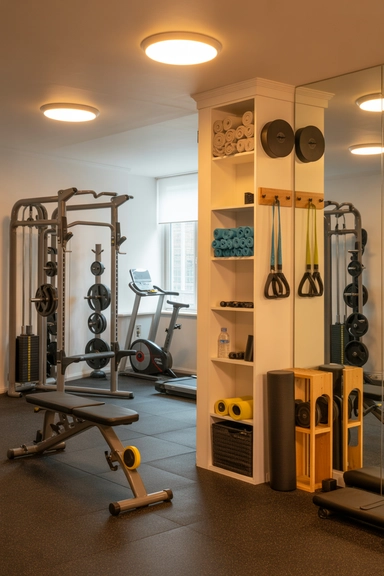
Dividing the room into workout zones helps maintain structure and prevents equipment from spreading everywhere. Creating separate areas for strength training, stretching, and cardio keeps the layout organized and easy to navigate. This approach supports efficient movement and helps maintain a focused workout environment.
When each zone has its own storage and equipment, the room feels more balanced and functional. Clear divisions also make cleanup faster because items return to their designated areas. A zoned layout helps maintain consistency and ensures the workout space stays organized over time.
22- Minimal Decor for a Clean Look
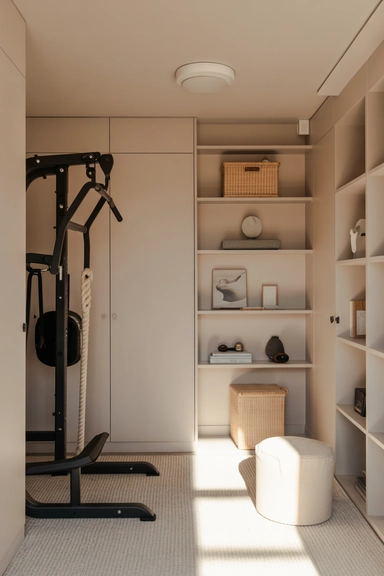
Keeping decor minimal helps maintain focus on functionality while preventing visual clutter. A few intentional design elements, such as neutral colors or simple wall art, can make the space feel motivating without overwhelming it. This balance keeps the room visually calm and encourages consistent use.
A clean environment supports better focus during workouts. When the room feels open and uncluttered, it becomes easier to move freely and maintain routines. Thoughtful simplicity ensures the workout space remains practical while still feeling welcoming and intentional.
23- Consistent Reset Routine
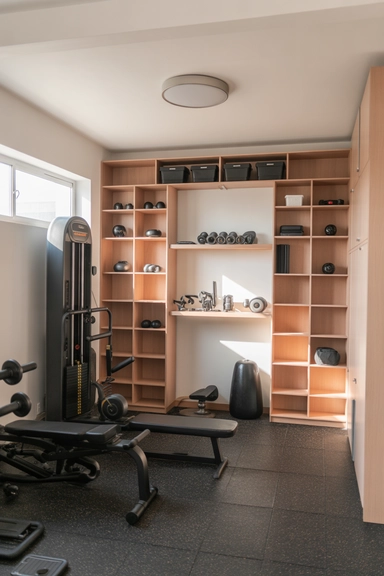
The most effective organization system is one that can be maintained easily. Creating a habit of resetting the workout area after each session keeps clutter from building up. Returning equipment to its designated storage ensures the space stays functional and ready for the next workout.
A consistent reset routine helps maintain long-term order without requiring major cleanups. When everything has a clear place, maintaining organization becomes part of the workout process itself. This habit keeps the room efficient, safe, and visually calm, supporting a consistent fitness routine.
Conclusion
A well-organized workout space makes daily routines easier to maintain and more enjoyable. The most effective home gym organization ideas focus on smart storage, clear layouts, and simple systems that keep equipment accessible without overwhelming the room. By using vertical storage, compact racks, and flexible solutions, even small spaces can function like dedicated training areas. Consistent organization helps reduce clutter, improve safety, and support long-term habits. With thoughtful planning and practical storage choices, any corner of the home can become a streamlined workout zone that feels motivating and easy to maintain.