
Introduction
Poor food storage leads to spoiled produce, stale dry goods, freezer burn, and forgotten leftovers that quietly inflate grocery bills. When food is stored without structure, visibility drops, airflow suffers, and items expire before they are used. Smart food storage is not only about containers but about systems that control moisture, temperature, access, and rotation. These food storage methods focus on practical solutions that fit real kitchen habits, keeping ingredients fresh and easy to manage daily. For complete kitchen-wide organization support, pair these methods with 23 Kitchen Storage Hacks That Make Every Inch Work Harder.
1- Use Airtight Containers for Dry Goods
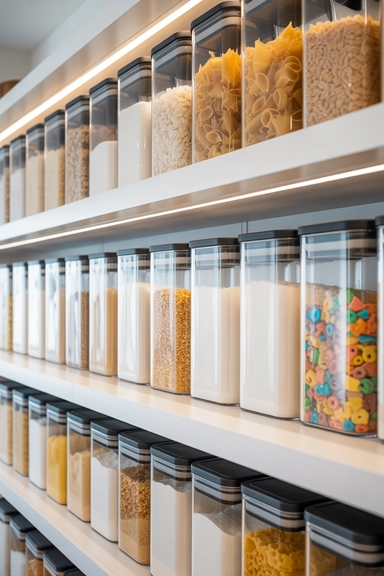
Dry goods stored in open bags quickly absorb moisture and attract pests, leading to stale cereal, clumpy flour, and wasted ingredients. Airtight containers create a sealed environment that protects food from humidity and air exposure. When grains, pasta, sugar, and snacks are transferred into sealed containers, shelf life increases and pantry shelves stay cleaner and more structured.
Airtight storage also improves visibility and stacking efficiency. Uniform containers eliminate half-open bags collapsing into each other. Measuring becomes easier, spills reduce, and rotation of older stock happens naturally. Over time, airtight storage keeps dry goods fresher, prevents waste, and maintains a tidy, reliable food storage system.
2- Store Produce in Ventilated Containers
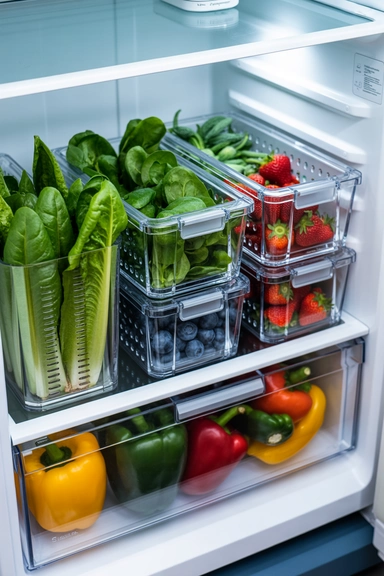
Fresh fruits and vegetables spoil quickly when trapped in stagnant moisture. Ventilated produce containers allow controlled airflow while maintaining humidity balance. This keeps greens crisp, berries dry, and vegetables from softening prematurely. Instead of loose produce rolling through drawers, each category stays contained and easy to monitor.
Ventilated storage also separates ethylene-producing fruits from sensitive vegetables, slowing ripening damage. Cleaning becomes simpler because food debris remains contained. Over time, ventilated containers extend produce life, reduce weekly grocery waste, and keep refrigerator drawers consistently organized.
3- Freeze Food in Portion Sizes
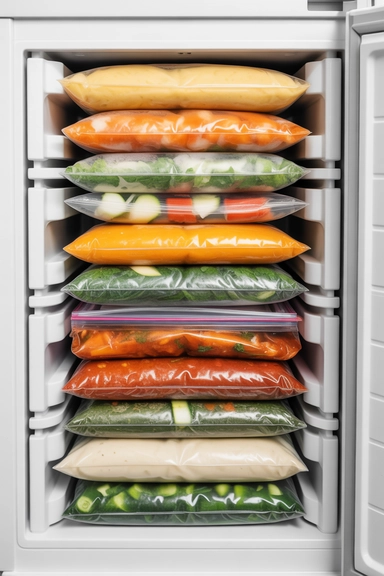
Freezing food in large bulk containers often leads to thawing more than needed, causing repeated refreezing or disposal. Portion-sized freezing solves this by dividing meals, meats, sauces, and cooked foods into single-use or family-sized servings. Each portion thaws quickly and evenly, preserving texture and taste.
Portion storage also maximizes freezer space. Flat freezer bags or stackable containers prevent irregular bulky shapes. Labeling and rotation become easier, ensuring older portions are used first. Over time, portion freezing cuts food waste, saves cooking time, and keeps freezer storage predictable.
4- Use Glass Containers for Leftovers
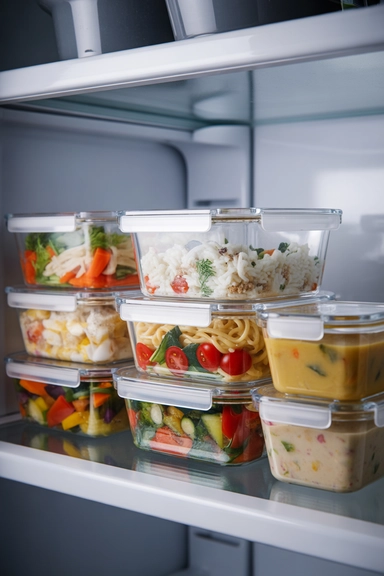
Plastic containers absorb odors and stain easily, which often leads to food being forgotten or thrown away. Glass containers provide clear visibility, odor resistance, and safe reheating without chemical leaching. Leftovers stored in glass remain appealing and easy to identify, increasing the chance they are eaten instead of wasted.
Glass also stacks neatly and cleans thoroughly, preventing bacteria buildup. Transparent walls allow instant content recognition without opening lids. Over time, glass storage improves food safety, keeps fridge shelves organized, and significantly reduces leftover waste.
5- Label and Date Stored Food
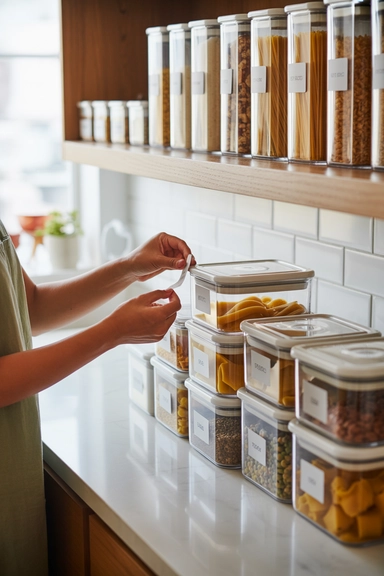
Unlabeled containers create uncertainty that leads to hesitation and eventual disposal. Labeling stored food with simple dates and contents removes confusion and supports proper rotation. Whether in the fridge, freezer, or pantry, visible labeling ensures older food is used first.
This practice also supports meal planning. You always know what is available without searching through containers. Over time, labeling prevents forgotten items, reduces expired food, and keeps storage zones functioning smoothly.
6- Store Raw Meat in Leak-Proof Containers
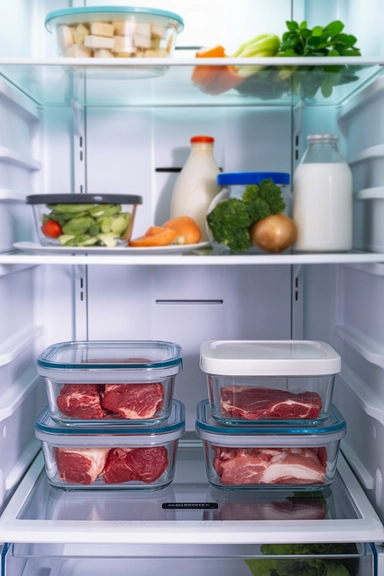
Raw meat stored in thin packaging often leaks, contaminates other foods, and forces full fridge cleanups. Using sealed leak-proof containers creates a controlled environment that prevents cross-contamination and keeps shelves hygienic. Meat stays securely contained, juices cannot escape, and other foods remain protected. This simple system eliminates the risk of accidental spills that break fridge organization and compromise food safety.
Leak-proof storage also improves restocking routines. Fresh meat goes directly into its container without rearranging shelves or layering plastic bags. Cleaning becomes faster because only the container needs washing instead of entire shelves. Over time, sealed meat storage reduces waste from spoilage, maintains fridge order, and ensures food safety stays consistent.
7- Keep Dairy in the Coldest Fridge Zone
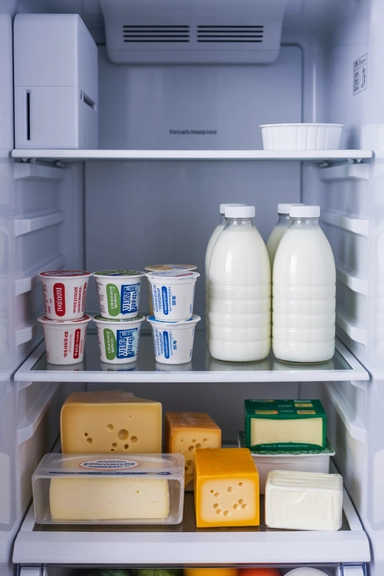
Dairy products spoil quickly when stored in unstable temperatures, especially in fridge doors. Assigning dairy to the coldest interior shelf preserves freshness and prevents sour milk, soft butter, and moldy cheese. Grouping milk, yogurt, cream, and cheese together also keeps fridge navigation simple and prevents items from scattering across multiple zones.
Consistent dairy placement reduces daily searching and shelf disruption. Family members learn where dairy belongs, making restocking and access natural. Over time, correct temperature storage extends shelf life, prevents premature waste, and keeps fridge organization steady and predictable.
8- Store Bread in Breathable Storage
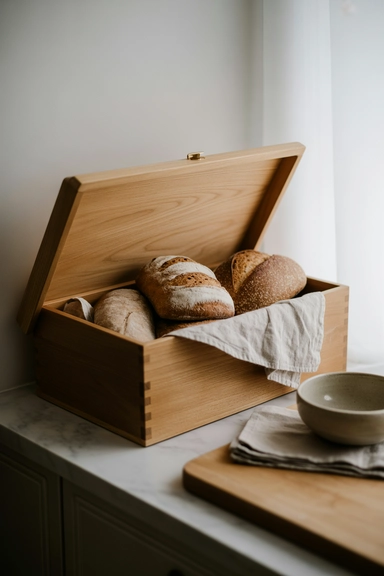
Bread stored in airtight environments traps moisture, causing mold, while open exposure dries it out. Breathable bread storage balances airflow, keeping loaves fresh without condensation buildup. Dedicated bread boxes or breathable bags prevent crushing and maintain structure while protecting from pests.
Bread storage also frees counter space and prevents plastic bags cluttering kitchen surfaces. When bread has a fixed storage home, rotation becomes easier and stale loaves are reduced. Over time, breathable storage keeps bread edible longer, cuts waste, and supports clean kitchen flow.
9- Use Produce Paper Towels to Control Moisture
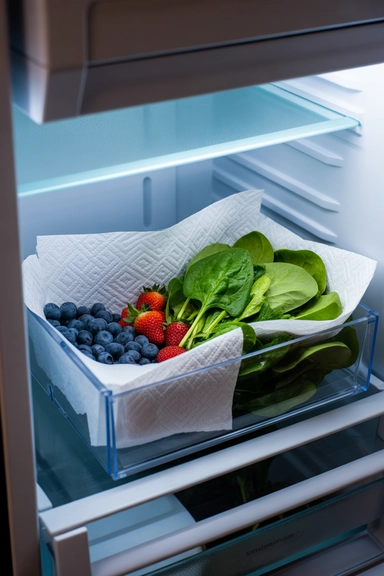
Excess moisture is one of the biggest causes of spoiled fruits and vegetables. Lining produce containers with paper towels absorbs condensation and prevents mold from spreading. This keeps berries dry, leafy greens crisp, and vegetables from becoming slimy prematurely.
Moisture control also reduces drawer cleaning frequency. Instead of sticky residue collecting at the bottom of crispers, paper towels trap mess and are replaced easily. Over time, moisture-managed produce storage extends freshness, lowers grocery waste, and keeps fridge drawers organized.
10- Separate Ethylene-Producing Fruits
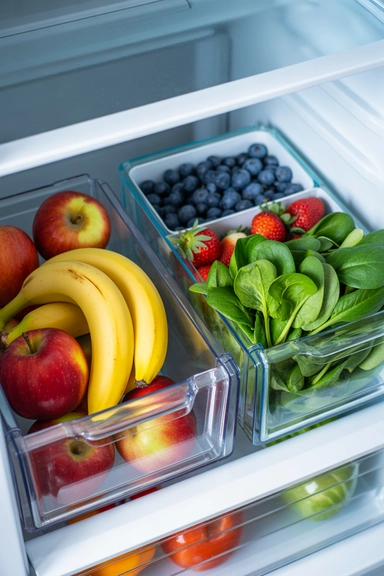
Some fruits release ethylene gas that accelerates ripening and spoilage of nearby produce. Apples, bananas, and avocados stored beside greens or berries cause premature decay. Separating ethylene-producing fruits into their own container or drawer prevents cross-ripening damage.
This system protects sensitive vegetables and berries from unexpected spoilage. It also improves visibility by grouping fruits together. Over time, ethylene separation extends produce life, reduces food waste, and keeps produce storage structured and intentional.
11- Store Leftovers in Clear Front-Facing Containers
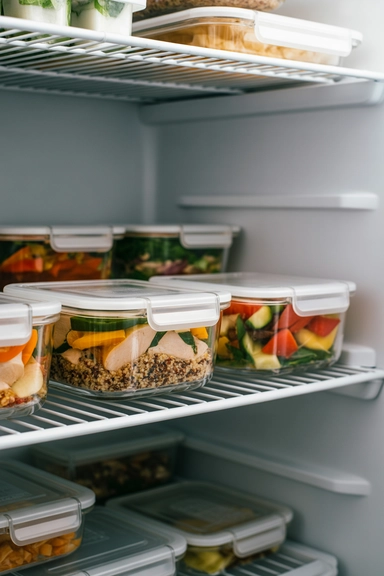
Leftovers often get pushed to the back of the fridge where they are forgotten and eventually wasted. Storing them in clear front-facing containers keeps prepared meals immediately visible when the fridge door opens. This encourages quick consumption instead of repeated cooking and prevents food from expiring unnoticed. When containers face forward in a dedicated area, scanning available meals becomes effortless and consistent.
Front-facing storage also reduces shelf disruption. Instead of moving multiple containers to see what’s behind, everything is already visible. This keeps stacks intact and preserves organized shelf structure. Over time, clear leftover storage lowers food waste, speeds up meal decisions, and maintains a predictable fridge system.
12- Use Stackable Freezer-Safe Bags for Flat Storage
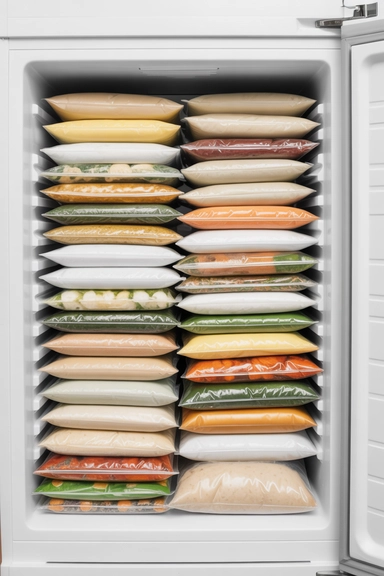
Freezers become chaotic when bulky containers stack unevenly and block access. Freezer-safe bags allow food to be stored flat, creating thin, uniform layers that stack neatly. Soups, sauces, chopped vegetables, and marinated meats freeze faster and thaw evenly when stored this way.
Flat stacking maximizes freezer space and prevents digging through piles to find items. It also improves rotation, as older bags remain visible instead of buried under new ones. Over time, flat freezer storage increases capacity, reduces forgotten frozen food, and keeps freezer organization stable.
13- Keep Frequently Used Items at Eye Level
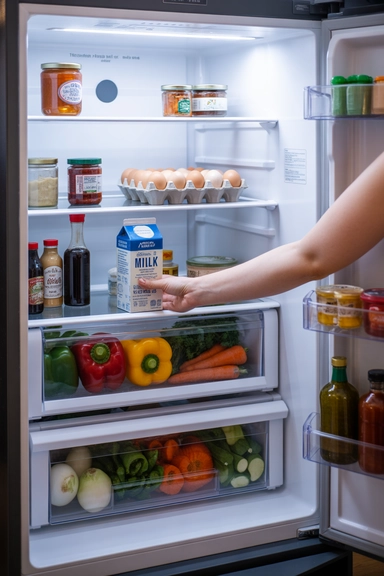
When everyday ingredients are stored too high or too low, shelves get disturbed during every cooking session. Keeping frequently used items like milk, eggs, sauces, and ready ingredients at eye level ensures fast access without shifting other containers. This placement strategy protects organized zones from constant disruption.
Eye-level storage also shortens fridge door-open time, preserving internal temperature and energy efficiency. Over time, height-based organization makes kitchen routines smoother, reduces accidental spills from reaching or bending, and maintains consistent shelf order.
14- Store Bulk Pantry Items in Secondary Storage
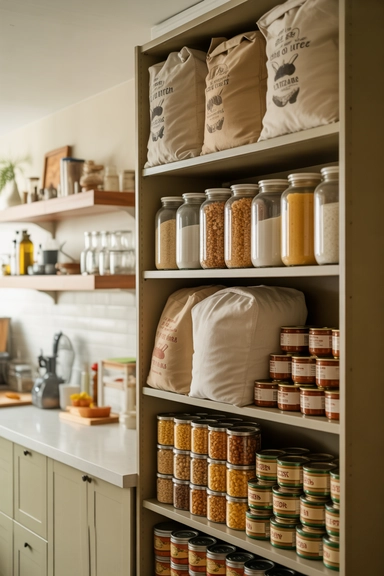
Buying in bulk saves money, but storing bulk food in the main kitchen area often creates clutter and overcrowding. Keeping extra rice bags, flour sacks, canned goods, and long-term supplies in secondary storage prevents kitchen shelves from overflowing. Only working quantities stay in primary storage zones.
Secondary storage also supports rotation. When primary containers empty, they are refilled from bulk stock instead of buying duplicates. Over time, this system lowers food waste, maintains tidy shelves, and keeps food storage balanced without overloading the kitchen.
15- Rotate Food Using the First-In, First-Out Method
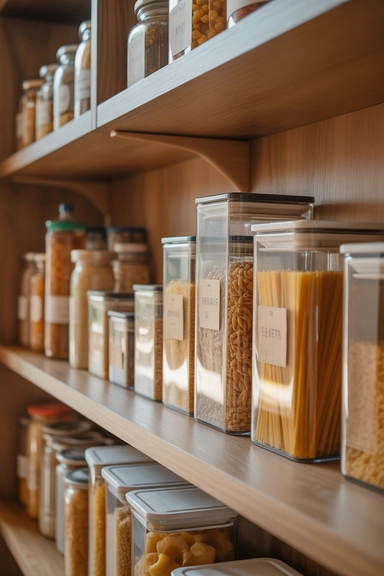
Even the best storage systems fail without proper rotation. Using the first-in, first-out method ensures older food is consumed before new items. New groceries are placed behind existing items so older stock naturally moves forward for use.
This habit prevents expiration, forgotten food, and duplicate purchases. It also keeps shelves visually consistent, as items move through predictable flow rather than random replacement. Over time, rotation becomes automatic, reducing waste, saving money, and preserving long-term organization.
16- Store Cooked Meals in Meal-Prep Containers
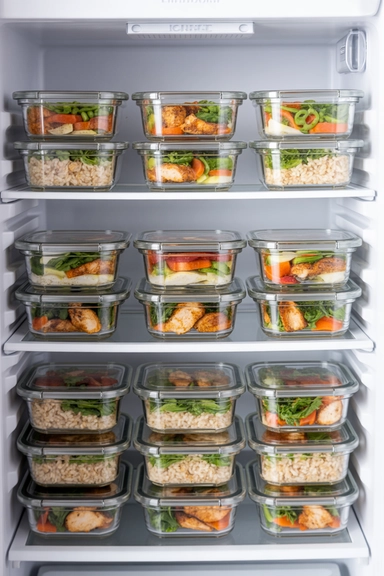
Cooked meals stored in random bowls or mismatched containers quickly create fridge clutter and forgotten food. Using dedicated meal-prep containers creates uniformity that keeps shelves structured and easy to scan. Each container holds a complete portion, sealed tightly to preserve freshness and prevent odors from spreading. Clear lids make meals visible without opening, reducing time spent searching and rearranging items. This system encourages planned eating rather than last-minute cooking, which directly reduces food waste.
Meal-prep containers also support consistent stacking. Uniform sizes prevent unstable piles and make shelf height predictable. When containers are easy to grab and reheat, leftovers are eaten instead of forgotten. Over time, structured meal storage builds a reliable routine that saves time, lowers grocery costs, and keeps refrigerator organization intact even during busy weeks.
17- Keep Snacks in Grab-and-Go Containers
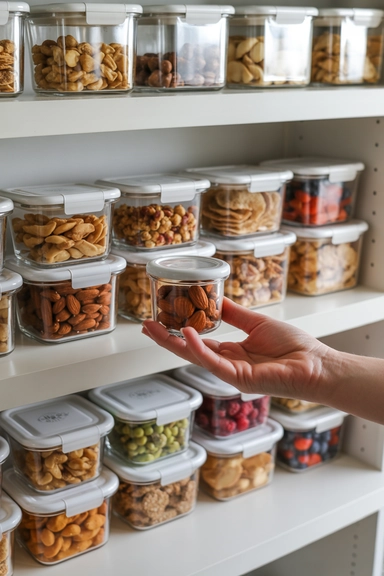
Snacks stored in large family-size bags often go stale or get buried behind other foods. Dividing snacks into grab-and-go containers keeps portions controlled and visible. Small sealed containers or bins protect chips, nuts, fruit, and cut vegetables from moisture and crushing. This makes snacking faster while keeping large packages from cluttering shelves or counters.
Grab-and-go snack storage also supports healthier eating habits. When snacks are pre-portioned and visible, there is less temptation to overeat or forget opened packages. Over time, this method prevents wasted half-eaten bags, keeps food fresher, and maintains clean, predictable storage zones in both pantry and fridge.
18- Store Sauces and Liquids in Leak-Proof Bottles
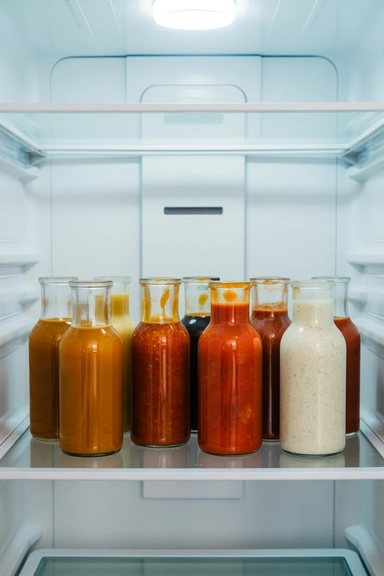
Opened sauce jars and partial liquid containers often drip, crust around lids, and create sticky shelf messes. Transferring sauces, broths, and homemade dressings into leak-proof bottles keeps storage clean and controlled. Secure lids prevent spills, while consistent bottle shapes stack neatly and stay upright. This also improves pouring accuracy, reducing waste during cooking.
Leak-proof bottle storage protects nearby foods from contamination and reduces shelf cleaning frequency. Clear bottles allow instant content recognition, preventing duplicate purchases of items already available. Over time, controlled liquid storage keeps refrigerators tidy, reduces spoilage from air exposure, and supports a professional-level kitchen organization system.
19- Use Freezer Labels for Long-Term Storage
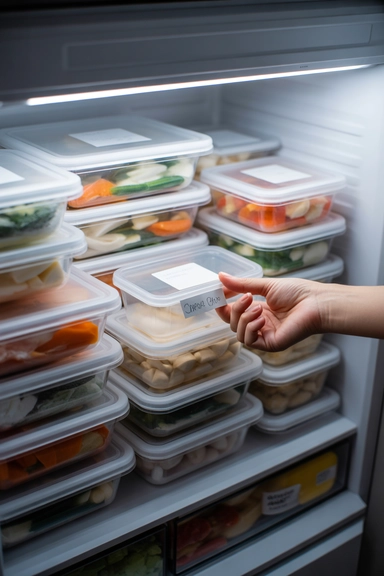
Frozen food often becomes mystery items buried in ice, leading to unnecessary disposal. Freezer labeling solves this by marking contents and dates clearly before freezing. Knowing exactly what each item contains and when it was stored prevents hesitation and forgotten food. This encourages proper rotation and timely use instead of freezer burn waste.
Labeling also improves freezer layout planning. Items can be grouped by category and stacked logically when identification is instant. Over time, labeled freezer storage creates accountability, reduces wasted frozen food, and keeps long-term storage running efficiently without chaotic digging or reorganization.
20- Store Herbs in Moisture-Control Systems
Fresh herbs spoil quickly when left loose in plastic packaging. Moisture-control herb storage balances hydration and airflow, keeping herbs crisp without mold. Dedicated herb containers or wrapped storage methods extend freshness while preventing wilting. This protects delicate leaves from crushing and keeps refrigerator drawers cleaner.
Proper herb storage also saves money by reducing repeated herb purchases. When herbs last longer, cooking becomes more flexible and ingredient planning improves. Over time, moisture-balanced herb systems reduce food waste, preserve flavor quality, and maintain tidy, specialized zones within fridge storage.
21- Maintain a Weekly Food Storage Reset
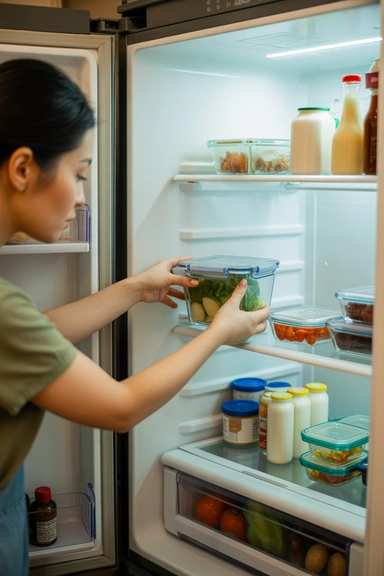
Even the best storage systems need routine correction. A weekly reset involves checking expiration dates, wiping shelves, moving older food forward, and returning items to their zones. This prevents slow buildup of forgotten containers and keeps storage systems functioning as designed. Short resets replace large cleanouts later.
Weekly review also strengthens inventory awareness. You naturally notice what foods need replenishing and which items are underused. Over time, this habit keeps waste low, storage areas hygienic, and kitchen organization permanently stable rather than temporarily neat.
Conclusion
Effective food storage is not about owning more containers, but about building systems that control freshness, visibility, and access. When dry goods stay sealed, produce breathes correctly, meals are portioned, and rotation habits stay consistent, food lasts longer and waste naturally drops. These food storage methods are designed for real daily use, not idealized setups. With structured placement and simple maintenance routines, kitchens stay organized, grocery spending lowers, and food remains fresh, accessible, and intentionally managed.