Your desk looks fine until you actually try to work at Small Office Organization. The difference between a functional home office and one that drains you every single day is not square footage. It is the items you keep within arm’s reach that you use maybe twice a month.
Most people never measure their small home office workspace before organizing it. A desk that feels cramped at thirty-six inches deep suddenly functions at thirty inches if you move six inches of clutter off the surface.
I spent three years blaming my small office for being dysfunctional before I realized the problem was not the space. It was everything I had shoved into it. If you have not read Small Kitchen Storage Ideas yet you are probably already making the mistake that costs most people an entire season.
Anyway. Start here.
How to Organize a Small Home Office Desk Surface
Stop treating your desk as a catch-all for things that have no other home.
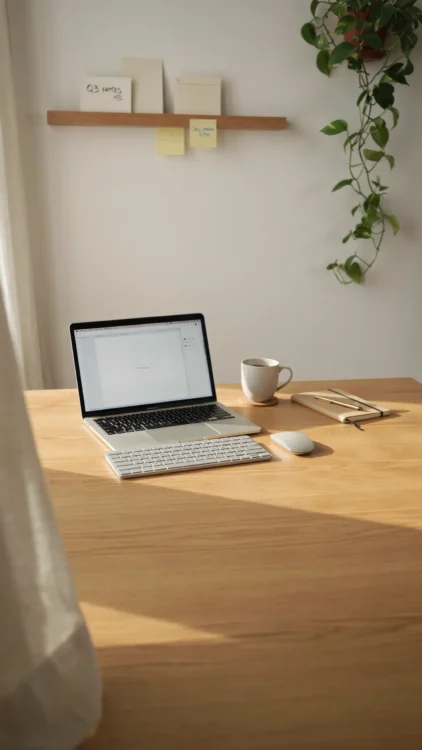
Your work surface is a tool you use to produce something, not a dumping ground. The moment you move items off your desk that do not support your actual work, you gain back functional space.
A single three-inch-deep shelf above your monitor holds keyboard shortcuts, reference cards, and sticky notes you actually need. Everything else goes somewhere else.
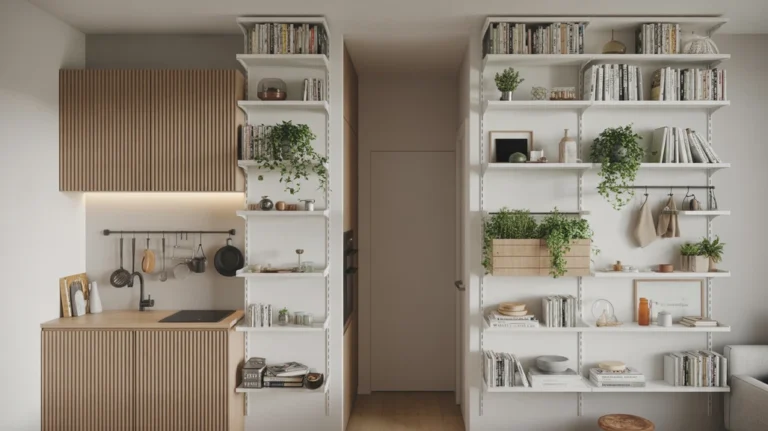
Turn Empty Walls Into Functional Home Office Storage
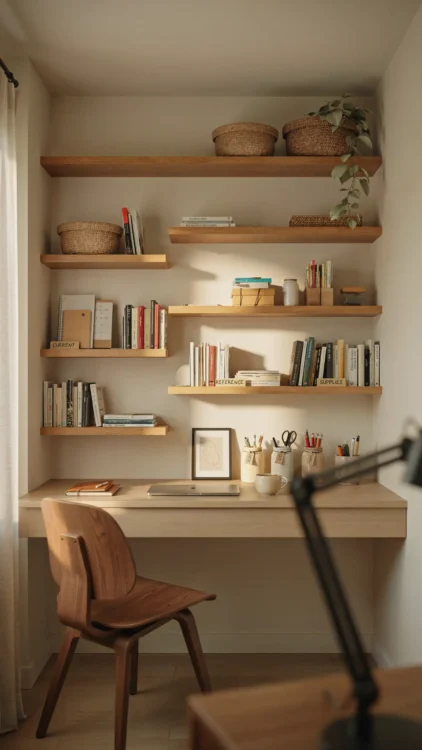
Your walls do nothing right now. Floating shelves at eye level keep frequently used items visible and off your desk without stealing floor space.
Dedicate one wall section to current projects you touch every single day. A second zone holds reference materials and guides. A third keeps supplies you grab weekly.
Your brain knows where everything lives because each zone has one specific job, not five. Mount shelves at varying heights so shorter items do not waste space under taller ones.
Vertical File Storage Ideas for Small Offices
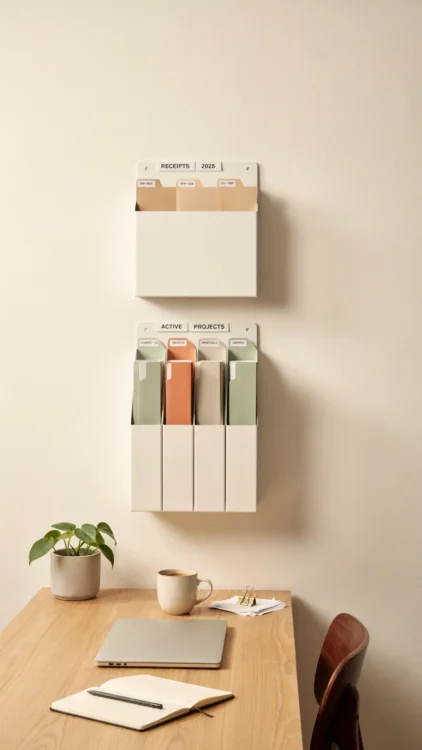
Filing cabinets eat floor space. Wall-mounted file holders do the same job in half the footprint.
Install a narrow vertical file organizer on the wall beside your desk. Hanging folders hold active projects, receipts, and paperwork you reference monthly.
Label every folder with what actually lives inside, not vague category names. This is where most setups quietly fall apart.
You create zones and then stuff them until they collapse. Keep your vertical files to active documents only.
How to Organize Office Drawers Efficiently
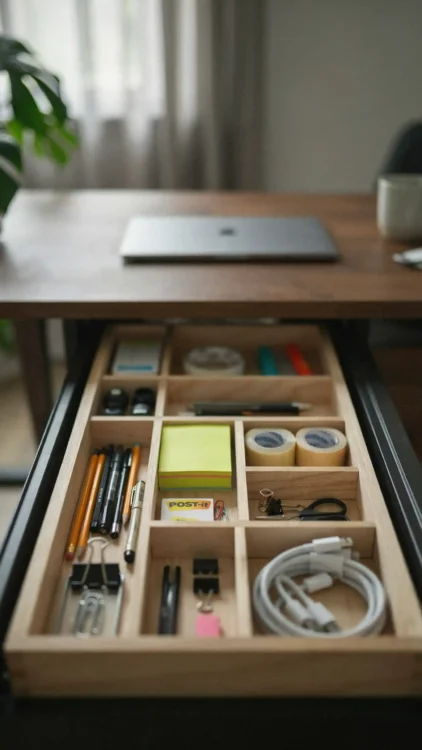
Your desk drawers either organize your work or hide chaos.
Divide your top drawer into zones using drawer dividers or even small boxes you already own. Writing implements in one section, sticky notes and tape in another, charging cables in a third.
Everything has a spot, and you know exactly where it lives without digging. Do not let your drawer become a junk repository.
Cable Management That Does Not Require Tools

Cords tangle because you let them. Velcro cable ties or even old hair ties bundle cords together and keep them from becoming a nest behind your desk.
Label each cable at both ends with what it powers. When you need to unplug something, you grab the right one instead of testing five different cables.
A simple label maker or even tape and a pen does this job perfectly. Run cables along the back edge of your desk using adhesive clips.
Desk Organizers That Actually Fit Your Space
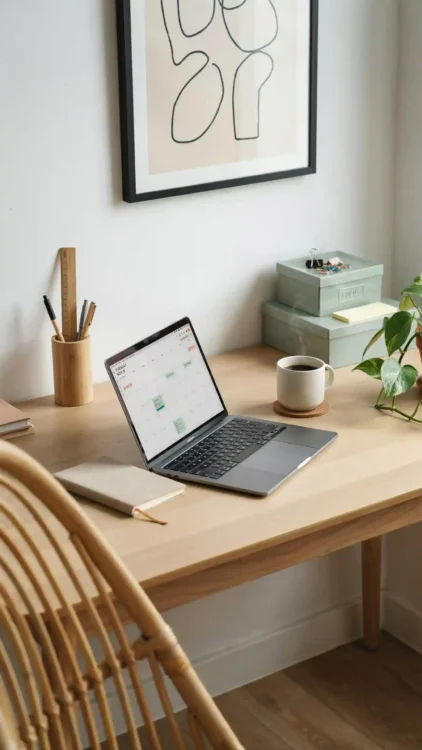
A single vertical pen holder takes up four square inches. A scattered pile of pens takes up your entire mental energy every time you need to write something.
Choose organizers that fit your desk dimensions exactly. Measure your space before you buy anything.
A six-inch-wide organizer for a desk only eight inches wide wastes half your surface area. Use drawer dividers, small boxes, or even mason jars to hold different supplies.
Desk Shelf Organization for Small Workspaces
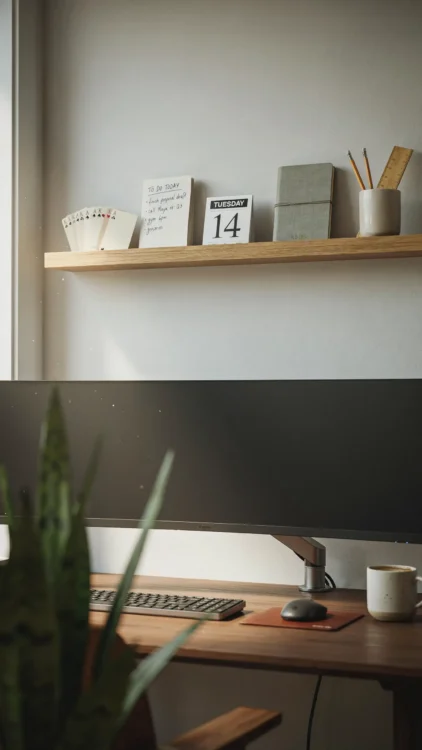
This shelf holds the things you look at constantly while working. Reference cards, a small calendar, your task list for today, nothing more.
Everything on this shelf earns its spot by being something you touch or look at multiple times per day. A pen holder, a small notepad, your coffee mug.
Do not stack items on this shelf. Do not cluster things.
A Simple Pegboard Setup for Office Essentials
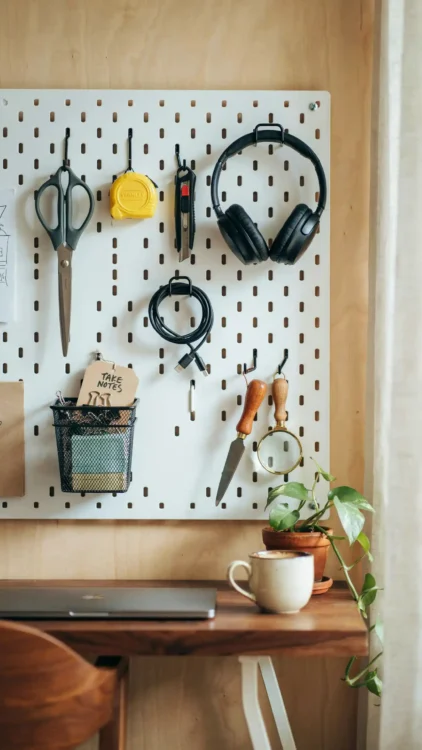
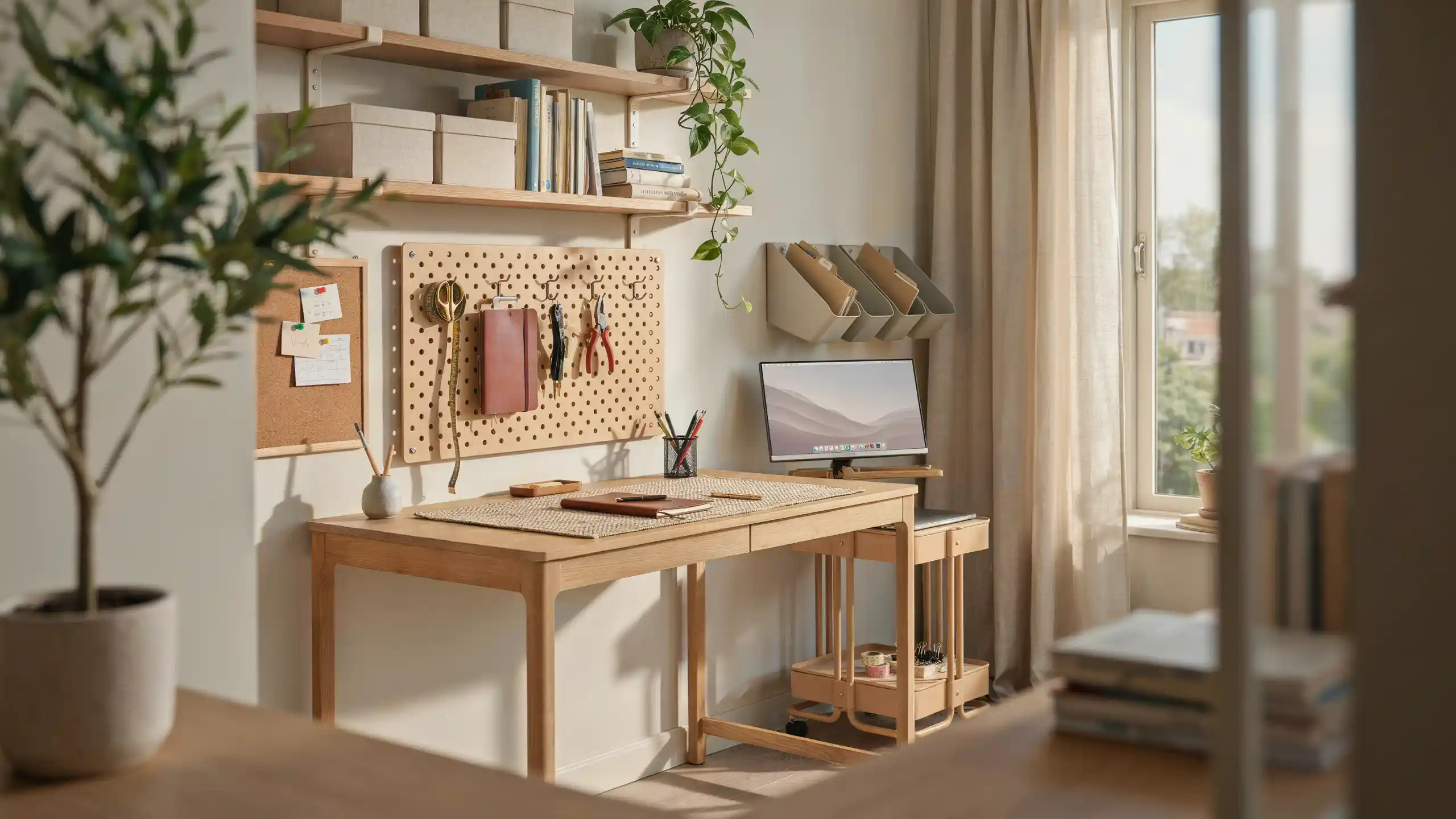
A pegboard holds more than your garage tools. Office pegboards display items you grab regularly while keeping your desk clear.
Mount a small pegboard on the wall beside your desk and hang items you use daily. Scissors, measuring tape, a utility knife, or whatever tools your specific work requires.
Everything hangs visibly, and you grab what you need in one second. Paint your pegboard to match your office aesthetic.
The Under-Desk Zone That Nobody Thinks About
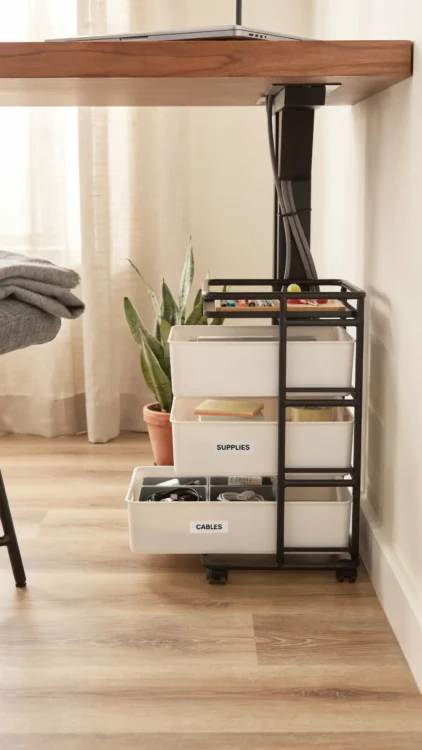
The space under your desk either works for you or against you. Most people let it become a cord graveyard and a feet-kicking zone.
Dedicate this space to one item only. A rolling storage cart, a filing cabinet, or a shelf for archived boxes.
Keep the area clear enough that you can still move your feet comfortably. If you cannot reach under your desk without rearranging ten things, your under-desk zone is failing you.
Rolling Carts for Projects You Move Between Rooms
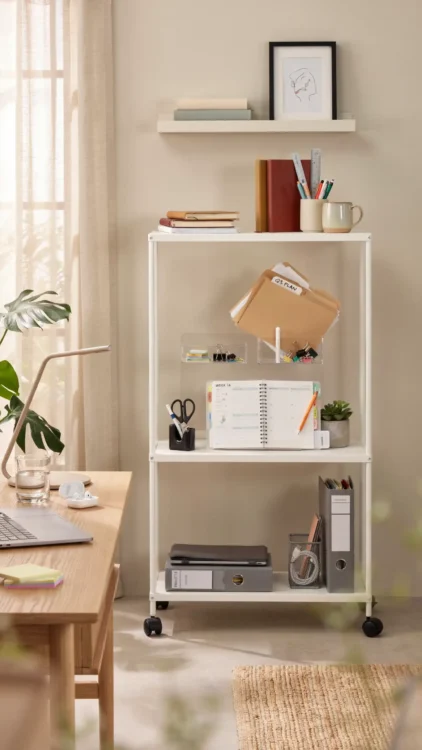
A three-tier rolling cart holds everything for a project you work on in different spaces. Kitchen table, living room, back to your office, the cart moves with you.
Load your cart with current materials, tools, and references. Pull it out when you work and push it back into a corner or closet when you finish for the day.
This method works best when you use the same three or four projects regularly. If you have twelve different rotating projects, a rolling cart creates chaos instead of order.
Labeling Systems That You Actually Maintain
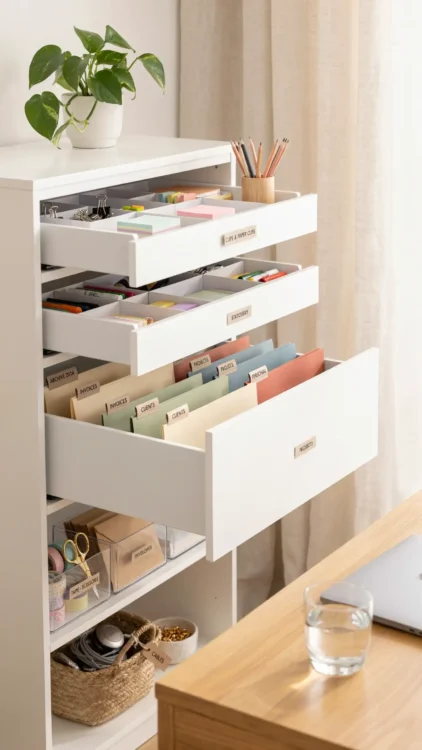
Labels fail when they are vague or when you label things that do not need labels.
Label only containers that hold mixed items. A shelf holding reference books does not need labels.
A drawer holding pens, pencils, clips, and rubber bands needs clear labels on each section. Use a label maker, or write labels by hand.
How a Weekly Inbox Keeps Your Desk Clear
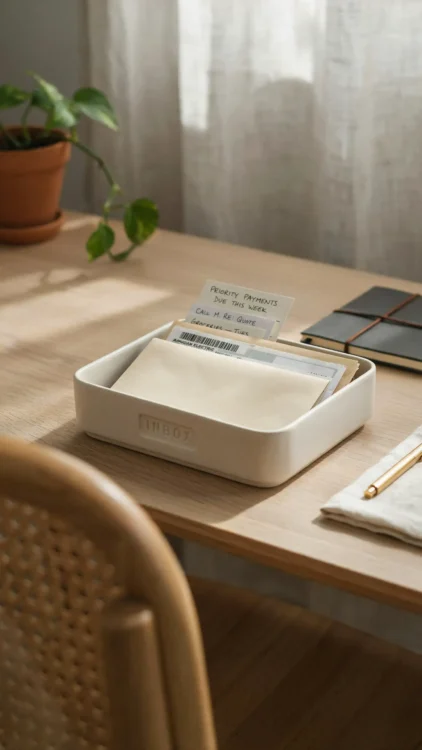
Paper accumulates. Bills, articles, receipts, notes, and things you meant to deal with pile up on your desk and destroy your workflow.
Create a single inbox tray where everything that arrives goes in for one week. At the end of each week, you process it.
File what stays and recycle what does not. Most people get this wrong because they never went through their inbox system and the results show immediately.
Archived Boxes in a High Spot
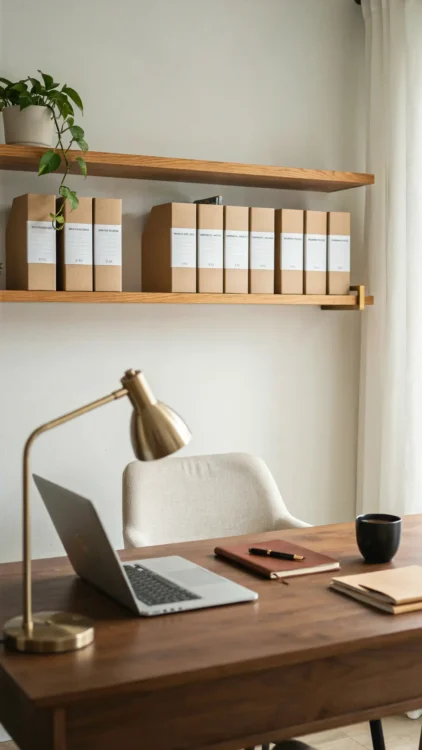
Items you reference once per year do not live on your desk or in your active filing system. They live in a labeled box on a high shelf or in another room entirely.
Label each box with its contents and the year. “2024 Tax Documents,” “Old Project Files,” “Reference Materials Archive.”
Stack boxes so you can pull what you need without toppling everything. Keep your active workspace for active work only.
Cable Organizer Boxes
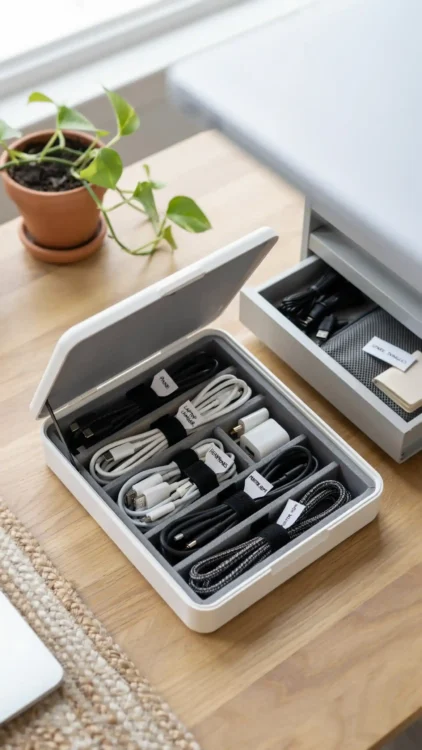
Cables breed. USB cables, charging cables, adapter cables, cables for devices you no longer own tangle and multiply in every drawer.
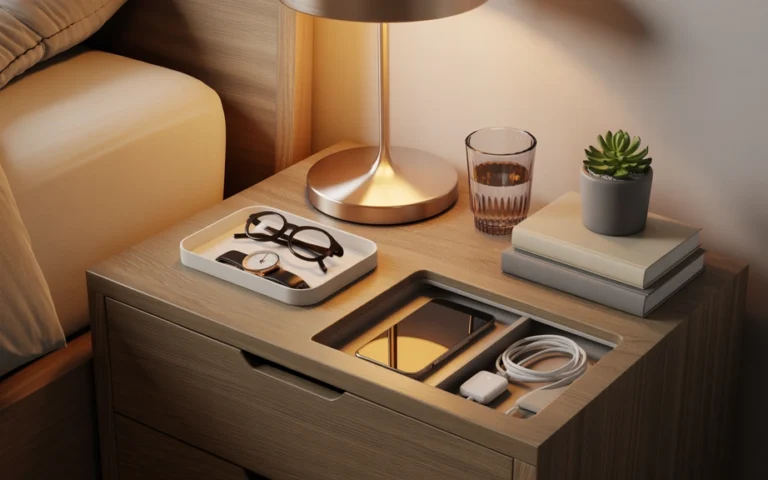
Get a single box or drawer organizer dedicated only to cables. Coil each cable loosely and fasten it with a velcro tie.
Label what each cable powers and store the box out of sight but accessible. Check this box quarterly and pull out cables for devices you no longer own.
Keep Essential Information Within Sight
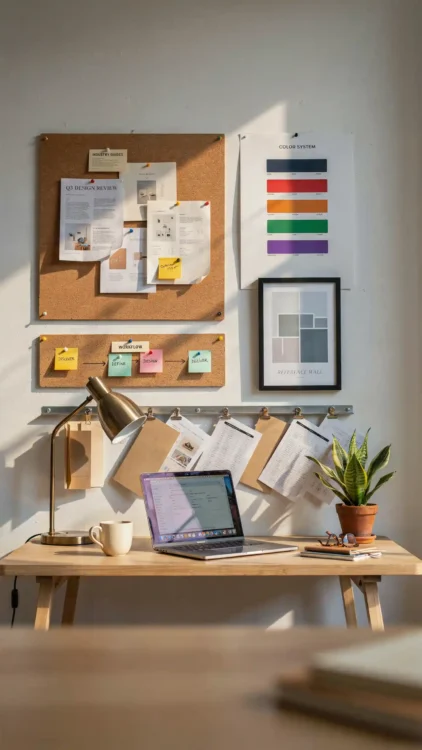
One wall section holds only materials you look at while working. Industry standards, guidelines, your client’s brand specifications, a color palette you are currently using.
Pin or tape these items directly to the wall or use a cork board. Keep this wall clear of everything except what you reference actively during work.
Rotate these materials out every month. As your current projects change, this wall changes with them.
Task Board Organization
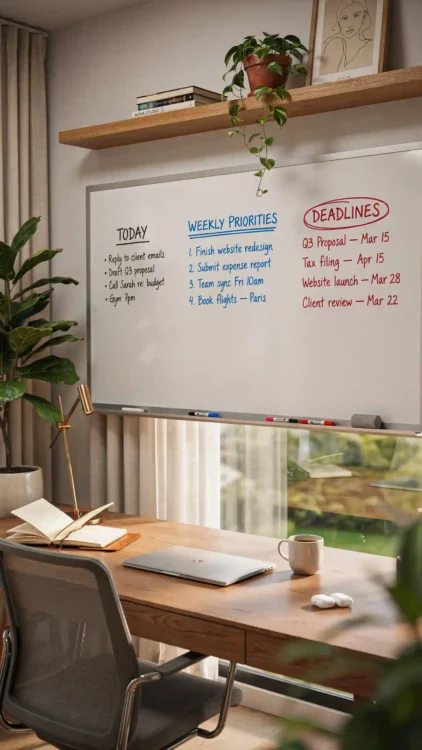
A whiteboard or cork board holds your daily task list, your weekly priorities, and your project deadlines. It lives at eye level where you see it constantly.
Write tasks as you commit to them and cross them off as you complete them. The act of writing and crossing off creates momentum.
Keep this board updated daily. A stale task board becomes invisible and your organization system fails.
Monitor Stand With Hidden Storage
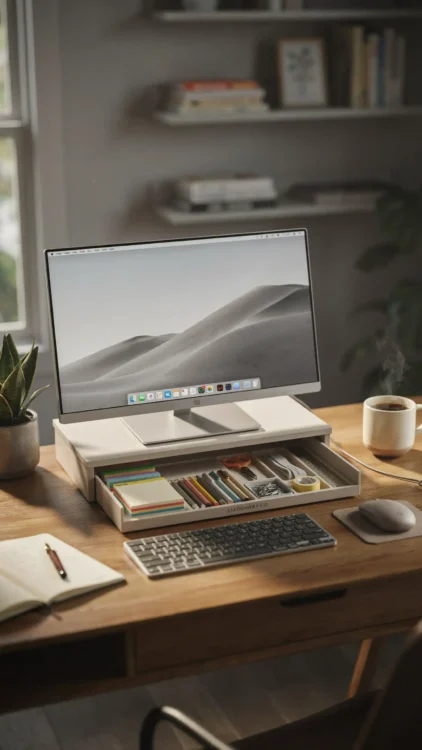
A monitor stand with a drawer underneath holds items you need occasionally but not constantly. USB drives, extra pens, notepads, a small fan, or backup supplies all fit underneath.
This one piece of furniture gains you storage without taking up any additional floor space. Your monitor sits at eye level and your desk gains an entire drawer.
Choose a stand with a drawer that slides smoothly. Drawers that stick get avoided and the storage becomes useless.
The Desk Pad That Defines Your Work Zone
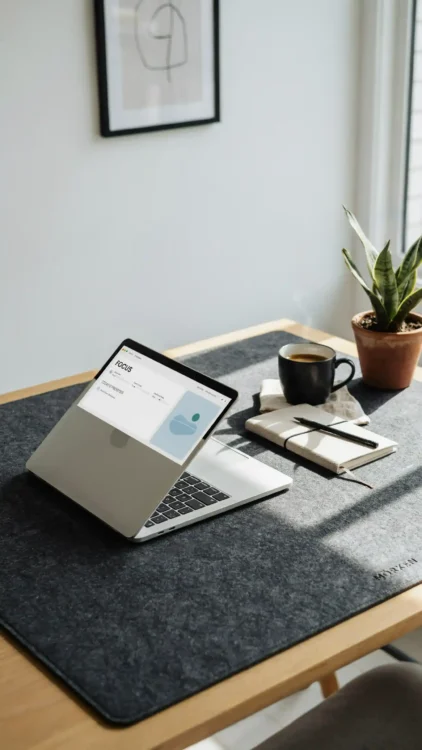
A large desk pad creates a visual boundary between your work zone and your non-work zone. It also protects your desk and gives you a defined surface for working.
Choose a pad that covers most of your desk surface. It anchors your space and makes the work area feel intentional and separate.
This is where most setups start to fail. You organize everything but then spread items across the entire surrounding area anyway.
Cord Clips and Adhesive Hooks
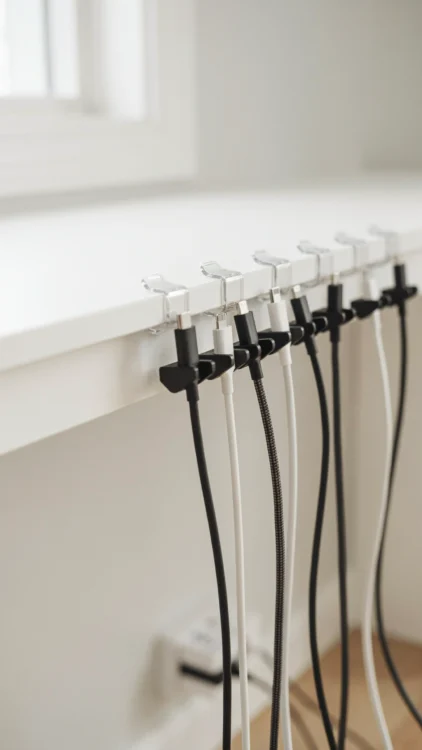
Adhesive hooks hold charging cables in place so they do not dangle or tangle. Cord clips keep cables running along the back of your desk instead of dragging across your floor.
Install hooks on the back edge of your desk at regular intervals. Run your cables through these clips so they stay contained and organized.
This takes thirty minutes and transforms the back of your desk from chaos to order. Skipping this step is exactly how people end up redoing their desk setup twice.
Drawer Depth Dividers for Deep Drawers
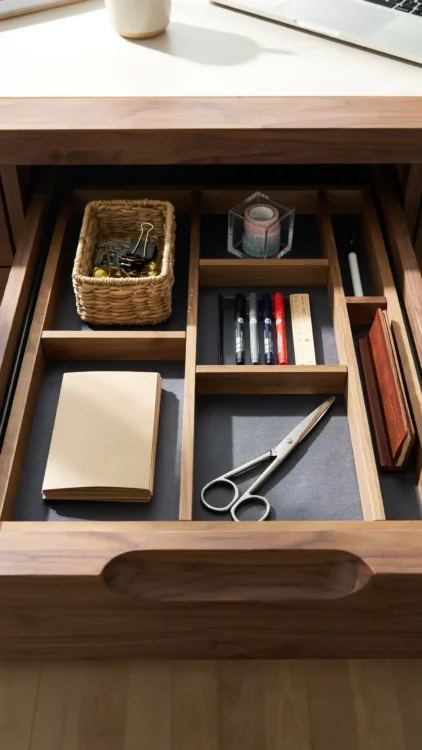
Deep drawers waste space because items sink to the back and you forget they exist. Dividers create shallow sections so everything stays visible and accessible.
Use adjustable dividers or create sections with small boxes. Every item in your drawer should be visible without digging.
Final Thoughts on Home Office Organization
Small offices require ruthless decisions about what actually lives in your workspace and what moves elsewhere. Your desk surface stays clear because only active work tools touch it.
Your walls become your storage and your vertical space becomes your real estate. Your drawers stay organized because you divide them into zones.
The moment you accept that your office is small and stop fighting that fact, you organize it correctly. Label everything consistently so you know where to find it without thinking. Most people get this wrong because they never went through their actual setup and the results show immediately.
FAQ About Home Office Organization
How do I organize a small office with no wall space?
Use every inch of vertical space you do have. Install floating shelves above your desk, beside your desk, or even on a wall behind your chair. A pegboard takes minimal space and holds surprising amounts. If your walls are already full, focus on under-desk storage, rolling carts, and drawer organization to maximize what you have.
What is the best storage solution for cords and cables?
Cable ties or velcro straps bundle cords and keep them from tangling. Label each cable at both ends so you know what powers what. Run cables along adhesive clips attached to the back of your desk so they stay off the floor and out of sight. A small container or box dedicated only to backup cables keeps them from spreading everywhere.
Can I organize a home office if I share the space with other people?
Yes, but you need clear boundaries. Use a rolling cart or a closed storage unit that you can move when someone else needs the space. Label your zones clearly so others know not to disturb them. Vertical storage and wall organization take up less floor space, making it easier to share a small room.
Sarah Mitchell’s Take
I have reorganized my home office four times. The version that finally stuck cost less than thirty dollars and took one afternoon. Most of the advice out there assumes you have more space than you do, or more time to maintain complicated systems.