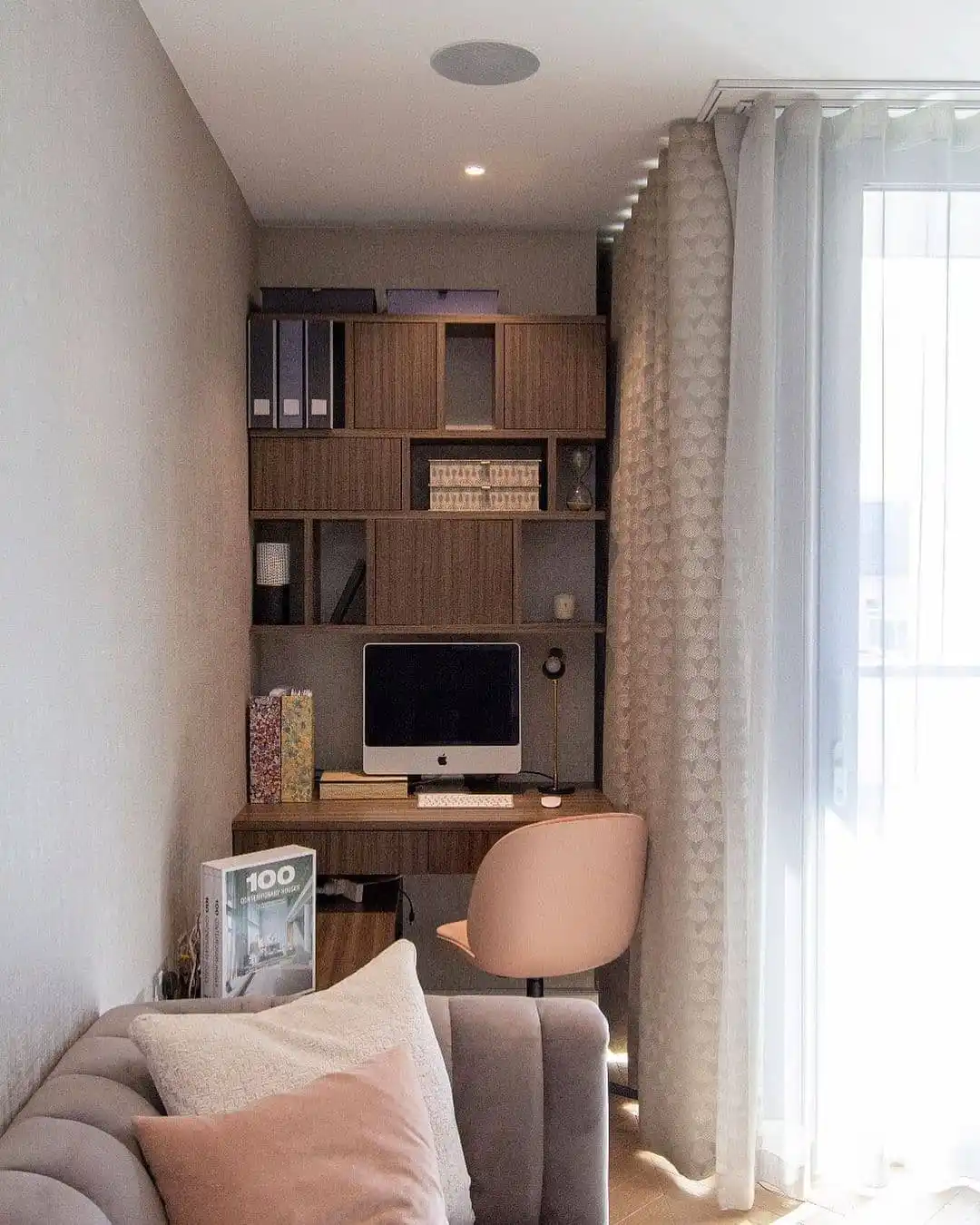
Your desk touches two walls and your chair blocks the door. The problem is not actually space.
Most people with small offices never use their vertical walls, never measure their actual workspace depth, and keep supplies within arm’s reach that they grab maybe three times a month.
The real difference between a cramped setup and one that actually functions comes down to knowing what needs to stay close and what can live elsewhere. Home office ideas that work in tiny spaces all start with one principle: stop treating empty walls like decoration.
They are storage waiting to happen. I have reorganized my own office five times, and every version that worked started by using corners and vertical space that was already there. See these Vertical Storage Ideas and Desk Organization Ideas for Small Spaces for more smart small-space solutions.
Start here.
Image source: Instagram
The Measurement Nobody Takes
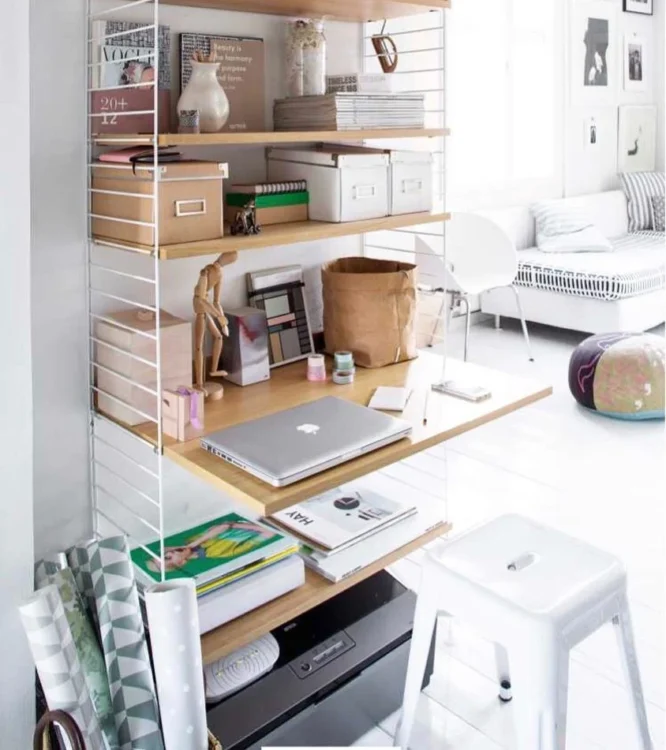
Image Source: Instagram
Most people eyeball their workspace and guess. That is where everything fails.
Pull a tape measure and check how deep your desk actually needs to be. A standard desk at thirty inches deep leaves barely any legroom if your chair rolls backward. Push it to twenty-two or twenty-four inches and suddenly you gain three extra feet of floor space that transforms the entire room.
Your actual work surface does not need to be thirty inches wide. It needs to be whatever width your monitor, keyboard, and coffee cup require.
Check your wall heights too. That empty space above your desk from four feet up to the ceiling is doing absolutely nothing.
The Shelf Behind Your Monitor
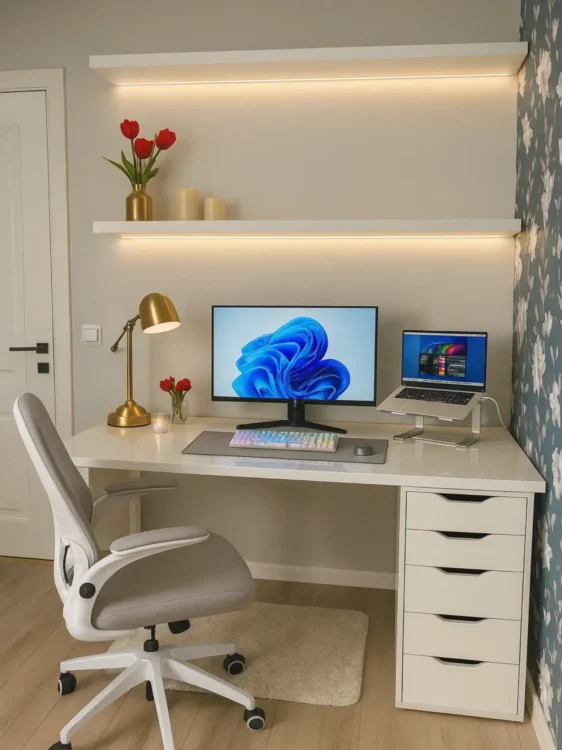
Image Source: Instagram
That gap between your screen and the wall behind your desk is wasted real estate.
A narrow floating shelf twelve to fourteen inches deep mounted directly behind your desk, just above eye level when sitting, holds your most-used reference materials or a small plant without cluttering your surface.
Install it at least six inches above your monitor so your sightline stays clear. When you look up from work, the shelf should feel like part of the room, not a barrier.
This single shelf removes the need for a hutch or overhead storage that makes small rooms feel suffocating.
The Corner That Holds Everything
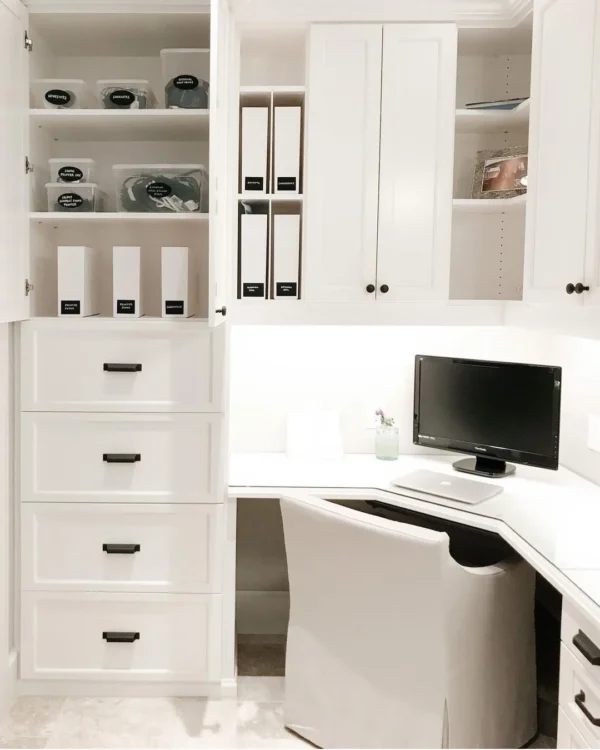
Image Source: Instagram
Every small office has one corner that feels like dead space.
A tall, narrow shelving unit, even just two feet wide, fits perfectly where two walls meet. Five or six shelves with twelve inches of depth each hold binders, reference books, backup supplies, and anything you need accessible but not on your desk.
Pair it with small labeled containers on each shelf so everything has a home. Your brain stops searching for things when it knows exactly where they live.
A corner unit that disappears into the room’s geometry makes the space feel larger because your desktop stays clear. If you need more compact setup inspiration, these Small Space Storage Ideas and Studio Apartment Organization Ideas show even more ways to maximize tight layouts.
Vertical Storage Without Floor Space
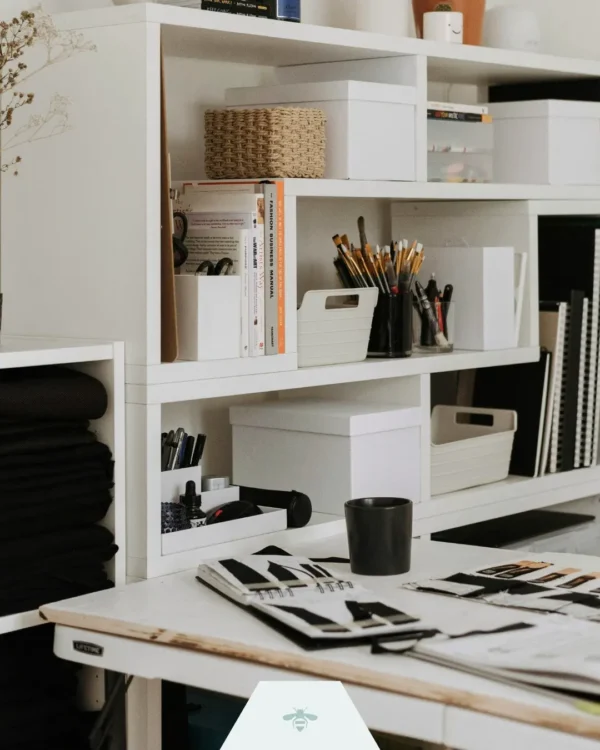
Image Source: Instagram
Wall-mounted pegboards or slat walls give you storage without eating any floor space.
Mount a pegboard above your desk at eye level, eighteen inches above your surface. Hang your most-used items like scissors, tape, headphones, and charging cables on hooks so they sit visible and reachable without opening drawers.
The pegboard itself becomes part of your office aesthetic if you choose black or natural wood. Empty space on a pegboard reads as clean.
Packed pegboards read as chaotic even when everything is organized. Leave breathing room.
The Drawer System That Actually Works
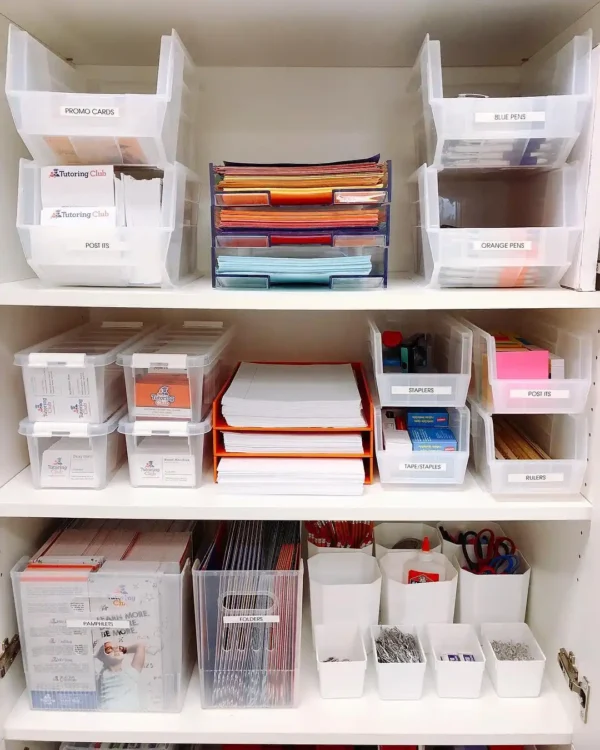
Image Source: Instagram
One deep drawer under your desk beats three shallow ones every time.
A single wide, deep drawer, twelve to fourteen inches deep, organized into three or four sections with dividers holds pens, sticky notes, charging cables, headphones, and daily supplies. Everything stays contained, out of sight, but within two seconds of reaching.
Pull the drawer out and you see everything at once. No digging through nested containers or moving ten items to find one pen.
Label each section so anyone using the space knows where things live. Your hand finds what it needs without your brain having to think.
The Wall Space Above Your Door
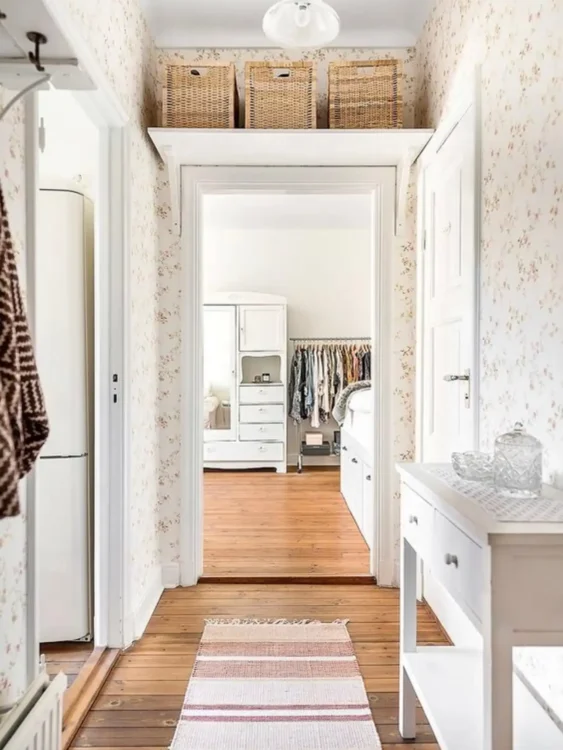
Image Source: Instagram
That wall space above your office door, the awkward stretch from seven feet up to the ceiling, holds a narrow shelf that nobody notices.
Install a thin shelf there, eight to ten inches deep, that runs the length above the doorframe. This spot holds backup paper, printer ink, or files you reference maybe twice a month. It is out of the way and does not interfere with walking through the door.
The shelf disappears because your eye does not naturally land there when you enter the room. Yet it holds the overflow that would otherwise pile on your floor or desk.
This is the part most people avoid.
Cable Management That Doesn’t Look Like Chaos
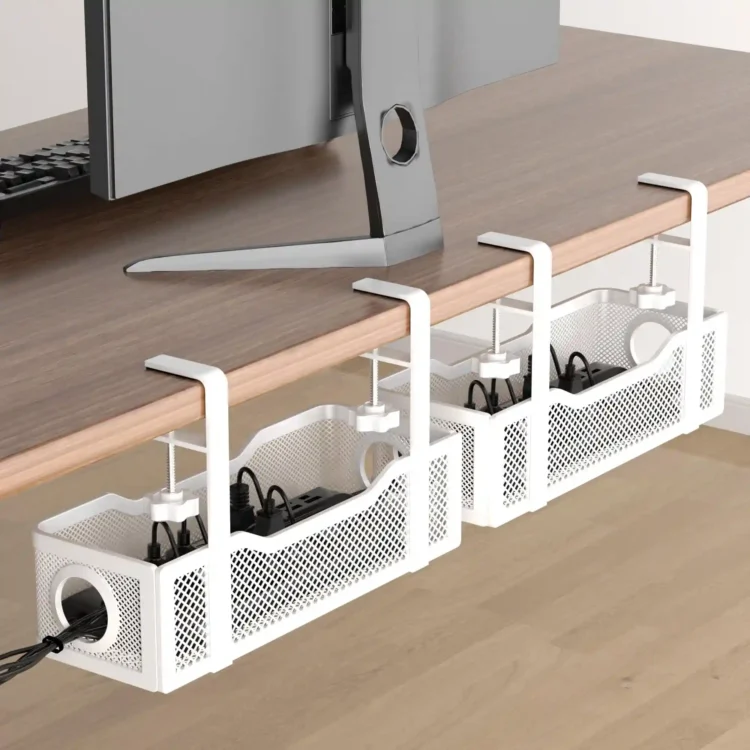
Image Source: Instagram
Cables behind a desk create visual noise that makes small spaces feel smaller.
Run all cables through one fabric sleeve that sticks to the back of your desk. Zip ties every foot along the cable run keep everything bundled and invisible from the front.
Color-code each cable with a small dot of electrical tape so you know which one powers what. When you need to unplug something, you grab the right one without unplugging everything else by accident.
One fabric sleeve costs under ten dollars and transforms how your desk looks from behind.
The Under-Desk Basket System
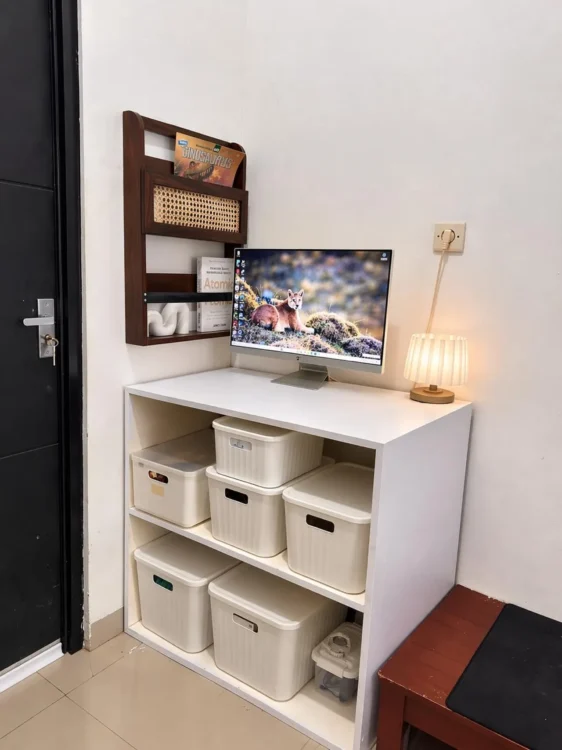
Image Source: Instagram
That empty space under your desk, the gap between the floor and your desktop surface, holds a flat basket that slides in and out.
Store your laptop bag, backup files, or off-season supplies in one basket that sits completely hidden unless someone crawls under your desk. It uses zero floor space and keeps bulky items out of sight while remaining accessible.
Choose a basket that is lower than your knees so it does not interfere with your leg room when you are sitting. Fabric baskets work better than plastic because they do not sound hollow when items shift inside.
Your space stops looking cramped the moment you hide what does not belong on top.
The Rolling Cart That Disappears Into Corners
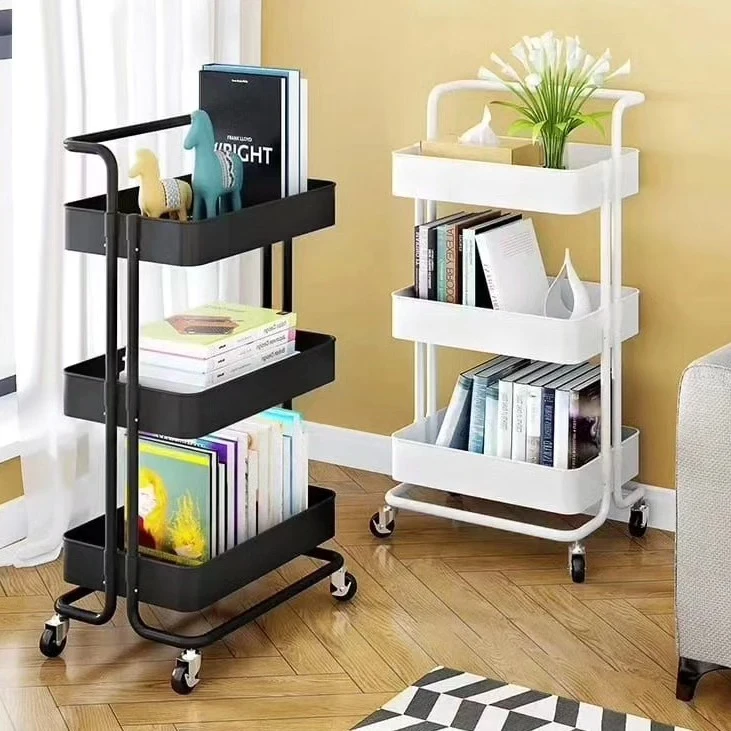
Image Source: Instagram
A narrow rolling cart, eighteen inches wide, slides into the corner beside your desk and becomes invisible until you need it.
Stock it with printer paper on the bottom shelf, office supplies on the middle shelf, and ongoing projects on the top. Everything you need for printing, copying, or organizing lives on this cart instead of scattered across your desk.
Wheels mean you can pull it out when you need to work with it and push it back when you are done. The cart becomes temporary desk space without taking up permanent real estate.
Most people think they do not have room for a cart. They do. They just have not looked at their corners yet.
The Window Ledge as Workspace
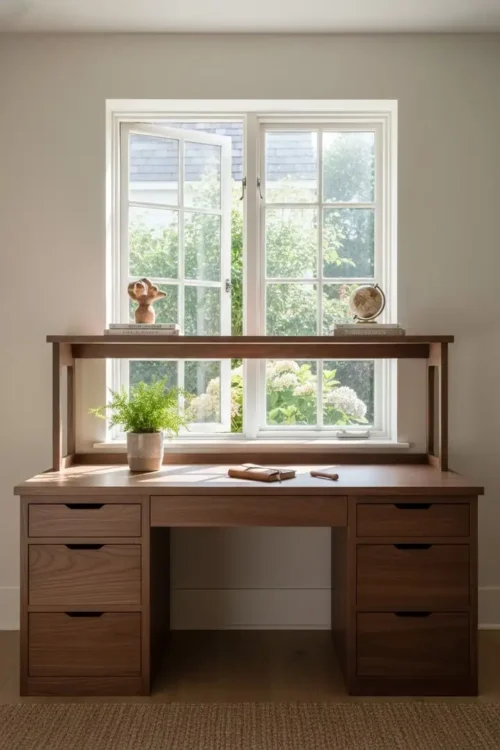
If your office has a window, that ledge is not just for plants.
A thin desk pad, ten to twelve inches wide, transforms your window ledge into secondary workspace for handwriting, sorting mail, or temporary project staging. It keeps your main desk clear while giving you a secondary surface that feels separate.
Position a small shelf above the ledge, six inches up, for reference books or supplies you use during those handwriting sessions. The window becomes a complete micro-workspace.
Natural light from the window makes this spot feel intentional, not cramped. Your main desk handles your computer work. Your window ledge handles everything else.
The Magnetic Board Above Your Desk
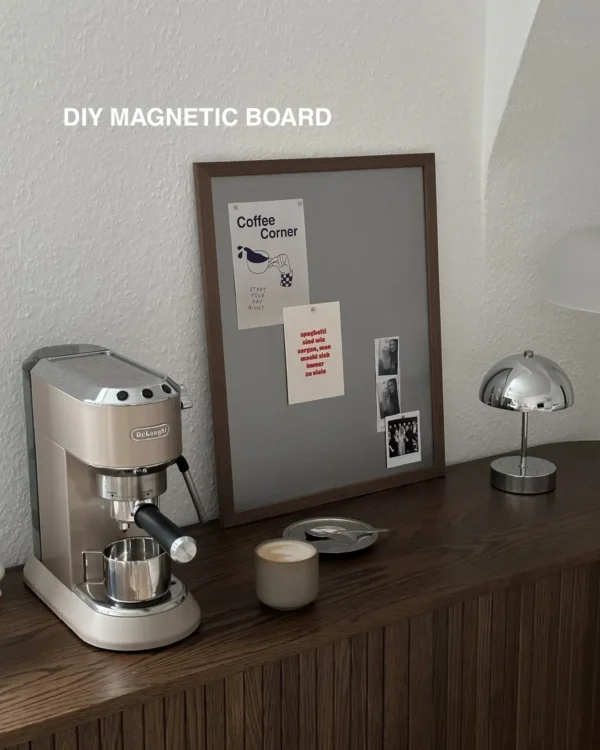
A magnetic whiteboard or steel panel mounted directly above your desk, at eye level, holds your daily priorities without taking up any desk space.
Stick your three tasks for the day on magnets. Write your deadline for the week. Post reference information you need visible. Everything your brain needs to see lives on this board instead of scattered across sticky notes.
The board itself becomes part of your office design if you choose a frame style that matches your aesthetic. It looks intentional, not like clutter.
Glance up instead of scrolling through notes. Your focus sharpens when your priorities sit directly in your sightline.
The File Cabinet As Desk Divider
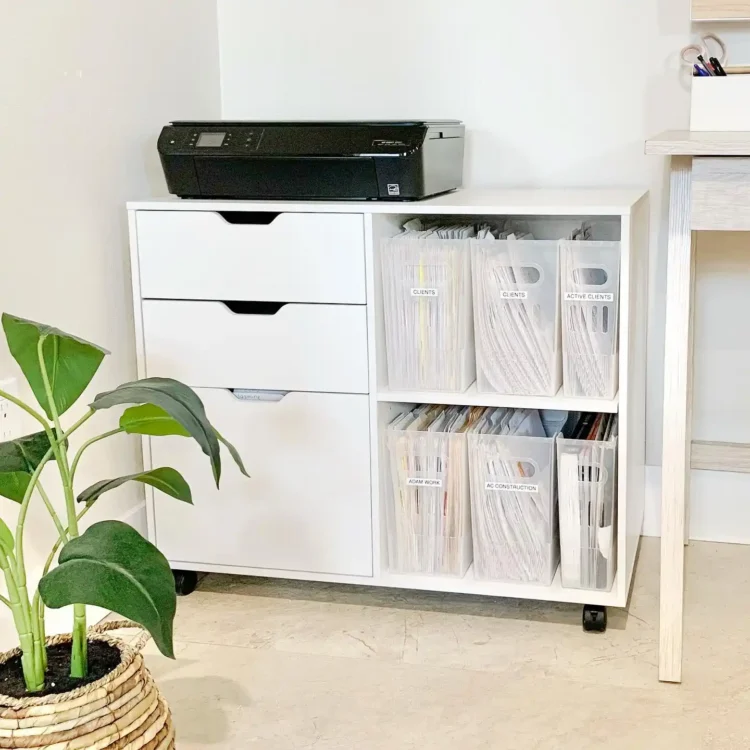
Image Source: Instagram
A two-drawer file cabinet positioned beside your desk, perpendicular to it, becomes both storage and a visual divider that makes a small office feel zoned.
One drawer holds client files or project documents. The other holds bills, receipts, and personal paperwork. Everything you need is within arm’s reach but tucked into a dedicated container instead of spreading across your workspace.
The cabinet becomes a divider that makes the small office feel like it has separate zones, even though it is just one room. Your brain processes this as more space.
Paint the cabinet to match your desk or leave it natural. Either way, it serves double duty as storage and spatial definition.
The Overhead Shelving System
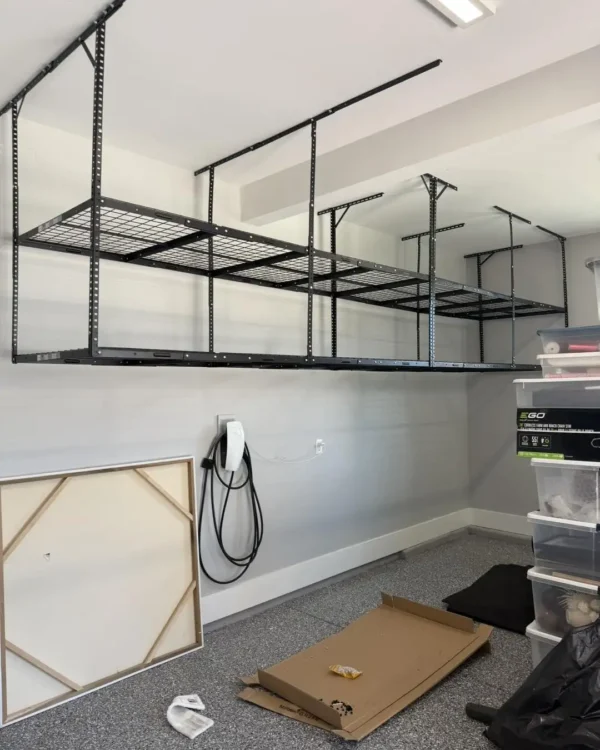
Image Source: Instagram
Wall-mounted shelves that run the entire length of one wall, from desk height all the way to seven feet up, create the illusion of more wall than you actually have.
Lower shelves, from three to five feet up, hold reference books, finished projects, and supplies you access regularly. Upper shelves, from five to seven feet up, hold backup inventory and items you reference maybe once a month.
The shelves themselves become part of your room’s architecture instead of looking like an afterthought. Everything that used to pile on your desk now lives in this vertical system.
One wall of shelving eliminates the need for a separate storage cabinet or closet system entirely.
The Keyboard Tray That Reclaims Desktop Space
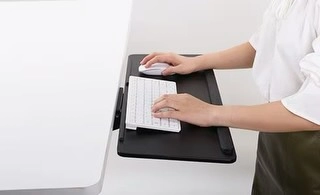
Image Source: Instagram
A pull-out keyboard tray mounted under your desk surface lowers your keyboard height and frees up three to four inches of desktop depth.
This reclaimed space holds your coffee cup, a small notepad, or breathing room that makes your desk feel less cramped. Your keyboard sits at the correct ergonomic height instead of sitting on your desktop taking up premium real estate.
The tray slides in when you are not typing and disappears completely. Most people who try one never go back to a flat keyboard on their desk.
The ergonomic benefit is real. The space-saving benefit is even better.
The Wall Organizer With Hidden Slots
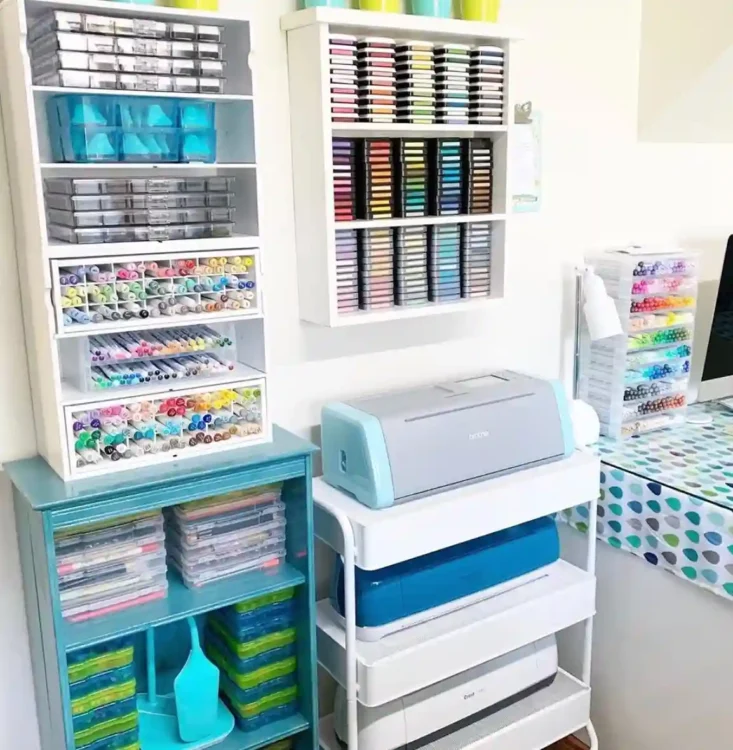
Image Source: Instagram
A hanging wall organizer with deep pockets, hung beside your desk instead of above it, holds papers, envelopes, notepads, and supplies that otherwise drift across your surface.
Each pocket is labeled so you know where everything lives. Your hand reaches for the pocket instead of searching three drawers.
The organizer itself becomes a design element if you choose one in natural linen or a color that matches your office. It looks intentional, not desperate.
This is where most setups start to fail without realizing it.
The Vertical File Holder That Stands Alone
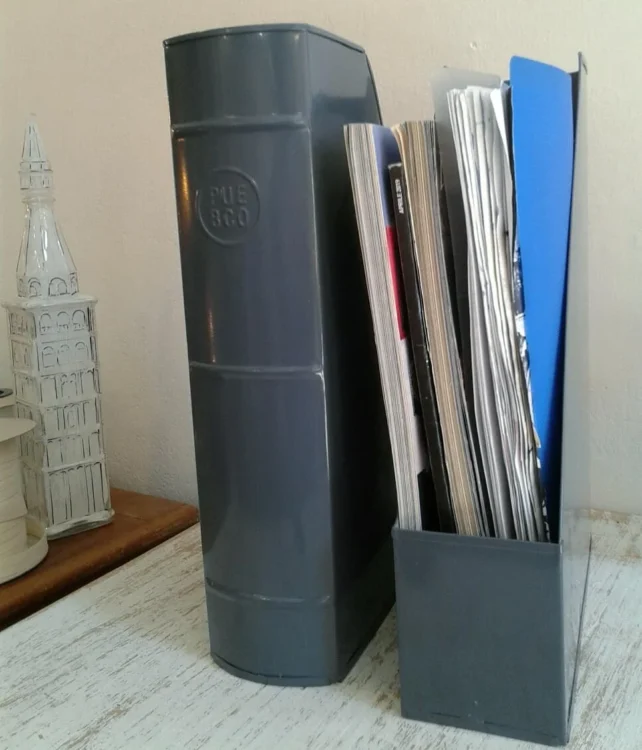
Image Source: Instagram
A vertical file holder, standing on your desk or on a nearby shelf, organizes active projects so they sit visible but not sprawled across your workspace.
Each file holds one project, one client, or one topic. You see all your active work at a glance without opening a filing cabinet or shuffling through stacks.
The holder takes up a six-inch square of surface space and holds twelve to fifteen files standing upright. Your desk surface transforms from a paper pile into a clean, organized system.
This one took me the longest to figure out, but it changed everything about how my office functions.
The Door-Back Organizer for Supplies
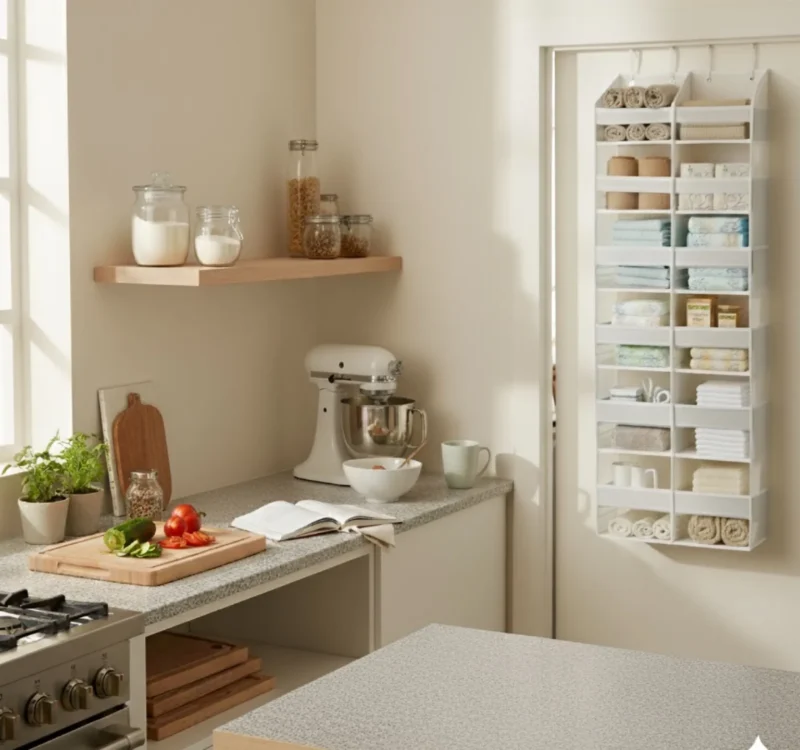
Image Source: Instagram
The back of your office door, that wall space that nobody uses, holds a hanging organizer with pockets or hooks.
Mount a shoe organizer, a fabric wall hanging with pockets, or hooks that hold scissors, headphones, chargers, and backup supplies. When you close the door, all your overflow disappears.
The door becomes invisible storage that holds everything you need without claiming any floor or desk space. Open the door and you have access. Close it and your office looks clean.
Most people get this wrong because they never went through and thought about what lives on top of their desk that could live on the back of their door instead.
The Narrow Floating Desk Shelf System
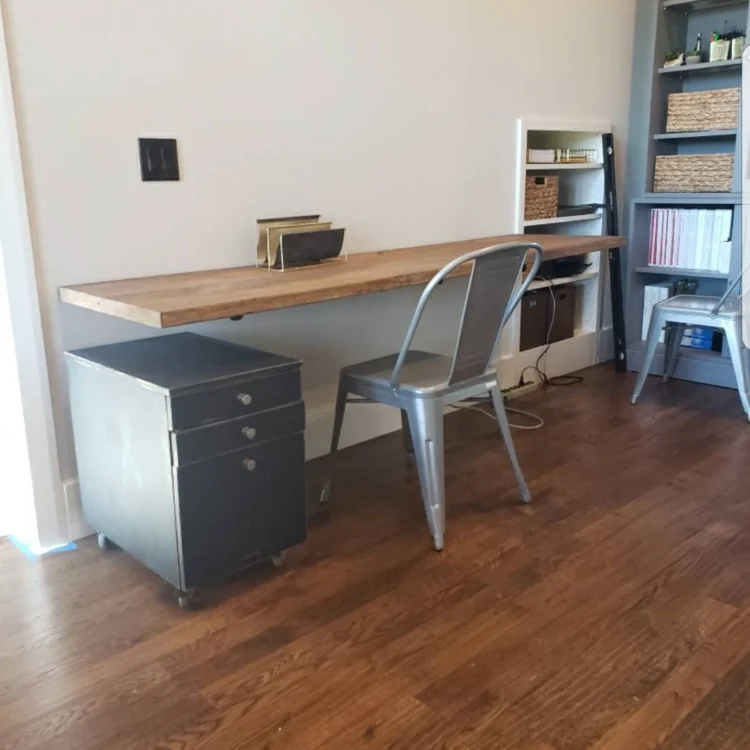
Image Source: Instagram
If your main desk is small, add a floating shelf system that runs above it at two different heights, creating a terraced effect.
Lower shelf at forty-eight inches holds your monitor. Upper shelf at sixty inches holds decorative items, a small plant, or reference materials. The terraced effect creates visual interest in a small space.
Everything stays off your desktop. Everything you need sits within reach. Your desk surface stays clear.
The shelves become part of your office’s architecture instead of looking like you ran out of space and started stacking things.
Final Thoughts on Home Office Ideas
These nineteen setups all start with the same principle: stop defending your lack of space and start using the space you have. Your vertical walls hold more than you think. Your corners work harder than you let them. Your unused wall stretches are doing nothing while you cram supplies onto your desk.
The office that functions is not the one with the most square footage. It is the one where every item has a home and your desktop stays clear. I have seen eight-by-ten offices that feel spacious and twenty-by-twenty offices that feel cramped. The difference is always organization, never size.
Start with the corner unit and the floating shelf behind your monitor. Everything else follows.
FAQ About Home Office Ideas
What is the best desk size for a small office?
Twenty-four to twenty-eight inches deep is ideal for small spaces. Standard thirty-inch desks waste legroom that you need for your chair to roll. Measure your actual workspace before buying anything. A shallower desk with vertical storage above it beats a deep desk with nothing around it.
How do I organize cables so they do not show in my small office?
Run all cables through one fabric sleeve attached to the back of your desk with adhesive clips. Zip ties every foot keep everything bundled. Color-code each cable with electrical tape so you know which one powers what. One sleeve costs under ten dollars and makes your desk look instantly cleaner.
Should I use closed storage or open shelves in a small office?
Mix both. Open shelves for items you use daily, like reference books or current projects. Closed storage like file cabinets or under-desk baskets for supplies, backup inventory, and items you reference occasionally. Open shelves make the space feel bigger. Closed storage keeps visual clutter away.
Sarah Mitchell’s Take
I have organized this same office four times in three years, and the version that finally worked cost less than eighty dollars and took one Saturday afternoon. Everything I got wrong in year one is covered in these nineteen ideas, and I wish I had found this approach before I started buying furniture.