
Introduction
A cluttered bedside table quietly adds stress to your evenings and mornings. The right nightstand organization ideas create a calm visual reset so your bedroom feels intentional instead of chaotic. When everything from charging cables to books has a defined place, your nightly routine becomes smoother and your surfaces stay clear. The goal isn’t minimalism for the sake of aesthetics—it’s smart placement that supports real habits. A well-organized bedside table should feel styled—yet effortless to maintain every day. When storage, layout, and daily essentials work together, even a small nightstand can stay clutter-free without constant tidying. If you’re organizing your bedroom as a whole, start by resetting surrounding surfaces so your nightstand isn’t fighting visual chaos from the rest of the room. For a full bedroom reset, see 23 Bedroom Organizing Ideas That Reduce Visual Clutter Instantly.
1- Use a Zoned Layout So Everything Has a Clear Home
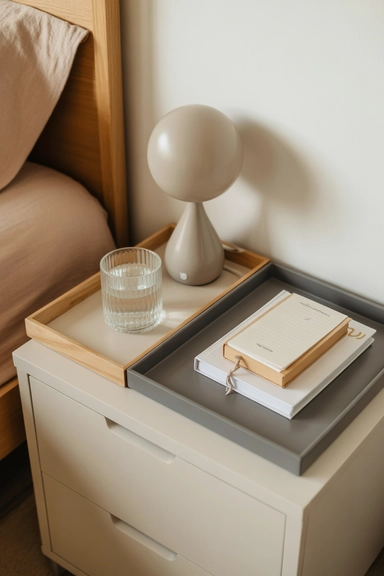
A nightstand becomes messy when unrelated items compete for the same surface. Creating zones is one of the most effective nightstand organization ideas because it instantly reduces visual noise and gives every item a defined place. Dedicate one side to nightly essentials like a lamp and water glass, and another to personal items like a book or journal. Keeping categories grouped helps your brain process the space faster and makes it easier to maintain daily. Even in small bedrooms, zoning creates structure so the top of your nightstand feels styled instead of random.
To keep the layout functional, use a small tray or shallow bedside table organizer to anchor each zone. Trays prevent items from drifting across the surface and make cleaning easier. A minimalist layout with defined areas also helps when sharing a bedroom, since each person can maintain their own side without overlap. Once zones are established, clutter naturally reduces because everything has a logical resting place.
2- Add a Bedside Organizer Tray for Small Essentials
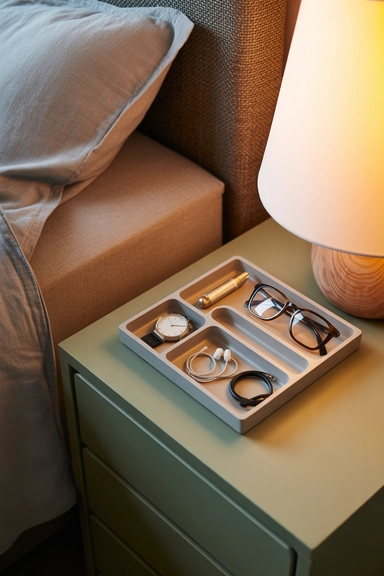
Loose items like lip balm, earbuds, and reading glasses quickly create bedside clutter. A structured bedside table organizer tray keeps these small objects contained without crowding the surface. Choose one with divided sections so each item has a visible home. This prevents the daily shuffle of searching for essentials and makes your nightstand feel intentionally arranged instead of overfilled.
Materials matter here. Wood, acrylic, or woven trays blend easily into bedroom decor and maintain a calm visual tone. Keeping the tray limited to nightly essentials prevents overflow. If it doesn’t fit inside the tray, it likely doesn’t belong on the nightstand. Over time, this small boundary system keeps surfaces clear and supports a clutter-free bedroom routine without requiring constant resets.
3- Install Wall Hooks for Nightly Grab-and-Go Items
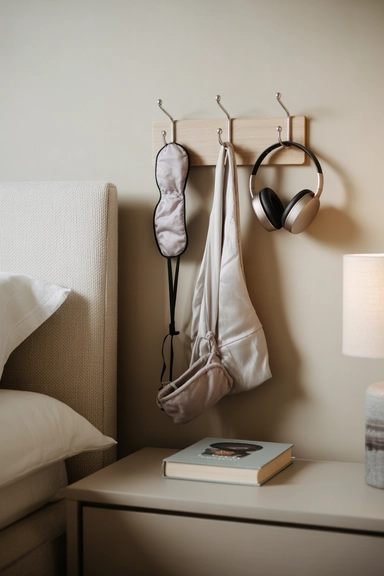
Not everything needs to sit on the nightstand surface. In fact, many smart nightstand organization ideas rely on moving frequently used items off the tabletop and onto nearby walls. Installing small wall hooks and shelves beside your bed gives items like sleep masks, headphones, or robes a dedicated home without taking up table space. This works especially well in small bedrooms where the top of your nightstand needs to stay visually light. Vertical storage adds function without adding bulk while helping your bedside area stay calm, practical, and easy to maintain.
Hooks also support nightly routines by keeping essentials within reach but off the surface. When items have a designated hanging spot, they’re less likely to pile up on the bedside table. Choose finishes that match your bedroom hardware so the setup looks intentional. This simple shift frees up valuable space and keeps your nightstand looking styled rather than crowded.
4- Use a Charging Station to Control Cable Clutter
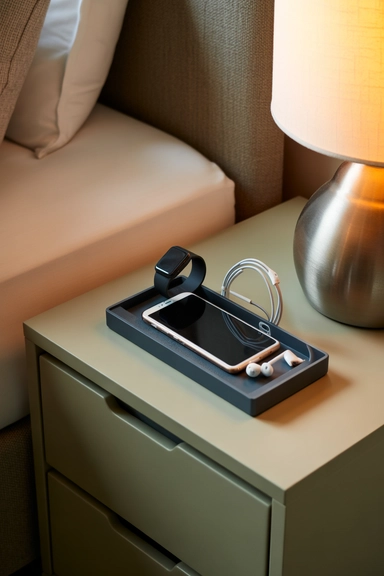
Charging cables are one of the biggest sources of nightstand mess. A compact nightstand organizer with charging station keeps cords contained and prevents them from spreading across the surface. Look for organizers that include hidden cable routing or a built-in dock so devices charge without creating visual clutter.
Keeping cables contained also makes the space safer and easier to clean. When wires stay behind the organizer or inside a drawer, the top of the nightstand remains calm and uncluttered. This is especially useful for shared bedrooms where multiple devices need charging. A controlled charging zone instantly improves both function and appearance while keeping your bedtime setup streamlined.
5- Store Books Vertically Instead of Stacking
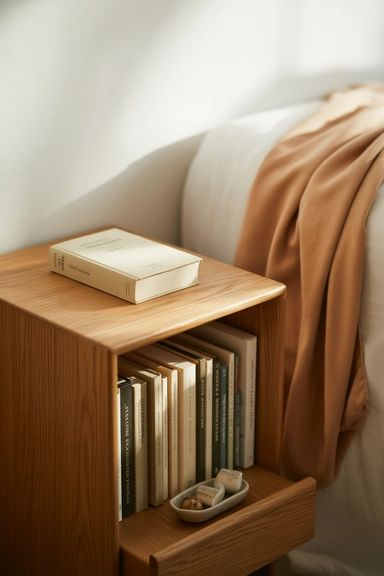
Stacked books quickly take over a bedside table and make the surface feel heavy. One of the most practical nightstand organization ideas is storing books vertically, either inside a drawer or in a slim holder, so they stay accessible without dominating the space. Limiting yourself to one or two current reads prevents overflow and maintains a balanced layout. This small shift keeps the top of your nightstand visually lighter while still supporting your nightly reading routine and helping the entire bedside setup feel intentional rather than crowded.
If your nightstand is small, consider a narrow magazine holder or book stand tucked beside it. This keeps reading material close but off the main surface. When books have a dedicated storage spot, the top of your nightstand stays open for essentials. Over time, this habit prevents buildup and keeps the bedside table visually calm and easy to maintain.
6- Create a Drawer System That Separates Nightly Categories
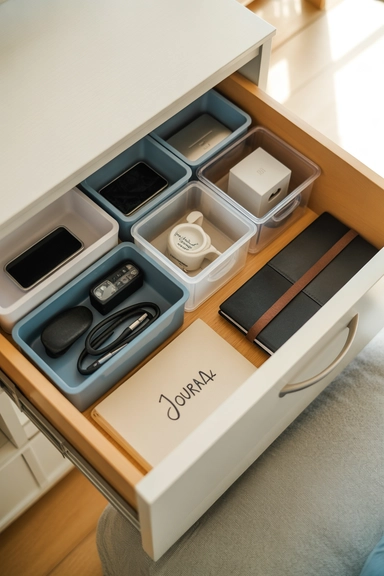
Nightstand drawers often become a mix of random items that build up over time. Turning the drawer into a structured system prevents that slow clutter creep. Use small drawer organizers or stackable storage bins to divide categories like sleep essentials, tech accessories, and personal care. When each item has a defined spot, the drawer becomes a support system rather than a hiding place for mess. A simple layout makes it easier to reset quickly each morning without needing a full cleanout.
Lining the drawer with a non-slip mat also helps items stay in place so the organization lasts longer. This small detail prevents things from shifting every time the drawer opens and closes. Keep only items you realistically use at night or first thing in the morning. Removing everything else creates breathing room and makes the space feel intentional. Over time, a structured drawer layout supports a calmer bedtime routine and keeps your nightstand from overflowing onto the surface.
7- Use a Minimalist Top Layout to Prevent Visual Clutter
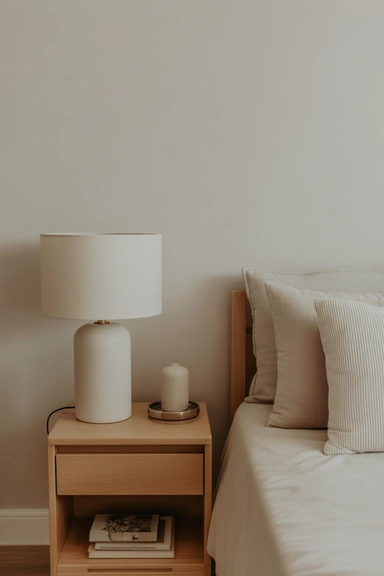
A crowded nightstand top creates visual stress even if everything is technically useful. A minimalist layout keeps only the most essential items within reach. Limit the surface to a lamp, one personal item, and a small tray for daily essentials. This approach creates negative space, which makes the entire bedroom feel calmer and more styled. A visually lighter surface is easier to maintain and prevents the slow buildup of random items.
Keeping the top clear also improves functionality. When there’s space to set down a book or phone without moving things around, the nightstand works better in real life. Choose decor that doubles as storage, such as a lamp with a small base tray or a compact bedside table organizer. This keeps the surface practical without sacrificing style. A restrained layout makes it easier to reset the space every morning and keeps the bedside area consistently tidy.
8- Add a Hidden Basket for Overflow Items
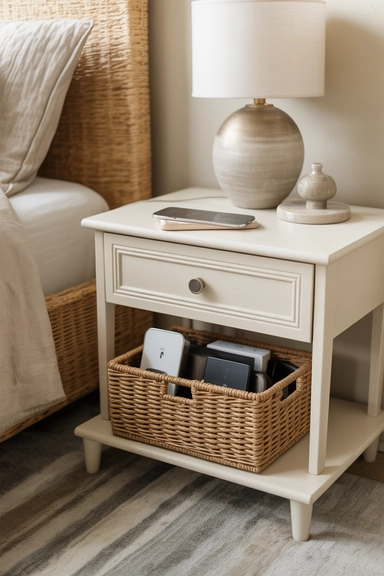
Even well-organized nightstands need a place for occasional extras. Among the most practical nightstand organization ideas is adding a small hidden basket on a lower shelf or beside the bed to create flexible storage without cluttering the surface. Use it for items like extra chargers, sleep masks, or seasonal essentials that don’t need to sit out every day. Keeping overflow contained prevents it from creeping onto the top of the nightstand and helps your bedside setup stay visually calm, functional, and easy to maintain over time.
Choose a basket that matches your bedroom decor so it blends seamlessly into the space. Woven or fabric options add texture while still feeling intentional. The key is to keep the basket limited to a specific category so it doesn’t become a catch-all. When overflow items have a designated home, your nightstand remains visually calm and easy to manage. This small addition helps maintain order without forcing a strict minimalist approach.
9- Style With a Functional Lamp Base
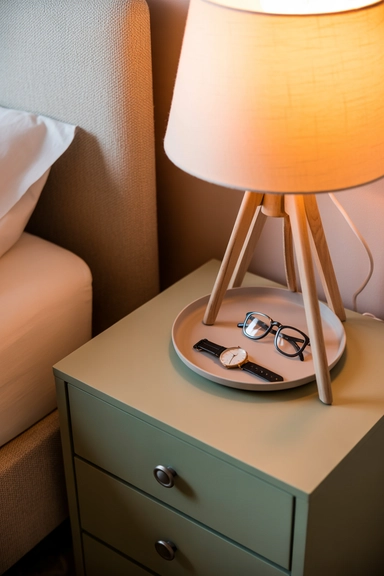
Lamps often take up the most space on a nightstand, so choosing one with built-in storage adds function without adding clutter. A lamp with a tray base or small shelf creates room for essentials like glasses, a watch, or a phone. This keeps items contained in one area and prevents them from spreading across the surface. Combining lighting and storage simplifies the layout and makes the nightstand feel more intentional.
A well-chosen lamp also anchors the overall design of the bedside table. Keeping all small items within the lamp’s footprint creates a defined zone that’s easy to maintain. This approach works especially well for small nightstand organization ideas where space is limited. By using the lamp as a functional centerpiece, you reduce the need for additional organizers and keep the surface visually balanced.
10- Use Vertical Space Beside the Bed
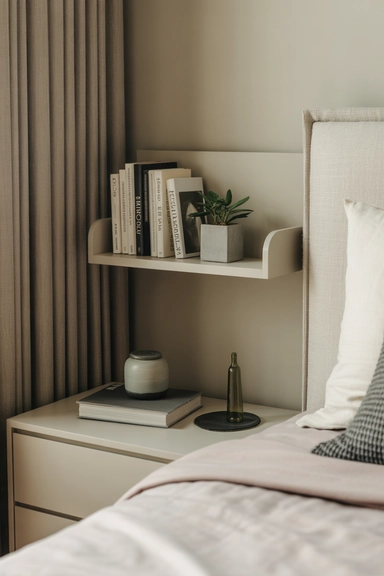
When surface space is limited, vertical storage becomes essential. A slim wall shelf or mounted bedside organizer adds extra storage without crowding the nightstand. This works well for items like books, decorative pieces, or a small plant. Using vertical space keeps essentials close while freeing up the top of the nightstand for daily use. It also helps maintain a minimalist layout that feels open and calm.
Vertical solutions are especially helpful in small bedrooms where every inch matters. Keeping the nightstand surface clear improves the overall look of the room and makes it easier to maintain. Choose wall-mounted options that match your existing decor so the setup feels cohesive. Over time, using vertical space reduces clutter buildup and supports a more organized bedroom environment.
11- Use a Two-Drawer Strategy for Day and Night Items
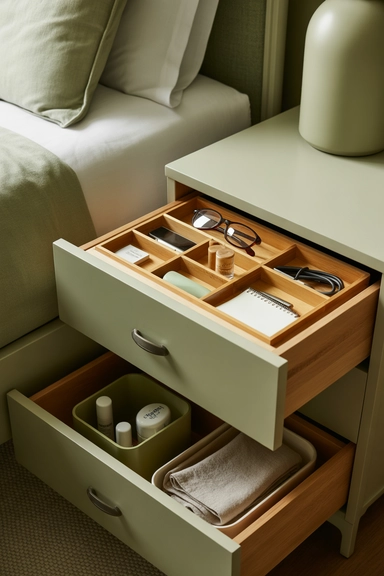
If your nightstand has two drawers, assigning each one a clear purpose keeps everything easier to maintain. Use the top drawer for nightly essentials like lip balm, sleep masks, and reading glasses so they’re easy to grab. Reserve the bottom drawer for less frequently used items such as backup chargers, notebooks, or seasonal items. Separating categories prevents everything from mixing together and makes it easier to keep the layout consistent.
Adding drawer organizers inside both compartments helps maintain structure over time. When items are grouped intentionally, the drawers feel calmer and more functional. This system works especially well in shared bedrooms because each person can manage their own side without overlap. Keeping a defined day-versus-night layout ensures the top of your nightstand stays clear while still keeping everything accessible.
12- Create a No-Drawer Nightstand System That Still Feels Organized
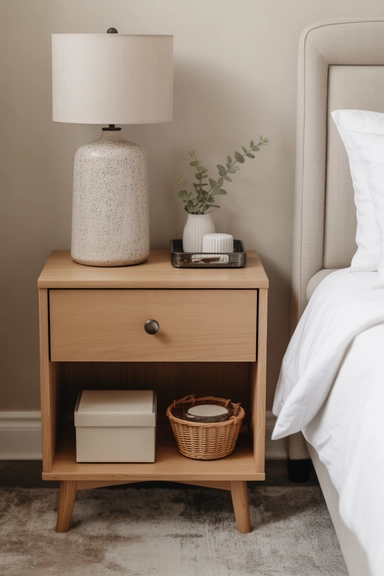
If your bedside table doesn’t have drawers, it can still stay organized with the right setup. Use a small basket or lidded box on the lower shelf to store personal items that would normally go inside a drawer. This keeps essentials close while maintaining a clean top surface. Pair that with a compact bedside table organizer tray for daily-use items so everything has a defined place.
The key is to keep categories limited and intentional. Without drawers, visual clutter builds quickly if items don’t have containers. A structured approach using trays and baskets gives you the same functionality as drawers without the bulk. This method works especially well in minimalist bedrooms or small apartments where space is tight. With the right containers, even a simple table can stay clutter-free and functional.
13- Add a Nightstand Organizer for Him With Practical Essentials
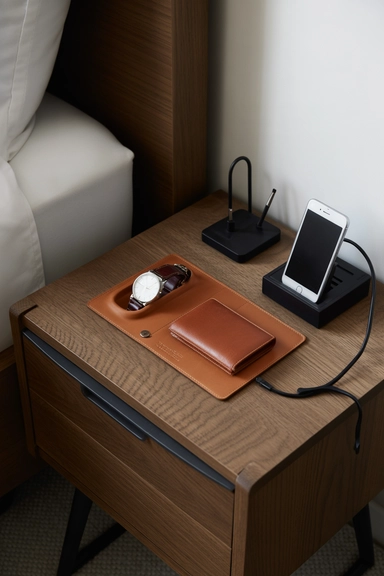
A nightstand setup tailored to daily habits keeps clutter from building up. For a practical layout, include a structured organizer for items like a watch, phone, wallet, and charger. Keeping these essentials grouped together prevents them from spreading across the surface. A masculine nightstand organizer often benefits from simple materials like wood or leather, which feel cohesive and intentional.
Limiting the number of items on display helps maintain a calm visual environment. If everything has a dedicated spot, it’s easier to keep the nightstand tidy each morning. A charging dock that holds multiple devices can also reduce cable clutter. This setup supports a streamlined routine while keeping the bedside table visually clean and easy to manage.
14- Create a Nightstand Organizer for Her With Layered Storage
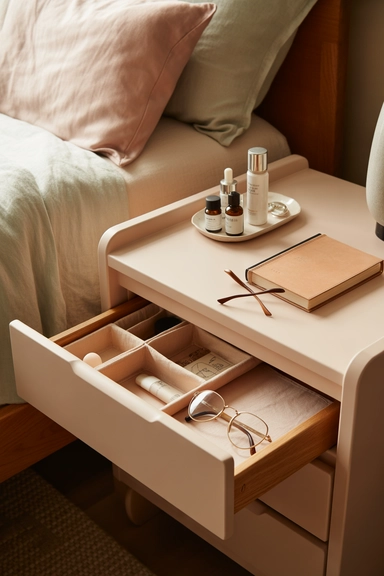
A layered nightstand setup works well for items like skincare, books, and accessories. Use a small tray or tiered organizer to keep frequently used items visible but contained. This prevents products from spreading across the surface while still keeping them accessible. Adding a drawer divider inside the nightstand helps separate categories and maintain order over time.
Choosing organizers that match the bedroom’s decor keeps the setup cohesive and styled. Soft materials like acrylic, ceramic, or woven textures add visual interest without creating clutter. Keeping only daily essentials on the surface prevents overflow. With a layered approach, everything feels intentional and easy to maintain while still supporting real-life routines.
15- Use Color-Based Styling to Keep the Nightstand Cohesive
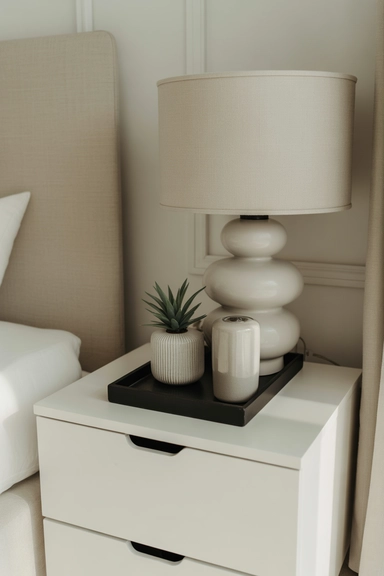
A consistent color palette makes a nightstand feel organized even when multiple items are present. Matching tones—like white, black, or natural wood—create visual harmony that reduces the appearance of clutter. When containers, trays, and decor share a similar palette, the space feels calmer and more intentional. This works especially well in bedrooms where visual simplicity supports better rest.
Keeping colors consistent also helps limit impulse additions. If a new item doesn’t match the palette, it’s easier to decide it doesn’t belong. This subtle boundary prevents buildup and keeps the layout balanced. Over time, color-based styling supports a cleaner, more cohesive bedside setup that’s both functional and visually calming.
16- Keep Only Nightly Necessities Within Arm’s Reach
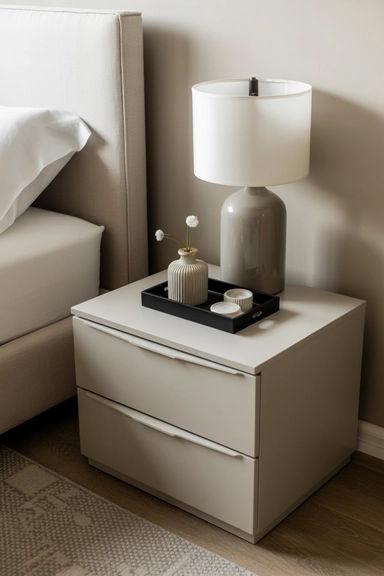
A nightstand should support sleep routines, not become a storage zone for everything you own. Limiting the surface to true nightly necessities—lamp, water, book, phone—prevents buildup and keeps the space functional. When items are reduced to what you actually use before bed and upon waking, the layout feels calmer and easier to maintain. This approach also makes cleaning quicker because there are fewer objects to move or rearrange.
Removing nonessential items creates breathing room and makes the bedside table feel intentional rather than crowded. If something hasn’t been used in a week, it likely belongs elsewhere. Keeping only practical essentials helps maintain a clutter-free bedroom and ensures your nightstand supports rest instead of visual distraction. Over time, this habit keeps the space consistently tidy without needing constant resets.
17- Use a Shelf Under the Nightstand for Extra Storage
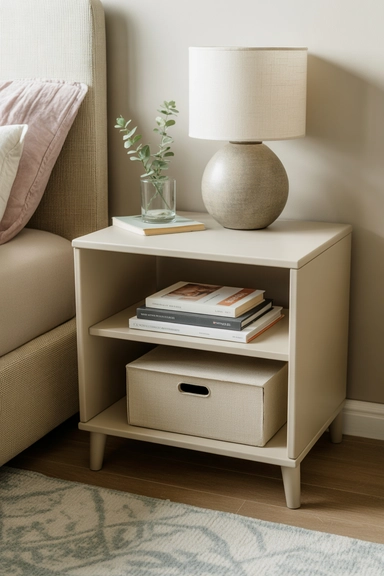
A lower shelf provides valuable storage without adding bulk to the room. Use it for items like books, a small basket, or a decorative box that holds less frequently used essentials. This keeps the top of the nightstand clear while still providing accessible storage. A structured shelf layout prevents items from stacking randomly and keeps everything visually balanced.
Keeping shelf storage contained in one or two containers prevents it from becoming a clutter zone. Choose baskets or boxes that match your bedroom style so the space feels cohesive. This setup works especially well in small bedrooms where storage is limited. By moving extra items off the surface and onto the shelf, the nightstand remains functional and visually calm.
18- Add a Wall-Mounted Pocket Organizer for Tight Spaces
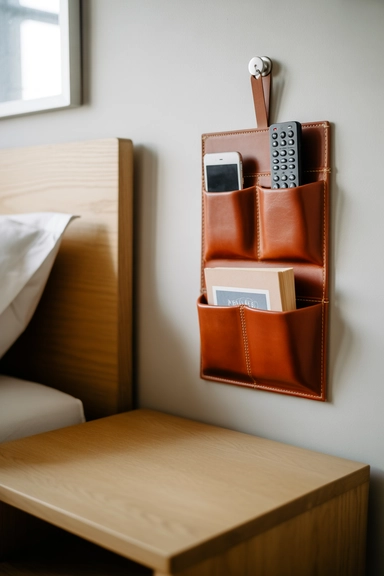
In very small bedrooms, a wall-mounted pocket organizer can replace or supplement a traditional nightstand. Fabric or leather pocket organizers hold items like phones, remotes, or books without taking up floor space. This keeps essentials close while freeing up the surface of your bedside table. It’s a practical solution for apartments, dorm rooms, or tight layouts where every inch matters.
Mounting the organizer beside the bed ensures everything stays within reach without creating clutter. Choose neutral tones so it blends with the bedroom decor. Keeping only necessary items inside prevents overstuffing. This approach helps maintain a streamlined bedside area and supports a minimalist layout that still feels functional and comfortable.
19- Use Stackable Storage Inside Deep Drawers
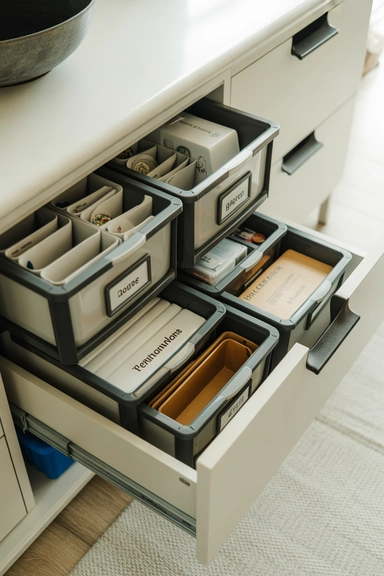
Deep nightstand drawers often become cluttered because items get lost in the space. Using stackable storage bins creates layers that keep everything visible and accessible. Separate categories like tech accessories, personal care, and reading materials so nothing mixes together. This structure makes it easier to find what you need without digging through a messy drawer.
Keeping bins small and clearly defined prevents overcrowding. When each layer has a purpose, the drawer stays organized longer and requires less maintenance. This system works especially well for larger nightstands where storage space is abundant. By using vertical space inside the drawer, you maximize storage while keeping everything easy to manage.
20- Rotate Items Seasonally to Prevent Build-Up
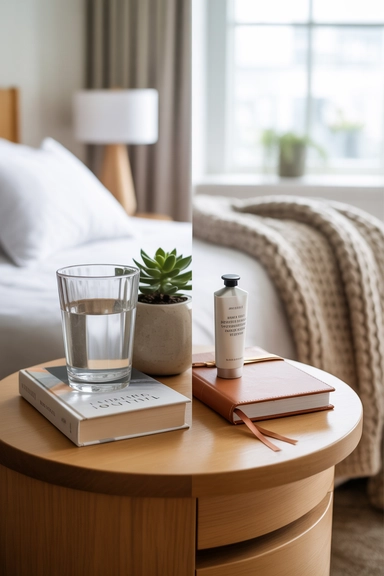
Nightstand clutter often builds slowly as new items get added but nothing gets removed. Rotating items seasonally keeps the setup fresh and prevents overcrowding. In warmer months, keep lighter essentials like a book and water glass. In colder seasons, swap in items like hand cream or a thicker journal. Adjusting the layout to match your routine helps maintain order.
Regularly reviewing what’s on your nightstand ensures only useful items remain. Removing anything that hasn’t been used recently keeps the surface clear. This small habit prevents buildup and keeps your bedside table functional year-round. Over time, seasonal resets make organization feel manageable instead of overwhelming.
21- End Each Day With a 30-Second Reset Routine
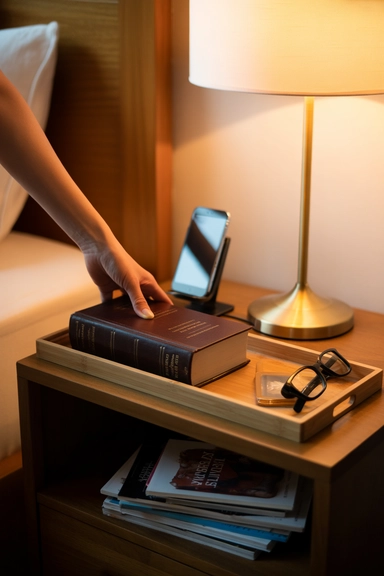
Even the best organization system needs a quick daily reset to stay effective. Taking 30 seconds each night to return items to their designated spots keeps the nightstand from becoming cluttered again. Put away books, align trays, and check that chargers are in place. This simple routine prevents small messes from turning into larger ones.
Consistency is more important than perfection. A short nightly reset keeps the layout intact and makes mornings feel calmer. When everything starts and ends the day in the right place, the nightstand stays functional without requiring deep cleaning sessions. This final habit ensures your bedside table remains tidy, practical, and easy to maintain.
Conclusion
A well-organized bedside table supports better routines and a calmer bedroom environment. These nightstand organization ideas focus on practical layouts, intentional storage, and daily habits that keep clutter from returning. When every item has a defined place and only essentials remain within reach, maintaining order becomes effortless. Small changes in layout and routine make a noticeable difference, turning your nightstand into a functional, clutter-free space that supports rest and relaxation every day.