Introduction
A small pantry rarely fails because of size—it fails because the shelving doesn’t guide how items live inside it. The most effective small pantry shelving ideas focus on turning shelves into zones that support daily use, quick restocking, and visual clarity. When shelves are spaced intentionally and storage categories are predictable, even a narrow closet pantry can function like a full walk-in. Instead of cramming food wherever it fits, the goal is to build layers that keep visibility high and clutter low. If you’re planning the layout alongside the shelving, these 23 Small Pantry Design Ideas for Tight Kitchen Spaces show how structure and storage can work together before building out your system.
1. Adjustable Shelf Spacing That Adapts to Changing Pantry Needs
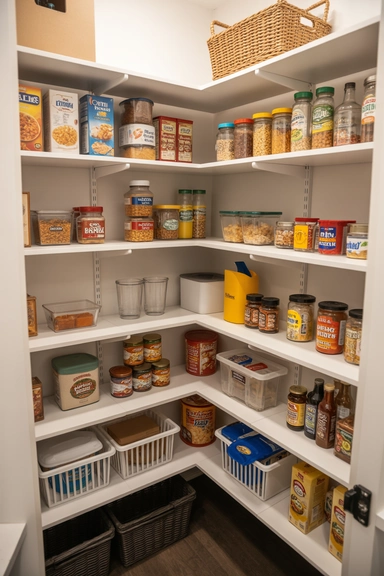
Adjustable shelving is the backbone of long-term pantry organization in small spaces because food packaging never stays consistent. One week you’re storing cereal boxes, the next you’re stacking bulk paper goods or snack bins. Fixed shelves force awkward stacking, but adjustable brackets allow spacing to shift as needs change. This flexibility keeps items visible instead of buried behind taller containers and prevents the overcrowded look that makes small pantries feel chaotic. A simple rail-and-bracket system also lets you experiment with shelf heights before committing to a permanent layout.
When planning adjustable shelves, think in vertical zones rather than individual shelves. Lower shelves should handle heavier bulk items like flour containers or appliances, while eye-level zones hold everyday ingredients. Upper shelves can store backstock or rarely used items. This layered approach ensures that nothing disappears into deep stacks. The goal isn’t just fitting more in—it’s keeping everything accessible without constant reshuffling. In tight pantry closets, adjustable spacing is what prevents clutter from rebuilding within weeks.
2. Floating Shelves That Open Up Narrow Pantry Walls
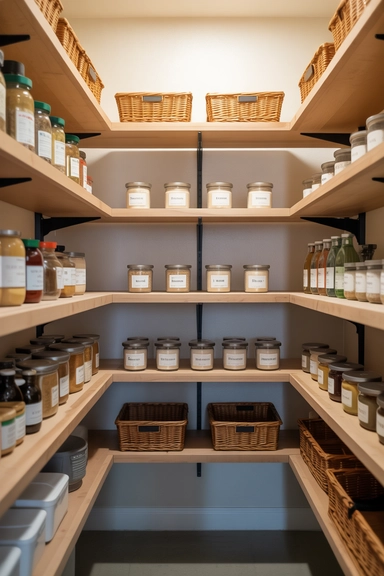
Floating shelves work especially well in narrow pantry closets where bulky cabinetry makes the space feel boxed in. Because they sit flush against the wall without visible supports, they create a lighter visual footprint while still offering solid storage. This openness helps small pantries feel less cramped and makes it easier to scan items quickly. Floating shelves are also customizable, allowing you to tailor depth based on what you actually store instead of relying on standard cabinet dimensions that waste valuable inches.
Depth control is key here. Shelves that are too deep create hidden rows where items get lost. Keeping floating shelves between 8 and 12 inches deep ensures everything remains visible from the front. Pairing them with clear containers or labeled baskets keeps categories contained without adding visual clutter. In very small pantry shelving ideas closet layouts, floating shelves on one side combined with shallow racks on the other can dramatically increase capacity without overwhelming the walkway.
3. Corner Shelving That Recovers Wasted Pantry Space
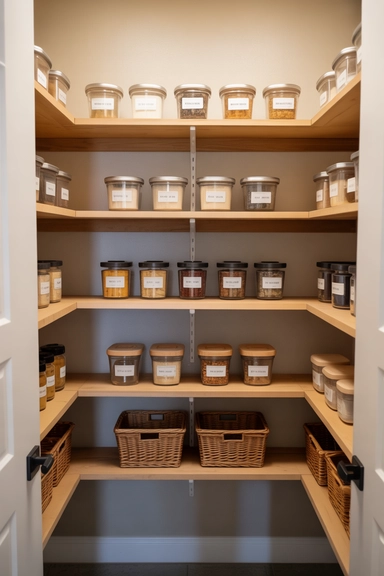
Corners often become dead zones in small pantries because standard shelves don’t reach into the angled space efficiently. Installing corner shelving—whether triangular shelves or L-shaped units—turns that wasted area into usable storage. These shelves are ideal for lightweight items like snacks, baking supplies, or small jars that benefit from visibility but don’t require deep storage. When designed properly, corner shelving prevents items from getting shoved into the back where they’re forgotten and eventually expire.
To keep corner shelves functional, avoid overfilling them. Instead of stacking items tightly, use bins or lazy Susans that rotate outward for easy access. This keeps the corner from becoming a clutter trap. In small pantry shelving ideas diy corner setups, even simple plywood triangles mounted with brackets can dramatically improve storage capacity. The key is ensuring that the corner feels intentional rather than like leftover space, making the entire pantry feel more organized and balanced.
4. Door-Mounted Shelving That Adds Storage Without Taking Floor Space
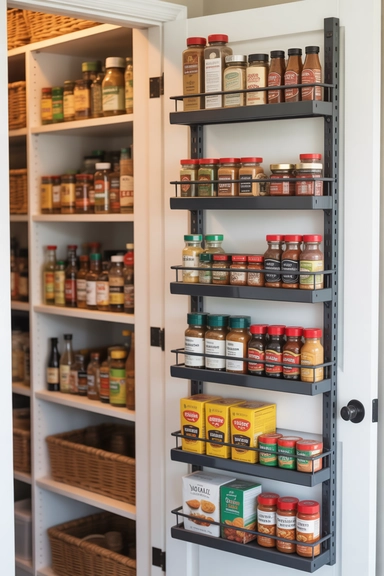
The back of a pantry door is one of the most underused storage surfaces in small kitchens. Adding slim door-mounted shelves instantly creates extra capacity without affecting the main shelving layout. These racks are perfect for spices, sauces, snack packets, or small jars that would otherwise crowd primary shelves. Because they sit at eye level, they also improve visibility and reduce the need to dig through deeper shelves.
To keep door shelving from becoming messy, assign clear categories to each tier. For example, dedicate one section to breakfast items and another to cooking essentials. This prevents random placement that leads to clutter. Adjustable door racks are especially useful because they allow spacing to match bottle heights. In small pantry shelving ideas for small spaces, door storage often provides the difference between a cramped pantry and one that feels thoughtfully designed and easy to maintain.
5. Pull-Out Shelf Systems for Deep Pantry Closets
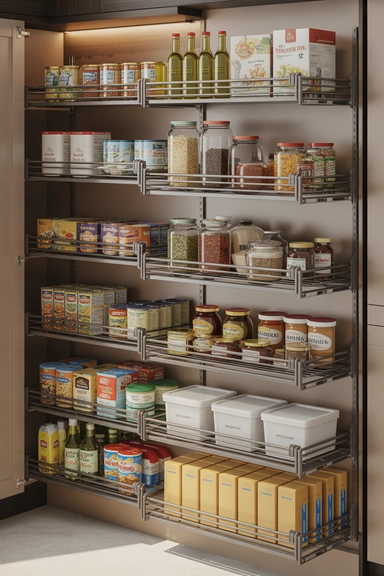
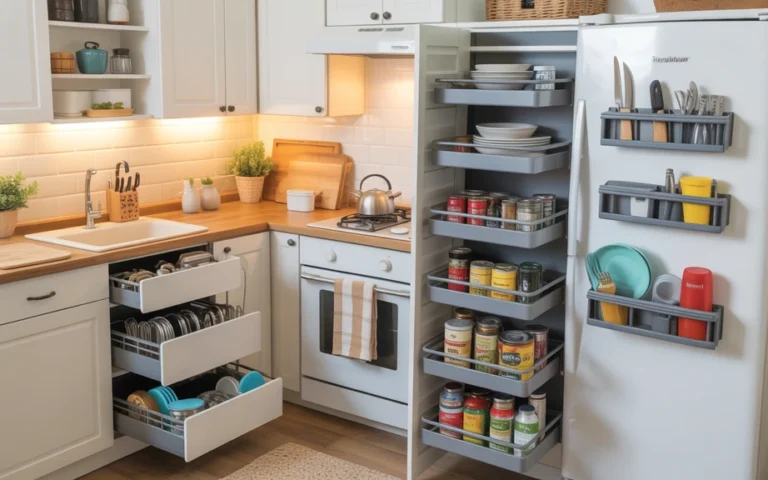
Deep pantry shelves can quickly become black holes where items disappear behind front rows. Pull-out shelving solves this by bringing everything forward in one motion. Sliding shelves or drawers make it possible to see and reach items stored in the back without removing everything in front. This is particularly useful for canned goods, jars, and packaged foods that tend to stack awkwardly on fixed shelves.
Installing pull-out systems doesn’t always require a full renovation. Many retrofit kits fit inside existing shelving frames, making them ideal for small pantry shelving ideas diy storage upgrades. When combined with clear containers or labeled bins, pull-out shelves create a system where restocking is simple and nothing gets forgotten. The result is a pantry that stays organized longer because access is effortless and visibility remains high.
6. Slim Vertical Shelves for Tight Pantry Gaps
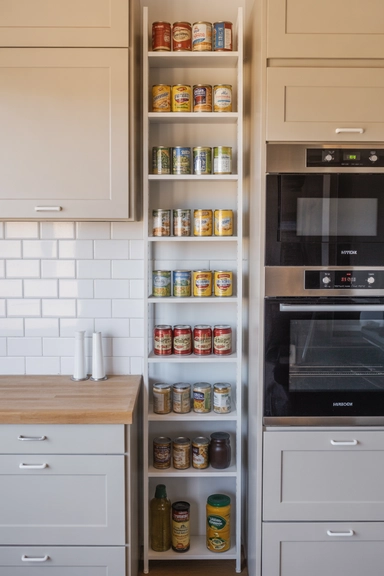
In many small kitchens, there’s a narrow strip of unused wall between cabinets, appliances, or door frames that’s just wide enough for a slim shelving unit. Installing vertical shelves in these tight gaps creates high-impact storage without expanding the pantry footprint. These shelves are ideal for canned goods, spice jars, or baking supplies that benefit from upright visibility. Because they’re narrow, items stay in a single row, making it easy to see everything at once without digging through layers.
To keep slim shelving functional, maintain consistent container sizes so items line up neatly instead of creating visual clutter. Clear bins or matching jars help reinforce order and make restocking faster. When incorporated into small pantry shelving ideas for small spaces, vertical shelving often becomes the most-used area because everything sits at eye level. This setup works especially well in apartment kitchens where square footage is limited but wall space still offers untapped storage potential.
7. IKEA Pantry Shelving Hacks That Customize Small Spaces
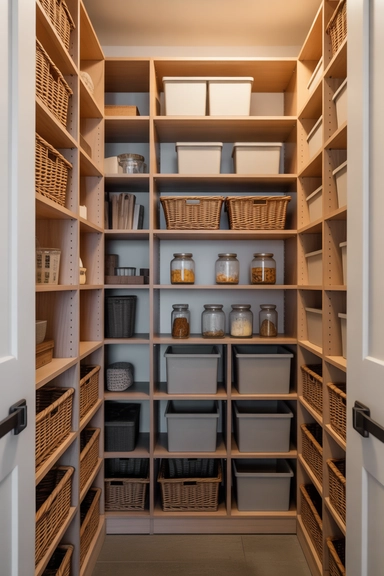
IKEA shelving systems are popular for small pantry makeovers because they’re modular, affordable, and easy to adapt. Adjustable units like IVAR or BOAXEL can be configured to fit narrow closets, corner spaces, or shallow pantry walls. These systems allow you to mix shelf widths and heights, creating a layout that matches how your household actually uses food storage. The flexibility also makes it easier to evolve the pantry over time instead of replacing everything when needs change.
A successful IKEA pantry setup relies on combining open shelving with contained storage. Baskets, bins, and jars prevent the open shelves from looking cluttered while still keeping items visible. In small pantry shelving ideas ikea setups, adding wood-toned shelves or neutral baskets helps the pantry blend into the kitchen aesthetic instead of looking purely utilitarian. This balance between function and appearance keeps the space visually calm while still highly efficient.
8. Farmhouse-Style Shelving That Keeps Small Pantries Warm and Practical
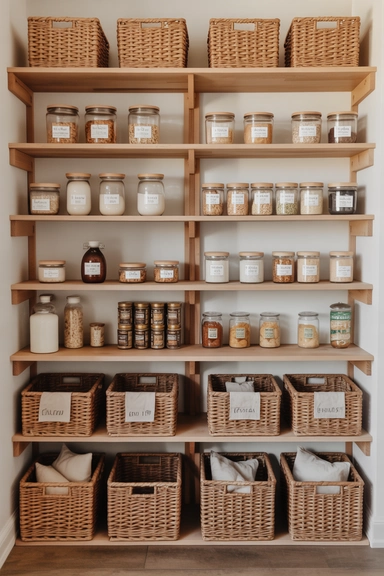
Farmhouse-inspired shelving works well in small pantries because it blends open visibility with a relaxed, lived-in aesthetic. Wooden shelves paired with glass jars or woven baskets create a cohesive look that feels intentional rather than crowded. This style encourages transferring pantry staples into uniform containers, which instantly reduces visual noise and makes shelves easier to scan. Even in tight spaces, consistent materials help the pantry feel curated instead of cluttered.
The practicality comes from keeping everyday items within reach while storing backstock higher up. Lower shelves can hold heavier goods in sturdy baskets, while upper shelves display labeled jars for quick access. In small farmhouse pantry shelving ideas, the warmth of wood tones helps the pantry feel like an extension of the kitchen rather than a cramped storage closet. This visual continuity encourages regular upkeep because the space feels worth maintaining.
9. Open Butler’s Pantry Nook Shelving for Compact Kitchens
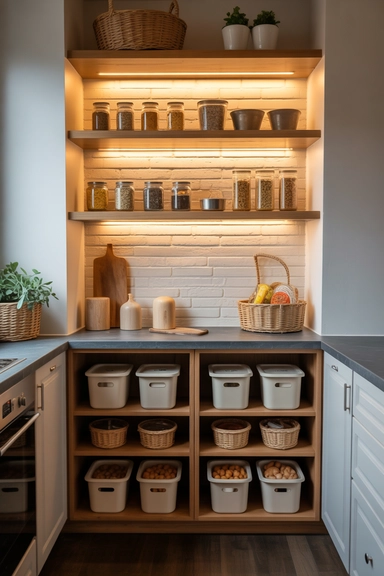
A small butler’s pantry nook can function as a powerful storage zone when shelving is planned intentionally. Open shelves allow quick access to frequently used items while keeping the area visually connected to the kitchen. In tight layouts, combining shallow upper shelves with slightly deeper lower shelves ensures that both small jars and bulk containers have dedicated zones. This layered approach keeps everything visible without overwhelming the limited space.
Lighting also plays a crucial role in small pantry nooks. Under-shelf lighting or warm LED strips make it easier to see items and create a polished look that encourages organization. In small butlers pantry nook open shelving ideas, keeping a consistent container style prevents the shelves from appearing chaotic. When the layout feels structured and easy to navigate, the nook becomes an efficient extension of the main kitchen rather than an afterthought storage area.
10. Closet-to-Pantry Shelving Conversions That Maximize Hidden Storage
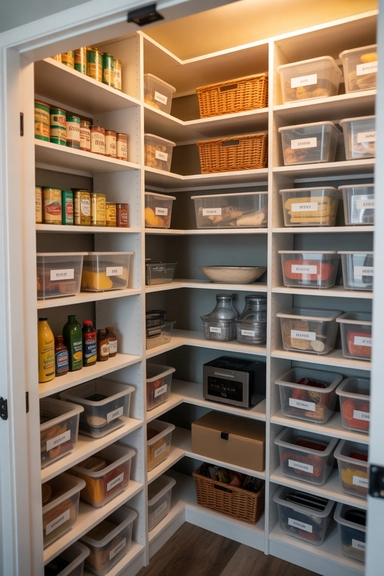
Converting a small closet into a pantry is one of the most effective ways to create storage in compact homes. By installing wall-to-wall shelving with varied depths, a simple closet can hold far more than standard kitchen cabinets. Narrow upper shelves work well for canned goods and dry ingredients, while deeper lower shelves accommodate appliances or bulk items. This tiered design ensures that every inch of vertical space contributes to usable storage.
To keep closet pantries organized, avoid filling every shelf edge to edge. Leaving small gaps between categories helps maintain visual order and makes items easier to retrieve. In small pantry closet shelving ideas organizing setups, adding labeled bins or clear containers keeps everything contained without hiding contents. The result is a pantry that feels structured and spacious even though it occupies a relatively small footprint within the home.
11. L-Shaped Shelving That Wraps Around Small Pantry Walls
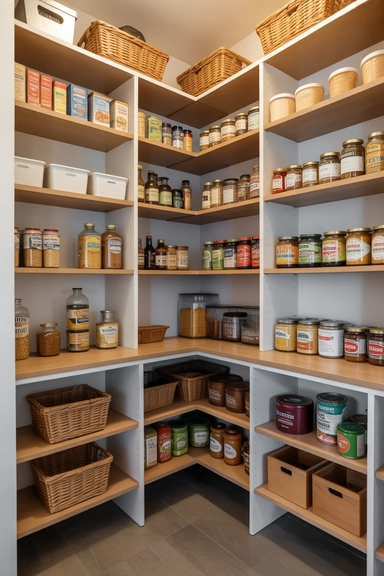
An L-shaped shelving layout works especially well in small pantry closets because it captures two adjoining walls without wasting corner space. Instead of stopping shelves at one wall, wrapping them around creates continuous storage that feels intentional and balanced. This design increases usable surface area while maintaining clear sightlines across the pantry. It’s particularly effective in narrow rooms where depth is limited but wall length is available.
To keep L-shaped shelving functional, vary the depth slightly between walls. One side can hold deeper shelves for bulk goods, while the adjoining wall uses shallower shelves for canned items or spices. This prevents the pantry from feeling heavy or overcrowded. In small l shaped pantry shelving ideas, thoughtful depth planning ensures that corners stay accessible rather than becoming dark storage pockets where items disappear over time.
12. Under-Stairs Pantry Shelving That Uses Sloped Ceilings Wisely
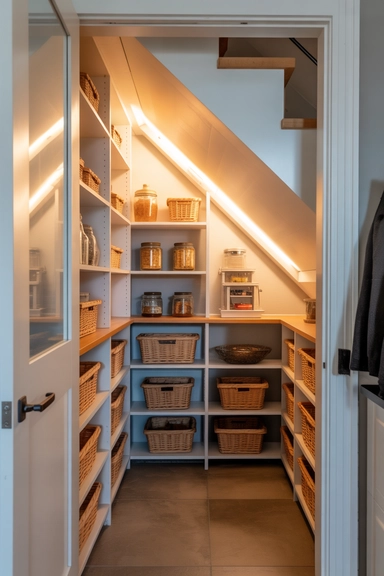
Under-stairs pantries often have uneven ceiling heights, which can make shelving tricky. Instead of forcing uniform shelves across the entire wall, tailor shelf heights to follow the slope. Lower sections can store taller containers or small appliances, while the shorter upper areas are perfect for canned goods and baskets. This approach ensures that no portion of the sloped space goes unused.
Custom shelving is especially valuable here. Even simple DIY plywood shelves can be cut to match the ceiling angle, maximizing storage in areas that would otherwise be dead space. In small pantry shelving ideas under stairs layouts, lighting becomes essential. Adding strip lights beneath shelves improves visibility in deeper sections and keeps the pantry from feeling cramped. When designed carefully, an under-stairs pantry can rival a traditional walk-in for efficiency.
13. Deep Pantry Shelves With Tiered Risers for Visibility
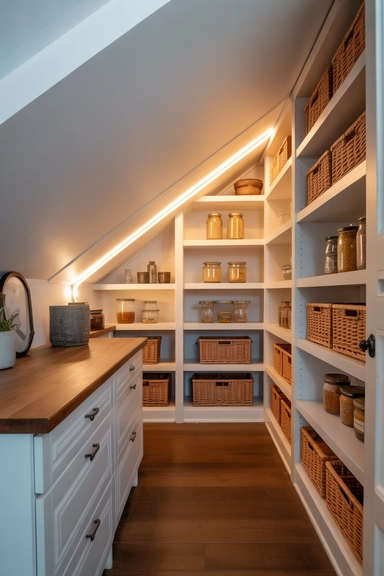
Deep shelves can store a large volume of food, but without structure they quickly turn into stacked layers where items in the back are forgotten. Adding tiered risers solves this problem by elevating back rows so every label stays visible. This is especially useful for spices, canned goods, and small jars that otherwise blend into one another when placed on flat surfaces.
To maintain order, group similar items on each tier rather than mixing categories. For example, keep baking supplies together and canned vegetables in another section. In small deep pantry shelving ideas, tiered inserts help convert wide shelves into organized zones without permanent modifications. The goal is to maintain accessibility while still taking advantage of the depth, ensuring that increased capacity doesn’t lead to increased clutter.
14. Narrow Pantry Shelving for Hallway or Galley Kitchens
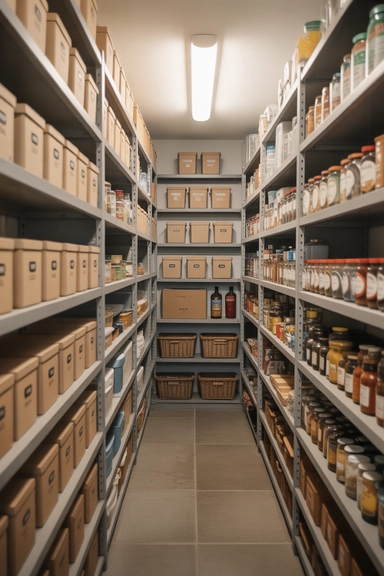
In galley kitchens or tight apartment layouts, pantries are often long and narrow. Installing shallow shelves—around 6 to 8 inches deep—prevents items from getting lost behind one another. This slim profile keeps everything in a single visible row, which reduces the need to shuffle items when searching for ingredients. Narrow shelving also preserves walkway space, keeping the pantry comfortable to move through.
For added efficiency, align shelves vertically with consistent spacing so categories remain predictable. Place everyday staples at eye level and reserve higher shelves for backstock. In small narrow pantry shelving ideas, uniform containers help maintain visual calm in elongated spaces. When the shelving design respects the limited width, the pantry feels streamlined rather than crowded, even when it’s fully stocked.
15. Shelving Designed Around Small Appliances
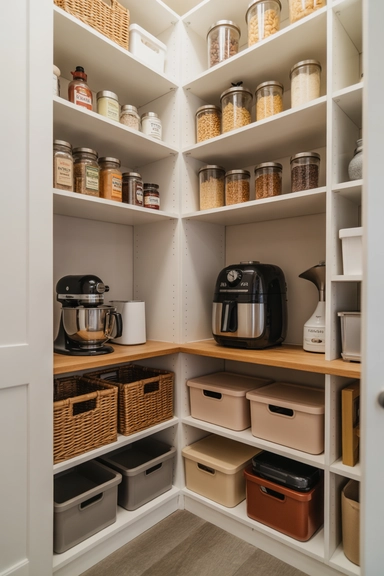
Small pantries often double as storage for appliances like air fryers, mixers, or coffee machines. Designing shelves specifically to accommodate these items prevents them from crowding food storage zones. Lower shelves should be reinforced and slightly deeper to safely hold heavier equipment, while upper shelves remain dedicated to dry goods and containers.
Spacing matters here. Measure appliance heights before installing shelves to avoid awkward stacking or wasted gaps. In pantry shelving ideas for small appliances, leaving a few inches of clearance above each appliance allows easy removal without scraping surfaces. This approach creates a structured layout where food and tools coexist without interfering with one another, keeping the pantry functional and easy to maintain long-term.
16. Minimalist Open Shelving That Keeps Small Pantries Calm
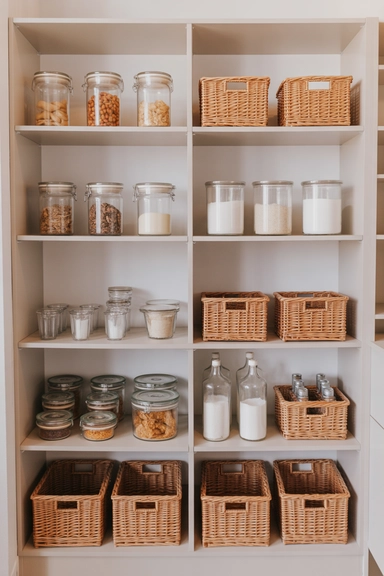
Minimalist shelving works exceptionally well in small pantry shelving ideas because it reduces visual noise and forces intentional storage decisions. Instead of overcrowding shelves with mismatched packaging, this approach focuses on clear containers, uniform jars, and limited open baskets. The result is a pantry that feels spacious even when fully stocked. Open shelving keeps everything visible, which naturally discourages overbuying and duplicate purchases that lead to clutter buildup.
To maintain a minimalist look, stick to a neutral color palette for bins and labels. Group similar items together and leave small breathing spaces between categories. In tiny kitchens, this negative space is just as important as the storage itself. When shelves feel curated instead of crammed, the pantry becomes easier to reset weekly, ensuring that organization lasts rather than collapsing after a busy grocery run.
17. Small Pantry Shelving With Built-In Baskets for Contained Zones
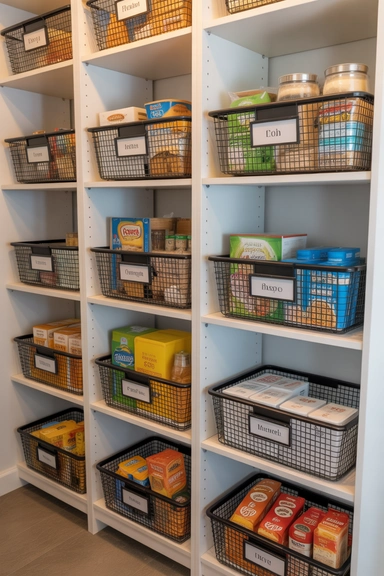
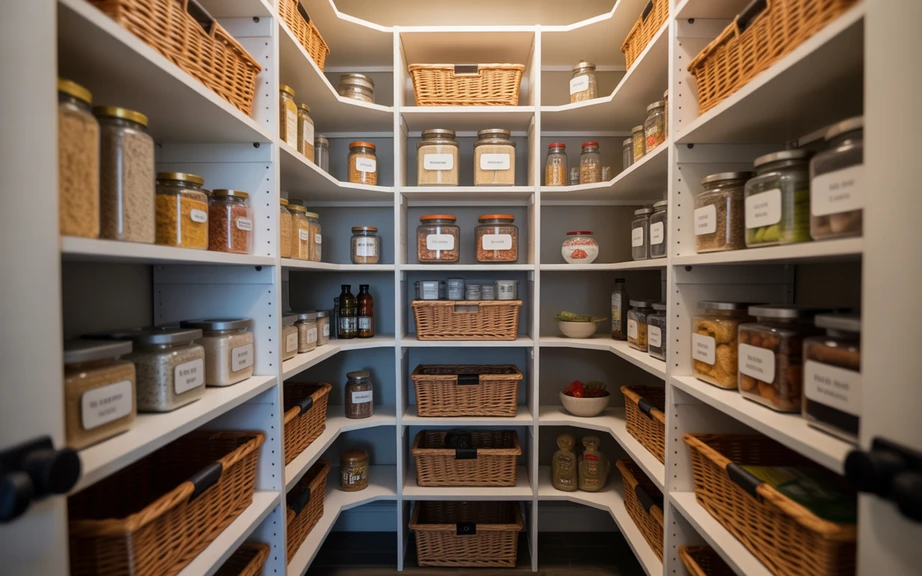
Built-in baskets integrated directly into shelving systems create clear boundaries inside a small pantry. Instead of loose piles of snack bags or baking packets, baskets define categories and prevent items from spreading across shelves. Wire or woven baskets work especially well because they allow airflow while keeping contents visible. This structure transforms chaotic shelves into organized compartments without requiring constant rearranging.
Position baskets at eye level for frequently accessed items and place heavier bins lower for stability. Labeling the front of each basket reinforces the system and helps family members return items to the correct zone. In small pantry closet shelving ideas organizing setups, contained shelving prevents visual overwhelm and supports faster meal prep. When every shelf includes a designated container, the entire pantry operates more like a system than a storage pile.
18. Rustic Wood Shelving That Adds Warmth to Compact Pantries
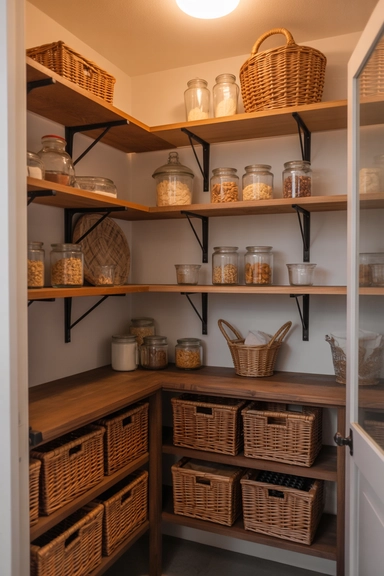
Rustic wood shelving brings character to small pantry shelving ideas while maintaining practicality. Natural wood tones soften the utilitarian feel of storage areas, especially in pantry closets that might otherwise look stark. Thick wooden planks paired with sturdy brackets create a durable surface for jars, baskets, and dry goods. This aesthetic works particularly well in farmhouse or transitional kitchens where continuity matters.
Balance is important to keep rustic shelving from feeling heavy. Pair wood shelves with light-colored walls or glass containers to prevent visual bulk. In small rustic pantry shelving ideas, combining wood textures with metal accents can add subtle contrast without clutter. When shelves feel thoughtfully styled rather than purely functional, the pantry becomes a cohesive extension of the kitchen instead of a hidden utility space.
19. Walk-In Pantry Shelving With Zoned Layout Planning
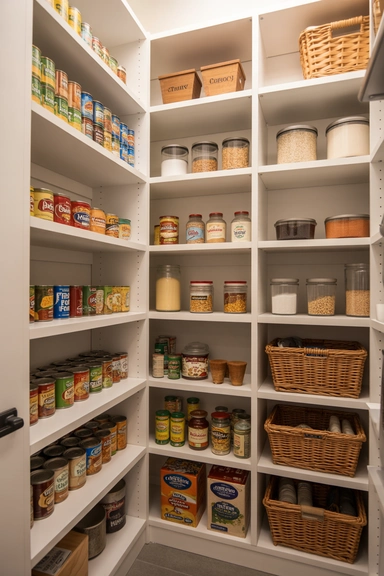
Even small walk-in pantries benefit from intentional zoning. Instead of lining all walls with identical shelves, divide the space into functional areas—one wall for canned goods, another for grains and baking supplies, and a section for appliances or bulk storage. This structured layout prevents random placement and keeps restocking predictable. Clear zones also make it easier to identify what’s running low at a glance.
Vary shelf depth based on category needs. Deeper shelves can handle bulk containers, while shallow shelves keep smaller items visible. In pantry shelving ideas for small walk-in pantries, leaving a narrow walkway ensures comfort and accessibility. The goal is to design around movement as much as storage. When zoning guides where items belong, the pantry maintains order even during busy weeks.
20. Shelving With Integrated Lighting for Better Visibility
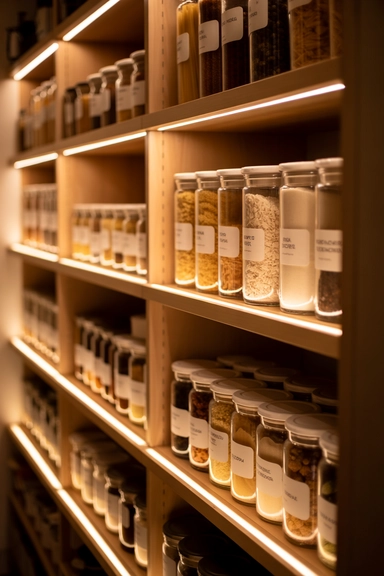
Lighting can transform how a small pantry functions. Integrated LED strips beneath shelves eliminate shadows and make labels easier to read, especially in deeper closet pantries. Good lighting reduces the frustration of searching through dim corners and helps maintain organization because everything is clearly visible. It also enhances the overall appearance, making the pantry feel larger and more polished.
For best results, install warm white lighting that doesn’t distort packaging colors. Motion-activated lights are especially useful in small pantry shelving ideas closet layouts where switches may be inconvenient. Proper lighting ensures that every shelf works at full capacity, preventing items from being forgotten simply because they’re hidden in darker sections. Visibility supports better inventory control and long-term organization.
21. Window-Side Shelving That Uses Natural Light Strategically
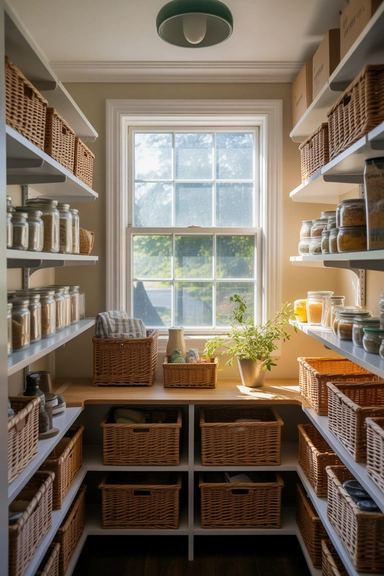
If your small pantry includes a window, shelving placement becomes crucial. Position shelves around the window rather than blocking it entirely, allowing natural light to illuminate the space. Glass jars and clear containers reflect daylight, making the pantry feel brighter and more spacious. This layout also prevents shadows that make shelves appear crowded.
Be mindful of direct sunlight on certain foods. Store sensitive items like oils or spices away from intense light exposure, reserving window-adjacent shelves for sealed goods or decorative baskets. In small pantry with window shelving ideas, balancing light and storage keeps the space functional without compromising food quality. When designed thoughtfully, natural light becomes an asset rather than a limitation in compact pantry layouts.
Conclusion
Small pantry shelving ideas work best when every shelf has a clear purpose and intentional spacing. Whether you’re converting a closet, redesigning a walk-in, or upgrading narrow shelves, the goal is to create visible zones that prevent clutter from rebuilding. Thoughtful depth, strategic lighting, and contained categories ensure that even the tightest pantry feels efficient and easy to maintain. When shelving supports how you actually cook and shop, every inch works harder—and stays organized longer.