
Introduction
Spice organization ideas work best when the cabinet itself becomes a system rather than just a place to store jars. When every bottle has a clear zone, cooking becomes faster, cabinets stay tidy, and visual clutter disappears. Instead of stacking bottles randomly or digging through crowded shelves, the goal is to build a layout where labels stay visible and access feels effortless. If you’re also refining overall kitchen storage, these setups pair well with 25 Deep Kitchen Cabinet Organization Ideas That Actually Work, especially when cabinets need clearer zones and better visibility.
1. Tiered Cabinet Shelves That Keep Every Jar Visible
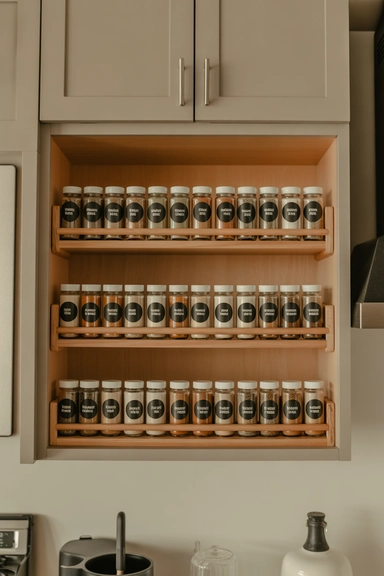
Deep cabinets often hide spices behind one another, making it hard to see what you already own. A tiered shelf system solves this by lifting back rows slightly higher than front rows, creating a stepped layout where every jar stays visible. This setup prevents duplicate purchases and removes the need to shuffle bottles around while cooking. When installed inside upper cabinets, tiered shelves create a structured grid that keeps labels facing forward and allows quick scanning while preparing meals.
To keep the cabinet looking tidy, place frequently used spices on the lowest tier and specialty blends toward the back. Matching jar sizes helps maintain visual order and prevents uneven rows. The goal is not just visibility but stability—once jars are assigned to specific tiers, they rarely shift out of place. This structure turns a cluttered cabinet into a clearly organized system that stays manageable even when new spices are added over time.
2. Drawer-Style Cabinet Inserts for Label-Up Storage
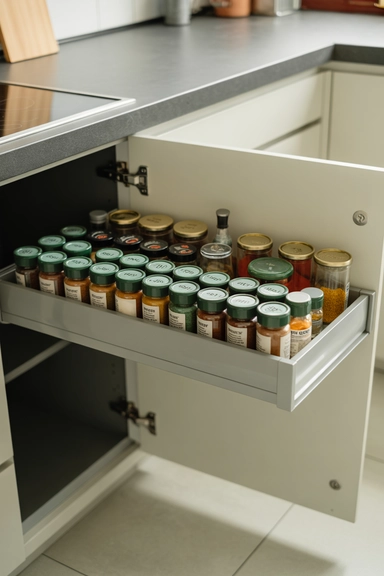
Some kitchens benefit from turning a lower cabinet shelf into a shallow pull-out drawer or using angled inserts that allow jars to lie flat with labels facing up. This layout creates a top-down view, making it easy to identify spices at a glance. Instead of reaching into dark corners, you simply slide the drawer or pull-out shelf forward and see everything instantly. The result is a cabinet that feels controlled and accessible.
Spacing jars evenly across the insert prevents rolling and keeps everything aligned. Alphabetical or category-based placement works especially well in this format because labels remain readable without moving jars around. Over time, this type of storage reduces visual clutter because each jar has a defined slot. The cabinet interior begins to function like a tool drawer, where every item has a designated position and returns to it after use.
3. Door-Mounted Spice Racks for Narrow Cabinets
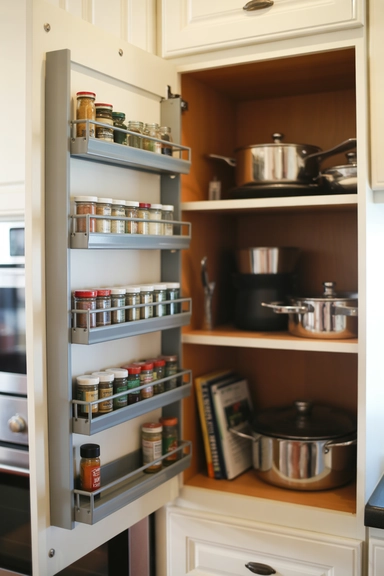
Cabinet doors are often overlooked storage zones, yet they provide ideal space for slim spice racks. Mounting narrow racks on the inside of a cabinet door allows jars to sit vertically without taking up shelf space. This keeps frequently used spices within reach while freeing the main cabinet interior for bulk items or cookware. The result is a layered storage system that uses every inch efficiently.
To maintain balance, use lightweight containers and avoid overcrowding each rack. When jars are arranged by cooking frequency, the door becomes a quick-access zone that reduces countertop clutter. Closing the cabinet instantly hides everything, keeping the kitchen visually calm. Over time, this setup prevents piles of mismatched bottles from forming on shelves because the door rack becomes the designated home for daily-use spices.
4. Matching Glass Jars for a Visually Calm Cabinet
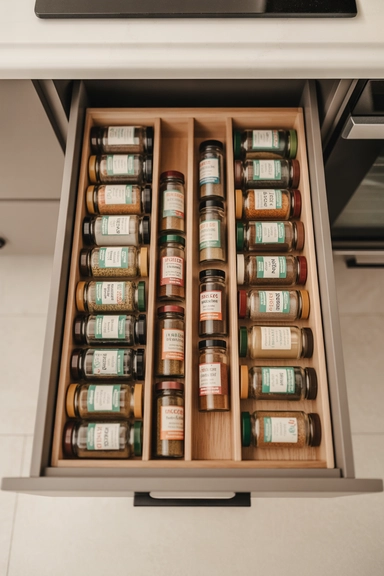
Switching spices into uniform jars instantly reduces visual chaos. When containers share the same shape and height, shelves appear more structured and easier to maintain. Clear glass allows quick identification, while consistent labeling keeps everything readable from the front or top. The cabinet begins to look intentional rather than crowded.
Uniform jars also stack neatly on risers or inside drawers, maximizing vertical space. Because every container fits the layout, there’s less shifting when adding new spices. Over time, this consistency encourages better upkeep. When a jar empties, it returns to the same spot after refilling. The cabinet stays tidy because its structure supports organization rather than fighting against it.
5. Pull-Out Cabinet Racks for Deep Shelves
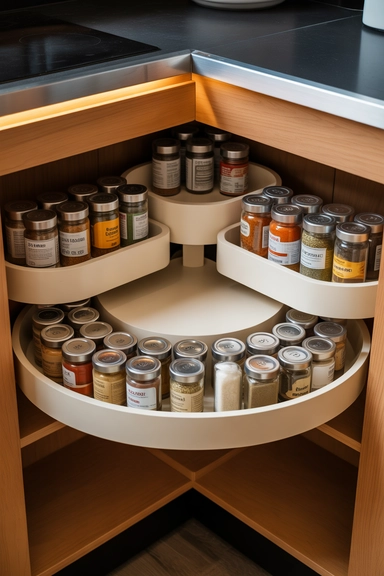
Deep cabinets often become clutter zones where spices disappear behind larger items. Installing pull-out racks transforms these spaces into accessible storage. When the rack slides forward, every jar moves into view without needing to reach into the back. This prevents overcrowding and keeps bottles upright and contained.
Spacing jars evenly across the pull-out surface ensures stability during movement. Grouping spices by cuisine or cooking style keeps the layout logical and easy to maintain. Over time, the pull-out rack reduces cabinet mess because jars remain in assigned rows. The sliding motion itself encourages returning items to their proper place, helping the cabinet stay tidy between cooking sessions.
6. Lazy Susan Platforms for Corner Cabinets
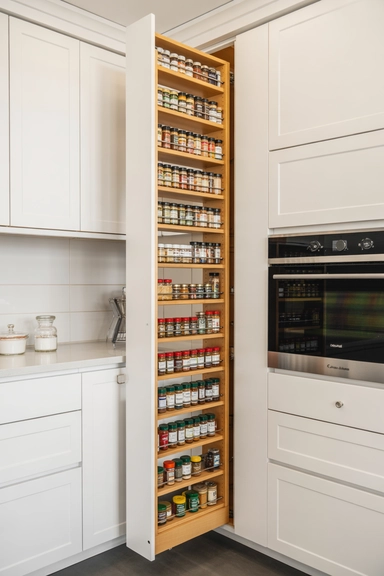
Corner cabinets can feel awkward to organize, especially when spices get lost behind other items. A rotating platform solves this by bringing jars forward with a simple spin. Instead of digging through layers, you rotate the surface until the needed spice appears. This movement keeps everything accessible while preventing overcrowded corners.
Arranging jars by height or frequency ensures that the most-used spices stay within easy reach. Smaller containers can sit toward the center, while taller ones line the outer edge. The circular layout naturally keeps items grouped and prevents piles from forming. Over time, the rotating surface helps maintain order because each jar returns to a visible position rather than disappearing into the back of the cabinet.
7. Shallow Shelf Zones That Prevent Bottle Piling
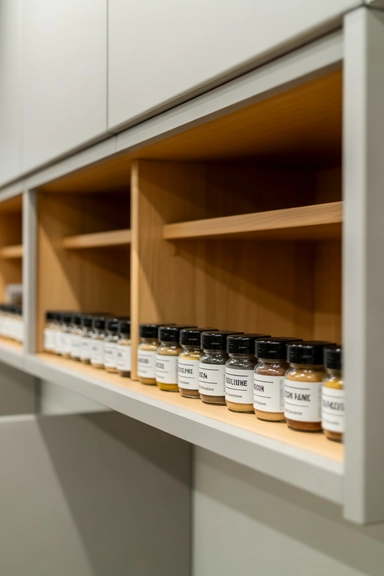
When cabinet shelves are too deep, spices tend to collect in crowded rows that are difficult to navigate. Creating a shallow front zone dedicated solely to spices prevents bottles from being pushed behind other pantry items. This approach works especially well in upper cabinets where visibility matters most. By keeping spice jars within a defined front section, you eliminate the habit of stacking and ensure everything stays in sight.
Spacing jars in single rows keeps the layout controlled and easy to maintain. If the cabinet is wide, dividing the shelf into sections for everyday blends, baking spices, and specialty seasonings helps maintain structure. Over time, this shallow-zone system keeps cabinets tidy because jars never drift into hard-to-reach areas. Instead, they remain aligned and accessible, making it easier to return each item to its place after cooking.
8. Labeled Lid Systems for Top-Down Visibility
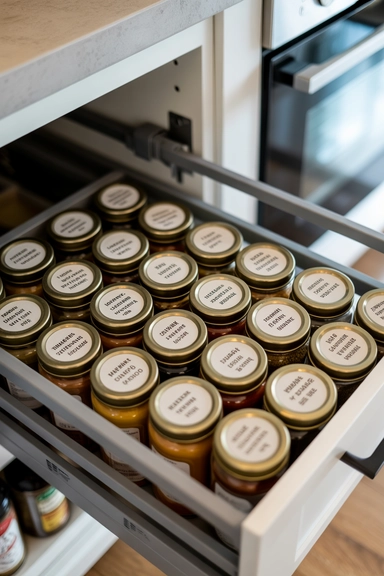
Cabinets that store spices in drawers or low shelves benefit from labeling the tops of jars. Lid labels allow quick identification when looking down at containers, eliminating the need to pick up each bottle. This method works especially well in pull-out shelves or angled inserts where jars sit horizontally. The result is a cabinet that functions like a catalog—every spice is visible from above.
Using consistent fonts and label placement keeps the visual layout clean. Grouping spices alphabetically or by cuisine helps maintain order long term. When jars are returned after use, the lid labels guide placement automatically. Over time, this system prevents clutter because each container has a clearly marked position. The cabinet remains tidy because identification happens instantly without rearranging rows.
9. Narrow Vertical Dividers for Tall Cabinets
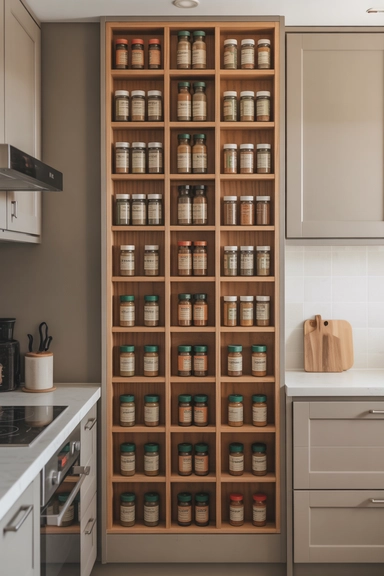
Tall cabinets often waste vertical space that could hold multiple rows of spices. Adding vertical dividers creates slim columns where jars can be stacked safely without tipping. This approach transforms unused height into functional storage while keeping bottles contained. Each divider forms a mini-zone that prevents jars from sliding or leaning.
Organizing columns by spice category keeps the layout logical. For example, one column can hold everyday seasonings while another stores baking blends. Because each section is separated, bottles stay aligned even when the cabinet is partially full. Over time, vertical dividers maintain tidiness by preventing piles from forming. The cabinet interior stays structured, and spices remain easy to locate.
10. Clear Storage Bins That Group Similar Spices
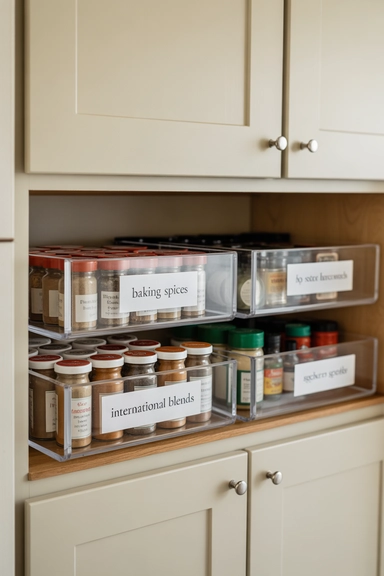
Grouping spices into small clear bins helps maintain order inside cabinets with mixed storage. Instead of placing jars loosely on shelves, each bin acts as a container for related items such as baking spices or international blends. This keeps shelves from becoming scattered and makes it easier to remove an entire group at once.
Clear bins allow quick scanning while still containing items neatly. When placed on shelves or pull-out racks, they prevent jars from drifting out of place. Returning a bin to its designated spot keeps the cabinet consistent and tidy. Over time, this grouping system simplifies organization because each category has a defined home that doesn’t shift during daily cooking.
11. Wall-to-Cabinet Transition Storage
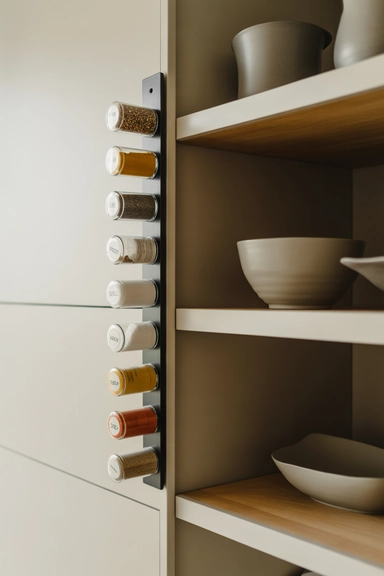
Some kitchens benefit from extending spice storage slightly outside the cabinet using narrow wall-mounted racks placed next to cabinet openings. This transition zone keeps frequently used spices accessible without overcrowding shelves. When cabinets remain partially dedicated to bulk storage, the wall rack becomes a quick-grab area that reduces cabinet congestion.
Aligning wall racks with cabinet shelves maintains visual continuity. Jars stored here should be those used daily, while specialty items remain inside the cabinet. This separation keeps the cabinet interior tidy and prevents overfilling. Over time, the transition system balances accessibility and organization, ensuring that both cabinet and wall storage remain structured and easy to maintain.
12. Uniform Height Placement for Clean Lines
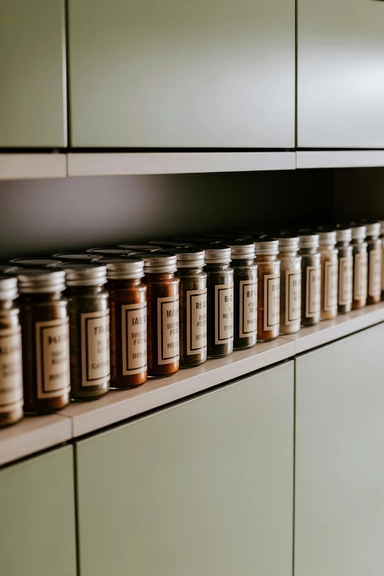
Keeping all spice jars at a consistent height creates a visually calm cabinet. When containers vary widely in size, shelves appear cluttered even if they are organized. Using jars of similar height or grouping taller containers at the back maintains clean lines that are easier to scan.
Arranging jars so labels face forward reinforces this sense of order. Over time, consistent placement encourages better upkeep because each container fits within the established layout. The cabinet remains tidy not only because items are stored neatly, but because the visual structure makes disorder immediately noticeable. This encourages quick corrections that keep the space organized long term.
13. Tiered Shelf Inserts That Bring Back Rows Forward
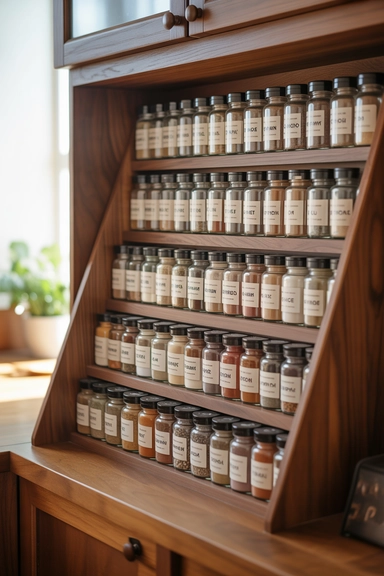
Deep cabinets often hide spices behind other spices, which leads to duplicate purchases and cluttered shelves. Tiered shelf inserts solve this by elevating the back rows so every jar remains visible. When bottles sit on stepped levels, you can scan the entire collection without moving containers around. This layout keeps cabinets visually controlled and functionally efficient.
Grouping spices by usage across the tiers maintains order. Everyday spices can sit on the lowest level for quick access, while specialty blends move toward the back. Because each tier supports only one row, jars don’t stack or slide. Over time, this system preserves cabinet tidiness because everything has a defined position that stays consistent even after frequent cooking sessions.
14. Pull-Out Cabinet Trays for Full Visibility
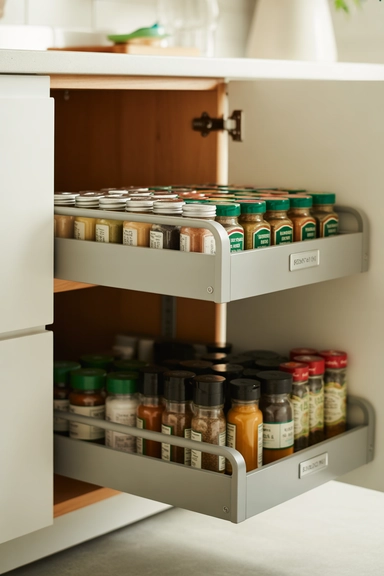
Pull-out trays transform standard cabinets into accessible storage zones where spices can be viewed at once. Instead of reaching into dark corners, sliding trays bring every jar forward. This prevents bottles from getting lost behind other items and reduces the tendency to overfill shelves. The cabinet stays orderly because each tray acts as a controlled storage layer.
Dividing trays by category keeps the system logical. One tray might hold daily spices, while another stores baking or specialty blends. Returning jars becomes easier because the layout is visible during placement. Over time, pull-out trays maintain tidiness by eliminating hidden areas where clutter typically forms. Everything remains within reach, and the cabinet retains a structured appearance.
15. Door-Mounted Racks That Free Shelf Space
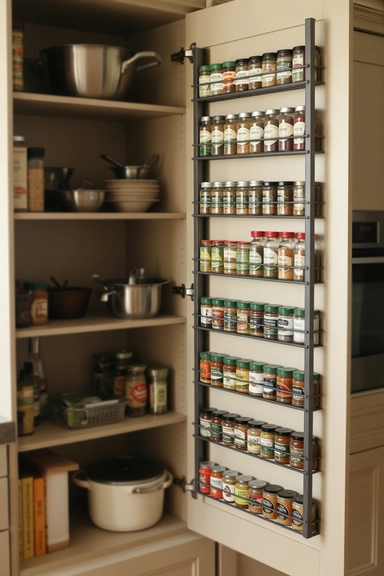
The inside of cabinet doors offers valuable storage for slim spice racks. Mounting shallow racks here removes bottles from crowded shelves while keeping them easily accessible. This approach works especially well in small kitchens where cabinet interiors need to remain flexible for larger items. Door racks create a dedicated spice zone that doesn’t compete with cookware.
Organizing door racks by frequency of use keeps daily spices at eye level. Heavier or less-used jars can remain inside the cabinet. Because the racks are narrow, bottles stay aligned and visible. Over time, this system prevents shelf clutter by relocating spices to a designated vertical surface. The cabinet interior stays tidy while still holding a full spice collection.
16. Drawer-Based Spice Layouts for Flat Storage
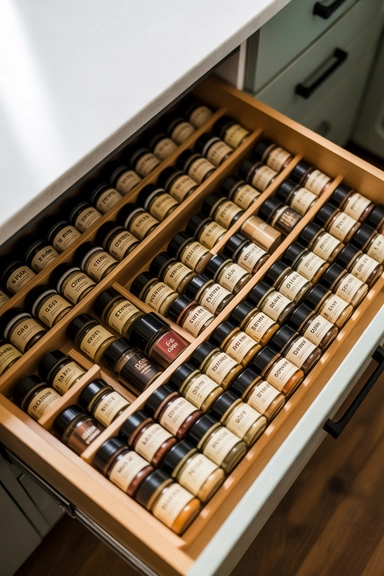
Storing spices in a shallow drawer keeps cabinets clear while maintaining visibility. When jars lie flat with labels facing up, you can see everything at once. This layout works best with angled inserts that prevent rolling. Each jar sits in its own slot, which maintains order even after frequent use.
Arranging spices alphabetically or by category simplifies navigation. Because each container has a designated space, returning items becomes automatic. Over time, drawer storage reduces cabinet congestion and keeps surfaces clear. The drawer remains tidy because jars cannot shift or stack, preserving the layout through daily cooking routines.
17. Corner Cabinet Rotating Storage
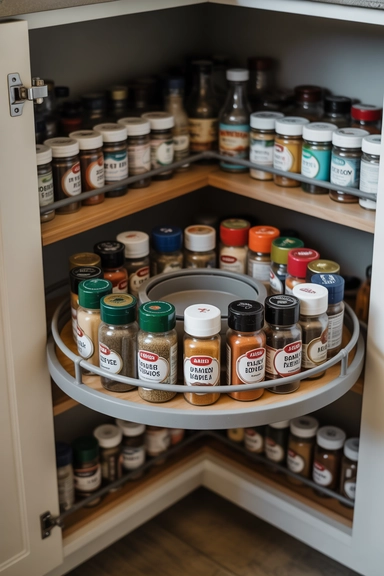
Corner cabinets often waste space and become cluttered with hard-to-reach items. Adding a rotating tray or lazy Susan allows spices to remain visible while maximizing the curved interior. A simple spin brings every jar forward, eliminating the need to dig through crowded shelves.
Dividing the rotating surface into sections keeps the layout organized. Everyday spices can sit at the front, while specialty blends rotate into view when needed. Because jars stay within defined zones, they don’t scatter across the cabinet. Over time, this rotating system keeps the corner cabinet tidy and ensures every bottle remains accessible.
18. Slim Pull-Out Columns for Narrow Gaps
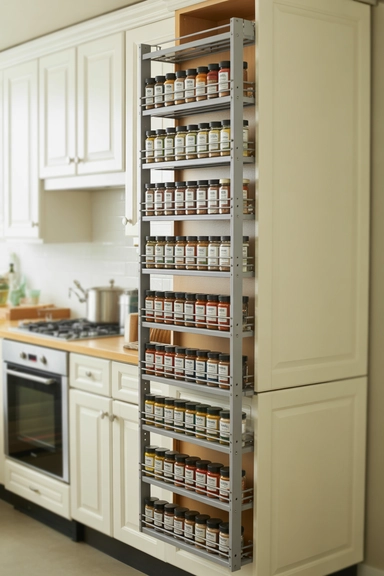
Narrow spaces between cabinets or appliances can be converted into slim pull-out spice columns. These vertical units hold rows of jars in a compact footprint while keeping them visible. Each shelf slides out, revealing all contents without disturbing the layout. This approach works well in tight kitchens where traditional storage feels crowded.
Grouping spices by category across the column maintains order. Because shelves are shallow, jars remain aligned and easy to scan. Returning items is simple—each slot stays consistent. Over time, slim pull-out columns keep cabinets tidy by relocating spices into a dedicated, space-efficient structure that prevents overcrowding elsewhere.
19. Minimalist Labeling That Maintains Order
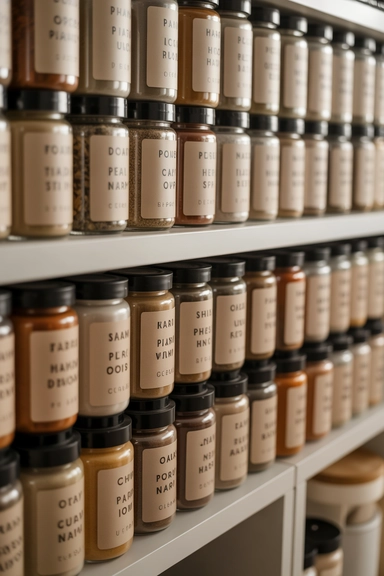
Consistent labeling across all spice jars reinforces a clean cabinet layout. Labels placed in the same position on each jar create visual alignment that helps maintain structure. When every container follows the same design, the cabinet appears organized even during busy cooking periods.
Using clear, readable fonts ensures quick identification. Grouping jars by type or cuisine keeps the layout logical. Over time, minimalist labeling encourages better upkeep because misplaced jars become immediately noticeable. This visual clarity keeps cabinets tidy and prevents the slow buildup of clutter that often comes from inconsistent storage.
20. Uniform Glass Jars That Eliminate Visual Clutter
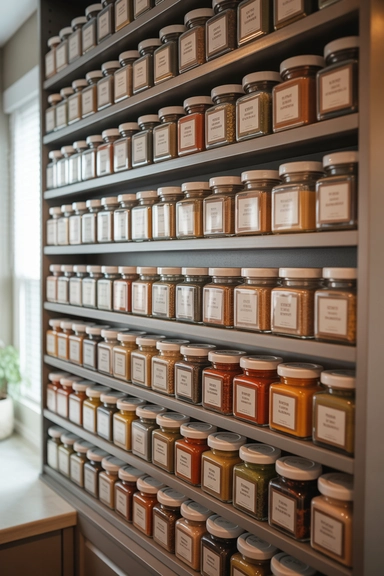
A cabinet filled with mismatched spice containers quickly looks chaotic, even when everything is technically organized. Transferring spices into uniform glass jars creates visual consistency that instantly calms the space. When every container shares the same height and shape, rows stay aligned and shelves appear structured rather than crowded. This makes it easier to spot gaps, duplicates, or overstocked categories.
Uniform jars also stack more predictably on shelves or inserts. Labels can face forward or upward depending on cabinet layout, allowing you to scan contents without moving anything. Over time, this system keeps cabinets tidy because jars return to the same positions naturally. The consistency removes friction during cooking and cleanup, which helps the organization system stay intact long term.
21. Magnetic Strip Storage Inside Cabinets
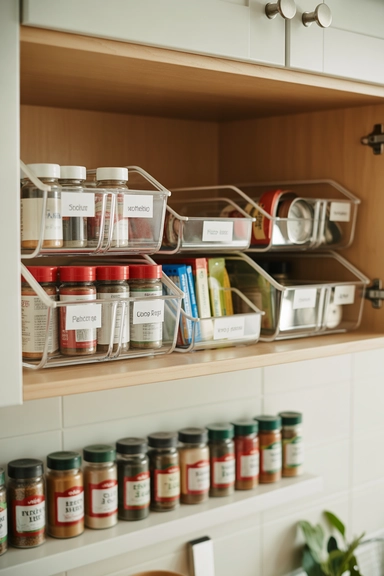
Installing a magnetic strip along the inside of a cabinet wall creates vertical storage for metal spice tins. This method lifts frequently used spices off shelves and keeps them visible without taking up surface space. Because tins attach directly to the strip, they remain evenly spaced and easy to remove.
Grouping tins by usage or cuisine keeps the layout intuitive. The magnetic surface prevents jars from shifting, which maintains order even in busy kitchens. Over time, this setup preserves cabinet tidiness by relocating high-use spices into a defined zone that doesn’t interfere with other storage. It’s especially effective in small cabinets where shelf space is limited.
22. Clear Storage Bins for Bulk Spice Storage
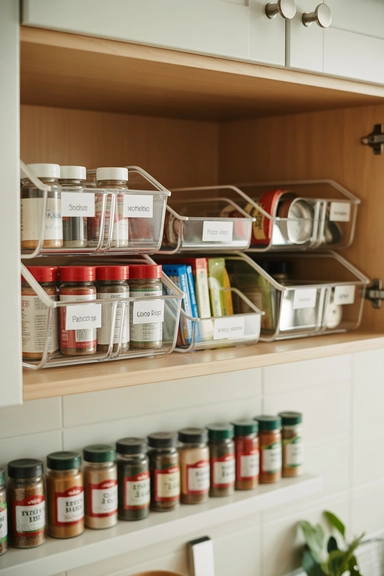
Large spice collections or bulk refills often disrupt cabinet order. Using clear storage bins to group extra containers keeps shelves from becoming overcrowded. Each bin can hold backup jars, specialty blends, or seasonal spices. Because bins are transparent, you can see contents without opening them.
Placing bins on upper shelves keeps daily spices accessible below. When refilling jars, you simply pull the bin forward rather than searching through the cabinet. Over time, this method prevents overflow and maintains a clean layout. The cabinet stays tidy because only frequently used spices remain visible, while extras stay contained.
23. Rotating Seasonal Spice Zones
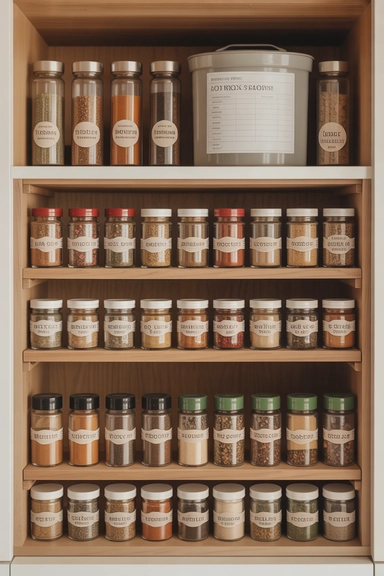
Spice collections often grow beyond everyday cooking needs. Creating a rotating seasonal zone inside cabinets helps manage overflow without creating clutter. Everyday spices remain in the main section, while seasonal blends move to a separate container or shelf. This keeps cabinets focused on what’s currently in use.
At the start of each season, rotate blends back into the main area and remove those used less often. Because this rotation happens regularly, cabinets never become overloaded. The layout remains controlled, and shelves stay easy to navigate. Over time, rotating zones maintain cabinet tidiness by keeping only relevant spices within immediate reach.
Conclusion
A well-organized spice cabinet keeps everyday cooking smooth because everything stays visible, grouped logically, and easy to return to its place. When shelves use clear jars, inserts, or defined zones, clutter doesn’t build up and you stop digging for bottles mid-recipe. The goal isn’t perfection but a layout that supports daily use—one where spices are easy to see, quick to grab, and simple to maintain so cabinets stay tidy without constant rearranging.