Introduction
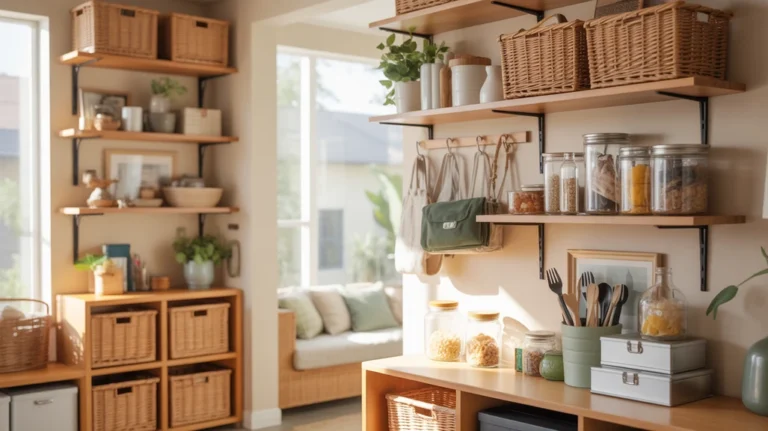
Living rooms are the most difficult spaces to keep organized because they serve multiple people, routines, and purposes at once. Unlike private rooms, clutter here spreads quickly and becomes visually dominant, even when the volume is small. The issue is rarely a lack of storage, but a lack of boundaries and shared logic. Effective living room organizing ideas focus on controlling visual drift, managing shared-use items, and protecting circulation paths. When organization supports how the room is actually used—rather than how it is styled—the space stays clear longer and feels easier to reset. Many of these principles also connect closely with Smart Tiny Home Organizing Hacks That Save Space, where restraint matters more than capacity.
1. Define What Truly Belongs in the Living Room
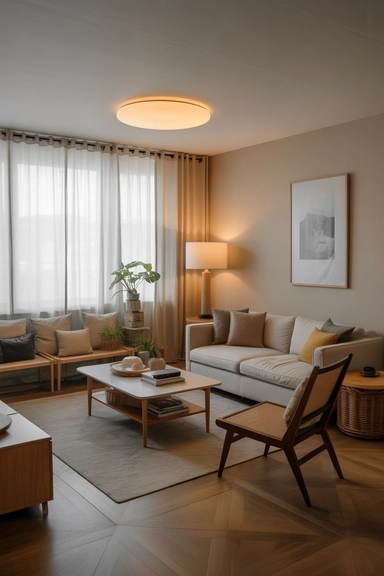
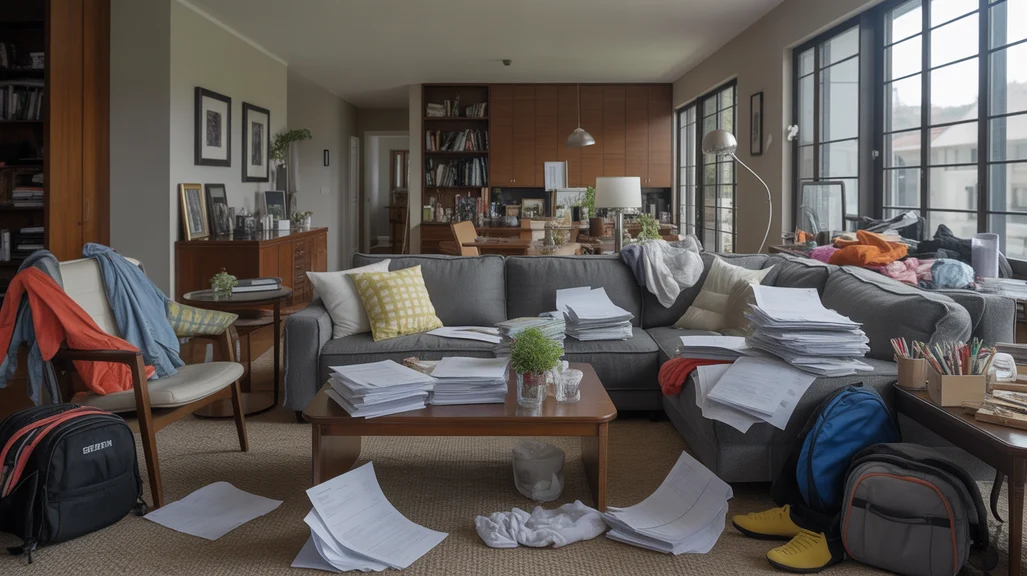
Shared spaces fail when they absorb items that belong elsewhere. Living rooms often become holding zones for paperwork, bags, laundry, and hobby supplies simply because they are central. This creates constant visual pressure and makes the room feel unsettled, even when furniture and decor are well chosen.
Clear organization starts by deciding what categories are allowed to live in the room permanently. Items that do not support seating, relaxation, or shared activity should have defined homes outside the space. Once boundaries are established, storage decisions become easier. The room stays clearer not because it holds less, but because it holds only what belongs.
2. Create Contained Zones Instead of Open Drop Areas
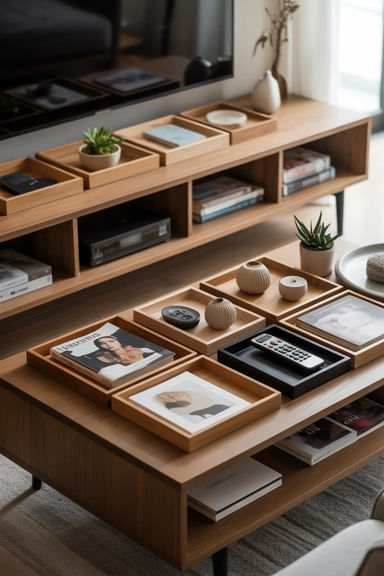
Open surfaces invite clutter when they lack purpose. Coffee tables, side tables, and console tops quickly become drop zones when they are not intentionally defined. This leads to scattered objects that interrupt sightlines and make the room feel busy.
Contained zones solve this problem. Trays, baskets, or low-profile containers give items a visible boundary, signaling where placement starts and ends. These zones absorb daily-use objects without letting them spread. Over time, containment reduces visual drift and keeps shared surfaces readable rather than chaotic.
3. Use Closed Storage for Shared, High-Volume Items
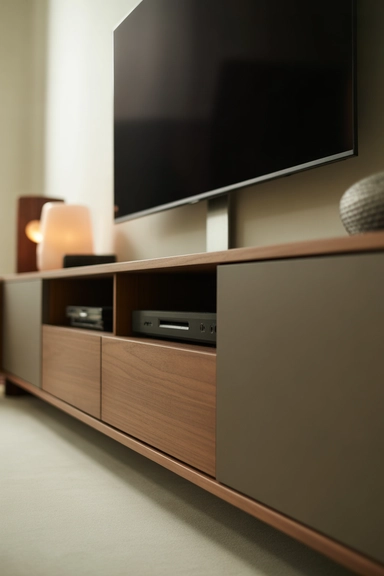
Items used by multiple people generate the most visual noise. Remotes, chargers, games, throws, and media accessories multiply quickly and rarely return to place without structure. Open storage exposes this volume, making the room feel cluttered even when items are neatly arranged.
Closed storage absorbs this pressure. Cabinets, drawers, and storage ottomans allow shared items to exist without dominating the room visually. This approach mirrors how bedroom organization ideas that reduce visual clutter rely on concealment to protect calm. In living rooms, closed storage keeps shared use from turning into shared mess.
4. Keep Circulation Paths Completely Clear
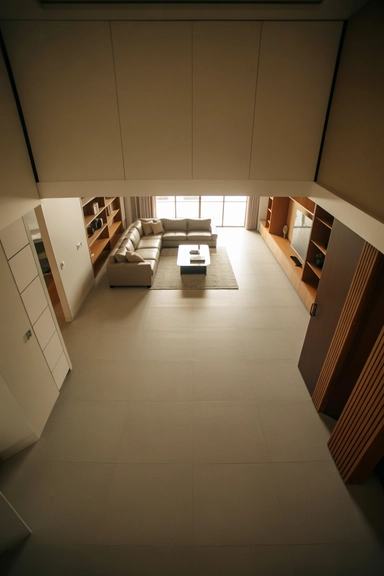
Living rooms fail functionally when movement is compromised. Chairs pushed too close, baskets placed in walkways, or storage creeping into circulation zones creates constant friction. Even small obstructions make the space feel crowded and uncomfortable.
Effective organization protects movement first. Storage should sit outside primary walk paths, not within them. When circulation is preserved, the room feels larger and calmer regardless of size. This also reduces accidental clutter buildup, because items placed in movement paths are quickly perceived as problems rather than tolerated.
5. Limit Each Shared Category to One Storage Location
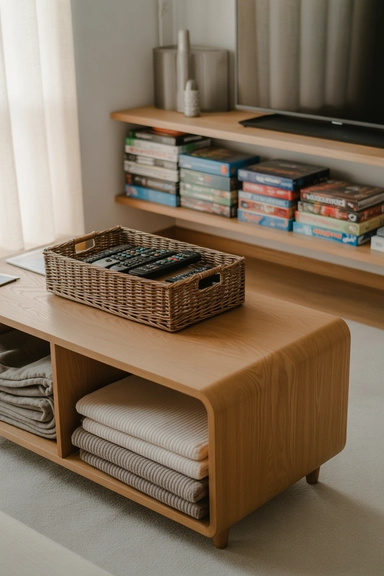
Shared categories cause disorder when they are spread across multiple locations. When remotes live in three places or throws exist in every corner, nothing feels settled. Items drift because no single location feels definitive.
Assigning one storage location per category restores clarity. Everyone knows where items belong, and return becomes automatic rather than negotiated. This single-location rule reduces duplication, prevents overflow, and keeps shared spaces visually stable over time.
6. Anchor Storage Around Daily Shared Activities
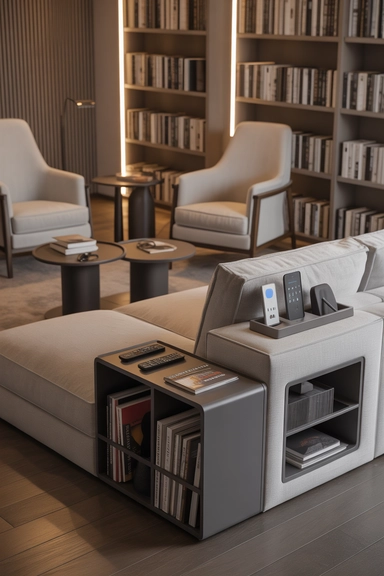
Living rooms stay clear when storage is organized around what actually happens there each day. Activities like watching television, reading, charging devices, or casual lounging generate repeat clutter if storage does not align with those behaviors. When storage sits too far from where items are used, objects migrate to the nearest surface instead.
Anchoring storage near activity zones shortens return paths. Remotes live near seating, charging solutions stay close to outlets, and reading materials remain within arm’s reach. This logic supports natural habits rather than forcing correction. It closely mirrors how living room shelf decor ideas for a calm living room rely on proximity and restraint to keep shared surfaces composed.
7. Control Visual Density at Eye Level
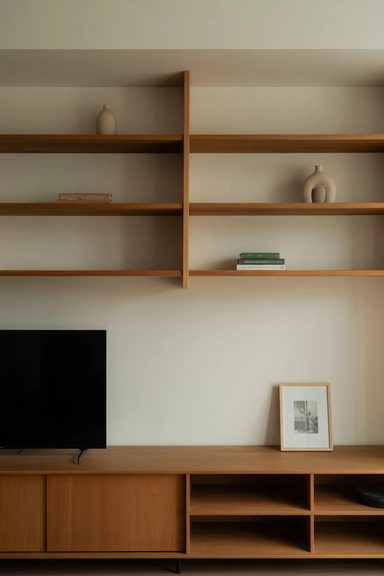
Eye-level clutter is more disruptive than floor-level or concealed storage. When shelves, consoles, or media units are visually crowded at standing or seated eye height, the room feels noisy regardless of organization quality. Visual density at this level competes with people, screens, and focal points.
Reducing eye-level density restores calm. Fewer objects, wider spacing, and intentional grouping prevent visual overload. Storage volume can exist lower or behind closed doors without sacrificing function. This approach keeps shared spaces readable and relaxed even when multiple users rely on the room daily.
8. Separate Long-Term Storage From Daily-Use Storage
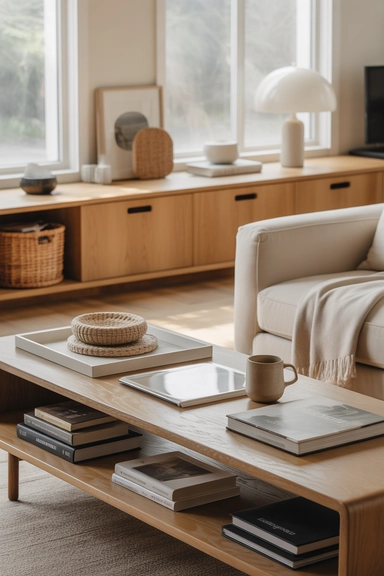
Living rooms often struggle when long-term storage mixes with daily-use items. Board games rarely played, archived media, or off-season decor should not share space with everyday essentials. This mixing increases retrieval friction and visual clutter.
Separating these timelines improves clarity. Daily-use items stay accessible and visible, while long-term storage moves to less prominent locations. The room feels lighter because only relevant items remain present. This separation reduces reshuffling and prevents occasional-use items from slowly dominating shared zones.
9. Use Furniture Edges to Contain Clutter
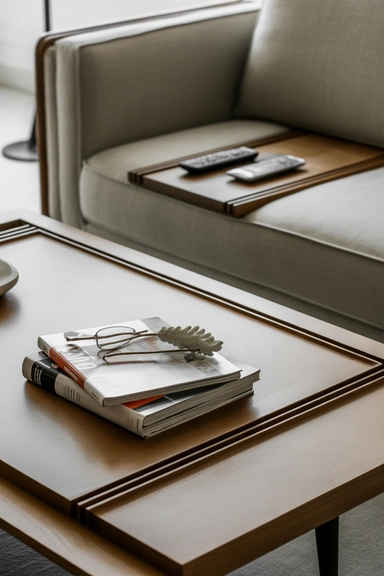
Clutter spreads fastest when furniture edges are undefined. Without clear boundaries, items drift from tables to sofas to floors. Using furniture edges intentionally—through trays, baskets, or integrated storage—creates natural containment lines.
These edges act as quiet limits. Objects stop at the boundary instead of spilling outward. Over time, this containment prevents gradual clutter expansion and keeps the room’s footprint readable. Shared spaces benefit most from this subtle structure because it requires minimal effort to maintain.
10. Keep Storage Symmetrical in Shared Seating Areas
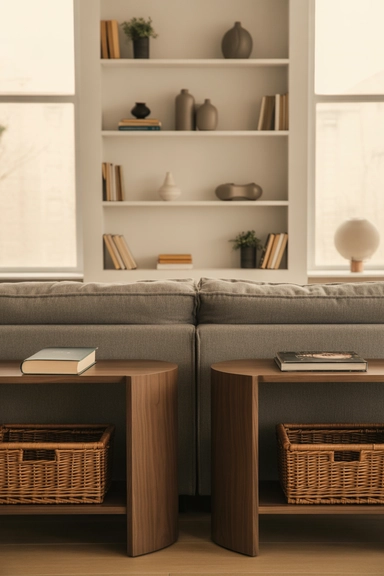
Asymmetrical storage around seating creates imbalance that the eye registers as disorder. One overloaded side table or an uneven media setup makes the entire space feel unsettled, even if items are organized.
Symmetry restores visual stability. Balanced storage on both sides of seating zones distributes weight evenly and keeps focus centered. This does not require identical furniture, but it does require visual equilibrium. When symmetry is respected, shared living rooms feel calmer and more intentional.
11. Prevent the Living Room From Becoming a Transit Hub
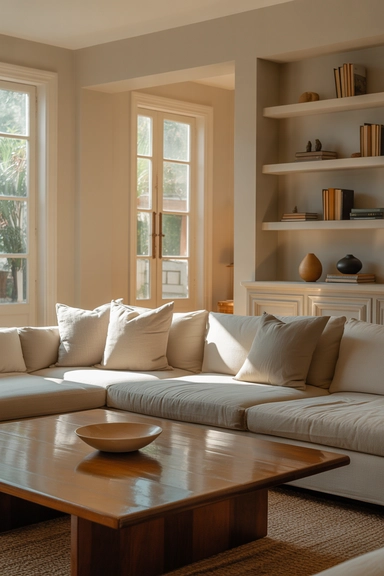
Living rooms often become transit hubs where items pause on their way elsewhere. Bags, packages, paperwork, and random objects accumulate temporarily and linger. Without intervention, temporary storage becomes permanent clutter.
Preventing this requires firm boundaries. Items in transit need defined holding zones outside the living room. When the room stops absorbing passing clutter, it regains clarity quickly. This rule alone dramatically reduces visual noise in shared spaces.
12. Assign Shared Storage Based on Ownership, Not Convenience
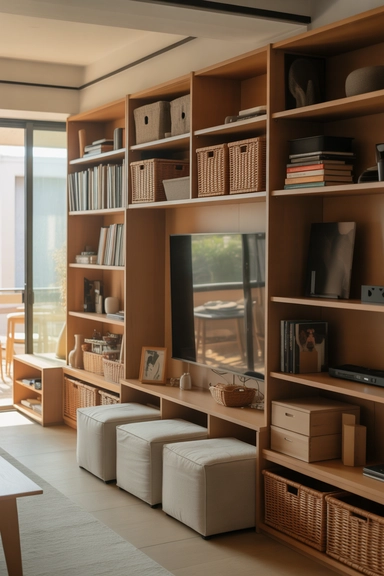
Living rooms stay clearer when shared storage reflects ownership rather than convenience. When items belonging to different people mix freely, responsibility dissolves and clutter lingers. No one feels fully accountable, and objects remain where they land instead of where they belong.
Assigning ownership zones restores order. A basket, drawer, or shelf designated per person creates quiet accountability without rules or reminders. Items return more reliably because placement is clear. Shared spaces benefit when responsibility is distributed structurally rather than negotiated verbally.
13. Limit Decorative Storage to Support, Not Compete

Decorative storage often creates more visual noise than functional value. Baskets, trays, and bins chosen for appearance rather than proportion quickly overwhelm shared rooms. When decorative storage competes with furniture and focal points, the space feels busy even when organized.
Effective decorative storage supports the room quietly. Scale, material, and placement matter more than style. When storage blends into the background, decor remains readable and intentional. The living room feels calmer because storage stops asking for attention.
14. Keep Media Storage Visually Contained
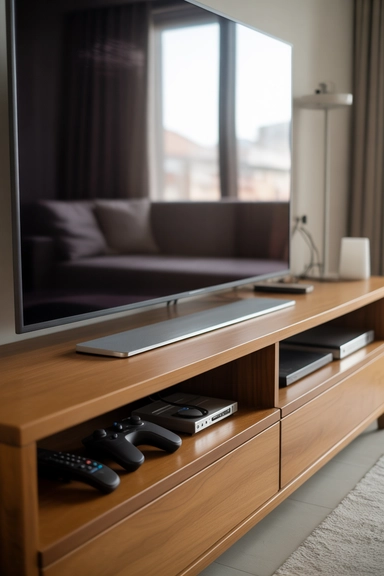
Media-related items generate constant clutter pressure in shared spaces. Cables, remotes, controllers, and accessories spread easily and dominate sightlines when not contained. Open shelving amplifies this effect, making disorder feel permanent.
Visually contained media storage solves this without sacrificing access. Drawers, closed cabinets, and hidden cable paths keep functional items available but unseen. When media storage is restrained, the room regains balance and shared use feels less chaotic.
15. Avoid Over-Access to Storage That Encourages Dumping
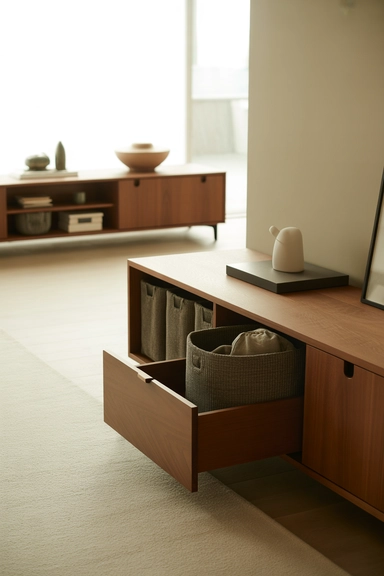
Too much easy-access storage invites dumping behavior. When baskets and open bins sit everywhere, items lose meaning and accumulate indiscriminately. Storage becomes a catchall rather than a solution.
Restricting access restores intention. Fewer storage points mean clearer decisions. Items must earn placement, which slows clutter accumulation. Shared rooms benefit from slightly limited access because it encourages conscious return rather than passive dropping.
16. Use Height Variation to Break Up Storage Mass
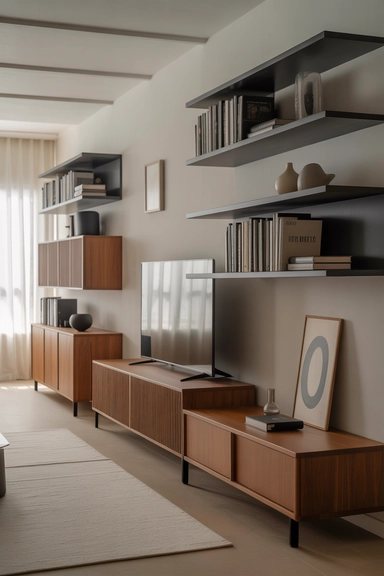
Uniform storage height creates visual heaviness in shared rooms. When all storage sits at the same level, the eye reads a continuous block that compresses space. This is especially noticeable in smaller living rooms.
Introducing controlled height variation breaks that mass. Lower storage grounds the room, while occasional taller elements provide rhythm. The key is moderation and alignment. When height changes feel deliberate, storage integrates smoothly instead of overwhelming the space.
17. Keep Shared Storage Flexible but Finite
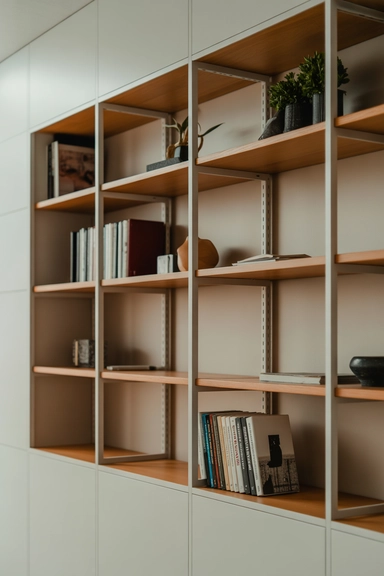
Shared storage must adapt, but it cannot be limitless. Systems that expand endlessly collapse under growth. Finite storage forces prioritization and keeps volume in check.
Flexibility works best within fixed boundaries. Adjustable shelves, modular bins, or reconfigurable furniture allow change without expansion. The living room stays clear because adaptability exists inside limits, not beyond them.
18. Reduce Visual Contrast Within Storage Areas
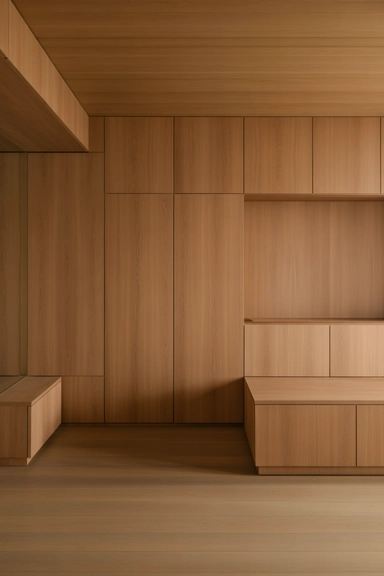
High contrast within storage zones draws attention to what should remain secondary. Mixed colors, materials, and finishes amplify visual noise, especially in shared spaces where many items coexist. Even organized storage feels cluttered when contrast is too sharp.
Reducing contrast allows storage to recede. When tones stay within a narrow range, the room itself becomes the focus rather than its contents. This approach keeps the living room visually calm even when storage volume is necessary. Order becomes perceptible without demanding attention.
19. Use Fewer, Larger Containers Instead of Many Small Ones
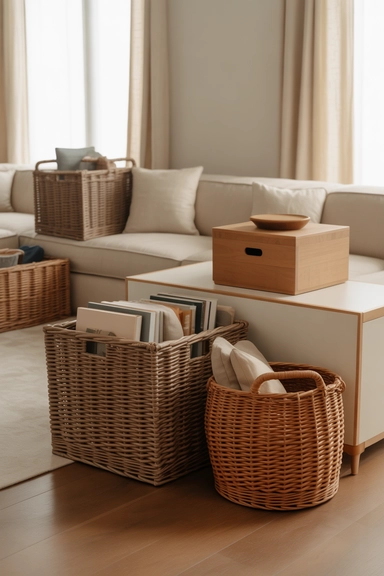
Multiple small containers fragment visual order and complicate maintenance. They encourage sorting without resolution, leaving many partial systems rather than one clear solution. In shared spaces, this fragmentation multiplies confusion.
Fewer, well-sized containers consolidate categories and simplify decisions. Larger containers create clearer endpoints and reduce visual interruption. When storage is consolidated, shared items remain easier to manage and the room reads as more composed.
20. Keep Storage Aligned With Furniture Proportions
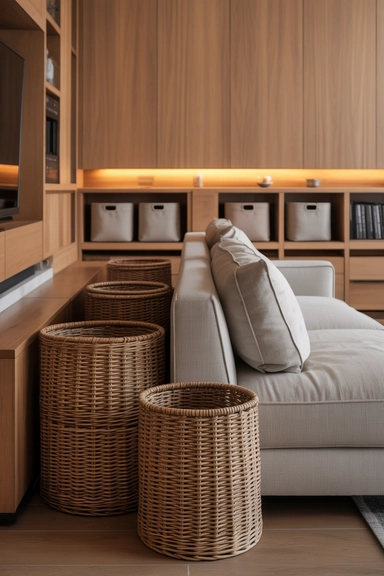
Storage that ignores furniture scale destabilizes the room. Oversized bins beside delicate seating or tiny baskets near large sofas disrupt balance. These mismatches register subconsciously as disorder.
Aligning storage proportions with furniture restores visual harmony. Storage feels intentional when it echoes the scale of surrounding pieces. This proportional consistency keeps shared spaces grounded and prevents storage from appearing improvised.
21. Prevent Overflow by Leaving Intentional Gaps
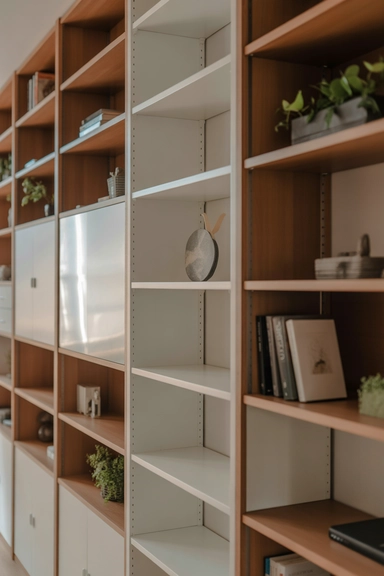
Fully packed storage collapses under even minor additions. When there is no breathing room, clutter has nowhere to go except outward. This creates constant pressure on surfaces and floors.
Leaving intentional gaps signals completion rather than scarcity. Empty space absorbs change without forcing reorganization. In shared living rooms, this buffer prevents systems from breaking under everyday use.
22. Use Lighting to Support Storage Clarity

Poor lighting turns organized storage into visual noise. When shelves and cabinets are dim or shadowed, items blur together and feel chaotic. Lighting clarifies boundaries and reinforces order.
Soft, focused lighting makes storage legible without highlighting it. The room feels calmer because objects are visible but not dominant. Lighting becomes a quiet organizational tool rather than a decorative afterthought.
23. Reassess Shared Storage as Habits Change
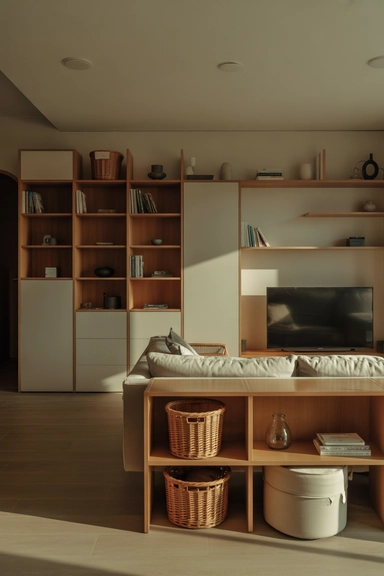
Living room use evolves as routines shift. Storage that once worked can quietly fail when habits change. Ignoring this leads to creeping disorder rather than sudden mess.
Periodic reassessment keeps systems relevant. Adjusting storage placement or capacity to match current behavior prevents breakdown. Organization remains supportive because it evolves with use instead of resisting it.
24. Remove Items That Do Not Serve the Room’s Purpose
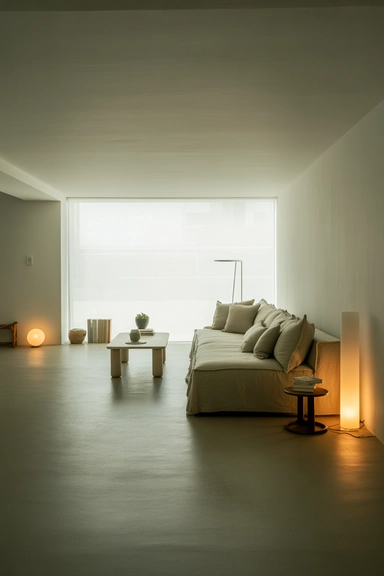
Every item in a shared space should support the room’s primary function. Objects that no longer contribute add friction and visual weight, even if they are harmless individually.
Removing these items sharpens focus. The room feels clearer because every remaining object earns its place. This discipline keeps living rooms aligned with their role as shared, restorative spaces.
25. Treat Shared Organization as a Collective Agreement
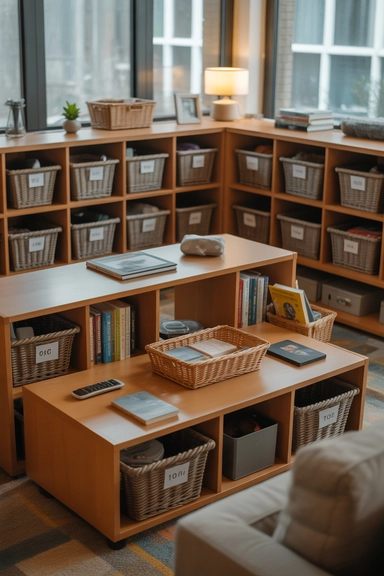
Living room organization succeeds when it reflects shared understanding rather than individual preference. Systems that only work for one person eventually fail. Collective agreement embeds order into daily behavior.
When everyone understands where items belong and why, maintenance becomes effortless. The room stays clear because organization is shared, not enforced. This alignment is what allows shared spaces to remain calm long-term.
Conclusion
Living rooms stay clear when organization respects shared behavior, visual balance, and defined limits. The most effective systems reduce visual noise, protect circulation, and contain shared-use items without demanding constant correction. These living room organizing ideas work because they prioritize clarity over capacity and structure over shortcuts. When organization aligns with how the space is truly used, shared living rooms remain calm, functional, and easier to maintain over time.