
Introduction
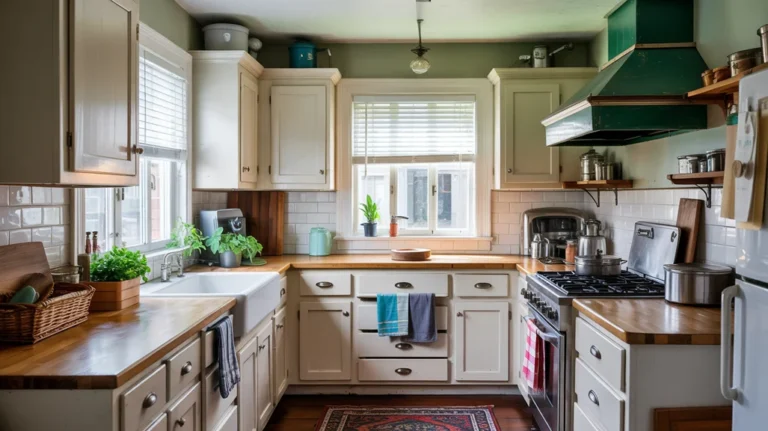
Morning light slides across a counter that stays clear long after breakfast ends. Cabinets close without resistance. Drawers open to neatly separated tools instead of tangled chaos. Order like this is not created by expensive renovations. It grows from thoughtful placement and storage that respects everyday habits. These budget kitchen organization ideas focus on practical, low-cost shifts that reduce daily clutter without demanding strict routines. The goal is a kitchen that resets itself naturally, where surfaces stay open, essentials stay close, and movement feels easy rather than managed. For deeper cabinet-focused solutions that build on this foundation, 25 Deep Kitchen Cabinet Organization Ideas That Actually Work offers additional structure-driven approaches.
1. Basket Drop Zones That Catch Clutter Early
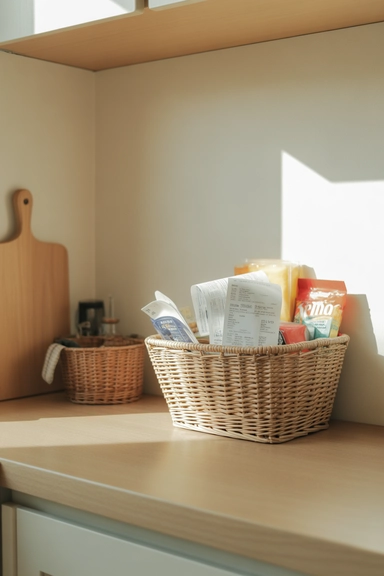
Small items enter the kitchen constantly. Grocery receipts, snack packets, keys, and mail drift toward countertops when no landing space exists. A shallow basket near the kitchen entry point creates a natural pause before clutter spreads. Woven baskets soften visual edges, wire baskets keep contents visible, and plastic bins offer quick wipe-down care. This single addition quietly changes behavior, catching mess before it travels deeper into the space.
Give each basket a defined purpose. One for produce, one for packaged snacks, one for daily incoming items. Keep basket walls low so contents stay visible and nothing disappears into piles. Among budget kitchen organization ideas, basket zoning succeeds because it supports natural habits instead of fighting them. Items land where they belong without conscious effort, keeping counters calm and predictable.
2. Drawer Dividers That Stop Daily Shuffling
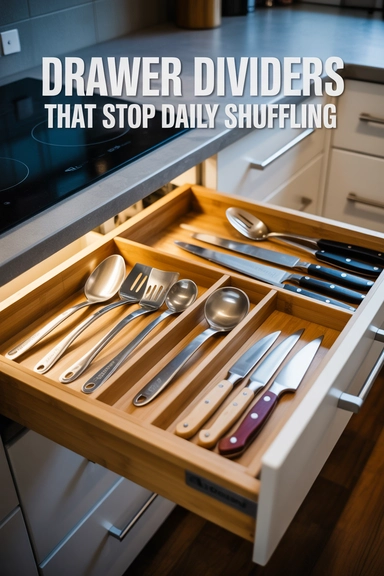
Utensil drawers become clutter magnets when tools float without structure. Spatulas overlap, measuring spoons tangle, and lids vanish under stacks. Adjustable dividers introduce clear boundaries, giving every item a permanent place. Hands reach for tools without searching, and drawers close smoothly without resistance. Bamboo dividers add warmth, plastic versions flex with changing needs, and wire options stay lightweight and durable.
Reserve a narrow divider for rarely used gadgets so bulky tools do not invade daily-use zones. Over time, consistent placement builds muscle memory, speeding cooking routines. These budget kitchen organization ideas reduce repeated micro-frustrations that quietly drain time. When drawers maintain order naturally, counters stay clearer, and kitchen flow becomes steady.
3. Vertical Storage Inside Cabinet Doors
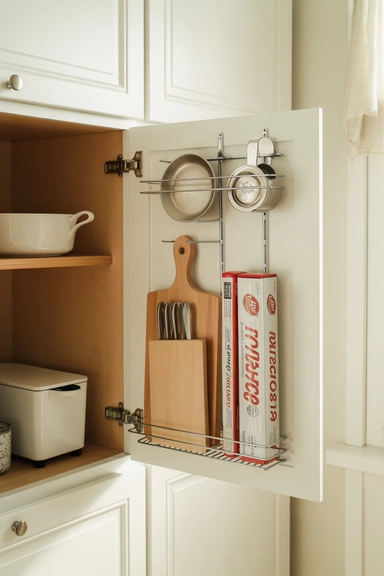
Cabinet interiors often waste vertical space. Mounting slim racks or adhesive hooks inside cabinet doors transforms unused surfaces into functional storage. Cutting boards slide neatly into narrow racks. Measuring cups hang where they are easy to reach. Foil and wrap boxes tuck into door-mounted holders, freeing shelf depth for cookware.
This method improves visibility and prevents forgotten duplicates. When items sit upright and forward-facing, everything stays within sight and easy reach. Door-mounted storage costs little but unlocks surprising capacity. Among budget kitchen organization ideas, vertical cabinet-door use works because it multiplies storage without expanding footprint, creating cabinets that open to order instead of clutter.
4. Clear Container Systems for Pantry Order
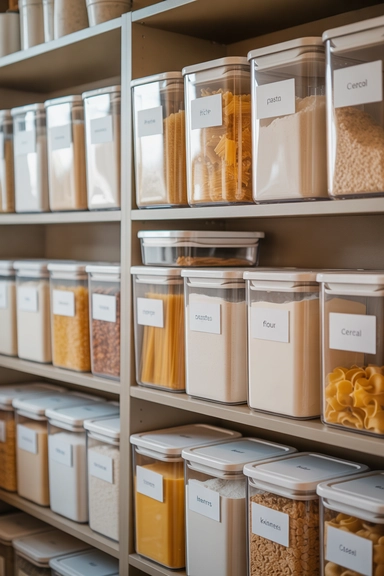
Pantry shelves often hold mismatched packaging that spills, hides, and wastes space. Uniform clear containers replace visual chaos with consistency. Dry goods stay sealed, stackable, and easy to identify at a glance. Airtight lids protect freshness, while straight edges maximize shelf depth. Labels complete the system, guiding quick restocking.
Begin with frequently used staples such as rice, flour, pasta, and cereals. Choose container sizes that fit shelf height to preserve clean sightlines. When visibility improves, overbuying decreases and rotation becomes natural. These budget kitchen organization ideas succeed because they combine hygiene, function, and visual calm, allowing the pantry to reset itself after every use.
5. Counter Zoning That Protects Open Space
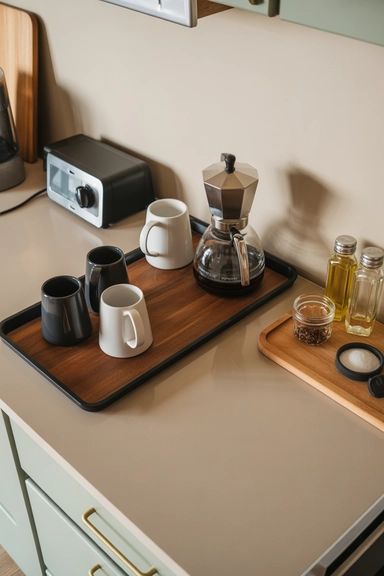
Countertops collect clutter when every task claims permanent territory. Zoning introduces gentle boundaries. A tray defines a coffee station. A narrow board anchors cooking oils and salt. A compact caddy holds dish soap and brushes. Each grouping limits spread while keeping essentials accessible.
The key lies in editing. Remove appliances that serve occasional needs and store them in cabinets. Preserve one clear preparation zone with no permanent objects. Among budget kitchen organization ideas, counter zoning protects workspace and visual breathing room. The kitchen feels lighter, cleaning becomes faster, and daily routines move without constant rearranging.
6. Stackable Shelf Risers That Double Cabinet Space
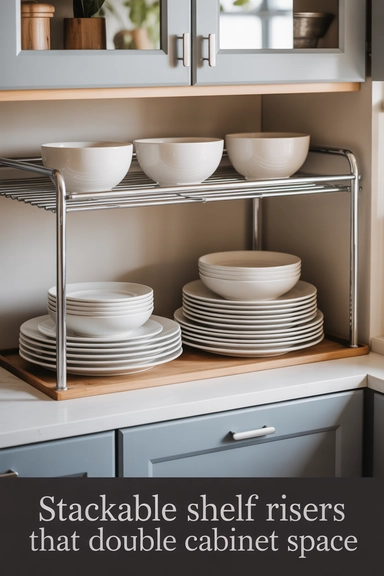
Cabinet shelves often leave wasted air above plates, bowls, or pantry items. Stackable shelf risers introduce a second level without permanent installation. Plates sit below, bowls rest above, and vertical space suddenly works harder. Metal risers keep a clean, modern look, while coated versions prevent sliding and scratching. Even simple plastic risers create noticeable breathing room in tight cabinets.
Place risers where you reach daily items. Avoid overstacking to keep access smooth. When cabinets feel layered instead of crowded, grabbing cookware becomes instinctive rather than frustrating. Among budget kitchen organization ideas, shelf risers deliver instant capacity without construction, turning cramped storage into a structured system that stays orderly through constant use.
7. Under-Sink Caddies That Tame Cleaning Supplies
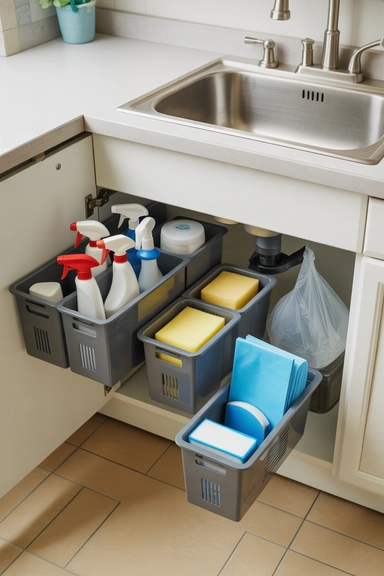
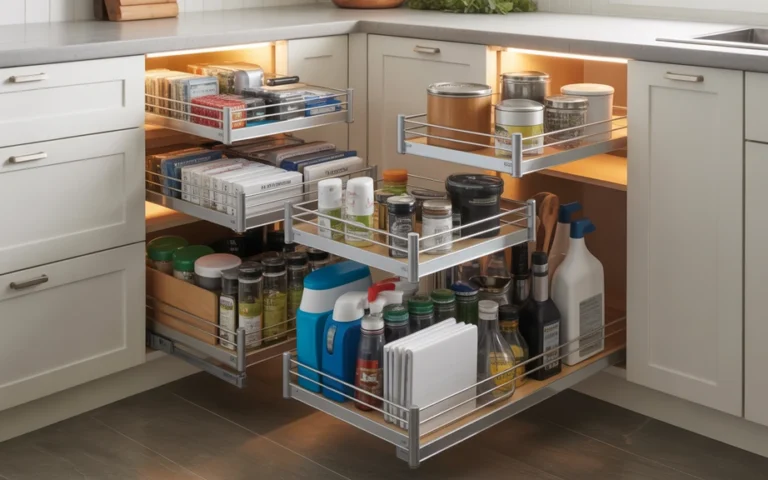
The space beneath the sink is often a chaotic collection of bottles, sponges, and cloths. Low pull-out caddies or tiered organizers transform this hidden zone into a functional storage hub. Cleaning sprays stand upright. Cloths fold neatly. Trash bags stay contained instead of loose on shelves. Moisture-resistant materials ensure durability in damp environments.
Group supplies by task—dishwashing in one section, surface cleaning in another. Keep frequently used items at the front. This prevents rummaging and accidental spills. Among practical budget kitchen organization ideas, under-sink caddies work because they impose structure on an awkward space, keeping doors opening to order rather than cluttered surprise.
8. Wall Rails That Lift Tools Off Counters
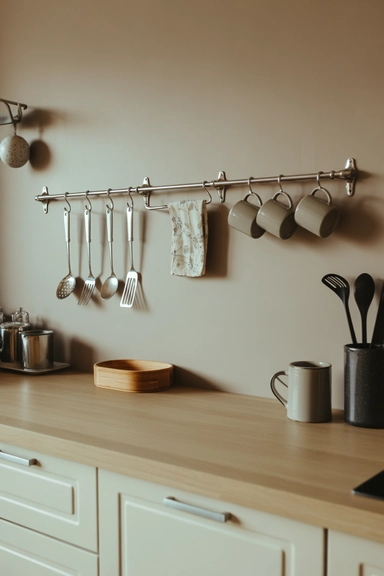
Countertops feel crowded when everyday tools lie flat. A simple wall-mounted rail with hooks lifts utensils, mugs, or towels into vertical display. Metal rails suit modern kitchens, while wood rails add warmth. Hooks rearrange easily as needs shift, keeping the system flexible over time.
Hang only items used daily to avoid visual noise. Leave breathing space between hooks so tools remain easy to grab. These budget kitchen organization ideas succeed because they free counter space without hiding essentials. Movement becomes smoother, cleaning becomes quicker, and the kitchen gains an airy rhythm that feels intentional rather than staged.
9. Rolling Carts That Create Mobile Storage
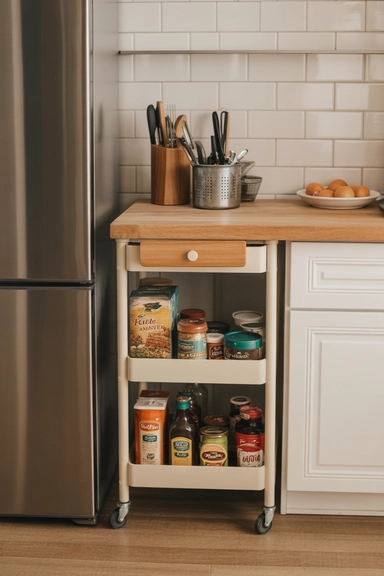
Small kitchens often lack fixed storage, but rolling carts provide adaptable capacity. A slim cart slides between appliances, storing pantry goods, cookware, or prep tools. Wheels allow movement during cooking, then tuck away when not needed. Wood carts bring warmth, metal frames offer industrial edge, and plastic versions handle moisture easily.
Assign each shelf a role: prep tools on top, pantry items in the middle, heavier goods below. Keeping categories separated prevents clutter creep. Among budget kitchen organization ideas, rolling carts shine because they respond to changing routines. Storage follows the cook, not the other way around.
10. Label Systems That Keep Everything Returning Home
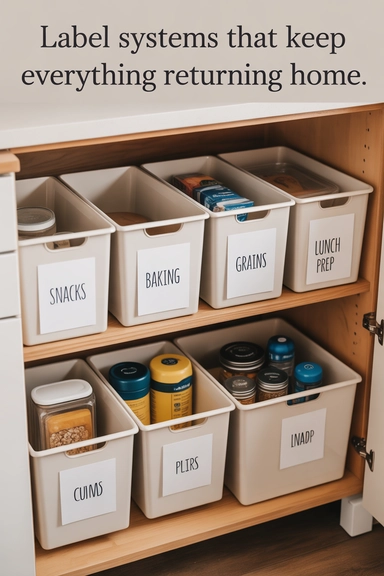
Storage fails when family members guess where items belong. Simple label systems remove uncertainty. Handwritten tags on baskets, printed labels on containers, or chalk markers on jars guide quick placement. Consistency matters more than style. Labels turn shared kitchens into self-maintaining spaces.
Focus labeling on high-traffic zones: pantry bins, snack drawers, lunch-prep areas. Keep fonts clear and wording simple. When everyone understands where items live, clutter stops regenerating. Among long-term budget kitchen organization ideas, labeling creates silent order. The kitchen resets itself naturally, even during busy weeks.
11. Pull-Out Spice Racks That End Counter Scatter
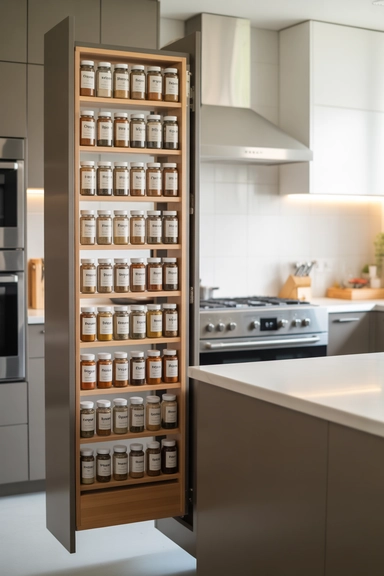
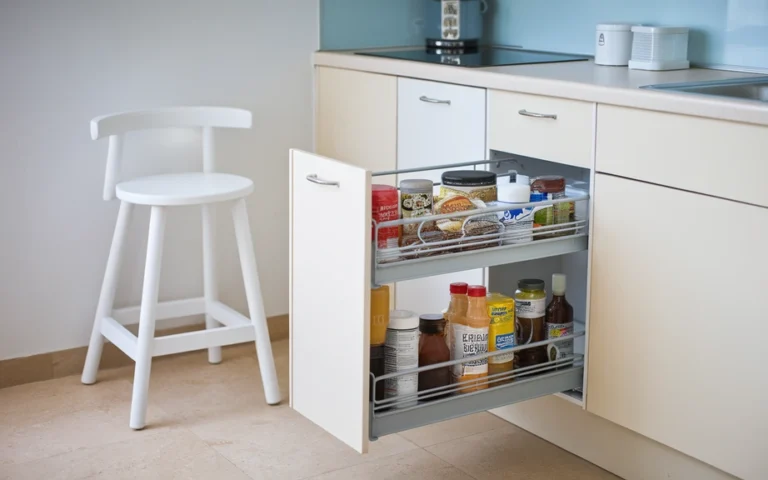
Spice jars often drift across countertops because cabinets hide them too deeply. A slim pull-out spice rack inside a cabinet or beside the stove keeps seasonings visible and reachable. Metal racks offer durability, while plastic versions fit tight spaces at lower cost. Uniform jar sizing keeps rows tidy and easy to scan during cooking.
Arrange spices by frequency of use rather than alphabetically. Daily seasonings stay at eye level, while occasional ones move to lower tiers. This reduces search time and prevents duplicate purchases. Among budget kitchen organization ideas, pull-out spice storage restores counter clarity while keeping flavor tools close, blending convenience with visual calm.
12. Pegboard Walls That Adapt to Changing Needs
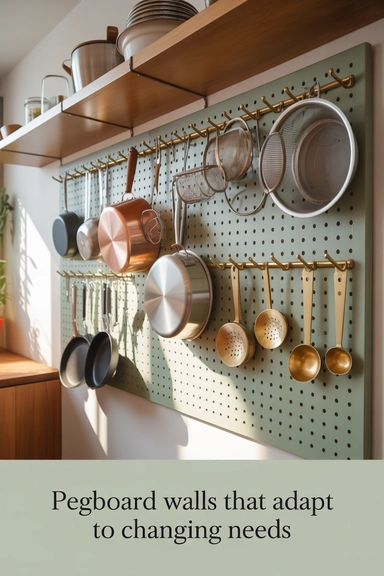
A pegboard wall turns an empty vertical surface into flexible storage. Pots, pans, strainers, and measuring tools hang in custom arrangements that shift as routines change. Painted pegboards blend with kitchen color schemes, while raw metal boards bring an industrial edge. Hooks reposition easily without drilling new holes.
Keep spacing generous to avoid visual clutter. Group items by cooking sequence so tools follow natural workflow. Among budget kitchen organization ideas, pegboards stand out because they evolve with the user. Instead of fixed shelving, the kitchen gains a living wall that responds to new tools and habits without additional cost.
13. Door-Back Towel and Cloth Stations
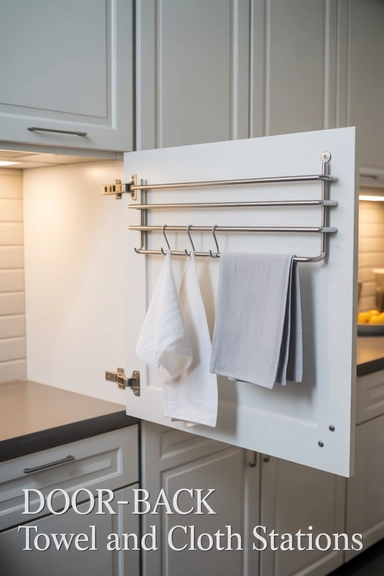
Dish towels and cleaning cloths often end up draped across counters. A simple over-the-door bar or adhesive hook system keeps them off work surfaces while remaining accessible. Stainless bars resist moisture, while plastic hooks work for lighter fabrics. This small shift keeps textiles dry, organized, and visually contained.
Assign separate spots for clean and used cloths to avoid mixing. Keeping towels elevated also speeds drying and reduces odor buildup. Among budget kitchen organization ideas, door-back towel stations remove soft clutter from sightlines, preserving counter clarity while maintaining hygiene and easy reach.
14. Slim Drawer Inserts for Wraps and Foils
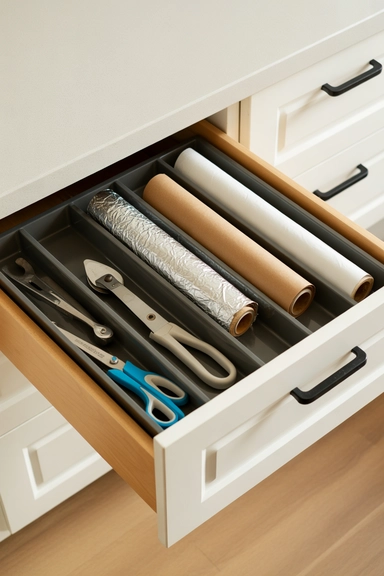
Boxes of foil, parchment, and plastic wrap often slide awkwardly on shelves. Slim drawer inserts hold each roll in fixed position with built-in cutters facing forward. This keeps edges accessible and prevents crushed packaging. Bamboo inserts add warmth, while plastic trays provide wipe-clean simplicity.
Store wraps close to prep zones for quick access. Keeping them flat in a drawer frees cabinet height for other items. Among budget kitchen organization ideas, wrap inserts eliminate one of the most common pantry tangles. Daily prep becomes smoother, and storage stays consistent without constant straightening.
15. Over-Fridge Storage That Uses Forgotten Space
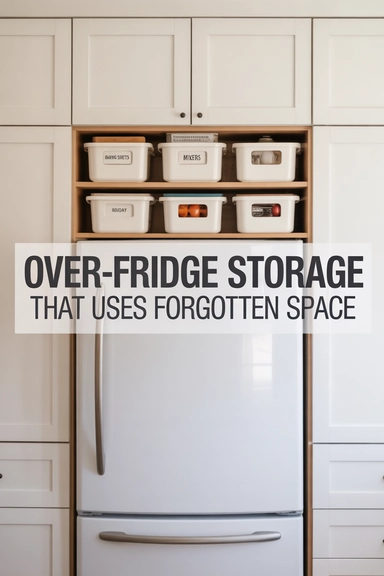
The area above the refrigerator often becomes a dumping ground for random items. Turning it into defined storage changes its function entirely. Low-profile baskets or bins hold seldom-used appliances, serving trays, or bulk pantry goods. Matching containers keep the look intentional rather than cluttered.
Label bins clearly so retrieval stays simple. Avoid stacking loose items that are hard to lift down safely. Among budget kitchen organization ideas, over-fridge storage works because it reclaims overlooked space while keeping daily zones free from overflow. The kitchen feels taller, calmer, and more efficiently planned.
16. Sink Caddies That Control Wet-Zone Clutter
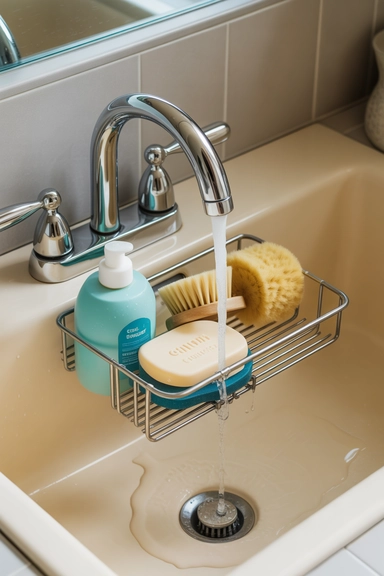
The sink area quickly becomes a magnet for sponges, brushes, and soap bottles. A structured sink caddy introduces boundaries that prevent scattered buildup. Stainless steel designs resist rust, while silicone options flex and drain easily. Keeping wet tools contained reduces water pooling and surface mess.
Separate dishwashing tools from surface-cleaning supplies to avoid cross-use confusion. Empty and rinse caddies weekly to maintain freshness. Among budget kitchen organization ideas, sink caddies succeed because they manage the most frequently used zone in the kitchen, keeping countertops dry, clean, and visually calm through constant daily use.
17. Uniform Food Storage That Stops Lid Chaos
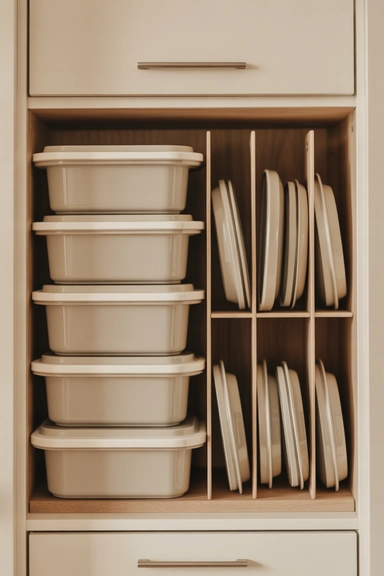
Plastic containers often breed clutter when shapes and lids do not match. Choosing a uniform food storage system solves this quietly. Square or rectangular containers stack cleanly, and shared lid sizes eliminate rummaging. Clear materials make leftovers easy to identify, reducing forgotten food waste.
Dedicate one drawer or shelf exclusively to food containers. Store lids vertically in a narrow divider to keep them visible. Among budget kitchen organization ideas, uniform storage systems restore order to one of the most frustrating kitchen categories. Meal prep becomes quicker, and cabinet stacks stay stable instead of collapsing into daily disorder.
18. Hanging Fruit Baskets That Free Counter Space
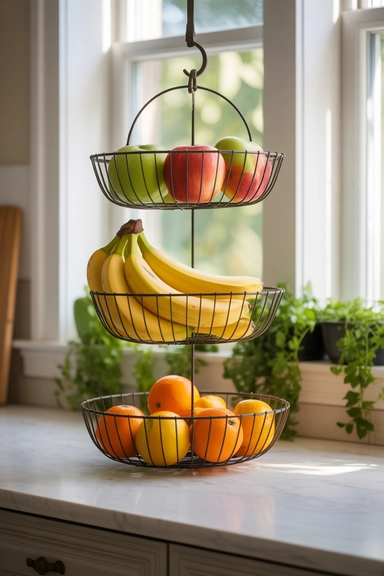
Fruit bowls on counters often spread as produce accumulates. A hanging fruit basket uses vertical airspace instead of precious work surfaces. Wire baskets allow airflow that slows spoilage, while tiered hangers separate heavy fruits from delicate ones. This keeps produce accessible without cluttering prep zones.
Hang the basket near natural light but away from direct heat. Rotate fruit weekly to prevent forgotten pieces. Among budget kitchen organization ideas, hanging produce storage works because it lifts everyday items into view while keeping counters clear for real kitchen tasks.
19. Folding Step Stools Stored Slim
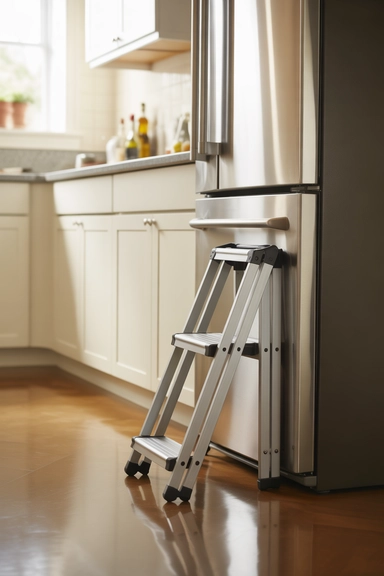
Reaching upper cabinets becomes inconvenient when step stools float around the kitchen. A folding stool stored behind a cabinet door or beside the fridge keeps access easy without visual interruption. Lightweight aluminum designs fold flat, while wooden stools add warmth when visible.
Place the stool where vertical storage zones exist so retrieval feels natural. Keeping it out of traffic areas prevents tripping hazards. Among budget kitchen organization ideas, folding stools solve a practical need without contributing to clutter, allowing full cabinet use while preserving open floor flow.
20. Dedicated Snack Drawers for Controlled Chaos
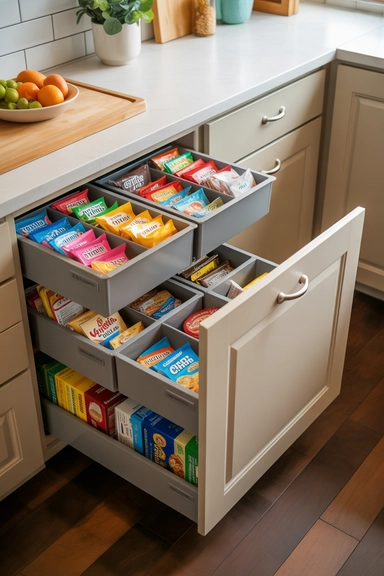
Snacks often scatter across pantry shelves and counters when left undefined. A dedicated snack drawer gives packaged items a contained home. Shallow bins inside the drawer separate sweet, savory, and grab-and-go options. This keeps selection simple and prevents overstocking.
Position the drawer at a child-friendly height to reduce rummaging in other areas. Rotate stock weekly to keep freshness visible. Among budget kitchen organization ideas, snack drawers succeed because they localize high-traffic items into one controlled zone, protecting the rest of the kitchen from daily spillover.
21. Weekly Reset Bins That Maintain Order
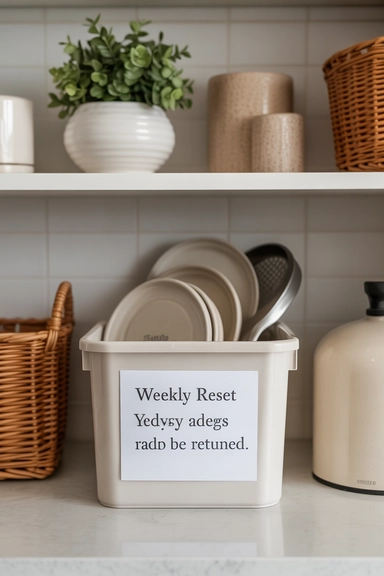
Even the best systems need occasional resets. A small bin labeled “weekly reset” gives temporary space for items that drift out of place. During a quick end-of-week tidy, contents return to their proper homes. This prevents slow clutter buildup without demanding constant vigilance.
Keep the bin small so it never becomes a long-term storage spot. Empty it regularly to maintain discipline. Among budget kitchen organization ideas, reset bins work because they acknowledge real life. They offer flexibility while protecting the kitchen from gradual disorder.
Conclusion
Daily kitchen clutter rarely comes from lack of space. It comes from undefined zones and storage that fights natural habits. These budget kitchen organization ideas focus on guiding movement, visibility, and easy return paths for every item. Small, thoughtful systems quietly maintain order without constant effort. Over time, the kitchen feels lighter, surfaces stay open, and routines flow smoothly. The result is not a styled space, but a kitchen that supports everyday life with calm consistency.