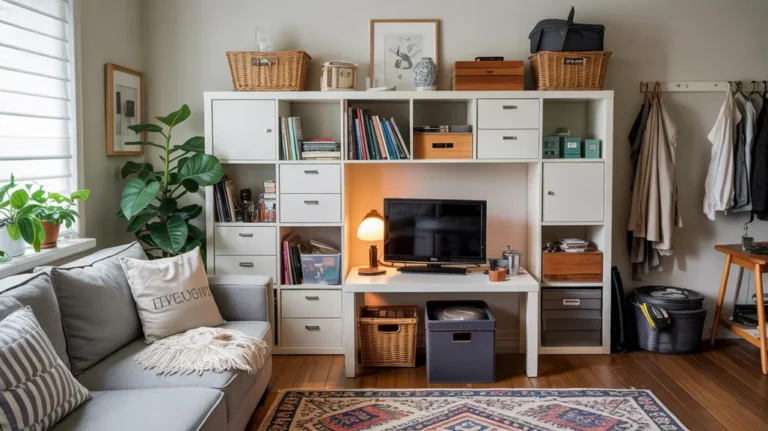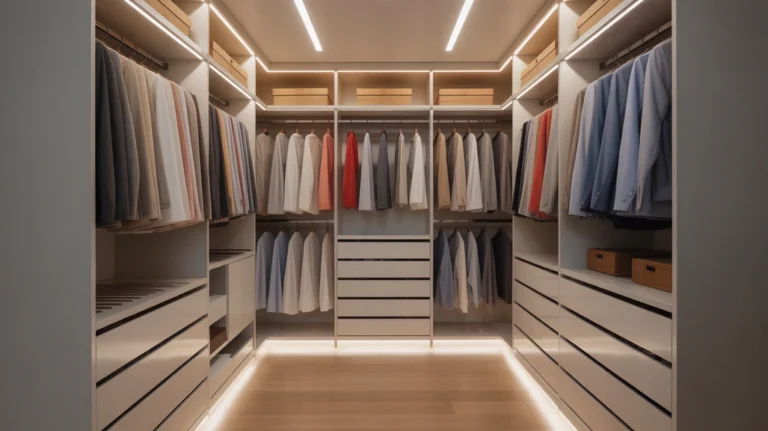
There’s a specific kind of tired that comes from standing in the middle of your own home and not knowing where to start.
You walk into the kitchen, notice the counter has become a holding zone for things that don’t belong anywhere, and instead of dealing with it, you pour yourself a glass of water and leave the room. Not because you’re lazy. Because your brain has already made a thousand small decisions today and this one — where does the broken umbrella actually go — feels like too much.
Image source: Instagram
If that sounds familiar, this guide is for you.
I’m not going to tell you that you need a label maker or a free weekend or some kind of personality overhaul. What I want to give you is an honest, working understanding of why small homes get out of hand, why organizing attempts collapse after a few days, and what actually helps when you’re short on space, money, and energy.
What “Decluttering a Small Home” Actually Means
The short answer: Decluttering a small home means systematically reducing what you own to only what you use, can maintain, and have a realistic place for — then building small daily habits that prevent the cycle from restarting.
It is not a one-day project. It is not a personality trait. And it does not require matching bins or a storage room or a spare afternoon that somehow never exists.
What it does require is understanding why the clutter keeps coming back — because most people who’ve tried organizing before have already done the “clean everything up” part. What they haven’t done is figure out why their home keeps reverting two weeks later.
That’s where we’ll start.
Why Small Homes Get Cluttered Faster Than Big Ones
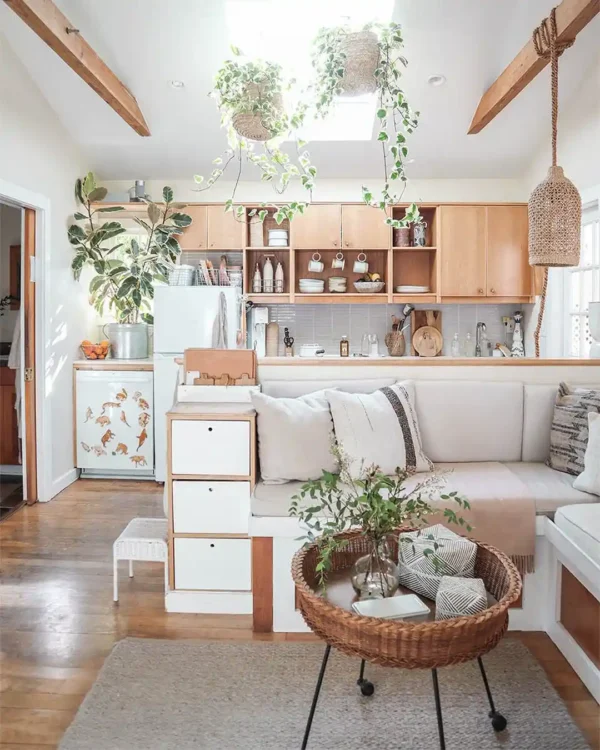
Image source: Instagram
This seems obvious, but it’s worth sitting with: in a small home, there’s almost no margin. One laundry basket left in the hallway for three days doesn’t just look messy — it narrows the hallway. A week of backpacks collecting near the front door doesn’t drift to the corner unnoticed — it blocks the entrance. Toys that migrate room to room in a large house disappear into background noise; in a 900-square-foot apartment, they’re always underfoot.
Small homes have a lower clutter threshold. Things become visually chaotic faster, which means the mental load of living there is higher even on ordinary days.
There’s also less storage infrastructure. Big homes have basements, mudrooms, spare bedrooms that quietly absorb overflow. Small homes often have one coat closet, a kitchen with limited cabinet space, and bathrooms with nowhere to put anything. So things end up on counters and floors and surfaces because there genuinely isn’t anywhere else.
This matters because most decluttering advice is written for people with space to work with. “Create a staging area” doesn’t help when your staging area is also your dining table. “Designate a spot for donations” is harder when that spot is your car trunk because there’s nowhere inside.
If you’re struggling to make a compact layout feel manageable, these small apartment organizing ideas can help create better flow without requiring more square footage.
The Psychological Reality of Starting
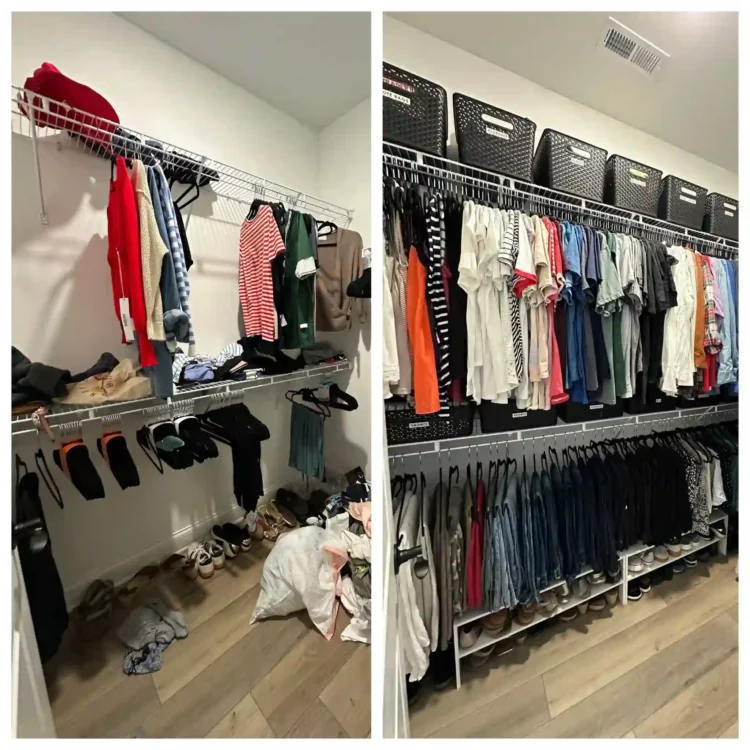
Image source: Instagram
Here’s something most organizing content skips: starting is legitimately difficult, and not because of willpower.
Clutter is tiring to look at. Chaotic environments demand more cognitive processing — your brain is constantly scanning, categorizing, and trying to make sense of what it sees. Which means by the time you get home from work, you’re walking into a space that’s already making you more tired just by existing in it.
This creates a loop. The clutter makes you too drained to deal with the clutter. You reorganize one area — the bathroom cabinet, say — and by the time you finish, the kitchen has somehow gotten worse. You put together a donation bag that sits in the trunk for six weeks. You buy a set of bins and they become clutter themselves.
Decision fatigue is real. Every item in a pile represents a micro-decision: keep, donate, throw away, or — the most common outcome — put it back and decide later. “Decide later” is how piles survive for months.
You cannot declutter your entire home in a weekend without burning yourself out and likely making things worse. Not because you’re bad at organizing. Because that’s not how brains or households actually work.
If the idea of organizing your entire home still feels mentally exhausting, this guide on How to Organize Your Home When You Feel Overwhelmed: A Real-Family, Small-Home, Small-Budget Guide breaks the process down into smaller, more realistic steps for busy households.
Before You Touch Anything: Understand How Your Home Lives
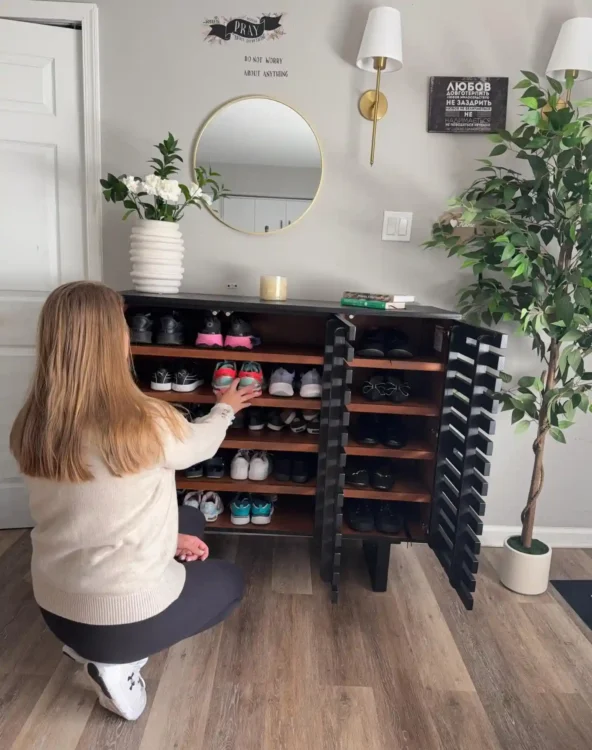
Image source: Instagram
Spend one day — just one — noticing your clutter hotspots before you start moving things.
Not judging them. Just noticing.
Where does mail pile up? In my house it used to land right next to the microwave — not because that made sense, but because that’s where you’d pause on your way through the kitchen. Where do bags land when people come home? Where does laundry sit when it’s been washed but hasn’t been put away? Where do things go when you genuinely don’t know where they go?
These spots are called drop zones, and they’re not a failure. They’re data. They tell you where people naturally put things when they’re tired and busy and have two seconds to make a decision.
A common mistake is to fight drop zones — removing the surface, the corner, the basket. But drop zones exist because they’re convenient. They’re near an entrance, near a transition point in the day, near where attention naturally pauses. Remove the surface and the behavior doesn’t stop; it migrates to the floor.
Work with them instead. If bags always end up near the door, that’s where hooks belong. If mail always lands on the counter, that’s where a small tray or vertical file organizer should live. The goal isn’t to eliminate the behavior. It’s to give it a container.
Homes with limited space benefit enormously from simple entryway organization ideas that give bags, shoes, keys, and daily clutter a predictable landing spot.
The Four-Box Method (and Why It Works Better Than Just Tidying)
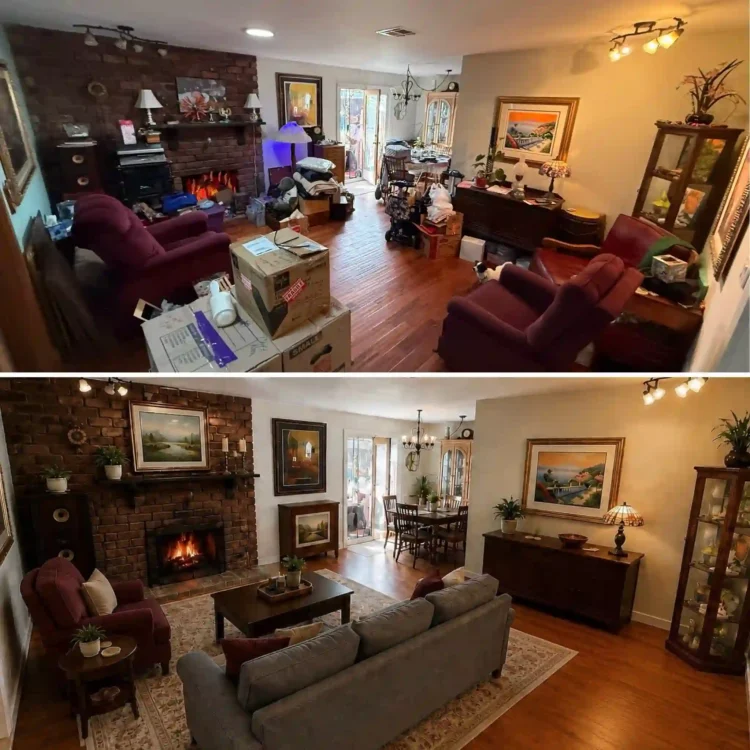
Image source: Instagram
If you’re going to tackle a room or a category of stuff, the four-box method works because it forces a decision rather than a rearrangement.
You need four containers — doesn’t matter what they look like. Laundry baskets, trash bags, cardboard boxes. Label them:
- Keep
- Donate / Sell
- Trash
- Belongs Elsewhere
Pick up each item once and put it in one box. The rule that matters most: you cannot put something back in its original spot without making a conscious decision first.
The “Belongs Elsewhere” box is underrated. It gives you a place for things that genuinely do have a home — just not in this room — without derailing the session by walking them back immediately. You deal with that box at the end.
The donate box needs to leave your house within 48 hours. Not because you’ll change your mind (though you might), but because a full donation bag sitting in your living room is still visual clutter. It still creates friction. Schedule the drop-off when you pack the box, not after.
The trash box sometimes surfaces things worth noticing. Broken items kept “in case you fix them” can sit for years. Birthday cards from people you’ve drifted from feel different from the ones you’d never get rid of. These aren’t personality flaws — they’re normal — but naming them helps you move faster next time.
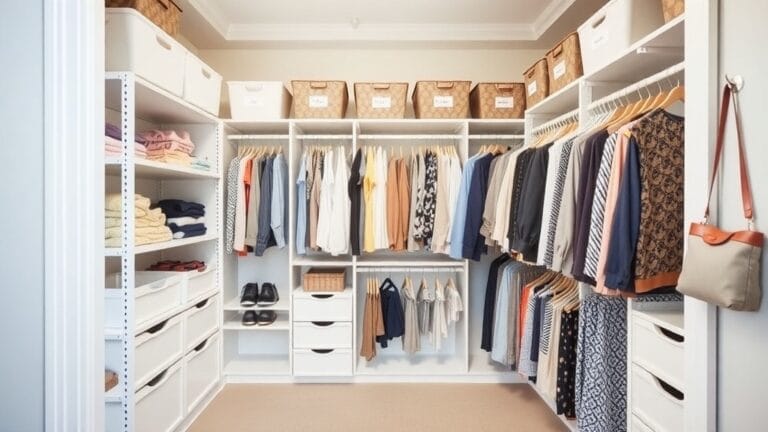
The same decision-making process used in these closet decluttering hacks works surprisingly well in kitchens, bathrooms, and other small-home trouble spots too.
How to Prioritize Where to Start
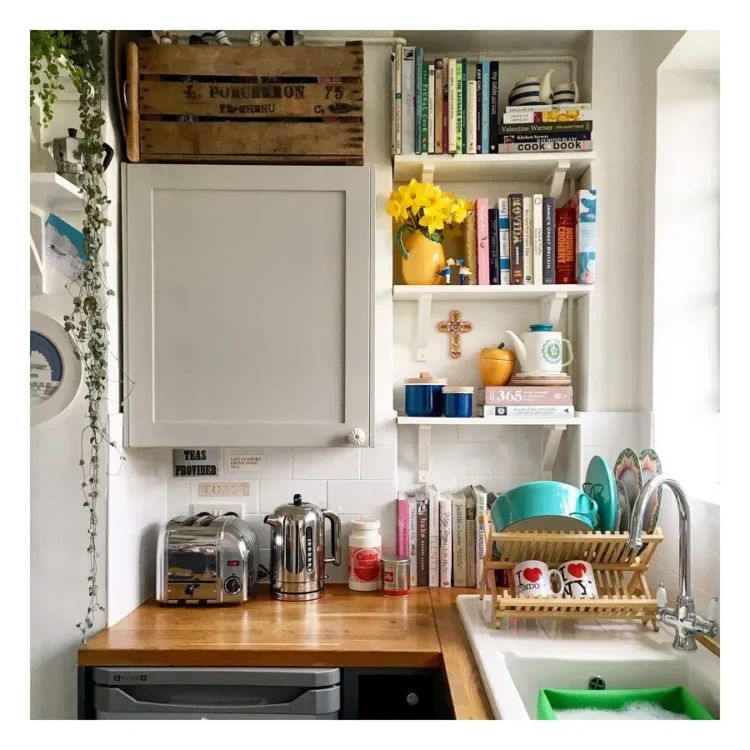
Image source: Instagram
The standard advice is to start small — a junk drawer, a bathroom cabinet. That’s genuinely good guidance, but not for the reason most people give.
It’s not really about building momentum. It’s about learning what your actual decision speed is before committing to a bigger area. Some people can sort through a kitchen in four hours. Others hit decision fatigue after forty minutes. You don’t know which you are in this house, with this amount of stuff, at this point in your life, until you try something small first.
Start with whichever area is causing you the most active friction right now. Not the worst-looking area — the one making your day harder. If you’re tripping over shoes by the door every morning, start there. If you can’t find anything in the bathroom cabinet, start there. If the pile of unopened mail on the kitchen counter makes you tense every time you walk past it, start with that pile.
Solving the thing that’s actively slowing you down gives you a real functional payoff fast — and that’s more sustaining than aesthetic improvement alone.
The Three Types of Clutter (They Don’t All Get Solved the Same Way)
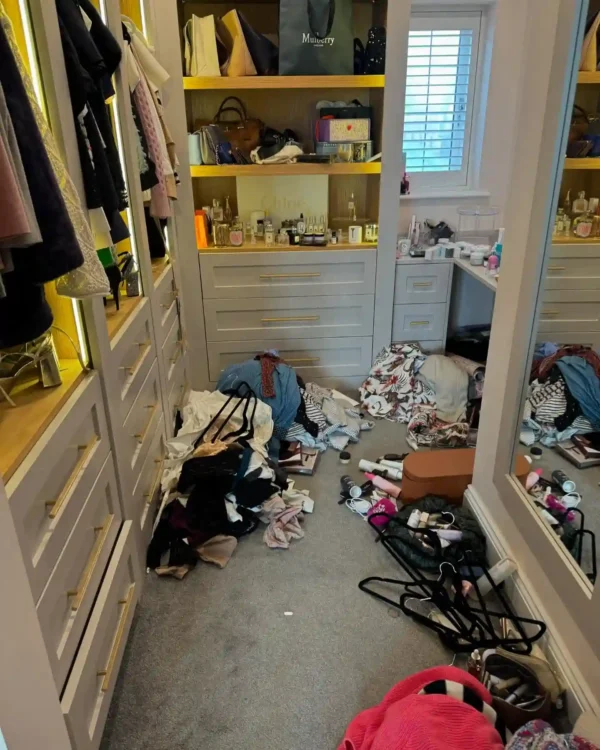
Image source: Instagram
One of the quieter organizing mistakes is treating all clutter as the same problem. It isn’t.
Some things are clutter because they’re genuinely unwanted and just haven’t been thrown out. Broken items, expired things, duplicates you forgot you had, mystery cables for devices you no longer own. These don’t require emotional energy — just time. They’re the easiest category and a good place to build early momentum.
Some things are clutter because they lack a home. Useful, wanted items without a designated spot will always drift to surfaces. This isn’t a decluttering problem — it’s a systems problem. You don’t need to get rid of them. You need to find or create a place for them, and that place needs to be more convenient than the counter.
Some things are clutter because of sentimental weight. These require the most energy and are the most commonly mishandled. The popular advice to keep only what “sparks joy” is fine as a concept, but in practice, standing in your kitchen holding a mug your mother gave you when you moved into your first apartment is a fundamentally different experience than deciding whether you need fourteen kitchen towels.
Rushing sentimental decisions leads to regret. Regret leads to abandoning the whole process. Do a first pass that skips sentimental items entirely — clear the easy categories first, then come back to the complicated ones with a clearer head and more physical space to think.
Small Home Storage That Doesn’t Cost Much
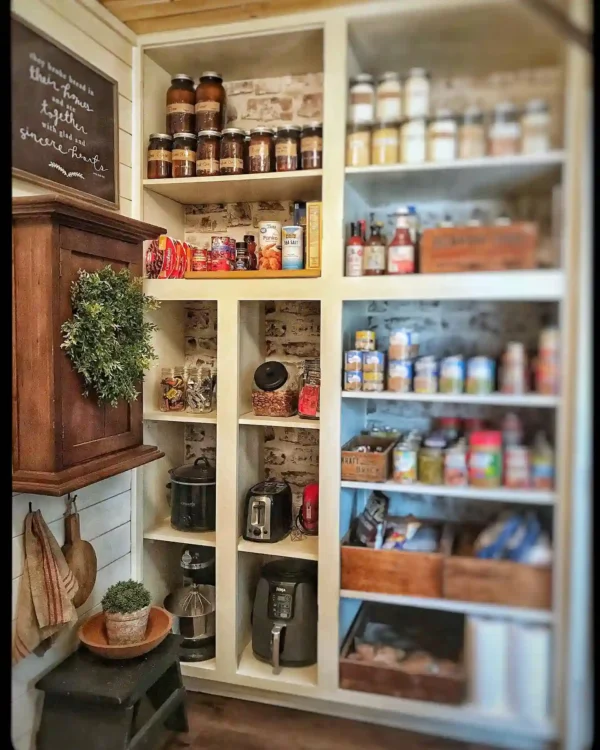
Image source: Instagram
A lot of home-organizing content leans hard on products. Matching baskets, custom shelving systems, storage solutions from expensive container stores. Some of that genuinely helps. But on a tight budget in a small home, the goal is to spend as little as possible until you actually know what you need.
The most common mistake is buying storage before decluttering. You organize clutter, it feels productive, but the volume hasn’t changed — and now you’ve spent money on bins filled with things you might have gotten rid of.
Declutter first. Then assess what you actually need to store and how. Most people find they need far less storage than they assumed.
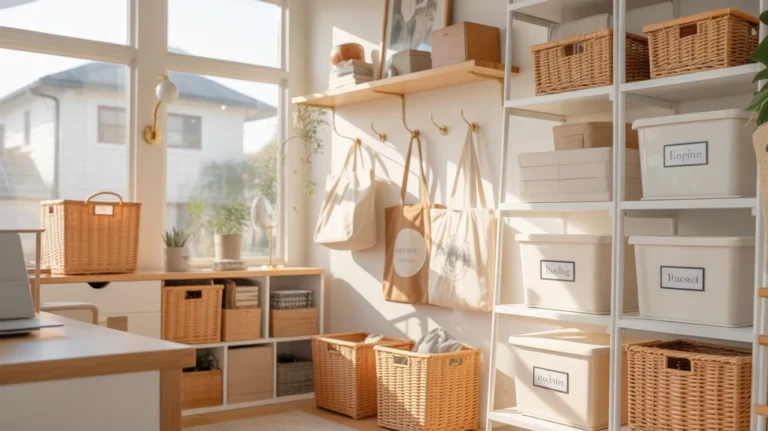
A few realistic small space storage ideas can make a compact home feel significantly calmer without requiring expensive custom systems.
When you do need something:
Vertical space is almost always underused. A $12 set of over-door hooks or a tension rod under a sink adds real storage without touching floor space.
Matching isn’t necessary — consistent sizing is. You don’t need pretty bins. You need bins that fit your shelves and each other. Repurposed shoeboxes, cardboard magazine holders from the dollar store, or thrifted baskets all work. What matters is that similar things live in similar containers.
Use clear containers for things you forget about. Opaque bins hide contents, which means you buy duplicates and lose track of what you have. For pantry items, craft supplies, medicine — anything you restock — clear or semi-clear containers save money over time.
The one-in-one-out rule only works if it’s attached to something specific. For every new item that comes in, one leaves. Elegant in theory. In practice it requires a habit, and habits need anchors. Attach it to a shopping trip, a delivery arriving, the end of the school week. Left abstract, it stays abstract.
What a Reset Routine Looks Like in a Real Small Home
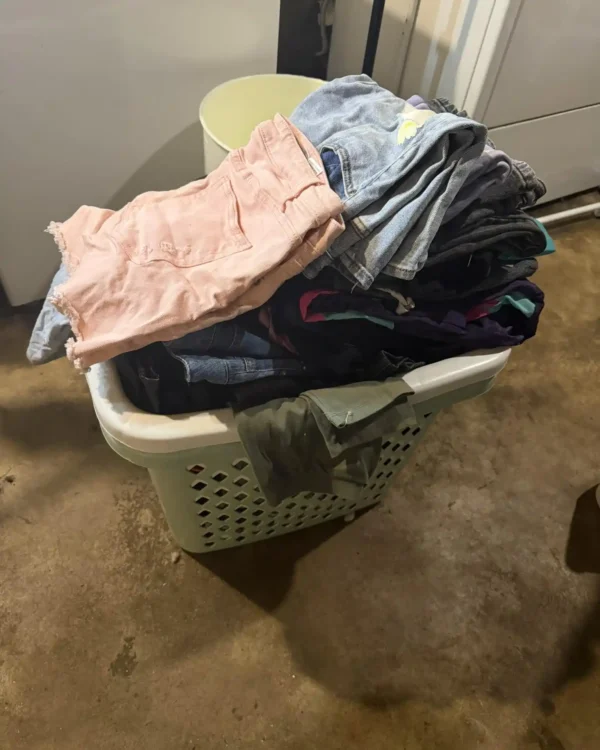
Image source: Instagram
The difference between a home that slowly deteriorates and one that stays functional isn’t a perfect initial declutter. It’s a reset routine — a small daily or weekly practice that prevents drift from compounding.
In a small home this doesn’t need to be long. Fifteen minutes if the baseline is already established.
A daily reset might look like:
- Return “Belongs Elsewhere” items to their actual homes before bed
- Clear one surface that became a dump zone during the day
- Put away anything that came in — mail, bags, school things, purchases
A weekly reset might include:
- One small area that tends to drift (a bathroom drawer, the entryway, the top of the dryer)
- Going through accumulated paper — trash it, act on it, or file it
- A quick check of drop zones to see if anything needs to leave the house
The point isn’t a pristine home every week. It’s preventing the drift from becoming an avalanche. A surface cleared once a week never reaches the state of one that hasn’t been touched in six months.
When everything piles up together it feels unmanageable. When you deal with the mail on Thursday, the backpack corner on Sunday, the bathroom cabinet once a month — it stays separable. Separable problems are manageable ones.
The Decluttering Attempts That Made Things Worse
I want to be honest about this because I’ve done several of these myself.
Reorganizing without decluttering first is the big one. Moving things into boxes and labeling them feels productive. The space looks better for a while. But if the volume hasn’t changed, you’ve just created a more organized version of the same problem — and given it somewhere to hide.
Doing too much at once is another. Pull everything out of every closet on a Saturday and you’ve created a crisis with a deadline. By afternoon, things go back in wherever they fit because you have to live in the space by evening. This is how storage areas become denser and harder to navigate than they were before you started.
Guilt-keeping is quieter but just as obstructive. Holding onto things because they were expensive, because someone gave them to you, because you might need them someday — none of those are wrong reasons to keep something. But when those reasons accumulate across fifty items you never actually use, you’re carrying significant weight.
Then there’s the perfection trap: waiting until you have the right bins, the right free weekend, the right energy level. Waiting for ideal conditions is how clutter survives for years. A fifteen-minute pass through one shelf with a trash bag and no particular system does more than a plan that never gets started.
What “Done” Actually Looks Like
Not Instagram. Not a linen closet that looks like a boutique hotel. Not open shelving with identical labeled jars and no visible evidence of real life.
Done, in a real small home, looks like this: you can find things when you need them. You’re not tripping over the same items every day. Company coming over doesn’t trigger a panic clean. You can reset the main living areas in under twenty minutes.
That’s the actual goal.
There will still be a pile somewhere. The junk drawer will still exist. There will be weeks when the laundry basket camps in the hallway longer than it should. None of that means the system has failed.
A home with a family in it is a living thing, not a static display. The goal of decluttering isn’t a space that stays perfect without effort. It’s reducing the effort required to keep things functional — and making the drift back toward chaos slower and more recoverable.
That version is actually achievable. Unlike the one on Pinterest.
A Realistic Starting Point
If you’ve read this far and still feel a little paralyzed, that’s okay. Here’s the smallest possible starting point that produces a real result:
Pick one flat surface that has become a dumping ground. Just one. Give yourself fifteen minutes.
Sort what’s on it into four piles: trash, put away (you know where it goes), deal with later (needs a decision, just not right now), and belongs somewhere else in the house.
Trash goes out immediately. “Put away” goes back to its home. “Deal with later” goes into one contained pile — a tray, a basket, a single designated corner — not spread across the surface. “Belongs elsewhere” gets walked to its room today, not later.
That’s it. The surface is clear.
It probably took less time than you expected. And it will feel noticeably different to live around — lighter, calmer, slightly easier to breathe in. That’s not motivational language. That’s what happens when visual clutter comes down.
Do it again next week. Same surface or a different one. Not a whole room. Not a whole weekend. Fifteen minutes and one flat surface, repeated, until the habit is built and the space reflects it.
The rest follows from there.
Frequently Asked Questions
How do I start decluttering when I feel completely overwhelmed?
Start smaller than feels meaningful. Not a room, not a closet — one flat surface or one drawer. Give yourself a fixed time limit, fifteen minutes maximum, and use the four-box method: keep, donate, trash, belongs elsewhere. The goal of the first session isn’t transformation. It’s proving to yourself that the process is survivable. Overwhelm usually shrinks once you’ve touched it once.
How long does it take to declutter a small home?
There’s no honest single answer because it depends entirely on how much you own, how quickly you make decisions, and how much time you can give it. A realistic approach for most small homes is one area or category per week over two to three months — not one marathon weekend. Slow and sustained produces better results than fast and exhaustive, because fast and exhaustive tends to end in things going back where they were.
What should I declutter first in a small home?
Start with whatever is causing the most friction in your daily life right now, not whatever looks worst. If you’re tripping over shoes every morning, start at the door. If you can’t find things in the bathroom cabinet, start there. Solving a problem that genuinely slows you down produces a functional payoff quickly — which is more motivating than tidying an area that bothers you aesthetically but doesn’t actually affect your day.
Why does my home get cluttered again so quickly after I organize it?
Usually because the organizing addressed the appearance of clutter without addressing the systems that create it. If things don’t have a designated home that’s easy to return to, they’ll drift back to flat surfaces. If drop zones aren’t managed — meaning the spots where things naturally land — they’ll fill up again within days. Sustainable organization requires small maintenance habits, not just periodic deep cleans.
Do I need to buy storage bins and organizers before I start?
No — and buying storage before decluttering is one of the most common mistakes. You’ll likely end up organizing things you would have gotten rid of and spending money on containers you don’t need. Declutter first, then assess what you actually have and where it needs to live. You’ll almost always need less storage than you thought, and you’ll be able to make much smarter decisions about what to buy.
Is the one-in-one-out rule actually realistic for families?
It’s realistic, but it needs to be attached to a specific trigger rather than left as a general principle. “For every new thing in, one thing leaves” sounds simple but doesn’t happen automatically. The version that actually works is linking it to a concrete moment — when you unpack groceries, when a package arrives, at the end of the school week when backpacks get emptied. Attached to a routine, it becomes habit. Left abstract, it stays an intention.
What’s the difference between decluttering and organizing?
Decluttering means reducing what you own — deciding what stays and what goes. Organizing means creating systems for what remains. Most people try to organize without decluttering first, which is why the results don’t last. You can’t organize your way out of having too much stuff for the space you have. The sequence matters: reduce first, then create systems for what’s left.
A Final Thought Before You Start
Decluttering a small home isn’t a personality trait you either have or don’t. It isn’t a weekend project with a satisfying before-and-after. And it definitely isn’t the version you see in organized home tours where every surface is clear and every cabinet looks like it was styled for a photoshoot.
It’s a slow, imperfect, ongoing process of making your home easier to live in — room by room, surface by surface, fifteen minutes at a time.
The families who end up with genuinely functional small homes aren’t the ones who found the perfect storage system or finally got serious about clutter. They’re the ones who stopped waiting for the right conditions and started with whatever was in front of them. A counter. A drawer. A pile of shoes by the door that had been there for three weeks.
Small homes require less stuff and better systems — not more willpower and not more products. Once that clicks, the whole process gets simpler.
If you’re just starting out, go back to the basics in this guide. Identify your drop zones. Use the four-box method on one small area. Build a reset routine before you worry about anything else. And give yourself permission to make progress slowly — because slow progress that sticks is worth considerably more than a perfect weekend that unravels by Tuesday.
Your home doesn’t need to look like anyone else’s. It just needs to work for the people who actually live in it.
That’s always been the point.