
Introduction
A utility closet often becomes the hidden source of household chaos. Cleaning supplies, tools, spare linens, and random storage items collect behind closed doors until finding anything feels frustrating. The problem is rarely lack of space, but lack of structure. Effective utility closet organization ideas focus on visibility, access, and defined zones so everyday supplies return to their place without effort. When this small but essential space works smoothly, clutter stops spreading into other rooms. This article explores practical organization strategies that transform utility closets into calm, functional storage zones that quietly support the entire home.
If you’re also improving concealed storage throughout your home, these 21 Clever Hidden Storage Ideas for a Clutter-Free Home pair naturally with the solutions below.
1. Utility Closet Organization Ideas That Start With Full Emptying
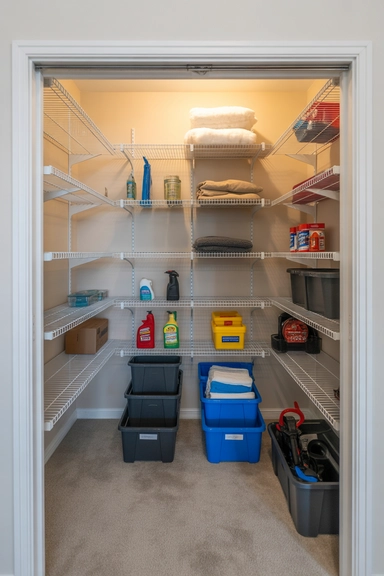
Every successful utility closet reset begins by removing everything. Supplies stacked in front of each other hide duplicates, expired products, and forgotten tools. Emptying the closet creates a clear view of what actually belongs there and what has migrated in without purpose. This step immediately reveals wasted space and ineffective shelving layouts.
Once the closet is empty, items can be grouped by category before returning them. Cleaning products, tools, linens, and repair supplies each deserve defined zones. Starting with a blank space prevents building new systems on top of old clutter. It ensures every storage decision moving forward is intentional rather than reactive.
2. Zoning Supplies by Frequency of Use
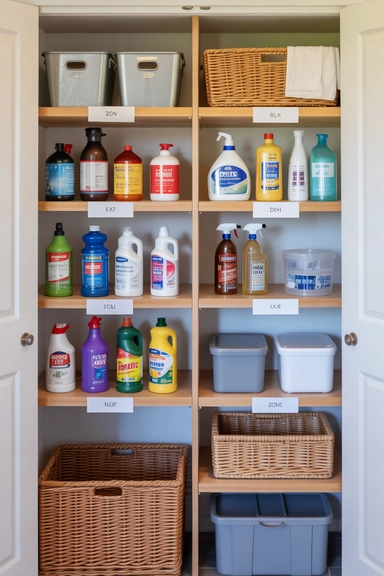
Utility closets function best when frequently used items stay within easy reach. Daily or weekly cleaning products should sit at eye or waist height, while seasonal or rarely used supplies can move higher or lower. Without frequency zoning, essential items end up buried behind bulk storage.
This approach reduces frustration and prevents supplies from spilling into other rooms. When retrieval feels effortless, items return to their correct place after use. Zoning by frequency also helps maintain order long-term because it aligns storage with real household behavior instead of idealized setups.
3. Adjustable Shelving That Adapts to Changing Supplies
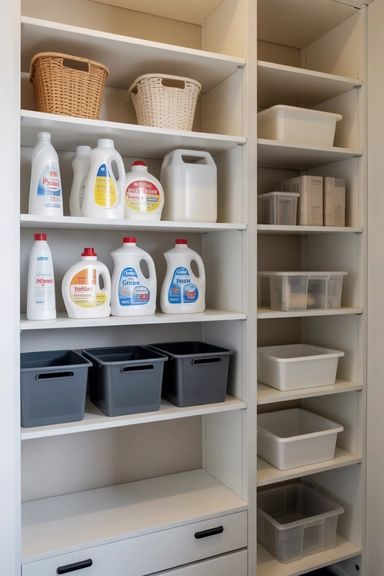
Utility closets store items of constantly changing shapes and sizes. Fixed shelves often waste space or force awkward stacking. Adjustable shelving solves this by allowing shelf heights to shift as supplies change over time.
When shelves can move, tall bottles, bins, and boxes fit properly without creating unused gaps. This prevents items from being laid sideways or squeezed into unstable piles. Flexible shelving keeps the closet efficient through changing seasons, cleaning routines, and household needs without requiring a complete reorganization each time.
4. Clear Bins That Prevent Hidden Clutter
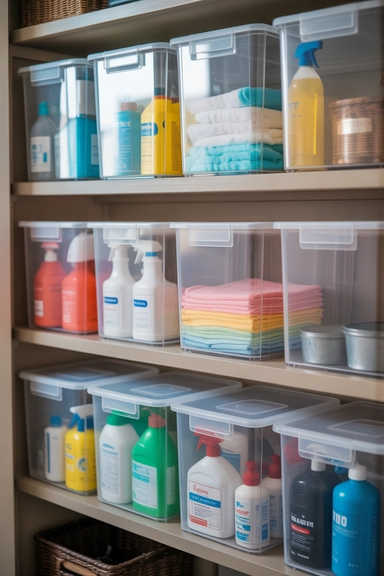
Opaque containers hide problems until they become overwhelming. Clear bins allow instant visibility of contents, preventing duplicate purchases and forgotten supplies. In a utility closet, transparency is key because items are often replaced irregularly.
Clear bins also support quick resets. When something is out of place, it becomes immediately noticeable. Grouping similar products in transparent containers keeps shelves visually ordered and easy to maintain. This simple choice dramatically reduces the chance of clutter rebuilding behind closed doors.
5. Labeling Systems That Keep Order Consistent
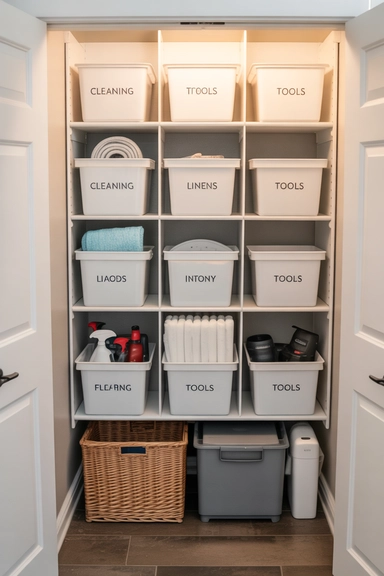
Even the best storage layout fails when household members guess where items belong. Simple labels on shelves and bins remove uncertainty and keep organization consistent across the household. Labels prevent slow drift, where items return to random locations over time.
This system reduces repeated reorganizing sessions because everyone follows the same logic. Labels also speed up restocking and inventory checks. In a small but high-traffic storage space like a utility closet, clarity is what keeps organization stable rather than temporary.
6. Door-Back Storage That Unlocks Hidden Space
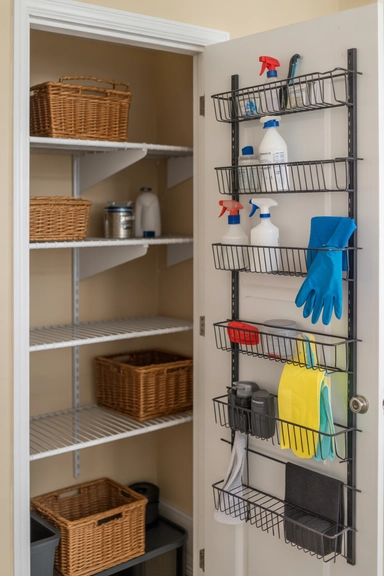
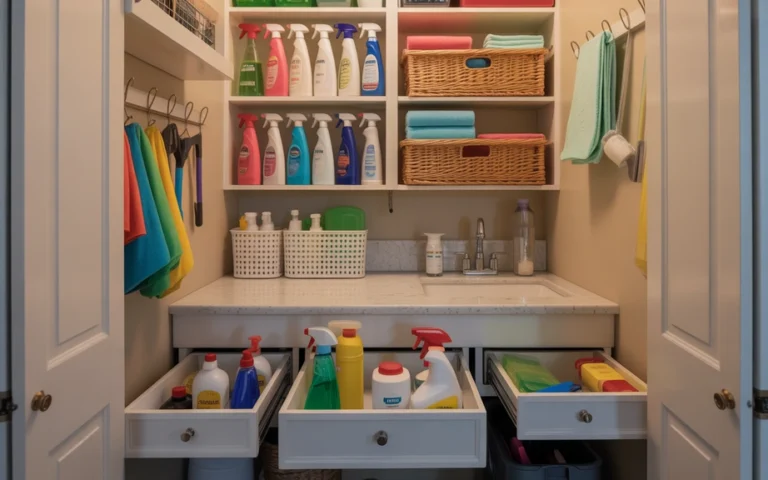
The inside of utility closet doors is often overlooked storage real estate. Slim racks, adhesive hooks, or narrow mounted baskets can hold sprays, gloves, cloths, or lightweight tools without consuming shelf space. This transforms a previously unused surface into a functional zone that supports daily cleaning routines.
Door-back storage also keeps frequently used supplies within instant reach. Instead of stacking bottles in front of one another on shelves, items stay visible and separated. This reduces clutter inside the main closet cavity and prevents the frustrating reshuffling that happens when products are stored too tightly together.
7. Vertical Tool Organization That Prevents Pileups
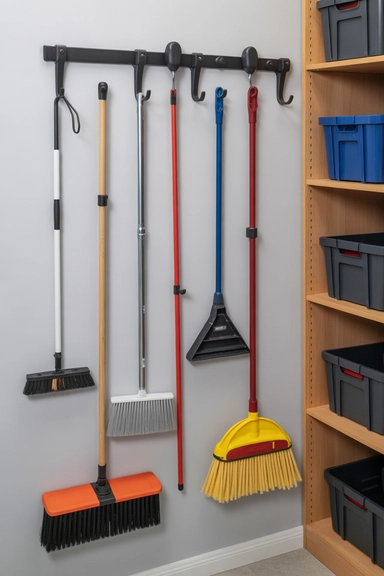
Mops, brooms, dusters, and vacuum attachments often lean into corners and fall into tangled piles. Vertical hanging systems or wall-mounted holders keep these long tools upright, separated, and easy to grab. This instantly clears floor space inside the closet.
When tools hang securely, they dry properly and last longer. More importantly, they return to position after use rather than being left in hallways or laundry rooms. Vertical organization turns awkward tall items into an orderly section instead of a recurring clutter problem.
8. Stackable Bins for Bulk Household Supplies
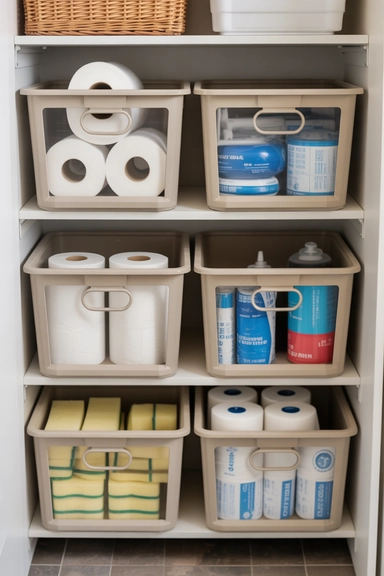
Bulk items like paper towels, toilet rolls, spare sponges, and refill bottles easily dominate shelves when left loose. Stackable bins create defined containment zones that keep these supplies grouped and stable.
This approach prevents items from tumbling forward every time the closet opens. It also makes restocking predictable, since each bin has a clear capacity. When bulk goods have assigned containers, they stop spreading into unrelated storage areas throughout the home.
9. Pull-Out Baskets That Improve Deep Shelf Access
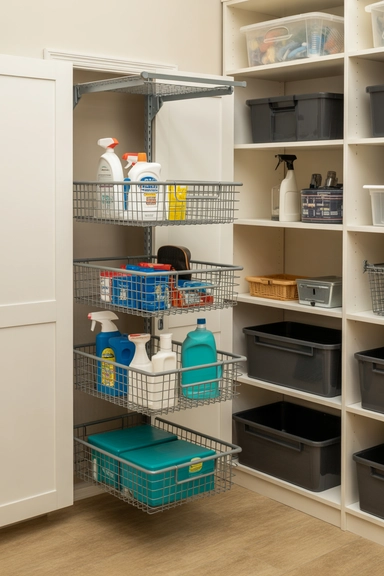
Deep utility closet shelves often hide supplies at the back, where they are forgotten until needed urgently. Pull-out baskets or sliding trays solve this by bringing everything forward in one smooth motion.
This visibility prevents duplicate buying and expired products. It also makes returning items effortless, so supplies do not end up left outside the closet after use. Pull-out systems convert hard-to-reach depths into efficient storage zones that stay organized naturally.
10. Separate Zones for Cleaning, Repairs, and Linens
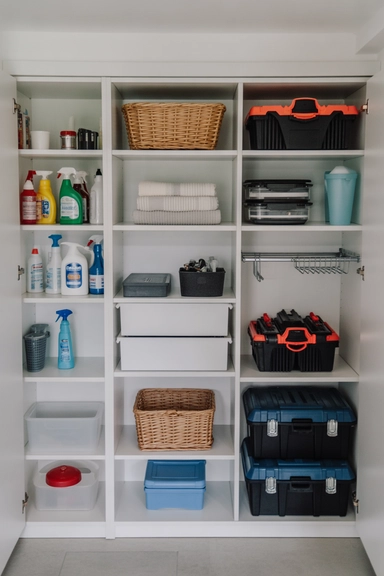
Utility closets frequently mix unrelated categories, which leads to scattered storage and slow retrieval. Dividing the closet into clear zones for cleaning products, home repair tools, and spare linens keeps each category contained.
This structure reduces decision-making when storing items and prevents cross-category clutter. When towels are not mixed with paint supplies and detergents, each group remains easier to maintain. Zoning also makes it clear when stock is running low, supporting consistent household routines.
If you’re also improving small-space storage throughout your home, these 20 Tiny Rental Organization Hacks Designed for Tight Rental Spaces pair naturally with utility closet solutions.
11. Using Shelf Risers to Double Vertical Capacity
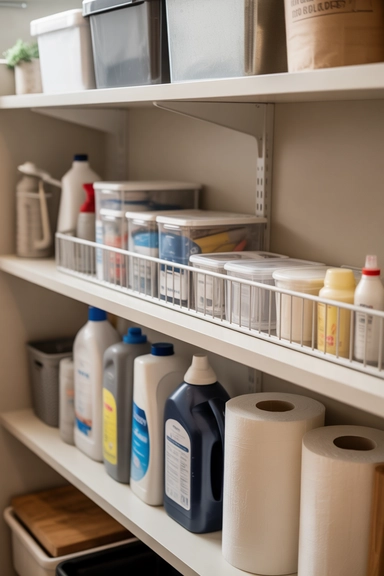
Utility closet shelves often waste vertical space because items sit in a single layer with unused air above them. Shelf risers create an additional tier, allowing smaller containers, folded linens, or grouped supplies to occupy two levels instead of one. This instantly increases storage without adding new shelving.
Risers also improve visibility. Items no longer hide behind taller bottles or stacked bundles. When every product remains in sight, the closet becomes easier to maintain and restock. This small structural adjustment prevents the slow buildup of hidden clutter that typically forms in crowded utility spaces.
12. Clear Category Baskets That Simplify Restocking
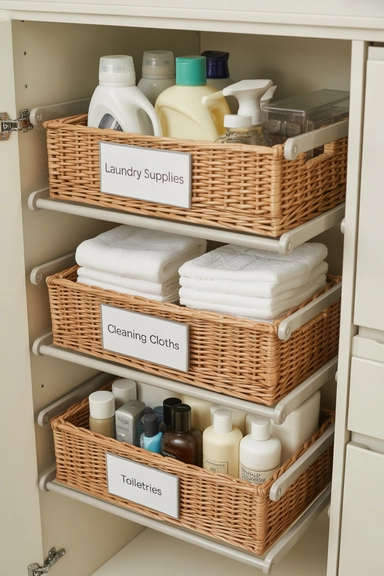
When supplies are scattered loosely across shelves, restocking becomes guesswork. Category baskets solve this by giving each supply group a defined boundary. One basket for laundry products, another for cleaning cloths, and another for spare toiletries creates predictable structure.
These containers also simplify household routines. Anyone can identify where items belong and where to return them. When baskets are pulled out as a unit, shelf cleaning becomes easier. Category containment keeps utility closets tidy without requiring constant reorganization.
13. Floor-Free Storage That Keeps the Closet Navigable
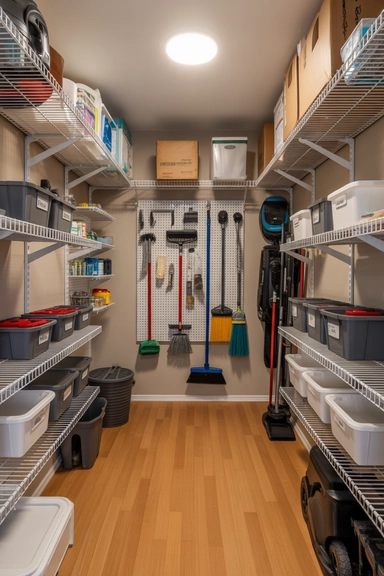
A common mistake in utility closets is using the floor as overflow space. Buckets, detergent jugs, and toolboxes quickly block movement and make the closet frustrating to access. Raising storage onto shelves or wall-mounted units keeps the floor clear.
A navigable closet encourages proper item return. When the space feels accessible, people are less likely to leave supplies outside after use. Floor-free organization also improves safety, preventing spills and tripping hazards in tight household storage areas.
14. Small Drawer Units for Loose Accessories
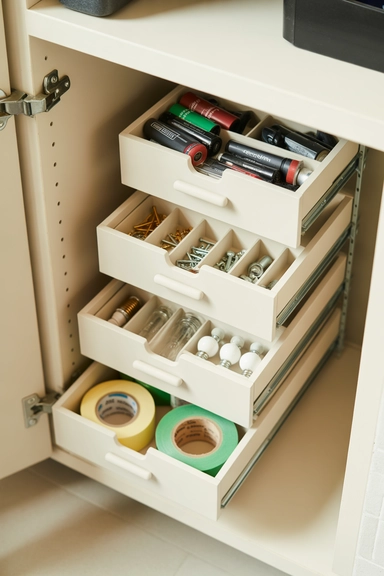
Loose items like batteries, tape, screws, light bulbs, and cords often end up in random boxes. Small drawer units create contained micro-storage for these frequently needed but easily lost supplies. Each drawer holds one category, preventing mixing.
This structure eliminates rummaging during urgent moments, such as when something needs repair. It also prevents small objects from spreading into other zones. Tiny drawers turn chaotic miscellaneous collections into orderly, functional storage.
15. Consistent Placement Rules That Prevent Drift
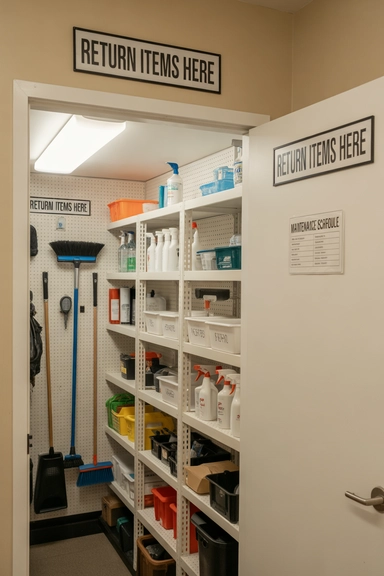
The biggest challenge in utility closet organization is not setup, but maintenance. Without simple placement rules, items gradually return to random spots. Establishing clear logic, such as “cleaning supplies only on middle shelves” or “linens only on the left,” prevents slow disorder.
Once placement becomes habit, the closet maintains itself. People stop guessing where items go. Over time, this consistency protects the system without requiring frequent overhauls. Simple rules are what turn a well-organized closet into a permanently organized one.
16. Hanging Fabric Organizers for Lightweight Supplies
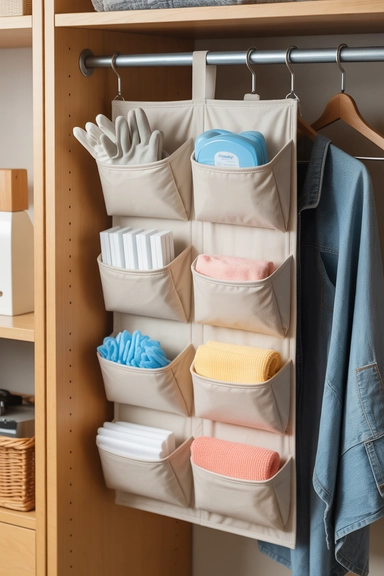
Fabric hanging organizers with multiple pockets work well for storing lightweight utility items such as gloves, microfiber cloths, dryer sheets, and small refill packets. Hung from a rod or door hook, they transform vertical airspace into structured storage without adding shelves or hardware.
Because each pocket holds a single category, small supplies no longer scatter across shelves. Visibility also improves, making it easy to see when stock is low. Hanging organizers keep frequently used lightweight items reachable while freeing shelf space for heavier or bulkier products.
17. Slim Rolling Carts for Overflow Storage
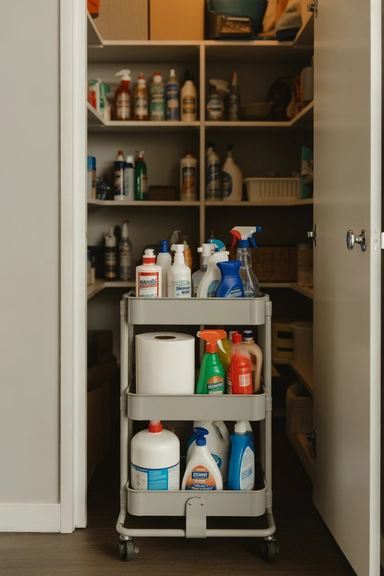
Some utility closets simply cannot hold everything a household needs. A slim rolling cart placed just outside or beside the closet provides flexible overflow storage for bulk cleaning products, paper goods, or backup supplies. It can be moved when not needed, keeping pathways clear.
Rolling carts also support task-based routines. Cleaning supplies can travel room to room without unloading multiple items. This prevents supplies from being left behind in random areas after use. A mobile storage unit keeps overflow controlled rather than scattered throughout the home.
18. Magnetic Strips for Metal Tools
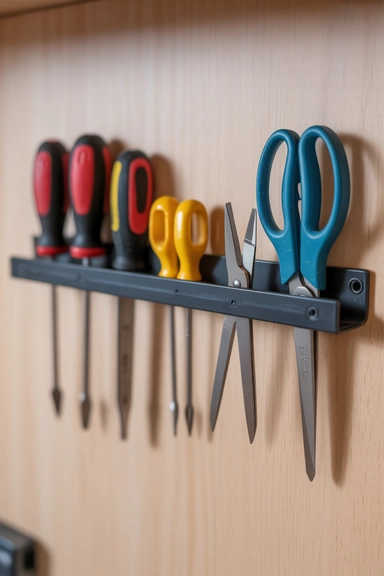
Metal tools such as scissors, small screwdrivers, and utility blades often get lost in drawers or bins. Magnetic strips mounted inside the closet create vertical storage that keeps tools visible, separated, and easy to grab.
This reduces rummaging and prevents sharp tools from floating loosely in containers. When tools return to a visible magnetic home, they are less likely to migrate into other rooms. Magnetic storage improves safety, visibility, and efficiency in compact utility spaces.
19. Foldable Baskets for Temporary Holding
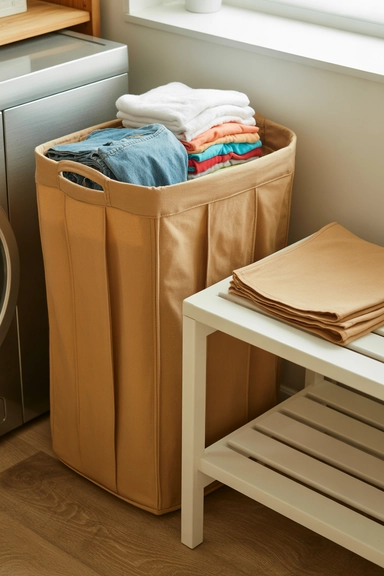
Household routines occasionally require temporary storage for sorting laundry, organizing donations, or staging cleaning supplies. Foldable baskets provide this flexibility without permanently occupying shelf space. When not in use, they collapse flat.
This prevents the common problem of keeping large empty containers that waste valuable closet room. Foldable baskets support changing household needs while keeping the base storage system intact. Temporary storage becomes intentional instead of improvised.
20. Color-Coding for Quick Category Recognition
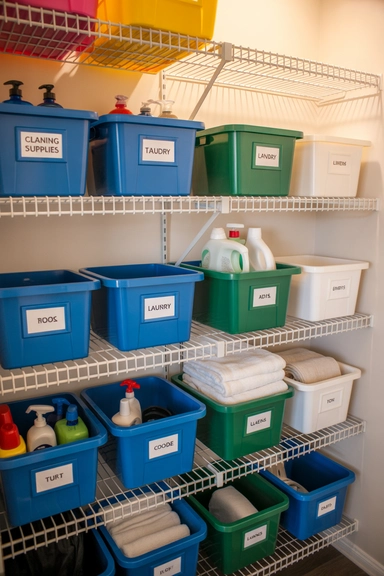
Color-coding bins or labels helps identify supply categories at a glance. Blue for laundry, green for cleaning, neutral for linens, or any simple scheme that fits the household. Visual cues speed up retrieval and return without reading labels.
This method works especially well in busy households where multiple people access the closet. Color recognition is faster than text and reduces misplacement. Color-coding keeps organization intuitive and prevents slow drift back into disorder.
21. A Monthly Mini-Reset to Keep Systems Stable
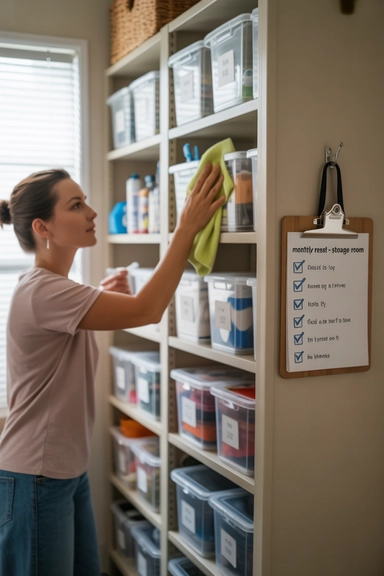
Even the best organization benefits from light maintenance. A monthly mini-reset involves checking product levels, wiping shelves, returning misplaced items, and removing expired supplies. This keeps small issues from becoming large reorganization projects.
Because the system is already structured, this reset takes very little time. It reinforces placement habits and keeps clutter from reappearing unnoticed. A short monthly check-in protects the long-term success of utility closet organization.
Conclusion
Utility closet organization ideas succeed when they focus on structure, visibility, and consistency rather than expensive products. By defining zones, using vertical space, and maintaining simple placement rules, this small storage area becomes a quiet support system for the entire home. When supplies are easy to find and return, clutter stops spreading into other rooms. The result is a home that feels calmer, more functional, and easier to maintain every day.