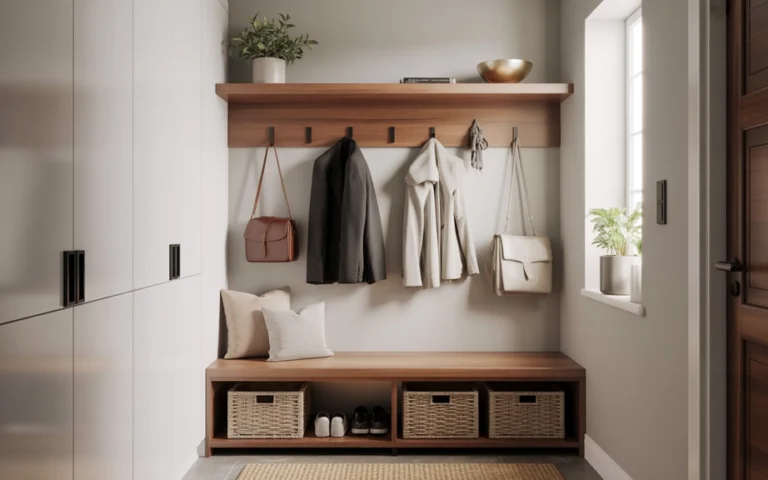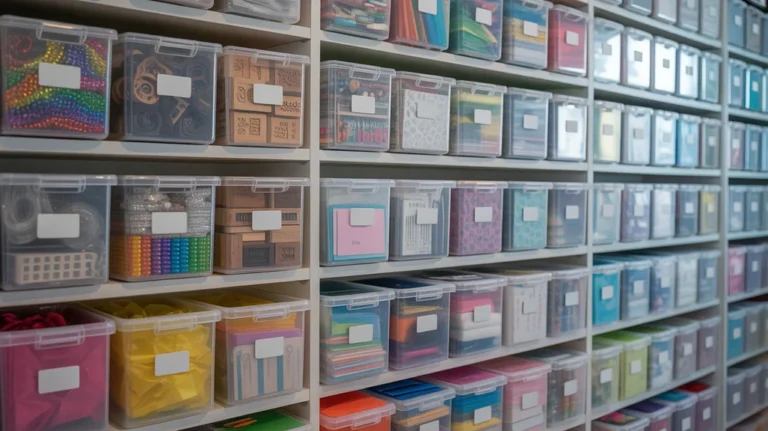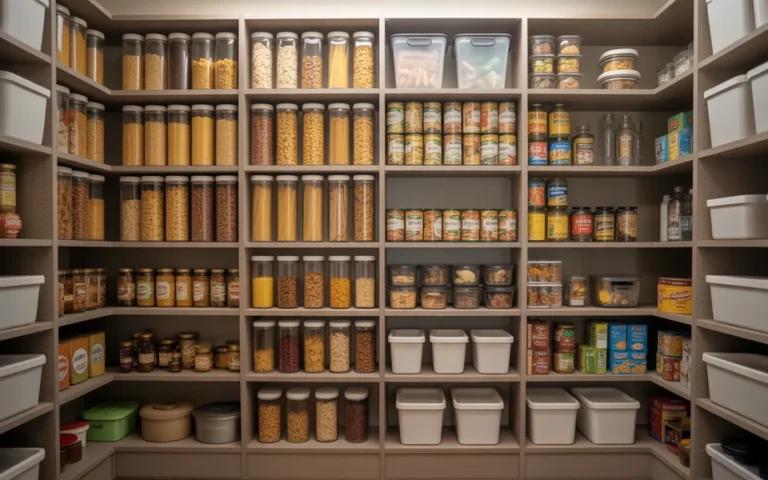

Space limitations in homes rarely come from square footage alone. They happen when everyday items serve only one purpose instead of working harder for the space they occupy. Repurposing ideas for storage focus on transforming overlooked household objects into functional organizing systems rather than adding new furniture. This keeps rooms lighter, budgets controlled, and clutter from spreading across floors and surfaces. The strategy is not about buying more containers, but about reimagining what already exists in smarter ways. When common objects gain structured storage roles, homes feel more open, easier to maintain, and visually calmer. For additional conceal-and-save strategies that naturally pair with repurposed solutions, explore 21 Hidden Storage Solutions That Keep Clutter Completely Out of Sight.
1. Wooden Crates Turned Into Stackable Storage Shelves
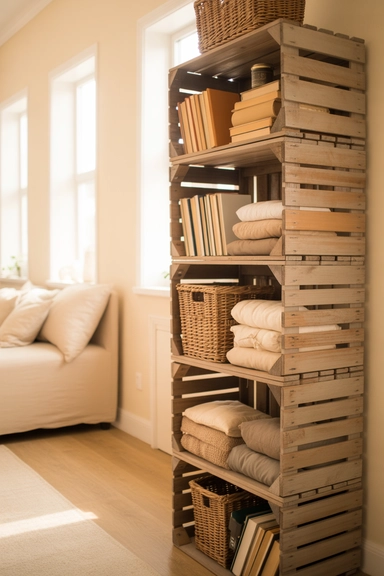
Wooden crates originally designed for transport offer strong open-frame structures that adapt easily into shelving. When stacked vertically and secured, they hold books, folded linens, pantry goods, or storage baskets while occupying minimal floor width. Their open sides maintain full visibility, preventing forgotten items from disappearing into closed cabinets and keeping daily-use supplies easy to access.
Sanding rough edges and sealing the wood improves durability for long-term indoor use. Securing stacked crates to walls prevents shifting under weight. Repurposing ideas for storage like crate shelving increase vertical capacity, reduce furniture needs, and introduce structured organization using materials that might otherwise remain unused.
2. Old Ladders Rebuilt as Vertical Storage Displays
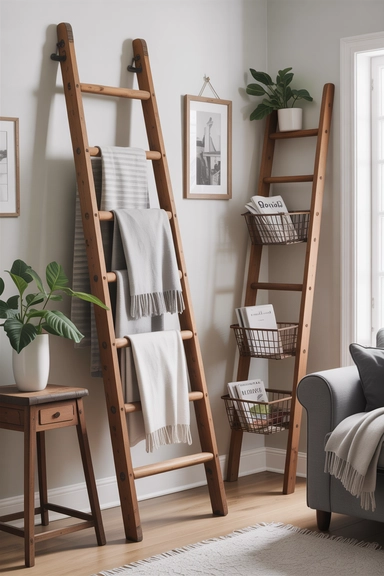
Unused ladders can be converted into tall, narrow storage structures that require very little floor space. Leaned against walls or fixed upright, ladder rungs become natural rails for blankets, towels, magazines, or hanging baskets. This introduces vertical storage without drilling heavy shelving systems or crowding existing room layouts.
Painting or staining ladders allows them to blend into surrounding décor instead of standing out as improvised furniture. Placing heavier items on lower rungs ensures stability. Repurposing ideas for storage using ladders create functional height-based organization that fits naturally into corners and slim wall zones.
3. Tin Cans Converted Into Wall-Mounted Supply Holders
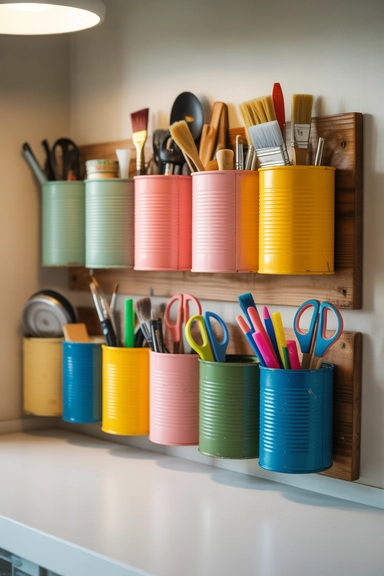
Cleaned tin cans provide ready-made cylindrical containers ideal for organizing pens, kitchen utensils, paintbrushes, or small tools. Mounted on boards or directly to walls, they form compact storage panels that lift frequently used items off desks and countertops. This keeps work surfaces clear while keeping tools visible and within reach.
Wrapping cans in fabric or painting them improves appearance and removes sharp edges. Grouping cans by tool type maintains predictable placement habits. Repurposing ideas for storage like wall-mounted can systems create modular, low-cost organization using items that would normally be discarded.
4. Shoe Organizers Repurposed for Household Supplies
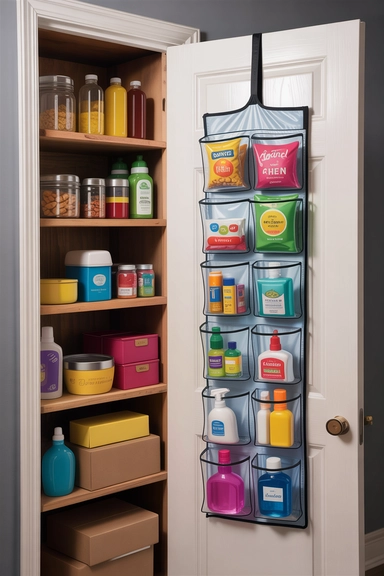
Over-the-door shoe organizers offer instant compartmental storage far beyond footwear. Their pocketed layout works equally well for pantry snacks, cleaning products, toiletries, or craft materials. Each pocket becomes a defined category, preventing small items from scattering across shelves or drawers.
Clear-pocket designs prevent forgotten contents and overbuying. Hanging organizers inside closet or cupboard doors keeps supplies accessible but hidden from sight. Repurposing ideas for storage that reuse shoe organizers activate vertical space without permanent installation or added cabinetry.
5. Suitcases Transformed Into Under-Bed Storage Units
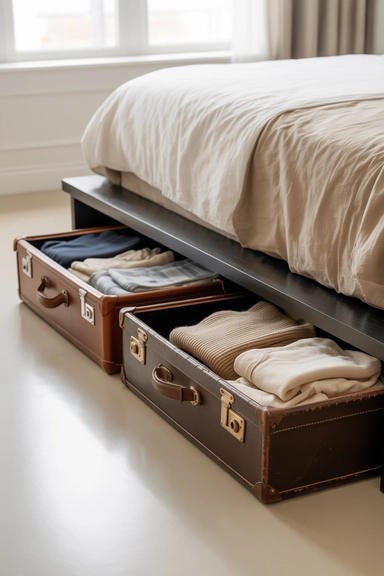
Old suitcases, especially hard-shell or vintage designs, can replace plastic under-bed bins with stronger structure and added character. Slid beneath beds, they store seasonal clothing, spare linens, or personal keepsakes while remaining completely out of sight. Their rigid frames protect contents better than soft storage bags.
Labeling suitcase handles simplifies identification without repeated opening. Adding small caster wheels improves accessibility for frequent use. Repurposing ideas for storage that convert forgotten luggage reclaim hidden space while keeping bedrooms and closets uncluttered.
6. Mason Jars Repurposed as Modular Kitchen and Craft Storage
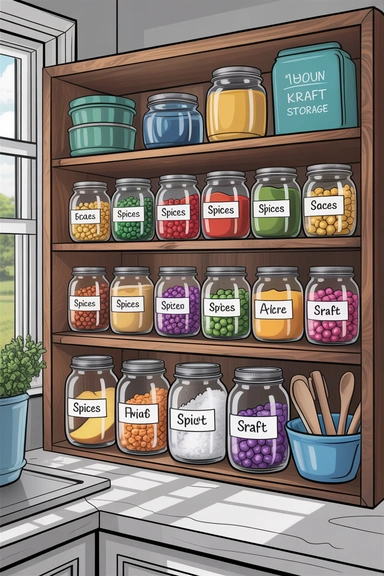
Glass mason jars often sit unused after their original purpose, yet they offer airtight, transparent storage that keeps contents instantly recognizable. In kitchens, they store dry foods, spices, or baking ingredients while preventing packaging clutter. In craft rooms or offices, they organize beads, buttons, clips, screws, or stationery. Their uniform shape allows predictable stacking, which uses shelf height efficiently and eliminates the disorder caused by irregular containers.
Mounting jar lids beneath shelves creates suspended storage that frees counter and drawer space. Labeling jars ensures consistent organization even when multiple people access the same area. Repurposing ideas for storage using mason jars replace disposable packaging with durable, structured containers that keep cupboards and workstations visually calm.
7. Drawer Units Converted into Rolling Under-Table Storage
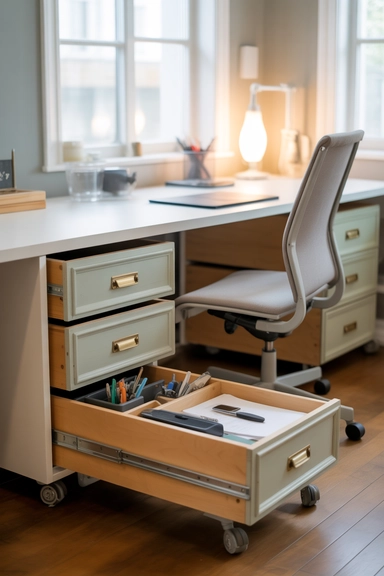
Old desk or dresser drawers can be transformed into rolling storage units that slide neatly beneath tables, beds, or workstations. Adding small caster wheels allows smooth pull-out access for linens, paperwork, toys, or tools. This activates low-clearance zones that usually remain unused, expanding storage capacity without introducing new furniture into tight rooms.
Handles improve ease of access, while interior liners protect stored fabrics and prevent splinters. Assigning each drawer a single category prevents daily rummaging. Repurposing ideas for storage that reuse drawers convert broken furniture components into hidden, high-capacity organization.
8. Magazine Holders Turned into Vertical Pantry Dividers
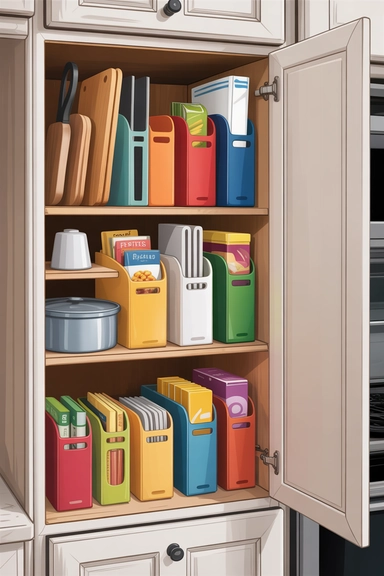
Magazine holders rarely serve their original function today, yet their upright structure makes them ideal for organizing flat kitchen items. Inside cupboards, they separate cutting boards, baking trays, foil boxes, or pantry packets that usually collapse into messy piles. This keeps flat items upright, visible, and easy to remove without disturbing other contents.
Uniform holders maintain a clean visual rhythm inside cabinets. Positioning them near prep zones improves cooking workflow. Repurposing ideas for storage that convert magazine holders into vertical dividers solve awkward flat-item clutter without adding specialized organizers.
9. Floating Shelves Made from Reclaimed Wooden Planks
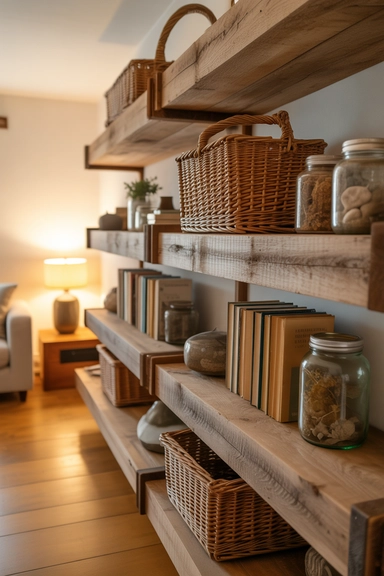
Reclaimed wooden planks from old furniture or leftover construction material can become strong floating shelves that add vertical storage without floor consumption. Mounted securely, they hold baskets, folded towels, books, jars, or décor while keeping wall space productive. The natural wood texture adds warmth, making storage feel intentional rather than improvised.
This method pairs naturally with cost-efficient home organization approaches found in 23 Low Budget Home Organizing Hacks for Real Everyday Homes, extending space-saving structure beyond store-bought furniture. Repurposing ideas for storage using reclaimed wood increase capacity, reduce waste, and maintain organized wall zones.
10. Wire Baskets Repurposed as Wall-Mounted Drop Zones
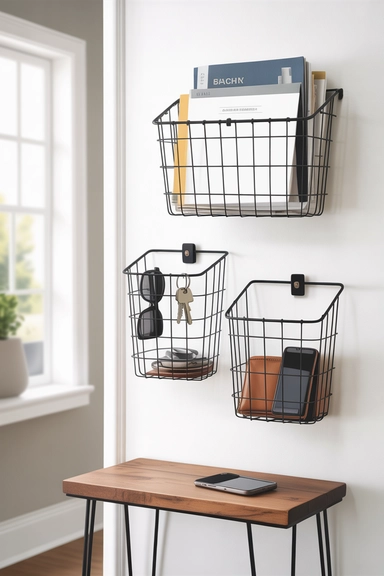
Wire baskets originally designed for laundry or office filing can be wall-mounted to create everyday drop zones. In kitchens, they hold produce or dishcloths. In entryways, they collect mail, keys, or daily essentials. This prevents countertops and tables from becoming clutter catch-points.
Open wire construction keeps contents visible and ventilated. Assigning each basket a specific purpose avoids overflow. Repurposing ideas for storage that reuse wire baskets introduce vertical organization that keeps busy household areas tidy without new cabinetry.
11. Old Cabinet Doors Rebuilt into Wall Storage Panels
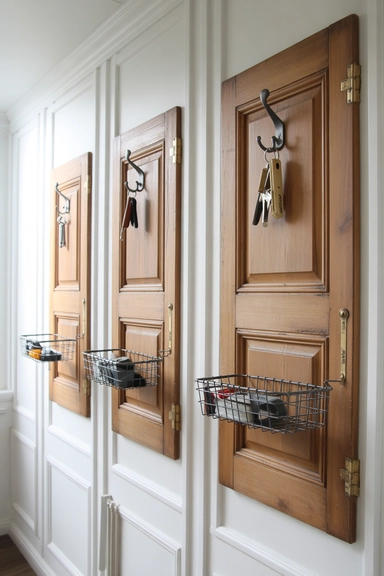
Cabinet doors removed during renovations often end up discarded, yet they are solid, flat, and perfectly sized for wall-mounted storage systems. Fixed vertically, they become strong backing panels for hooks, wire baskets, or small shelves that hold keys, kitchen tools, cleaning brushes, or craft supplies. This creates organized wall zones without installing new cabinetry or consuming floor space.
Painting the doors to match wall colors helps them blend naturally into the room instead of looking improvised. Adding labeled hooks or containers ensures each item has a permanent return spot. Repurposing ideas for storage that reuse cabinet doors turn renovation leftovers into practical, space-saving organization features.
12. Pegboards Made from Reclaimed Wood Sheets
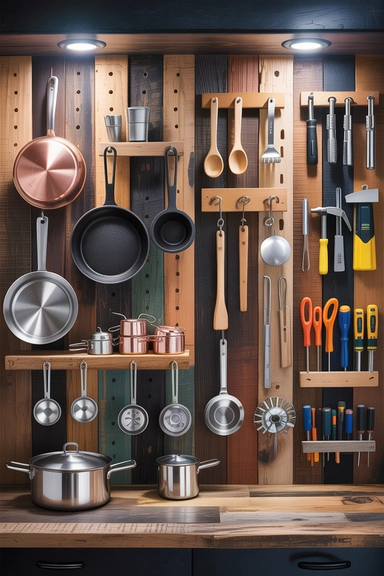
Reclaimed plywood or wooden panels can be drilled into custom pegboards designed for tools, kitchen utensils, or creative supplies. Unlike standard pegboards, DIY versions allow customized hole spacing that fits specific items, preventing wasted wall space and awkward layouts. This creates precise vertical storage where every tool has a defined position.
Sealing the wood protects against splintering and moisture damage in kitchens or work areas. Peg arrangements can be reconfigured as storage needs change, keeping the system flexible long term. Repurposing ideas for storage using reclaimed pegboards transform scrap materials into adaptive organization systems that save both space and cost.
13. Wine Racks Repurposed for Towel and Linen Storage
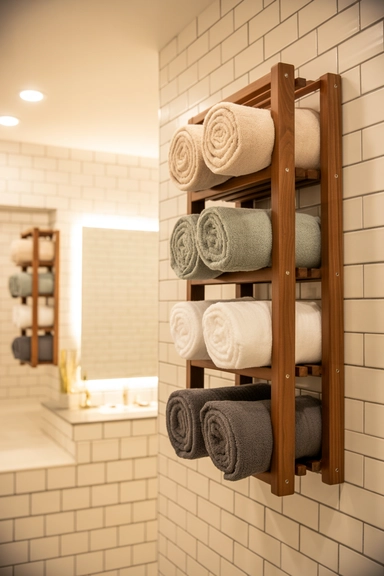
Wine racks naturally support rolled items, making them ideal for storing towels, blankets, yoga mats, or throws. Their curved slots keep textiles neatly separated, preventing shelf stacks from collapsing into untidy piles. Used in bathrooms or bedrooms, they introduce vertical storage without bulky cabinets.
Refinishing or painting the rack allows it to coordinate with surrounding décor. Grouping linens by size or function improves daily access. Repurposing ideas for storage that reuse wine racks create elegant textile organization while giving idle furniture a useful second life.
14. Filing Cabinets Turned into Garage or Craft Storage
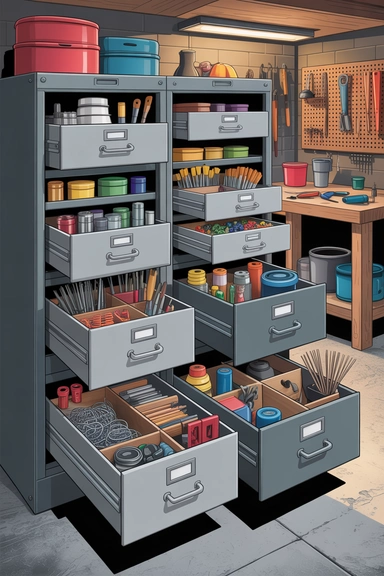
Metal filing cabinets offer deep, durable drawers designed to handle weight, making them perfect for tools, hardware, or heavy craft equipment. Repurposed in garages or workrooms, they keep supplies dust-free, secure, and neatly categorized. Drawer depth accommodates bulky items that standard shelving cannot.
Adding drawer liners protects tools and reduces noise during opening and closing. Labeling drawer fronts ensures fast retrieval and consistent return habits. Repurposing ideas for storage that convert filing cabinets introduce industrial-grade organization without purchasing new workshop furniture.
15. Hanging Fruit Baskets Used for Produce and Kitchen Tools
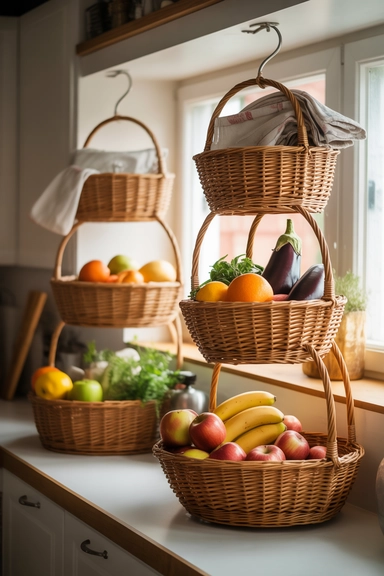
Tiered fruit baskets originally meant for countertops can be hung from ceiling hooks or wall rails to create vertical storage for produce, dishcloths, or small kitchen tools. This frees counter space while keeping frequently used items within reach during cooking routines.
Open-wire designs promote airflow, extending the freshness of fruits and vegetables. Assigning each tier a dedicated category prevents clutter buildup. Repurposing ideas for storage that adapt hanging baskets bring practical vertical organization to busy kitchen areas without additional shelving.
16. Old Picture Frames Converted into Wall-Mounted Organizer Grids
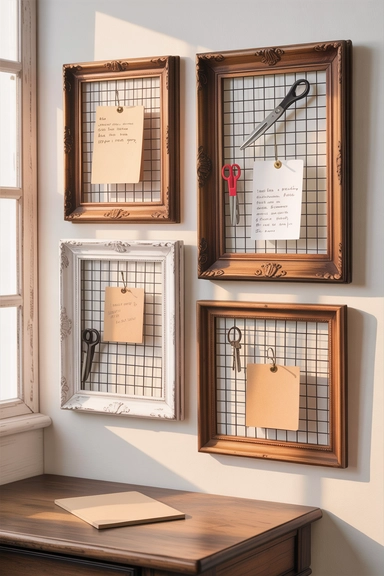
Unused picture frames can become functional wall organizers when fitted with wire mesh, corkboard, or small hooks. Mounted in kitchens, offices, or bedrooms, they hold notes, keys, jewelry, scissors, or lightweight tools while keeping surfaces clear. The frame structure creates defined visual boundaries, preventing wall storage from looking messy or accidental.
Painting frames to match wall tones allows them to blend naturally into the space. Assigning each frame a single purpose ensures long-term order rather than visual clutter. Repurposing ideas for storage that transform picture frames introduce decorative yet practical organization without adding new furniture.
17. Wooden Pallets Rebuilt into Vertical Storage Walls
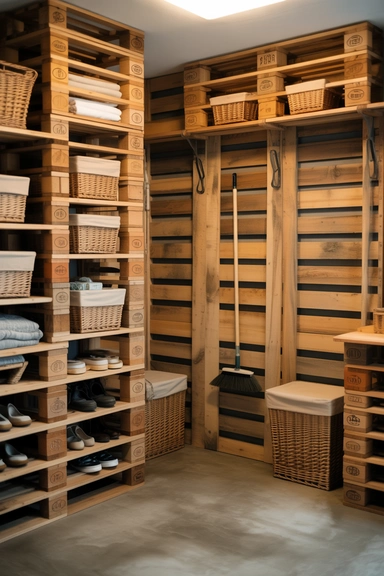
Discarded shipping pallets provide ready-made slatted structures that work perfectly as vertical storage walls. Mounted securely, they hold baskets, hooks, or small shelves for shoes, garden tools, cleaning supplies, or pantry items. Their open slat design keeps contents visible and accessible while maximizing wall space that would otherwise remain unused.
Sanding and sealing the wood prevents splinters and improves durability. Anchoring pallets firmly ensures stability under weight. Repurposing ideas for storage using pallets create high-capacity organization from materials that typically go to waste.
18. Old Drawers Mounted as Floating Wall Shelves
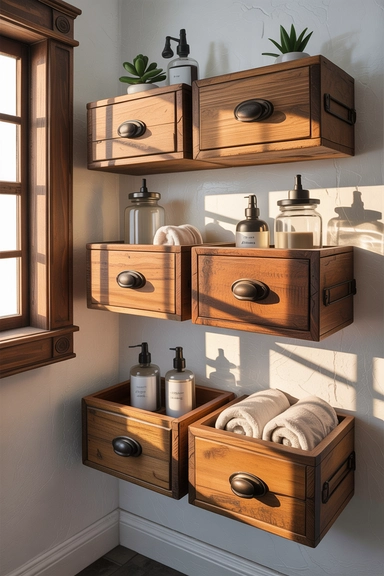
Single drawers removed from damaged furniture can be fixed directly onto walls as shadow-box shelving. Their built-in sides prevent stored items from falling, making them ideal for toiletries, spices, small décor, or office supplies. This adds depth-based wall storage without installing new cabinetry.
Painting drawer exteriors keeps the installation clean and intentional. Using different drawer sizes creates layered wall composition while preserving structure. Repurposing ideas for storage that reuse drawers build practical shelving from forgotten furniture parts.
19. Kitchen Colanders Repurposed as Hanging Storage Baskets
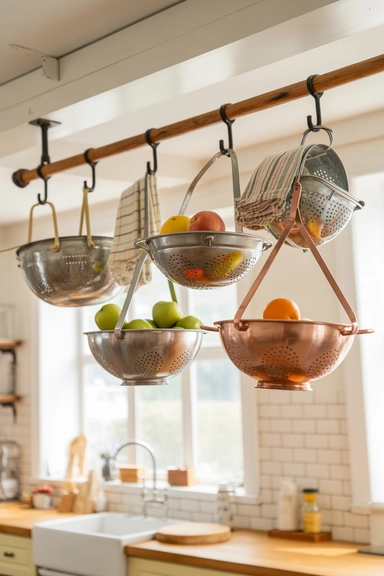
Metal colanders are lightweight, ventilated, and designed to hold items securely. Hung from wall hooks or ceiling rails, they become ideal baskets for fruits, vegetables, dishcloths, or craft materials. Their perforated design allows airflow, preventing moisture buildup in kitchens or laundry areas.
Using matching colanders maintains visual consistency. Assigning each basket a specific category prevents overfilling. Repurposing ideas for storage that use colanders create breathable hanging storage without purchasing specialty organizers.
20. Old Books Stacked into Hidden Storage Boxes
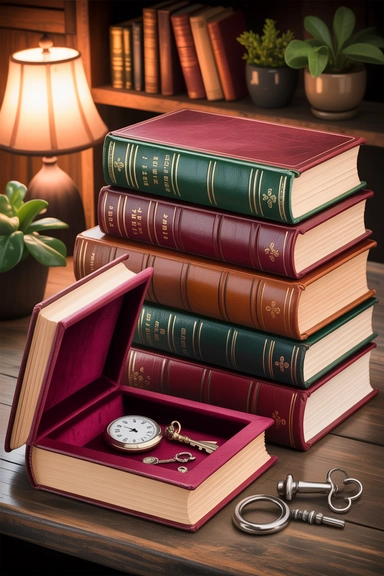
Hardcover books can be hollowed or converted into lift-lid containers for valuables, cables, documents, or small accessories. Placed on shelves or side tables, they disguise storage in plain sight while keeping contents protected from dust and visual clutter.
Using similar book sizes keeps stacks neat and believable. Limiting contents to lightweight items prevents wear over time. Repurposing ideas for storage that convert books into containers introduce hidden organization while preserving aesthetic appeal.
21. Old Toolboxes Repurposed as Portable Storage Stations
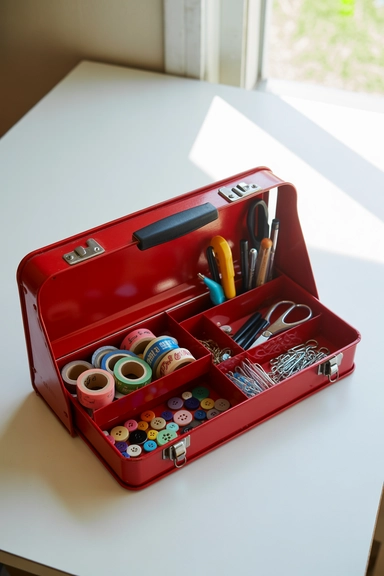
Metal or plastic toolboxes often sit unused once their original purpose fades, yet they offer compartmentalized storage ideal for organizing craft supplies, first-aid items, cleaning kits, or hardware essentials. Their built-in dividers prevent small items from mixing, while the handle design allows easy transport between rooms. This keeps frequently used supplies contained instead of scattered across drawers and countertops.
Labeling compartments improves quick identification, especially when multiple categories share one box. Choosing stackable toolboxes increases storage density without expanding floor space. Repurposing ideas for storage that reuse toolboxes create mobile organization zones that adapt easily to daily household needs.
Conclusion
Effective storage does not require new furniture or costly systems. Repurposing ideas for storage succeed because they transform overlooked household items into structured organization tools that use space already available. When everyday objects gain new purpose, clutter loses its place to settle. With thoughtful reuse, rooms feel lighter, storage becomes more flexible, and homes stay organized without constant maintenance or added expense.