
Introduction
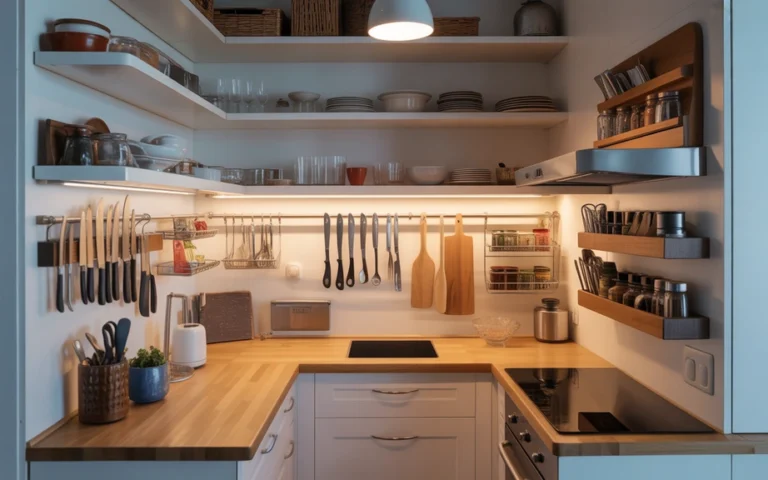
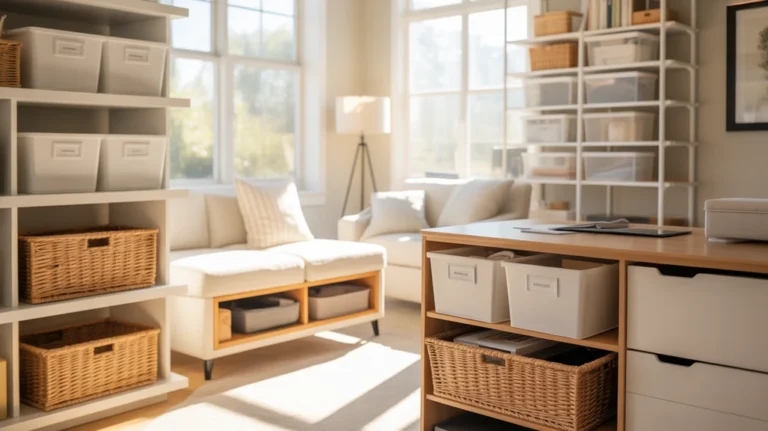
Open shelves can make a kitchen feel airy and intentional — or instantly chaotic. The difference isn’t how many shelves you have, but how they’re structured and styled. The best kitchen shelving organization ideas reduce clutter by controlling height, spacing, color, and category instead of simply adding more storage. When shelves are layered with purpose, they hold more without looking crowded. Done right, they replace bulky cabinets and heavy racks with something lighter and easier to maintain. If you’re also optimizing enclosed storage, explore 25 Kitchen Cabinet Storage Ideas That Maximize Every Shelf
1. Clear Container Systems That Make Open Shelves Look Controlled
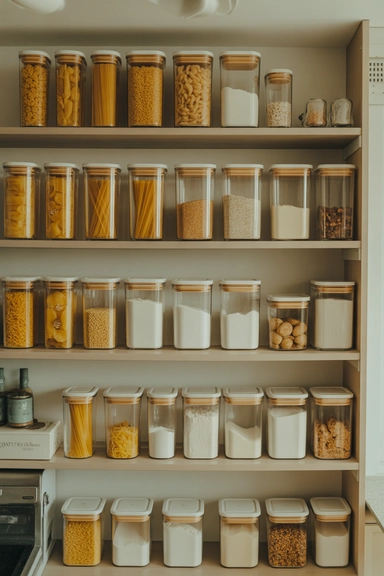
Open shelving quickly looks chaotic when packaging, colors, and container sizes compete for attention. One of the most reliable kitchen shelving organization ideas is replacing mismatched packaging with uniform clear containers. Grains, pasta, snacks, and baking staples instantly look calmer when they share the same visual language. In open shelf kitchens or pantry shelving setups, this single change reduces visual noise while also making items easier to track and restock. It also prevents half-used bags from collapsing and spreading across the shelf.
Container height matters as much as container style. Keep similar-height jars together so the shelf forms a clean line instead of a jagged skyline. Place the most-used items at eye level and store backups higher or lower. When labels face forward and categories stay grouped, shelves feel intentional rather than overfilled. This approach works especially well in small kitchens and apartments where open storage is visible all day and needs to stay visually controlled.
2. Structured Height Zoning That Prevents Shelf Crowding
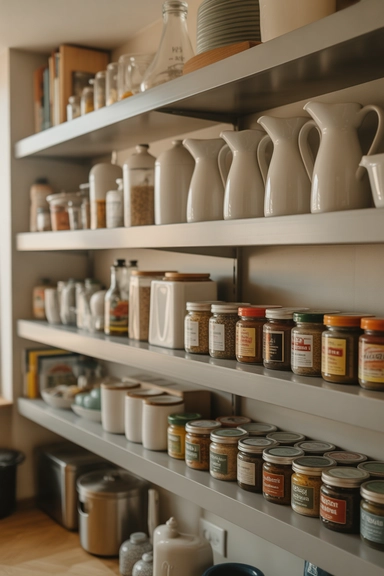
When every item on a shelf sits at the same height, clutter forms visually even if the shelf isn’t full. One of the most effective kitchen shelving organization ideas is intentional height zoning. Place taller containers and pitchers at the back, medium items in the center, and shorter pieces toward the front. This creates depth without stacking items directly on top of one another. In kitchen open shelving organization ideas, layered height allows you to store more while keeping everything visible and easy to reach.
Height zoning also prevents constant reshuffling. When each item has a designated vertical zone, shelves stop becoming a temporary holding space. Use risers only when necessary and avoid stacking randomly, which quickly creates instability. In small kitchen storage small apartment layouts, controlled height variation keeps shelves functional while still looking styled. The goal isn’t just fitting items in — it’s creating visual order that lasts beyond the first day you organize.
3. Category Blocking That Stops Shelf Migration
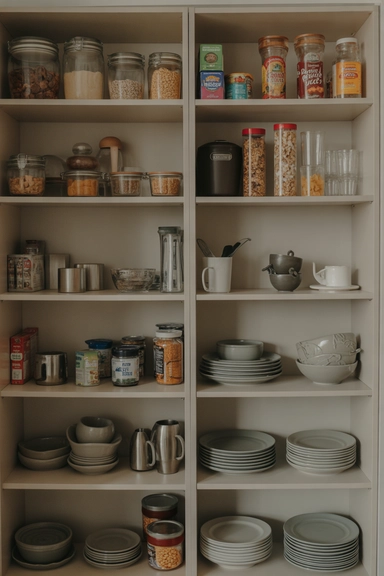
Clutter spreads when items don’t have defined categories. Assigning each shelf a purpose prevents objects from migrating randomly over time. Keep baking supplies together, coffee items in one section, and everyday dishes in another. Strong kitchen shelving organization ideas rely on predictable grouping, not convenience placement. When shelves follow logic, it becomes obvious when something is out of place, which naturally reduces buildup.
Category blocking also simplifies restocking and cleaning. Instead of shifting items across multiple shelves, you return them to one defined area. This works especially well in pantry shelving ideas food storage kitchen organization layouts where similar items can quickly blend together. Visually, grouped categories create calm because shapes and colors cluster naturally. Functionally, they reduce the friction of daily use, which is what keeps shelves organized long-term.
4. Negative Space That Makes Shelving Feel Designed, Not Packed
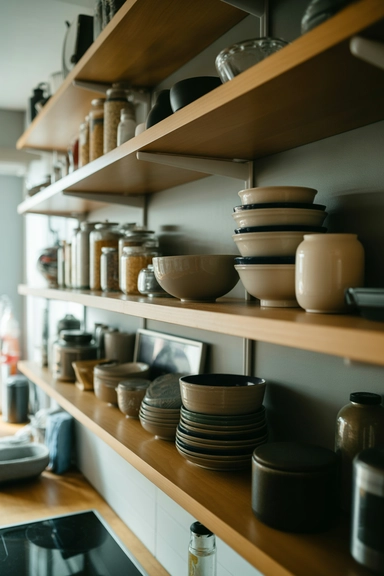
One of the strongest kitchen shelving organization ideas is resisting the urge to fill every inch. Leaving visible breathing room between stacks of bowls, jars, or containers prevents shelves from looking heavy. Negative space isn’t wasted space — it’s structural balance. In floating kitchen shelf ideas, this becomes even more important because everything is exposed and fully visible from multiple angles.
Aim to leave small gaps between groupings instead of pressing items tightly together. This visual separation helps the eye distinguish categories and reduces the impression of clutter. Even in kitchen storage small apartment setups, controlled spacing makes shelving feel intentional. When shelves look designed rather than crammed, they require less constant adjustment because visual boundaries are already built into the layout.
5. Basket Containment That Controls Small Loose Items
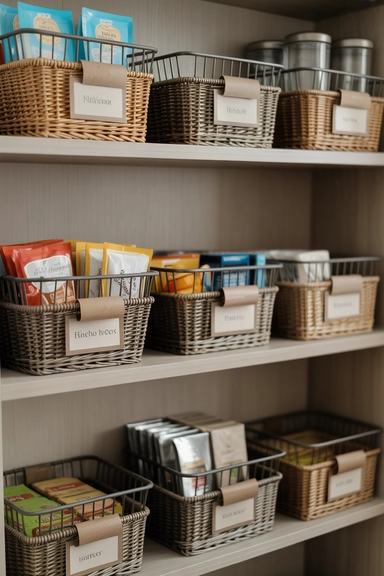
Small packets, tea sachets, and snack bags are often the fastest way to create shelf chaos. Containing them inside uniform baskets or bins prevents visual fragmentation. This is one of the most practical kitchen shelving organization storage ideas because it manages small items without forcing them into rigid containers. Baskets act as flexible zones that can adjust as contents change.
Choose baskets that fit the shelf depth precisely so they don’t hang over the edge or waste space behind them. Label the front clearly so retrieval stays easy. In kitchen wire shelving organization ideas, baskets also prevent small items from slipping between gaps. Containment keeps loose objects from spreading across the shelf, which preserves both visual clarity and daily usability.
6. Everyday Dish Zones That Keep Frequently Used Items Accessible
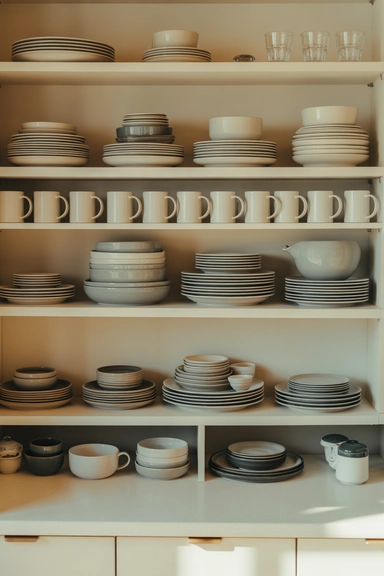
Shelves become cluttered when everyday dishes compete with occasional-use pieces. Creating a dedicated daily-use zone keeps plates, bowls, and mugs within easy reach while preventing overcrowding across multiple shelves. One of the most practical kitchen shelving organization ideas is placing the items you use most at eye level, with less-used serving dishes stored higher or lower. This keeps the shelf visually balanced and prevents constant reshuffling every time you unload the dishwasher.
Consistency is what keeps this system working long-term. Return dishes to the same location after washing so stacks don’t migrate. In kitchen open shelving organization ideas, uniform plate stacks and aligned mug rows create visual rhythm that makes shelves feel orderly even when fully stocked. Limiting this zone to everyday items prevents it from becoming a catch-all. Over time, this habit keeps shelves predictable and reduces the need for frequent reorganization.
7. Shelf Depth Control That Prevents Hidden Clutter
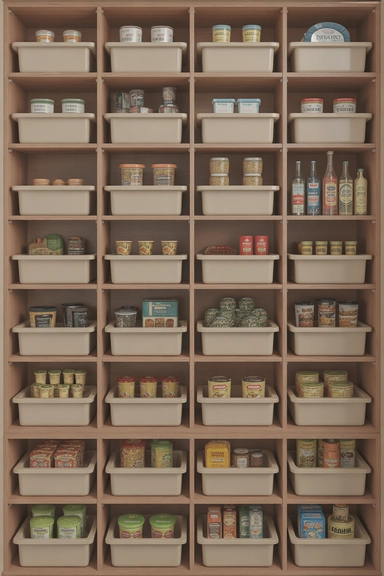
Deep shelves often hide clutter because items get pushed behind others and forgotten. Controlling depth by using shallow bins or front-facing containers ensures everything stays visible. Strong kitchen shelving organization ideas rely on accessibility as much as neatness. When items remain visible from the front, they’re more likely to be used and returned properly instead of piling up behind other objects.
Use dividers or bins that match the shelf depth so items don’t drift backward. This works especially well in pantry shelving ideas food storage kitchen organization layouts where packaged goods tend to collapse or shift. Keeping items within a defined front boundary prevents visual and physical clutter from building up behind the first row. The shelf stays easier to maintain because nothing gets lost in the back.
8. Color Grouping That Creates Visual Calm
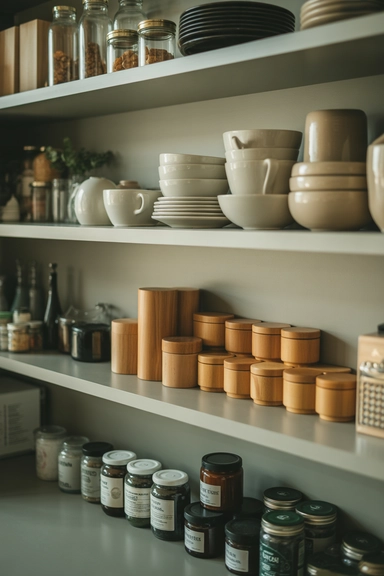
Even organized shelves can feel busy if colors clash randomly. Grouping similar tones together helps shelves look more controlled without removing items. One of the more subtle kitchen shelving organization ideas is arranging containers and dishes by color family. Neutral containers paired together create calm, while brighter items can be grouped in one section instead of scattered.
Color grouping works especially well in open shelves where everything is visible. In kitchen ideas with shelves, repeating tones across different levels creates cohesion. This approach doesn’t require buying new containers — simply rearranging existing items can reduce visual clutter significantly. When colors stay grouped, shelves look styled rather than crowded, which makes them easier to maintain long-term.
9. Shelf Lighting That Improves Visibility and Order
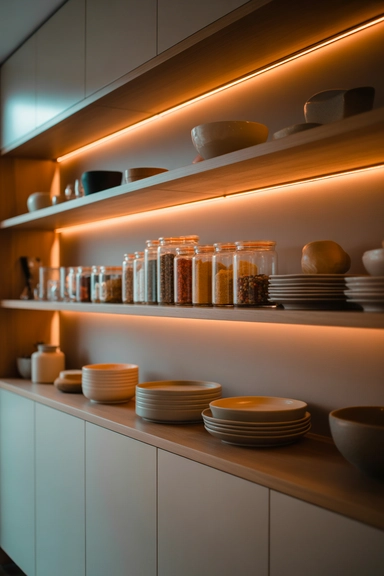
Poor lighting can make even organized shelves look messy. Adding soft under-shelf or strip lighting improves visibility and makes items easier to locate. In floating kitchen shelf ideas, lighting also highlights structure and spacing, which helps shelves look intentional instead of improvised. When every item is clearly visible, it’s easier to return things to the correct spot.
Lighting doesn’t need to be dramatic. A simple warm LED strip under each shelf can transform how the space feels. Better visibility supports strong kitchen shelving organization ideas because items don’t get lost in shadows. This reduces the chance of overbuying or misplacing items, keeping shelves more controlled and visually balanced over time.
10. Label Systems That Prevent Shelf Drift
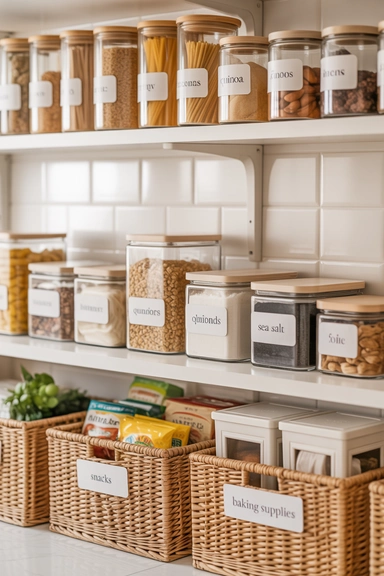
Labels may seem unnecessary at first, but they prevent shelves from slowly losing structure. Clear labeling ensures each category stays in its designated zone. One of the most practical kitchen shelving organization ideas is labeling baskets, jars, or bins so items always return to the same place. This keeps shelves from becoming a temporary holding space for unrelated items.
Labels also make it easier for everyone in the household to maintain the system. In pantry shelving ideas food storage kitchen organization setups, labeled zones reduce confusion and prevent overcrowding. Over time, this consistency keeps shelves cleaner with less effort. When placement becomes automatic, clutter has fewer opportunities to build up.
11. Adjustable Shelf Spacing That Fits Real Item Heights
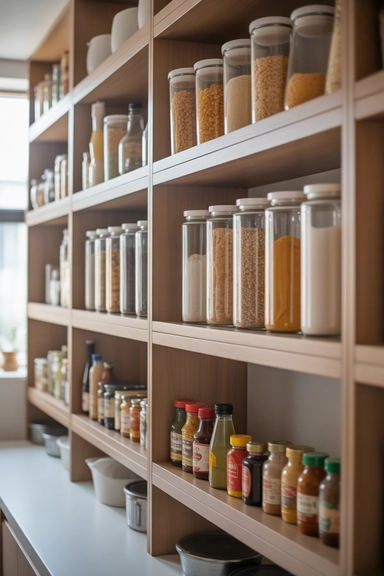
Fixed shelf spacing often wastes vertical room or forces awkward stacking. Adjusting shelf heights to match what you actually store is one of the most practical kitchen shelving organization ideas. Measure your tallest jars, cereal containers, and pitchers, then set spacing so items fit comfortably without extra empty space above them. When shelves match real storage needs, they hold more while still looking orderly and easy to access.
This adjustment prevents unstable stacking and reduces the chance of items toppling over. In kitchen shelving organization ideas for small apartments, customized spacing keeps shelves efficient without overcrowding. Once each level fits its contents properly, shelves become easier to maintain because items return to the same spot naturally. Good spacing creates structure before clutter has a chance to form.
12. Mixing Open and Closed Storage for Visual Balance
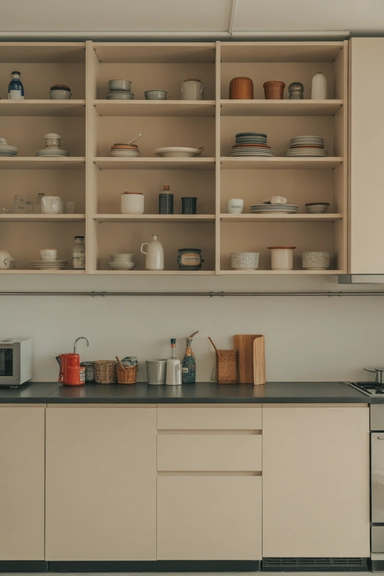
Not everything needs to stay visible. Combining open shelves with a few closed containers or cabinets keeps the kitchen from feeling overloaded. One effective kitchen shelving organization idea is using open shelves for frequently used, visually consistent items while storing less attractive packaging behind doors or in opaque bins. This balance keeps shelves functional without overwhelming the space.
Closed storage acts as a buffer for items that don’t need daily access. In kitchen open shelving organization ideas, this prevents shelves from becoming a catch-all for everything. By controlling what remains visible, you maintain visual calm while still maximizing storage. The result is a kitchen that feels lighter and more intentional, even when it holds a lot.
13. Symmetry That Creates Instant Order
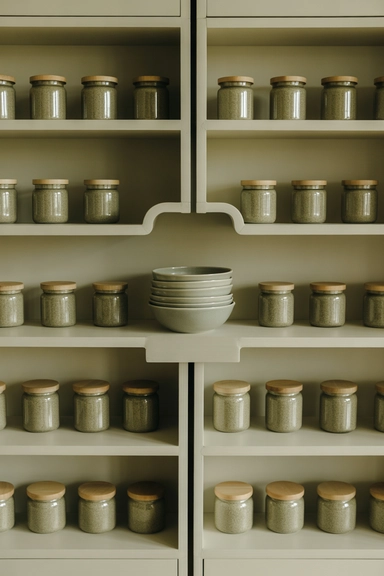
Symmetry naturally reduces visual clutter because the eye reads repetition as order. Placing matching jars, containers, or stacks of dishes evenly across a shelf makes the space feel structured. Among the most effective kitchen shelving organization ideas is arranging items in mirrored groupings so shelves look balanced rather than random.
Symmetry doesn’t mean perfection — it simply means creating visual rhythm. In kitchen shelving organization storage ideas, evenly spaced stacks and matching containers make shelves feel calmer. This also helps maintain organization over time because the layout becomes predictable. When the shelf has a clear visual pattern, it’s easier to return items to the correct place after use.
14. Dedicated Coffee or Breakfast Shelf Zones
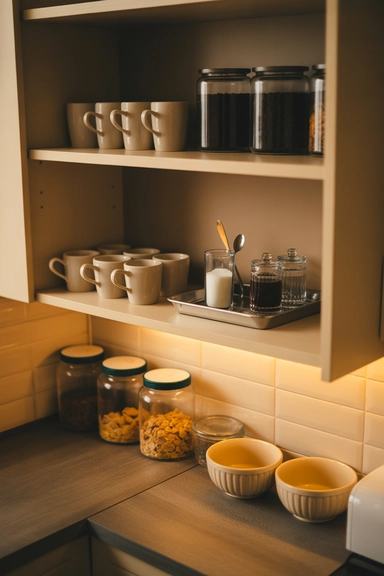
Combining too many categories on one shelf quickly leads to clutter. Creating a dedicated coffee or breakfast zone keeps frequently used items together and prevents them from spreading across multiple shelves. One of the most useful kitchen shelving organization ideas is grouping mugs, coffee, tea, and breakfast bowls in one accessible area.
This setup simplifies morning routines and keeps other shelves free for different categories. In kitchen storage small apartment layouts, defined zones reduce the chance of overlap. When each shelf has a specific function, items stop migrating randomly. Over time, this structure keeps the entire shelving system easier to maintain and visually cleaner.
15. Shelf Edge Alignment That Creates Clean Visual Lines
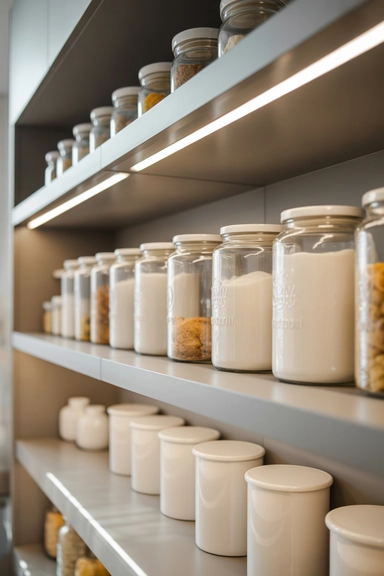
Items placed randomly at different depths can make shelves look messy even when they’re organized. Aligning the front edge of containers, dishes, or baskets creates a clean visual line that immediately reduces clutter. This simple adjustment is one of the most overlooked kitchen shelving organization ideas because it requires no extra tools or purchases.
Front-edge alignment also makes it easier to see what’s stored on each shelf. In pantry shelving ideas food storage kitchen organization setups, this keeps items from getting pushed to the back and forgotten. A consistent front line gives shelves a tidy, intentional appearance and helps maintain order without constant rearranging.
16. Material Consistency That Keeps Shelves Visually Calm
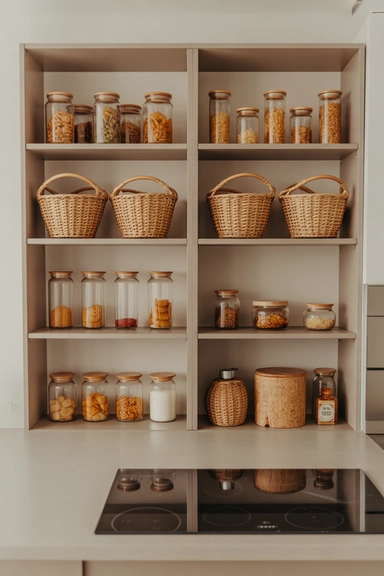
Mixing too many materials on one shelf can create visual clutter even when everything is technically organized. One of the most effective kitchen shelving organization ideas is keeping materials consistent within each zone. If you use glass containers, keep them grouped together. If baskets are part of the system, use the same tone or texture across the shelf. Consistency helps the eye read the space as controlled instead of chaotic.
Material repetition also makes restocking easier. When containers match, replacements blend in instead of disrupting the visual flow. In kitchen shelving organization ideas for small kitchens, this matters even more because every item is visible. A unified material palette keeps shelves looking intentional and reduces the sense of overcrowding, even when storage is fully utilized.
17. Vertical Plate Storage That Frees Shelf Width
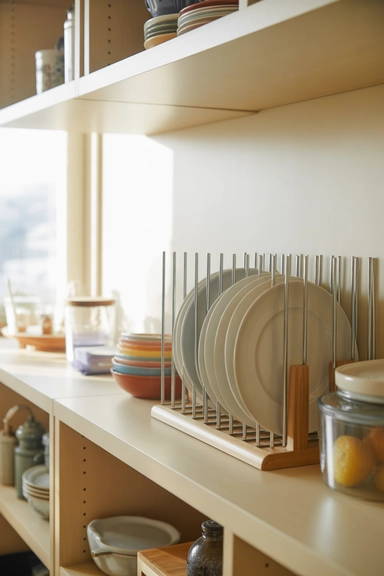
Stacks of plates can quickly consume shelf width and create unstable piles. Storing plates vertically using rack dividers keeps them accessible while reducing horizontal spread. This is one of the more practical kitchen shelving organization ideas because it allows shelves to hold more without looking cramped. Vertical storage also makes it easier to remove one plate without disturbing the entire stack.
This method works especially well in open shelving or shallow cabinets. In kitchen shelving organization ideas for apartments, vertical plate racks maximize space while keeping items easy to reach. Once plates stand upright instead of stacking high, shelves feel lighter and more structured. The layout becomes easier to maintain because items return to the same slot every time.
18. Small Appliance Shelf Boundaries That Prevent Spread
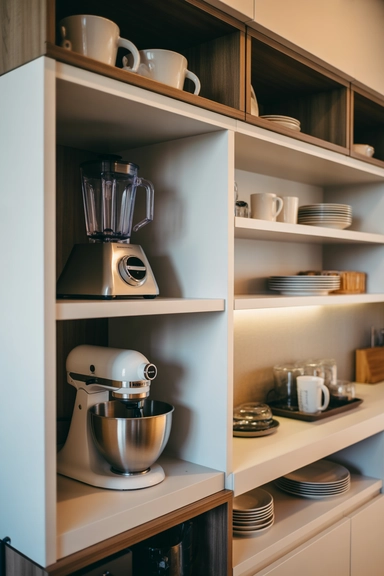
Small appliances like mixers or blenders can quickly dominate shelving space if they don’t have boundaries. Assigning one dedicated shelf or section for appliances prevents them from spreading into other zones. One of the most practical kitchen shelving organization ideas is limiting appliance storage to a clearly defined area so the rest of the shelves remain flexible.
Keeping appliances grouped together also makes the kitchen feel more predictable. In small kitchen storage small apartment layouts, boundaries prevent bulky items from overtaking storage meant for everyday dishes or food. Once appliances have a defined home, shelves stay more balanced and easier to manage. This reduces the need for constant rearranging when new items are added.
19. Shelf Rotation Habits That Keep Items From Expiring
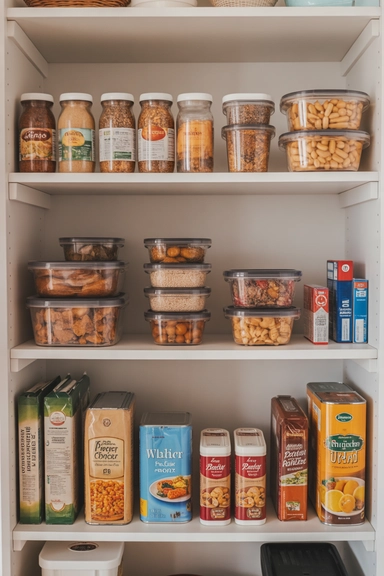
Shelves become cluttered when older items get pushed to the back and forgotten. Rotating items regularly ensures everything stays visible and usable. Among the most sustainable kitchen shelving organization ideas is adopting a simple rotation habit: newer items go to the back, older items move forward. This keeps shelves from accumulating expired or unused goods.
Rotation works especially well in pantry shelving ideas food storage kitchen organization systems. When items are easy to see, they’re easier to use before they expire. This prevents unnecessary buildup and keeps shelves from feeling overcrowded. A consistent rotation routine helps maintain both visual and functional order over time.
20. Shelf-Specific Purpose That Prevents Overlap
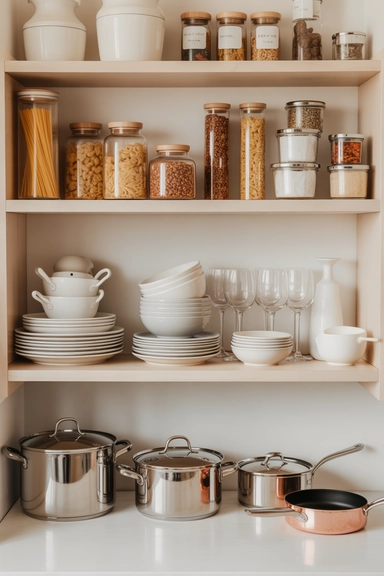
When shelves don’t have defined purposes, items migrate freely and clutter builds quickly. Assigning each shelf a clear function — dishes, dry goods, snacks, or cookware — prevents overlap. One of the most reliable kitchen shelving organization ideas is giving each level a job so items always have a predictable return spot.
Purpose-driven shelves reduce the need for constant decision-making. In kitchen shelving organization storage ideas, defined functions keep categories from mixing. This clarity makes daily use smoother and prevents overcrowding. Once each shelf has a role, maintaining order becomes easier because everything has a logical home.
21. Under-Shelf Hooks That Use Hidden Vertical Space
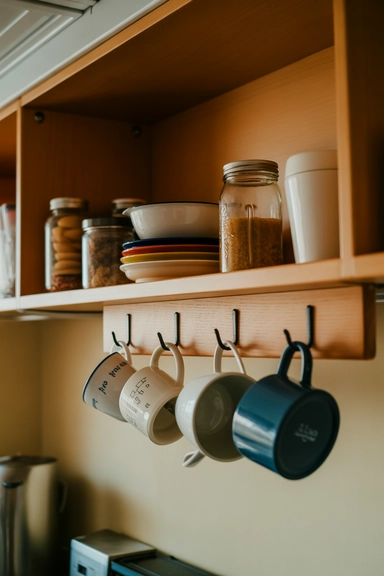
The underside of a shelf is often completely unused, yet it can hold a surprising number of lightweight items. Adding small hooks beneath shelves creates space for mugs, measuring cups, or frequently used tools without taking up the shelf surface itself. This is one of the most efficient kitchen shelving organization ideas because it expands storage without adding bulk. In tight kitchens, using hidden vertical space helps keep shelves from feeling overcrowded.
Keeping hooks evenly spaced prevents the area from looking cluttered. Limit what hangs there to daily-use items so the space stays functional. In kitchen shelving organization ideas for small apartments, this approach keeps shelves visually lighter while still increasing capacity. Once items move underneath instead of on top, the shelf surface becomes easier to maintain and more open for essential storage.
22. Floating Shelf Depth Control That Prevents Overloading
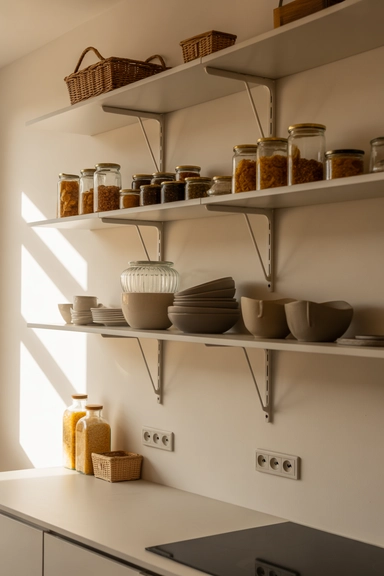
Deep floating shelves can quickly become cluttered if items are pushed too far back. Controlling depth by placing only one or two rows of items keeps everything visible and accessible. Among the most practical kitchen shelving organization ideas is limiting how far objects extend from the wall so the shelf never feels overcrowded. This also prevents forgotten items from hiding behind others.
Use shallow containers or baskets that match the shelf depth. In floating kitchen shelf ideas, keeping items within a defined front boundary maintains visual order. When everything stays within reach and visible from the front, shelves remain easier to clean and restock. This simple adjustment helps maintain structure even when shelves hold many items.
23. Reset Routines That Keep Shelves Organized Long-Term
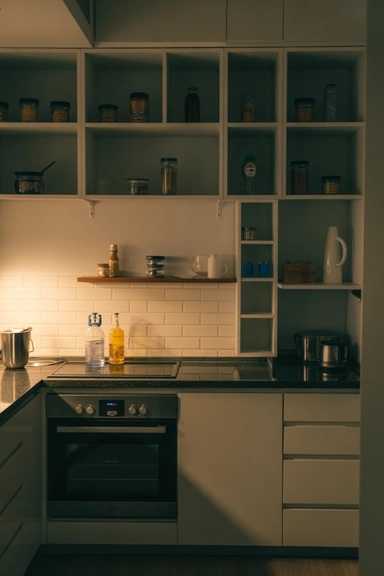
Even the best shelving systems lose structure if items aren’t returned to their proper place. Creating a quick reset routine at the end of the day helps maintain order without constant deep organizing. One of the most sustainable kitchen shelving organization ideas is taking a minute to realign stacks, return items to their zones, and clear anything that doesn’t belong.
This habit prevents small messes from turning into large clutter problems. In kitchen shelving organization ideas for busy households, consistency matters more than perfection. When shelves are reset regularly, they stay predictable and functional. Over time, this routine keeps the entire storage system easier to manage and visually calmer.
Conclusion
Well-organized shelves don’t rely on adding more storage — they rely on structure. When categories, spacing, and visual balance work together, shelves hold more without looking crowded. The most effective kitchen shelving organization ideas focus on consistency and intentional placement rather than constant rearranging. By defining zones, controlling depth, and maintaining simple habits, shelves remain usable and visually calm. With the right structure in place, kitchen storage becomes easier to maintain and far less likely to turn into clutter again.