Your office walls are bare except for the cords running down them, and your desk is whatever surface survived the move. A workspace assembled from leftover furniture doesn’t make you work worse. It just makes you feel like you’re not quite a real professional, even during your best days.
The home office decor ideas for a stylish workspace that actually work treat every element as functional. Color, lighting, texture, and storage all serve both your eye and your workflow. Skipping home office storage ideas is exactly how people end up with attractive desks buried under visible clutter.
The gap between a functional desk and a space you actually want to sit in is smaller than most people think. These ideas close it.
Textured Accent Wall Behind Your Desk
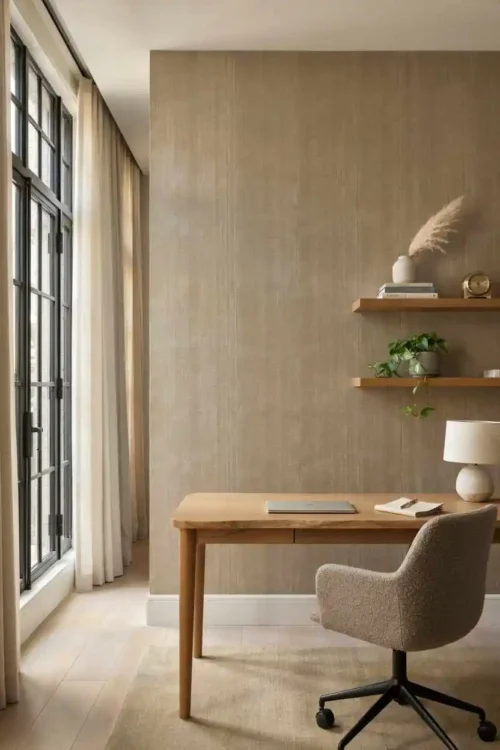
Paint or wallpaper the wall directly behind your monitor in a textured finish—shiplap, grasscloth, or subtle geometric pattern. The texture catches light differently than smooth walls, creating visual interest without screaming for attention.
This wall becomes the backdrop for every video call and your natural focal point when you look up from work. A well-chosen accent wall makes the whole room feel designed rather than default.
Keep the texture subtle enough that it doesn’t distract during calls. The goal is sophisticated, not distracting.
Layered Lighting With Task and Ambient Sources
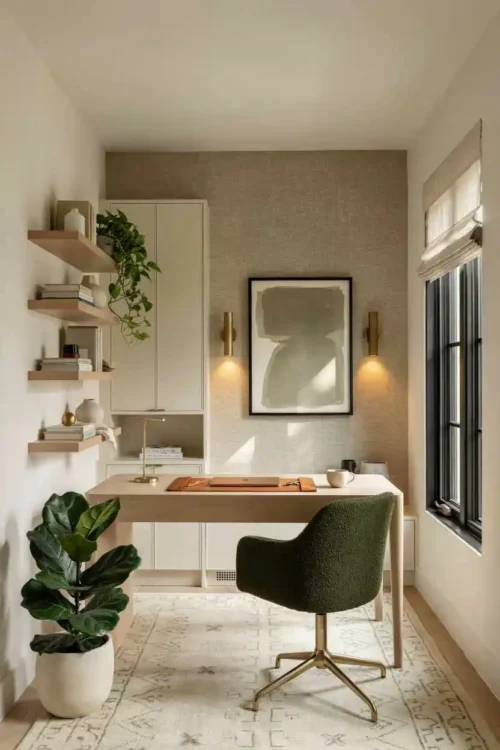
One overhead light creates harsh shadows and makes you squint at your screen. Combine desk lamps, wall sconces, and ambient lighting that you can adjust based on the time of day.
Task lighting directly on your work surface eliminates screen glare and reduces eye strain. Ambient lighting in the corners makes the room feel larger and more welcoming than a single bright source.
Dimmable bulbs let you shift from focused work lighting to softer evening tones without changing fixtures.
Real Plants in Corners and on Shelving
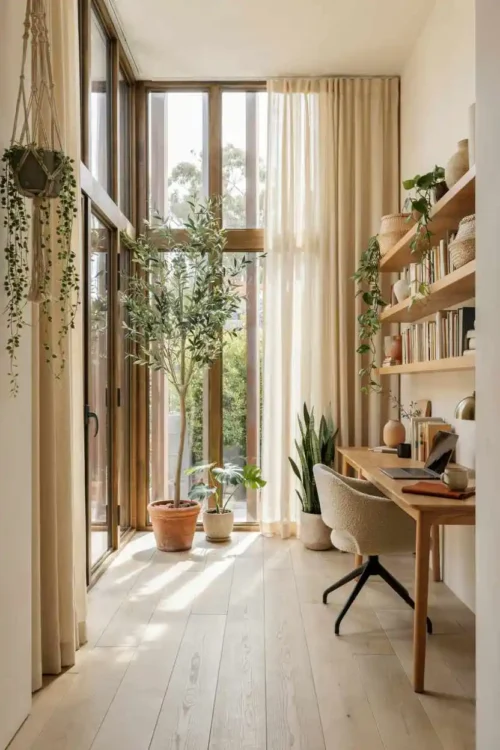
A live plant in the corner draws your eye away from the screen periodically, which reduces fatigue. Plants also soften the hard edges of furniture and cables, making the space feel less like a command center.
Larger plants on the floor anchor corners that would otherwise feel empty. Smaller plants on shelves or hanging from the ceiling add life without eating desk space.
The benefit isn’t just visual—plants improve air quality and create a subtle psychological shift toward calm.
Wood Tones That Match Your Desk and Storage
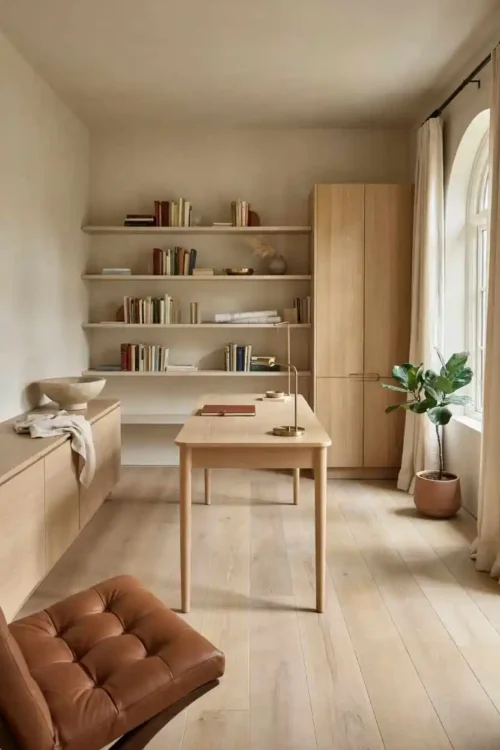
Mismatched wood finishes make a room feel chaotic, like furniture was collected randomly. Choosing warm oak, cool gray-washed wood, or dark walnut throughout the space creates visual cohesion.
Your desk, shelving, and any additional furniture don’t need to be identical, but they should read as the same family of materials. This consistency makes a small room feel intentional and larger.
Wood also feels warmer than all-metal or all-white spaces, which matters when you’re spending eight hours there daily.
Floating Shelves Styled With Books and Objects
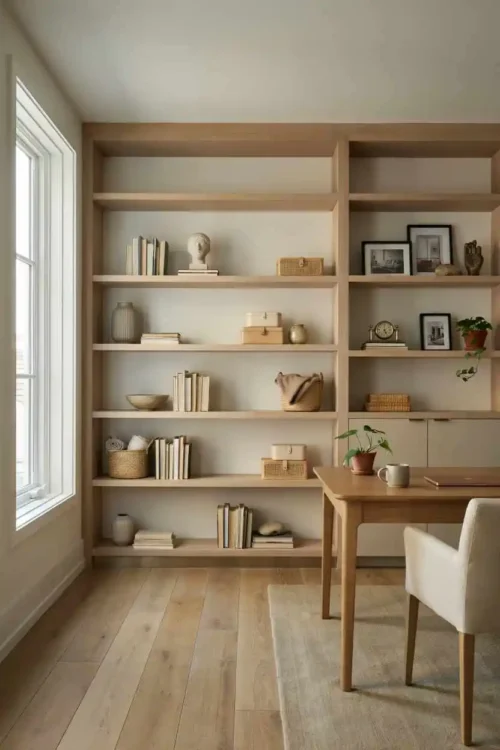
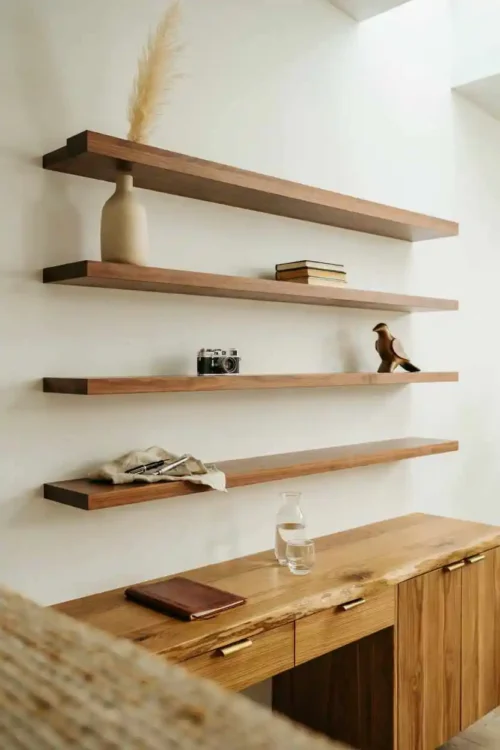
Floating shelves above your desk hold both functional supplies and decorative objects—reference books, a small vase, a framed photo, a smooth stone. The mix of useful and beautiful prevents the shelves from looking like storage and instead feels curated.
Styling shelves with intention transforms practical storage into visual interest. The objects break up the visual monotony of a blank wall.
Keep one shelf primarily functional, one primarily decorative, and arrange items in odd numbers for visual balance.
Neutral Color Palette With One Bold Accent Color
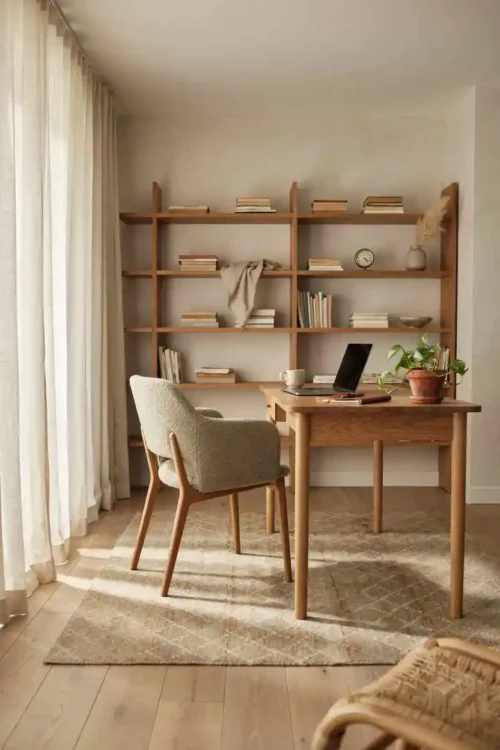
An all-beige office feels depressing. A rainbow explosion of colors feels chaotic. The sweet spot is neutral walls (soft white, warm gray, pale green) with one bold accent color appearing in a few strategic places.
Your accent color might appear in a desk chair, artwork, or a single painted cabinet. The repetition of that color makes the space feel designed rather than random.
Bold accent colors also create energy without overwhelming the space you’re trying to focus in.
Area Rug That Defines the Office Zone
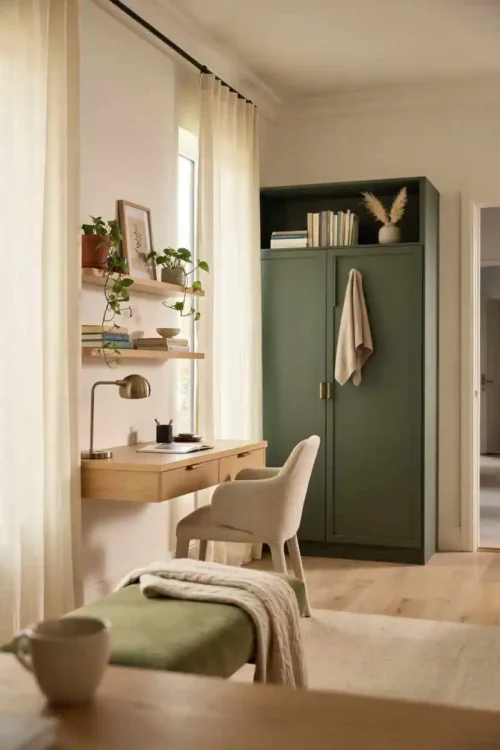
A rug under your desk and chair defines your work zone visually and acoustically. It absorbs sound, softens hard flooring, and creates a contained feeling that helps with focus.
Choose a rug in a neutral or subtle pattern that complements your accent color. The rug also makes a room feel finished rather than incomplete.
Rugs come in various sizes—a 5×7 is typical for a single-desk office, while a 6×9 works for larger layouts.
Framed Artwork That Reflects Your Work or Interests
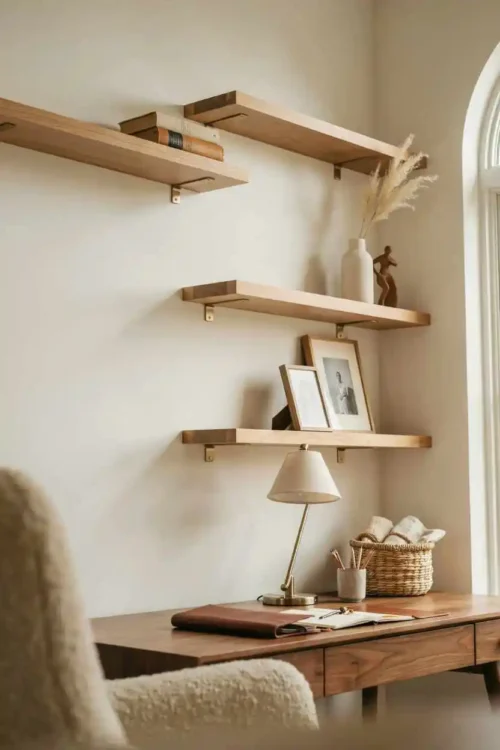
Generic corporate art feels false. Framed pieces that reflect your actual interests—a map of a place you love, an illustration related to your industry, an abstract print you genuinely enjoy—make the space feel personal.
Artwork gives your brain something to rest on when you look up from focus work. It also signals that this space belongs to you, not a corporate template.
One or two substantial pieces work better than a scattered collection. Odd numbers feel more intentional.
Open Shelving Styled as Display
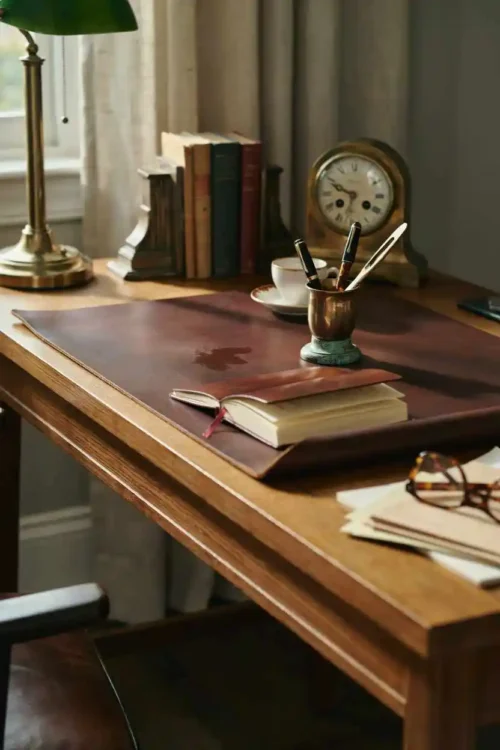
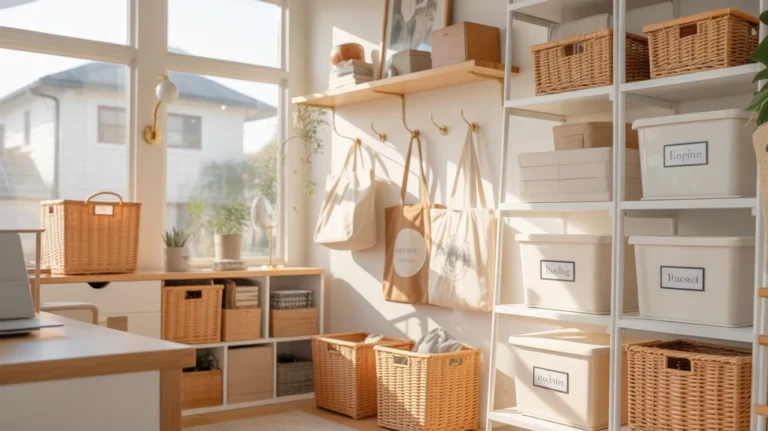
Rather than hiding supplies in cabinets, use open shelving and style it intentionally with beautiful storage containers, stacked books, and small decorative objects. Styled shelving becomes decor rather than just functional storage.
This works because you’re forced to edit ruthlessly—only things that look good and function well make it onto open shelves. Your workspace becomes visually cleaner as a result.
The styling also creates visual interest that motivates you to stay organized.
Vintage or Antique Desk Accessories
A brass pen holder, a glass desk blotter, or vintage bookends add personality and craftsmanship that mass-produced plastic never delivers. These objects also improve functionality—a good pen holder keeps your pens exactly where you need them.
Vintage accessories also tell a story, which makes your space feel curated rather than catalog-ordered. The slightly imperfect quality feels more human than sterile modern minimalism.
Thrift stores and antique shops have endless options for cheap, beautiful desk accessories.
Window Treatments That Control Light and Look Intentional
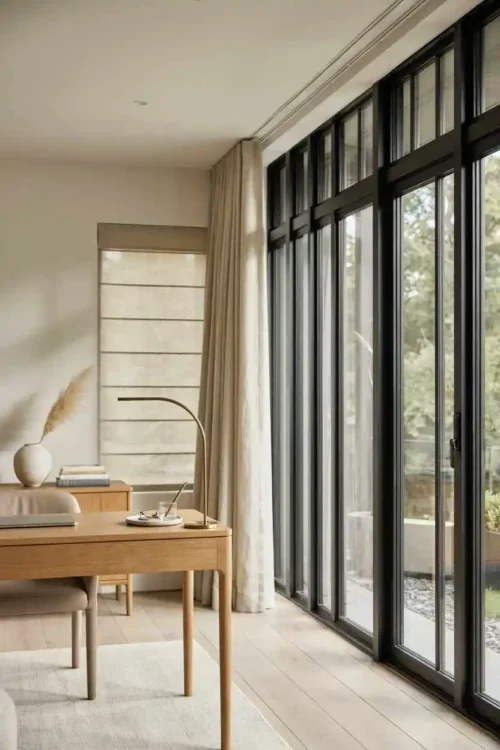
Bare windows feel unfinished. The right window treatment controls glare on your screen, creates privacy, and makes the room feel complete. Choose curtains, shades, or shutters that complement your color palette.
Light-filtering shades let you see outside while preventing screen glare. Blackout shades work if you need complete darkness during video calls from different time zones.
The window treatment is one of the first things visible on a video call, so it anchors the entire aesthetic.
Cork or Fabric Pinboard With Styled Inspiration
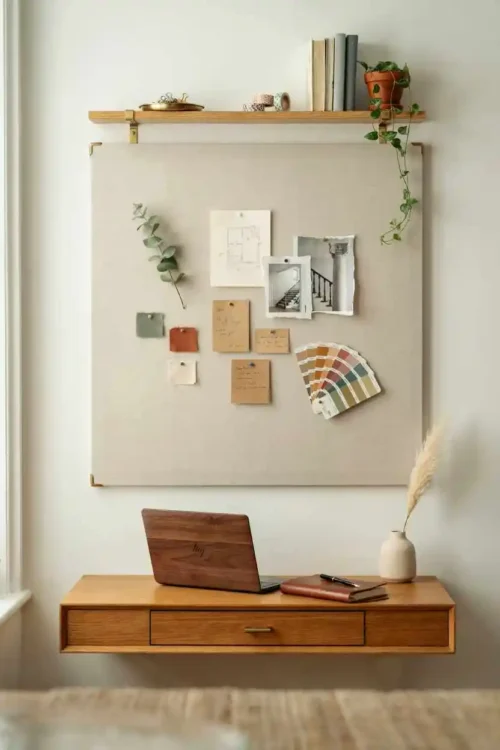
A pinboard holds both functional items (calendar, reminders) and inspirational images or quotes that keep you motivated. Style it intentionally with a color scheme rather than letting it become a chaotic mess.
The pinboard can be cork, fabric, or a combination, depending on your aesthetic. Fabric pinboards in your accent color feel more designed than plain cork.
This keeps inspiration and reminders visible without cluttering your actual desk surface.
Vertical Cable Management That Looks Intentional
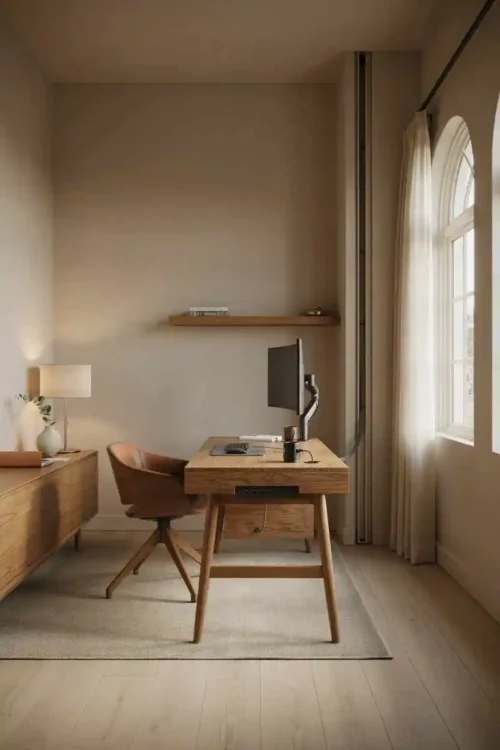
Cords behind your desk are unavoidable, but they don’t have to look like spaghetti. Use cable sleeves, clips, and channels to organize cords vertically or along the back of your desk in a logical pattern.
Organized cables create visual cleanliness that dramatically improves how the space looks and feels. Messy cables make even a beautiful office feel chaotic and unfinished.
This is one of the cheapest decor upgrades—organized cords cost under thirty dollars but feel like a complete transformation.
Desk Pad or Blotter That Coordinates With Your Color Scheme
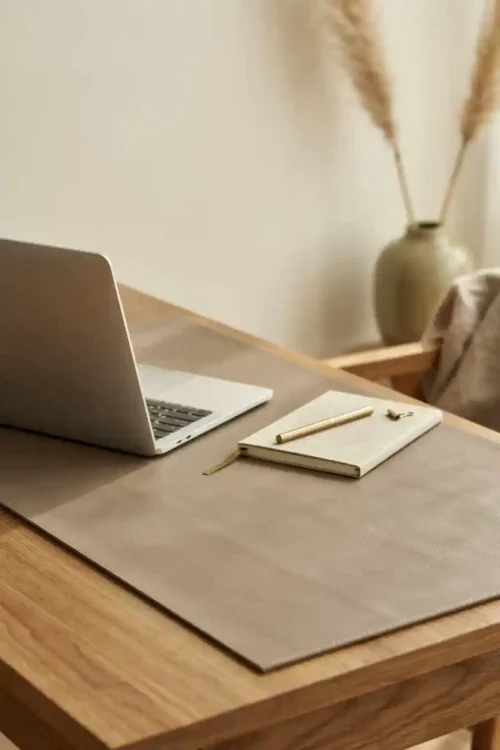
A desk pad defines your work surface and adds texture and color that ties your color palette together. Choose leather, felt, or natural materials that coordinate with your other design choices.
A pad also protects your desk surface and creates a visual boundary where your actual work happens. It anchors the desk as a deliberate object rather than just a table.
The desk pad should coordinate with but not match your accent color—slightly muted or a complementary shade.
Wall Sconces Instead of Desk Lamps for a Cleaner Look
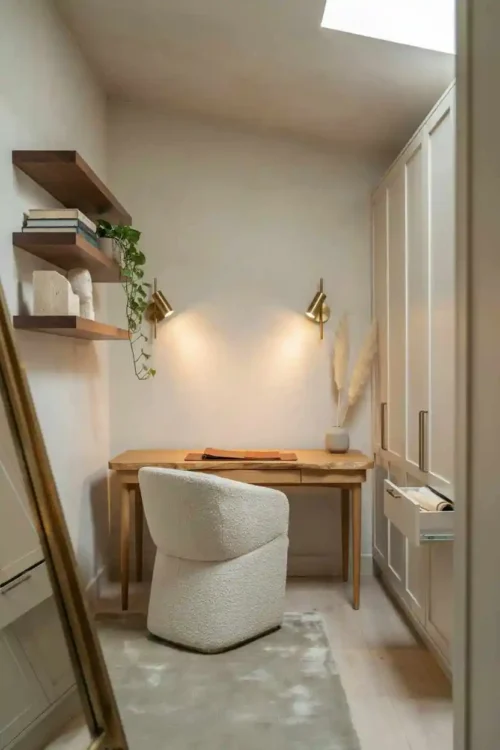
Wall-mounted sconces on either side of your desk provide task lighting without eating desk surface area. They also create a finished, designed aesthetic that desk lamps often can’t match.
Sconces work especially well in smaller offices where desk space is already limited. They keep your work surface completely clear except for essential items.
Choose sconces in brass, ceramic, or other materials that complement your overall aesthetic.
Large Mirror to Visually Expand the Space
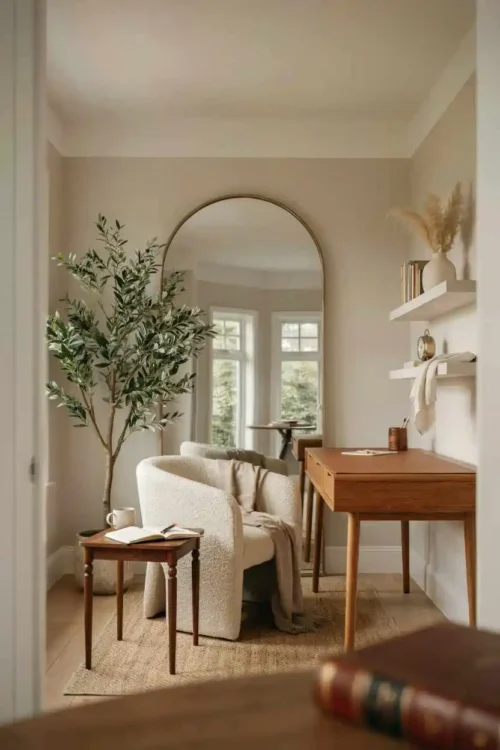
A mirror on the wall opposite your desk reflects light and makes a small office feel larger. It also reflects your work area back at you, which creates subtle visual interest.
A mirror with an intentional frame becomes decor rather than just functional. Wood, metal, or painted frames coordinate with your aesthetic.
Avoid placing a mirror directly in your sightline while working—you don’t need to watch yourself type.
Curated Collections on Display
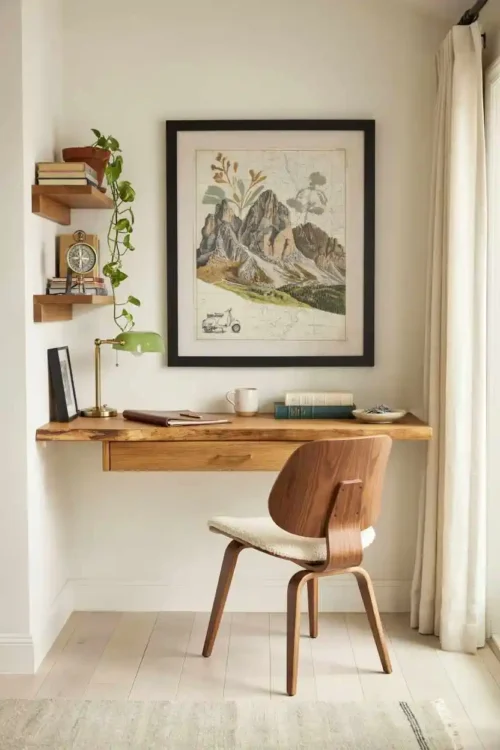
If you collect something—vintage typewriters, ceramic vessels, fountain pens—display a curated selection on shelves or the wall. Collections add personality and give visitors insight into who you are.
Collections work because they’re intentional. Rather than random objects, they tell a story about your interests and taste.
Keep collections edited to your favorites rather than displaying everything. Restraint makes the display feel more curated.
Warm White Bulbs in All Light Fixtures
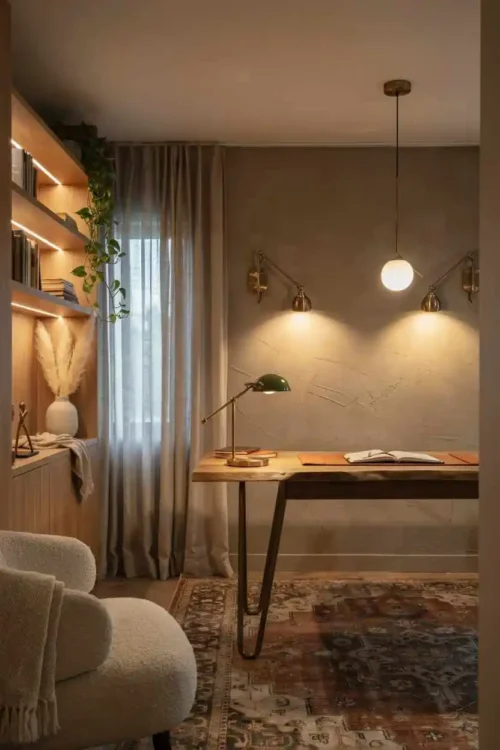
Cool-white or blue-tinted bulbs make spaces feel institutional. Warm white (2700K) bulbs create a space that feels welcoming rather than sterile, especially in the late afternoon when your eyes are tired.
All your lighting should coordinate on the same color temperature. Mismatched bulbs create visual discord that you can’t quite identify but definitely feel.
Invest in good bulbs—cheap bulbs flicker, which creates fatigue over eight-hour days.
Final Thoughts on Home Office Aesthetics
A stylish workspace isn’t luxury—it’s practical. When your office looks intentional and beautiful, you want to be there. You sit down with better focus and leave with less resentment about the work. The gap between “functional desk” and “place you actually want to spend time” is just thoughtful design that serves both beauty and productivity.
Most home offices fail aesthetically because people treat decor as an afterthought. The real answer is building aesthetics into your layout from the beginning, not adding pretty things after the fact.
FAQ About Home Office Decor
Do you need to spend a lot of money to make an office look stylish?
Not at all. The biggest visual improvements come from organization (styled shelves, managed cables) and lighting, both of which cost under a hundred dollars. A fresh coat of paint costs less than most furniture. Thrift store accessories and plants fill space beautifully without breaking the budget. Strategic styling matters far more than expensive purchases.
How do you decorate a small home office without making it feel cluttered?
Every object needs to earn its place by either functioning or looking genuinely beautiful. Open shelving means you edit ruthlessly—only attractive items stay visible. Closed storage hides supplies that don’t serve the aesthetic. Vertical styling (walls, shelves, hanging plants) makes small spaces feel larger than horizontal clutter. Restraint is the real secret.
What if your office style clashes with the rest of your home?
Your office can have its own aesthetic separate from the rest of your home. Closing the door creates a boundary that lets you design a space specifically for focus and productivity rather than matching your living room. This separation also helps your brain shift into work mode when you enter. A bold accent color in your office can feel like a disruption in a living room but energizing in a workspace.
Sarah Mitchell’s Take
I watched someone transform their sad gray office by adding a rug, styled shelves, and better lighting. Same desk, same square footage, completely different feeling. They said it made them actually want to sit down instead of avoiding the space. That’s the difference between functional and designed—one feels like obligation, the other feels like choice.