
Introduction
A cramped desk doesn’t become messy because you own too much—it becomes messy because the space lacks defined boundaries. The most effective desk organization ideas for small spaces focus on protecting the work surface first, then layering storage around it. When vertical storage, hidden compartments, and controlled supply zones work together, even a narrow desk can stay usable throughout the day. Instead of constantly cleaning, the goal is to design a layout that prevents clutter from forming. With structured placement and realistic daily systems, a small desk can remain clear, functional, and visually calm long term. For broader room-level systems that support a clear workspace, see 21 Creative Organization Ideas for Your School Office.
1- Build a Vertical Command Zone Above the Desk
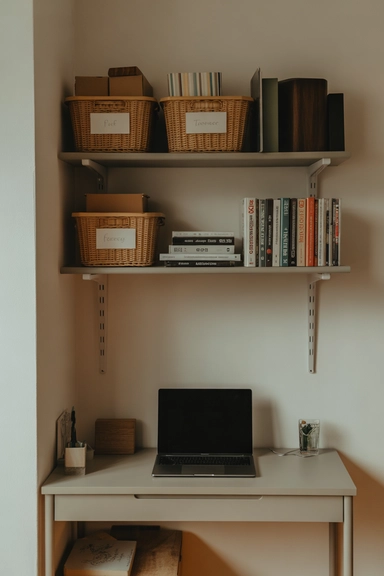
When a desk is small, the wall behind it becomes your primary storage partner. One of the most impactful desk organization ideas for small spaces is building a vertical command zone that holds items without touching the work surface. Floating shelves, slim ledges, or narrow cubbies can store books, files, and containers while keeping them within reach. This setup keeps the center of the desk open for active tasks rather than turning it into a storage platform. In tight bedrooms or corner workstations, vertical storage prevents the feeling of overcrowding while still keeping essentials accessible.
To keep the system effective, assign clear roles to each shelf. Frequently used items should stay at eye level, while rarely used supplies move higher. Use semi-bold vertical storage bins, labeled containers, or stackable boxes to prevent visual chaos. When the vertical zone has structure, items return there automatically after use. Over time, this reduces decision fatigue and keeps the desk surface protected. A defined wall system ensures that storage expands upward instead of spreading across the limited desk area.
2- Establish Clear Surface Zones for Daily Work
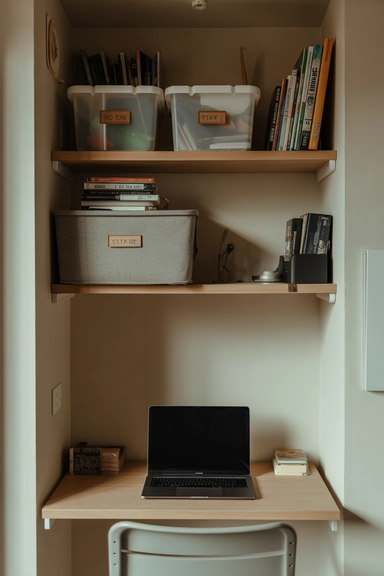
A small desk cannot function if every item competes for the same space. One of the most practical desk organization ideas for small spaces is dividing the surface into strict zones: primary work zone, quick-access zone, and buffer zone. The primary zone should remain mostly empty so tasks can happen without moving objects around constantly. The quick-access zone can hold a pen holder, notebook, or device dock, while the buffer zone provides breathing room so the desk never feels overcrowded.
Maintaining these zones requires discipline in what stays visible. Only items used daily should remain on the surface, while backups move into drawers or shelves. Using semi-bold desktop organizers or a narrow tray helps contain essentials without spreading them across the desk. This zoning method trains your brain to reset the desk quickly because each item has a defined return point. Over time, structured zones reduce clutter buildup and make even the smallest desk feel more functional and controlled.
3- Use a Monitor Riser to Create Hidden Storage
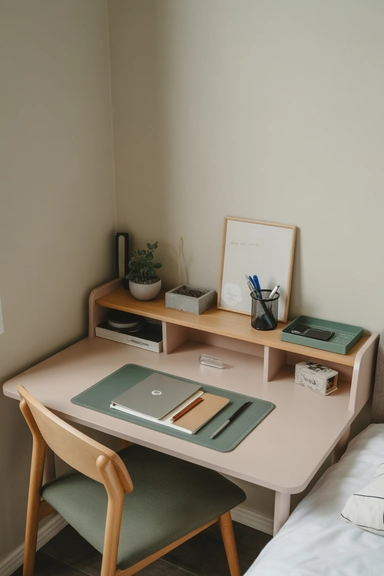
A monitor riser instantly adds usable storage without increasing the desk footprint. This makes it one of the most efficient desk organization ideas for small spaces for both laptop and desktop setups. By elevating the screen slightly, you create a storage shelf underneath that can hold notebooks, document trays, or small supply bins. This hidden zone removes items from the main surface while keeping them within arm’s reach. The raised layout also creates visual separation, making the workspace feel more structured and less crowded.
To maximize the benefit, treat the space under the riser like a mini storage drawer. Store only items used regularly so it doesn’t become a dumping area. Pair the riser with semi-bold cable management clips and compact trays to keep the zone neat. When used intentionally, this setup protects the central workspace and prevents clutter from spreading outward. Over time, the riser becomes one of the most reliable ways to maintain a clear and functional desk.
4- Replace Paper Piles With a Vertical Flow System
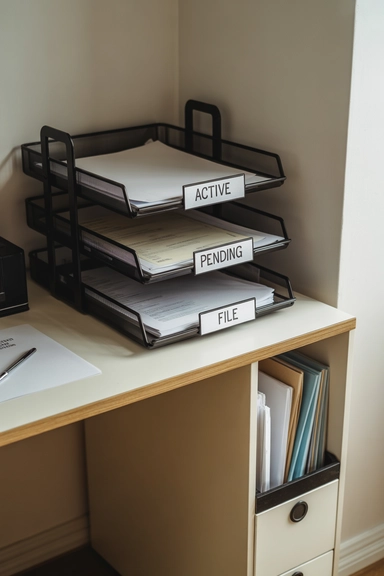
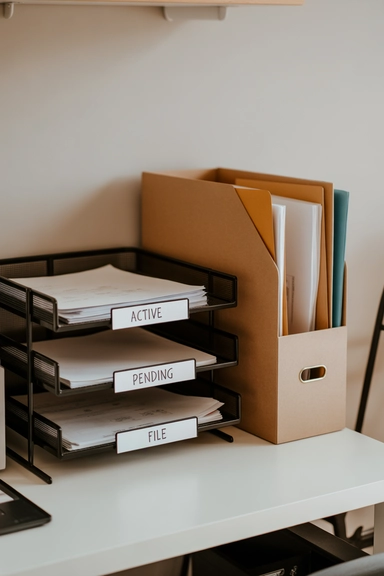
Paper is often the biggest source of clutter on small desks. Without structure, documents spread horizontally and consume working space. One of the most reliable desk organization ideas for small spaces is replacing loose stacks with a vertical flow system. Stackable trays or upright file holders keep documents visible while preventing them from covering the desk. This approach allows papers to move through stages—active, pending, and filed—without ever forming piles that block your workspace.
Assign each tray a specific role and label it clearly so documents move consistently. Combine this system with semi-bold file organizers or folders stored in a nearby cabinet. The goal is not to store more paper but to control its movement. When papers have a defined path, they stop accumulating on the desk. Over time, a vertical flow system ensures that documents remain manageable and the work surface stays open for actual tasks.
5- Install Under-Desk Storage That Supports Daily Workflow
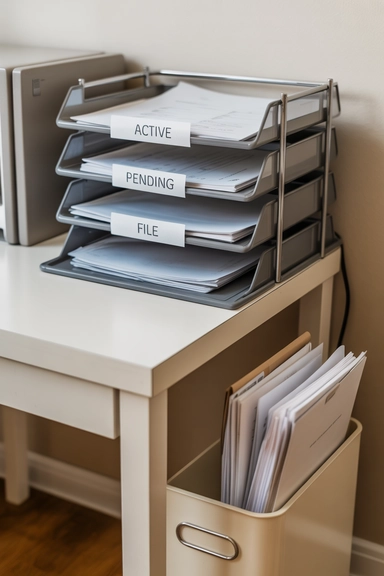
When surface space is limited, the area beneath the desk must work harder. One of the most functional desk organization ideas for small spaces is installing shallow under-desk drawers or slim rolling units that store frequently used items without blocking legroom. This keeps notebooks, cables, and small tools close to the work zone while protecting the main surface. Instead of spreading items across the desk, they remain contained just below it, creating a cleaner and more usable workspace throughout the day.
The key is choosing storage that fits the scale of the desk. Oversized cabinets crowd the area and make movement uncomfortable, while slim drawers maintain accessibility. Use semi-bold under-desk organizers or compartment trays inside each drawer so items stay separated. Keeping under-desk storage intentional prevents it from becoming a hidden clutter trap. Over time, this setup supports daily productivity by keeping essentials nearby without overwhelming the workspace visually.
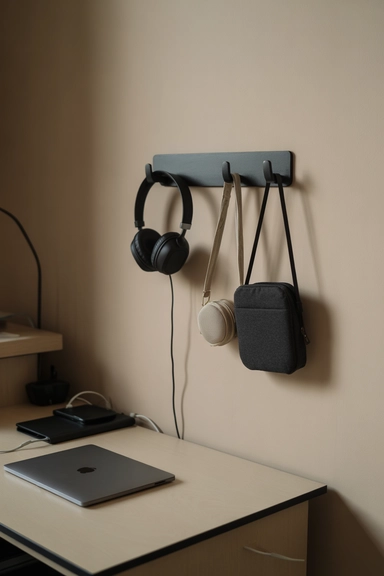
6- Move Accessories Off the Surface With Wall Hooks
Headphones, bags, and charging cables often end up on the desk even though they don’t need to be there. Removing these items is one of the simplest desk organization ideas for small spaces because it instantly frees working room. Installing wall hooks beside or slightly above the desk gives accessories a defined home that doesn’t interfere with the surface. This approach keeps items accessible while preventing them from spreading across the workspace and creating visual noise.
Assign each hook a specific function so items don’t overlap. A dedicated hook for headphones, another for bags, and one for frequently used cables keeps everything structured. Pair hooks with semi-bold vertical storage solutions like a pegboard or narrow shelf to create a complete wall system. When accessories consistently return to their hooks, the desk remains clear and easier to maintain, even during busy workdays.
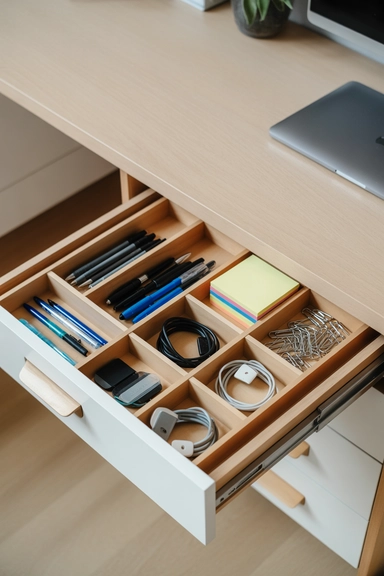
7- Divide Drawers Into Functional Compartments
A cluttered drawer undermines even the most organized desk. One of the most necessary desk organization ideas for small spaces is dividing drawers into compartments that keep supplies visible and separated. Pens, sticky notes, chargers, and clips should each have their own section so nothing disappears into a messy pile. This structure reduces time spent searching and prevents small items from migrating back onto the desk surface.
Use adjustable inserts or small containers that can adapt as needs change. Label sections if needed to reinforce consistency. Combining this system with semi-bold drawer dividers and a quick weekly reset keeps drawers functional long term. When internal storage remains organized, the desk surface stays clearer because items return to their proper place instead of lingering out in the open.
8- Contain Cables With a Dedicated Charging Zone
Loose cables are one of the fastest ways to make a small desk feel chaotic. Creating a contained charging area is one of the most effective desk organization ideas for small spaces because it removes tangled cords from view. A small box, drawer, or mounted shelf can hold a power strip and device chargers while keeping them accessible. This keeps cables from spreading across the desk and interfering with daily tasks.
Secure cords with clips or ties so they stay separated and easy to manage. Label chargers if multiple devices share the same outlet. Pair this setup with semi-bold cable management tools to maintain order long term. When charging is centralized, the workspace feels cleaner and more structured, and devices remain easy to connect without creating visual clutter.
9- Use Matching Containers to Create Visual Order
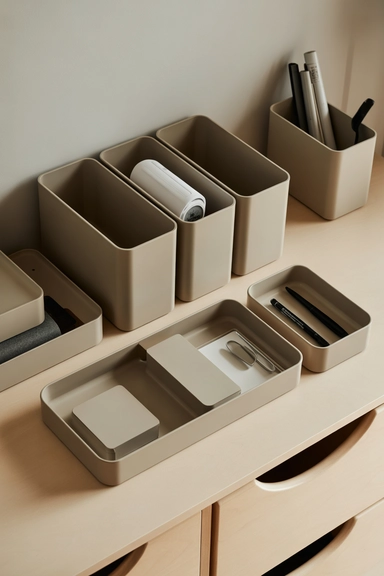
In tight spaces, visual clutter appears faster even when items are technically organized. Using coordinated containers is one of the most overlooked desk organization ideas for small spaces because it reduces visual noise and creates consistency. Matching trays, bins, and holders make the desk feel calmer and more intentional. This doesn’t just improve appearance—it also helps maintain structure because each container has a defined purpose.
Choose containers that fit the scale of the desk so they don’t dominate the surface. Assign clear roles for each one and avoid overfilling. Pair this approach with semi-bold minimalist storage systems to keep the workspace balanced. Over time, visual consistency supports better habits because it becomes easier to notice when something is out of place and return it quickly.
10- Add a Slim Rolling Cart for Flexible Storage
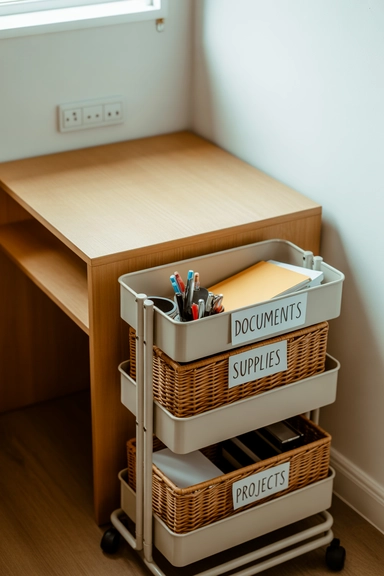
A narrow rolling cart can dramatically expand storage without overwhelming a tight workspace. This makes it one of the most adaptable desk organization ideas for small spaces, especially when the desk itself has limited drawers. Positioned beside or slightly under the desk, the cart can hold notebooks, tech accessories, and backup supplies that don’t need to sit on the surface. Because it moves easily, it supports changing workflows without permanently crowding the room. In shared rooms or bedroom offices, this flexibility prevents storage from feeling bulky or fixed.
To keep the cart functional, divide each tier by purpose and avoid mixing unrelated items. Use semi-bold stackable bins or labeled baskets inside the cart so everything remains easy to find. When the cart is not needed, it can slide aside to preserve open floor space. Over time, this mobile storage becomes an extension of the desk rather than an overflow pile. It supports organization without compromising the limited surface area needed for daily work.
11- Install a Pegboard for Frequently Used Tools
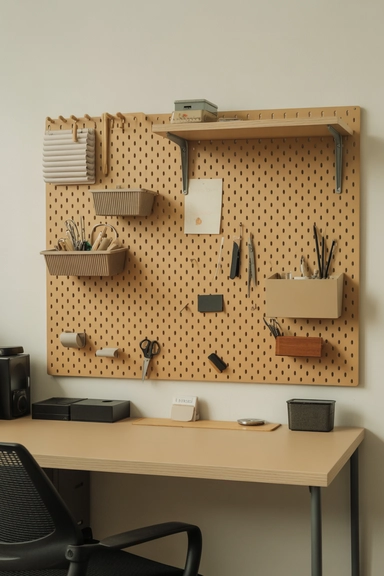
A pegboard transforms unused wall space into an active storage system, making it one of the most practical desk organization ideas for small spaces. By moving frequently used tools and supplies onto the wall, the desk remains free for tasks. Hooks and baskets can hold scissors, headphones, stationery, and small containers without occupying surface space. This setup works especially well for creative workstations or study desks where tools are used throughout the day.
Structure is essential to prevent pegboards from becoming cluttered. Group items by function and maintain spacing so the layout stays readable. Pair the board with semi-bold wall-mounted organizers or small containers to keep supplies contained. When maintained consistently, a pegboard becomes a reliable storage zone that supports workflow while preserving a clear desk surface. It keeps essentials visible without overwhelming the workspace visually.
12- Mount a Narrow Shelf for Secondary Storage
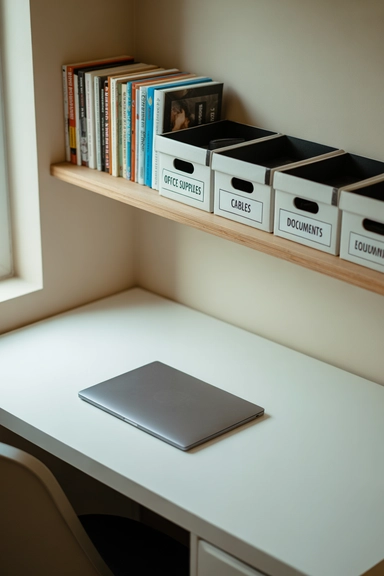
A narrow wall shelf above the desk can hold items that don’t require constant access. This makes it one of the most strategic desk organization ideas for small spaces, as it removes visual clutter while keeping supplies nearby. Books, decorative storage boxes, or reference materials can sit on the shelf instead of occupying the desk. In small rooms, this vertical expansion keeps the workspace functional without making it feel crowded.
Keep the shelf structured by assigning categories to each section. Avoid overloading it so the area remains visually calm. Combine the shelf with semi-bold labeled containers to keep smaller items organized. Over time, this secondary storage zone prevents the desk from becoming a storage platform. It allows the surface to remain open while still supporting daily tasks and quick access to important materials.
13- Use a Desktop Corner Organizer to Maximize Space
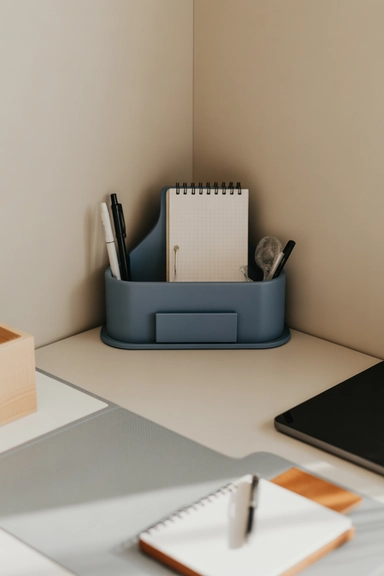
Desk corners often go unused, yet they provide valuable storage potential. A compact corner organizer is one of the smartest desk organization ideas for small spaces because it uses vertical space without interfering with the main work zone. Pens, notebooks, and small tools can sit in the organizer while the center of the desk remains clear. This keeps frequently used items accessible without spreading them across the workspace.
Choose a design with multiple compartments to maintain separation between categories. Pair it with semi-bold small desk organizers that match the overall setup so the desk looks cohesive rather than crowded. Keeping the organizer structured ensures it supports workflow instead of becoming a clutter trap. Over time, using the corner efficiently helps preserve working space and maintain visual balance.
14- Add a Bulletin Board for Visual Planning
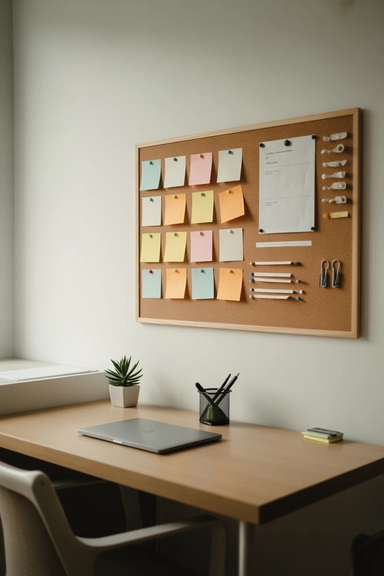
Notes and reminders often pile up on small desks, creating unnecessary clutter. Mounting a bulletin board above the workspace is one of the most effective desk organization ideas for small spaces because it moves planning tools off the surface while keeping them visible. A corkboard or fabric board provides a centralized place for schedules, to-do lists, and reference notes. This prevents paper from spreading across the desk while still supporting organization.
Limit the board to active items only so it remains useful rather than overwhelming. Remove outdated notes regularly to maintain clarity. Pairing the board with semi-bold planning systems like vertical file holders ensures information stays organized. Over time, a dedicated planning zone reduces paper clutter and helps maintain a clear, functional workspace that supports productivity.
15- Choose Multi-Functional Desk Furniture That Adds Storage
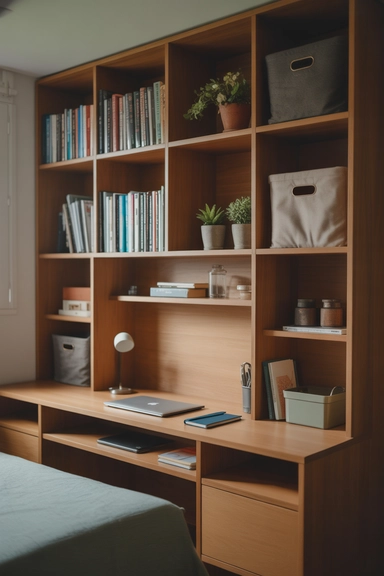
In tight rooms, furniture must work harder. One of the most strategic desk organization ideas for small spaces is choosing a desk that already includes built-in storage like shelves, cubbies, or slim drawers. Instead of adding bulky organizers later, the furniture itself supports daily storage needs. This approach reduces the number of separate pieces around the desk, which helps the workspace feel less crowded. In bedrooms or shared rooms, a multi-functional desk allows supplies, books, and tools to stay contained without spreading outward.
To keep the system efficient, assign each built-in compartment a single category. Books stay in one cubby, tech accessories in another, and paperwork in a third. Pair the desk with semi-bold compact storage bins to maintain separation and prevent items from mixing. When furniture is designed to store efficiently, the desk surface remains open for work. Over time, multi-functional pieces reduce clutter buildup and make daily resets faster because everything already has a dedicated place within the workstation itself.
16- Create a Dedicated Vertical File Station
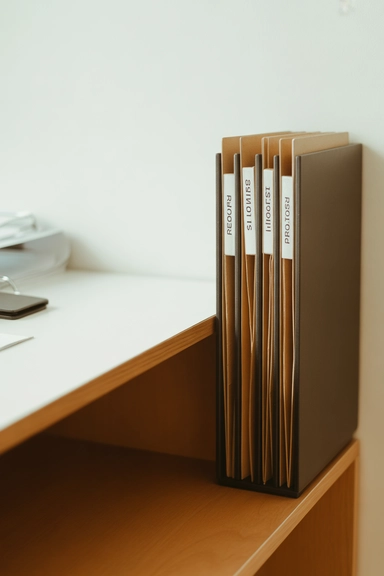
Paper management becomes critical when desk space is limited. Instead of stacking documents flat, creating a vertical file station is one of the most effective desk organization ideas for small spaces. A slim file holder placed beside or above the desk keeps papers upright and categorized without taking over the surface. Separating active documents from reference materials prevents piles from forming and ensures papers move through a clear workflow instead of lingering.
Label each section so documents are returned consistently after use. Combine the file holder with semi-bold folder systems or document trays stored nearby. This layered approach keeps paperwork visible but controlled. Over time, vertical filing reduces clutter because papers no longer spread horizontally across the desk. A structured file station ensures that documents stay accessible without interfering with daily tasks, making the workspace easier to maintain.
17- Use Magnetic Storage for Small Metal Items
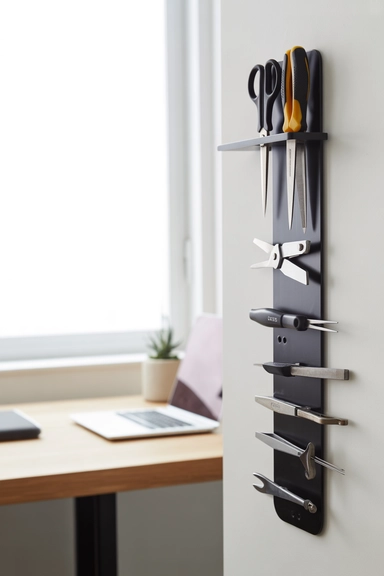
Small metal tools like scissors, clips, and pins often scatter across a desk, creating unnecessary clutter. Mounting a magnetic strip is one of the most space-efficient desk organization ideas for small spaces because it lifts these items off the surface while keeping them visible. Positioned on the wall or side of a shelf, the strip creates a dedicated storage line that frees drawer and desk space simultaneously.
Group similar items together on the strip to maintain visual order. Pair the strip with semi-bold vertical storage accessories like mini baskets or hooks to expand functionality. When metal tools consistently return to the strip, they stop migrating across the desk. Over time, this system keeps frequently used items accessible without occupying precious surface space, helping maintain a cleaner and more controlled workspace.
18- Add Under-Shelf Baskets to Expand Storage
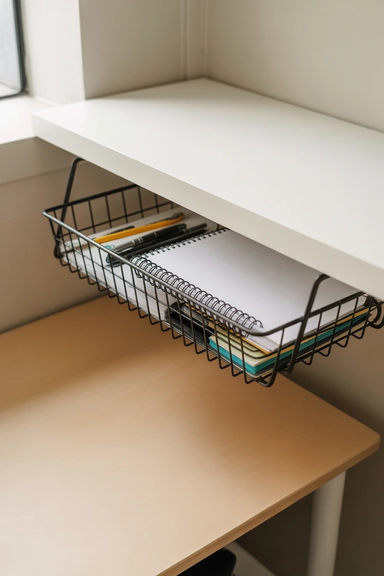
Under-shelf baskets provide hidden storage without adding bulk, making them powerful desk organization ideas for small spaces. These slide beneath existing shelves or desktops to hold notebooks, chargers, or small supplies that would otherwise sit on the desk. By using the underside of furniture, you gain additional storage while preserving the openness of the main workspace. This layered approach allows more items to be stored without visually crowding the area.
To keep baskets effective, avoid overfilling them and assign clear categories to each one. Combine them with semi-bold storage bins or labeled containers so items remain easy to find. When used consistently, under-shelf storage prevents clutter from returning to the surface. Over time, this simple addition expands capacity while maintaining a clean and functional desk environment.
19- Use Matching Organizers to Maintain Visual Calm
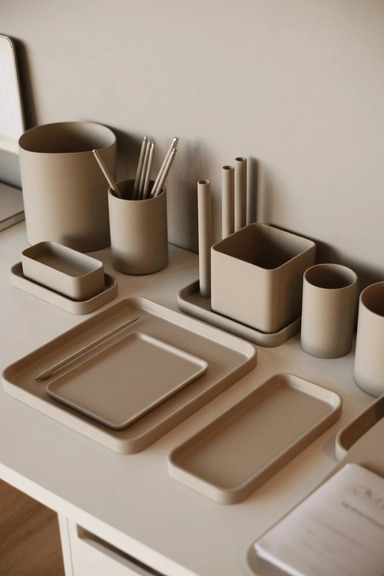
In small work areas, visual clutter builds faster than physical clutter. One of the most effective desk organization ideas for small spaces is using matching organizers to create a unified look. When trays, bins, and holders share the same material or color, the desk feels structured rather than chaotic. This visual consistency makes it easier to maintain order because items naturally return to their designated spots. Even when multiple tools are present, coordinated storage prevents the workspace from feeling crowded or disorganized.
Assign each organizer a specific role so categories stay clear. Avoid overfilling containers to maintain visual balance. Pair this approach with semi-bold minimalist storage systems that match the scale of the desk. Over time, visual consistency reduces mental clutter as well, making the workspace feel calmer and more manageable. A unified storage setup supports daily productivity by keeping everything organized without overwhelming the limited surface area.
20- Establish a Daily Reset System
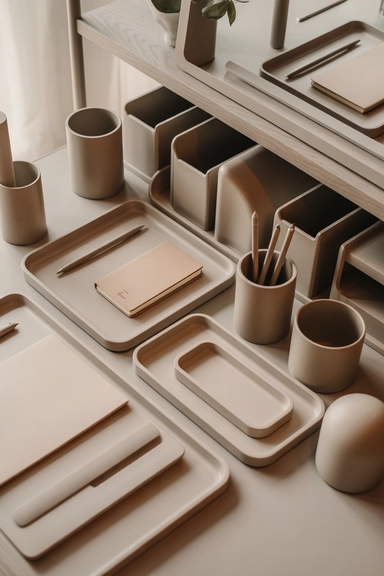
Even the best storage setup fails without routine maintenance. A short daily reset is one of the most practical desk organization ideas for small spaces because it prevents clutter from building gradually. Taking a few minutes at the end of each work session to return items to their designated places keeps the surface clear for the next day. This habit ensures that storage systems continue functioning instead of slowly breaking down over time.
Focus on clearing the central work zone first, then returning tools to drawers, shelves, or organizers. Pair this routine with semi-bold workspace organization habits like filing papers and coiling cables. When resets happen consistently, the desk rarely reaches a chaotic state. Over time, this simple practice keeps the workspace functional without requiring large reorganizing sessions.
21- Use Wall-Mounted Bins for Quick-Access Supplies
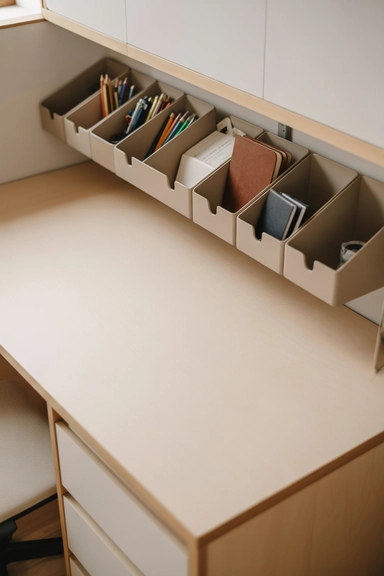
Frequently used supplies often end up scattered across the desk. Mounting bins on the wall is one of the most efficient desk organization ideas for small spaces because it keeps items accessible without occupying surface area. Pens, notebooks, and small tools can live in wall-mounted containers within reach but off the desk. This approach preserves working space while still supporting daily tasks.
Install bins at a reachable height and group items by purpose. Avoid overcrowding to maintain clarity. Pair wall bins with semi-bold vertical storage systems like shelves or pegboards to create a complete organization zone. Over time, this setup ensures that frequently used items remain accessible without spreading across the desk and creating clutter.
22- Maintain a Minimal Surface With Structured Storage
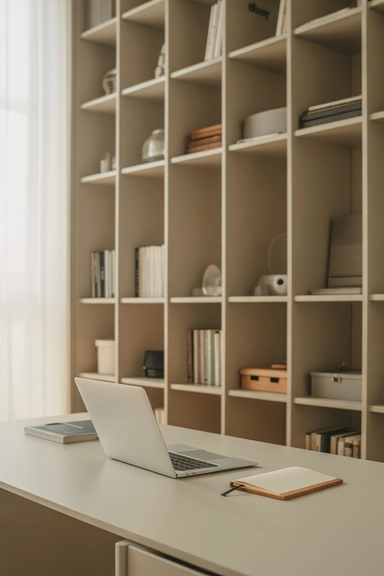
The most sustainable strategy for small desks is maintaining a minimal surface supported by structured storage. This is the core principle behind all effective desk organization ideas for small spaces. Keeping only daily essentials visible ensures the workspace remains usable throughout the day. Everything else should live in drawers, shelves, or vertical systems that support the workflow without overwhelming the desk.
Revisit storage zones regularly to ensure they still match daily needs. Combine this approach with semi-bold small workspace organization systems like trays and vertical storage. When the surface remains protected and storage remains structured, even the smallest desk can stay tidy long term. A minimal surface paired with intentional storage keeps the workspace calm, functional, and ready for use at any time.
Conclusion
A tidy desk in a small space isn’t about owning fewer items—it’s about giving each item a defined home. The most effective desk organization ideas for small spaces protect the work surface while building storage upward and outward in controlled ways. Vertical systems, hidden compartments, and consistent reset routines work together to prevent clutter from forming. When storage is intentional and maintained daily, even the smallest workspace can stay clear, productive, and easy to manage over time.