
Introduction
A cluttered shed makes even simple yard work feel overwhelming. When tools are buried behind bins or stacked in corners, you waste time digging instead of doing. The right shed storage organization ideas transform your space into a clear, efficient workspace where every rake, drill, and shovel has a visible home. By focusing on vertical storage, smart shelving units, and defined storage zones, you can create a shed layout that works like a workshop instead of a dumping ground. If you love smart wall systems, you’ll also appreciate these 21 Wall Organizer Ideas That Keep Surfaces Clutter-Free.
1- Pegboard Wall Systems for Everyday Tools
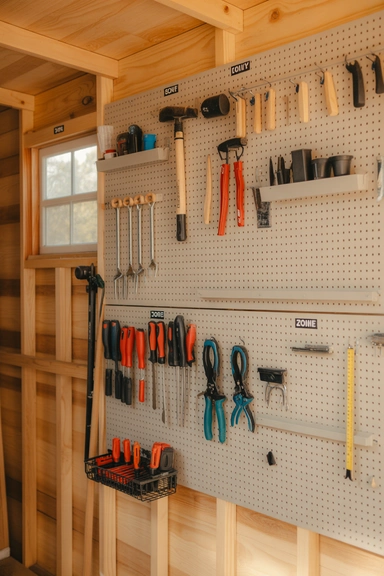
A full pegboard wall instantly upgrades your shed layout by turning empty wall space into active storage. Instead of tossing hand tools into drawers, hang them where they stay visible and within reach. Arrange garden tools, small power tools, and measuring tapes in grouped sections so you can see exactly what you own. This approach works especially well in small shed organization ideas where floor space is limited and vertical storage becomes essential.
Use metal hooks, adjustable brackets, and labeled outlines to create a structured tool rack effect. Tracing tool shapes on the pegboard makes it obvious when something is missing, which prevents misplacement. For metal shed organization ideas, mount pegboards onto reinforced studs to handle heavier items. The result feels organized and intentional, more like a compact workshop than a backyard storage box.
2- Vertical Tool Racks Along Stud Walls
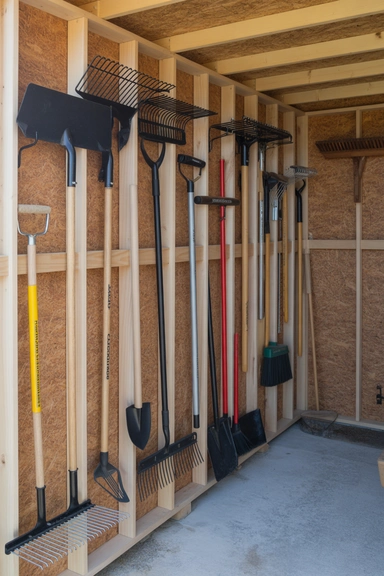
Long-handled tools like rakes, shovels, and hoes often end up leaning in chaotic piles. Installing vertical tool racks along exposed studs eliminates that mess instantly. This is one of the most practical shed storage organization ideas because it keeps tools upright, separated, and easy to grab. Designate one wall specifically for lawn equipment to create a defined storage zone that supports efficient workflow.
Choose heavy-duty wall hooks or stud-mounted brackets that cradle each handle securely. Space them evenly so tools don’t overlap and stay fully visible. In smaller sheds, this method clears precious floor space and keeps walkways open. It also reduces wear on tool heads since they’re no longer scraping against concrete or metal surfaces.
3- Open Shelving Units for Clear Storage Bins
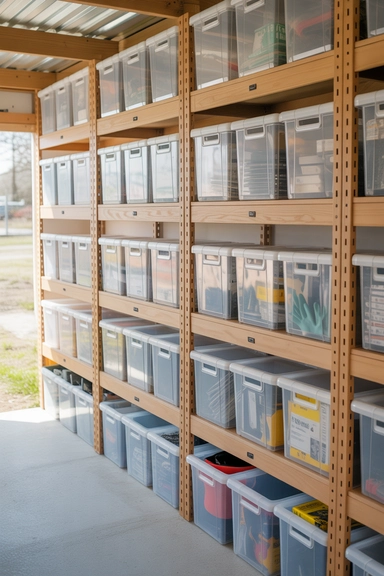
Closed cabinets hide clutter, but open shelving units encourage better habits. Install sturdy shelves along one side of the shed and use clear storage bins with labeled fronts. This allows you to see seasonal supplies, fertilizers, gloves, and hardware at a glance. Among shed storage organization ideas, this method balances visibility with containment, especially in outdoor shed storage setups.
Organize bins by category and height. Frequently used items should sit at eye level, while bulk supplies can go higher or lower. Labeled bins reduce the temptation to toss things randomly. If your shed doubles as a workshop shed, dedicate one shelf to fast-access hardware so projects move faster without constant searching.
4- Overhead Storage for Seasonal Equipment
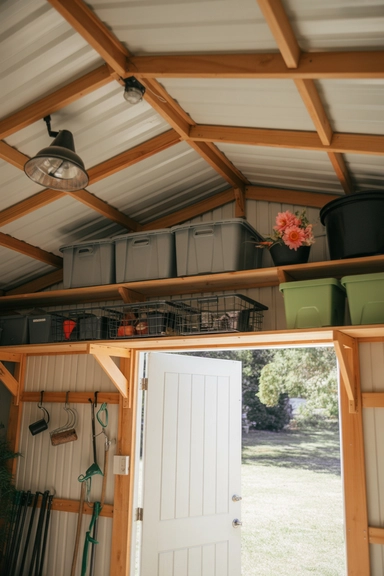
Overhead storage is often ignored, yet it’s prime real estate. Install ceiling-mounted racks for items used only a few times a year, such as holiday decor or spare pots. By lifting bulky items off the floor, you preserve working space below. These shed storage organization ideas help smaller sheds feel taller and more functional without expanding their footprint.
Use secure brackets and avoid overloading the ceiling structure. Keep heavier boxes toward the edges for balance and store lighter items above your main storage zones. When overhead storage is planned properly, it feels intentional rather than cluttered. This is particularly useful in 8×10 or 10×10 storage shed organization ideas where vertical space must work harder.
5- Dedicated Workbench with Built-In Storage
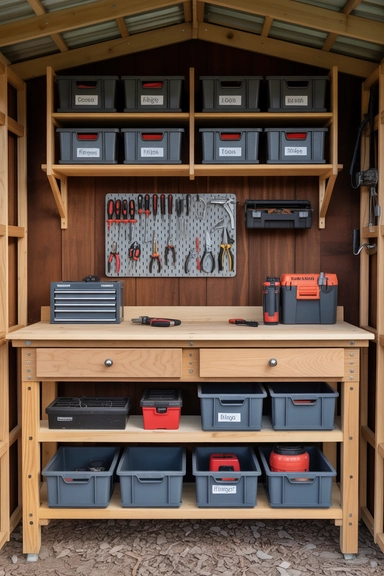
A well-placed workbench anchors your entire shed layout. Instead of treating it as just a tabletop, design it with built-in drawers and side compartments. Keeping screws, nails, and frequently used tools within arm’s reach supports better workflow. Smart shed storage organization ideas always consider how you move through the space while working.
Add a slim pegboard strip above the workbench to hold pliers, hammers, and safety glasses. Beneath the bench, use labeled bins for bulk supplies. This setup transforms the shed into a functional tool shed storage area rather than simple outdoor storage. A structured workbench also reduces clutter spread, since every tool has a visible, logical home.
6- Magnetic Strips for Small Metal Tools
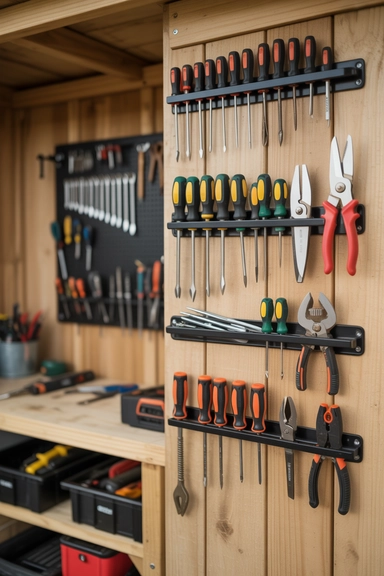
Small metal tools tend to disappear into drawers where they stack, tangle, and slow down every project. Installing heavy-duty magnetic strips along one wall keeps frequently used items fully visible and instantly accessible. Screwdrivers, pruning shears, drill bits, and measuring tools stay in plain sight instead of buried inside containers. Among practical shed storage organization ideas, magnetic storage works best near a workbench or main tool zone so you can grab and return tools without breaking workflow.
Mount multiple strips at different heights to create layered storage that prevents overlap. Place lighter tools at eye level and heavier metal items slightly lower for stability. This method reduces drawer clutter and keeps your most-used gear within reach. In small shed organization ideas where space is tight, magnetic strips eliminate the need for bulky toolboxes and free up valuable shelving space for larger items.
7- Clear Storage Bins with Category-Based Labeling
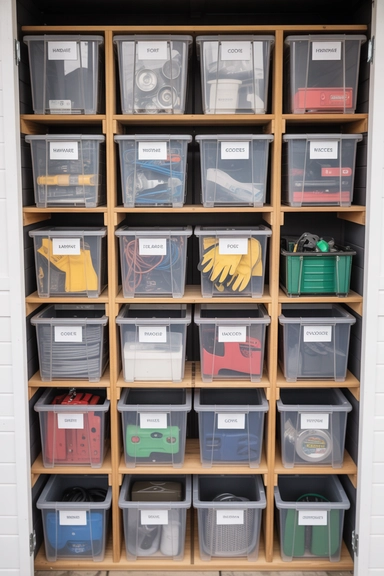
When supplies are tossed into random boxes, visibility disappears quickly. Clear storage bins solve that by making contents visible without opening every container. Sort hardware, gloves, extension cords, and smaller garden tools into labeled bins that sit on open shelving units. These shed storage organization ideas prevent clutter buildup because every item returns to a designated category instead of landing wherever there’s space.
Use consistent labeling styles so shelves look structured rather than chaotic. Place frequently used bins at waist or eye level and store seasonal items higher. For outdoor shed storage setups, choose durable containers that resist moisture and dust. The goal is to maintain visibility while protecting supplies, creating a system where nothing gets lost behind opaque boxes or deep shelves.
8- Slat Wall Panels for Adjustable Tool Storage
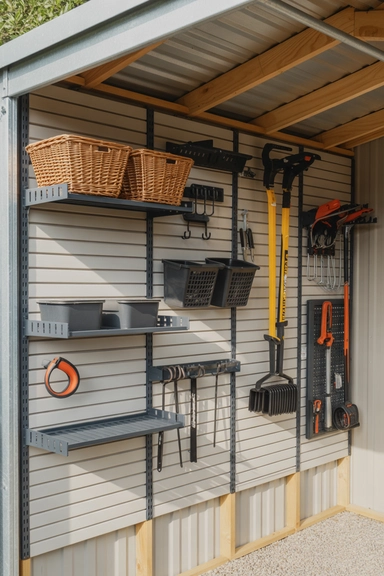
Slat wall systems offer flexibility that traditional hooks and shelves cannot. By installing slat panels along one or two walls, you can adjust tool placement as your storage needs change. This makes them ideal for evolving shed storage organization ideas where new equipment or seasonal tools rotate throughout the year. Garden tools, power equipment, and extension cords all remain visible and easy to reposition.
Use baskets, hooks, and shelf attachments to create a layered wall system. Keep heavier tools lower for stability and lighter accessories higher for quick access. Slat walls are especially effective in metal shed organization ideas because they distribute weight evenly across studs. Over time, this adjustable system prevents clutter from creeping back in and keeps every tool in a visible, logical position.
9- Corner Shelving That Uses Dead Space Efficiently
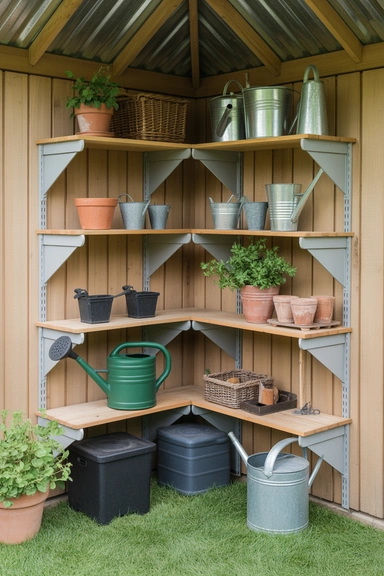
Corners often become dumping zones where items pile up without structure. Installing corner shelving transforms that wasted space into functional storage that keeps supplies visible. Use tiered shelves to hold watering cans, small containers, and frequently used accessories. Among shed storage organization ideas, corner units create extra capacity without blocking walkways or interfering with larger tool zones.
Choose open shelving designs so items remain visible from multiple angles. Keep heavier items on lower shelves and lighter supplies higher up to maintain balance. In small shed organization ideas, corner storage can dramatically improve flow by preventing clutter buildup near entrances. When corners are intentionally used, the entire shed layout feels more open and easier to maintain.
10- Rolling Tool Cart for Flexible Access
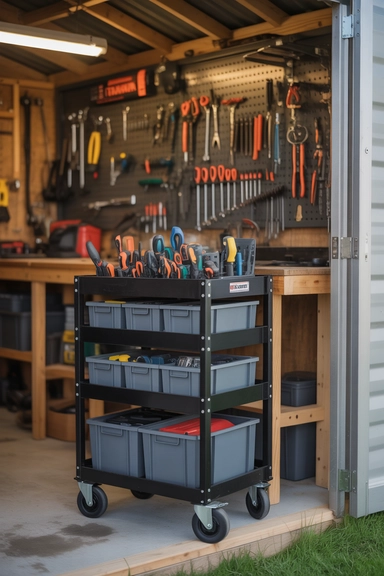
A rolling tool cart adds mobility to your shed layout, allowing tools to move with you instead of staying fixed in one spot. This is especially useful in sheds that double as workspaces or potting areas. Keeping frequently used tools on a cart ensures visibility while reducing the need to walk back and forth across the shed. Smart shed storage organization ideas often include at least one mobile storage solution.
Use the top tier for daily tools and lower shelves for bulkier supplies. Return the cart to a designated parking zone when not in use so pathways stay clear. In small sheds, this approach keeps surfaces uncluttered while maintaining easy access. A rolling cart also adapts as your projects change, making it a flexible addition to any organized shed setup.
11- Defined Storage Zones Based on Workflow
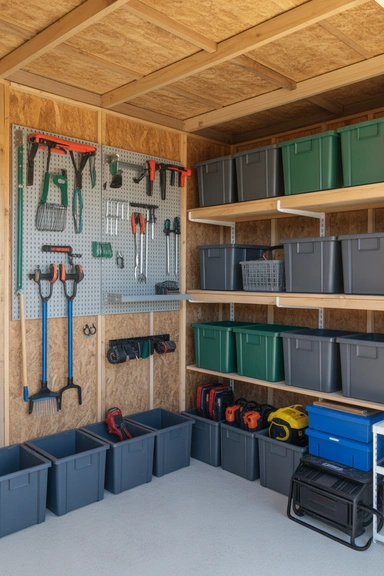
Most sheds feel chaotic because everything competes for the same space. Instead of organizing by item type alone, divide your shed into clear storage zones based on how you actually work. Create a gardening zone, a power tool zone, and a maintenance zone so tools remain grouped by function. This approach makes shed storage organization ideas far more sustainable because tools return to the area where they are naturally used, not just wherever there’s empty space.
Start by mapping your shed layout on paper and identifying movement patterns. Place high-frequency tools near the entrance or workbench, while seasonal equipment moves toward the back. Use subtle visual cues like shelf labeling or wall color accents to reinforce each zone. When storage zones are intentional, the entire shed feels structured, and visibility improves because similar tools are never scattered across multiple walls.
12- Custom Shelving Built Around Tool Dimensions
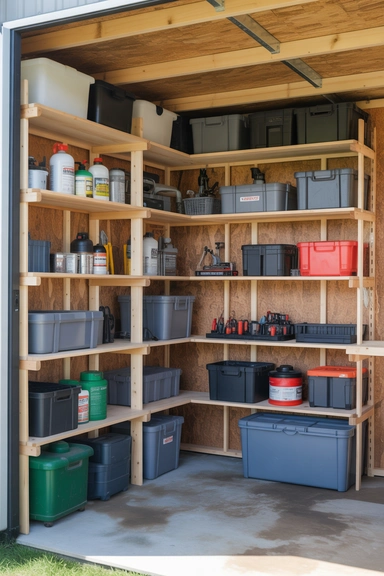
Standard shelves often waste vertical room because they are not sized for the tools you actually own. Building custom shelving based on your equipment dimensions ensures everything stays visible and evenly spaced. Measure taller items like sprayers or fertilizer containers and design shelf heights that prevent stacking. Thoughtful shed storage organization ideas focus on proportion, not just adding more shelves.
Use sturdy materials that can handle weight without sagging over time. Adjustable brackets provide flexibility if your inventory changes. Position shelves along a single wall to maintain a clean visual line and prevent overcrowding. When shelves are tailored to your storage needs, items sit comfortably without overlapping, making it easier to see and access everything at a glance.
13- Wall-Mounted Baskets for Lightweight Supplies
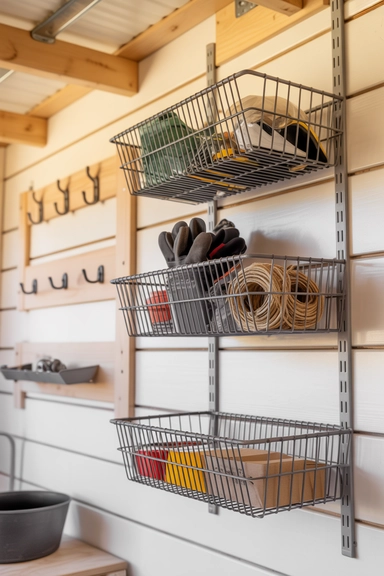
Loose items like gloves, twine, seed packets, and safety glasses often become visual clutter. Wall-mounted wire baskets solve this by keeping smaller supplies visible but contained. Install them near your main work area so frequently used accessories remain easy to reach. Among shed storage organization ideas, this option balances openness with order, preventing small items from spreading across work surfaces.
Choose open metal or mesh designs so contents stay visible from different angles. Label each basket clearly and avoid overfilling, which reduces visibility. Position baskets at mid-height to keep them accessible without blocking larger wall storage systems. This method keeps lightweight supplies organized without resorting to closed drawers that hide what you already own.
14- Ceiling Hooks for Bulky but Lightweight Equipment
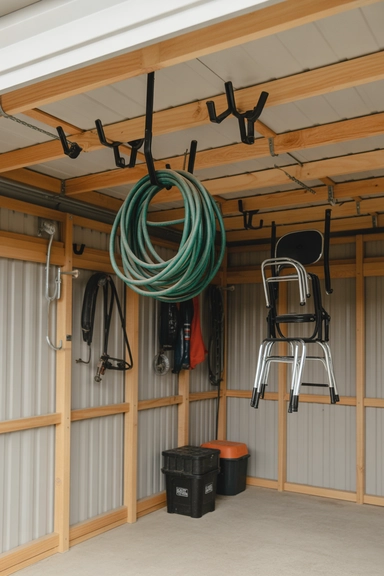
Ceiling space often goes underused, yet it’s ideal for bulky, lightweight equipment like hoses, folding chairs, or extension cords. Installing ceiling hooks frees up wall and floor areas while keeping large items visible. Effective shed storage organization ideas maximize all three dimensions of space, not just walls and shelves. This strategy is especially useful in small shed organization ideas where every inch matters.
Ensure hooks are anchored securely into ceiling joists to support weight safely. Group similar items together so you’re not scanning overhead space randomly. Keep frequently used tools at eye level and reserve ceiling storage for occasional-use equipment. When done thoughtfully, ceiling hooks create clean visual separation between daily tools and seasonal gear.
15- Vertical Lumber and Long-Item Storage Rack
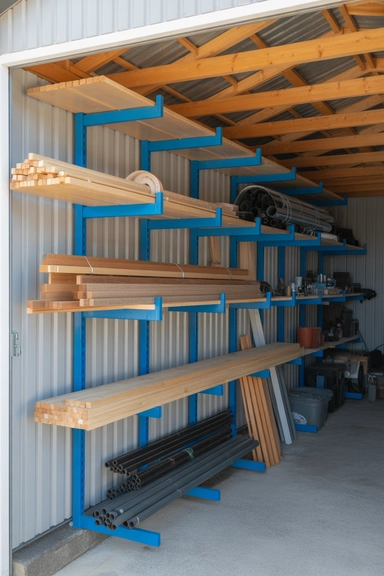
Boards, pipes, and long-handled equipment often create clutter because they don’t fit neatly on standard shelves. A vertical lumber rack solves this by holding long materials upright against one wall. This keeps them visible, separated, and easy to access without stacking horizontally. Strategic shed storage organization ideas always account for awkward shapes instead of forcing them into unsuitable spaces.
Install sturdy brackets spaced evenly to prevent bowing or tipping. Keep heavier boards closer to the floor for stability and lighter materials higher. Position the rack near the back of the shed to maintain open pathways. With a proper long-item system, you eliminate leaning piles that block access and restore clear sightlines across the entire shed.
16- Back-of-Door Storage Panels for Quick-Access Tools
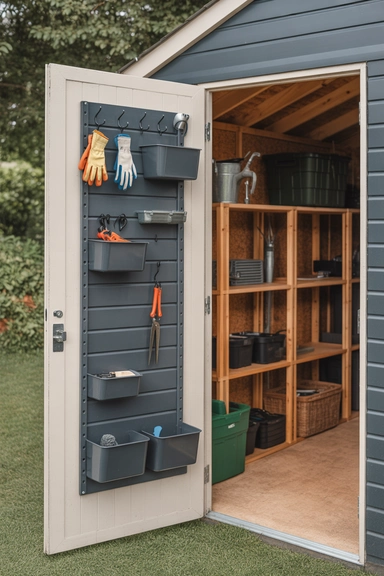
The back of a shed door is often wasted space, yet it’s one of the most efficient places to keep everyday tools visible. Installing a slim storage panel with hooks, narrow shelves, or elastic tool holders creates instant accessibility the moment you step inside. These shed storage organization ideas work especially well for frequently used items like gloves, pruning shears, safety goggles, and measuring tapes that shouldn’t get buried on deeper shelves.
Choose low-profile hardware so the door still closes comfortably. Arrange items vertically to prevent overlap and maintain clear visibility. Keep only high-frequency tools here to avoid overloading the door. When used intentionally, back-of-door storage becomes a high-efficiency zone that speeds up quick tasks and keeps small tools from drifting into cluttered bins or drawers.
17- Color-Coded Zones for Faster Tool Identification
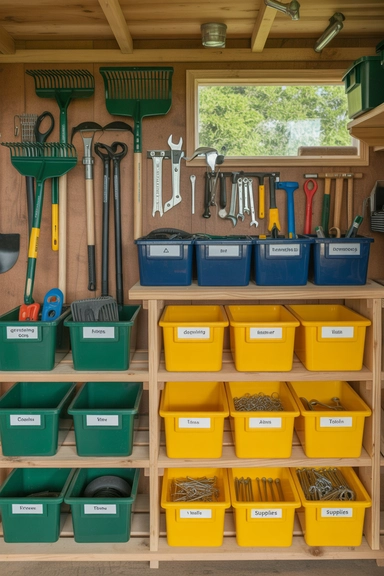
When multiple tool categories share the same wall, visual confusion builds quickly. Color-coding your storage zones helps you identify where tools belong at a glance. Assign one color for gardening tools, another for repair equipment, and another for seasonal supplies. Effective shed storage organization ideas rely on visual cues that make returning items intuitive rather than requiring constant decision-making.
Use colored labels, painted shelf edges, or matching bins to reinforce each zone. This approach is especially helpful in shared sheds where multiple people use the same space. Over time, color coding reduces misplaced items and keeps tools visible because they always return to clearly marked areas. It also makes inventory easier to track when something is missing.
18- Narrow Wall Cabinets for Hazardous Supplies
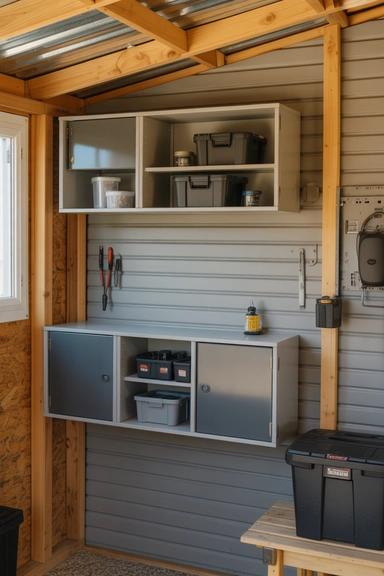
Not everything should stay fully open. Chemicals, sharp tools, and delicate equipment need controlled storage while still remaining visible. Installing narrow wall cabinets with glass fronts or open slats keeps contents in view without exposing them to damage. Among shed storage organization ideas, this method balances safety with accessibility, especially in sheds used for both gardening and maintenance work.
Position cabinets at eye level for quick checks and keep heavier items lower for stability. Use clear containers inside to maintain visibility. Avoid deep cabinets that hide items behind one another. With proper placement, wall cabinets provide protection without sacrificing the clear, organized look that keeps your shed functional and easy to maintain.
19- Portable Bin System for Project-Based Storage
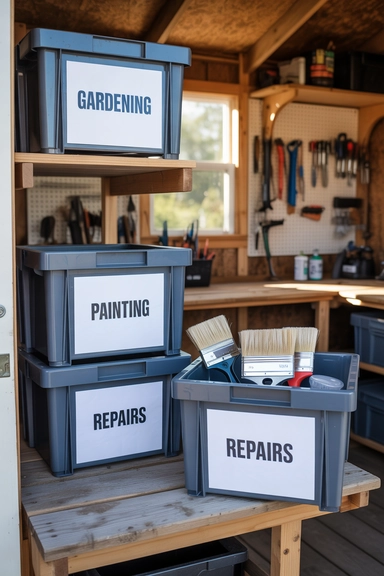
Projects often require groups of tools that travel together. A portable bin system lets you gather related items in one visible container that moves with you. For example, create a gardening bin, a painting bin, or a repair bin. These shed storage organization ideas reduce back-and-forth movement while keeping supplies visible and grouped logically.
Choose stackable bins with open tops or clear fronts so you can see contents instantly. Store them on a dedicated shelf when not in use to prevent scattering. Label each bin clearly and avoid mixing categories. This system keeps tools organized by task rather than by random placement, which maintains visibility and simplifies cleanup after each project.
20- Floor-Level Heavy Equipment Zone
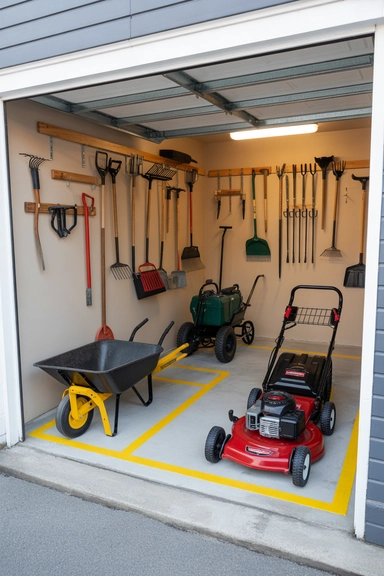
Heavy equipment like lawnmowers, compressors, or large planters should have a defined floor zone rather than drifting across the shed. Creating a dedicated heavy-equipment area prevents obstruction and keeps the rest of the space visible and accessible. Strong shed storage organization ideas always account for weight distribution and movement paths to maintain a functional layout.
Mark the zone with tape or a rubber mat so placement becomes consistent. Keep this area near the entrance for easy access and to avoid dragging equipment across the shed. Leave clearance around it to maintain open walkways. When heavy tools have a clear home, the rest of the shed stays organized because nothing large gets temporarily dropped wherever there’s space.
21- Central Visibility Check and Reset Routine
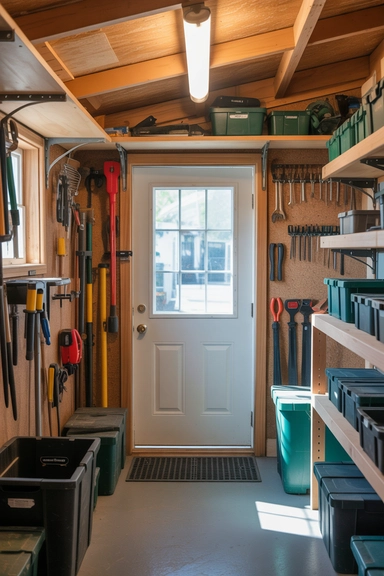
Even the best setup fails without maintenance. A weekly visibility check ensures tools remain in their designated spots and nothing drifts into clutter. Walk through the shed, return misplaced items, and adjust storage zones if needed. The most successful shed storage organization ideas include simple routines that protect the system you’ve built.
Keep a small reset checklist near the door to reinforce habits. Spend five minutes after each project returning tools to visible positions. Over time, this routine prevents slow clutter buildup and keeps your shed functioning as an efficient workspace. When visibility becomes part of your routine, organization stays consistent instead of temporary.
Conclusion
A well-organized shed isn’t about adding more storage — it’s about making every tool visible, reachable, and logically placed. These shed storage organization ideas focus on layout clarity, vertical systems, and defined zones so nothing disappears behind clutter. Start with one wall or zone, build momentum, and maintain a simple reset routine each week. With consistent visibility and thoughtful placement, your shed becomes a reliable workspace that supports every project instead of slowing you down.