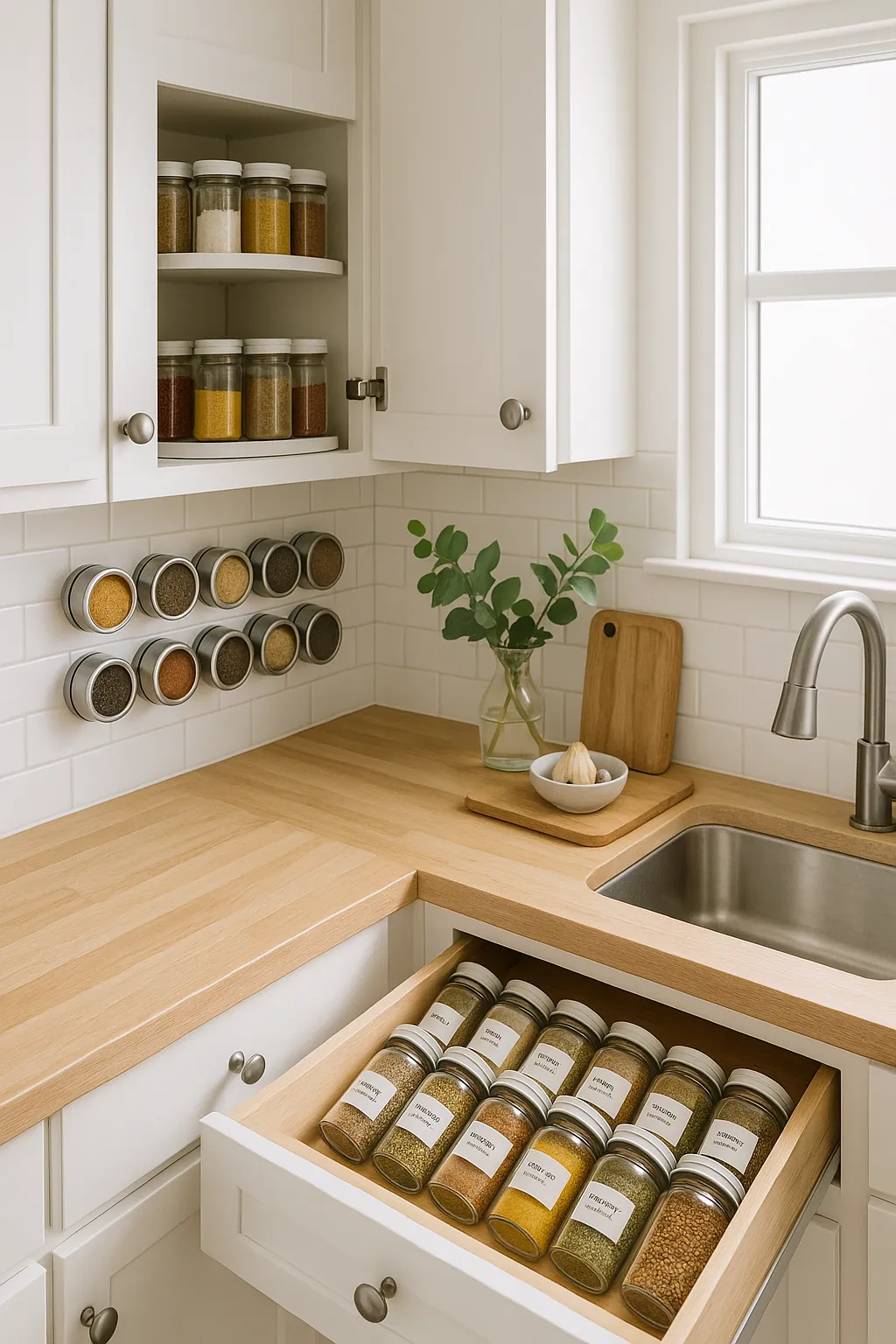
You open the cabinet and three jars tumble out. You grab what you think is cumin. It’s coriander, again. That mix-up is exactly why spice organization breaks more small kitchens than almost any other task, since the cabinets run deep and dark and nothing stays where you left it.
I’ve rebuilt my own spice setup four times in six years before any of it actually stuck. Most people quit after the second attempt because they copy a system built for a kitchen twice the size of theirs.
These 15 spice rack organization ideas are built for real small kitchens, not magazine kitchens with twelve spare inches of wall space.
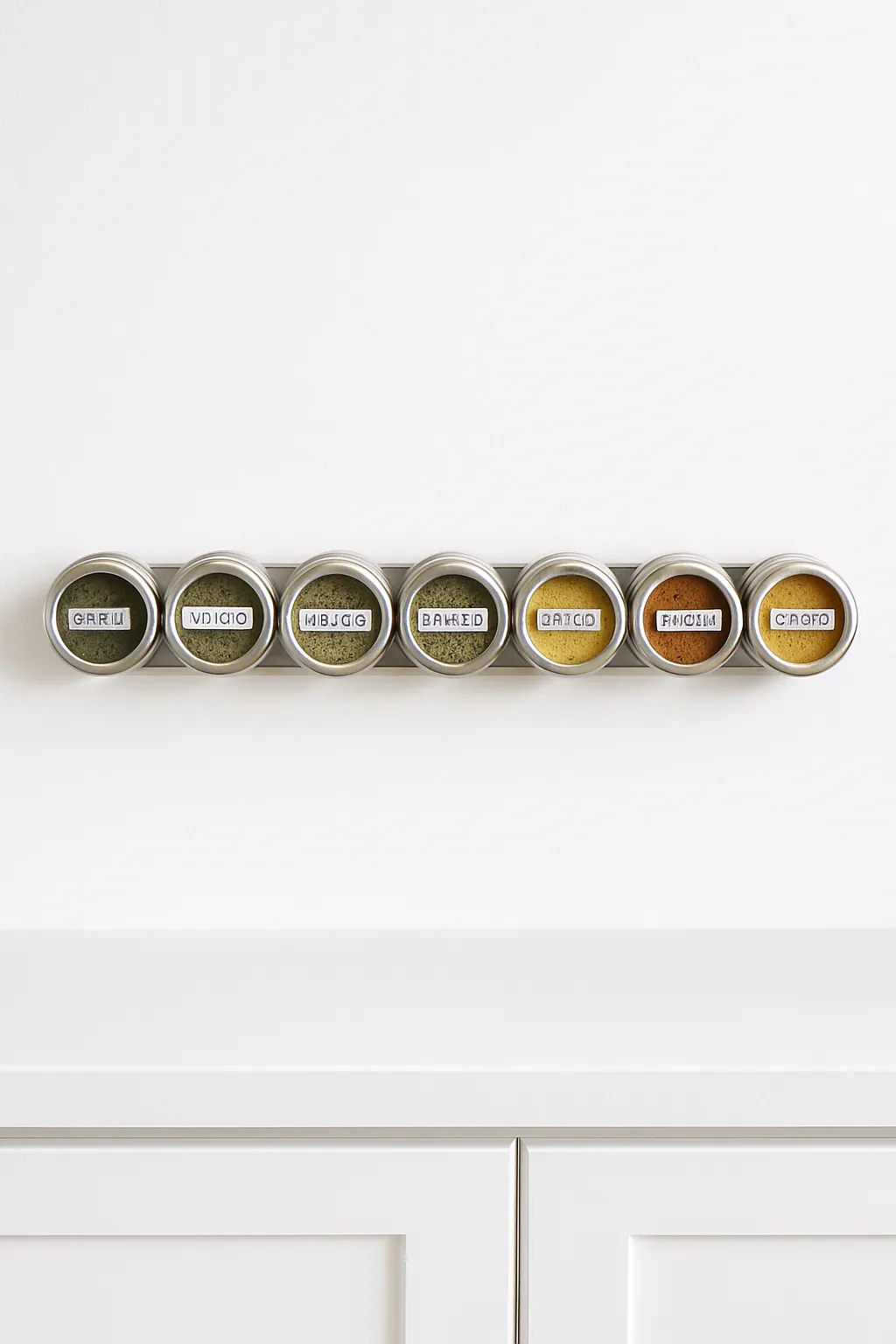
The Wall-Mounted Magnetic Strip That Actually Works
Magnetic knife strips repurposed for spice tins are one of the smartest small-kitchen moves I’ve seen. You buy small magnetic tins, fill them with your most-used spices, and mount the strip on an unused wall section. Suddenly your counter clears and your spices are visible at eye level.
Here’s where most people get stuck. They buy cheap tins that don’t seal properly, and their paprika dries out in three months. Spend slightly more on tins with tight lids. It matters more than the strip itself.
The visual impact is real. A row of uniform silver tins against a white wall looks intentional and clean. This approach works beautifully alongside other kitchen wall storage solutions when you’re working with zero counter space.
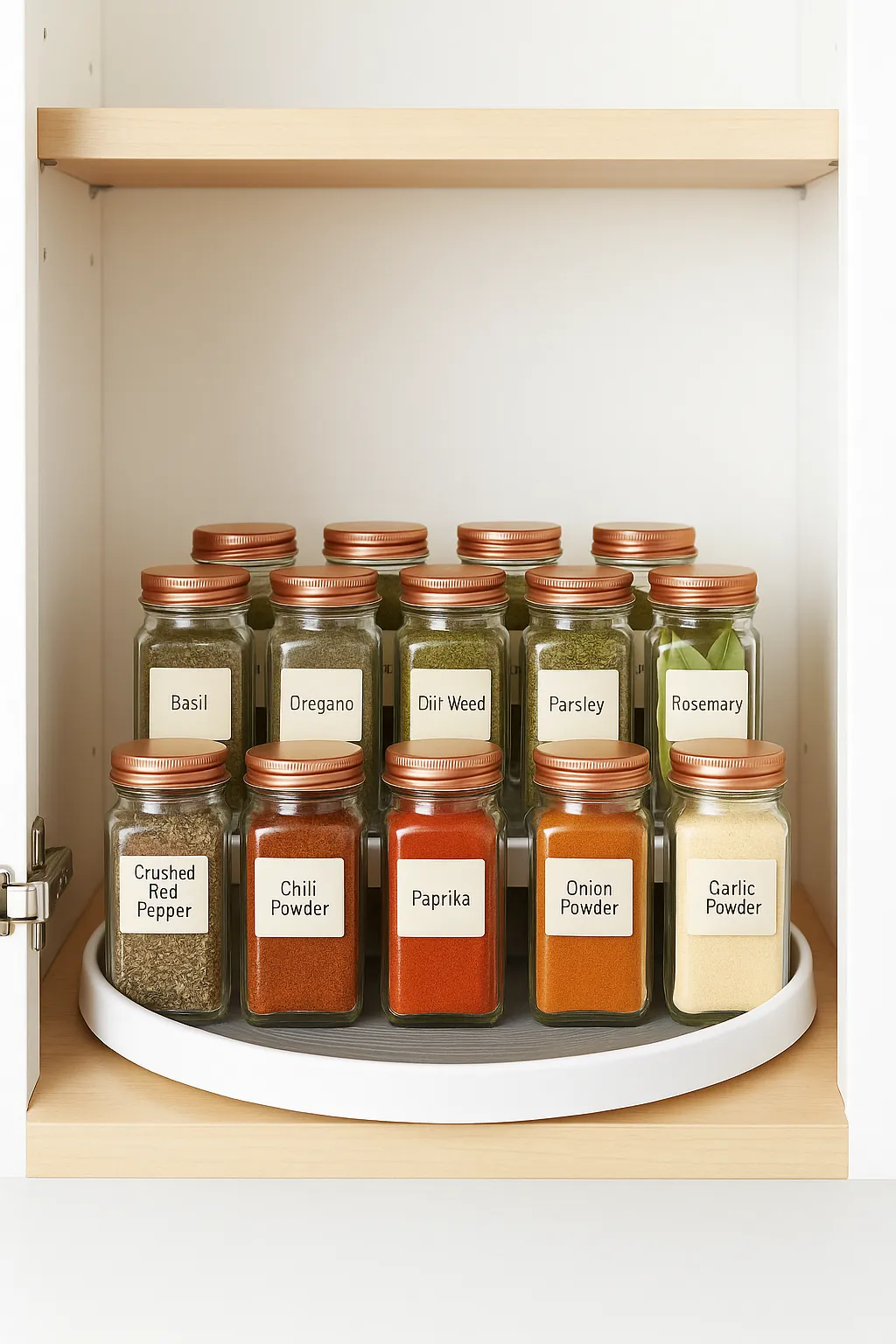
A Turntable Inside the Cabinet That Stops the Avalanche
A lazy Susan turntable placed inside a deep cabinet changes everything about spice retrieval. You spin it and every jar comes to you. No more reaching past the oregano to find the smoked paprika that somehow migrated to the back corner.
I confess I resisted this for years. Turntables felt old-fashioned to me. Then I tried an iDesign bin turntable from Target and understood immediately why my grandmother swore by this method.
The practical takeaway is sizing. Measure your cabinet interior before buying. A turntable that’s too small wobbles. Too large and it scrapes the shelf walls every rotation. Get the measurement right once.
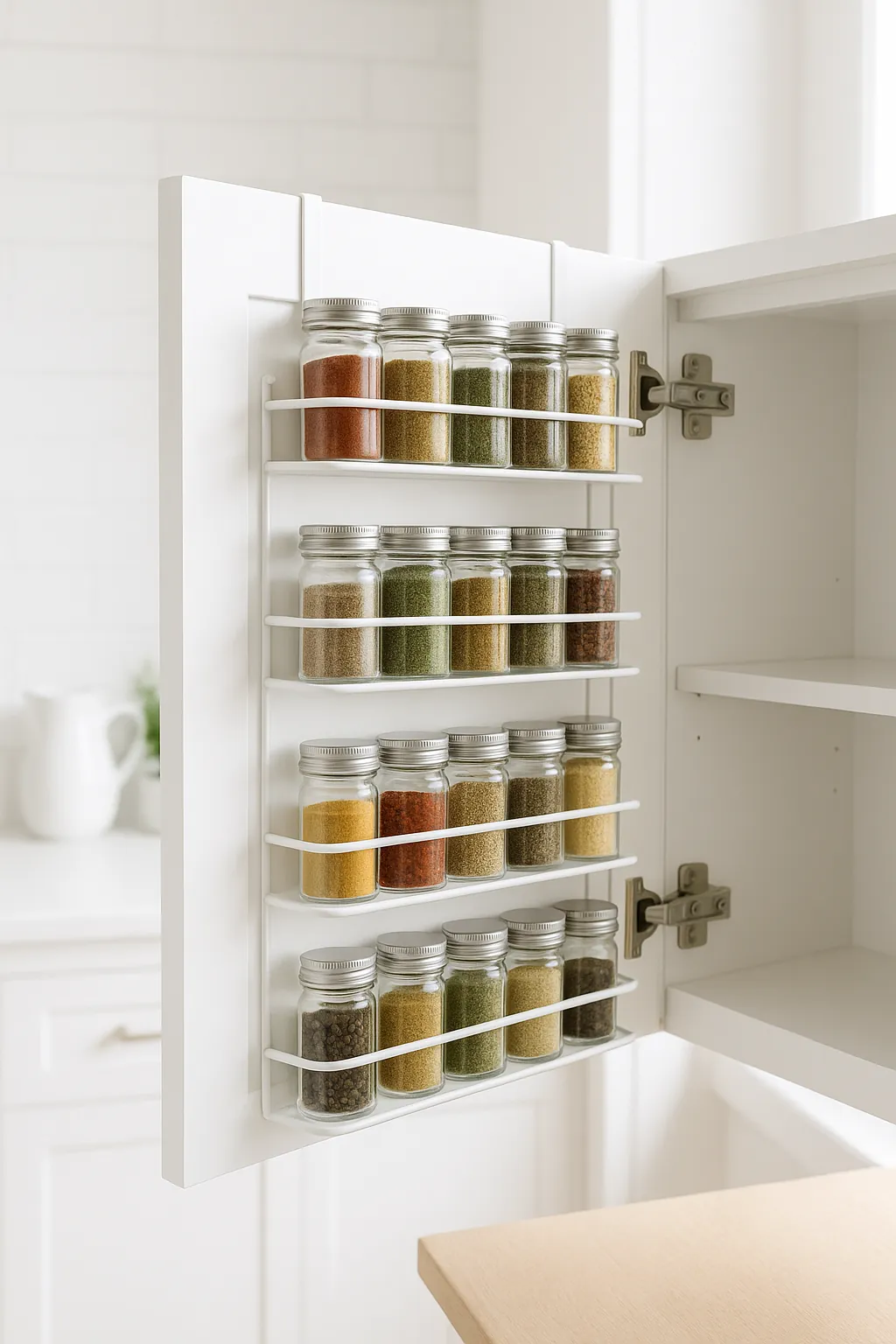
The Door-Mounted Spice Rack Nobody Thinks To Use
The inside of a cabinet door is prime real estate most people ignore completely. A simple over-door spice rack screwed directly into the door holds 12 to 20 jars without using a single inch of shelf space.
Now here’s the part nobody mentions. The door has to clear your shelves when it swings shut. Check that gap carefully before committing to a rack with depth. A thin profile rack, roughly 2.5 inches deep, clears most standard cabinet shelves without any modification.
This is one of those small kitchen storage ideas that requires five minutes of measuring but pays off for years. Command strips won’t hold this one safely. Use actual screws.
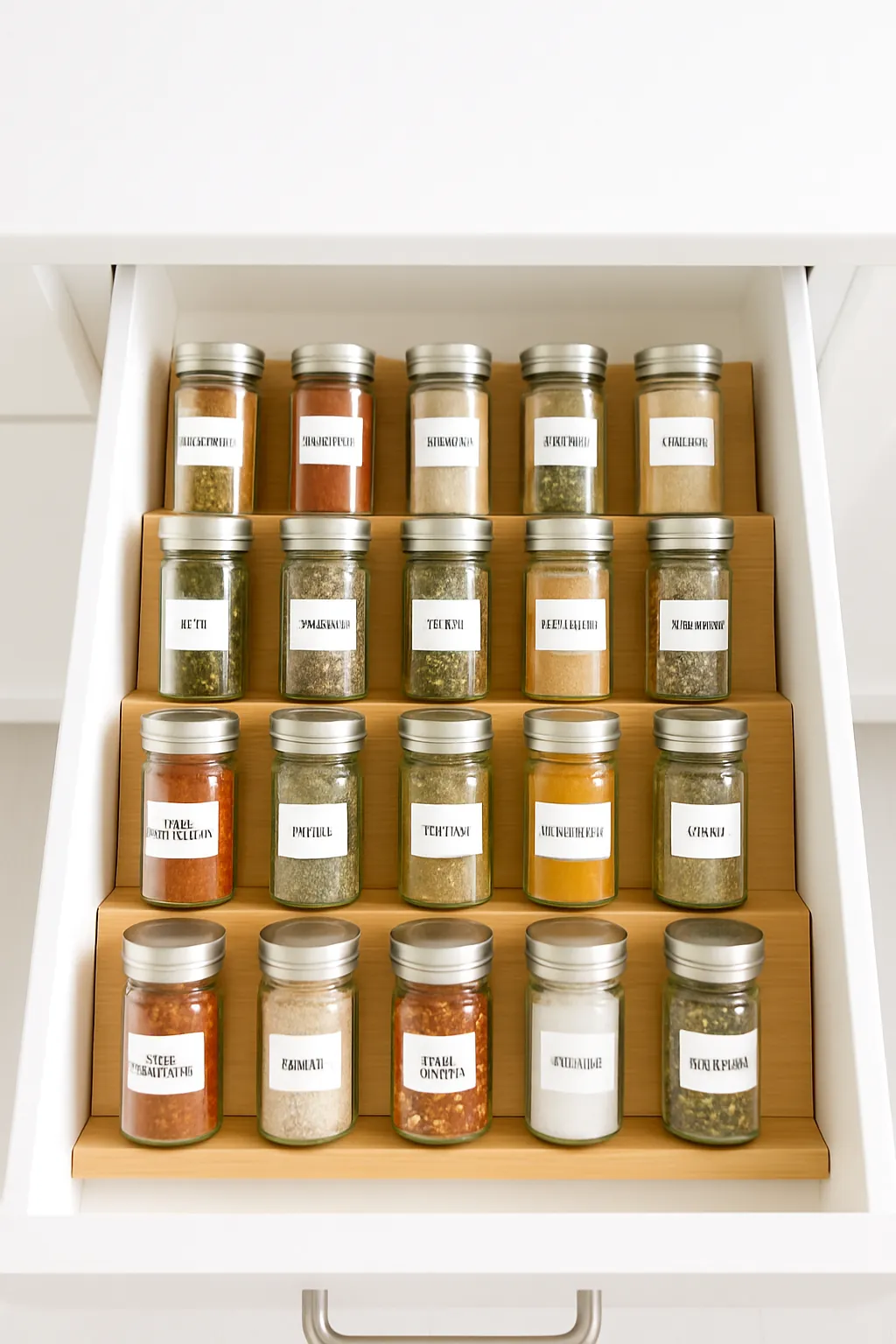
Pull-Out Drawer Inserts That Display Every Label at Once
A tiered pull-out drawer insert lets you see every single spice label from above. You pull the drawer, look down, and every jar is visible in rows. No label hunting. No stacking.
These inserts come in bamboo or plastic and fit inside most standard kitchen drawers. The bamboo versions from IKEA look particularly clean and hold their shape well over time. I’ve had one in my main spice drawer for three years and it still sits level.
The realistic observation here is that labels matter as much as the insert. If your jars have labels only on the top cap, this system is perfect. If labels are only on the side, you’ll need to relabel the lids with a simple label maker before this works properly.
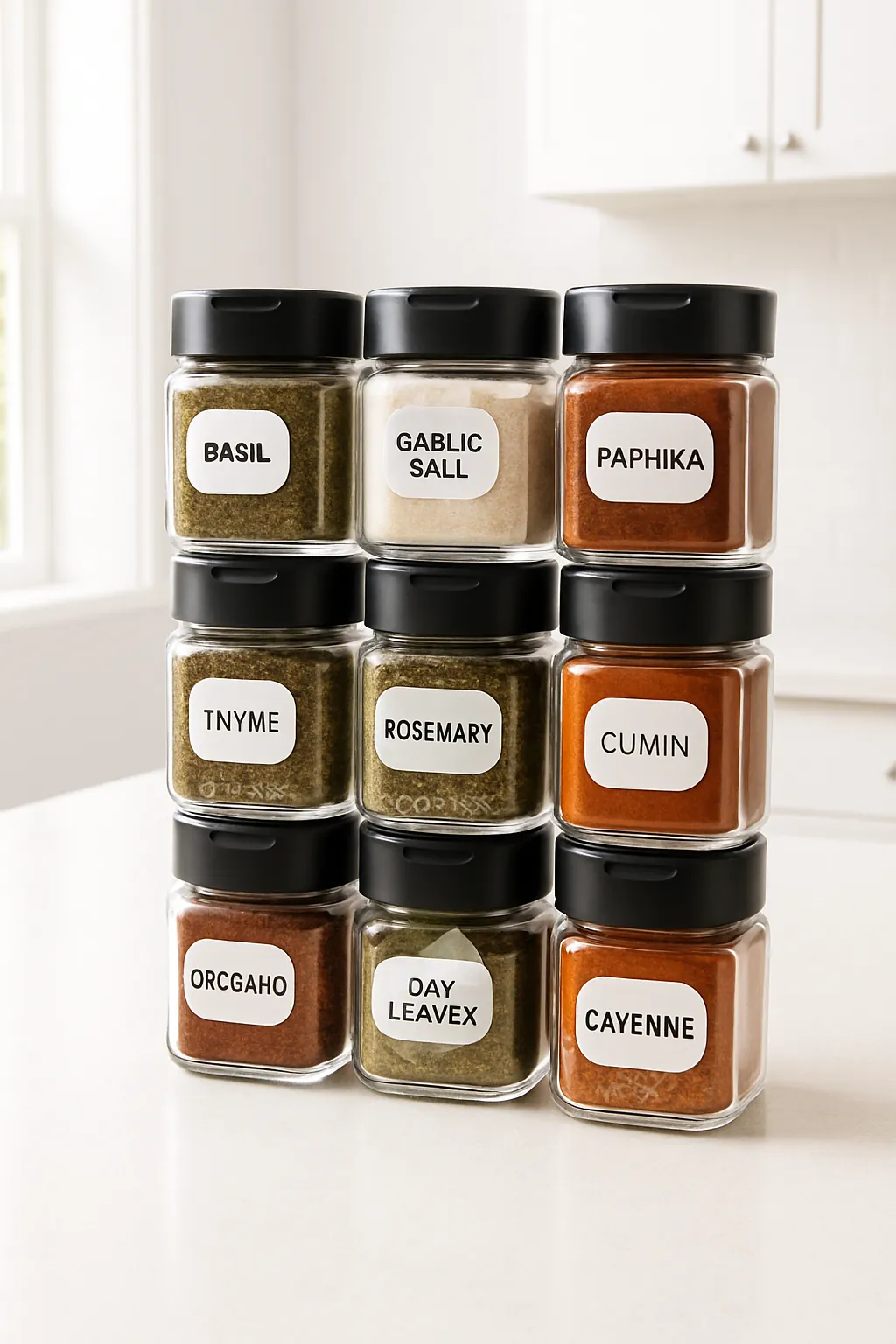
Stackable Spice Jars That Actually Use Vertical Space
Standard spice jars are terrible at stacking. They tip, roll, and take up double the space they should. Uniform stackable jars solve this entirely. You decant everything into matching containers, label them clearly, and stack in tiers.
OXO makes a stackable spice jar set worth every penny. The lids interlock slightly so the stack stays stable. The square shape means no wasted space between jars. They sit flush against each other like small bricks.
The honest truth is the decanting process takes a Sunday afternoon. It feels annoying while you’re doing it. But it’s a one-time task that makes every subsequent cooking session faster. For more ideas on maximizing your vertical space, explore these vertical storage solutions that apply beyond just spices.
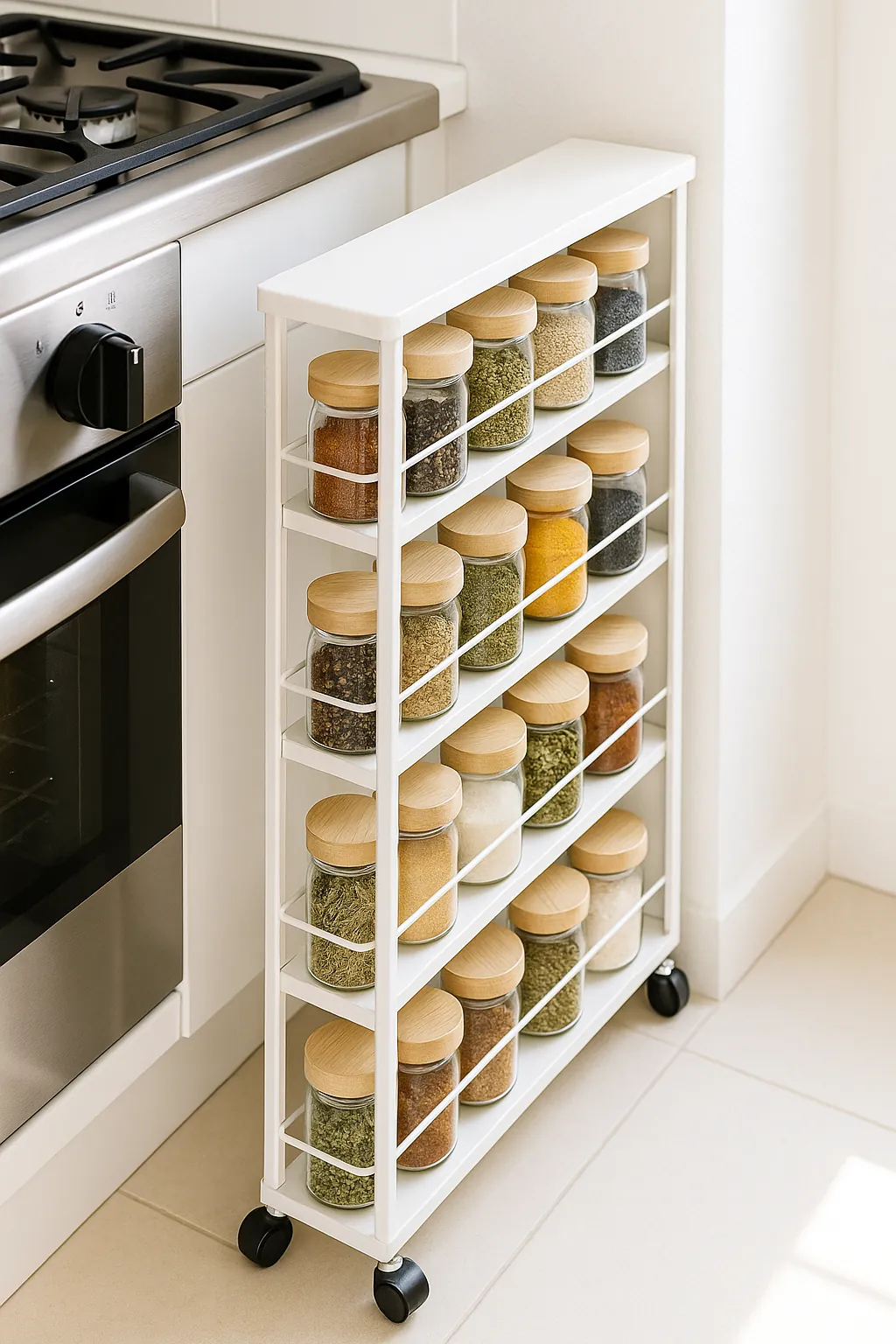
A Narrow Pull-Out Cabinet Between the Stove and Wall
That two-inch gap between your stove and wall or refrigerator is not wasted space. A narrow pull-out spice tower fits exactly there. These are freestanding units on wheels that slide out like a drawer when you need them.
I watched a neighbor install one in her rental apartment. The gap was three inches wide. She found a pull-out tower at exactly that depth online, and suddenly she had 30 spice slots in a space that previously collected dust and dropped pens.
The weight matters here. Fill the bottom shelves first with heavier jars. A top-heavy pull-out tower tips forward when fully extended. Start low, work up.
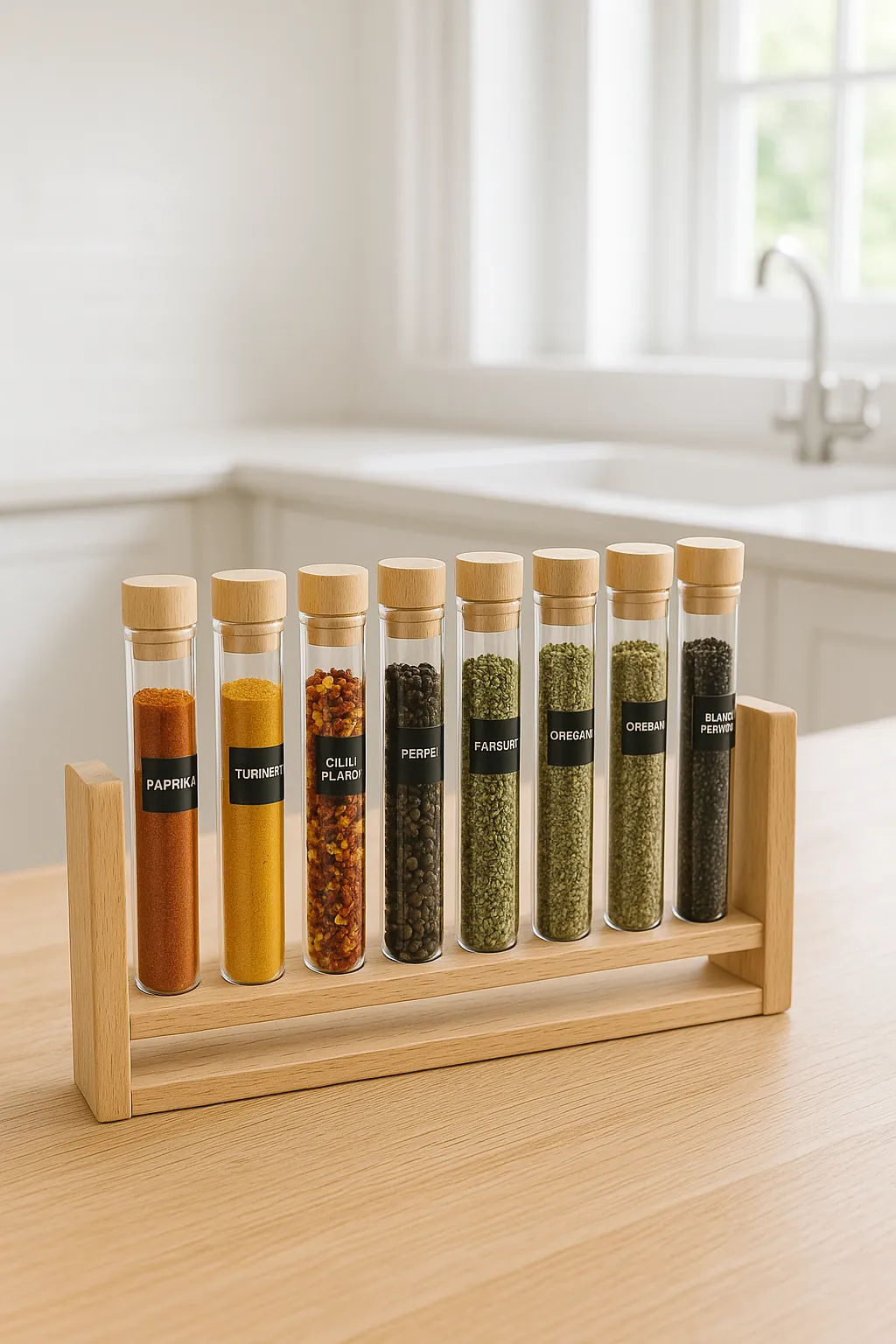
Repurposed Test Tube Spice Holders for Counter Display
Test tube spice holders sit in a wooden or metal rack on the counter and hold smaller quantities of your most-used spices. They look interesting. They’re conversation starters. And they keep your everyday spices at arm’s reach while cooking.
This works best for the spices you reach for daily: salt, pepper, garlic powder, chili flakes, cumin. Keep your less-used collection stored elsewhere. The test tubes hold maybe two tablespoons of spice, so you refill from a larger container stored in the cabinet.
The visual detail that makes this work is uniformity. All glass tubes, one style of rack, consistent label placement. Mixed materials and sizes make this look cluttered instead of intentional. Consistency is the entire point.
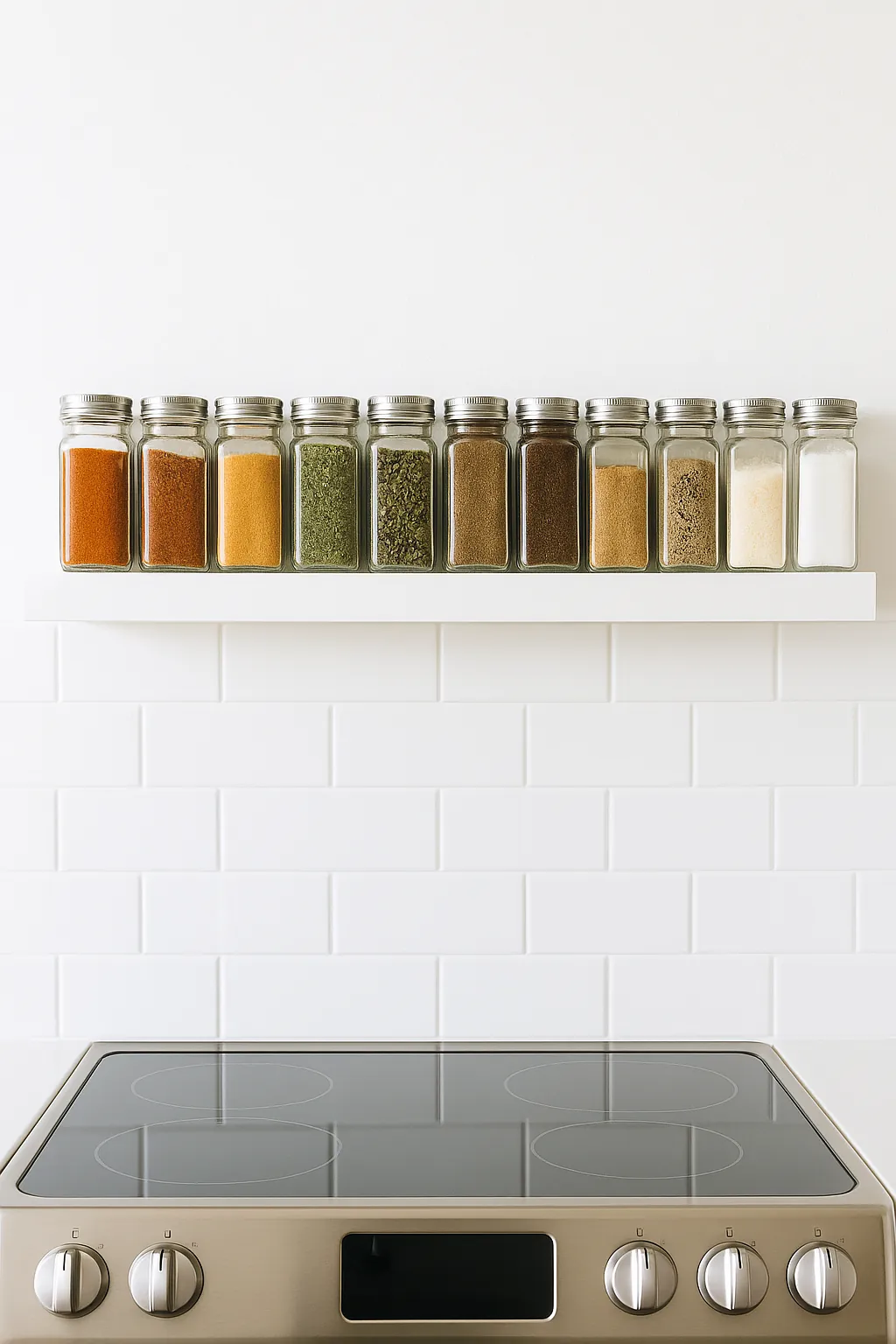
Over-the-Stove Shelf That Keeps Spices Within Cooking Reach
A floating shelf mounted directly above the stove puts your spices exactly where you need them while cooking. Reach up, grab, return. The motion is faster than opening any cabinet.
The concern most people have is heat and steam damage. It’s valid. Keep the shelf at least 18 inches above the burners. Open shelving above the stove is fine for spices you cycle through quickly. Don’t store spices you use once a month up there.
For renters, this requires wall anchors and landlord permission. If that’s not possible, a freestanding shelf unit positioned next to the stove achieves nearly the same reach. Explore more tiny kitchen organization tips for rental-friendly alternatives that don’t require drilling.
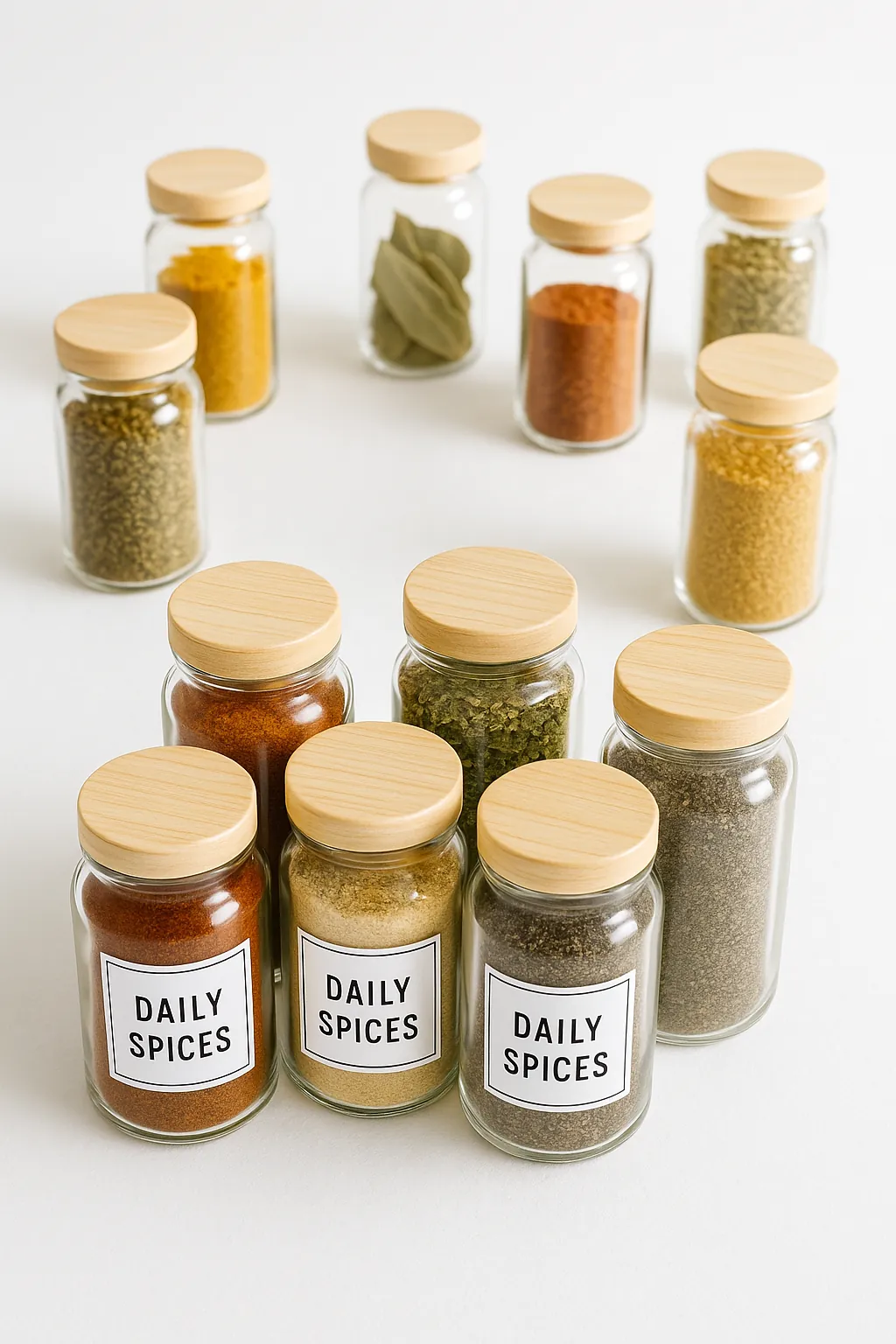
Alphabetizing vs. Frequency Sorting: Pick One and Commit
Here’s a real opinion that might surprise you. Alphabetizing your spices is mostly wrong for small kitchens. It sounds organized. It feels organized. But it optimizes for finding a spice you’ve never used, not for grabbing paprika for the fifth time this week.
Sort by frequency instead. Front row gets your daily spices. Second row gets your weekly ones. The back of the cabinet or a higher shelf holds the specialty spices you use three times a year. This single change reduces cooking friction more than any bin or jar purchase.
I spent two years alphabetizing before someone pointed this out to me. I felt genuinely irritated at myself for not seeing it sooner. Frequency sorting is one of those spice organization ideas that costs nothing and pays off immediately.
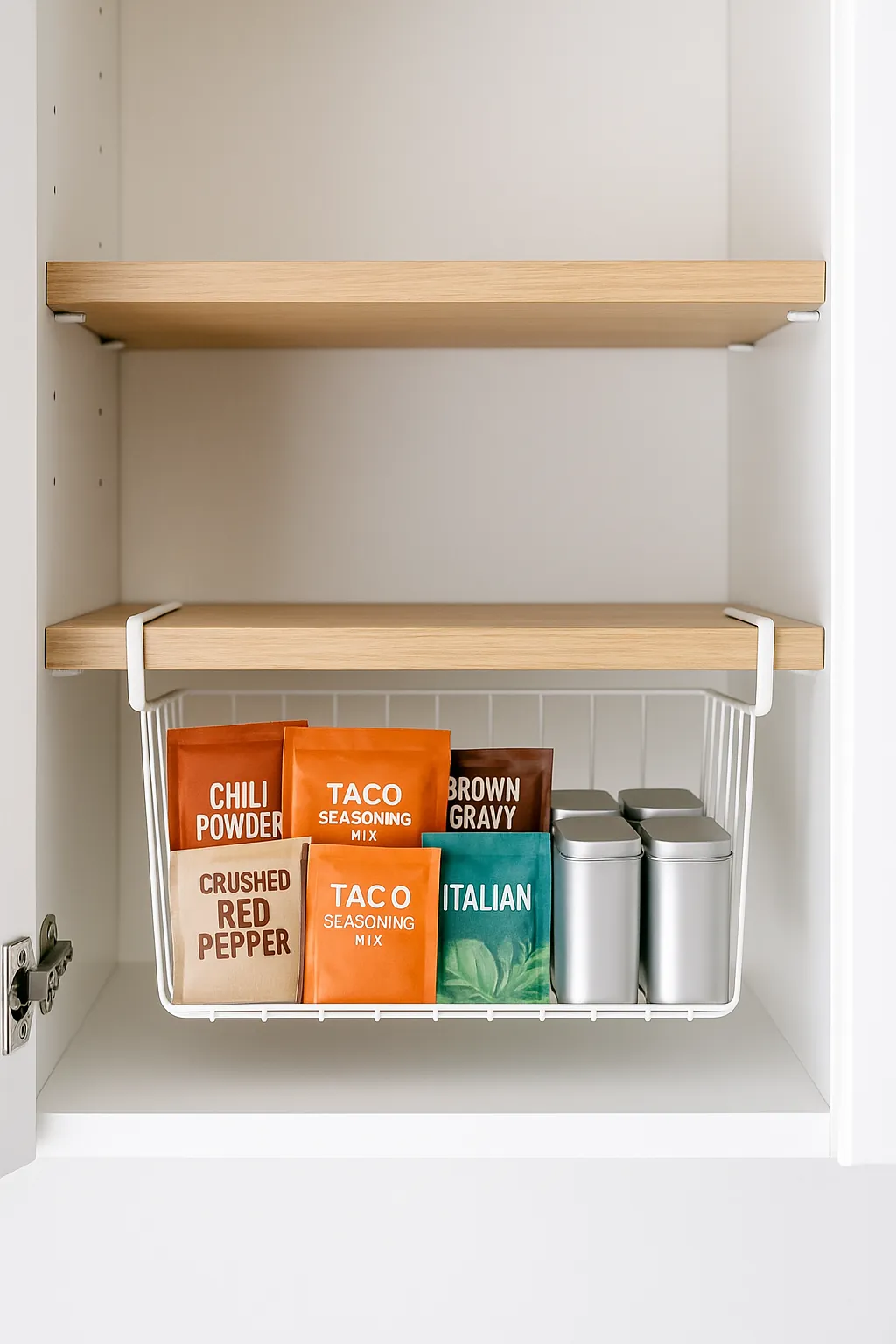
Under-Shelf Baskets That Steal Dead Air Space
The space between your cabinet shelf and the items sitting on it is usually wasted. An under-shelf basket clips onto the shelf above and hangs down, creating a second layer of storage below the existing shelf surface.
mDesign makes an under-shelf basket in a wire design that clips on without tools. You can hang your flat spice packets, small jars, or seasoning envelopes from it. It’s not glamorous. But it works in spaces where you’ve genuinely run out of options.
The practical limit is weight. Under-shelf baskets clip on but don’t anchor deeply. Keep them for lightweight items only: foil spice pouches, small tins, dried herb packets. Heavy glass jars belong on solid shelves.
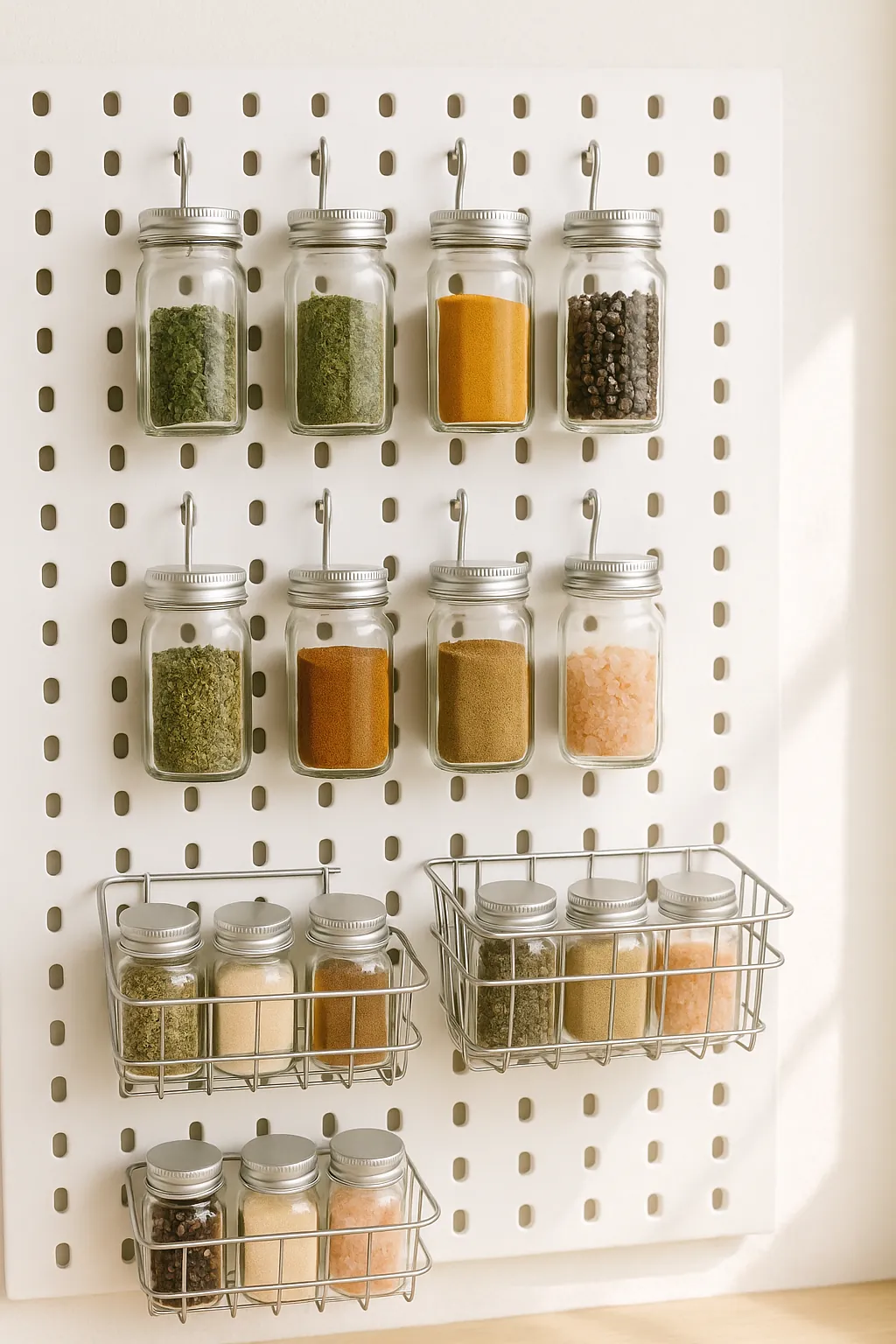
A Pegboard Spice Wall That Lets You Rearrange Freely
Pegboard mounted on a kitchen wall with small hooks and baskets holds spice jars in a completely flexible arrangement. You can move every element. Add a hook here, shift a basket there. The system evolves with your cooking habits.
This is a bigger commitment than most solutions here. You need wall space, a drill, and a half day to set it up well. But for someone who cooks seriously and has a dedicated kitchen wall, this is the most adaptable system available.
The small kitchen organization ideas that work long-term are the ones you can change. Pegboard never locks you in. Your cooking life shifts, and the pegboard just gets rearranged.
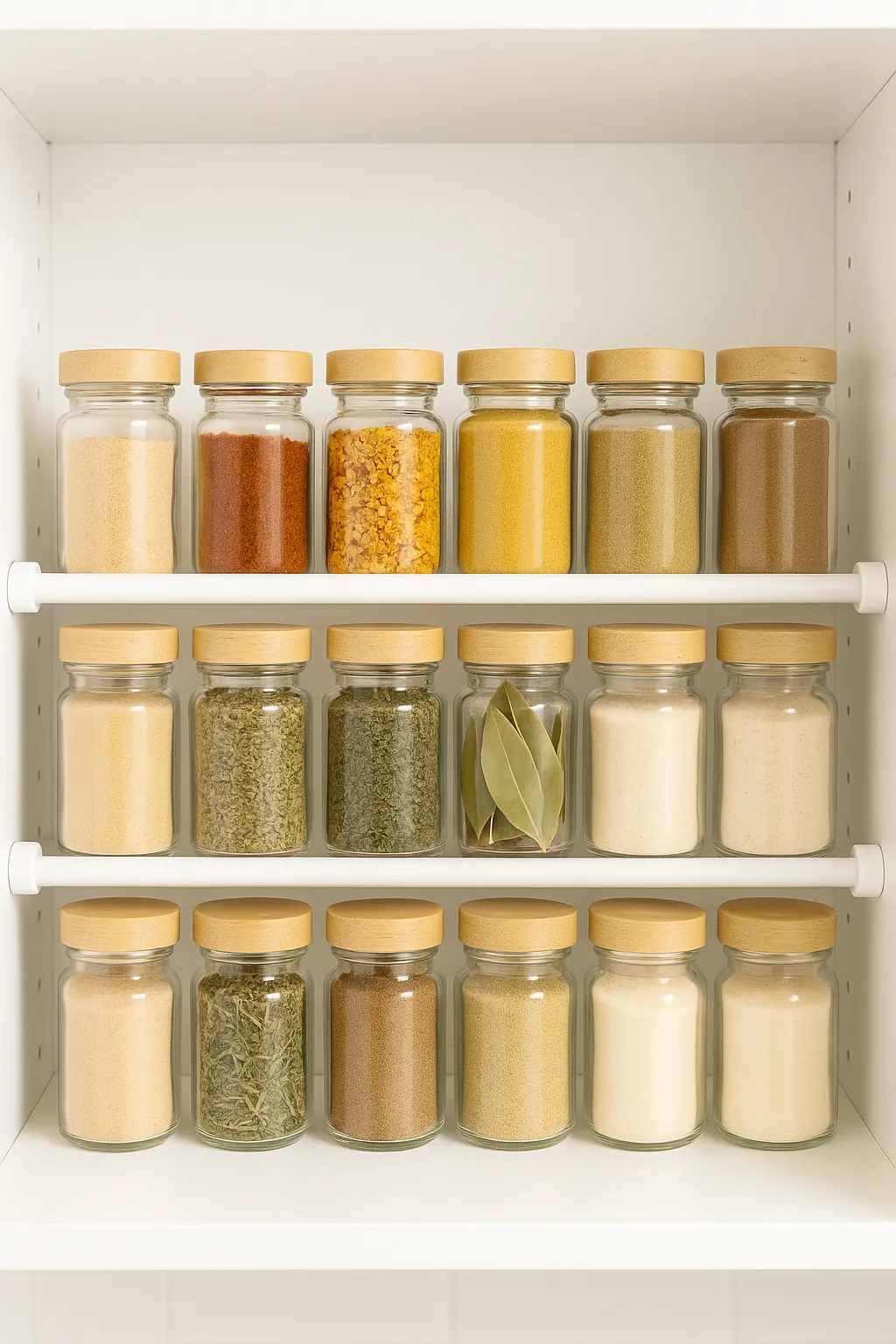
Tension Rod Dividers That Create Shelf Rows
Two tension rods placed horizontally across a cabinet shelf create rows that keep spice jars from sliding and tipping. The jars sit between the rods in neat lines. Nothing rolls forward when you open the cabinet door.
This costs almost nothing. Two tension rods from a dollar store, properly sized for your cabinet width, do the job completely. You don’t need to buy any specialty spice product to make this work.
The honest limitation is that tension rods work better for same-height jars. A cabinet mixing tall and short jars gets messy with this method. Standardize your jar heights first, then add the tension rods.
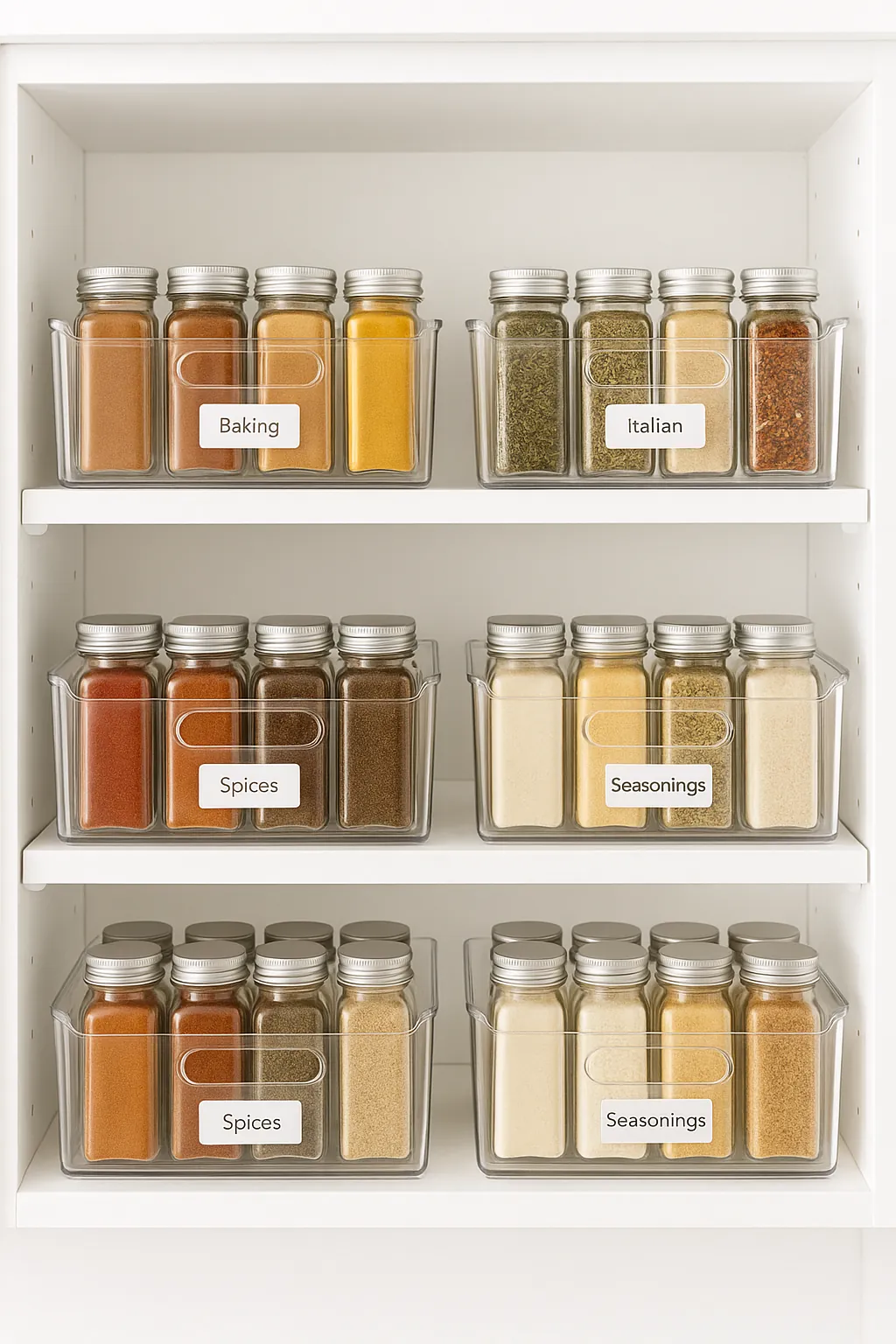
Labeled Bins That Group Spices by Cooking Style
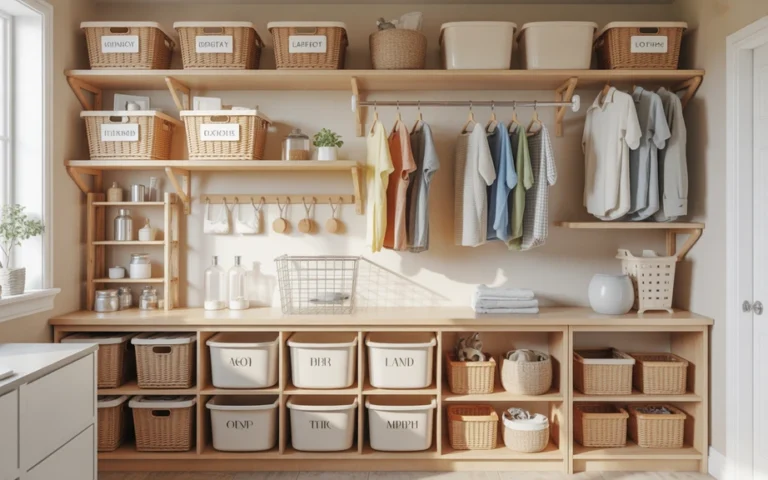
Instead of organizing individual jars, group related spices into small labeled bins. One bin for baking spices. One for Italian herbs. One for Asian cooking. One for grilling rubs. You pull the whole bin when you need it.
This approach works especially well in deep cabinets where individual jar retrieval is awkward. Pull the “Italian” bin forward, use what you need, slide it back. The iDesign plastic bins with handles make this effortless.
For more structural cabinet approaches, the kitchen cabinet organization ideas on this site go deeper into bin and basket grouping strategies. The grouped-bin method changes how you think about organization entirely.
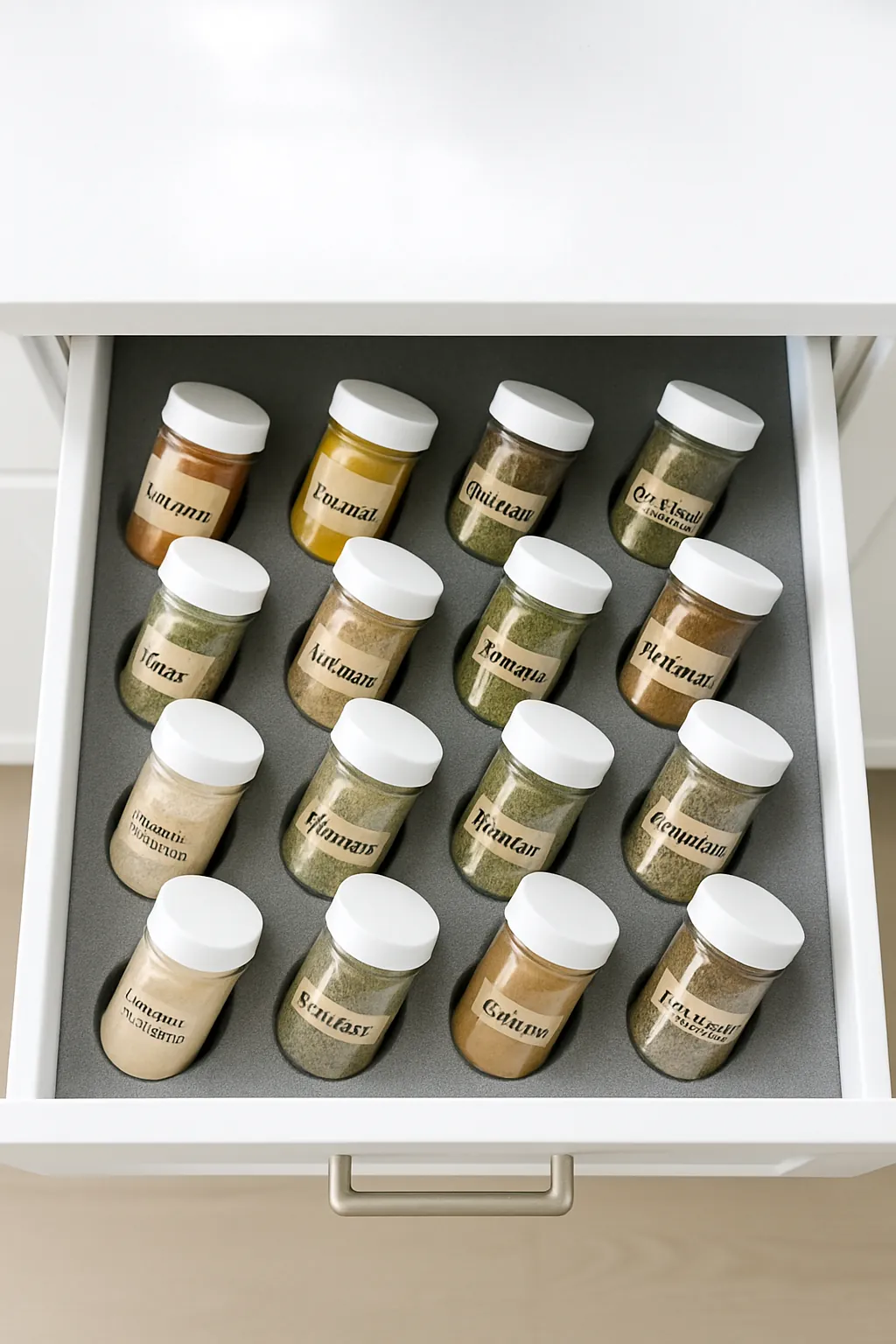
A Dedicated Spice Drawer With Custom Foam Inserts
Cutting craft foam to fit your drawer and carving out individual spice jar slots sounds overly complicated. It takes about 20 minutes and creates the most stable spice storage I’ve ever used. Every jar has a designated hole. Nothing shifts.
You can also buy pre-cut foam drawer inserts sized for standard spice jars. The jar sits snugly in its foam slot at a slight angle so you read the label when you look down. It’s a very specific visual satisfaction.
The realistic observation is that this works perfectly until your spice collection grows. Add three new jars and you’re cutting new foam. It rewards a curated, stable spice collection more than a growing one.
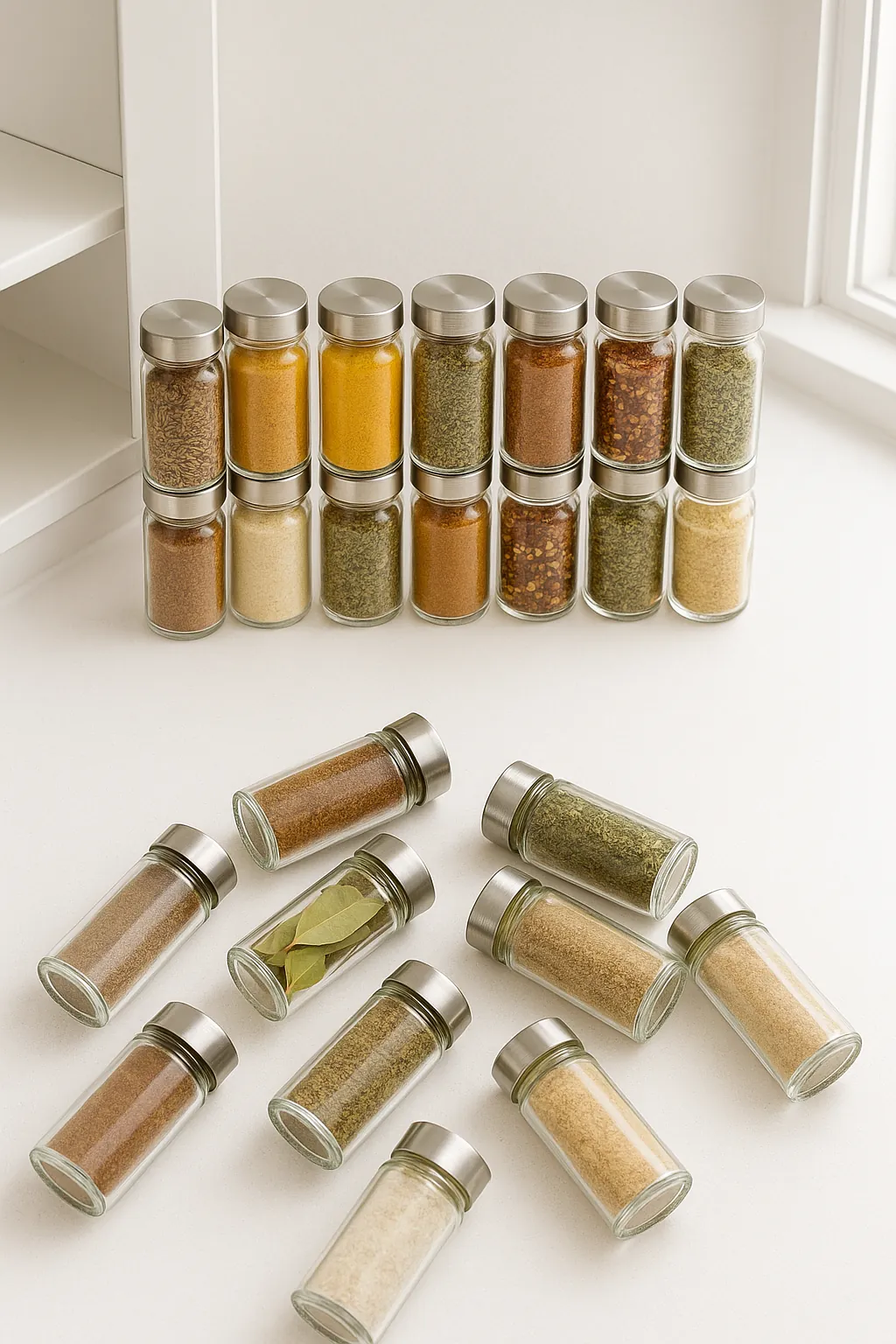
Decluttering First, Then Organizing: The Order Matters
Every single one of the previous 14 ideas will fail faster if you skip this step. Decluttering your spice collection before implementing any system is not optional. It’s the foundation.
Pull everything out. Check every expiration date. Smell every jar. Whole spices last about four years. Ground spices go flat after two. Dried herbs lose most of their flavor by 18 months. Throw out what’s dead. Most people find they’re storing 30 percent more spices than they actually use.
Now here’s the curiosity gap worth sitting with. You might discover you only actively use 15 spices. That changes which solution makes sense for you entirely. A 12-slot magnetic wall strip might be genuinely sufficient. Don’t buy a 40-jar system for a 15-spice cook.
Final Thoughts on Spice Rack Organization for Small Kitchens
Small kitchen spice organization is solvable. It just requires matching the solution to your actual space, not an aspirational one. Measure before buying. Sort by frequency before alphabetizing. Declutter before organizing anything at all.
The systems that last aren’t always the prettiest ones. They’re the ones that fit your specific cabinet dimensions, your specific cooking habits, and your specific tolerance for maintenance.
Pick one idea from this list and implement it this week. Not three. One.
FAQ About Spice Rack Organization
What is the best way to organize spices in a small kitchen?
Sort by frequency of use rather than alphabetically. Keep daily spices at eye level and arm’s reach. Use uniform containers when possible to maximize the space you actually have.
How do I keep spices from expiring before I use them?
Buy smaller quantities more often rather than large jars you’ll use slowly. Write the purchase date on the bottom of each jar with a marker. Smell-test every jar before cooking since your nose knows before the label does.
Can I organize spices without spending much money?
Yes. Tension rods, repurposed bins, and a simple label maker cost almost nothing. The frequency-sorting method costs zero dollars. Start with decluttering and sorting before spending anything at all.
Sarah Mitchell’s Take
I’ve tried at least eight of these methods personally, and the lazy Susan turntable is still the one I go back to every time I move. It’s not the most stylish option. It just works every single time without any maintenance or adjustment.
—