
Kitchen counters fill up fast when every appliance, jar, and utensil competes for the same surface. When storage is planned in zones and vertical layers, counters stay usable without feeling empty or staged. The goal isn’t to hide everything, but to keep daily items contained so the layout feels calm and functional. These kitchen counter storage ideas focus on spacing, height, and grouping so small and large kitchens both stay manageable. Clean counters make cooking easier and keep visual clutter from building throughout the day. For more space-saving kitchen setups, explore 25 Creative Small Kitchen Storage Ideas to Maximize Your Space.
1. Vertical Shelf Risers That Double Counter Space
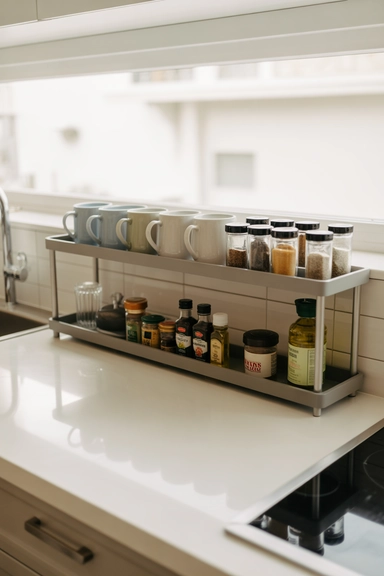
A compact shelf riser placed against the backsplash instantly creates a second storage level without taking over the counter. Use the top tier for mugs or spice jars and the lower level for oils or daily-use items. Keeping the riser narrow prevents it from crowding prep space. Light metal or wood finishes blend into most kitchens and keep the setup looking intentional rather than temporary. This approach works well in small kitchen counter storage ideas where vertical layering helps free the surface for actual cooking tasks.
Spacing items evenly across both levels prevents the riser from looking overloaded. Limiting each shelf to one category keeps the structure organized and easier to maintain. Placing the riser near the wall instead of the center of the counter preserves workspace while still adding storage. When used consistently, risers create a clear visual line that helps keep the entire counter looking organized instead of scattered with small items.
2. Drawer Organizer Stations for Daily Tools
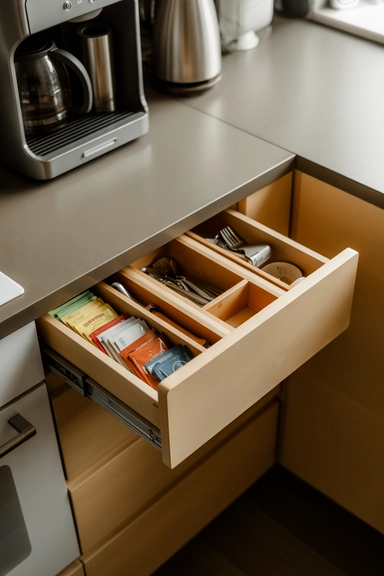
A compact countertop organizer with shallow drawers can hold utensils, tea packets, or snack items without spreading them across the counter. Position it near the area where these items are used most often, such as beside the coffee maker or prep zone. Keeping frequently used tools inside drawers reduces visual clutter and makes daily routines faster. Slim wooden or acrylic drawer units work well because they provide storage without feeling bulky.
Limiting what goes inside each drawer keeps the organizer from becoming a catch-all. One drawer for utensils, one for packets, and one for small tools maintains order. In kitchens with limited cabinet space, a countertop drawer station replaces the need to open multiple cabinets during cooking. When placed neatly against the wall, it adds storage while preserving the open look of the counter.
3. Slim Countertop Cabinets for Hidden Storage
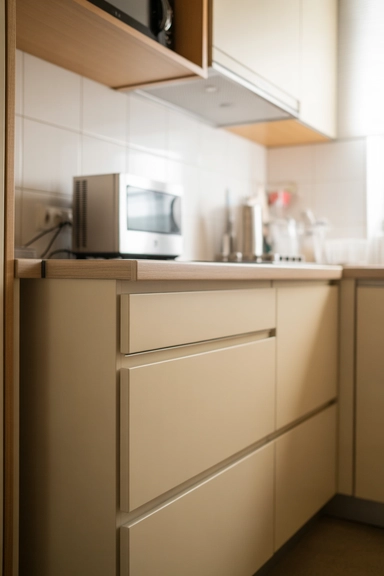
A narrow countertop cabinet placed along the back wall can hide snacks, bread, or small appliances while keeping them accessible. Choose a cabinet that sits flush against the backsplash so it doesn’t interrupt the prep zone. Neutral finishes help the piece blend into the kitchen rather than stand out. This solution works well in small kitchen counter storage ideas where closed storage keeps visual clutter under control.
Keeping only daily items inside prevents the cabinet from becoming overcrowded. Organizing contents by category helps maintain order when opening and closing the doors. A slim cabinet also creates a visual boundary along the counter, which helps define the workspace. When storage sits neatly against the wall, the rest of the counter stays clear for cooking and prep tasks.
4. IKEA Rail Systems for Counter Walls
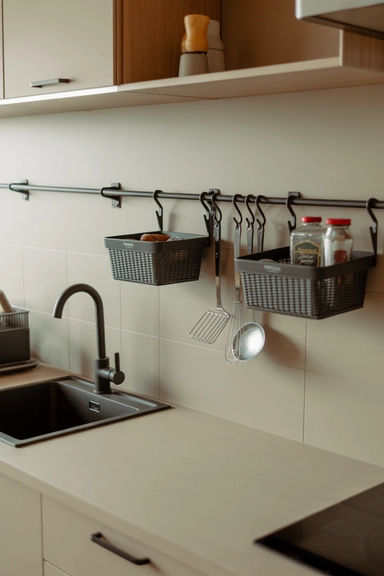
A rail system mounted just above the counter adds vertical storage without taking up surface space. Hang small baskets for spices, utensils, or cleaning supplies so they stay accessible but off the counter. Positioning the rail along the backsplash keeps items within reach while maintaining a clean surface. This setup works especially well in kitchens where cabinet space is limited.
Spacing hooks and baskets evenly keeps the rail from looking crowded. Limiting each container to one category makes it easier to maintain the system over time. By shifting smaller items upward, the counter itself stays open and easier to wipe down. This method supports a clutter-free kitchen while still keeping essentials close at hand.
5. Basket Zones for Produce and Snacks
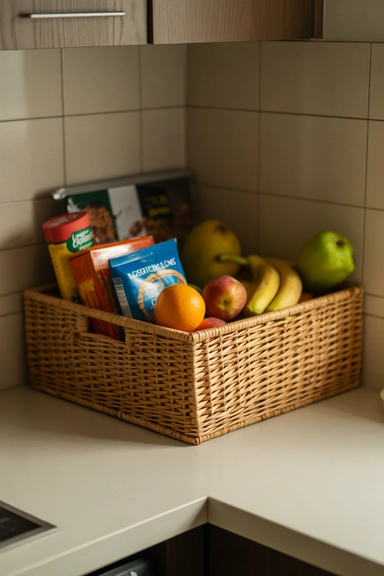
A shallow basket placed in one corner of the counter can hold fruit or packaged snacks in a contained way. Choose a basket that allows airflow so produce stays fresh. Keeping everything inside one container prevents items from spreading across the counter. Natural woven baskets add warmth while still functioning as practical storage.
Limiting the basket to one type of item keeps it from becoming cluttered. In small kitchens, grouping items together makes the space feel more intentional. Positioning the basket near the edge of the counter keeps the central prep area clear. A single organized basket often looks cleaner than multiple small containers scattered across the surface.
6. Corner Counter Tiered Storage
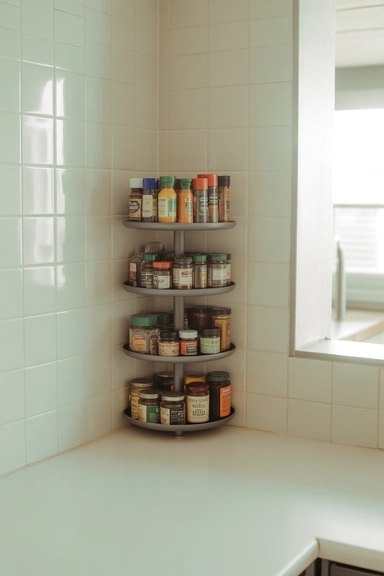
A tiered organizer placed in a corner makes use of space that often goes unused. Use the lower tier for heavier items and the upper tier for lighter containers. This setup keeps items visible without stacking them directly on top of each other. Choosing a slim design prevents the corner from feeling crowded.
Spacing items across the tiers keeps the structure balanced. Limiting the organizer to one category, such as spices or coffee supplies, prevents visual clutter. Corners are ideal for storage because they keep the main prep area open. When used consistently, a tiered corner organizer helps maintain a clear and structured counter layout.
7. Coffee Station Storage That Keeps the Counter Controlled
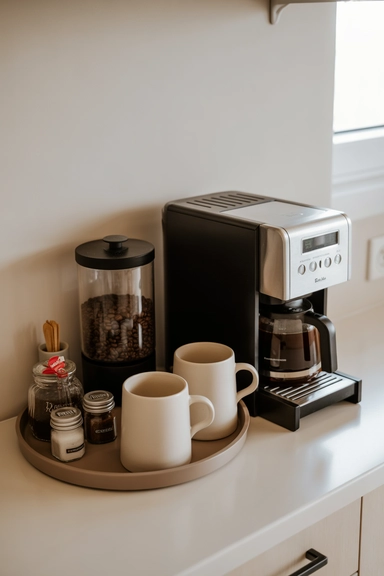
A defined coffee station prevents mugs, pods, and tools from spreading across the counter. Place a compact tray or riser beside the coffee machine so everything sits within one boundary. Store pods or beans in canisters, mugs on a small stand, and sweeteners in a drawer organizer. Keeping the setup tight and contained allows the rest of the counter to stay open for prep. This approach works especially well in small kitchen counter storage ideas where appliances easily dominate the surface.
Spacing items inside the station matters as much as the storage itself. Leave a few inches between containers so the area doesn’t feel crowded. Position the station along the back wall or near an outlet to avoid blocking workspace. When the coffee area has a clear footprint, the rest of the counter feels more intentional and easier to maintain throughout the day. A contained station also makes cleanup faster since everything returns to one defined zone.
8. Under-$25 Counter Storage That Adds Structure
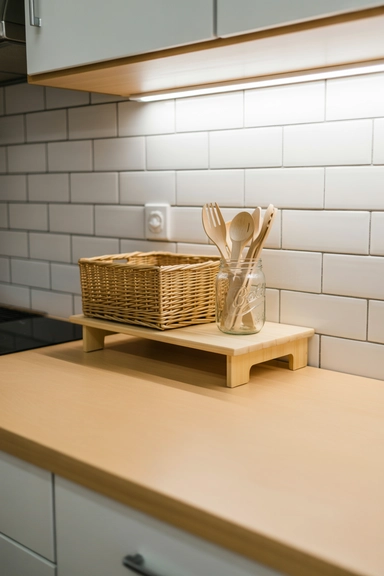
Budget-friendly countertop storage can still create a clean layout when chosen carefully. A simple riser, small drawer unit, or basket set can group daily items without adding bulk. Place budget organizers along the backsplash so they don’t interrupt prep space. Neutral materials like wood, wire, or clear acrylic keep the setup looking cohesive even when pieces are inexpensive. This method works well for renters or temporary kitchens where permanent changes aren’t possible.
Limiting each organizer to a single function keeps the counter from looking cluttered. One for utensils, one for snacks, one for jars. Spreading items across too many containers can feel chaotic, so choosing only a few helps maintain order. Budget storage works best when it creates zones rather than covering the entire counter. When everything has a clear place, even low-cost solutions can make the kitchen feel more organized and usable.
9. Canister Rows That Replace Loose Packaging
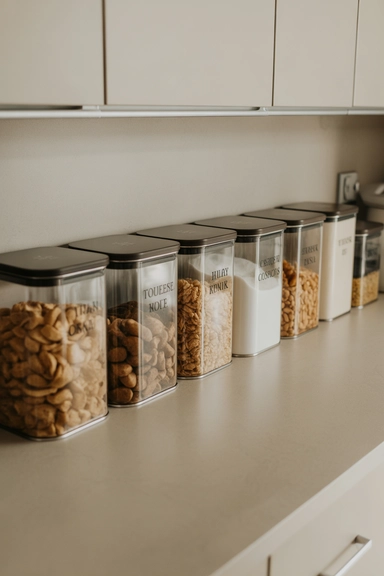
Matching canisters lined along the backsplash create a clean storage row for dry goods. Use them for coffee, sugar, flour, or snacks that are used daily. Keeping containers similar in height and color helps the counter look intentional rather than crowded. Placing them against the wall preserves workspace while still keeping items accessible. This approach also reduces packaging clutter, which often makes counters feel messy even when items are organized.
Spacing canisters slightly apart prevents the row from looking heavy. Leaving small gaps between each container helps the arrangement breathe visually. In small kitchens, a single row of coordinated canisters can replace multiple scattered packages. This keeps daily-use ingredients within reach while maintaining a calm and tidy surface. A consistent container line also makes the counter easier to wipe down and maintain.
10. Countertop Hutch Storage for Vertical Organization
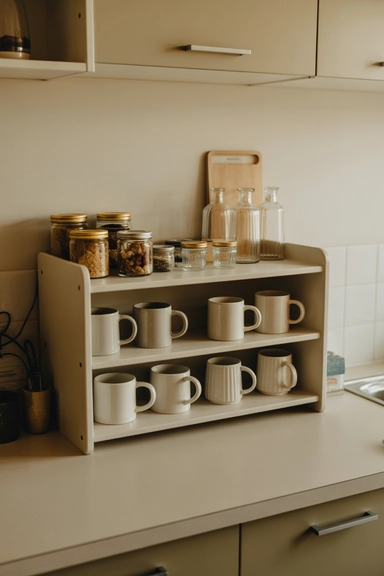
A small countertop hutch creates vertical storage without needing additional cabinets. Place frequently used dishes or jars on the lower shelf and lighter items above. Keeping the hutch narrow prevents it from blocking light or crowding the counter. Neutral finishes help it blend into the kitchen rather than stand out as a bulky piece. This type of storage works well when cabinets are limited but daily items still need to stay accessible.
Spacing items evenly across shelves keeps the hutch from feeling overloaded. Limiting the number of objects displayed maintains a clean visual line. In small kitchens, vertical storage allows more items to stay accessible without filling the entire counter. Positioning the hutch along the wall creates a defined storage zone while leaving the rest of the surface clear for cooking and prep work.
11. Island Counter Storage That Stays Contained
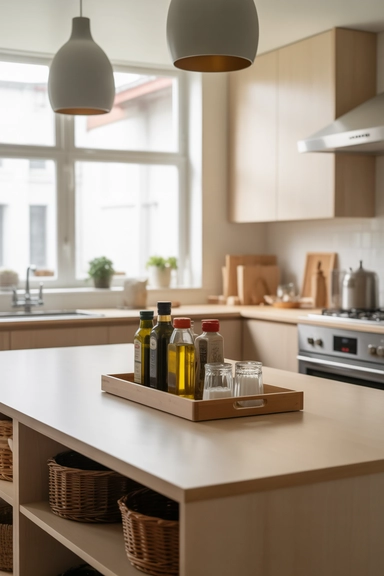
Kitchen islands often become drop zones for mail, snacks, and small appliances. Creating a defined storage tray or container on one side keeps these items contained. Use a shallow tray for oils, salt, or daily tools while leaving the rest of the island open. This keeps the island functional for prep while still holding essentials. A contained zone prevents items from spreading across the entire surface.
Keeping the tray minimal ensures the island still feels open. Avoid stacking too many items inside the container. In smaller kitchens, the island may double as a prep and dining space, so limiting visible storage is key. A controlled storage zone keeps the surface usable while maintaining a clean look. When everything returns to the tray after use, the island remains organized and ready for daily tasks.
12. Minimalist Tray Grouping for Daily Essentials
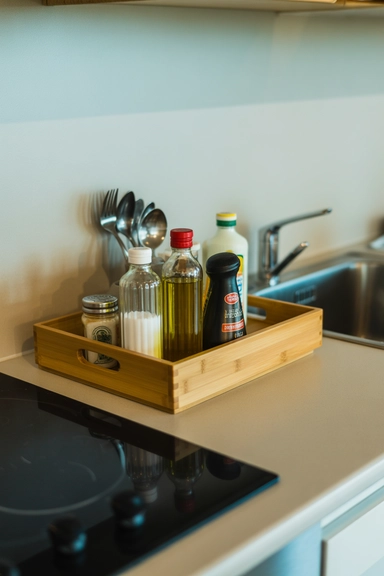
A simple tray can gather frequently used items into one contained area. Place oils, salt, or utensils inside the tray so they stay organized without spreading across the counter. Choose a tray that fits the scale of the space so it doesn’t dominate the surface. Light wood or neutral tones blend easily into most kitchens. This approach helps maintain organized kitchen counters without adding bulky storage pieces.
Spacing items within the tray keeps it from looking cluttered. Leave room between bottles and containers so each item remains visible. Position the tray along the backsplash or in a corner to keep prep space open. When everything sits inside one boundary, the counter feels calmer and easier to maintain. A tray also makes cleanup simple because all items can be lifted at once.
13. Fruit Bowl Zoning That Prevents Counter Spread
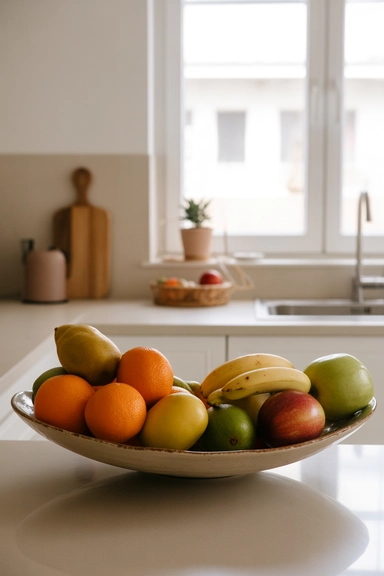
A fruit bowl only works as storage when it has a defined footprint. Place it along the back third of the counter or at the far edge near a wall so it doesn’t drift into prep space. Choose a wide, low bowl instead of a deep one. This keeps fruit visible without stacking vertically, which quickly looks messy. Keeping the bowl in a fixed zone helps maintain organized kitchen counters because loose items stop migrating across the surface throughout the day.
Limit the contents to fresh produce only. No packets, mail, or random kitchen tools. When the bowl becomes a catch-all, the counter immediately loses its structure. Leave small gaps between fruits so the bowl doesn’t look overcrowded. In smaller kitchens, one controlled produce area is enough. Positioning it near natural light also helps it feel intentional instead of temporary. A consistent fruit zone keeps the rest of the counter visually calm and easier to reset after meals.
14. Wall Shelf Above the Counter for Daily Items
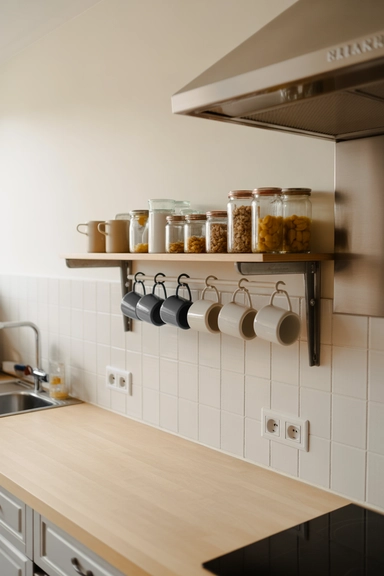
A narrow wall shelf above the backsplash moves frequently used items upward and clears valuable counter space. Install it low enough to reach easily but high enough that it doesn’t interfere with prep. Use it for jars, oils, or mugs that are accessed daily. This approach works well for kitchen counter storage ideas in small spaces because it shifts storage vertically instead of spreading across the surface.
Spacing matters. Keep gaps between containers so the shelf doesn’t feel heavy. Limiting it to one category helps maintain order. When jars or tools sit in a single line above the counter, the surface below stays clear and functional. This also improves visibility and makes cleaning easier. A well-placed shelf doesn’t add clutter. It removes it from the counter entirely.
15. Rolling Cart Beside the Counter for Overflow Storage
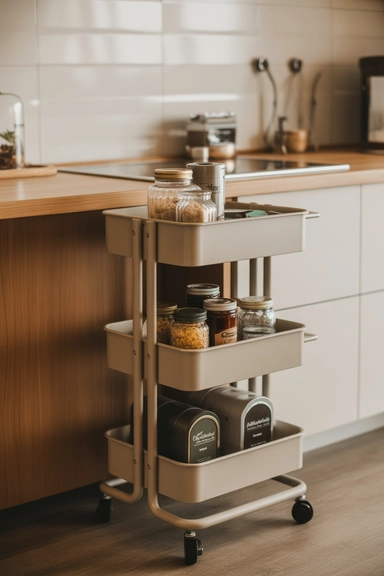
A slim rolling cart positioned at the end of the counter acts as an extension of storage without crowding the main workspace. Place it close enough to be convenient but not so close that it blocks movement. Use the top tier for items used daily, like oils or utensils, and lower tiers for backup supplies. This keeps extra products off the counter while still within reach.
Organize the cart in zones. One shelf for snacks, one for tools, one for jars. Avoid mixing categories. This makes it easier to maintain over time. In smaller kitchens, carts absorb overflow before it reaches the counter. Because they move, they adapt to changing needs. A controlled cart setup keeps the main counter open for prep while still supporting daily routines.
16. Appliance Garage That Reduces Visual Clutter
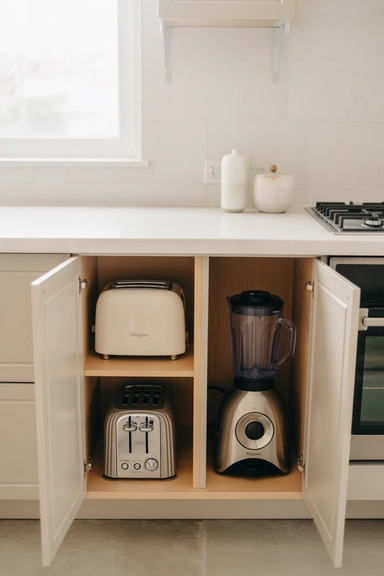
Appliances create the fastest counter clutter. A compact appliance garage placed along the backsplash hides them without moving them far. Store the toaster, blender, or coffee tools inside so they stay accessible but out of sight. This keeps the counter from looking crowded even when appliances are used every day. Closed storage helps maintain a clutter-free kitchen without sacrificing function.
Keep the inside organized. Leave space between appliances so cords and tools don’t tangle. Choose a cabinet depth that fits the counter without pushing forward into prep space. When appliances have a defined storage zone, the rest of the counter remains clear and easier to clean. A contained appliance area improves both layout and workflow in busy kitchens.
17. Narrow Backsplash Shelf for Oils and Spices
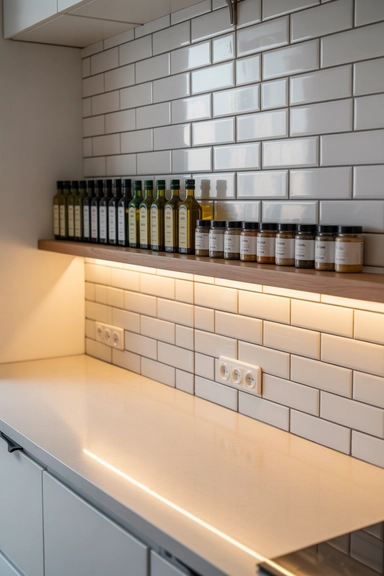
A slim shelf running along the backsplash keeps oils and spices accessible without taking over the counter. Install it just deep enough for bottles to sit securely. This keeps them from spreading across the surface while still staying within reach during cooking. A continuous shelf line also creates a structured look that supports organized kitchen countertops.
Group items by use. Cooking oils together. Seasonings together. Leave visible space between each container. Overcrowding the shelf defeats the purpose. When bottles stay aligned against the wall, the prep area in front remains open. This improves both efficiency and visual clarity. A narrow backsplash shelf is one of the most effective ways to maintain clear counters without losing accessibility.
18. Counter Drawer Units for Small Tools and Packets
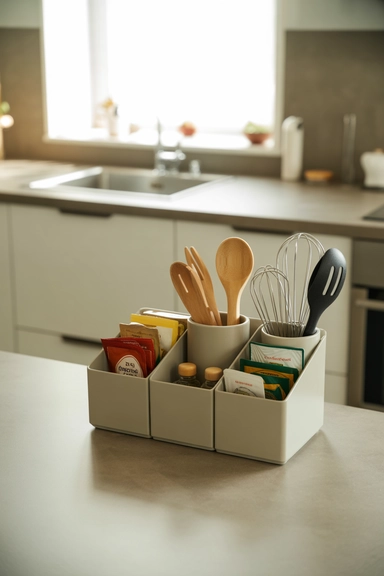
A compact countertop drawer unit can hold tea bags, utensils, or snack packets that usually scatter across the surface. Place it near where these items are used most often. This keeps daily tools accessible while removing visual clutter. Slim wooden or acrylic drawers work well because they add storage without bulk. They create structure without dominating the counter.
Assign each drawer a purpose. One for utensils. One for packets. One for small tools. Mixing items leads to clutter returning quickly. Keep the top surface of the drawer unit clear to avoid stacking. In small kitchens, contained storage prevents buildup and keeps surfaces usable. A well-organized drawer unit supports daily routines while maintaining a clean counter layout.
19. Spice Rail Storage That Frees Up Prep Space
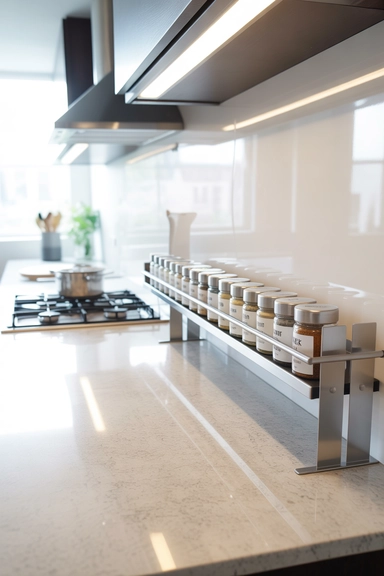
A slim spice rail installed along the backsplash keeps frequently used seasonings accessible without scattering jars across the counter. Choose a narrow rail with a front lip so bottles stay secure while cooking. Position it near the stove but outside direct heat to keep contents stable. This approach keeps spices visible and within reach while preserving prep space. When spices sit in one controlled line, the rest of the counter remains clear and easier to maintain.
Spacing jars evenly along the rail prevents it from looking overcrowded. Limit the rail to everyday spices rather than the entire collection. Keeping only what’s used daily maintains order. A rail also makes cleanup easier because the counter beneath stays open. In small kitchens, shifting spices upward creates immediate breathing room and helps maintain organized kitchen countertops without adding bulky storage pieces.
20. Decorative Storage That Still Functions
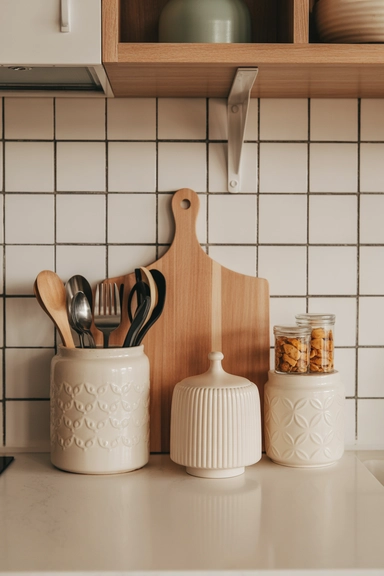
Decorative storage works best when it serves a purpose. A ceramic jar set, small wooden box, or covered container can hold utensils, tea, or snacks while adding visual warmth. Place decorative storage along the back edge of the counter so it doesn’t interrupt prep. Keeping pieces neutral helps them blend into the space rather than dominate it. Functional decor supports both organization and aesthetics.
Limit decorative storage to one or two pieces. Too many turns the counter into display space instead of workspace. Use containers with lids to keep contents hidden and tidy. When decorative items double as storage, they prevent clutter instead of adding to it. This balance keeps the counter visually appealing while still practical for everyday cooking.
21. Black and White Storage That Creates Visual Order
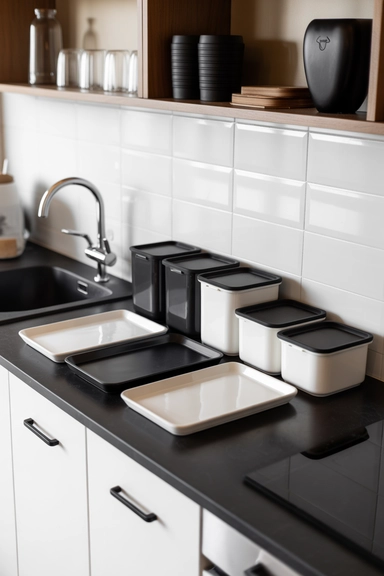
Using consistent colors across storage pieces helps the counter feel structured. Black racks with white canisters or neutral trays create visual order without needing extra containers. Place matching items together along the backsplash to maintain a clean line. Color coordination makes even small kitchens feel more intentional and organized.
Keep the palette simple. Two or three tones at most. Mixing too many styles can make storage feel cluttered even when it’s organized. When containers match, the eye reads the counter as one cohesive zone instead of multiple scattered items. This approach supports organized kitchen counters and keeps the surface visually calm throughout the day.
22. Multi-Level Organizer That Creates Zones
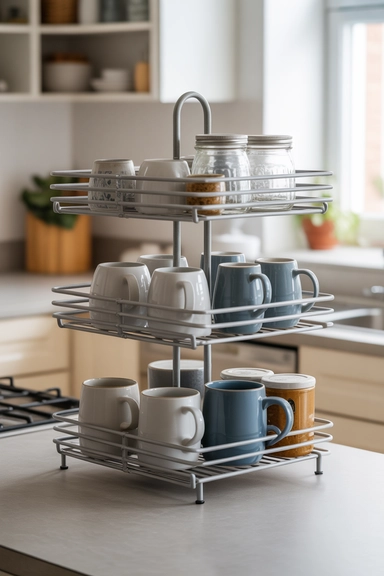
A multi-level countertop organizer creates defined zones for different categories. Use the lower level for heavier jars and the upper level for lighter items like mugs or spices. Position it along the back wall to keep prep space open. This setup works well in small kitchen counter storage ideas where layering helps maximize limited space.
Spacing items across both levels prevents the organizer from looking overloaded. Keep categories separate so everything has a clear place. Avoid stacking items directly on top of each other. A structured organizer helps maintain order over time because items naturally return to their designated spot. When used consistently, it keeps the counter clear and ready for daily tasks.
Conclusion
Clear counters come from controlled placement, not empty surfaces. When jars, tools, and daily appliances have defined zones, they stop spreading across the workspace and the kitchen stays usable. Vertical risers, contained trays, drawer units, and wall storage keep essentials accessible without turning the counter into a drop zone. Limiting what stays out and grouping items by use helps maintain order throughout the day. The most effective kitchen counter storage ideas focus on spacing, visibility, and consistency so surfaces remain functional, easy to clean, and visually calm even during busy routines.