
Introduction
Desk clutter becomes visually overwhelming faster than clutter in most other areas of the home because workspaces concentrate tools, technology, and daily tasks into a small footprint. When storage is poorly planned, even a few scattered items disrupt focus and make the desk feel chaotic. The problem is rarely a lack of storage, but a lack of structure and restraint. Effective IKEA desk storage hacks focus on reducing visual interruption, controlling surface exposure, and aligning storage with how work actually happens.
But if your desk still feels cluttered no matter what you try, the issue usually isn’t storage—it’s what you’re keeping within reach. A quick reset using simple decluttering rules can instantly clear your workspace and make these ideas actually work.
1. Clear the Desk Surface Before Adding Any Storage
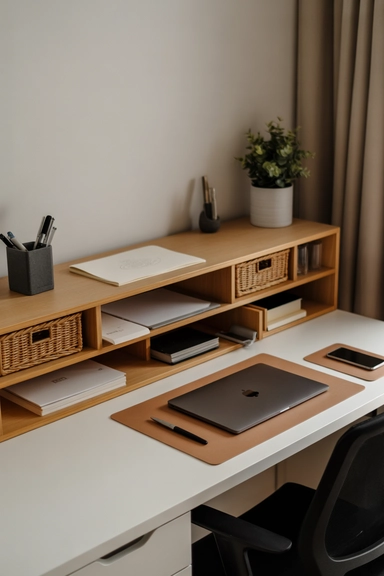
Most desk storage problems begin with trying to organize items that should not live on the surface at all. Pens, papers, cables, and tools often accumulate because the desk becomes a default landing zone rather than a controlled workspace. When too many items remain visible, the eye has no place to rest, and even organized setups feel cluttered and distracting.
Clearing the desk surface first establishes a visual baseline. Only items required for active work should remain visible. Everything else must earn its place through frequency of use. This step immediately reduces visual noise and prevents storage from becoming an excuse to keep unnecessary items within arm’s reach.
2. Use IKEA Drawer Inserts to Separate Functions, Not Just Items
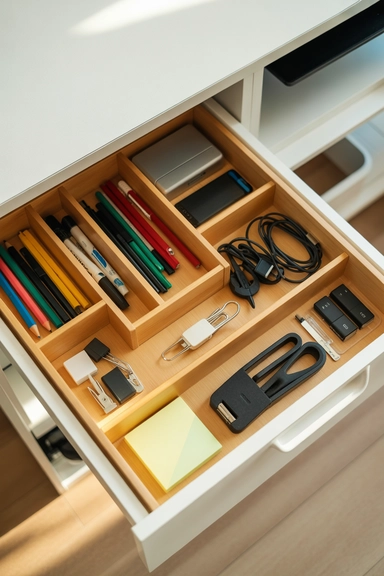
Drawer inserts fail when they divide space by object type instead of by task. Grouping all pens together or all cables together ignores how items are actually used during work. This leads to frequent drawer rummaging and surface sprawl as items are pulled out and not returned.
Using IKEA drawer inserts to separate functions improves clarity. Everything needed for a specific task lives in one compartment. This shortens setup and cleanup time and keeps the desk surface clear. Functional grouping reduces friction, which is essential for maintaining visual order in daily workspaces.
If your drawers still feel messy even after organizing, it means items are grouped the wrong way. This is where drawer divider setups help keep everything structured before clutter spreads back to the desk.
3. Keep Vertical Storage Below Eye Level
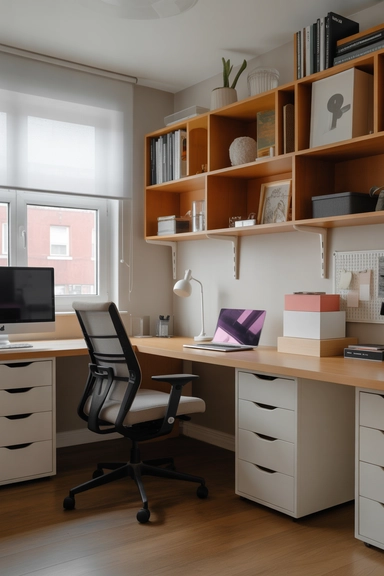
Vertical desk storage often creates more clutter than it solves. Tall organizers, stacked shelves, or upright file holders pull attention upward and crowd the visual field. In small workspaces, this makes the desk area feel boxed in and mentally heavy.
Keeping vertical storage below eye level restores balance. Lower shelves, drawers, or under-desk units absorb volume without competing for attention. The workspace feels lighter because sightlines remain open. This strategy keeps necessary items nearby while preserving visual calm, which is critical for focused work.
4. Use IKEA Cable Management to Remove Visual Interruptions
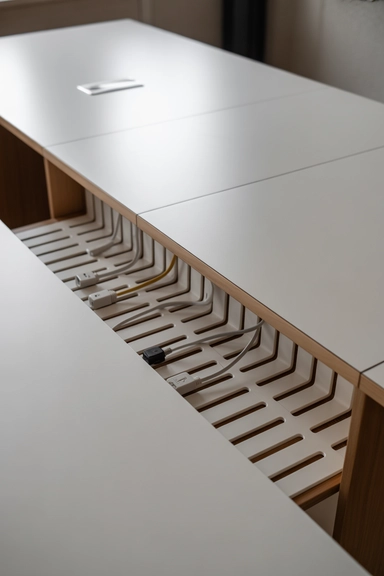
Cables create instant visual clutter because they introduce irregular lines and uncontrolled movement across the desk. Even when everything else is organized, loose cords break visual order and make the workspace feel unfinished. Many desks appear cluttered not because of objects, but because cables remain visible, tangled, or draped across surfaces. This visual disruption pulls attention away from work and increases mental fatigue over time.
IKEA cable management solutions work best when they fully remove cables from the visual plane. Under-desk trays, adhesive clips, and rear-mounted channels guide cords out of sight while keeping them accessible. When cables disappear, the desk surface immediately feels calmer and more intentional. This change alone can dramatically improve perceived organization without adding any new storage volume.
If cables are still visible after organizing, they’re breaking the visual flow of your workspace. This is where cable organization hacks help remove distractions before clutter builds up again.
5. Store Frequently Used Items Within Reach but Out of Sight
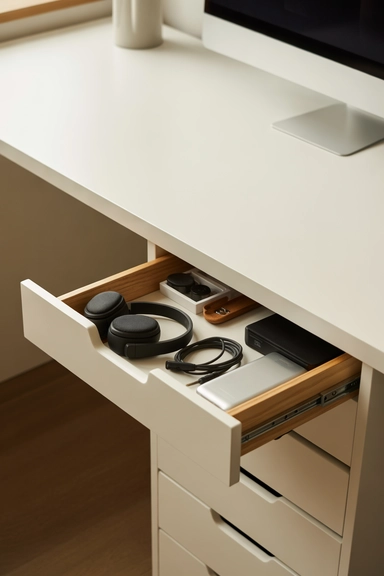
Desks fail when frequently used items have no defined home beyond the surface itself. Tools that are used daily—such as notebooks, headphones, or chargers—often remain visible because hiding them feels inconvenient. Over time, these items form permanent surface clutter that erodes visual clarity, even though each item feels justified.
Effective IKEA desk storage balances accessibility with concealment. Shallow drawers, sliding trays, or side-mounted storage allow items to remain within reach without staying visible. When frequently used items disappear between uses, the desk resets visually without effort. This approach keeps the workspace functional while preventing gradual surface overload.
6. Limit Desktop Containers to Prevent Over-Segmentation
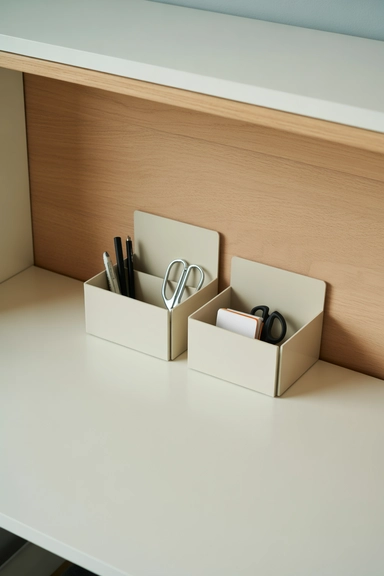
Too many small containers create visual fragmentation. Pencil cups, trays, and mini organizers multiply easily, especially when they are inexpensive or modular. While each container feels helpful individually, together they clutter the desk by breaking it into too many visual zones. This segmentation makes the surface feel busy and distracts from focused work.
Limiting the number of desktop containers restores cohesion. One or two well-chosen organizers outperform several smaller ones. Fewer containers force prioritization, ensuring only essential tools remain on the desk. This restraint keeps the workspace readable and prevents storage from becoming another form of clutter.
If your desk feels cluttered even with organizers, it usually means there are too many containers competing for space. This is where desk organization ideas help simplify your setup before it becomes visually overwhelming.
7. Use IKEA Shelf Units to Frame, Not Crowd, the Desk
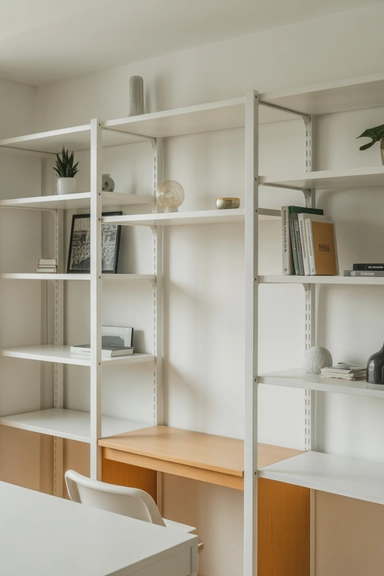
Shelving around a desk often becomes overloaded because it feels like available space. When shelves are filled edge to edge, they dominate the visual field and overwhelm the workspace below. This makes the desk feel compressed and mentally heavy, even if items are neatly arranged.
Using IKEA shelf units as frames rather than storage walls preserves visual calm. Leaving open space around shelves and limiting depth prevents crowding. The desk remains the focal point, supported rather than surrounded by storage. This framing approach maintains order while keeping the workspace visually breathable.
8. Use IKEA Drawer Units to Absorb Paper Without Surface Spread
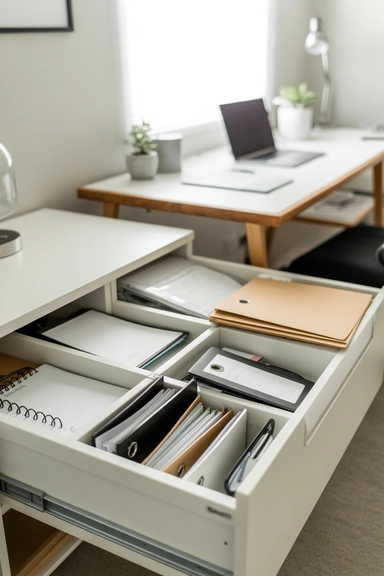
Paper clutter overwhelms desks quickly because it stacks horizontally and spreads across surfaces. Documents, notebooks, and loose sheets accumulate when there is no clear vertical containment. In workspaces, paper often remains visible because filing feels tedious or storage feels too distant. Over time, even small paper volumes dominate the desk and reduce usable space.
IKEA drawer units work best when dedicated specifically to paper control. Assigning drawers by purpose—active work, reference, and archive—prevents surface buildup. When paper has a predictable path off the desk, visual clutter drops immediately. This structure keeps paper accessible without letting it define the workspace visually.
9. Keep Storage Symmetrical to Maintain Visual Balance
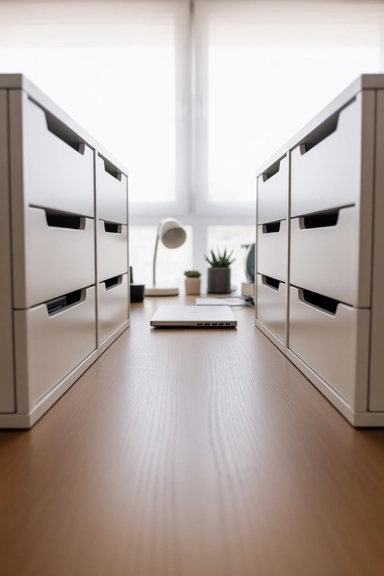
Asymmetrical desk storage introduces subtle visual tension. When one side of a desk holds more containers, shelves, or accessories than the other, the imbalance registers subconsciously as disorder. Even well-organized items can feel chaotic when weight and distribution are uneven. This is especially noticeable in compact desks where every element is close to the visual field.
Maintaining symmetry restores calm. Matching drawer units, balanced shelving, or evenly distributed accessories create stability. Symmetry does not require identical items, but it does require equal visual weight. When storage feels balanced, the workspace reads as intentional rather than improvised, supporting sustained focus.
10. Push Secondary Storage Away From the Desk Edge
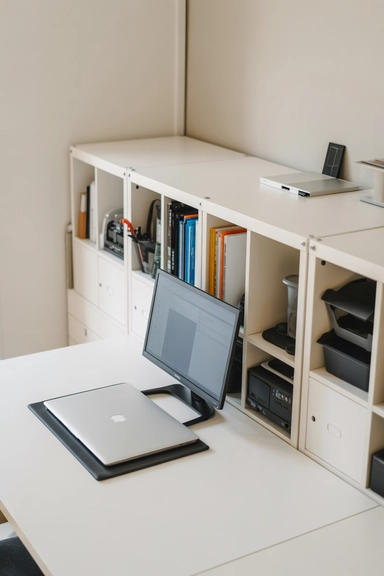
Storage placed directly on the desk edge crowds the active work zone. Items stored too close reduce usable surface area and create constant visual pressure. In many setups, secondary tools linger at the edge simply because they are convenient, not because they are needed during active work.
Pushing secondary storage slightly away restores breathing room. Using side units, rear shelves, or under-desk solutions clears the edge and defines the work area. This separation improves both ergonomics and visual clarity. The desk feels purposeful because the active zone remains distinct from storage zones.
11. Prevent Desk Storage From Becoming a Catchall
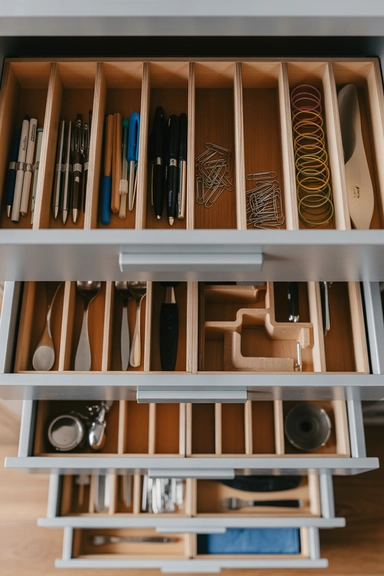
Desk storage fails when it accepts unrelated items without resistance. Drawers and trays easily turn into catchalls when their purpose is not clearly defined. Over time, this leads to rummaging, surface overflow, and a sense that storage is not actually helping organization.
Preventing catchall behavior requires narrow purpose. Each desk storage element should support a specific task or category. When storage resists randomness, items return more reliably. The desk stays clear because storage enforces intention instead of absorbing everything indiscriminately.
12. Use IKEA Wall Storage to Lift Clutter Off the Desk
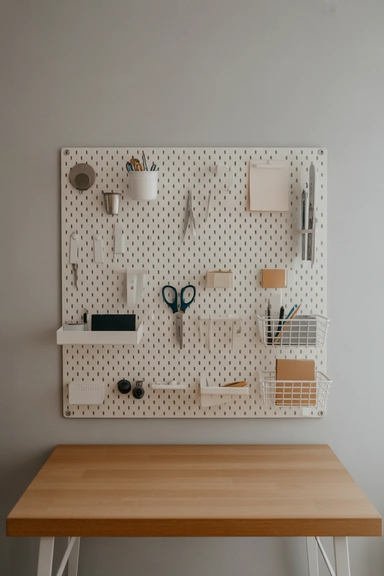
Desk clutter often persists because storage competes with the active work surface instead of supporting it. When storage lives on the desk, even organized items reduce usable space and crowd sightlines. In small work areas, this creates constant visual pressure that makes the desk feel cramped and distracting.
IKEA wall storage lifts necessary items upward without adding surface clutter. Pegboards, rails, or shallow wall shelves keep tools accessible while preserving the desk plane. When vertical storage is used intentionally and sparingly, it supports function without overwhelming the workspace visually. The desk feels clearer because storage works around it, not on it.
If your desk still feels crowded, it means storage is competing with your workspace instead of supporting it. This is where wall organization ideas help move clutter off the surface before it takes over again.
13. Keep Reference Items Visible but Contained
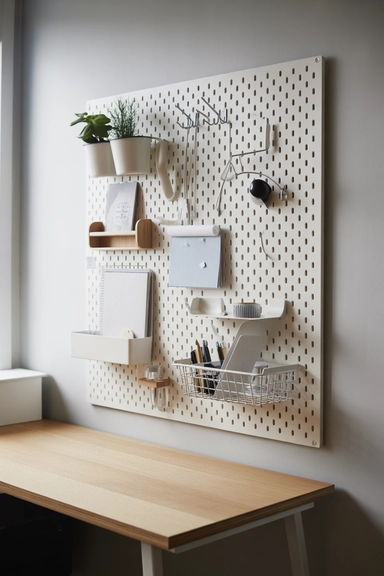
Reference items such as notebooks, planners, or manuals are often used daily but not constantly. Leaving them spread across the desk adds visual noise, yet hiding them completely creates friction. This tension causes items to linger on surfaces long after they are needed.
Containing reference items solves this problem. A single upright file holder, slim shelf, or side compartment keeps them visible without letting them spread. Visibility remains intentional and limited. The desk feels organized because reference materials are present without dominating the visual field or interrupting active work.
14. Use IKEA Storage With Shallow Depth to Avoid Overfilling
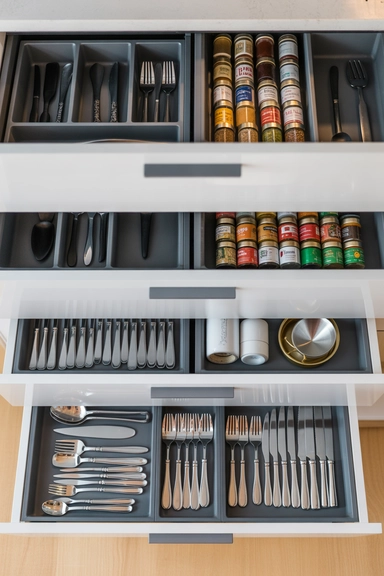
Deep storage invites overfilling. When drawers or shelves can hold more than intended, items accumulate beyond necessity. In desk setups, this leads to cluttered drawers that eventually spill back onto the surface because retrieval becomes frustrating.
Shallow IKEA storage limits accumulation naturally. Reduced depth forces selectivity and keeps contents visible. When storage cannot hide excess, organization stays honest. This design constraint helps maintain long-term clarity because items must earn their place. The desk remains clear because storage never becomes a dumping ground.
15. Separate Work Tools From Personal Items
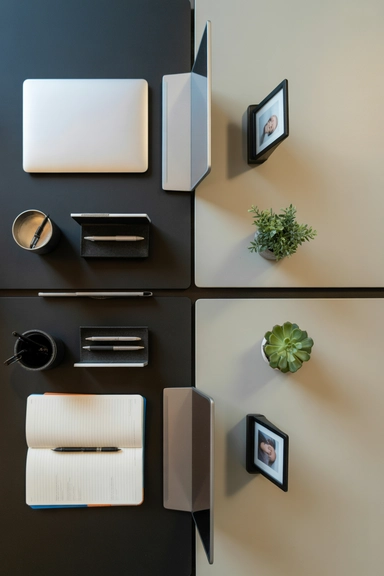
Workspaces become visually cluttered when personal items mix with tools and materials. Mugs, decor, accessories, and office supplies blend together, creating confusion about what belongs where. This mixing increases decision fatigue and slows cleanup, especially in shared or multifunctional spaces.
Separating work tools from personal items restores structure. Dedicated zones prevent overlap and make reset faster. When each category has a clear boundary, the desk reads as intentional rather than layered. This separation keeps the workspace professional and visually calm, even when personal touches remain.
16. Keep the Desk Center Completely Clear
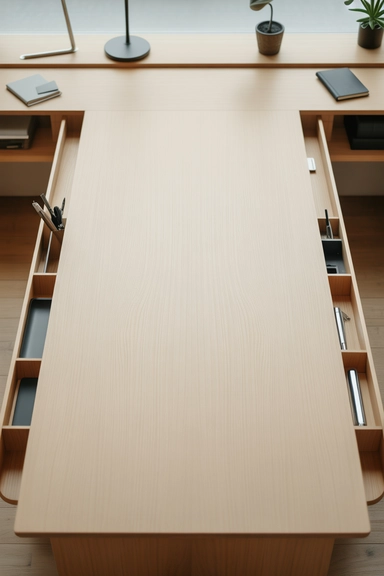
The center of the desk is the most visually dominant zone and should remain as open as possible. When items creep into this space, even temporarily, they disrupt focus and compress the work area. Many desks feel cluttered not because of volume, but because the central workspace has been compromised by storage, accessories, or unfinished tasks.
Protecting the desk center restores visual order immediately. Storage shifts outward to drawers, side units, or wall-mounted solutions. The clear center acts as a visual anchor, making the entire workspace feel calmer and more intentional. This simple boundary improves both productivity and visual clarity without adding storage.
17. Use IKEA Under-Desk Storage to Hide Bulk Items
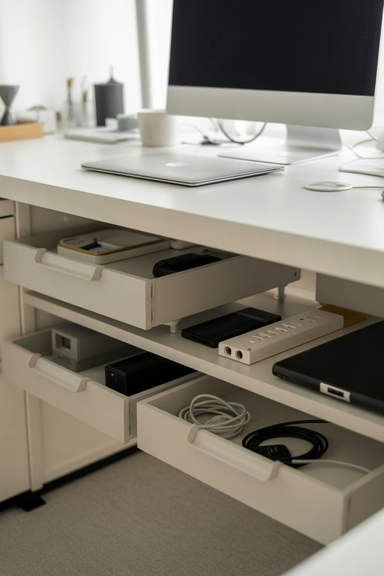
Bulk items such as power strips, extra equipment, or rarely used tools often linger near the desk because they are awkward to place elsewhere. When these items remain visible, they create visual heaviness that makes the workspace feel crowded and unfinished.
IKEA under-desk storage absorbs bulk without interfering with sightlines. Low-profile drawers or shelves beneath the desk keep items accessible while removing them from view. This strategy preserves floor space and keeps the visual field clean. The desk feels lighter because necessary bulk exists without visual presence.
If bulky items keep showing up around your desk, it means they’re not being stored out of sight properly. This is where under-desk storage ideas help keep everything hidden before clutter builds up again.
18. Limit Desk Decor to One or Two Anchors

Decor becomes clutter when it competes with function. Multiple decorative items fragment attention and reduce the desk’s role as a work surface. In small workspaces, even attractive decor can feel overwhelming when too many elements demand attention simultaneously.
Limiting decor to one or two anchors restores balance. A plant, a framed image, or a single sculptural object provides personality without distraction. The workspace feels intentional because decor supports atmosphere rather than replacing structure. This restraint keeps the desk visually calm and easier to maintain.
19. Keep Storage Consistent Across the Workspace
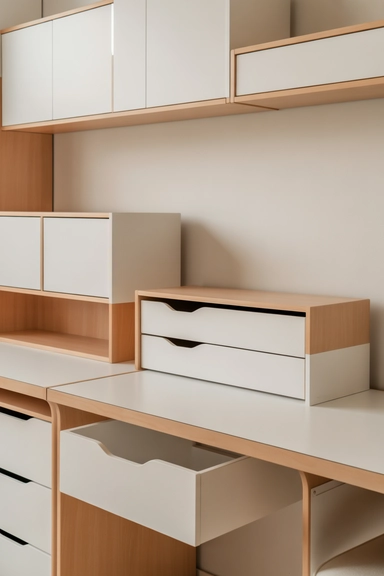
Inconsistent storage creates visual fragmentation. Mixing different finishes, styles, and proportions forces the eye to process each piece separately, increasing mental load. Even organized desks can feel cluttered when storage lacks cohesion.
Keeping IKEA storage consistent restores unity. Repeating materials, colors, or forms allows storage to fade into the background. The desk reads as a single system rather than a collection of parts. This consistency supports focus by reducing unnecessary visual processing throughout the workspace.
20. Leave Intentional Empty Capacity in Desk Storage
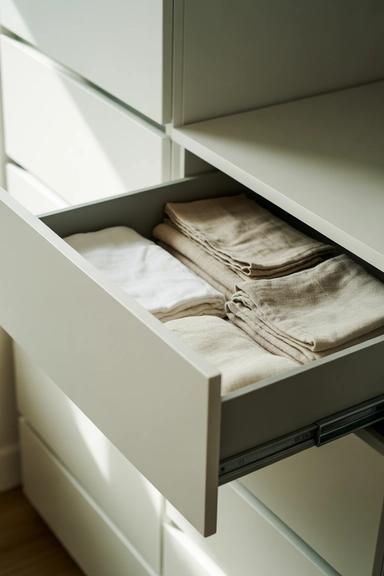
Desk storage fails when every drawer, shelf, and compartment is filled to its limit. When there is no spare capacity, new items immediately spill onto the desk surface, creating visual clutter even in otherwise organized setups. Overfilled storage also increases friction, making it harder to retrieve items and discouraging proper return. This pressure builds silently until disorder feels constant rather than situational.
Leaving intentional empty capacity stabilizes the system. A partially empty drawer or shelf absorbs temporary clutter without breaking visual order. This buffer allows the workspace to handle daily fluctuations naturally. The desk stays clear because storage can flex without forcing items back into view, supporting long-term visual calm.
21. Reevaluate Desk Storage as Work Habits Change

Desk organization quietly degrades when work habits evolve but storage remains static. New tools, workflows, or schedules change what needs to be accessible, even if the desk itself does not move. When storage no longer matches behavior, items drift to convenient but visually disruptive locations.
Periodic reevaluation prevents this breakdown. Adjusting drawer assignments, relocating tools, or removing outdated items restores alignment. Organization stays effective because it reflects current use rather than past assumptions. A desk remains visually clear when storage evolves alongside how work actually happens.
Conclusion
IKEA desk storage hacks only work long term when the system controls what stays visible and what stays hidden. Without that balance, even well-organized setups slowly turn back into clutter. These ideas focus on reducing visual noise, controlling surface exposure, and aligning storage with how you actually work. But if your desk still feels messy after trying different setups, something is missing. Most people never fix this part, and that’s why clutter keeps coming back. These pro organizing strategies show how to fix the system so it actually holds over time.