
Introduction
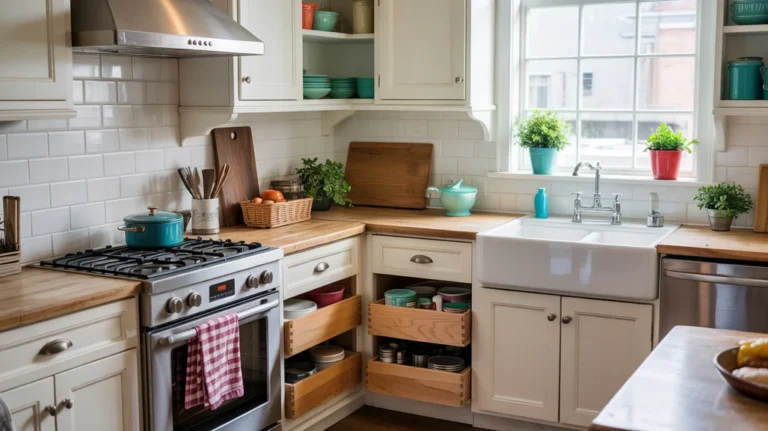
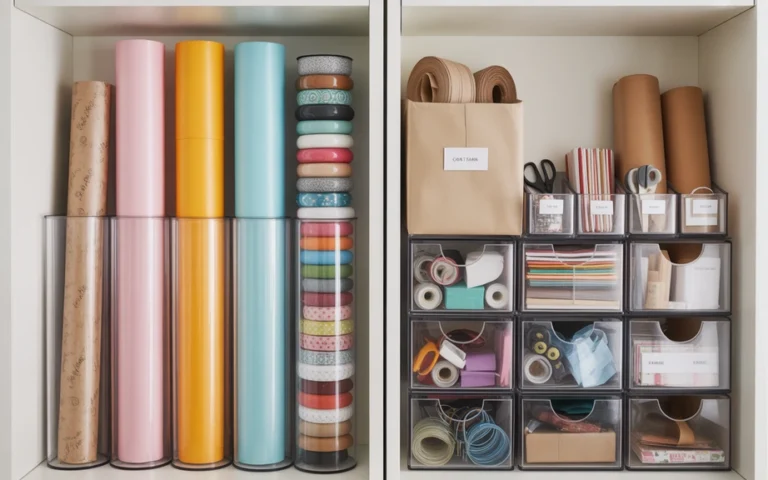
Apartments amplify visual clutter faster than larger homes because storage, circulation, and daily activity are compressed into fewer zones. When organization is poorly planned, even small amounts of disorder dominate sightlines and make the space feel crowded. The issue is not volume alone but visibility, overlap, and unclear boundaries between functions. Effective apartment organizing hacks focus on reducing what the eye has to process rather than hiding everything indiscriminately. When storage decisions prioritize visual quiet, predictable placement, and controlled density, apartments feel calmer almost immediately—without relying on constant tidying or excessive furniture, a principle that also underpins Smart Tiny Home Organizing Hacks That Save Space.
1. Remove Objects That Do Not Support Daily Apartment Use
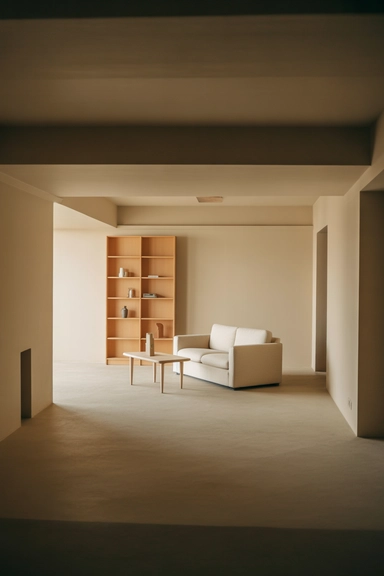
Apartments suffer most when they retain items that no longer match daily routines. Furniture, decor, or storage pieces that once felt useful often remain long after habits change. These objects continue to occupy visual and physical space, creating friction even if they are rarely used. Because apartments have limited margins, every unnecessary item increases visual competition and makes the space feel tighter than it is.
Removing non-supportive objects restores clarity quickly. Sightlines open, circulation improves, and remaining items gain breathing room. This is not about minimalism, but alignment. When each object serves a current function, the apartment feels intentional rather than inherited from past routines.
2. Collapse Multiple Small Storage Areas Into Fewer Clear Zones
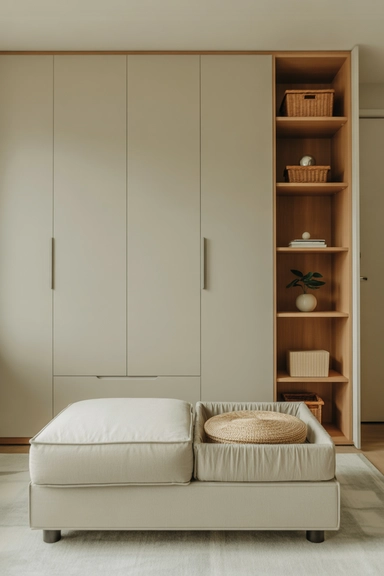
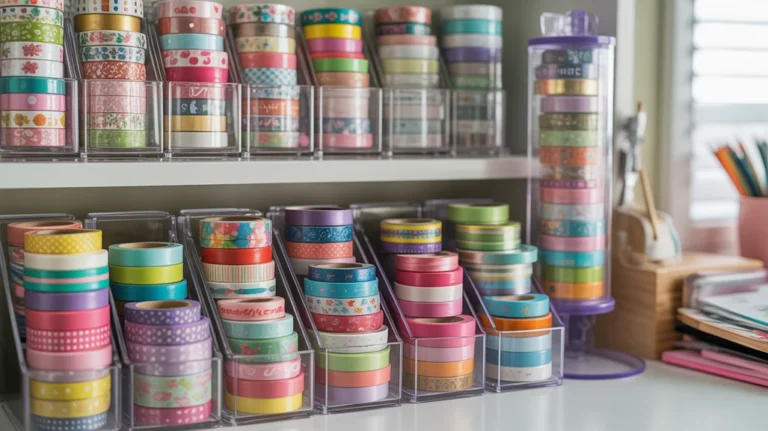
Visual clutter increases when storage is fragmented across many small areas. Multiple baskets, bins, and shelves create visual interruption, even if each one is organized. In apartments, this fragmentation makes the space feel busy because the eye is constantly switching focus between storage points.
Collapsing storage into fewer, well-defined zones reduces that noise. Larger, consolidated storage areas give the eye places to rest. Items are easier to manage because categories are centralized rather than scattered. This single change often reduces perceived clutter without removing anything.
3. Control What Lives at Eye Level First
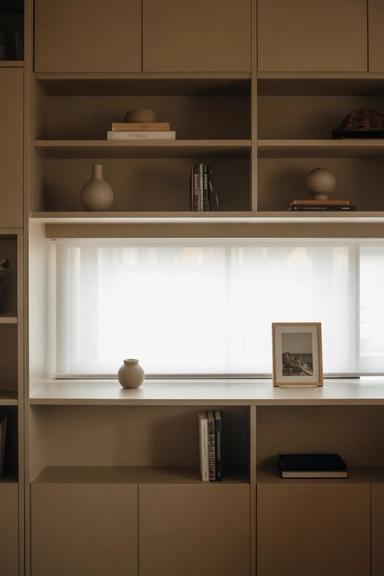
Eye-level clutter is processed faster and more aggressively than clutter elsewhere. In apartments, shelves, counters, and console tops often sit directly in the primary visual field, making even small collections feel overwhelming. When eye-level zones are crowded, the entire apartment reads as cluttered.
Reducing eye-level density creates immediate relief. Items move lower, behind closed storage, or into controlled groupings. The apartment feels calmer not because it holds less, but because the most visually dominant areas are quieted first.
4. Separate Visual Storage From Functional Storage
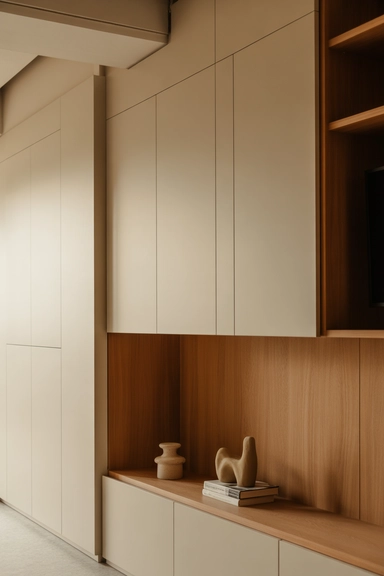
Apartments fail visually when every storage solution is treated the same. Functional items that support daily life often end up sharing space with decorative or identity-driven objects. When both compete in the same visual plane, the room feels crowded even if storage volume is reasonable. Visual clutter is not caused by quantity alone; it is caused by mixed signals. Items meant to be used quietly should not demand attention, and items meant to be seen should not carry storage burden.
Separating visual storage from functional storage restores hierarchy. Closed cabinets absorb practical volume, while limited open areas communicate intention. This separation allows apartments to remain expressive without feeling busy. Storage stops acting as decor, and decor stops acting as storage, which reduces visual noise immediately.
5. Reduce Surface Depth to Prevent Accumulation
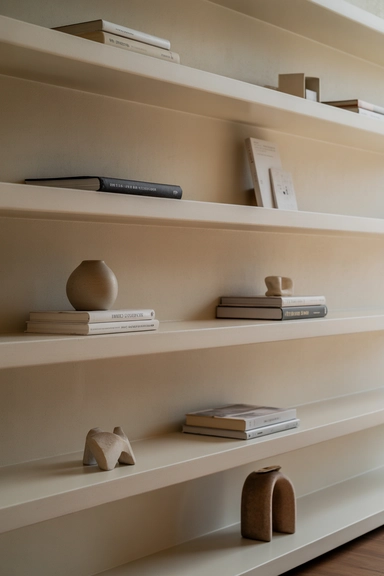
Deep surfaces invite accumulation because they can hold more than intended. Console tables, shelves, and countertops with excessive depth encourage layering, stacking, and forgotten objects. In apartments, these surfaces become visual magnets for clutter because they offer too much tolerance. Items stay because there is no natural pressure to remove them.
Reducing usable surface depth forces selectivity. When surfaces only accommodate what is necessary, objects must earn their place. This physical limitation prevents gradual buildup and keeps surfaces readable. Shallow depth works as a silent boundary that controls clutter without requiring constant discipline or reminders.
6. Assign Storage Based on Behavior, Not Categories
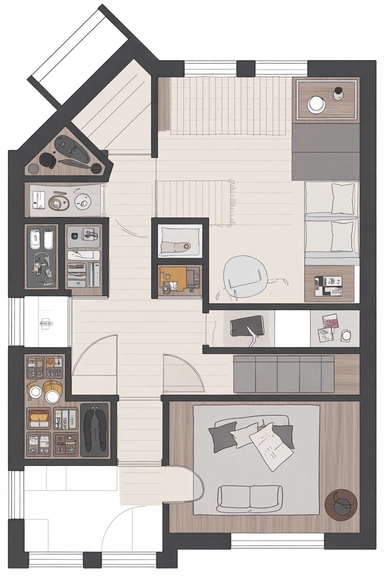
Traditional organization groups items by type, but apartments benefit more from behavior-based storage. Items used together should live together, even if they belong to different categories. When storage ignores behavior, objects migrate toward convenience, creating clutter in visible areas.
Behavior-based storage reduces friction. Items return to place because placement matches routine. This alignment prevents visual drift caused by convenience stacking. Apartments stay clearer because storage supports how people actually live, not how items are labeled.
7. Keep the Center of the Room Visually Open
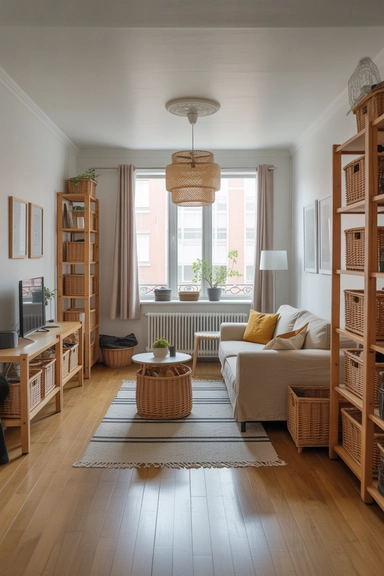
Apartments feel crowded fastest when the center of the room becomes visually occupied. Coffee tables overloaded with objects, floor baskets placed mid-path, or furniture pushed inward compress sightlines and disrupt movement. Even small obstructions here dominate perception.
Keeping the center visually open restores spatial balance. Storage shifts to edges, walls, and corners, allowing the room to breathe. This openness improves circulation and reduces the sense of clutter immediately. The apartment feels calmer because the eye has a clear anchor point instead of constant interruption.
8. Limit Storage Variety to Reduce Visual Fragmentation
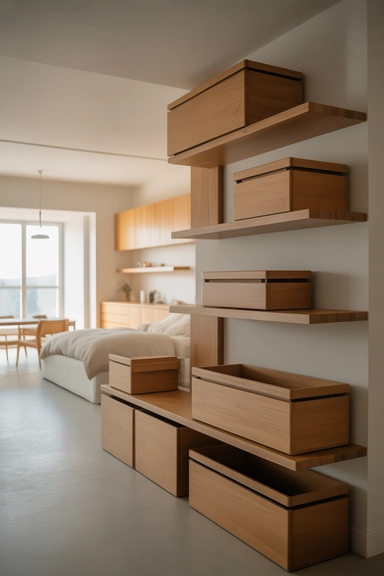
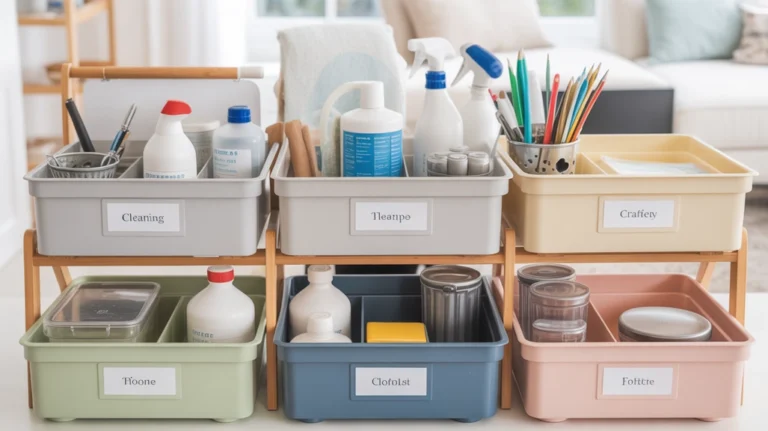
Apartments accumulate visual clutter when storage solutions vary too much in size, material, or style. Even well-organized items feel chaotic when containers compete visually. Different baskets, bins, and shelving units break visual continuity, forcing the eye to constantly reprocess form and scale. In smaller spaces, this fragmentation magnifies disorder because storage itself becomes a focal point rather than a background element.
Limiting storage variety restores cohesion. Repeating similar forms, finishes, and proportions allows storage to recede visually. The apartment feels calmer because the eye reads patterns instead of interruptions. This does not reduce capacity, but it dramatically reduces perceived clutter by simplifying what the eye must track.
9. Move Bulk Items Out of Primary Sightlines
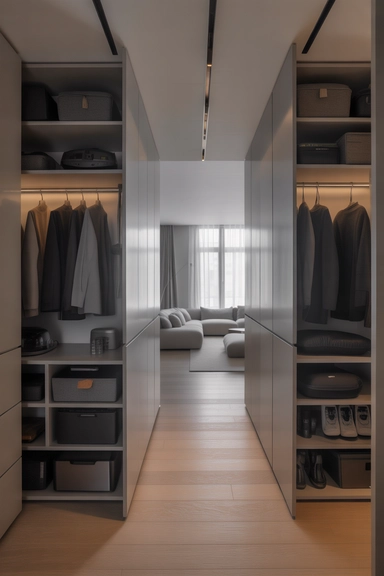
Bulk items create visual pressure simply by occupying volume, even when neatly stored. In apartments, items like extra linens, equipment, or seasonal gear often sit in visible areas because space feels scarce. When bulk storage dominates sightlines, the room feels compressed and visually heavy.
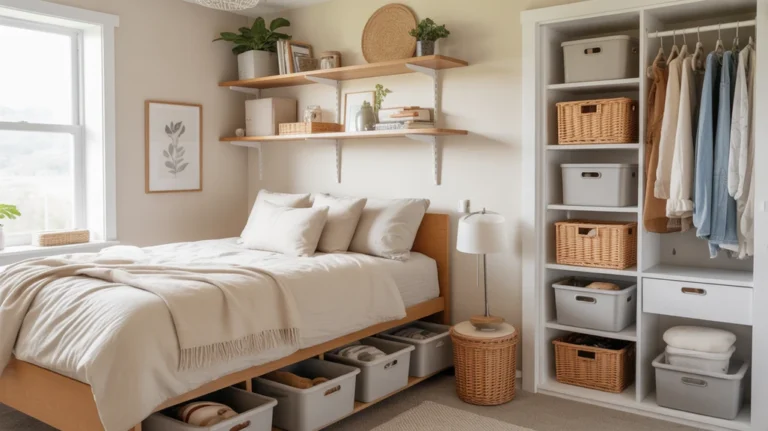
Relocating bulk items to secondary zones immediately relieves that pressure. Storage closer to floors, inside closed units, or deeper within closets absorbs volume without broadcasting it. The apartment feels lighter because primary sightlines remain clear. This change improves perception without changing how much is actually stored.
10. Use Height Strategically to Control Visual Weight
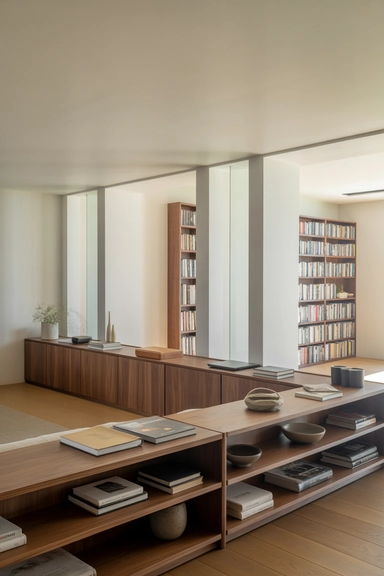
Height influences how storage is perceived. Tall storage elements draw attention upward and can overwhelm apartments if used indiscriminately. When everything reaches eye level or higher, the room feels boxed in, even if floor space remains open.
Strategic height use restores balance. Lower storage grounds the space, while occasional taller elements provide structure without dominance. When height variation is intentional rather than uniform, storage feels integrated instead of imposing. The apartment reads as composed because visual weight is distributed thoughtfully rather than stacked vertically.
11. Reduce the Number of Decision Points in Shared Areas
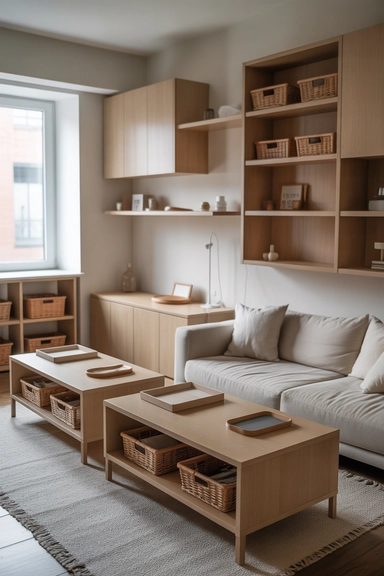
Visual clutter increases when people face too many placement options. Multiple shelves, surfaces, and bins create hesitation, leading items to land wherever is easiest. In apartments, this hesitation compounds quickly, turning shared areas into passive storage zones.
Reducing decision points simplifies behavior. Fewer storage options mean clearer returns. Items go back automatically because choices are limited. This structural simplicity keeps apartments clear even during busy periods, as organization no longer relies on constant attention or perfect habits.
12. Consolidate Paper and Loose Items Into One Controlled Zone
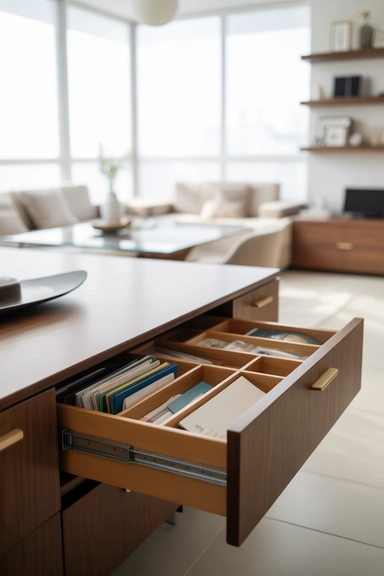
Apartments generate paper clutter quietly through mail, receipts, manuals, and documents that lack an obvious destination. When these items spread across tables, shelves, and drawers, they fragment attention and make spaces feel perpetually unfinished. Multiple small paper piles feel harmless individually but collectively dominate sightlines, especially in compact living areas.
Consolidating paper into a single, controlled zone restores visual order quickly. One drawer, file box, or cabinet dedicated to paper eliminates drift. Items stop appearing randomly because there is only one acceptable destination. This containment reduces visual noise without requiring constant sorting and keeps shared areas clear of slow-accumulating clutter.
13. Keep Soft Items From Spreading Across Furniture
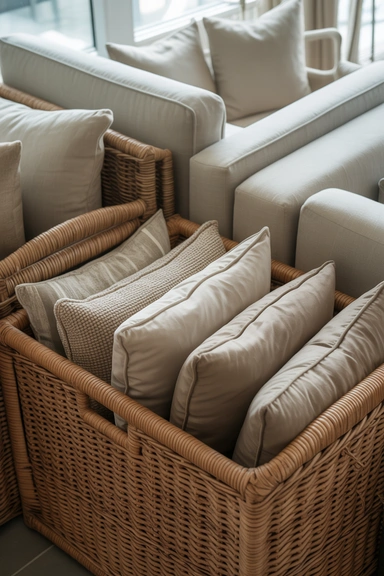
Soft items such as throws, pillows, and blankets contribute to visual clutter when they spread across seating and floors. In apartments, these items multiply quickly and are rarely returned to place because they feel informal. Over time, seating loses definition and rooms feel visually loose rather than composed.
Containing soft items restores structure. Assigning a single basket, drawer, or storage bench prevents overflow and keeps furniture readable. When soft items have limits, they support comfort without overwhelming the room. The space feels intentional because textiles enhance seating instead of obscuring it.
14. Align Storage Placement With Natural Light Paths
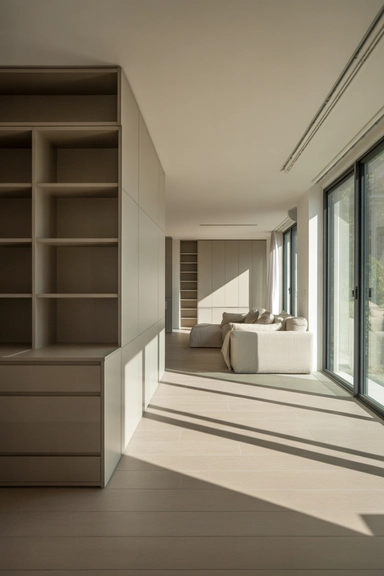
Natural light amplifies clutter by highlighting contrast, shadows, and visual interruptions. In apartments, poorly placed storage can block light or create shadow-heavy zones that exaggerate disorder. When storage interferes with light paths, rooms feel smaller and visually heavier.
Aligning storage with light paths preserves openness. Keeping windows, low-light walls, and bright zones free of dense storage allows light to move uninterrupted. The apartment feels clearer because light defines space rather than bouncing off clutter. This adjustment improves visual calm without changing storage volume.
15. Remove Storage That Encourages Passive Accumulation
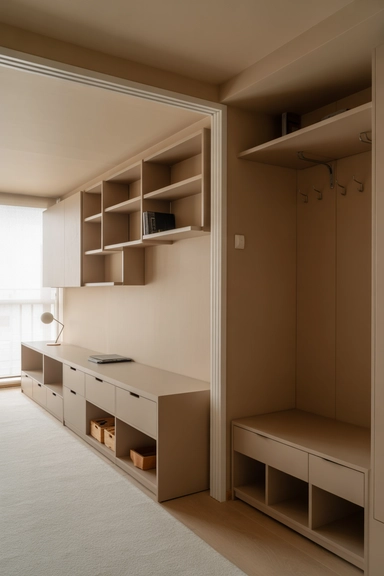
Not all storage is helpful. Some bins, trays, and shelves encourage passive accumulation by accepting anything placed inside them. In apartments, these catchall solutions quietly collect clutter under the guise of organization, making cleanup harder rather than easier.
Removing or limiting these storage types forces intentional placement. When storage requires a decision rather than offering endless tolerance, clutter slows. Items either find a proper home or leave the space. This shift prevents the apartment from becoming a holding area for unresolved objects.
16. Use Furniture With Concealed Storage to Absorb Visual Noise
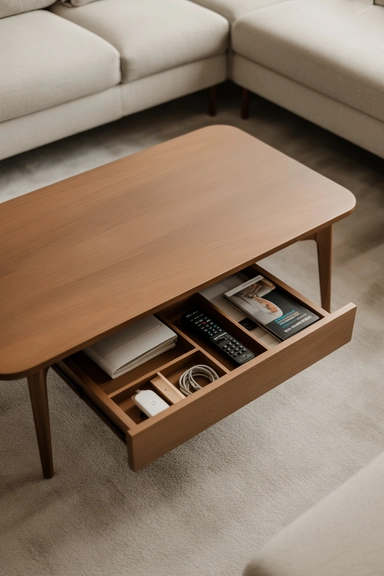
In apartments, furniture often performs multiple roles, and concealed storage becomes critical for maintaining visual calm. Open storage exposes volume and detail that the eye must constantly process. When everyday items remain visible, even tidy rooms feel busy. Furniture that hides storage—such as sofas with internal compartments or benches with lift tops—absorbs this visual noise without adding more pieces to the room.
Concealed storage works best when it aligns with natural use. Items placed inside should support the furniture’s function rather than fight it. When storage disappears into furniture, the apartment feels simpler because necessary objects exist without announcing themselves visually.
17. Protect Corners From Becoming Overflow Zones
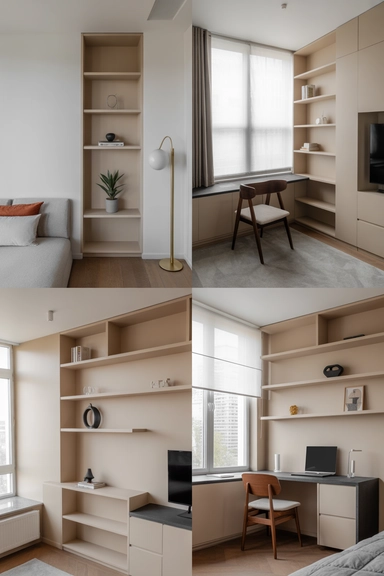
Corners quietly collect clutter because they feel out of the way. In apartments, this leads to stacked items that lack purpose or structure. Over time, corners become visual dead zones that make rooms feel unfinished, even when the rest of the space is organized.
Protecting corners requires intentional use or intentional emptiness. Either assign a clear function—such as a defined storage unit—or leave the corner open to preserve visual breathing room. When corners are resolved deliberately, clutter loses one of its most common hiding places.
18. Reduce Redundancy in Multi-Use Furniture
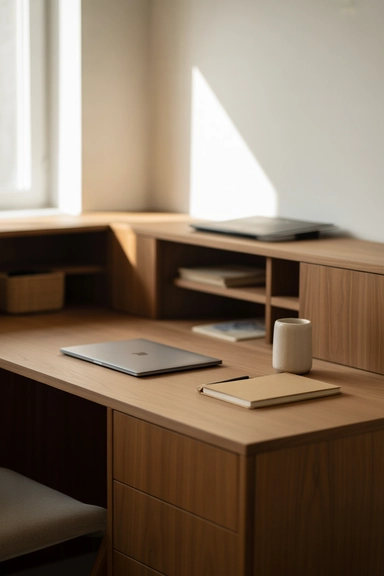
Multi-use furniture often becomes cluttered because it attracts overlapping functions. A table that serves as desk, dining surface, and storage point collects unrelated items quickly. In apartments, this redundancy compounds visual disorder because one piece carries too many roles.
Reducing redundancy clarifies use. Assigning primary and secondary functions limits accumulation. When furniture supports fewer purposes, items stay aligned with intent. The apartment feels clearer because surfaces no longer host competing activities simultaneously.
19. Keep Storage From Breaking Sightlines Across Rooms
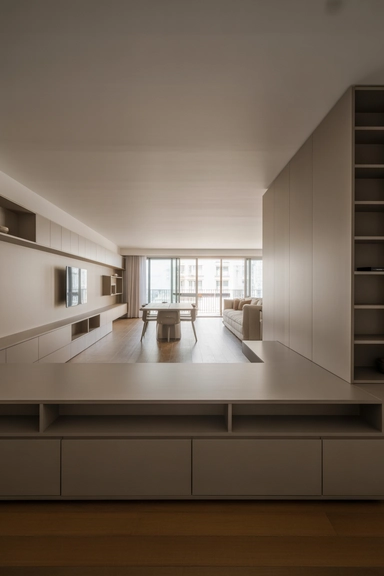
Apartments often rely on open layouts, where sightlines connect multiple zones. Storage that interrupts these lines fragments space visually, making the apartment feel smaller and more cluttered. Tall shelves, stacked bins, or furniture placed mid-line block visual flow.
Preserving sightlines restores openness. Keeping storage low or aligned with walls allows the eye to travel uninterrupted. Even when storage volume remains unchanged, the apartment feels larger and calmer because visual continuity is protected across rooms.
20. Leave Intentional Empty Capacity to Prevent Visual Spillover
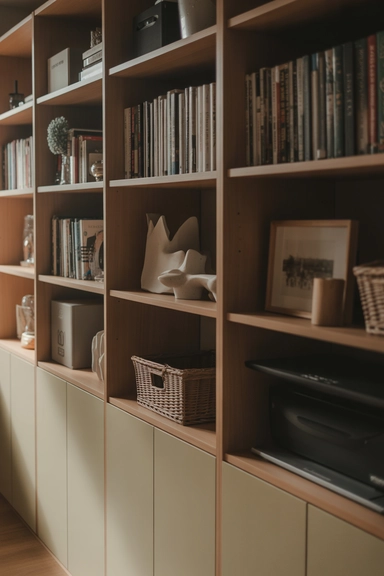
Apartments fail visually when storage is filled to its limit. Fully packed shelves, drawers, and cabinets leave no margin for daily fluctuation, so excess items spill into visible areas. This creates the illusion of constant clutter even when organization systems exist. The issue is not ownership volume but lack of slack. When storage has no breathing room, it cannot absorb change, and disorder becomes inevitable.
Leaving intentional empty capacity stabilizes the system. Space acts as a buffer that absorbs short-term clutter without breaking structure. When new items arrive, they are contained instead of displaced. This restraint keeps apartments visually calm because organization remains resilient rather than brittle.
21. Reevaluate Apartment Storage as Routines Shift
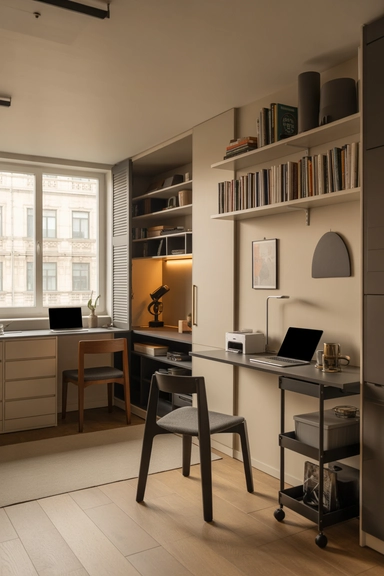
Apartment organization quietly degrades when routines change but storage does not. New work patterns, hobbies, or household dynamics alter how space is used, even if furniture stays the same. When storage no longer matches behavior, items settle wherever friction is lowest, creating slow visual drift rather than obvious mess.
Regular reevaluation prevents this breakdown. Adjusting placement, capacity, or access based on current routines restores alignment. Organization stays effective because it evolves with use. Apartments remain visually clear not through constant tidying, but through systems that stay relevant as habits change.
Conclusion
Apartment organizing hacks succeed when they reduce what the eye must process rather than simply hiding belongings. By consolidating storage, protecting sightlines, controlling visual density, and leaving intentional capacity, apartments regain clarity quickly and sustainably. The most effective systems align storage with real behavior and evolving routines instead of fixed assumptions. When organization supports how the space is actually lived in, visual clutter fades without constant effort, and small apartments feel calmer, lighter, and easier to maintain over time.