
Introduction
Towels are one of the most visually disruptive items in a bathroom because they are bulky, repetitive, and used multiple times a day. When towel storage is poorly planned, even a clean bathroom can feel crowded and disorganized. Effective towel organizing ideas focus less on adding storage and more on controlling volume, placement, and access. When towels are stored in a way that reflects how they are grabbed, dried, and returned, clutter naturally decreases. A well-structured towel system also improves airflow and hygiene, helping bathrooms stay functional and visually calm over time, especially when paired with creative bathroom storage ideas to maximize space.
1. Vertical Towel Storage That Uses Wall Height Efficiently
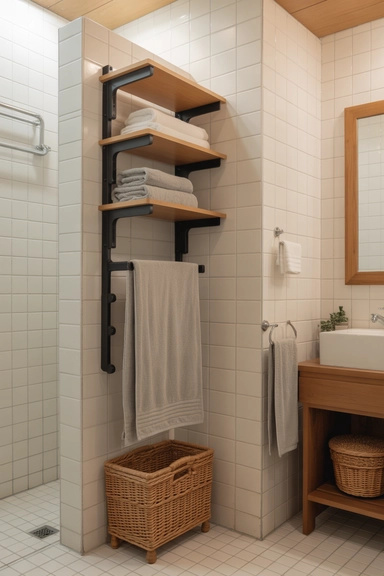
Vertical storage is one of the most effective towel organizing ideas for reducing bathroom clutter without expanding the footprint. By moving towels upward rather than outward, wall-mounted racks or narrow shelving free floor space and prevent bulky piles from forming. Vertical systems also keep towels visible and reachable, which discourages stacking extras on counters or toilet tanks.
The success of vertical storage depends on proportion and spacing. Shelves that are too deep encourage overloading, while overly tight spacing restricts airflow. In small bathrooms, vertical storage keeps towels contained within a narrow visual column. In larger bathrooms, it establishes a clear storage zone that prevents towels from spreading across unrelated surfaces.
2. Rolled Towel Storage That Controls Bulk and Visual Noise
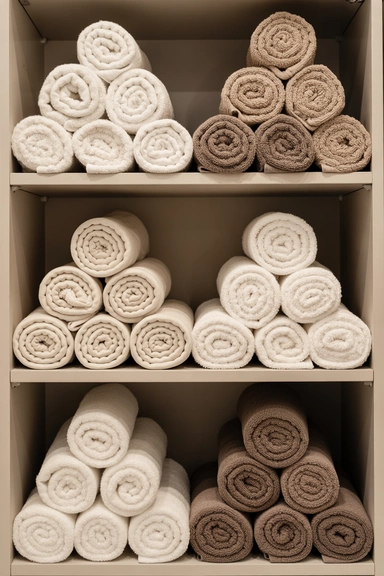
Rolling towels instead of folding them flat is a practical organizing strategy that reduces visual bulk. Rolled storage compresses volume and creates uniform shapes, making shelves and baskets feel more ordered. This approach works especially well in open storage, where visual consistency plays a major role in keeping bathrooms from feeling cluttered.
Rolled storage requires defined boundaries to remain effective. Without containment, rolls loosen and collapse into piles. Baskets, cubbies, or shelf dividers maintain structure and prevent drift. In small bathrooms, rolled towels maximize limited shelf depth. In larger spaces, they provide a controlled, spa-like appearance without sacrificing accessibility.
3. Zoned Towel Organization Based on Use Frequency
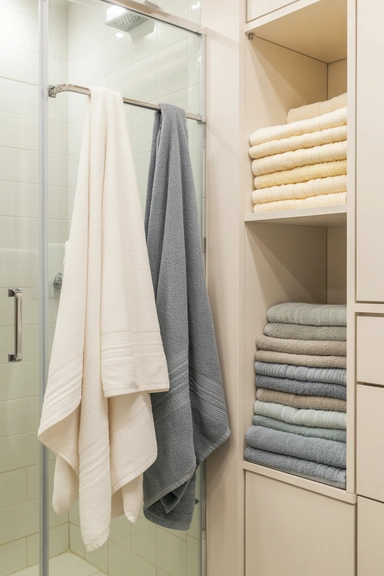
Not all towels need equal access, which makes zoning a foundational principle in towel organizing ideas. Towels used daily should live closest to showers or sinks, while guest or backup towels belong in secondary storage. Without zoning, towels accumulate in convenient but inappropriate places, increasing clutter.
Effective zoning reduces decision fatigue. When each category has a defined location, towels return to storage naturally after use. In small bathrooms, zoning prevents overcrowding near fixtures. In larger bathrooms, it limits unnecessary duplication across cabinets and shelves. A zoned system aligns storage with real usage rather than theoretical convenience.
4. Closed Storage That Reduces Visual Clutter Instantly
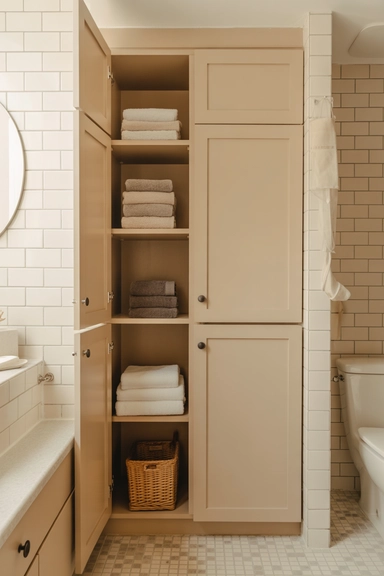
Open towel storage is not always the best solution, particularly in bathrooms with limited space or visual overload. Closed storage options such as cabinets or drawers instantly reduce clutter by removing bulky textiles from sight. This approach works well when bathrooms already contain strong visual elements like tile patterns or hardware finishes.
Closed storage must remain shallow and intentional to avoid becoming a dumping ground. Overly deep cabinets encourage overstocking, which reintroduces clutter internally. In small bathrooms, closed storage creates visual calm. In larger bathrooms, it balances open displays by absorbing excess volume and maintaining overall order.
5. Floating Storage That Keeps Floors Clear
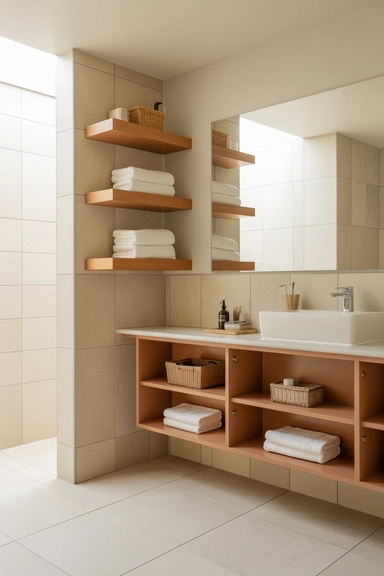
Floating towel storage reduces bathroom clutter by preserving clear floor space, which significantly affects how spacious a room feels. Wall-mounted shelves or floating cabinets lift bulk off the floor, preventing towels from encroaching on circulation paths. This approach also improves cleaning efficiency and moisture control.
The placement of floating storage is critical. Units should sit at reachable heights without blocking fixtures or mirrors. In small bathrooms, floating storage prevents visual compression. In larger bathrooms, it maintains openness while still providing ample capacity. Keeping towels elevated reinforces order and prevents clutter from spreading downward.
6. Drawer-Based Towel Storage That Prevents Overstacking
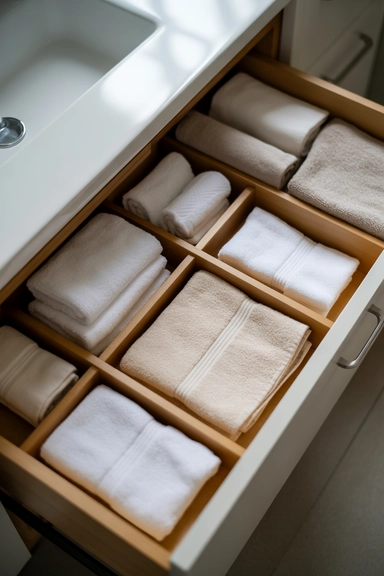
Drawer-based towel storage works best when it limits how many towels can be stored in one place. Deep drawers often encourage overstacking, which leads to wrinkled towels and cluttered interiors. Shallow drawers with dividers keep stacks controlled, making it easier to grab one towel without disturbing the rest. This approach supports order through physical constraints rather than constant reorganization.
Proper drawer placement matters. Drawers located near showers or sinks reduce the temptation to leave towels out after use. In small bathrooms, drawer systems consolidate storage into a compact footprint. In larger bathrooms, they prevent towel overflow from spreading into cabinets intended for other essentials.
7. Towel Ladders That Combine Access and Airflow
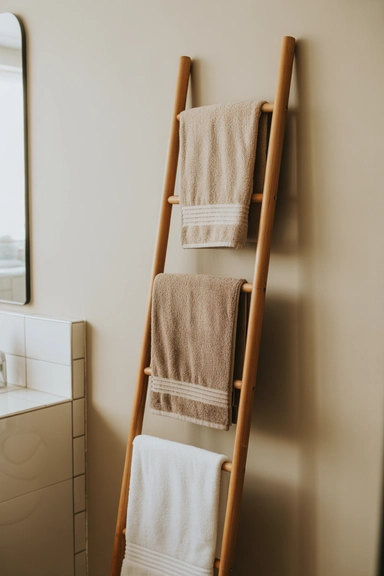
Towel ladders are effective towel organizing ideas when both access and drying matter. Unlike hooks or bars, ladders allow towels to hang freely without overlapping, improving airflow and reducing moisture buildup. This makes them particularly useful in bathrooms where towels are reused throughout the day.
Ladders must be sized carefully to avoid visual clutter. Overcrowding defeats their purpose and creates uneven drying. In small bathrooms, a slim ladder placed against a wall adds storage without dominating the room. In larger bathrooms, ladders define a functional zone that keeps towels visible, dry, and contained.
8. Shelf Dividers That Keep Folded Towels Structured
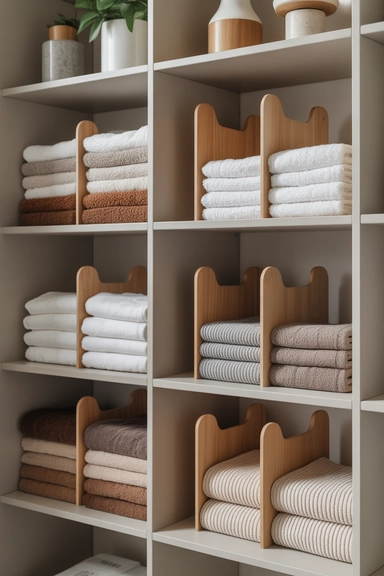
Shelf dividers play a subtle but powerful role in towel organizing ideas, especially for folded storage. Without dividers, towel stacks tend to slump or merge, creating messy shelves even when items are neatly folded. Dividers preserve clean lines and make it easier to remove one towel without collapsing the entire stack.
Spacing is key. Dividers should match the typical towel stack height to prevent excess compression. In small bathrooms, this control maximizes limited shelving. In larger bathrooms, it maintains order across wider shelves. Dividers turn passive shelving into structured storage that resists clutter over time.
9. Over-the-Door Storage That Uses Ignored Space
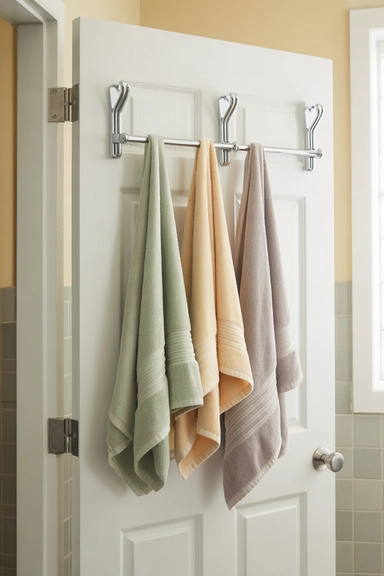
Over-the-door towel storage makes use of space that is often overlooked, making it one of the more efficient towel organizing ideas for small bathrooms. Hooks or racks mounted on the back of doors provide quick access without consuming wall or floor space. This placement works especially well for towels in active rotation.
The challenge lies in restraint. Too many hooks encourage overcrowding and uneven drying. Limiting capacity keeps the system functional. In small bathrooms, door-mounted storage prevents surface clutter. In larger bathrooms, it supplements primary storage without disrupting the main layout.
10. Towel Hooks That Reduce Folding and Handling
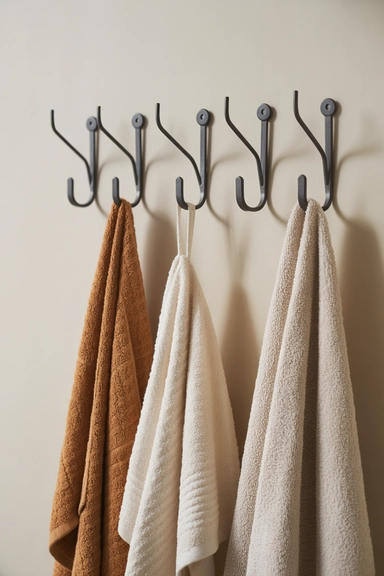
Hooks reduce clutter by simplifying towel storage. Instead of folding and stacking, towels can be hung immediately after use, minimizing handling and decision-making. This makes hooks particularly effective in high-use bathrooms where speed and convenience matter.
Hook placement determines success. Hooks should be spaced far enough apart to allow towels to dry properly. In small bathrooms, hooks replace bulkier storage systems. In larger bathrooms, they support daily-use towels while folded storage remains reserved for backups. Hooks align storage with real habits rather than ideal routines.
11. Dedicated Linen Zones That Contain Excess Towels
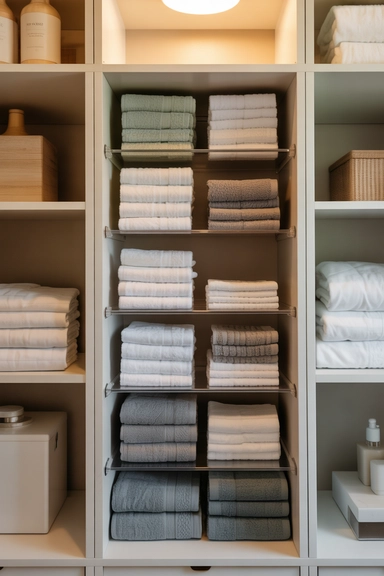
Creating a dedicated linen zone prevents towel overflow from invading other storage areas. Whether this zone is a cabinet, closet section, or shelving unit, defining boundaries keeps towel quantities in check. Without a designated zone, towels tend to spread into vanities or open shelves.
Capacity limits are essential. When the zone fills up, it signals the need to reduce or rotate towels. In small bathrooms, this prevents overcrowding. In larger bathrooms, it preserves balance across storage areas. Dedicated zones transform towel storage from reactive to intentional.
12. Towel Storage That Accounts for Drying Time and Moisture
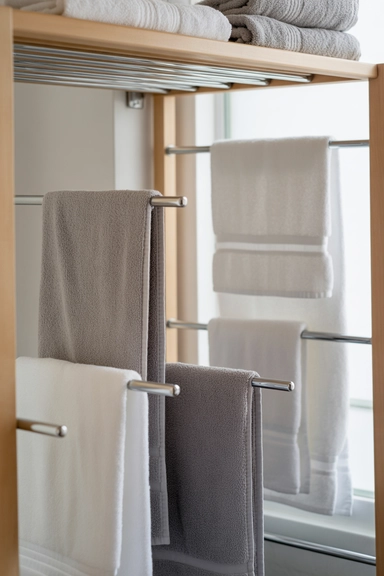
Many towel organizing ideas fail because they ignore how long towels stay damp after use. Storage that compresses towels too tightly traps moisture, leading to odors and faster wear. Effective towel storage allows air to circulate so towels can dry fully between uses, even when stored indoors.
This is especially important in bathrooms with limited ventilation. Shelves, bars, or hooks should leave space between towels rather than forcing overlap. In small bathrooms, spacing reduces mildew risk without adding bulk. In larger bathrooms, moisture-aware storage preserves towel quality and keeps the space feeling fresher over time.
13. Organizing Ideas That Separate Guest and Daily Towels
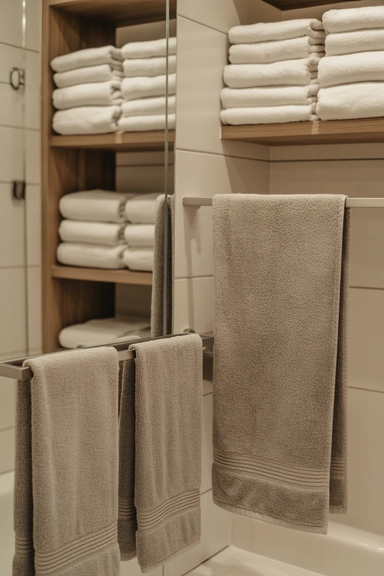
Mixing guest towels with daily-use towels creates unnecessary clutter and confusion. Guests rarely know which towels are intended for them, and daily towels end up displaced. Smart towel organizing ideas separate these categories clearly, reducing disruption during regular use.
Guest towels work best in secondary storage that remains untouched most of the time. Daily towels should live closest to sinks and showers. In small bathrooms, this separation prevents overhandling. In larger bathrooms, it maintains order during visits. Clear separation keeps both storage and etiquette simple.
14. Narrow Storage Solutions for Tight Bathroom Layouts
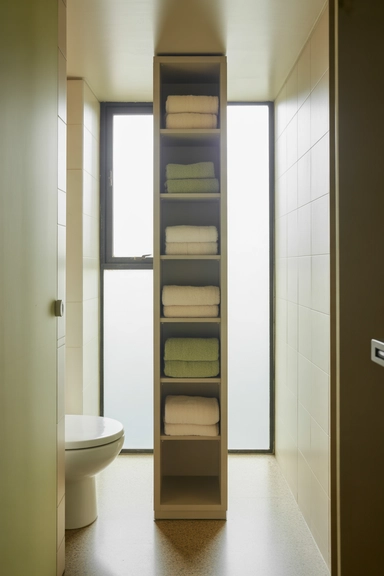
Bathrooms with limited width often struggle with towel storage because standard cabinets and shelves feel oversized. Narrow storage solutions address this by fitting into tight gaps without blocking movement. Slim shelving units, recessed niches, or narrow cabinets make better use of constrained layouts.
The advantage of narrow storage lies in control. Limited depth prevents overloading and keeps towel quantities reasonable. In small bathrooms, this maintains circulation. In larger bathrooms, narrow storage fills awkward gaps without creating visual heaviness. Properly scaled storage supports order rather than excess.
15. Organizing Ideas That Limit Towel Quantity Intentionally
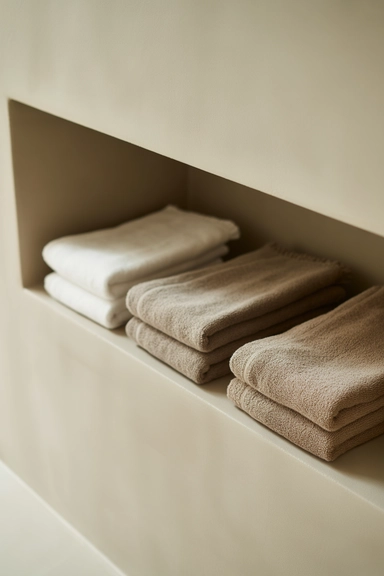
One of the most effective ways to reduce bathroom clutter is to limit how many towels are stored in the space. Excess towels increase bulk and make organization harder to maintain. Smart towel organizing ideas establish realistic quantity limits based on household size and usage.
When storage capacity is intentional, it encourages rotation instead of accumulation. Extra towels can live outside the bathroom entirely. In small bathrooms, this prevents crowding. In larger bathrooms, it keeps storage purposeful. Limiting quantity turns organization into a sustainable system rather than a constant reset.
16. Storage That Keeps Towels Easy to Return After Use
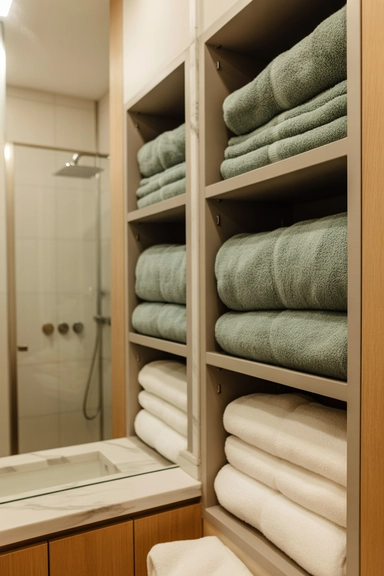
Towel systems succeed when they make returning towels effortless. If storage requires folding precision or opening multiple doors, towels will be left out. Organizing ideas that prioritize easy return reduce clutter without relying on discipline.
Open shelves, hooks, or shallow drawers near points of use support this behavior. In small bathrooms, ease of return prevents surface buildup. In larger bathrooms, it keeps order consistent across zones. Storage that aligns with habit maintains cleanliness naturally.
17. Balanced Open and Closed Storage for Visual Calm
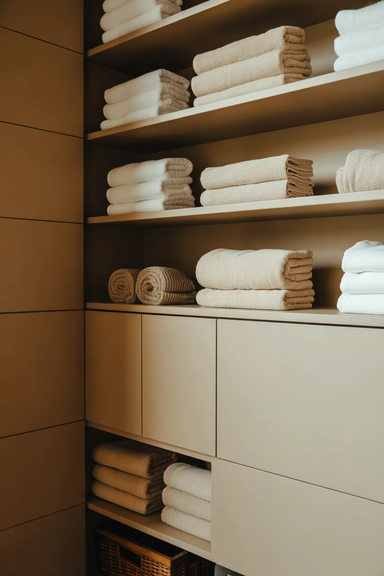
Relying entirely on open or closed storage often creates imbalance. Open storage adds warmth but can feel cluttered, while closed storage feels clean but impersonal. Effective towel organizing ideas balance both to achieve visual calm without sacrificing access.
Daily-use towels may live in open storage, while backups stay concealed. In small bathrooms, this balance prevents visual overload. In larger bathrooms, it adds structure and rhythm. Mixing open and closed storage allows towels to be accessible without dominating the room visually.
18. Storage That Aligns With Daily Movement Patterns
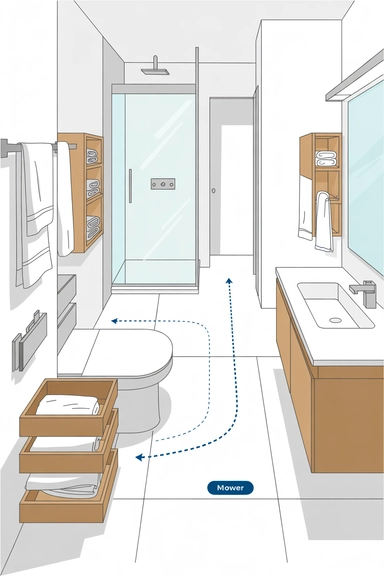
Towel clutter often forms when storage placement ignores how people move through the bathroom. If towels are stored too far from showers or sinks, they end up draped over fixtures or left on counters. Effective towel organizing ideas position storage along natural movement paths, allowing towels to be grabbed and returned without detours.
This alignment reduces friction during busy routines. In small bathrooms, proximity prevents surfaces from becoming temporary storage. In larger bathrooms, it keeps towels from migrating across zones. When storage mirrors movement, order becomes a byproduct of convenience rather than an enforced rule.
19. Recessed Storage That Preserves Floor and Wall Space
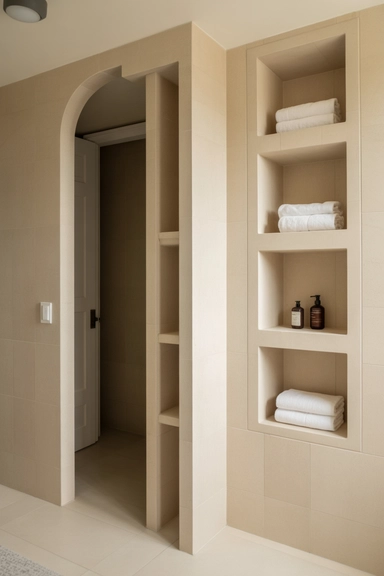
Recessed storage is a powerful solution for reducing bathroom clutter without adding visual bulk. Built-in niches or recessed cabinets allow towels to be stored within wall cavities, preserving both floor space and circulation. This approach works especially well in bathrooms where every inch matters.
Recessed storage must remain shallow to avoid becoming visually heavy. When designed correctly, it keeps towels accessible while maintaining clean lines. In small bathrooms, recessed solutions prevent overcrowding. In larger bathrooms, they add architectural structure while quietly absorbing towel volume.
20. Organizing Ideas That Keep Towels From Competing With Decor
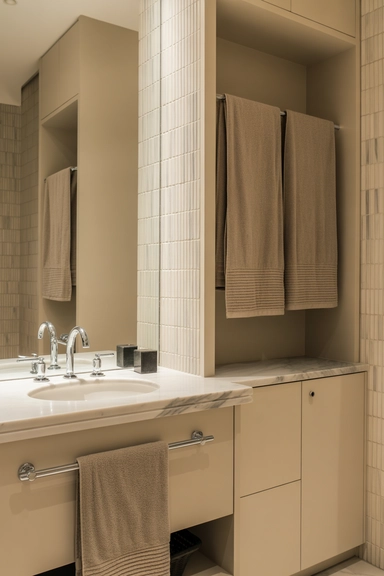
Towels often clash with bathroom decor because of their color, texture, and volume. When storage forces towels into prominent visual positions, they compete with finishes and fixtures. Smart towel organizing ideas minimize this competition by placing towels where they support rather than dominate the visual field.
This can mean neutral-toned storage, partial concealment, or placement outside primary sightlines. In small bathrooms, this reduces visual stress. In larger bathrooms, it preserves design intent. When towels complement the space instead of overwhelming it, the bathroom feels calmer and more cohesive.
21. Storage That Supports Rotation Without Reorganizing
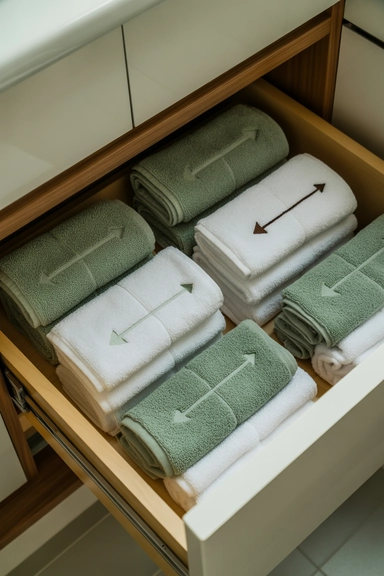
Towel rotation is necessary for hygiene and wear, but frequent reorganization often discourages it. Organizing ideas that support simple rotation allow towels to move through the system without disrupting order. Front-to-back or top-to-bottom rotation systems work best.
Clear access and consistent spacing make rotation intuitive. In small bathrooms, this prevents clutter during swaps. In larger bathrooms, it keeps storage balanced over time. Rotation-friendly systems ensure freshness without requiring full resets or constant adjustments.
22. Organizing Ideas That Adapt to Changing Household Needs
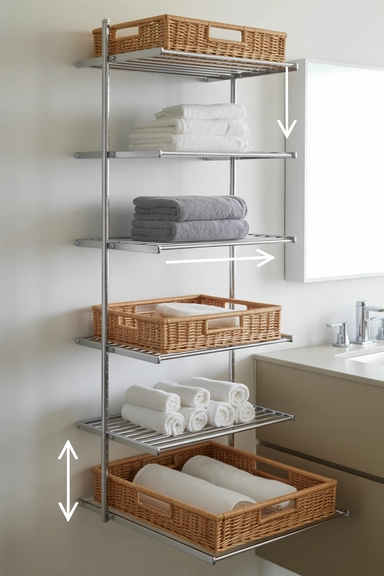
Household needs change over time, and towel storage should be flexible enough to adapt. Rigid systems fail when family size shifts or routines change. Smart towel organizing ideas allow capacity and placement to adjust without major reconfiguration.
Modular shelves, adjustable rods, or movable baskets support this flexibility. In small bathrooms, adaptability prevents overcrowding. In larger bathrooms, it keeps storage responsive rather than static. Flexible systems extend the lifespan of organization efforts and reduce future clutter.
23. Storage That Makes the Bathroom Feel Finished
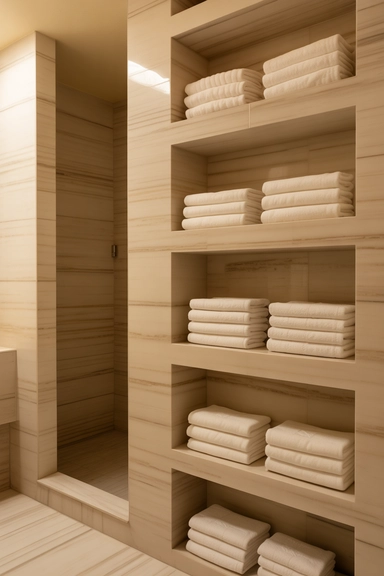
Bathrooms feel cluttered when towel storage looks temporary or improvised. The most effective towel organizing ideas treat storage as part of the room’s structure rather than an add-on. Consistent materials, alignment, and spacing create a sense of completion.
When storage feels intentional, towels naturally stay contained. In small bathrooms, this reduces visual fatigue. In larger bathrooms, it prevents underused or chaotic areas. Finished storage signals order and permanence, reinforcing long-term tidiness without constant effort.
Conclusion
Reducing bathroom clutter starts with understanding how towels are used, moved, and returned throughout the day. Towel organizing ideas that prioritize placement, airflow, and habit-friendly access create order without relying on constant maintenance. By aligning storage with movement patterns, limiting excess, and balancing visibility with containment, bathrooms remain functional and visually calm over time. The most effective systems quietly guide towels back into place, allowing cleanliness and clarity to sustain themselves naturally.