Introduction
A messy play space usually means storage systems aren’t working for real life. The most effective kids room storage ideas focus on accessibility, visibility, and simple routines that children can maintain themselves. When toys, books, and clothes have clearly defined homes, cleanup becomes faster and the room stays usable throughout the day. Smart storage doesn’t just hide clutter—it creates systems that support daily habits. Whether you’re working with a shared room or limited square footage, intentional layouts make a big difference. If you’re resetting the entire bedroom layout, start with 21 Bedroom Organization Ideas That Reduce Visual Clutter.
1- Use Low Open Shelving Kids Can Reach
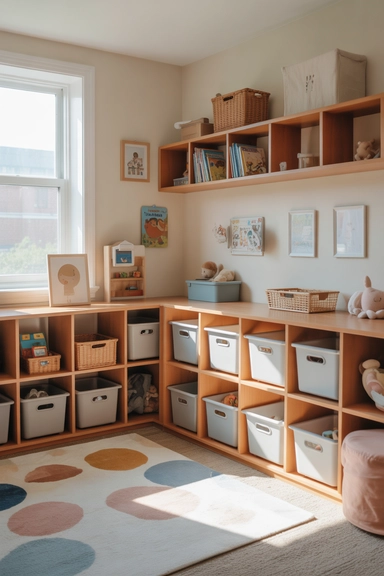
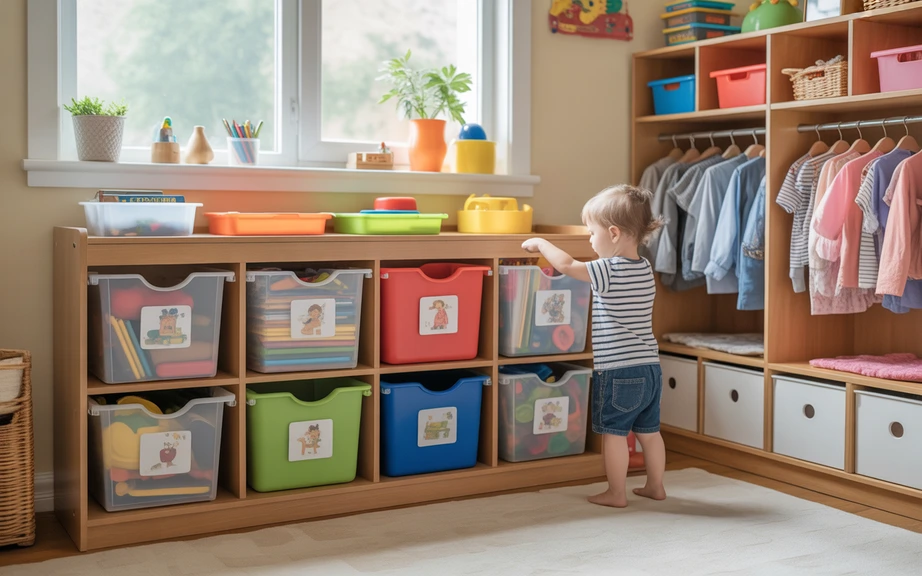
Accessible shelving is one of the most practical kids room storage ideas because it allows children to see and reach their toys without help. Open cube units or low kids room storage furniture make cleanup easier and encourage independence. When shelves are kept at child height, toys can be returned quickly instead of left on the floor. This setup works especially well in small kids room storage ideas where visibility matters more than hidden storage.
Keeping shelves partially open also prevents overcrowding. Rotating toys regularly ensures the space stays manageable and visually calm. Pair shelves with labeled bins so each category has a clear home. Over time, low shelving systems help maintain order because children can easily access and return items without needing constant reminders.
2- Add Labeled Storage Bins for Toy Categories
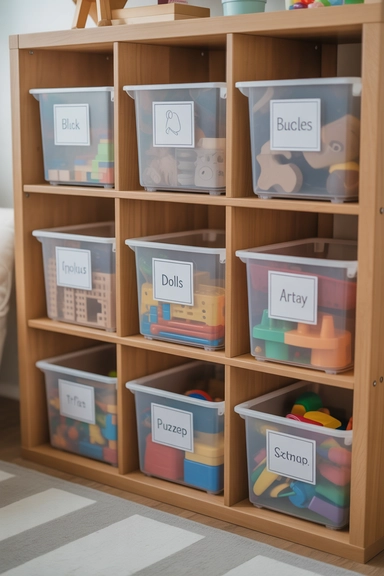
Clear categorization supports long-term organization, making labeled bins essential among kids room storage ideas. Use separate storage containers, boxes & bins kids room ideas for building blocks, dolls, puzzles, and craft supplies. Labels with pictures work especially well for younger children who can’t read yet. When categories are clearly defined, cleanup becomes a simple sorting process instead of a guessing game.
Choose durable bins that slide easily in and out of shelves. Keeping colors consistent helps the room feel visually organized rather than chaotic. This system works in both playrooms and bedrooms because it keeps toys contained without hiding them completely. Over time, clearly labeled storage prevents clutter from building up and makes daily cleanup faster and more predictable.
3- Create a Toy Rotation System to Reduce Overload
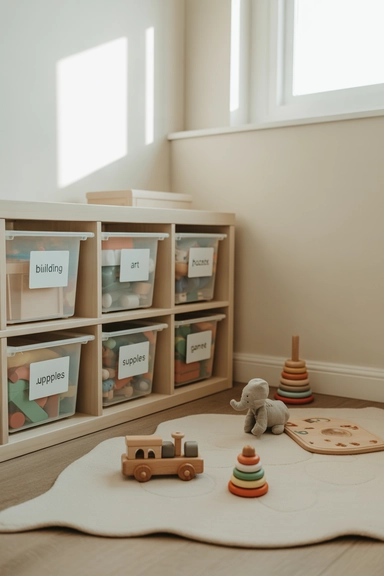
Too many toys at once often leads to clutter, which is why rotation systems are powerful kids room storage ideas. Store half the toys in labeled containers and keep only a manageable selection available. Rotating toys every few weeks keeps the space fresh without adding more storage. This method works especially well in toy storage ideas for small spaces where floor area is limited.
Keeping fewer toys visible also helps children focus during playtime. Extra items can be stored in closets or under-bed bins until needed. When the active toy collection is smaller, cleanup becomes quicker and the room feels calmer. Over time, rotation systems prevent overflow and maintain a balanced storage layout.
4- Use Wall Storage to Free Floor Space
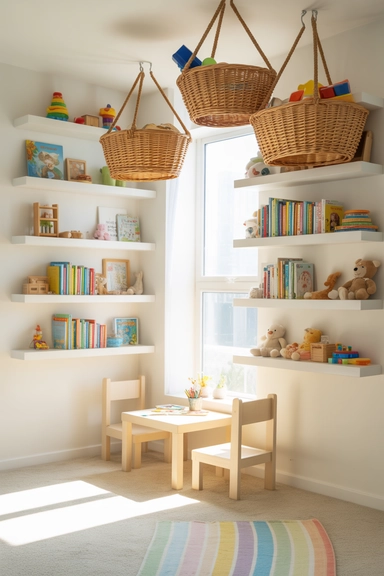
Vertical solutions are essential kids room storage ideas when floor space is limited. Wall-mounted shelves, pegboards, or hanging baskets keep toys off the ground while still accessible. This works especially well in kids room storage ideas for small spaces where every inch counts. Using vertical storage allows the floor to remain open for play and movement.
Keep frequently used items within reach and place rarely used items higher up. Matching containers or baskets keeps the wall visually cohesive. This setup reduces clutter without making the room feel overcrowded. Over time, vertical storage becomes a reliable way to maintain order while maximizing limited space.
5- Add Rolling Toy Carts for Flexible Storage
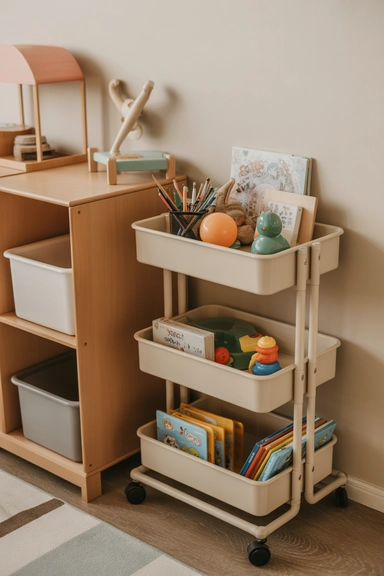
Mobility adds flexibility to many kids room storage ideas, especially in shared rooms or play areas. Rolling carts allow toys and supplies to move between spaces easily. A cart can hold art supplies during the day and be tucked into a corner at night. This is especially useful in toy storage ideas living room setups where toys need to stay contained but accessible.
Choose carts with multiple tiers so categories stay separated. Keeping only daily-use items on the cart prevents overload. Wheels make cleanup easier because the entire unit can be moved at once. Over time, rolling carts help maintain order by giving toys a designated place that adapts to different activities.
6- Use Cube Storage Systems That Grow With Kids
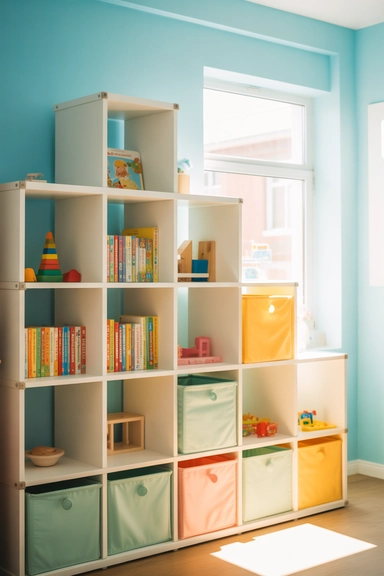
Modular shelving is one of the most adaptable kids room storage ideas because it evolves as children grow. Cube units can hold bins for toys now and books or school supplies later. Using cube storage shelves kids room ideas keeps everything visible and easy to return after playtime. This system works especially well in shared kids room storage ideas where multiple children need clear categories.
Adding labeled fabric bins inside each cube helps maintain structure. Keeping one category per cube prevents toys from mixing together. As interests change, bins can be swapped or repurposed without replacing furniture. Over time, modular cube storage keeps the room organized while adapting to new needs without creating clutter.
7- Add Under-Bed Storage for Less-Used Toys
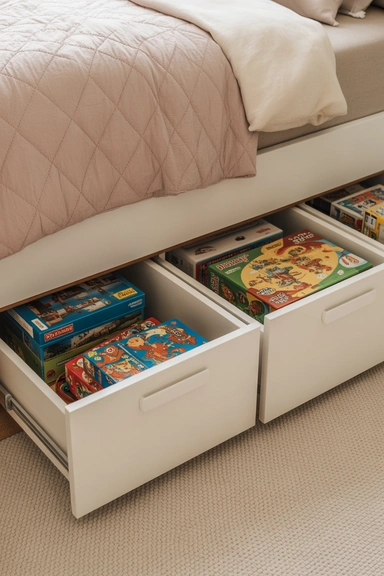
Hidden storage is essential for maintaining order, making under-bed systems practical kids room storage ideas. Flat bins can store puzzles, board games, or seasonal toys that don’t need daily access. Using under bed toy storage keeps the floor clear while still keeping items accessible. This works especially well in small kids room storage ideas where closet space is limited.
Choose low-profile bins with lids to keep contents clean and easy to slide out. Labeling each bin prevents digging through everything later. By storing rarely used toys underneath the bed, the main play area stays uncluttered. Over time, this approach keeps the room feeling open while still accommodating plenty of storage.
8- Use Baskets for Quick Cleanup Zones
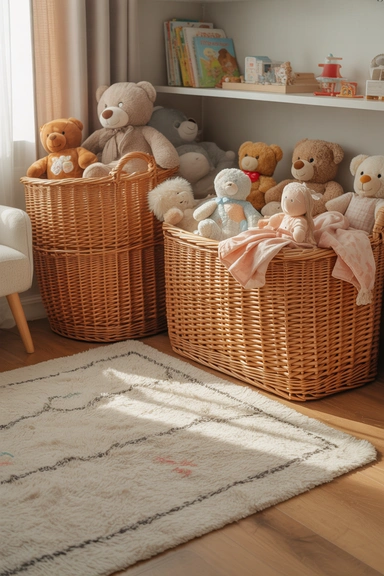
Baskets are simple but effective kids room storage ideas for everyday cleanup. Large floor baskets can collect stuffed animals, dress-up clothes, or blankets in seconds. Using decorative baskets kids room storage ideas keeps storage functional while still matching the room’s style. Baskets work especially well for younger children who need fast cleanup options.
Place baskets in corners or beside shelves so they’re easy to reach. Keeping categories broad prevents frustration during cleanup. This system doesn’t require perfect organization to work effectively. Over time, baskets make daily tidying faster and help maintain a cleaner play space without adding complicated systems.
9- Install Book Storage That Faces Forward
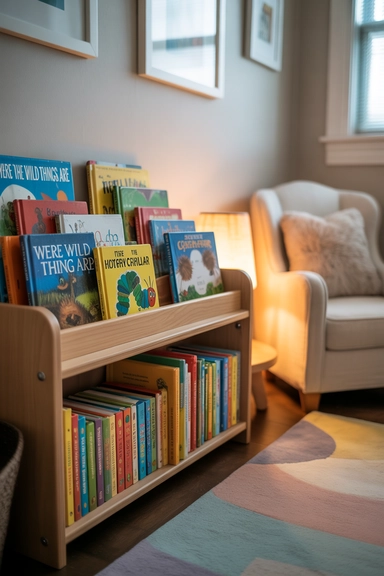
Front-facing book storage is one of the most useful kids room storage ideas for encouraging reading and maintaining order. Low bookshelves or wall-mounted ledges allow covers to be visible so children can easily choose and return books. Using kids bookcases kids room storage ideas keeps reading materials organized without stacking them in piles.
Keep only a small selection of books on display and rotate the rest. This prevents overcrowding and keeps the shelf visually calm. Placing the shelf at child height makes cleanup easier and promotes independence. Over time, forward-facing book storage keeps reading areas organized and accessible.
10- Use Multi-Functional Furniture With Built-In Storage
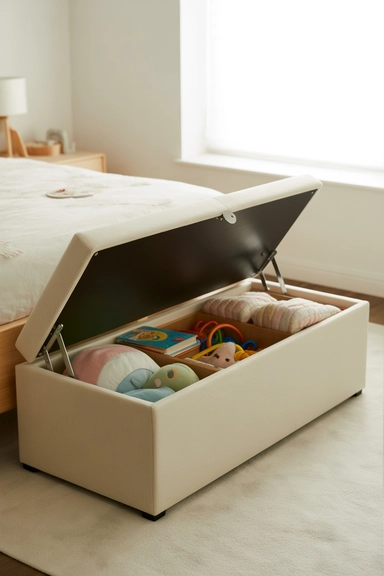
Furniture that doubles as storage is one of the smartest kids room storage ideas for maximizing space. Storage benches, beds with drawers, or ottomans provide hidden compartments for toys and clothing. Using storage cabinets kids room ideas or beds with built-in drawers keeps items contained without adding extra furniture.
Choose pieces that match the room’s style so storage feels intentional. Built-in compartments keep clutter out of sight while still accessible. This works especially well in small kids room storage ideas where floor space is limited. Over time, multi-functional furniture helps maintain a tidy room without overcrowding it.
11- Create Dedicated Zones for Different Play Activities
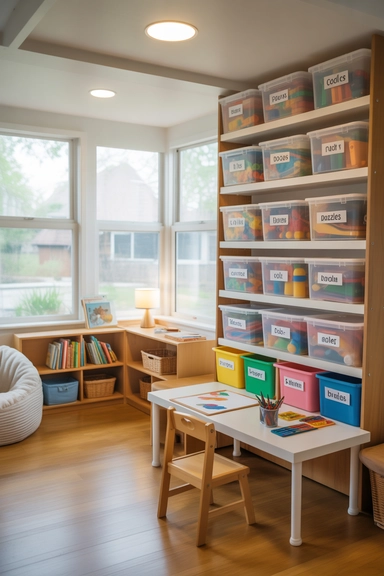
Dividing the room into activity zones is one of the most effective kids room storage ideas for keeping toys under control. Assign specific areas for building toys, art supplies, reading, and pretend play so everything has a logical home. Using toy organizers kids room storage ideas within each zone helps prevent items from spreading across the entire room. When categories stay contained, cleanup becomes faster and more intuitive.
Use shelves, bins, or low storage units to visually define each zone. Keeping only relevant items in each area reduces overwhelm and supports focused play. This approach works especially well in shared kids room storage ideas where multiple children need separate storage areas. Over time, zoned layouts help maintain order without requiring constant supervision.
12- Use Drawer Carts for Flexible Storage
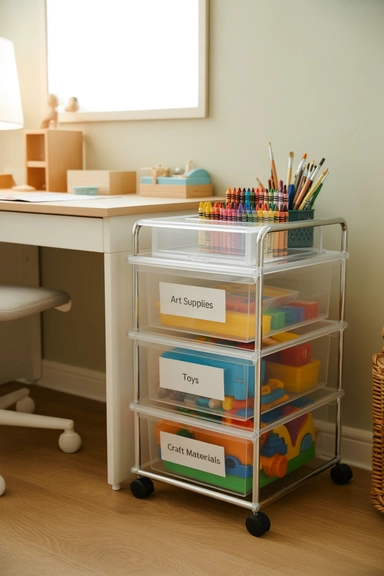
Rolling drawer carts provide adaptable storage and are among the most practical kids room storage ideas for growing children. Multi-tiered storage drawer carts & towers kids room ideas keep art supplies, school materials, or small toys separated and easy to access. Because carts are mobile, they can be moved between play areas or tucked away when not in use.
Choose clear drawers so contents remain visible without opening each compartment. Keeping categories separated prevents items from mixing together. This system works well for both bedrooms and playrooms because it keeps supplies organized while still accessible. Over time, drawer carts help maintain structure as children’s needs change.
13- Install Closet Storage Systems for Kids
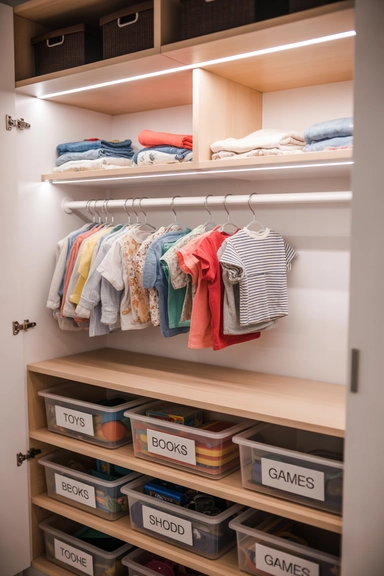
Closets often become cluttered when they aren’t designed for children’s height. Adapting closet interiors is one of the most impactful kids room storage ideas. Add low rods, shelves, and bins so children can reach clothing and accessories independently. Using closet storage kids systems keeps clothes and toys organized in one contained space.
Divide closet sections into clear categories such as everyday clothing, dress-up items, and seasonal pieces. Adding labeled bins ensures everything has a defined place. This approach reduces the need for extra furniture in the room. Over time, a child-friendly closet system supports independence and keeps the bedroom more organized overall.
14- Use Wall Pegboards for Creative Storage
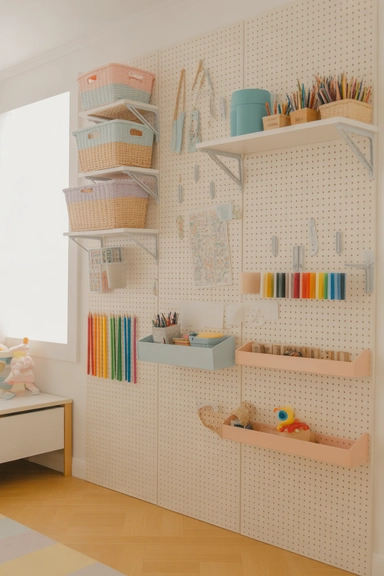
Pegboards provide flexible vertical storage and are highly adaptable kids room storage ideas. Mounted on the wall, they can hold baskets, hooks, and small shelves for art supplies, toys, or accessories. Using wall storage kids room systems keeps frequently used items visible without taking up floor space. Pegboards also allow storage layouts to change as interests evolve.
Keep heavier items on lower hooks and lighter items higher up. Matching containers or baskets keeps the setup visually cohesive. Pegboards work especially well in small kids room storage ideas because they use vertical space efficiently. Over time, they become a dynamic storage system that grows with the child’s needs.
15- Add Storage Benches for Hidden Toy Storage
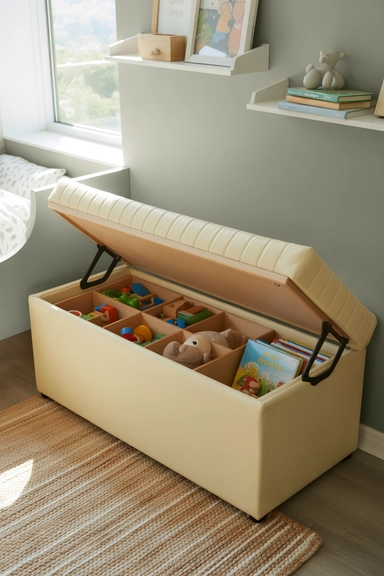
Storage benches are practical kids room storage ideas that combine seating and hidden storage. A bench at the foot of the bed or along a wall can hold toys, blankets, or seasonal items inside. Using storage cabinets kids room ideas keeps clutter out of sight while still accessible. This approach works well in both small bedrooms and playrooms.
Choose benches with soft-close lids to prevent accidents. Keeping only a few categories inside prevents overcrowding. Benches also create a tidy visual line across the room, making the space feel more organized. Over time, hidden storage benches help maintain a cleaner environment while providing extra seating and functionality.
16- Use Stackable Bins to Maximize Vertical Space
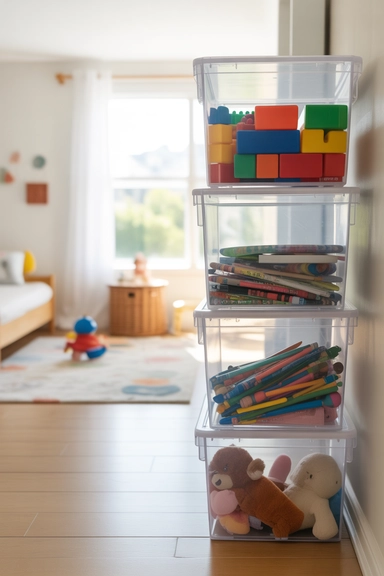
Stackable containers are among the most efficient kids room storage ideas when floor space is limited but toy volume is high. Clear or color-coded storage containers, boxes & bins kids room ideas allow categories to be layered vertically while staying easy to access. This setup works especially well for puzzles, building blocks, and craft supplies that don’t need to stay on display but still need regular access. Stacking upward instead of outward keeps pathways clear and prevents toys from spreading across the room.
Choose bins with secure lids so stacks remain stable and dust-free. Keeping similar categories in each stack prevents confusion and makes cleanup faster. When stacked systems are placed against a wall or inside a closet, they create a compact storage tower that still feels organized. Over time, vertical stacking helps maintain order without requiring additional furniture.
17- Create a Stuffed Animal Storage System
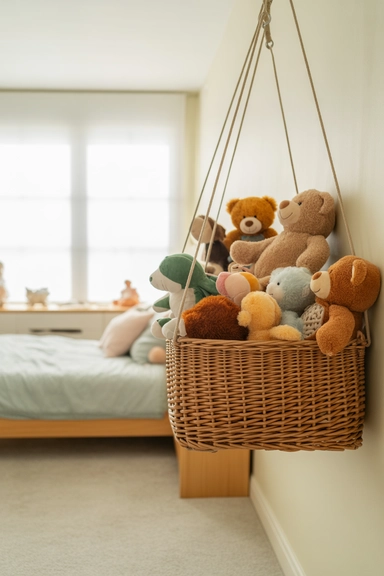
Stuffed animals tend to accumulate quickly, making them one of the biggest clutter sources in children’s rooms. Dedicated solutions are essential kids room storage ideas for keeping plush toys contained without hiding them completely. Wall hammocks, baskets, or labeled bins allow children to store their favorites while still seeing them. Using stuffed animal storage ideas ensures these items don’t take over beds and floors.
Keep storage systems easy to reach so children can put toys away independently. Rotating stuffed animals periodically prevents overcrowding. Limiting the number displayed at once helps maintain a calmer visual environment. Over time, a designated stuffed animal system prevents piles from forming and keeps the room feeling manageable.
18- Use Clear Toy Boxes for Easy Visibility
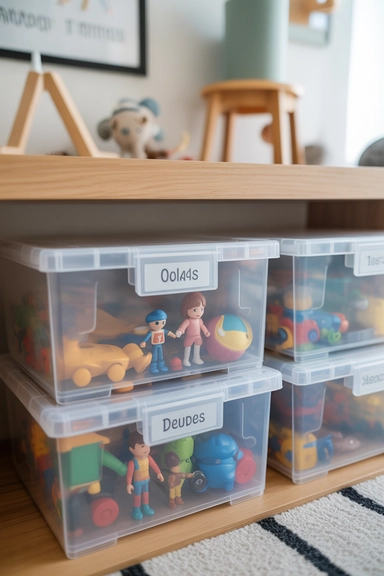
Visibility plays a major role in maintaining organized spaces, making clear containers valuable kids room storage ideas. Transparent toy boxes allow children to see what’s inside without dumping everything out. This approach works well for smaller toys like action figures, cars, or building sets that can easily get lost. Using toy organizers kids room storage ideas with clear fronts helps keep categories separated and accessible.
Choose durable boxes with smooth edges and secure lids. Keeping labels on each container reinforces where items belong. When children can quickly identify where toys go, cleanup becomes easier and faster. Over time, clear storage systems reduce frustration and help maintain a more structured play environment.
19- Add IKEA-Style Modular Storage for Flexibility
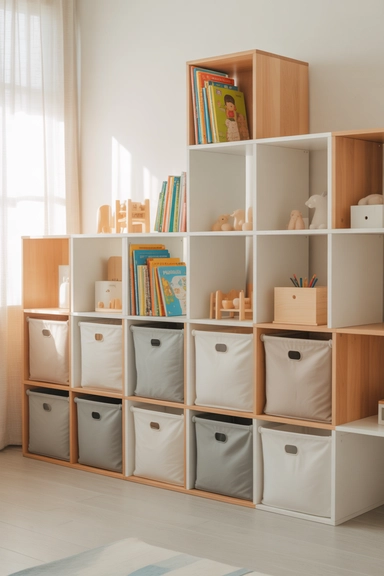
Modular systems inspired by kids room storage ideas ikea are some of the most adaptable options for growing children. These units allow shelves, bins, and drawers to be rearranged as needs change. Using modular kids room storage furniture ensures the setup can evolve without replacing everything. This flexibility makes them ideal for shared rooms or spaces that serve multiple purposes.
Choose neutral frames with interchangeable bins to keep the layout cohesive. Keeping one category per bin prevents overcrowding. As children grow, bins can be replaced with drawers or shelves for books and school supplies. Over time, modular storage adapts to changing needs while maintaining a consistent organizational system.
20- Use Budget-Friendly Storage Solutions
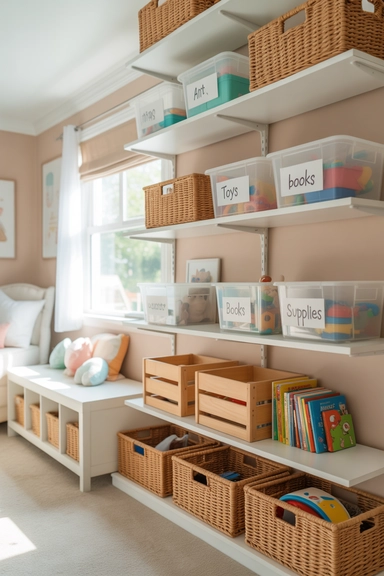
Affordable systems are some of the most practical kids room storage ideas for families managing growing collections of toys. Repurposed baskets, labeled boxes, and simple shelving can create effective storage without large investments. Using storage ideas for kids rooms on a budget ensures organization remains sustainable as needs change.
Choose durable but inexpensive containers that can be replaced easily if damaged. Keeping the system simple makes it easier to maintain. Budget storage works best when categories are clearly defined and containers are consistently used. Over time, low-cost solutions can still deliver long-term organization when paired with consistent routines.
21- Create Shared Storage Systems for Multiple Children
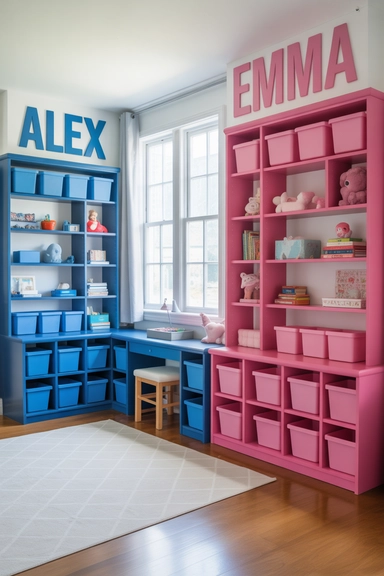
Shared bedrooms require thoughtful kids room storage ideas to prevent clutter from multiplying. Assigning each child a specific storage zone helps maintain order and reduce conflicts. Using labeled bins or shelves for each child ensures toys and belongings stay separated. This approach works especially well in shared kids room storage ideas where space must be used efficiently.
Color-coded bins or personalized labels make it easy for children to recognize their own storage areas. Keeping categories simple prevents confusion. When each child knows where items belong, cleanup becomes more manageable. Over time, structured shared storage systems help maintain harmony and keep the room organized.
22- Build a Simple Daily Cleanup Routine
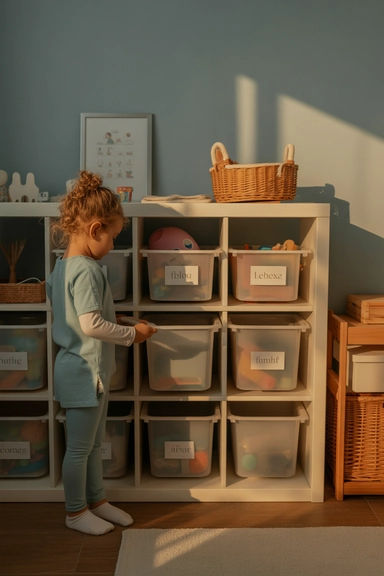
Even the best systems need consistent maintenance, making routines essential kids room storage ideas. A short daily cleanup time ensures toys return to their designated places before clutter builds. Keeping storage accessible and clearly labeled makes this process faster and less overwhelming. Using kids room storage ideas pinterest style visual systems helps children remember where items belong.
Encourage children to return toys to bins before moving on to new activities. Keeping cleanup short and consistent prevents large messes from forming. Over time, this habit reinforces the storage system and keeps the room functional. A simple routine ensures all other storage strategies continue working effectively without constant intervention.
Conclusion
The most effective kids room storage ideas focus on visibility, accessibility, and simple systems that children can maintain every day. When toys, books, and supplies have clearly defined homes, cleanup becomes faster and the room stays usable without constant supervision. Combining labeled bins, modular kids room storage furniture, vertical shelving, and hidden storage creates a balanced system that grows with your child. Even in small or shared spaces, structured zones and consistent routines prevent clutter from building up. With the right layout and habits, a kids’ room can stay organized, functional, and easy to maintain long term.