
Introduction
The area around the TV collects more clutter than almost any other spot in the living room. Remotes, wires, game controllers, and random daily items tend to gather on or around the console, making the entire space feel busier than it actually is. The best tv stand storage ideas focus on hiding everyday mess while keeping everything easy to reach. When the TV wall looks calm, the whole room feels calmer. If you’re also refining the rest of your layout, these 25 Living Room Organizing Ideas That Keep Shared Spaces Clear connect naturally with the strategies below. Each idea helps keep storage accessible without adding visual noise.
1. Closed Cabinet TV Stands That Hide Wires and Devices
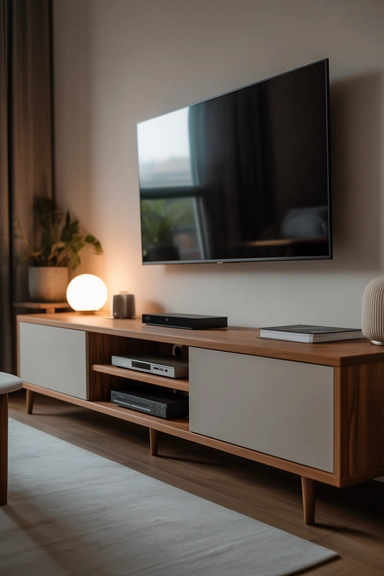
A TV stand with fully closed cabinets is one of the most effective tv stand storage ideas for keeping the media wall visually calm. Media boxes, routers, gaming consoles, and loose cables disappear behind solid doors, allowing the room to feel organized instead of tech-heavy. Choose flat-front cabinet doors without glass panels so wires and devices remain completely hidden even when the TV becomes the main focal point. A clean cabinet exterior helps the entire wall read as one quiet visual surface rather than a collection of competing items.
Inside the cabinet, separate electronics using cable organizers and small bins so devices don’t stack or tangle. Group items by function and leave slight spacing between them to maintain order long-term. When cords are contained and equipment has dedicated sections, the interior stays manageable and the exterior remains uncluttered. This approach keeps the TV area visually controlled without sacrificing accessibility.
2. Drawer-Based TV Units for Remote and Controller Storage
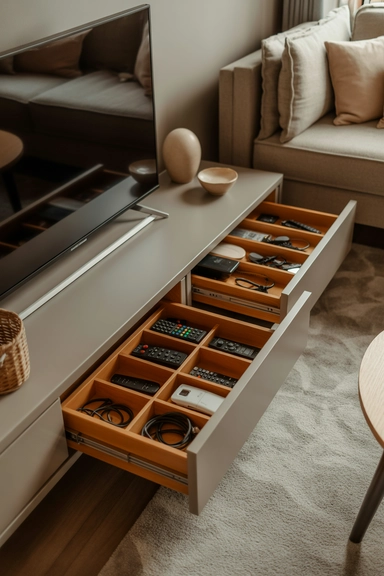
Drawer-based consoles are among the most practical tv stand storage ideas for items used daily but not meant to stay visible. Remotes, controllers, charging cables, and small accessories can all live inside shallow drawers where they remain easy to reach yet completely out of sight. Without drawers, these items quickly spread across tabletops and surrounding furniture, making the TV zone feel messy even when the rest of the room is tidy. A dedicated drawer system prevents surface buildup and keeps essentials contained.
Use internal dividers so items return to fixed positions instead of shifting into piles. Assign each drawer a category so nothing overlaps or gets lost. When everything has a consistent place, the top of the console stays clear and the media wall looks intentional rather than cluttered. Smooth-front drawers also help the stand appear visually streamlined and balanced within the room.
3. Cube Storage TV Stands With Hidden Baskets
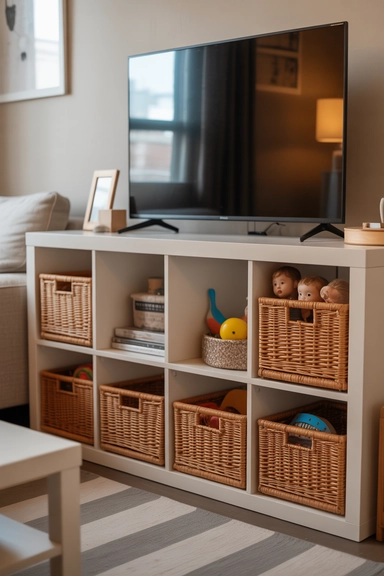
Cube-style units function well as tv stand storage ideas because they combine flexible shelving with concealed storage. Placing matching baskets or fabric bins inside each cube keeps smaller items hidden while remaining easy to access. Toys, magazines, and tech accessories stay contained without creating the busy appearance that open shelving often causes. Matching containers allow the unit to feel structured rather than scattered.
Choose baskets that match the stand’s tone so storage blends into the design. When each cube holds a defined category, items stop drifting across the room and return to the same place after use. This consistency keeps the TV area controlled and visually calm. A cube stand with concealed bins offers strong storage capacity while maintaining a simplified exterior.
4. Floating TV Consoles That Keep Floors Clear
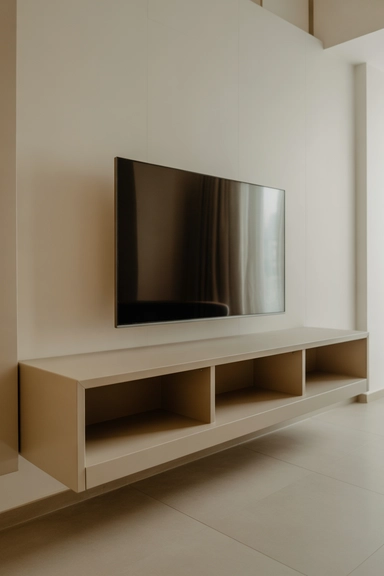
Floating consoles are highly effective tv stand storage ideas for compact living rooms because they lift storage off the floor and open up visible space beneath. When the floor remains uninterrupted, the entire area feels wider and less crowded. Closed compartments inside the console keep electronics and accessories hidden while maintaining a clean horizontal line across the wall. The floating design reduces visual weight and helps the TV area feel lighter.
Leave the space below mostly empty or limit it to one low-profile basket if additional storage is needed. Keeping this area open preserves visual breathing room and prevents compression in smaller layouts. Floating units also simplify cable management by allowing cords to route directly into the wall, which keeps the floor clear and prevents wires from becoming part of the visible clutter.
5. TV Stands With Sliding Doors for Flexible Access
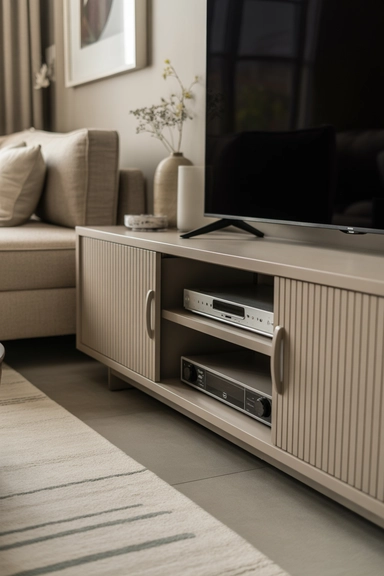
Sliding-door consoles are adaptable tv stand storage ideas because they allow sections of the stand to be hidden or revealed as needed. Doors can glide over cluttered areas while leaving frequently used components accessible, making them useful when devices require ventilation or quick access. This flexibility helps maintain a tidy appearance without sacrificing practicality.
Choose designs with continuous front panels so the stand looks cohesive even when one section is open. Inside, group items by category and keep shelves structured so hidden sections remain organized. When doors slide closed, they restore a clean visual surface instantly. This balance between access and concealment helps the TV area stay calm and controlled throughout daily use.
6. Under-TV Baskets That Contain Daily Clutter
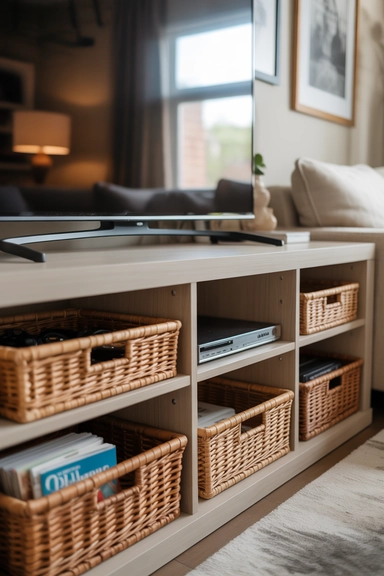
Open shelving under a TV often becomes a landing zone for random items, but structured baskets transform that space into contained storage. Use identical woven or fabric baskets sized to fit each compartment so everything from game controllers to charging cords has a defined home. When baskets match in tone and texture, the entire console reads as one calm surface instead of multiple small visual interruptions that compete with the TV above.
Assign each basket a clear category to prevent overflow and mixing. One basket can hold remotes and small electronics, another for magazines or notebooks, and a third for kids’ items. Keeping items grouped stops clutter from migrating across shelves and surfaces. When baskets slide in flush and remain slightly underfilled, they maintain their shape and keep the storage looking intentional rather than crammed.
7. Corner TV Stands That Use Dead Space Efficiently
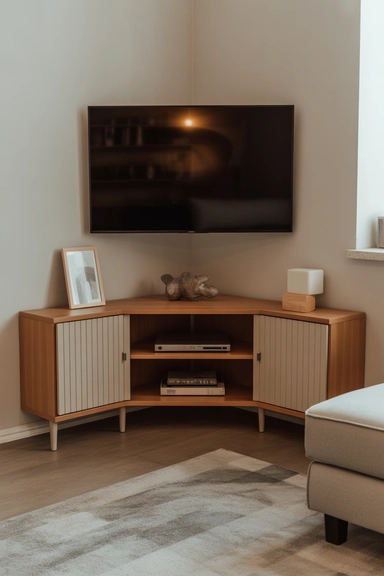
Corners often collect clutter because they lack defined storage, yet a well-designed corner TV stand turns that unused angle into a contained zone. Triangular or angled cabinets fit tightly into the corner while still offering shelves and closed compartments. This keeps the TV area compact and prevents storage from spreading across multiple walls, which can make a small living room feel fragmented and crowded.
Inside the stand, use adjustable shelving to separate electronics, DVDs, or board games rather than stacking them. Keeping each category in its own section prevents clutter from spilling out when doors open. Because the stand anchors the corner, it also frees up surrounding wall space for cleaner sightlines. The result is a focused media area that feels organized rather than scattered across the room.
8. Built-In Media Walls With Concealed Lower Storage
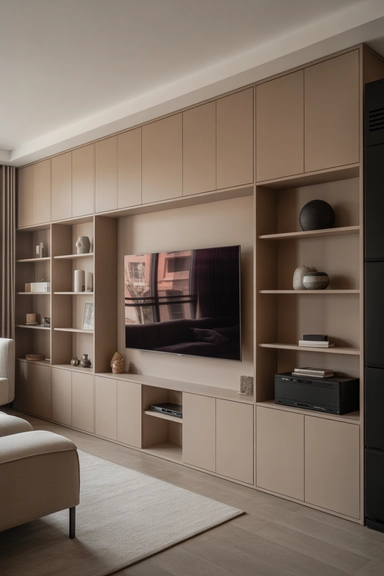
A built-in media wall consolidates storage into one continuous structure, replacing multiple standalone pieces that compete visually. Lower cabinets with solid doors hide electronics, cables, and miscellaneous items while upper sections can remain minimal or closed. This unified design prevents the TV area from looking like a collection of separate storage units and instead creates a single calm focal wall.
Interior organization is essential for maintaining that calm exterior. Use shelf dividers and labeled bins so items remain grouped and easy to find. Keep upper shelves intentionally sparse or fully closed to avoid visual overload. When everything lives within one cohesive built-in unit, surfaces stay clear and the entire living room feels more structured and less cluttered.
9. TV Stands With Lift-Top Storage Compartments
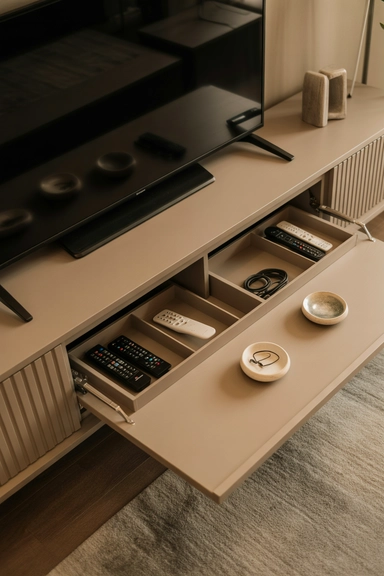
Lift-top TV stands offer hidden storage that stays completely out of view when closed. The top panel lifts to reveal compartments for items like remotes, chargers, and small electronics, allowing the surface to remain clean. This design is especially effective in homes where items are used frequently but need to disappear quickly once the TV area is no longer in use.
Inside the compartment, use small trays or dividers to keep items from shifting into a pile. A lift-top design works best when the interior stays organized so the lid can close smoothly without forcing items down. When the top surface remains clear and uncluttered, the TV stand becomes a calm visual anchor rather than a catch-all surface for everyday mess.
10. Minimalist TV Consoles With Deep Hidden Shelves
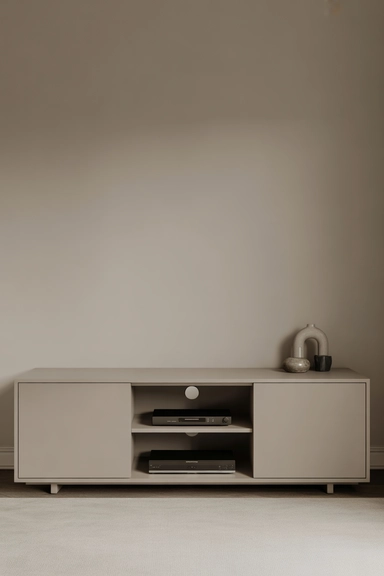
A minimalist TV console with deep internal shelving can hold more than it appears from the outside. Solid front panels keep the exterior visually simple while deeper shelves inside accommodate larger items like gaming consoles, routers, and storage boxes. This allows the stand to absorb clutter without expanding outward or adding visible bulk to the room.
To keep the interior manageable, separate shelves by function and avoid stacking items loosely. Use shallow bins for smaller objects so they stay contained rather than spreading across the shelf. When the console closes, the exterior remains smooth and uninterrupted, which helps the TV wall feel calmer and more intentional even when it stores a wide range of everyday items.
11. TV Stands With Vertical Side Cabinets for Extra Concealed Storage
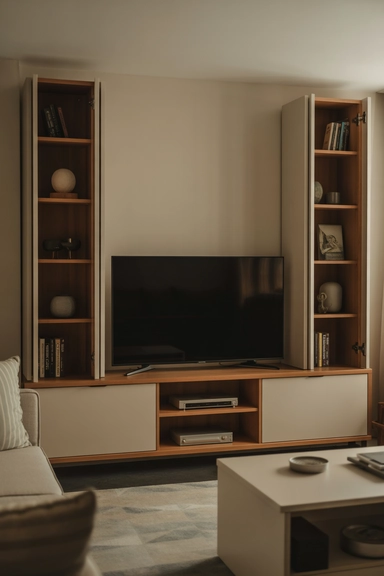
Some TV stands extend upward with narrow side cabinets that frame the television while adding concealed storage. These vertical compartments are ideal for items that normally pile around the console, such as board games, extra cables, or manuals. Because the cabinets rise alongside the TV rather than spreading outward, they increase storage without widening the footprint or making the media wall feel heavier.
Inside each cabinet, divide shelves by item type so everything remains accessible without stacking. Keep frequently used items at mid-level and occasional items higher or lower. When doors close, the entire structure reads as one cohesive wall element instead of multiple separate storage zones. This keeps the TV area visually grounded and prevents clutter from drifting into surrounding furniture.
12. TV Consoles With Pull-Out Media Drawers
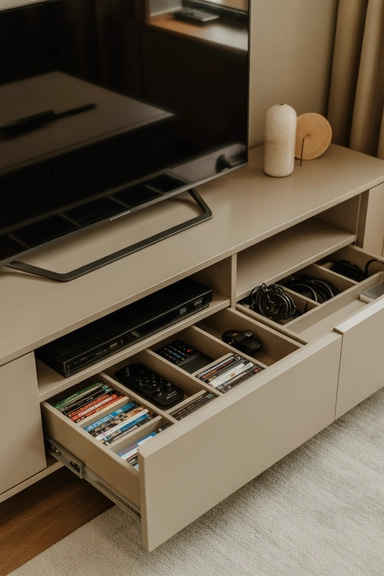
Pull-out media drawers are designed for items that need quick access but shouldn’t remain visible. DVDs, gaming accessories, or remote controls can all live inside these drawers without crowding the top surface. Because the drawers extend fully, they allow easy organization without digging through stacked items or creating interior chaos.
Use adjustable dividers to separate categories and prevent items from shifting. When everything has a dedicated slot, the drawer closes smoothly and the exterior stays clean. Keeping these items inside a pull-out system also prevents them from migrating to nearby tables. The result is a TV stand that supports daily use while maintaining a visually calm exterior.
13. TV Stands With Hidden Cable Management Compartments
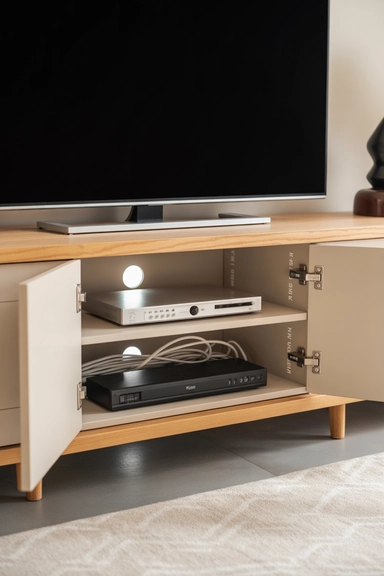
Cables are often the most visually disruptive part of a TV area. A stand with built-in cable management compartments hides wires behind internal panels or channels, preventing them from spilling out the back or tangling on the floor. This keeps the area beneath the television visually quiet and prevents cords from becoming part of the room’s decor.
Route each cable through designated openings and secure them with clips or ties so they stay in place. Keeping cables organized inside the stand means fewer adjustments later. When the back panel remains tidy and contained, the console looks cleaner from every angle and the surrounding space feels more organized.
14. Low-Profile TV Stands That Reduce Visual Bulk
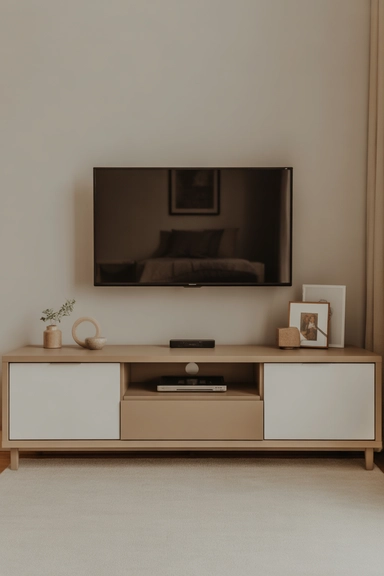
A low-profile TV stand keeps the visual weight of the media area closer to the floor, making the room feel more open. Because the stand sits lower, it doesn’t block wall space or compete with other furniture visually. Closed compartments along the base still provide enough storage for electronics and accessories while maintaining a streamlined appearance.
Keep the top surface minimal so the stand doesn’t become a secondary display shelf. Inside, group items by use and avoid stacking them loosely. When the stand stays visually simple and grounded, it anchors the TV wall without adding unnecessary bulk. This approach works especially well in smaller living rooms where every visual line matters.
15. Modular TV Storage Units That Adapt to Changing Needs
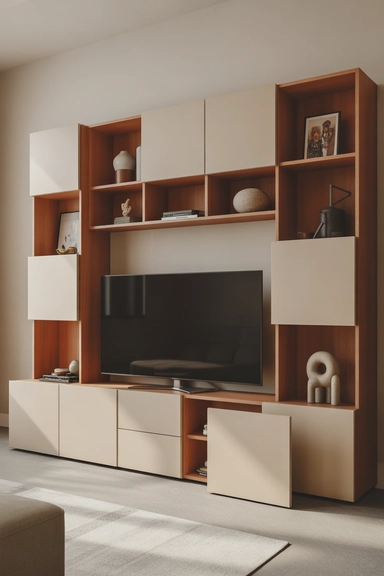
Modular TV storage systems allow you to adjust compartments as your storage needs shift. Individual units can be rearranged, stacked, or expanded, which prevents the need for multiple mismatched pieces later. This keeps the TV area consistent even as devices or storage needs change over time.
Use closed modules for items that create visual clutter and open sections only where styling is intentional. Keeping the configuration balanced prevents the unit from looking chaotic. Because modular pieces can shift as needed, they maintain order long-term and prevent overflow from spreading into other parts of the room.
16. TV Stands With Sliding Top Panels for Hidden Surface Storage
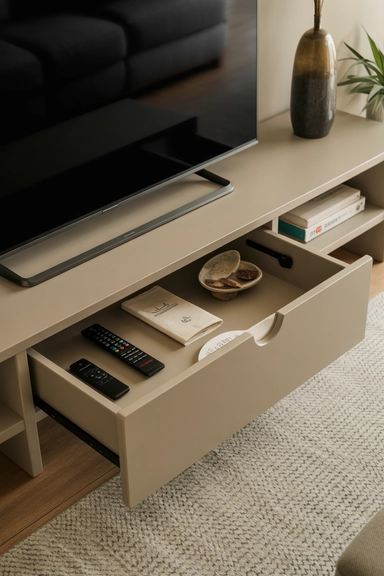
A sliding top panel allows the surface of the TV stand to open and reveal a concealed compartment beneath. This is ideal for items that normally sit out in the open, such as remotes, charging cables, and small devices. When the panel slides closed, the entire surface resets visually, keeping the TV area calm and uncluttered even after daily use.
To maintain function, keep the interior divided into sections so items remain easy to find. Avoid overfilling the compartment, as that can prevent the panel from closing smoothly. When the surface stays mostly clear and the hidden storage remains organized, the stand continues to look intentional instead of becoming a catch-all zone for random items.
17. TV Stands With Built-In Lighting to Reduce Visual Noise
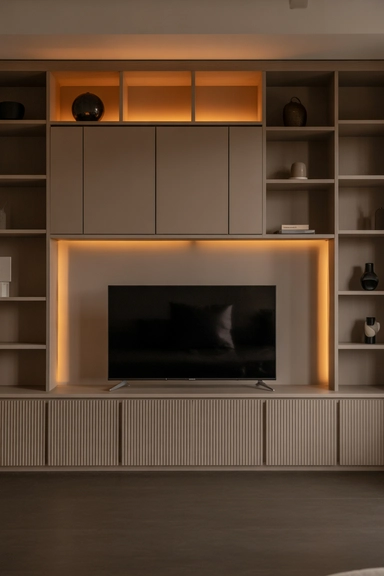
Integrated lighting inside a TV stand can help reduce visual clutter by creating soft illumination around stored items and preventing dark shadowed areas from feeling heavy. Subtle interior lighting makes it easier to locate items without leaving cabinet doors open, which helps maintain a clean exterior.
Use warm, low-intensity lighting rather than bright strips so the effect remains calm. Keep internal storage grouped and minimal so the lighting highlights structure rather than clutter. When the stand appears evenly lit and balanced, it draws attention to the overall layout instead of to scattered objects or messy shelves.
18. TV Stands With Dual-Level Hidden Compartments
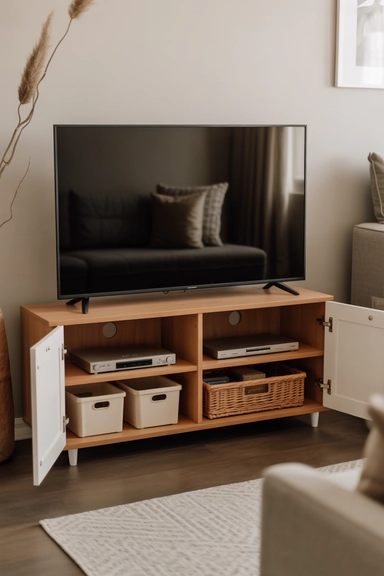
Some TV stands include dual-layer storage inside closed doors, allowing small items to live on upper shelves while larger items sit below. This separation prevents stacking and keeps everything easier to access. When items are layered intentionally rather than piled together, the interior stays organized and the exterior remains clean.
Place frequently used electronics on the upper level and less-used items below. Keeping each level dedicated to a purpose helps maintain order over time. When the doors close, the entire structure appears simple and uncluttered, even though it holds multiple categories of everyday items inside.
19. TV Stands With Hidden Back Storage Panels
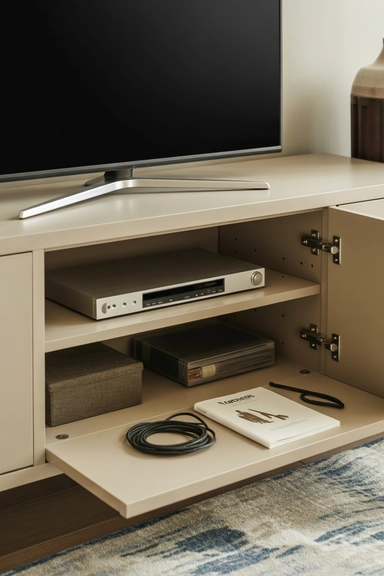
Hidden back panels create storage space behind the main compartments of a TV stand. This is useful for storing items that don’t need frequent access, such as extra cables, manuals, or seasonal electronics. By placing these items behind a secondary panel, the main shelves remain less crowded and easier to maintain.
Keep the back storage organized with small labeled pouches or clips so items don’t shift. This prevents the area from becoming a tangled storage zone. When the primary compartments stay clear and the secondary storage remains contained, the entire console feels more manageable and visually calm.
20. TV Stands With Integrated Toy Storage for Family Rooms
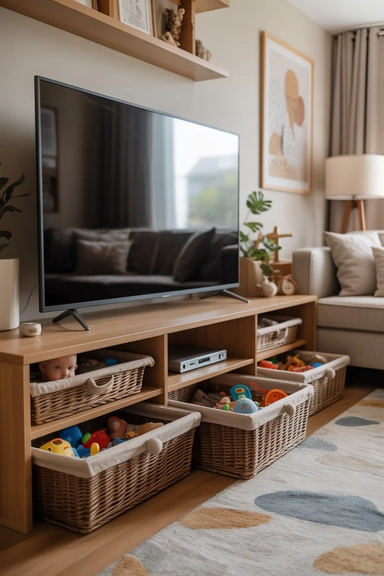
In family living rooms, toys often end up near the TV area. A stand with built-in toy storage compartments allows those items to stay close but out of sight. Closed bins or drawers inside the stand keep toys contained so they don’t spread across the floor or onto surrounding furniture.
Use labeled bins so items return to the same place after use. Keeping toy storage integrated into the stand prevents the need for extra baskets or boxes around the room. When toys remain hidden behind closed panels, the living room maintains an adult-friendly look even in shared family spaces.
21. Minimal Styling Around the TV Stand to Support Hidden Storage
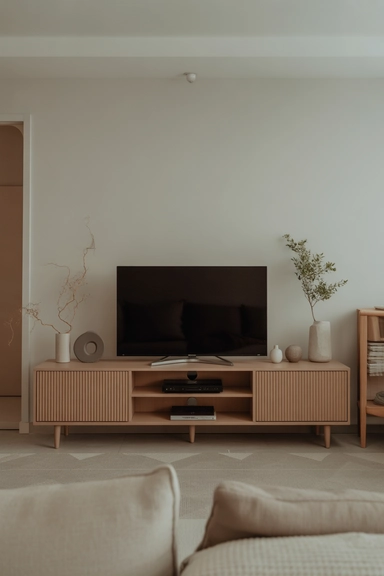
Even the most functional TV stand loses effectiveness if the surrounding surfaces become crowded. Keeping decor around the stand minimal allows hidden storage to do its job without competition. Limit visible items to one or two intentional pieces, such as a plant or a single decorative object, so the stand remains the main visual anchor.
Store everything else inside the console rather than around it. When surfaces stay mostly clear and storage remains concealed, the TV wall feels calm and balanced. This final step ensures that all hidden storage solutions work together to maintain a space that looks organized every day without constant adjustment.
Conclusion
A cluttered TV area quickly makes an entire living room feel disorganized, even when the rest of the space is tidy. The most effective tv stand storage ideas focus on hiding everyday mess while keeping essentials easy to access. Closed cabinets, concealed drawers, and structured compartments allow remotes, cables, and devices to stay out of sight without becoming difficult to find. When everything has a defined place inside the stand, surfaces remain clear and the room feels calmer. Start by choosing one or two storage upgrades that remove visible clutter immediately, then build from there. As the TV wall becomes more contained and intentional, the entire living room begins to look more open, balanced, and easier to maintain.