
Introduction
n a tiny kitchen, the counter isn’t just a surface — it becomes the prep zone, coffee station, and daily landing strip all at once. Once that space fills up, cooking turns into constant rearranging instead of a smooth routine. The most practical tiny kitchen counter organization ideas focus on protecting usable prep space first, then relocating everything else with intention. Vertical storage, defined zones, and hidden extensions quietly multiply working room without renovation. When counters stay clear by design, even the smallest kitchen feels calmer, more functional, and far easier to maintain every day. the entire cooking area feels calmer and easier to maintain. For deeper cabinet fixes, see 25 Deep Kitchen Cabinet Organization Ideas That Actually Work.
1. Wall-Mounted Shelves That Remove Daily Items from the Counter
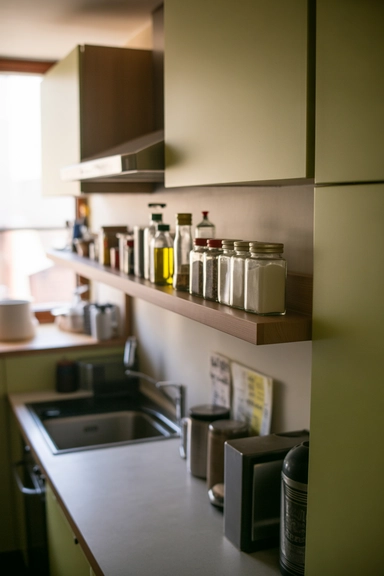
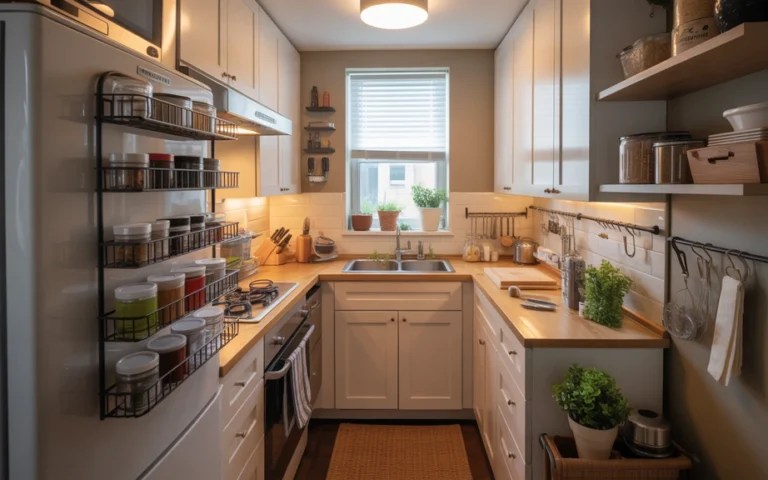
A narrow floating shelf placed just above the busiest stretch of counter can immediately lift oils, spices, and small jars off the surface. When planning tiny kitchen counter organization ideas, moving everyday items upward is one of the fastest ways to open usable prep space without removing essentials. Keeping the shelf shallow prevents it from crowding the wall or interfering with upper cabinets, which is important in very tight layouts. This simple vertical shift works especially well in small home kitchen ideas for tiny spaces where horizontal counter room is limited and every inch needs to stay functional.
Resist the urge to fill the shelf completely. Limit it to items used daily so it stays functional instead of decorative clutter. Matching small kitchen canisters or clear jars help the wall feel orderly rather than busy. Once frequently used items live above instead of on the counter, the cooking area below stays open longer without constant resetting.
2. Sink Covers That Create Temporary Prep Space
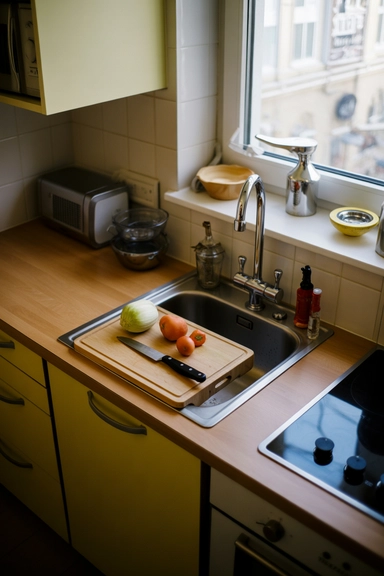
A fitted cutting board that spans the sink instantly creates extra working surface when needed. In tiny kitchen counter space organization setups, the sink often sits unused while you prep elsewhere. Covering it temporarily gives you a flush extension for chopping vegetables, assembling meals, or setting bowls down during cooking. This simple adjustment works well in apartments and small kitchen storage solutions where permanent expansion isn’t possible.
Look for a sturdy board with non-slip edges so it stays stable while in use. When finished, slide it vertically beside a cabinet or store it behind a divider. This method doesn’t add clutter — it simply turns an existing footprint into flexible prep space that appears when needed and disappears afterward. Solutions like this are at the core of smart Tiny Kitchen Counter Organization Ideas, since they expand usable surface without permanently taking up room or adding bulky storage.
3. Contained Counter Trays That Stop Clutter from Spreading
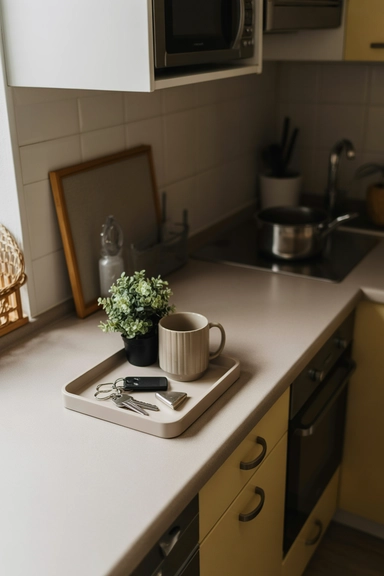
Instead of trying to keep counters completely empty, assign one contained tray as the only landing zone. Mail, keys, or daily-use items must stay within that boundary so they don’t slowly spread across the entire surface. In tight layouts, this simple rule is one of the easiest Tiny Kitchen Counter Organization Ideas to maintain daily. The tray becomes a visual stop point that keeps clutter controlled while still allowing real-life use, making the counter feel intentional rather than constantly crowded with small items.
Choose a low-profile tray in wood, stone, or metal so it blends naturally with decor ideas for small kitchen setups. Keep the size strict and proportional to your counter — once it fills, something leaves or gets relocated. This controlled boundary prevents your kitchen counter catch-all from expanding into prep space while still supporting everyday routines. Over time, this habit helps maintain a clearer surface and makes it easier to keep the kitchen functional without constant resetting.
4. Under-Cabinet Hooks That Lift Mugs and Tools Upward
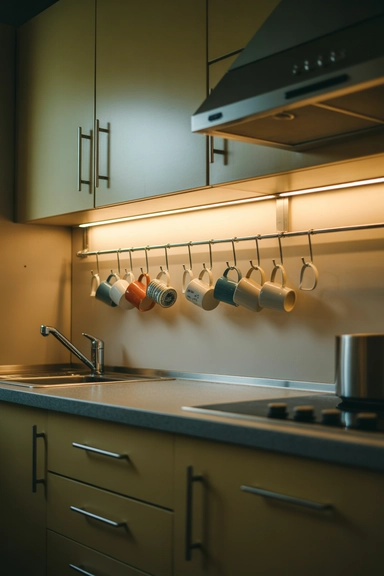
Under-cabinet hooks quietly reclaim vertical space that usually goes unused. Install small screw-in hooks beneath upper cabinets to hold mugs, measuring cups, or lightweight utensils that would otherwise sit on the counter. In very tight layouts, removing even a few items from the surface can noticeably improve how usable the prep area feels. Simple adjustments like this are among the most practical Tiny Kitchen Counter Organization Ideas, since they free space without reducing convenience or requiring major changes to the layout.
Spacing matters. Keep hooks evenly aligned so the row feels intentional rather than improvised, and limit what hangs there to items you reach for daily. When mugs hang in a neat line instead of sitting in a bulky rack, the counter opens up both visually and physically. This subtle vertical shift often creates enough working room to prep comfortably without constantly moving items aside during cooking.
5. Rolling Carts That Relocate Appliances Off the Counter
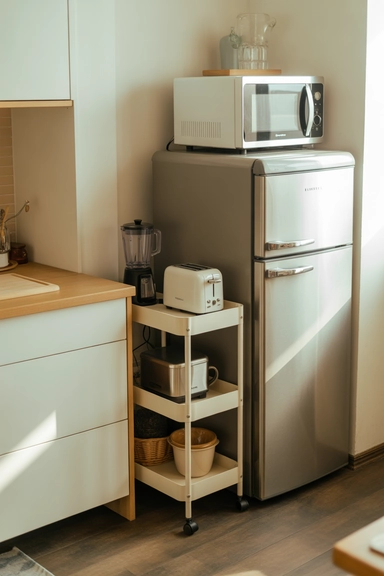
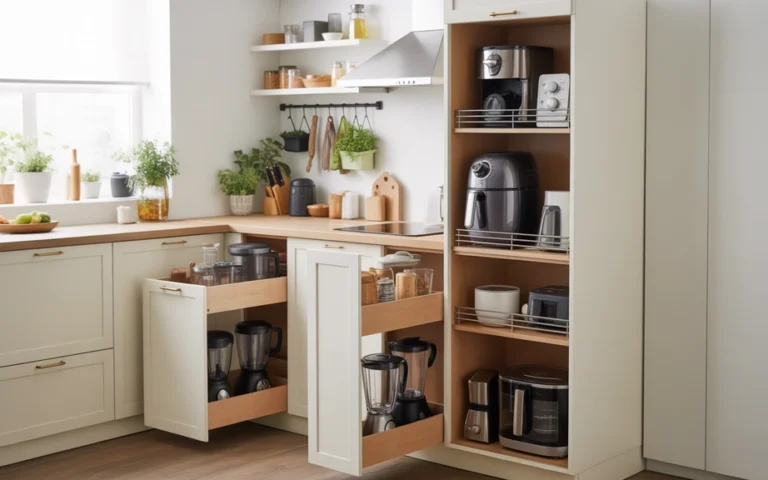
Small appliances often occupy more counter space than anything else. A slim rolling cart can hold the toaster, blender, or coffee setup and tuck beside the fridge or a cabinet when not in use. In tiny kitchen organization ideas counter space planning, relocating appliances instead of removing them completely keeps routines intact while freeing the main prep area.
Choose a cart with at least two shelves so items can be stacked vertically instead of spread out. When cooking, roll it beside your workspace; when finished, move it back. This keeps the primary counter clear while still keeping appliances accessible, making the kitchen feel larger without changing the layout.
6. Magnetic Knife Strips That Replace Bulky Counter Blocks
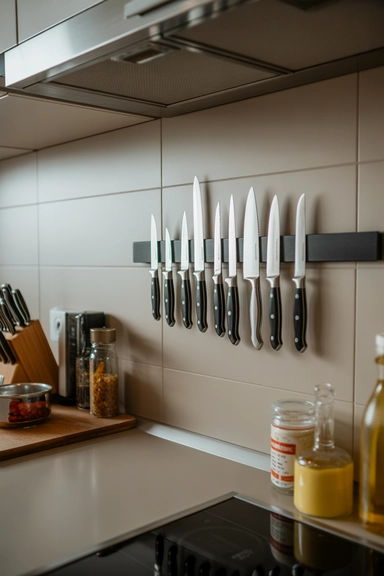
Knife blocks quietly consume more counter space than most people realize. Mounting a magnetic strip on the wall keeps knives accessible while immediately freeing that footprint. In tight kitchen counter space setups, removing even one bulky object can change how the entire surface functions. Place the strip near your prep zone but away from heavy splash areas so blades stay clean and dry. This small shift keeps tools within reach without forcing them to live directly on the counter.
Choose a strip long enough to hold your daily knives without overcrowding. Stainless steel blends into modern kitchens, while wood-backed strips soften small home kitchen ideas tiny spaces. Once knives move to the wall, the counter feels less congested and easier to wipe down. It’s a subtle adjustment that dramatically improves small kitchen countertop organization without adding new clutter.
7. Tiered Risers That Stack Oils and Spices Vertically
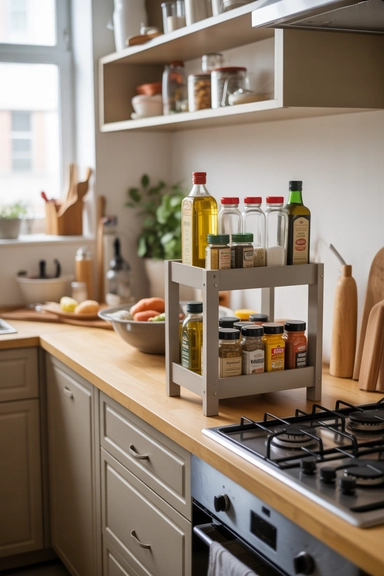
Oils and spices often spread across the counter because they’re used daily. A slim tiered riser stacks them upward instead of outward, keeping labels visible while reducing the footprint they occupy. In small kitchen counter organization ideas layouts, vertical layering keeps essentials nearby without letting them dominate prep space. This approach works especially well beside the stove where items need to stay accessible but contained.
Choose a narrow riser rather than a wide lazy Susan in tight spaces. Uniform bottles or matching small kitchen canisters help the setup feel calm instead of crowded. Once items are stacked vertically, the surrounding counter opens up naturally, making the cooking area feel more deliberate and less chaotic without removing anything you actually use.
8. Fold-Down Wall Surfaces That Expand When Needed
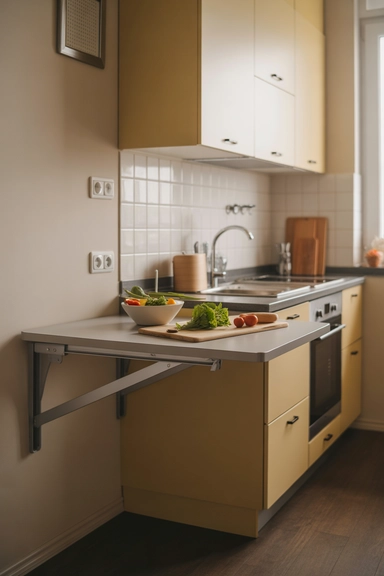
A fold-down wall-mounted surface can act as temporary prep space and disappear when not in use. This is especially useful in apartments or very small kitchen organization layouts where adding permanent furniture isn’t realistic. Mounted near the main cooking area, it provides a quick extension for chopping, plating, or setting bowls down during meal prep. When folded up, it reads as a simple wall panel rather than extra furniture.
Placement matters. Install it where cabinet doors won’t collide when opened. A sturdy hinge and slim profile keep it functional without adding visual bulk. This type of hidden extension supports how to make more counter space in a small kitchen without remodeling or sacrificing floor area.
9. Corner Shelves That Turn Awkward Counter Angles Useful
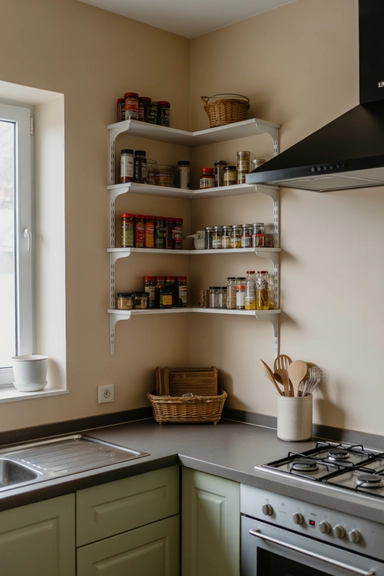
Corners often collect clutter because they’re hard to reach and easy to ignore. A compact corner shelf or two-tier stand can stack items vertically and keep them contained. Instead of letting bottles and jars spread across the entire surface, the corner becomes a defined storage zone. In small kitchen storage ideas organizing counter space setups, this helps preserve the main prep stretch for actual cooking.
Keep the shelf low and stable so it doesn’t feel top-heavy. Limit it to frequently used items and avoid overfilling. Once the corner holds its own items neatly, the central counter feels more open and easier to maintain. Defined zones prevent clutter from slowly creeping outward across the workspace.
10. Slim Utensil Rails That Move Tools Off the Surface
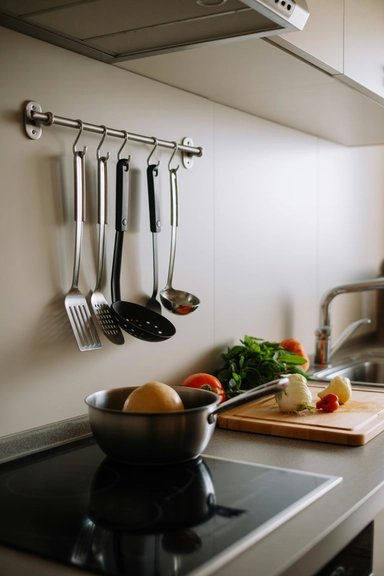
Utensil crocks often crowd small counters. Installing a slim rail with hanging hooks keeps spatulas, ladles, and tongs accessible without using surface space. In very small kitchen organization designs, shifting tools to the wall reduces visual clutter and frees room for prep. Place the rail near the stove for convenience but high enough to avoid splashes.
Spacing the hooks evenly keeps the setup looking intentional rather than improvised. When tools hang vertically, they’re easier to grab and quicker to put back. This simple wall shift removes a bulky container from the counter and replaces it with something lighter and more efficient for daily cooking.
11. Stackable Canisters That Consolidate Loose Pantry Items
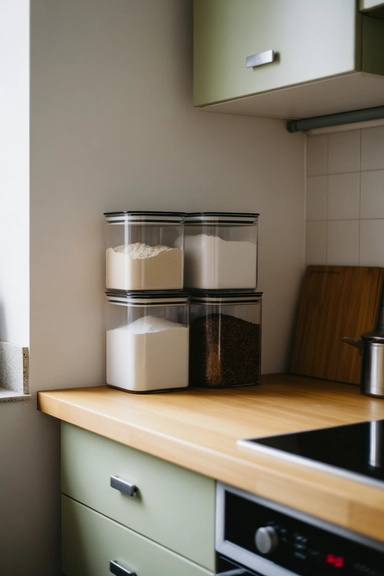
Loose bags of rice, snacks, or coffee tend to scatter across the counter when cabinet space is limited. Transferring these into stackable canisters allows them to sit vertically instead of spreading outward. In small kitchen counter space organization setups, stacking immediately reduces how much surface area dry goods occupy. Choose square or rectangular containers so they sit flush together and don’t waste space between them.
Keep only frequently used items in these canisters and store the rest elsewhere. Matching lids and uniform heights create visual calm, which helps the counter feel less crowded even when items remain present. Once loose packaging disappears and storage becomes contained, the prep area feels easier to maintain throughout the day.
12. Over-the-Stove Covers That Extend Work Surfaces
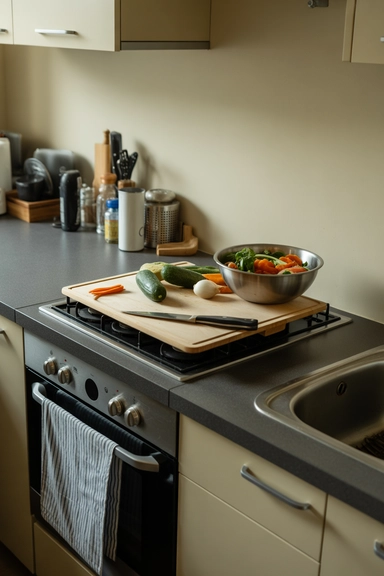
When the stove isn’t in use, its surface can temporarily function as extra counter space. A fitted stovetop cover creates a flat extension that works for prep, plating, or setting down ingredients. In tiny kitchen organization ideas counter space layouts, using existing appliances as temporary surfaces adds flexibility without adding furniture. This works especially well in apartments where every inch matters.
Choose a heat-safe, sturdy cover designed to sit securely over burners. Store it vertically when cooking begins so it doesn’t become another obstacle. This approach turns an idle appliance into a functional workspace when needed, giving you more room to work without permanently altering the kitchen layout.
13. Under-Shelf Baskets That Lift Small Items Upward
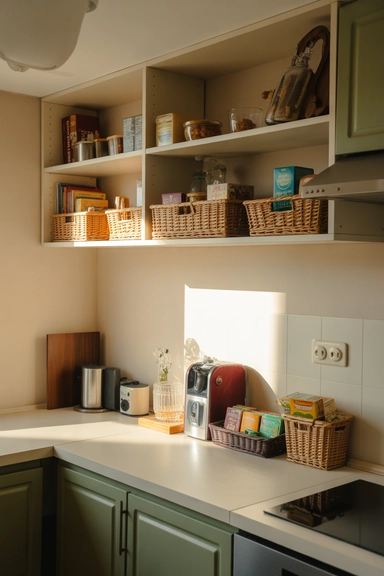
Under-shelf baskets slide onto existing shelves and create a secondary storage layer above the counter. Items like tea boxes, napkins, or snack packs can move into these baskets instead of sitting out. In very small kitchen organization layouts, using vertical airspace prevents the counter from becoming a holding area for overflow.
Choose slim baskets that don’t hang too low or block visibility. Once small items move upward, the counter feels clearer and easier to wipe down. This method doesn’t require drilling or installation, making it especially helpful for renters or temporary setups where permanent changes aren’t possible.
14. Mounted Paper Towel Holders That Free Surface Room
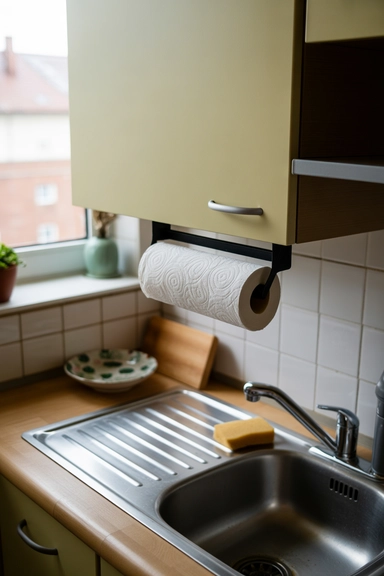
Paper towel rolls often sit on the counter by default, quietly taking up valuable space. Mounting a holder beneath a cabinet or on a nearby wall removes that footprint instantly. In small kitchen storage ideas organizing counter space, even small removals like this create more usable prep room.
Place the holder near the sink or cooking area for convenience. Keeping it mounted also prevents the roll from sliding around during use. Once it moves off the counter, the surface feels less crowded and easier to maintain throughout daily cooking routines.
15. Appliance Zones That Limit Where Bulk Items Live
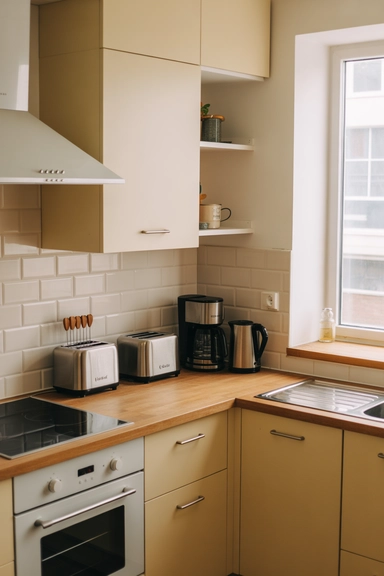
Instead of letting appliances scatter across the entire counter, assign a single zone where they must stay. Whether it’s a corner or a short stretch of wall, containing them prevents spread. In small kitchen counter organization ideas layouts, boundaries matter more than removal. Keeping appliances grouped together leaves the remaining counter open for prep.
Choose the least functional stretch of counter for this zone so prime prep space stays clear. When appliances always return to the same spot, the rest of the surface remains predictable and usable. Over time, this habit alone can dramatically improve how much counter space stays available day to day.
16. Slim Wall Rails That Lift Everyday Tools Off the Counter
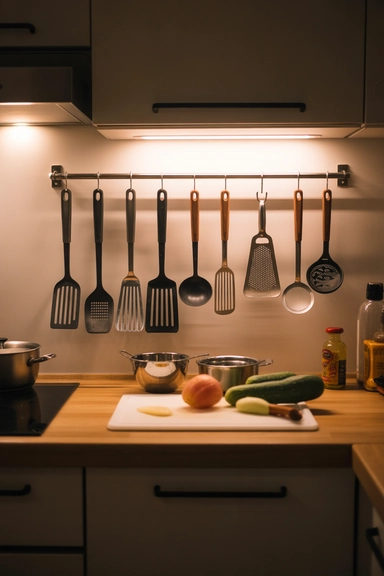
Utensil holders and small containers often sit on the counter simply because they’re used daily, but they quietly take up valuable prep room. Installing a slim wall rail with hooks keeps spatulas, ladles, and tongs accessible without forcing them to live on the surface. In tiny kitchen organization ideas counter space planning, shifting tools upward creates immediate breathing room for chopping and plating. Placing the rail near the stove maintains convenience while ensuring the primary prep stretch stays clear and usable during busy cooking sessions.
Spacing and restraint keep this system from becoming another clutter zone. Limit hooks to daily-use tools and keep them evenly aligned so the wall looks intentional rather than crowded. This setup supports kitchen counter space saving ideas by relocating frequently used items without hiding them. Once utensils live vertically instead of inside bulky crocks, the counter becomes easier to wipe down and reset, helping maintain a simple organized kitchen routine even on busy days.
17. Vertical Divider Storage That Removes Flat Items from the Surface
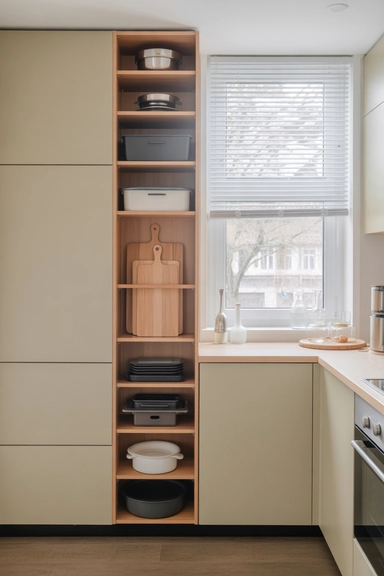
Cutting boards, baking trays, and cooling racks often end up leaning against the backsplash or lying flat across the counter when cabinet storage feels tight. Creating a vertical divider slot inside a nearby cabinet or narrow gap gives these flat items a defined home. In small kitchen counter organization ideas layouts, removing wide, flat objects from the surface instantly opens up more usable prep space without eliminating tools you rely on.
Slim dividers keep boards upright and easy to grab while preventing them from sliding or stacking messily. This supports small kitchen storage solutions by containing items vertically rather than spreading them horizontally. Once trays and boards move into a designated slot, the counter stops acting as overflow storage. The surface feels calmer and more predictable, which makes daily cooking easier and helps maintain clear, usable workspace throughout the day.
18. Corner Appliance Grouping That Keeps Bulk Contained
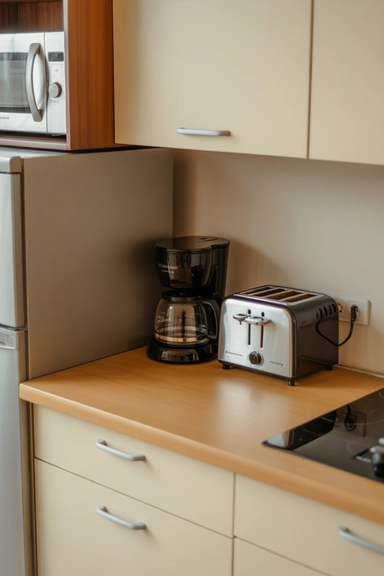
Appliances are necessary, but when they scatter across the counter they quickly reduce usable prep room. Grouping them into one defined corner zone keeps bulk contained while leaving the main cooking stretch open. In very small kitchen organization setups, boundaries matter more than removal. Keeping the kettle, toaster, or coffee maker together in a single cluster prevents them from slowly spreading across the entire surface over time.
Choose the least functional corner for this zone so prime prep space remains clear. Keeping appliances in one contained area supports kitchen counter space organization by controlling placement instead of constantly rearranging items. Over time, this simple habit keeps the rest of the counter predictable and open. When bulk items return to the same spot after use, the kitchen feels easier to manage and maintain throughout daily routines.
19. Compact Drying Solutions That Don’t Overtake the Counter
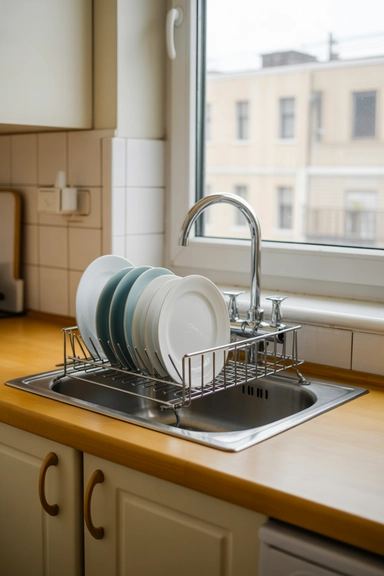
Dish racks can quietly expand across the counter after washing, leaving little room for food prep. Switching to a slim vertical rack or an over-the-sink drying solution keeps dishes contained without spreading outward. In small kitchen counter space organization ideas, reducing the drying footprint is essential for keeping the main surface usable throughout the day. A narrow rack beside the sink allows water to drain while preserving prep space nearby.
Once dishes are dry, storing the rack or folding it flat prevents it from becoming a permanent fixture. This supports kitchen storage ideas for small spaces by keeping temporary items from turning into long-term clutter. Controlling where drying happens helps maintain a clearer counter and makes daily cleanup feel faster. When the rack has a defined place, the rest of the surface remains open and ready for cooking.
20. Minimal Decor Zones That Keep Counters Visually Calm
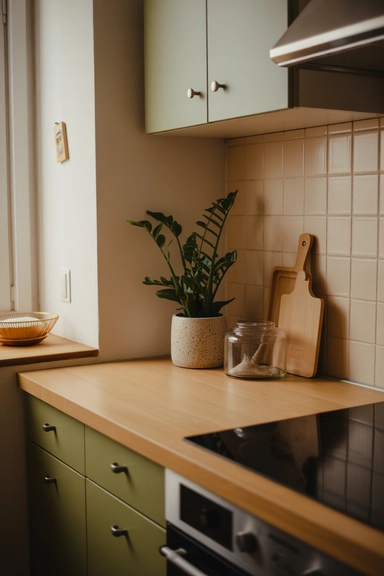
Decor adds warmth to a kitchen, but too many items scattered across the counter can make even a clean space feel crowded. Limiting decorative objects to one contained zone keeps the surface visually calm while still allowing personality. In tiny kitchen organization ideas counter space planning, boundaries for decor matter just as much as boundaries for tools. A single plant, candle, or decorative jar can add style without overtaking valuable prep room.
Choose one small section of counter for decorative items and keep the rest dedicated to function. This balance supports decor ideas for small kitchen layouts without sacrificing usability. When decor stays contained, the counter feels styled yet practical, making it easier to maintain clear surfaces. Over time, this controlled approach helps the kitchen feel more intentional and less cluttered during everyday use.
21. Wall-Mounted Drop Zones That Stop Daily Items from Reaching the Counter
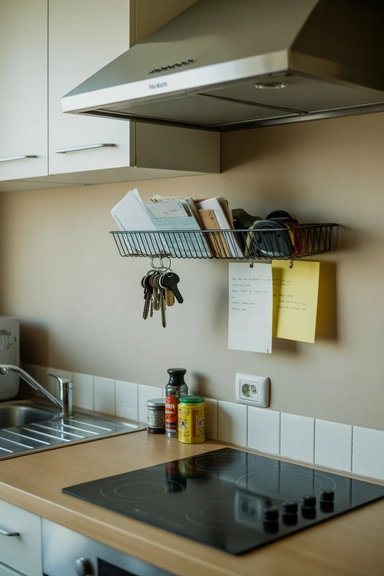
Mail, receipts, and small daily items often land on the nearest surface, which in a tiny kitchen is usually the counter. Creating a slim wall-mounted drop zone with a narrow shelf or pocket organizer keeps these items contained before they spread. In small kitchen counter space organization, preventing non-kitchen clutter from landing on prep areas is just as important as moving appliances. A designated vertical landing spot near the entrance or fridge keeps everyday items from drifting across the workspace.
Choose a compact organizer that doesn’t project too far from the wall so it stays unobtrusive. Limiting this zone to essentials keeps it functional rather than decorative. This approach supports organizing small kitchen countertops by intercepting clutter before it reaches them. Once daily items have a clear landing area, the counter remains dedicated to cooking tasks, making the kitchen easier to maintain throughout the day.
22. Reset Zones That Keep the Counter Clear by Habit
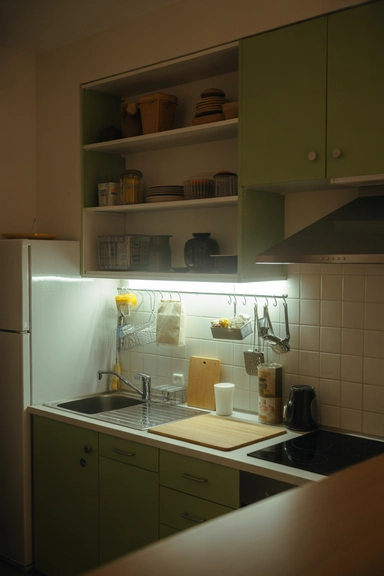
Even well-organized counters can slowly fill if items don’t have a return point. Creating a simple reset zone ensures everything goes back to the same place after use. In tiny kitchen organization ideas counter space planning, consistency matters more than constant cleaning. Assign a spot for each frequently used item so it never lingers on the prep surface longer than necessary. This habit keeps the workspace predictable and ready for use.
A reset routine at the end of each cooking session helps maintain a clear counter without extra effort. Wiping the surface and returning items to their zones prevents buildup over time. This supports kitchen counter space saving ideas by protecting the workspace through habit rather than constant rearranging. When every item has a defined home, the counter stays open and usable throughout daily routines.
Conclusion
Keeping counters clear in a tiny kitchen isn’t about removing everything — it’s about assigning better homes for what remains. When vertical storage, defined zones, and flexible surfaces work together, even the smallest cooking area feels manageable. Protecting prep space first allows the kitchen to function smoothly without constant rearranging. With consistent placement and a few strategic adjustments, the counter stays usable, making daily cooking easier and the entire space feel calmer and more intentional.