
Introduction
A compact living room rarely needs more furniture — it needs smarter placement and quieter storage. The most effective small living room storage ideas work by lowering visual noise, hiding everyday items, and creating clear sightlines across the room. When surfaces stay open and storage blends into the layout, the entire space feels larger and calmer. If you’re refining multi-purpose spaces too, these 25 Living Room Organizing Ideas That Keep Shared Spaces Clear pair naturally with the strategies below. Each idea focuses on reducing what the eye sees first while still increasing what the room can hold.
1. Floating Media Consoles That Clear the Visual Floor Line
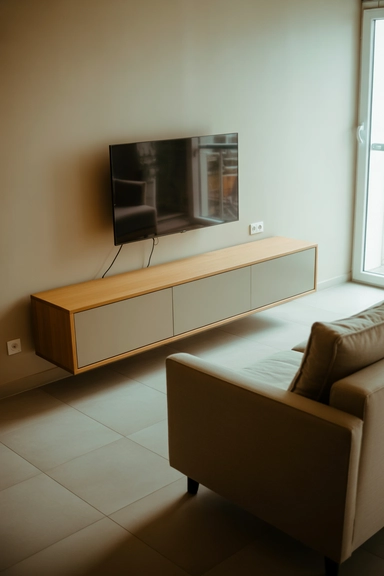
A floating media console immediately changes how a small living room reads. When the storage unit lifts off the floor, more of the flooring remains visible, which makes the room feel wider and less crowded. Choose a console with flat-front cabinet doors instead of open cubbies so electronics, remotes, and cables stay completely hidden. This prevents the TV wall from becoming a cluster of small visual interruptions that draw attention away from the seating area.
Inside the console, create defined zones rather than stacking everything together. Use slim cable organizers and shallow dividers so devices remain accessible without tangling. Keep the top surface intentionally minimal — a single decor object or small stack of books is enough. The goal is not just storage capacity but visual quiet. When the floor line stays open and the console blends into the wall, the entire room feels less compressed.
2. Storage Ottomans That Replace Hard-Edged Coffee Tables
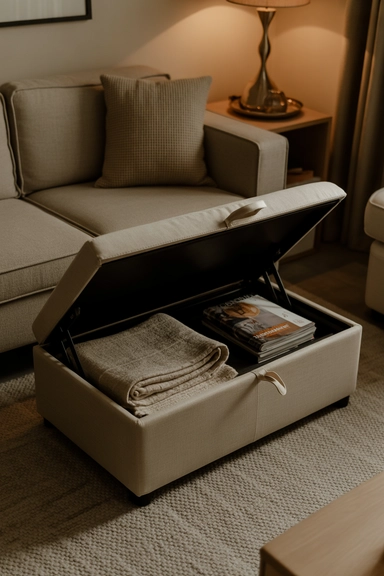
A storage ottoman softens the center of a small living room while quietly absorbing clutter. Unlike rigid coffee tables, an upholstered ottoman visually relaxes the seating area and doubles as concealed storage. Use it to hold blankets, extra cushions, or items that normally end up scattered across the sofa. When the lid closes, everything disappears from view, which keeps the room looking composed even during daily use.
Choose a size that matches the seating footprint rather than oversizing it. An ottoman that aligns with the sofa depth maintains clean walking paths. Interior compartments prevent items from shifting and creating bulk inside. If you need a firm surface occasionally, place a structured tray on top. This approach keeps the center of the room flexible without adding another piece of furniture that competes for space.
3. Tall Narrow Shelving That Uses Height Without Adding Width
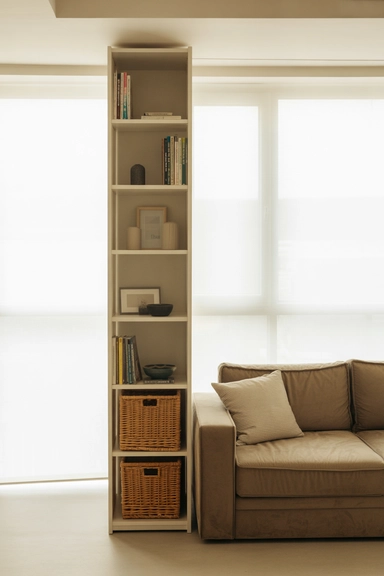
In small living rooms, horizontal expansion is limited, so vertical storage becomes essential. A tall, narrow shelving unit uses wall height instead of floor width, allowing you to store books, baskets, or decorative objects without crowding the seating area. Because the footprint is slim, it can fit beside a sofa or in a corner without interrupting movement through the room.
Styling matters here. Avoid filling every shelf completely. Leave breathing room between stacks and incorporate a few closed baskets on lower levels to hide miscellaneous items. When upper shelves remain lighter and more open, the structure feels intentional rather than heavy. The vertical lines also draw the eye upward, subtly making the ceiling feel taller and the room more spacious.
4. Window Benches With Concealed Interior Storage
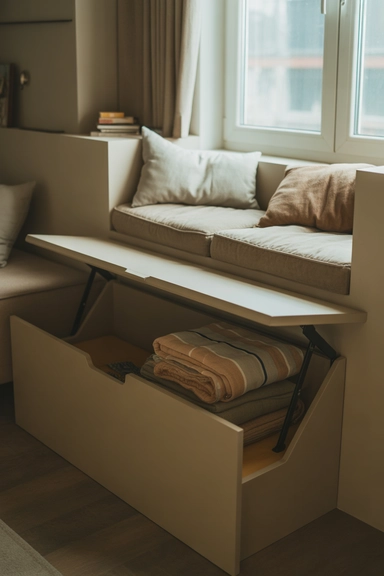
A window bench transforms an often-underused wall into both seating and hidden storage. In a small living room, this dual-purpose piece eliminates the need for extra chairs while providing a place to store blankets, seasonal decor, or children’s items. Because the storage sits along the perimeter, it doesn’t interrupt the central walking space.
To keep the bench visually integrated, match its color to the wall or trim so it reads as built-in rather than added furniture. Use lift-top compartments or front drawers to maintain easy access. Cushioning on top softens the line and helps it function as part of the main seating arrangement. This strategy consolidates multiple functions into one continuous element, which reduces visual fragmentation across the room.
5. Closed Cabinets That Hide Everyday Visual Noise
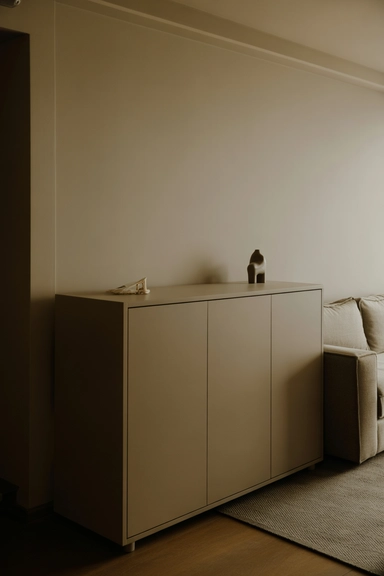
Closed storage cabinets are one of the most effective ways to calm a small living room. Items like board games, paperwork, chargers, and remote controls create visual clutter when left exposed. A cabinet with solid doors conceals all of it at once, allowing surfaces and shelves to remain intentionally styled rather than crowded.
Select cabinets with minimal hardware and clean fronts so they blend into the wall. Avoid glass doors unless the contents are curated carefully. Internally, use adjustable shelving to separate categories of items instead of stacking them. When everything has a defined place behind closed doors, the visible parts of the room stay consistent and uncluttered, which is what makes a compact living space feel orderly rather than overfilled.
6. Under-Sofa Storage That Uses Hidden Floor Space
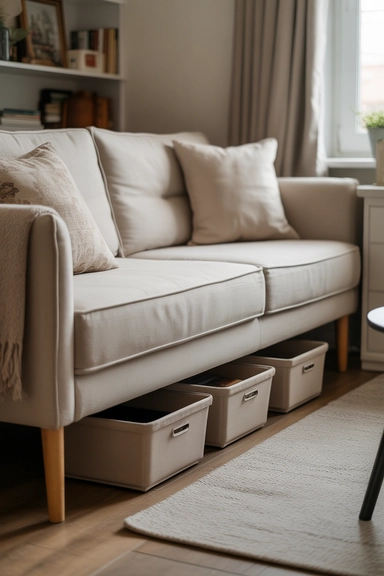
The area beneath a sofa often goes unused, yet in a compact living room it can hold a surprising amount without adding visual weight. Choose low-profile storage bins that slide fully under the frame and remain invisible from standing height. This works best with sofas that have exposed legs, allowing airflow and light to pass through so the room still feels open.
Use these bins for items that don’t need daily access: extra throws, seasonal decor, or board games. Matching containers keep the storage uniform so nothing looks accidental if a bin edge becomes visible. When clutter disappears beneath existing furniture rather than sitting around it, the room feels calmer and more intentional without adding a single extra piece.
7. Corner Shelves That Turn Dead Angles Into Storage
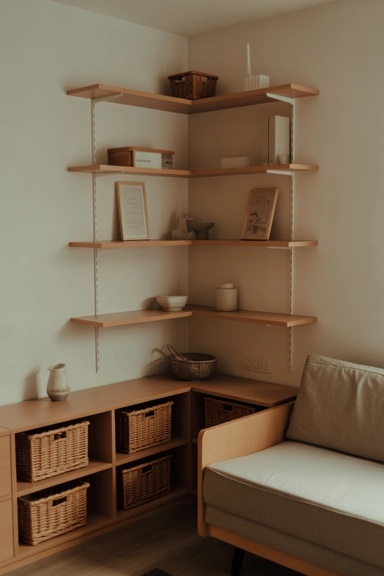
Corners often become drop zones because they lack structure. Installing floating corner shelves gives that empty angle a defined purpose without crowding the center of the room. Because the shelves hug the wall, they add storage vertically while preserving floor space and walking paths.
Keep styling deliberate. Use lower shelves for small baskets that conceal miscellaneous items and upper shelves for lighter decor pieces. Avoid overloading each tier; negative space keeps the corner from feeling heavy. This approach converts unused geometry into functional storage while maintaining a clean, balanced layout that doesn’t compete with the main seating area.
8. Wall-Mounted Cabinets That Replace Floor Units
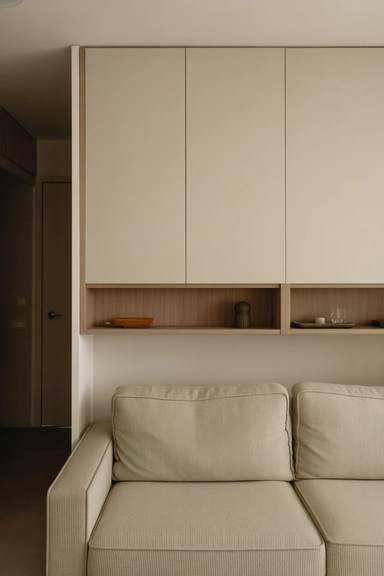
Wall-mounted cabinets provide the storage capacity of a traditional cabinet without taking up floor space. Lifting storage off the ground makes a small living room feel more open because sightlines remain uninterrupted across the floor. Choose shallow-depth cabinets so they store essentials without projecting too far into the room.
Install them along the longest wall or above a media unit for continuity. Inside, divide shelves by category so items remain grouped rather than stacked. Closed fronts keep visual noise contained, while the floating placement maintains a lighter overall footprint. This is especially effective in narrow living rooms where every inch of floor clearance matters.
9. Open-Back Shelving That Defines Zones Without Closing Space
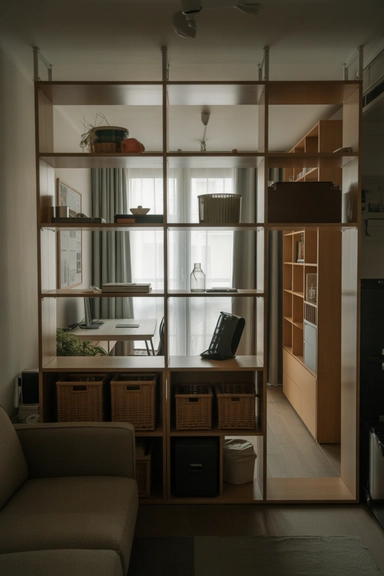
In studio layouts or open-plan apartments, an open-back shelving unit can divide areas while still letting light pass through. This allows the living room to feel distinct without blocking the visual flow of the entire space. Because both sides remain visible, styling must stay balanced and uncluttered.
Use baskets on lower shelves to hide less attractive items and keep upper levels minimal. Leave intentional gaps between objects so the shelving doesn’t feel dense. When done well, the unit functions as both storage and a subtle room divider, giving structure to the layout without making the living area feel boxed in.
10. Storage Coffee Tables With Concealed Compartments
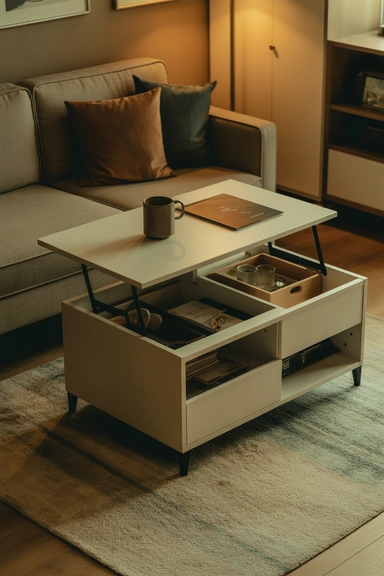
If a coffee table is necessary, choose one that stores items internally. Lift-top or drawer-based designs hold remotes, magazines, and everyday clutter that would otherwise sit on the surface. Keeping the tabletop mostly clear allows the center of the room to feel calmer and more spacious.
Select a table with clean lines and a finish that blends with surrounding furniture. Inside, use small organizers so items don’t shift and create internal clutter. The goal is to maintain a surface that reads as intentional rather than functional storage, while still giving the room a place to contain daily-use objects discreetly.
11. Slim Console Tables Behind Sofas for Hidden Daily Storage
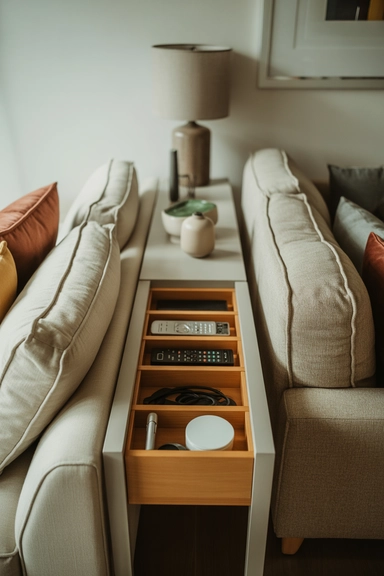
The space behind a sofa often sits unused, yet it can hold a narrow console table that quietly absorbs everyday clutter. A slim profile keeps walking paths open while adding drawers or concealed shelves for items that usually land on side tables. This placement keeps storage close to seating without adding visual bulk to the main view of the room.
Use the console to store remotes, chargers, notebooks, or coasters so surfaces stay clear. Keep the top styling minimal — a lamp and one decor piece is enough. When storage sits just behind the sofa rather than scattered around it, the seating zone feels calmer and more intentional, which helps a small living room read as organized rather than crowded.
12. Matching Storage Baskets That Visually Simplify Open Shelves
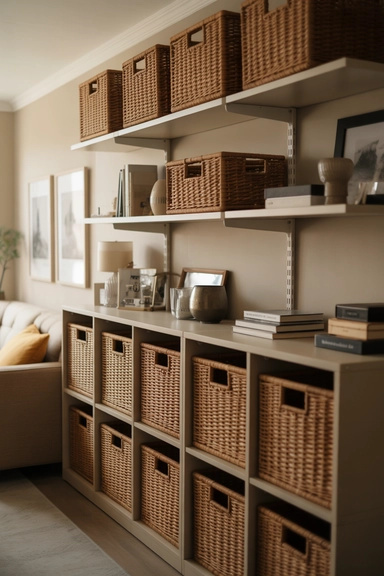
Open shelving can quickly look chaotic if every item is visible. Matching storage baskets create visual uniformity while hiding miscellaneous objects. Use them on lower shelves of bookcases or media units where clutter tends to accumulate. When baskets share the same material and color, the eye reads them as one cohesive block instead of multiple separate items.
Assign each basket a category so contents stay grouped. Avoid overfilling; slightly underfilled baskets maintain shape and keep the shelf from looking strained. The goal is not just to hide clutter but to make open storage look intentional. Consistent containers reduce visual fragmentation and help the entire wall feel calmer.
13. Wall-Mounted Drop Zones for Small Everyday Items
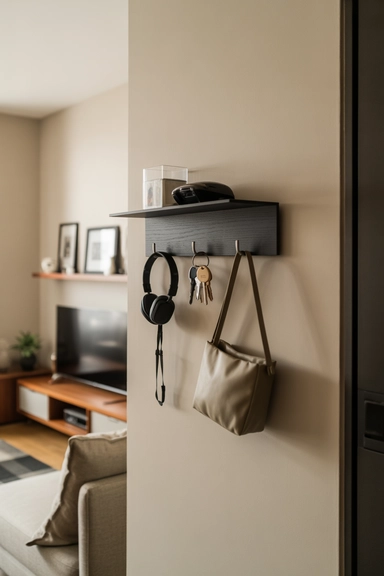
Small items like keys, headphones, or mail often drift onto coffee tables and side surfaces. A compact wall-mounted drop zone near the seating area gives these items a defined place without introducing a full piece of furniture. Choose a narrow shelf with a small ledge or hooks beneath it to keep items contained vertically.
Install it where items naturally get set down, such as near the room entrance or beside a sofa arm. Keeping these objects off horizontal surfaces immediately reduces visual clutter. When small necessities have a dedicated wall spot, they stop spreading across the room and the main surfaces remain clean.
14. Multi-Use Side Tables With Internal Storage
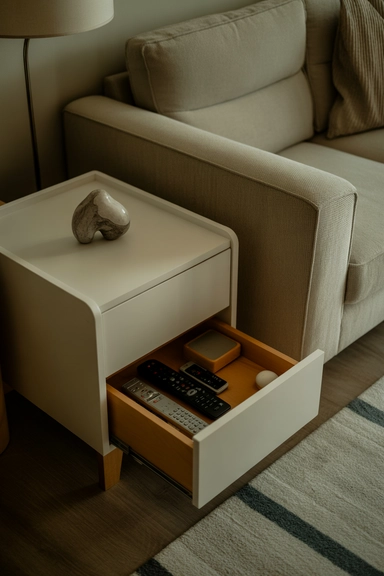
Side tables with drawers or lift-top compartments keep essential items close without leaving them exposed. In a small living room, this prevents the buildup of remotes, books, and chargers on visible surfaces. Choose designs with clean lines and closed fronts so they blend quietly into the seating arrangement.
Inside the table, separate items by frequency of use. Keep daily essentials in the top compartment and less-used items below. When side tables serve as both storage and surface, the number of standalone organizers in the room decreases. This consolidation keeps the layout simpler and visually lighter.
15. Floating Shelves Styled With Negative Space
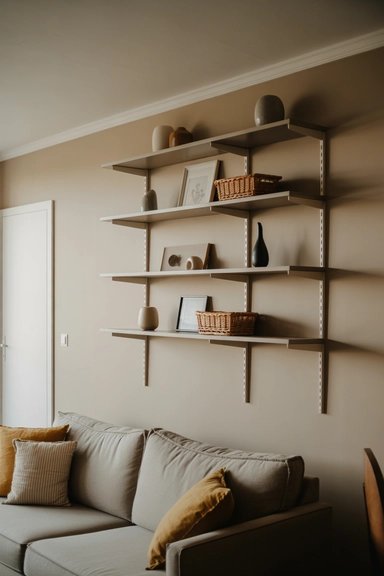
Floating shelves can either reduce clutter or amplify it depending on how they’re styled. In a small living room, fewer objects displayed with deliberate spacing keep the shelves from feeling heavy. Use them to hold a mix of decor and small storage boxes, but avoid filling every inch.
Place heavier visual items toward the ends and lighter ones toward the center to maintain balance. If baskets are used, match their tone to the wall or shelving finish so they blend rather than stand out. When shelves hold only what’s necessary and everything has breathing room, they add storage without adding visual noise.
16. Built-In Wall Units That Replace Multiple Storage Pieces
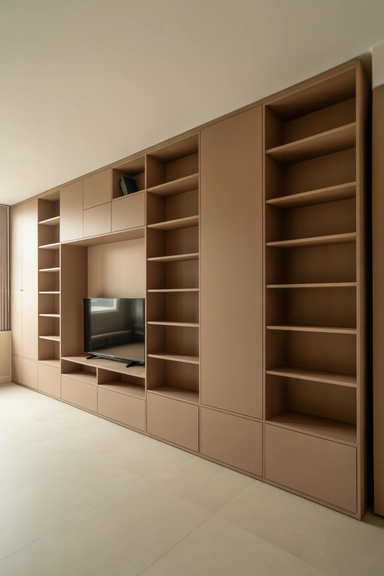
A built-in wall unit consolidates several storage functions into one continuous structure, which is far more effective than scattering small pieces across the room. In a compact living room, replacing a bookcase, media console, and side cabinet with one integrated unit prevents visual fragmentation and keeps sightlines consistent. Floor-to-ceiling designs draw the eye upward and create a single, organized focal wall instead of several competing storage points that make the room feel busy and crowded.
Inside the unit, mix closed cabinets with a few open sections so everyday clutter stays hidden while select decor remains visible. Keep open shelves intentionally sparse and balanced, allowing empty space to offset stored items. When everything from electronics to blankets fits into one cohesive structure, surfaces stay clear and the room reads as calmer and more spacious, even though the actual storage capacity has increased significantly.
17. Nesting Tables That Expand Only When Needed
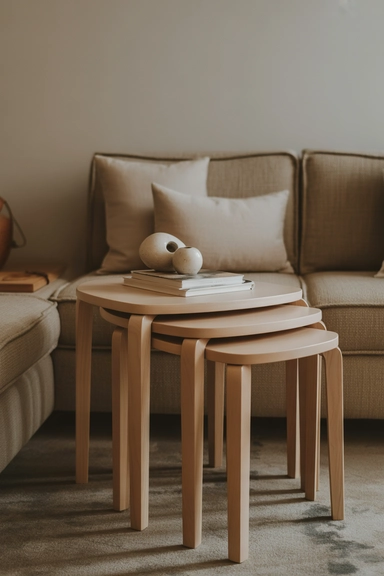
Nesting tables provide surface area when necessary without permanently occupying valuable floor space. In small living rooms, keeping furniture flexible prevents the layout from feeling locked and crowded. A set of nesting tables can stay stacked most of the time, appearing as a single compact piece. When guests arrive or extra surfaces are needed, they can be separated and repositioned without introducing additional furniture that would normally live in the room full time.
Choose designs with internal shelves or shallow drawers so they also function as hidden storage when stacked. Store coasters, remotes, or small items inside to keep tabletops uncluttered. Because the tables collapse back into one footprint after use, they maintain a lighter visual presence than multiple standalone side tables. This adaptability keeps the room open while still supporting everyday living.
18. Ladder Shelves That Provide Storage Without Bulk
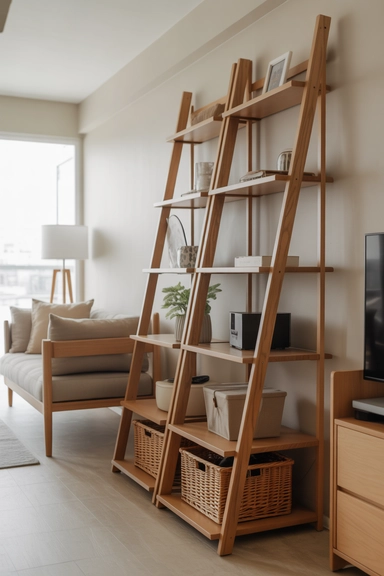
Ladder shelves lean lightly against the wall and offer vertical storage without the visual weight of traditional bookcases. Their tapered shape takes up less floor space at the top, which helps maintain open sightlines in tight layouts. This makes them useful for storing books, baskets, and decorative objects without crowding the seating area or blocking light.
Style the lower shelves with concealed baskets for items that would otherwise create clutter. Keep upper shelves minimal and balanced to avoid a top-heavy look. Because ladder shelves appear more open than solid units, they add storage while preserving the sense of airiness that small living rooms depend on. The structure feels intentional but not imposing, which helps maintain visual calm.
19. Hidden Storage Behind Artwork or Panels
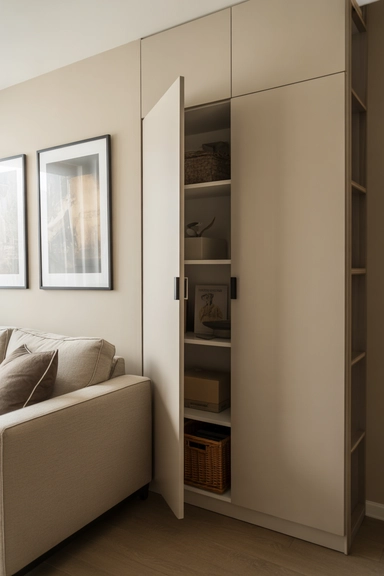
Wall art can double as storage when mounted on hinged panels or shallow cabinets. This approach allows you to store small items behind framed artwork or decorative panels without adding visible furniture. In small living rooms where wall space is limited, combining decor and storage prevents additional visual layers from forming.
Install these panels at eye level for easy access while keeping them aligned with other wall elements. Inside, store slim items such as remotes, cables, or small notebooks. Because the storage remains completely concealed behind decor, the wall appears clean and uninterrupted. This method works especially well in minimalist spaces where maintaining simple visual lines is a priority.
20. Rolling Storage That Tucks Away After Use
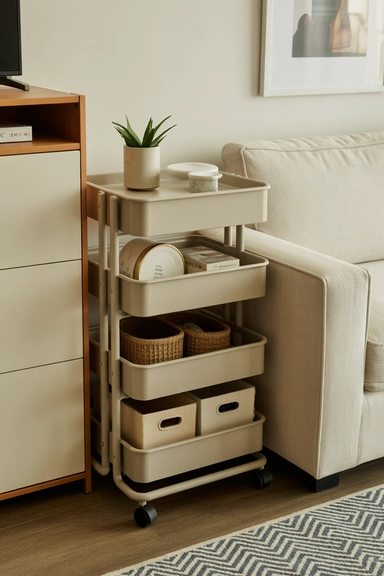
Rolling storage carts provide flexible capacity for items that don’t need to stay visible. In a small living room, mobility matters because it allows storage to disappear when not needed. A slim rolling cart can hold craft supplies, office materials, or extra decor, then slide into a closet or behind furniture when the room needs to feel open.
Choose a cart with solid sides or matching bins so contents remain hidden. Keep the top surface minimal to avoid drawing attention when the cart is out. When storage can be moved and concealed easily, it prevents accumulation on fixed surfaces. This flexibility supports daily use while preserving the clean visual structure that keeps a small living room from feeling crowded.
21. Wall-Mounted Drop Cabinets That Hide Paper and Tech Clutter
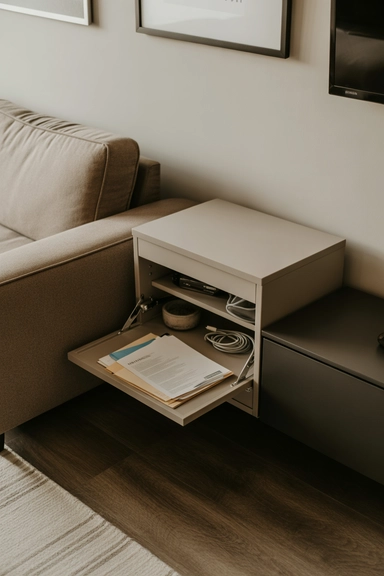
Paper stacks, chargers, and small electronics tend to collect on visible surfaces because they’re used frequently. A shallow wall-mounted drop cabinet keeps these items accessible while removing them from view. Installing one near the seating area creates a dedicated zone for everyday essentials without adding a full desk or bulky storage piece that would crowd the room.
Inside, use slim dividers to separate cables, notebooks, and remotes so everything stays organized rather than piled together. Keep the exterior simple with a flat front that blends into the wall color. When the cabinet closes, the visual field resets instantly, which helps a compact living room maintain a calm, uncluttered appearance even during daily use.
22. Storage Poufs That Double as Seating and Hidden Space
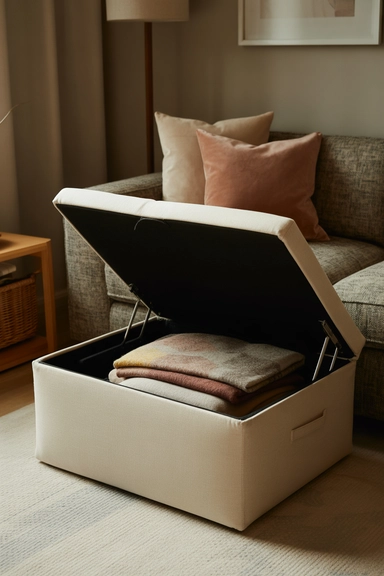
Storage poufs offer flexible seating while quietly holding items inside. Unlike rigid chairs, they can be moved easily and tucked under tables when not needed. In small living rooms where every piece must earn its place, a pouf that opens for storage keeps extra blankets, toys, or magazines contained without adding visible bulk.
Choose a design that matches the sofa upholstery or rug tones so it integrates naturally. Use the interior for items you reach for often but don’t want displayed. When the lid closes, the pouf reads as part of the seating arrangement rather than storage. This keeps the room visually simple while still accommodating everyday needs.
23. Behind-Door Storage for Items That Drift Into Living Areas
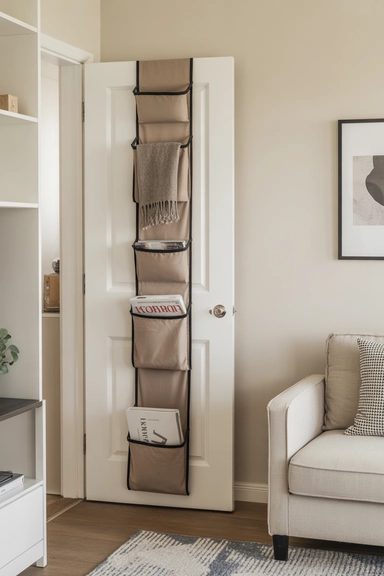
If the living room connects to a hallway or closet, the back of that door can hold shallow storage. Over-door organizers or slim racks keep items like throws, reading materials, or small accessories contained in a vertical zone that doesn’t intrude on the room’s footprint. This approach shifts clutter away from central surfaces and into overlooked areas.
Keep the storage uniform in color so it blends with the door rather than drawing attention. Assign each pocket or shelf a category so items don’t accumulate randomly. By relocating smaller objects to hidden vertical storage, the main living space stays clearer and more open.
24. Modular Storage Cubes That Adapt to Layout Changes
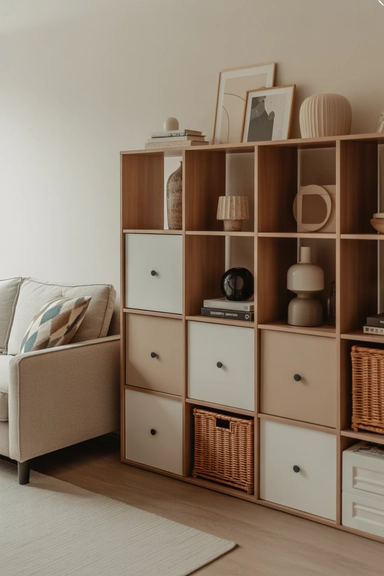
Modular storage cubes allow you to build storage that fits the exact dimensions of your living room. Instead of forcing a single large cabinet into a tight layout, smaller units can be arranged horizontally or vertically depending on available space. This flexibility prevents awkward gaps and keeps storage aligned with furniture placement.
Use closed bins within the cubes to hide miscellaneous items and keep the exterior consistent. Leave some cubes open for a few decorative elements so the unit doesn’t feel heavy. Because the configuration can change over time, modular storage supports evolving needs without requiring new furniture, helping maintain a clean and adaptable layout.
25. Minimal Surface Styling That Supports Hidden Storage
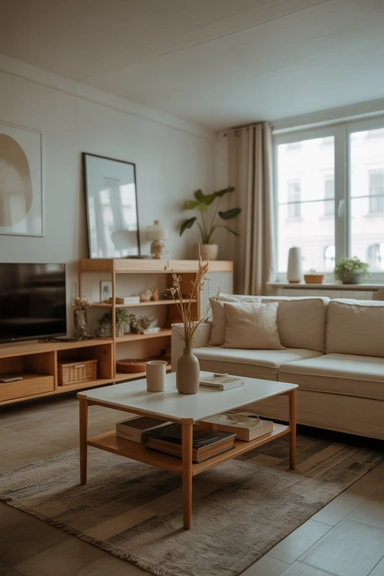
Even the best storage solutions fail if surfaces become crowded again. Keeping tabletops and shelves intentionally minimal reinforces the effect of hidden storage throughout the room. Limit visible items to a few pieces that anchor the space, such as a lamp, a book stack, or a single decorative object. Everything else should have a concealed home.
This restraint keeps sightlines clear and allows the room’s structure to show. When surfaces remain open, the storage working behind the scenes becomes more effective because it isn’t competing with visual clutter. A small living room feels calmer not only because items are stored away, but because what remains visible is carefully chosen and balanced.
Conclusion
A small living room rarely needs more furniture — it needs better placement and quieter storage. The most effective small living room storage ideas reduce what the eye notices first while increasing what the room can hold behind the scenes. When storage blends into walls, seating, and overlooked spaces, surfaces stay open and the layout feels more spacious. Start with one or two changes that remove visible clutter immediately, then build from there. As storage becomes more intentional, the entire room begins to feel calmer, clearer, and easier to maintain every day.